Home Blog Page 8

India Accounts for 97 of World’s 100 Hottest Cities Amid Severe Heatwave

0

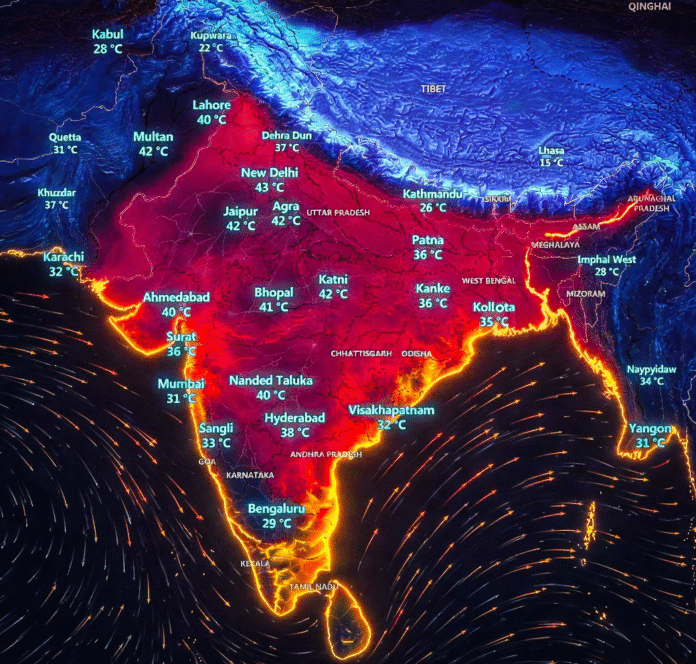
India recorded 97 of the world’s 100 hottest cities on Thursday as an intense heatwave swept across northern, central and eastern parts of the country.

According to temperature monitoring data, Balangir in Odisha registered a scorching 48°C, while Sasaram in Bihar also touched 48°C. Varanasi in Uttar Pradesh recorded 47°C, placing all three among the hottest locations globally.

Heatwave Conditions Intensify

The India Meteorological Department (IMD) said heatwave to severe heatwave conditions are expected to continue across large parts of the country until May 27.

The affected regions include several states in northern, central and eastern India, where daytime temperatures have remained significantly above seasonal averages for days.

A heatwave in India is officially declared by the IMD when temperatures exceed specified thresholds and remain abnormally high over consecutive days. The agency categorizes alerts as heatwave, severe heatwave and extreme heat conditions.

Health Risks Rise

Authorities warned that the combination of extreme temperatures and low humidity is increasing health risks across affected regions.

Humidity levels in several cities ranged between 6% and 8% on May 22, worsening dehydration and heat stress conditions.

In Andhra Pradesh alone, officials reported 325 suspected heatstroke cases between March 1 and May 19. Hospitals in multiple states have also seen a rise in dehydration and other heat-related illnesses.

Indian Cities Dominate Global Rankings

Air quality and weather monitoring platform AQI.in ranked Balangir as the hottest city in the world on May 22. Sasaram, Varanasi and dozens of other Indian cities also featured in the global top 100 hottest cities list.

Only three cities outside India, including Dhangadhi, Nepalgunj and Lumbini Sanskritik in Nepal, appeared in the top 100 rankings.

Earlier in the day, all 50 of the world’s hottest cities were reported to be in India.

Key Background

  • The India Meteorological Department is India’s national weather forecasting agency.
  • Heatwave conditions are most common during the pre-monsoon months from April to June.
  • States such as Odisha, Bihar and Uttar Pradesh frequently experience extreme summer temperatures.
  • Heatstroke is considered a medical emergency caused by prolonged exposure to extreme heat and dehydration.

World Turtle Day: Celebrating Nature’s Ancient Survivors

0

Every year on May 23, the world observes World Turtle Day, a global initiative dedicated to raising awareness about turtles and tortoises and the urgent need to protect them and their habitats. Established in 2000 by the American Tortoise Rescue organisation, the day highlights the importance of conserving one of Earth’s oldest surviving species, creatures that have existed for more than 200 million years.

Turtles and tortoises are often admired for their calm nature, distinctive shells and long lifespans, but they also play a crucial role in maintaining ecological balance. Sea turtles help preserve healthy marine ecosystems by controlling jellyfish populations and maintaining seagrass beds, while freshwater turtles contribute to clean aquatic environments by feeding on dead plants and animals. Tortoises, on the other hand, aid in seed dispersal and soil health in terrestrial ecosystems.

Despite their ecological importance, turtles across the world are facing increasing threats. Habitat destruction, climate change, plastic pollution, illegal wildlife trade, accidental fishing net entanglement and urban expansion have pushed many turtle species towards extinction. According to conservation organisations, more than half of the world’s turtle and tortoise species are currently threatened or endangered.

One of the biggest dangers for marine turtles is plastic waste in oceans. Mistaking floating plastic for food, turtles often ingest harmful materials that can prove fatal. Coastal development and artificial lighting also disrupt nesting patterns, especially for female turtles returning to beaches to lay eggs. Rising global temperatures further affect turtle populations, as temperature determines the sex of hatchlings in several species.

India is home to several important turtle species, including the Olive Ridley turtle, Leatherback turtle and Indian Roofed turtle. Odisha’s coastline, particularly Gahirmatha Beach, witnesses one of the world’s largest mass nesting events of Olive Ridley sea turtles every year, attracting global conservation attention. Wildlife authorities and environmental groups continue to work towards habitat protection, rescue operations and awareness campaigns to safeguard these species.

World Turtle Day is not just about celebrating turtles; it is also a reminder of humanity’s responsibility towards nature. Simple actions such as reducing plastic use, keeping beaches clean, supporting wildlife conservation and avoiding products made from turtle shells can contribute significantly to their survival.

Often called “living fossils,” turtles have survived dinosaurs, ice ages and millions of years of evolution. Yet today, their future increasingly depends on human action. Protecting turtles means protecting oceans, rivers and ecosystems that sustain life on Earth.

Biological Diversity: Nature’s Invisible Web That Sustains Life

0

From the towering forests of the Amazon to the tiny microorganisms living beneath our feet, life on Earth exists in an extraordinary interconnected network known as biological diversity, or biodiversity. It refers to the variety of all living organisms — plants, animals, fungi and microorganisms — along with the ecosystems they form and the genetic differences within species. Simply put, biodiversity is the rich tapestry of life that keeps our planet functioning.

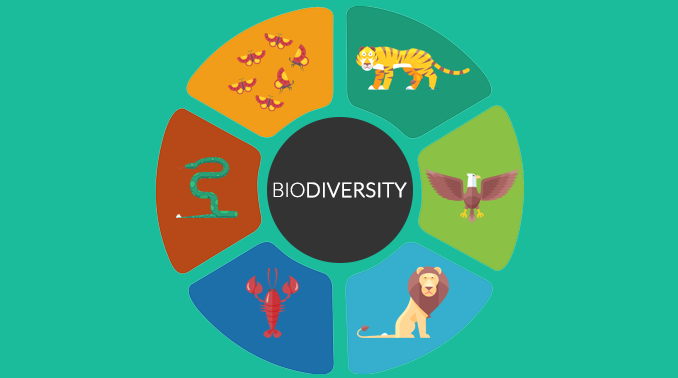
Biological diversity is generally divided into three levels: genetic diversity, species diversity and ecosystem diversity. Genetic diversity ensures that species can adapt to environmental changes, species diversity refers to the variety of living organisms, while ecosystem diversity includes forests, deserts, wetlands, oceans and grasslands that support life in different ways.

Biodiversity is not merely about protecting wildlife or rare species; it is essential for human survival. Healthy ecosystems provide us with clean air, fresh water, fertile soil, medicines and food. Pollinators such as bees help grow crops, forests regulate climate and absorb carbon dioxide, while oceans sustain millions of livelihoods. Nearly every aspect of human life — directly or indirectly — depends on biodiversity.

However, the planet’s biological richness is under severe threat. Climate change, deforestation, pollution, rapid urbanisation, habitat destruction and illegal wildlife trade are accelerating biodiversity loss at an alarming rate. Scientists warn that many species are disappearing faster than ever before in human history, creating ecological imbalances that could affect food security, health and economies worldwide.

India, one of the world’s megadiverse countries, holds nearly 8% of global biodiversity despite covering only about 2.4% of Earth’s land area. From the Himalayas and Western Ghats to the Sundarbans and Thar Desert, the country is home to thousands of unique species of flora and fauna. Conservation efforts through national parks, wildlife sanctuaries, afforestation drives and sustainable development policies are increasingly becoming crucial.

The International Day for Biological Diversity, observed every year on May 22, serves as a reminder that protecting nature is not a choice but a necessity. Conservation is no longer limited to governments and environmental organisations alone. Individuals can contribute by reducing waste, conserving water, planting trees, supporting sustainable products and respecting natural habitats.

Biological diversity is often called the “web of life” because every species, no matter how small, plays a role in maintaining ecological balance. The future of humanity is deeply connected with the future of nature. Protecting biodiversity today means protecting life, livelihoods and the planet for generations to come.

From Muga Silk to Mangoes: PM Modi’s Gifts Showcase India’s Cultural Heritage on Global Stage

0

Prime Minister Narendra Modi not only strengthened diplomatic ties during his recent five-nation tour of the UAE, Netherlands, Sweden, Norway and Italy, but also used cultural diplomacy to showcase India’s rich artistic, textile and agricultural heritage through carefully curated gifts presented to world leaders.

The gifts reflected India’s regional diversity, traditional craftsmanship and GI-tagged specialties, turning the visit into a global display of the country’s soft power and cultural identity.

One of the most talked-about moments came in Italy, where PM Modi gifted Italian Prime Minister Giorgia Meloni a traditional Assamese Muga silk stole, renowned for its natural golden sheen and durability. He also presented a Shirui Lily-inspired silk stole from Manipur, highlighting the cultural richness of Northeast India. Alongside these elegant gifts, a playful diplomatic gesture grabbed headlines worldwide when Modi gifted Meloni a packet of “Melody” toffees — a light-hearted reference to the popular “Melodi” nickname associated with the two leaders.

In the UAE, Modi gifted premium Indian mangoes and other agricultural products, underlining India’s vast farming traditions and export potential. The selection symbolised India’s agricultural excellence and the growing economic partnership between New Delhi and Abu Dhabi.

Several gifts during the tour drew from India’s centuries-old artistic traditions. These included Madhubani paintings from Bihar, Odisha’s silver filigree Tarakasi artwork, Pattachitra art on palm leaves, Bidriware craftsmanship, Blue Pottery and Pichwai paintings from Rajasthan. Handcrafted textiles, Ladakhi wool products and Himalayan orchid-themed artworks further reflected India’s regional diversity and artisanal legacy.

PM Modi also highlighted India’s growing focus on millet-based nutrition by gifting millet bars and traditional food products such as Mithila Makhana. Literary and cultural items, including Rabindranath Tagore’s works and Shantiniketan-style handcrafted products, were also part of the diplomatic exchange.

The thoughtfully selected gifts transformed routine diplomatic protocol into a broader cultural statement, projecting India not merely as an economic and strategic power, but also as a civilisation deeply rooted in heritage, craftsmanship and artistic excellence. Through textiles, paintings, handicrafts and regional specialties, the tour effectively carried India’s cultural story to the global stage.

Chandrayaan-3 Honoured with 2026 Goddard Astronautics Award in the US

0

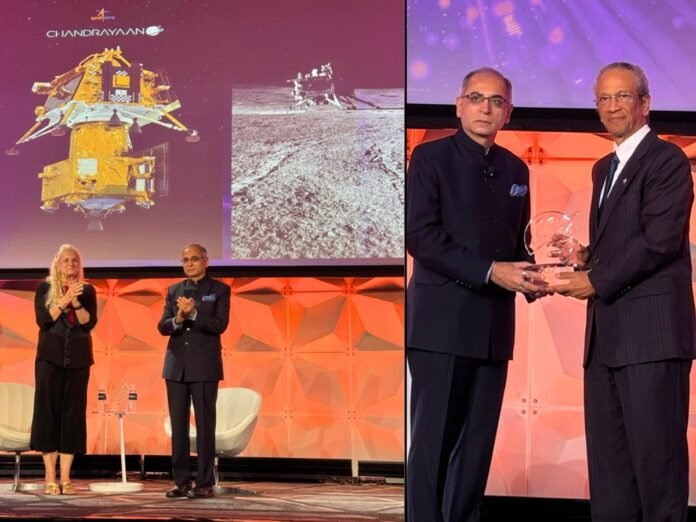
India’s historic Chandrayaan-3 mission has added another remarkable achievement to its legacy by receiving the prestigious 2026 Goddard Astronautics Award from the American Institute of Aeronautics and Astronautics (AIAA), one of the world’s leading aerospace organisations. The award recognises exceptional contributions to astronautics and space exploration and places the Indian Space Research Organisation (ISRO) among the most respected names in global space science.

The honour comes nearly three years after Chandrayaan-3 achieved its historic soft landing near the Moon’s south polar region on August 23, 2023 — a feat accomplished by only a handful of nations. More significantly, India became the first country in the world to land a spacecraft near the Moon’s south pole, an area considered scientifically important because of the possibility of water ice deposits.

The AIAA Goddard Astronautics Award has previously recognised some of the biggest achievements in global space exploration. By selecting Chandrayaan-3, the organisation acknowledged the mission’s innovation, cost-effectiveness and scientific importance. The award particularly celebrates ISRO’s successful demonstration of precision lunar landing technology under highly challenging conditions.

Chandrayaan-3 consisted primarily of the Vikram lander and Pragyan rover. After landing successfully, the rover conducted experiments on the lunar surface, studying soil composition, temperature and seismic activity. The mission also demonstrated India’s growing capability in autonomous navigation, landing systems and deep-space communication.

The achievement holds special significance because it came after the setback of Chandrayaan-2 in 2019, whose lander lost communication moments before touchdown. Rather than slowing down India’s ambitions, the earlier setback became a learning experience that strengthened ISRO’s engineering and mission planning. Chandrayaan-3’s success was therefore celebrated not just as a technological victory, but as a story of resilience and scientific determination.

Global recognition for the mission reflects India’s rising stature in the international space community. Over the years, ISRO has earned worldwide respect for conducting ambitious missions at comparatively low costs. From launching satellites for multiple countries to successful Mars and Moon missions, India’s space programme is increasingly seen as a model of innovation and efficiency.

The recognition also comes at a time when India is rapidly expanding its space ambitions. ISRO is currently working on projects including the Gaganyaan human spaceflight mission, further lunar exploration and advanced solar studies. The success of Chandrayaan-3 has inspired a new generation of students and young scientists across the country, reinforcing the idea that India is emerging as a major force in global space exploration.

For millions of Indians, the award is more than an international honour — it is a moment of national pride. It symbolises how Indian science, perseverance and vision have carried the country from Earth’s laboratories to the unexplored frontiers of the Moon.

Why Most Volatile Synthetic Indices Attract High Risk Traders

0

One of the biggest trends in trading right now is the most volatile synthetic indices. This type of trading allows you to trade quickly without having to rely on news events or economic data releases.

In this article, we are going to look at why most volatile synthetic indices attract high-risk traders. You will also see how they create chances for bigger gains and faster trading results.

Massive Profit Potential on the Platform

You can earn big gains when trading the most volatile synthetic indices on the Syntxwiki platform. Prices move quickly and offer numerous opportunities for profit in a short period.

Many traders focus on most volatile synthetic indices because small changes can grow an account balance quickly. This makes trading more attractive for people who want fast results.

Fast Moves, Quick Opportunities

Fast price movement in the most volatile synthetic indices gives you quick entry and exit chances. You can open and close trades in minutes and still find profit opportunities.

This speed helps you react quickly to market changes without delay. It best suits traders who enjoy active trading sessions with constant movement on a daily trading charts platform.

High Volatility, More Setups

High volatility in the most volatile synthetic indices creates many trade setups every day. You see strong price swings that help you spot entry points easily.

Some traders also compare it with the most volatile pairs in synthetic indices to understand movement. This helps you plan better trades during active market hours for better trading setups.

Small Moves, Big Returns

Even small moves in most volatile synthetic indices can bring big profits if timed well. You do not need much capital to see strong returns in these markets.

Quick price changes allow you to take advantage of short opportunities. Many traders watch every move closely to catch small gains with careful timing and focus.

Better for Short-Term Trading

Short-term trading works well in most volatile synthetic indices because price changes happen quickly. You can enter and exit trades within minutes or hours.

This style suits people who like fast decision-making. It helps you stay active during trading sessions. Many traders prefer the most volatile synthetic indices for quick profits and simple trading setups.

Rapid Swings Favor Active Traders

Rapid swings in the most volatile synthetic indices create constant trading chances. Active traders enjoy these fast market changes because they can react quickly.

You must stay alert to catch good entry points during movement. This environment rewards people who stay focused and disciplined. An active trading style helps you benefit from fast market movements safely here.

Discipline Improves Results

Discipline is key when trading the most volatile synthetic indices. You must control emotions to avoid quick, bad decisions. Good discipline helps you follow your trading plan without fear.

It also helps you remain consistent in volatile markets. If you are not disciplined, it becomes a challenge to trade the most volatile synthetic indices without making costly mistakes.

Conclusion

Most volatile synthetic indices attract high-risk traders because they move fast and create many chances for profit. At the same time, they can be risky if you are not careful.

This kind of market requires you to be disciplined, patient, and have a strong risk control plan. Always focus on learning first before risking real money.

ISS Becomes a Floating Medical Lab as NASA Astronauts Conduct Cancer, Heart and Tissue Research in Space

0

Hundreds of kilometres above Earth, inside the weightless environment of the International Space Station, astronauts are helping scientists unlock new possibilities in medicine — from cancer treatment to heart repair and tissue regeneration.

During Expedition 74 in May 2026, NASA astronauts carried out a series of advanced biomedical experiments aboard the ISS, using the Japanese Kibo laboratory module and its Life Science Glovebox to study how microgravity affects human cells, drugs and biological materials.

The research focused on pancreatic cancer therapies, cartilage tissue growth, heart stem cells and DNA-inspired nanomaterials that may one day improve treatments for chronic diseases.

Fighting Cancer in Microgravity

NASA Flight Engineer Chris Williams worked on the Space Cancer Therapeutics experiment inside the Kibo laboratory module.

Scientists are studying how microgravity changes the behaviour of anti-cancer drugs and cancer cells, particularly in pancreatic cancer treatment. In space, cancer cells can grow into three-dimensional tumour structures called spheroids and organoids, which closely resemble how tumours behave inside the human body.

Researchers believe these space-grown models may help scientists better understand tumour growth and test new medicines more effectively than traditional laboratory methods on Earth.

Growing Human Cartilage in Space

NASA astronaut Jessica Meir conducted experiments aimed at growing cartilage tissue in space.

Cartilage is the flexible connective tissue found in joints, ears, the nose and rib cage. Because it has limited ability to heal naturally, scientists are exploring whether microgravity can help grow stronger and more realistic three-dimensional tissue structures for future medical applications.

The experiment used specialised hardware inside Kibo’s Life Science Glovebox to observe how cartilage forms in weightless conditions.

Heart Cells, Bacteria and DNA-Inspired Materials

The ISS research programme also included studies involving heart stem cells and pneumonia-causing bacteria linked to cardiovascular disease research.

On April 23, 2026, Jessica Meir processed stem cell samples for experiments examining possible treatments for heart conditions.

On the same day, NASA Flight Engineer Jack Hathaway and Sophie Adenot of the European Space Agency worked on manufacturing DNA-inspired nanomaterials inside the Kibo module.

These materials are being studied for use in advanced cancer therapies, immunotherapies and treatments for chronic illnesses.

Why Space Matters for Medicine

Microgravity changes how cells grow, interact and organise themselves. Without Earth’s gravity pulling cells downward, tissues can form naturally in three dimensions — something difficult to recreate in normal laboratories.

This makes the ISS a unique environment for biomedical research.

In recent years, scientists have increasingly used the space station to grow tumour organoids, heart tissue and miniature disease models that may improve drug testing and personalised medicine.

In 2024, the ISS National Laboratory and NASA selected several cancer-related projects under the “Igniting Innovation” programme, including research at the University of California San Diego studying accelerated cancer development in microgravity.

Researchers at the Sanford Stem Cell Institute later observed tumour spheroids tripling in size within just 10 days in space conditions, demonstrating how rapidly cancer models can develop in microgravity.

The Future of Space Medicine

By June 2025, scientists at Cedars-Sinai had successfully used stem cells to create heart organoids aboard the ISS to study how cancer medicines affect the human heart.

Meanwhile, biotechnology companies such as Encapsulate have explored tumour-on-a-chip systems in space to test chemotherapy drugs in more realistic cancer environments.

As biomedical research aboard the ISS expands, scientists hope the discoveries made in orbit could eventually transform healthcare on Earth — improving cancer therapies, tissue engineering and treatment methods for millions of patients worldwide.

12th-Century Hoysala Hero Stone Unearthed in Karnataka Echoing With Forgotten Warriors Stories…

0

A silent stone buried for centuries beneath the soil of Karnataka has once again brought alive the story of courage, sacrifice and medieval South India’s warrior traditions.

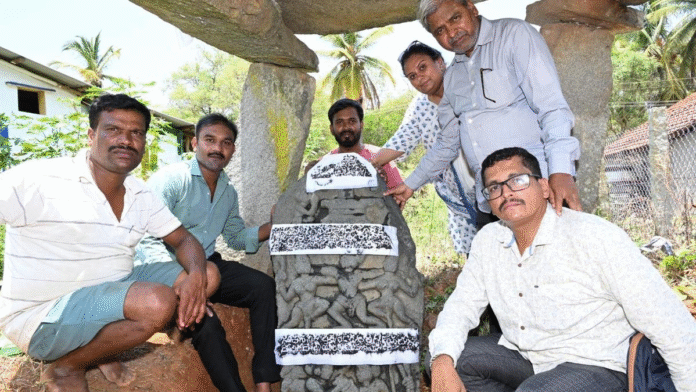
On May 21, 2026, a rare 12th-century Veeragallu, also known as a hero stone, dating back to the reign of Hoysala ruler Vishnuvardhana was discovered in Maniyur village of Nagamangala taluk in Mandya district, Karnataka.

For historians and archaeologists, the discovery is more than just an ancient stone slab. It is a fragment of a forgotten world, a time when bravery on the battlefield, cattle protection and loyalty to one’s village were immortalised in stone.

What Are Veeragallu?

The word “Veeragallu” comes from Kannada and literally means “hero stone.” These memorial stones were erected in memory of warriors or ordinary people who died heroic deaths, often while defending cattle, fighting local battles, protecting villages or displaying extraordinary courage.

Such stones are found across Karnataka, Tamil Nadu, Andhra Pradesh and Telangana, and serve as important windows into the social and military life of medieval India.

Most Veeragallu feature carved panels showing scenes of combat, death and the hero’s symbolic ascent to heaven. Many also carry inscriptions in medieval Kannada or Sanskrit, recording names, villages, kings and reasons for commemoration.

The Age of the Hoysalas

The newly discovered stone belongs to the era of the Hoysala Empire, one of South India’s most influential dynasties between the 10th and 14th centuries CE.

Under rulers such as Vishnuvardhana, the Hoysalas transformed Karnataka into a centre of temple architecture, literature and military power. Their legacy survives today in iconic temples at Belur and Halebidu, renowned for intricate stone carvings and artistic brilliance.

Vishnuvardhana himself remains one of the most prominent Hoysala kings. His reign witnessed territorial expansion, military campaigns and a flourishing of Kannada culture. Many inscriptions from his period, written in medieval Kannada script, continue to provide valuable insight into governance, land grants and regional conflicts.

Stones That Speak of Medieval Life

Hero stones are not merely memorials to war. Historians often describe them as “stone archives” because they reveal details about taxation, village administration, local disputes, cattle raids and social customs that official royal inscriptions rarely mention.

In Karnataka especially, Veeragallu traditions became deeply rooted in rural society. Villages erected them to honour bravery and preserve community memory long before written histories became widespread.

Institutions such as Hampi Kannada University and the Centre of Excellence for Studies in Classical Kannada have played a major role in documenting and interpreting such discoveries.

Karnataka’s Continuing Archaeological Discoveries

The Maniyur discovery adds to a growing list of remarkable hero stones unearthed in Karnataka in recent years.

In April 2026, archaeologists discovered a 12th-century Viragal near Belur in Hassan district carrying a medieval Kannada inscription describing a border conflict between the Hoysalas and the Seuna rulers of Devagiri, the capital associated with the Yadava dynasty.

Another striking discovery emerged in November 2024 near Chikkabidare village in Davanagere district, where a 12th-century Yadava-period Veeragallu depicted a Maha Sati scene, showing a veeranari embracing her martyred husband on a funeral pyre.

Earlier discoveries in Mandya district also revealed 13th-century Hoysala hero stones portraying acts of sacrifice, including memorials depicting couples dying together in ritual acts linked to medieval warrior traditions.

Why Such Discoveries Matter

For modern India, these stones are reminders that history does not survive only in grand forts or royal palaces. Sometimes, it lies hidden in village fields, temple courtyards or beneath layers of forgotten earth.

Each Veeragallu tells a deeply human story, of courage, loyalty, grief and remembrance.

And as Karnataka continues to uncover these fragments of the medieval past, the voices of long-forgotten warriors continue to echo through stone.

International Day for Biological Diversity: Protecting Nature for a Sustainable Future

0

The International Day for Biological Diversity is observed every year on May 22 to raise awareness about the importance of biodiversity and the urgent need to protect the planet’s natural ecosystems. The day highlights how all living organisms — plants, animals, microorganisms, and humans — are interconnected and essential for maintaining ecological balance and sustaining life on Earth.

The observance was established by the United Nations to mark the adoption of the Convention on Biological Diversity in 1992 during the Earth Summit held in Rio de Janeiro, Brazil. Since then, the day has become an important global platform for promoting environmental conservation and sustainable development.

Biological diversity, or biodiversity, refers to the variety of life forms found on Earth, including different species, ecosystems, and genetic variations. Healthy biodiversity supports food production, clean water, climate regulation, medicine, agriculture, and economic livelihoods. Forests, oceans, wetlands, mountains, and grasslands all contribute to sustaining life and protecting environmental stability.

However, biodiversity across the world is facing severe threats due to deforestation, climate change, pollution, urbanisation, habitat destruction, overexploitation of natural resources, and illegal wildlife trade. Scientists warn that many plant and animal species are disappearing at an alarming rate, leading to ecological imbalance and environmental crises.

The International Day for Biological Diversity reminds people that protecting nature is not only about saving wildlife but also about safeguarding human survival. The loss of biodiversity can affect food security, health systems, water availability, and even increase the risk of natural disasters and disease outbreaks.

India, known as one of the world’s megadiverse countries, possesses rich biodiversity ranging from the Himalayas and Western Ghats to mangroves, deserts, forests, and marine ecosystems. The country is home to iconic species such as the Bengal tiger, Asiatic lion, elephant, snow leopard, and one-horned rhinoceros. Conservation programs, wildlife sanctuaries, national parks, and eco-friendly initiatives continue to play a vital role in protecting India’s natural heritage.

Every year, governments, schools, environmental organisations, and communities organise awareness campaigns, tree plantation drives, seminars, nature walks, and educational activities to mark the occasion. The day encourages people to adopt sustainable lifestyles and participate actively in environmental protection.

The International Day for Biological Diversity serves as a reminder that humanity’s future depends on the health of the natural world. Conserving biodiversity is essential for achieving sustainable development and ensuring a healthier, safer, and more balanced planet for future generations.

The Story of Indian Chai: History, Culture and Global Popularity

0

In India, tea is far more than just a beverage — it is an emotion woven into daily life. From crowded railway stations and roadside tea stalls to corporate offices and family gatherings, a cup of chai has become one of the country’s strongest cultural symbols. On International Tea Day, observed every year on May 21, India not only celebrates one of the world’s most consumed drinks but also the millions of farmers, workers and small vendors who sustain the country’s vast tea industry.

The History of Tea in India

Although tea has ancient roots in China, India’s tea story gained momentum during the British colonial period in the 19th century. The British East India Company began cultivating tea commercially in Assam after discovering native tea plants growing in the region. Large tea plantations were later developed in Darjeeling, Nilgiris and other hill regions to reduce dependence on Chinese tea imports.

Over time, tea became deeply embedded in Indian society. What began as a colonial commercial crop evolved into the beloved “chai culture” that defines India today.

India’s Major Tea-Producing Regions

India is currently one of the world’s largest tea producers and consumers. The country produces a wide variety of teas across different geographical regions:
Assam Tea: Strong, malty and bold, Assam tea is among the most famous black teas globally.
Darjeeling Tea: Often called the “Champagne of Teas,” Darjeeling tea is known for its delicate aroma and unique muscatel flavour.
Nilgiri Tea: Grown in the hills of Tamil Nadu, Nilgiri tea has a fragrant and smooth taste.
Kangra Tea: Produced in Himachal Pradesh, Kangra tea is known for its light flavour and growing international recognition.
Sikkim Tea and Dooars Tea: These regions also contribute significantly to India’s tea diversity.

Assam and West Bengal together account for a major share of India’s tea production.

Chai: India’s Everyday Ritual

Tea is consumed across nearly every social and economic section of Indian society. Whether served in clay cups called kulhads, steel glasses or fine porcelain cups, chai remains central to everyday conversation and hospitality.

The most iconic Indian preparation is masala chai — black tea brewed with milk, sugar and spices such as cardamom, ginger, cinnamon and cloves. Regional variations exist across the country, from Kashmiri Kahwa and Irani chai to cutting chai in Mumbai and butter tea in Himalayan regions.

India is among the world’s highest tea-consuming nations, with a majority of the population drinking tea at least once daily. For many, the day begins and ends with chai.

Tea Exports and Global Popularity

India is also one of the world’s leading tea exporters. Indian teas are exported to countries including Russia, the United Kingdom, the United Arab Emirates, Iran and the United States. Darjeeling tea, in particular, enjoys Geographical Indication (GI) protection and global prestige.

The tea industry supports millions of livelihoods, especially women workers employed in tea plantations. Beyond economics, tea tourism has also become increasingly popular, with travellers visiting scenic tea estates in Assam, Darjeeling and the Nilgiris.

More Than a Beverage

International Tea Day is not only about celebrating flavour and tradition, but also recognising the labour, heritage and communities behind every cup. In India, chai represents warmth, conversation, hospitality and pause in the middle of busy lives.

From mountain plantations to roadside kettles boiling over open flames, tea continues to connect India across regions, languages and generations — one cup at a time.