

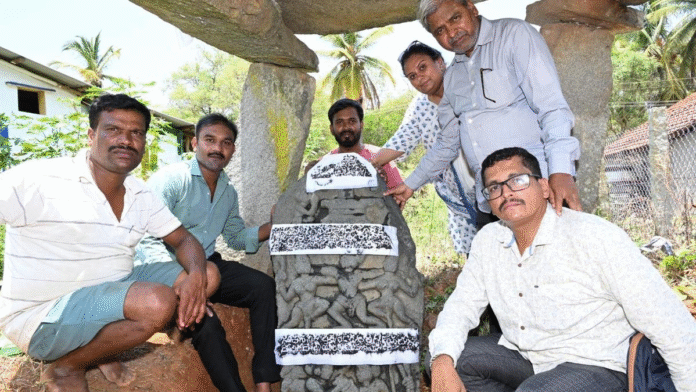
A silent stone buried for centuries beneath the soil of Karnataka has once again brought alive the story of courage, sacrifice and medieval South India’s warrior traditions.
On May 21, 2026, a rare 12th-century Veeragallu, also known as a hero stone, dating back to the reign of Hoysala ruler Vishnuvardhana was discovered in Maniyur village of Nagamangala taluk in Mandya district, Karnataka.
For historians and archaeologists, the discovery is more than just an ancient stone slab. It is a fragment of a forgotten world, a time when bravery on the battlefield, cattle protection and loyalty to one’s village were immortalised in stone.
What Are Veeragallu?
The word “Veeragallu” comes from Kannada and literally means “hero stone.” These memorial stones were erected in memory of warriors or ordinary people who died heroic deaths, often while defending cattle, fighting local battles, protecting villages or displaying extraordinary courage.
Such stones are found across Karnataka, Tamil Nadu, Andhra Pradesh and Telangana, and serve as important windows into the social and military life of medieval India.
Most Veeragallu feature carved panels showing scenes of combat, death and the hero’s symbolic ascent to heaven. Many also carry inscriptions in medieval Kannada or Sanskrit, recording names, villages, kings and reasons for commemoration.
The Age of the Hoysalas
The newly discovered stone belongs to the era of the Hoysala Empire, one of South India’s most influential dynasties between the 10th and 14th centuries CE.
Under rulers such as Vishnuvardhana, the Hoysalas transformed Karnataka into a centre of temple architecture, literature and military power. Their legacy survives today in iconic temples at Belur and Halebidu, renowned for intricate stone carvings and artistic brilliance.
Vishnuvardhana himself remains one of the most prominent Hoysala kings. His reign witnessed territorial expansion, military campaigns and a flourishing of Kannada culture. Many inscriptions from his period, written in medieval Kannada script, continue to provide valuable insight into governance, land grants and regional conflicts.
Stones That Speak of Medieval Life
Hero stones are not merely memorials to war. Historians often describe them as “stone archives” because they reveal details about taxation, village administration, local disputes, cattle raids and social customs that official royal inscriptions rarely mention.
In Karnataka especially, Veeragallu traditions became deeply rooted in rural society. Villages erected them to honour bravery and preserve community memory long before written histories became widespread.
Institutions such as Hampi Kannada University and the Centre of Excellence for Studies in Classical Kannada have played a major role in documenting and interpreting such discoveries.
Karnataka’s Continuing Archaeological Discoveries
The Maniyur discovery adds to a growing list of remarkable hero stones unearthed in Karnataka in recent years.
In April 2026, archaeologists discovered a 12th-century Viragal near Belur in Hassan district carrying a medieval Kannada inscription describing a border conflict between the Hoysalas and the Seuna rulers of Devagiri, the capital associated with the Yadava dynasty.
Another striking discovery emerged in November 2024 near Chikkabidare village in Davanagere district, where a 12th-century Yadava-period Veeragallu depicted a Maha Sati scene, showing a veeranari embracing her martyred husband on a funeral pyre.
Earlier discoveries in Mandya district also revealed 13th-century Hoysala hero stones portraying acts of sacrifice, including memorials depicting couples dying together in ritual acts linked to medieval warrior traditions.
Why Such Discoveries Matter
For modern India, these stones are reminders that history does not survive only in grand forts or royal palaces. Sometimes, it lies hidden in village fields, temple courtyards or beneath layers of forgotten earth.
Each Veeragallu tells a deeply human story, of courage, loyalty, grief and remembrance.
And as Karnataka continues to uncover these fragments of the medieval past, the voices of long-forgotten warriors continue to echo through stone.