Home Blog Page 7

The Rupee Under Pressure: Inside India’s Currency Crisis

0

The Indian rupee has been under constant pressure in recent years, reaching historic lows against the US dollar. While many people see this only as a financial issue, the falling rupee affects the daily lives of ordinary Indians through rising fuel prices, inflation, expensive imports, and costly foreign education. The weakening rupee has now become one of the biggest economic concerns in the country.

Why Is the Rupee Falling?

India imports large amounts of crude oil, electronics, machinery, and gold. Since these imports are paid for in US dollars, demand for dollars remains high. India also imports nearly 85% of its crude oil, making the economy highly vulnerable to global oil price increases.

Another major reason is the strengthening of the US dollar. Whenever US interest rates rise, investors move money into American markets, causing currencies like the rupee to weaken.

Jayant Mundhra’s Perspective

Finance educator Jayant Mundhra explains that a falling rupee should not always be viewed emotionally. According to him, the rupee weakens mainly because of economic fundamentals such as trade deficits, oil dependence, and global dollar dominance.

He also points out that foreign investors play a huge role in short-term currency movements. When foreign investors pull money out of India, they convert rupees into dollars, increasing pressure on the Indian currency.

Jayant Mundhra believes that the Reserve Bank of India can control panic temporarily, but long-term currency strength depends on stronger manufacturing, exports, and productivity.

Impact on Common People

A weak rupee increases the prices of petrol, diesel, electronics, medicines, and imported goods. Students planning to study abroad face higher expenses, while foreign travel also becomes costlier.

However, some sectors such as IT and export industries benefit because they earn in dollars while spending in rupees.

Conclusion

The decline of the Indian rupee reflects deeper structural challenges in the Indian economy. While India continues to grow globally, dependence on imports and foreign capital keeps pressure on the currency. The real solution lies in building stronger exports, reducing import dependence, and improving economic productivity in the long run.

(The writer of this article is Akhilesh Saproo, a student of Class 10th E, APS Jaipur)
APS Jaipur Takes Educational Tour In Kota Exploring Seven Wonders to Chambal’s Sacred Shores

0

Kota is a city that wears many faces with equal grace. Renowned across India as the coaching capital of the country, it is also a city of breathtaking natural beauty, deep spiritual roots, and timeless charm, all woven together along the serene banks of the Chambal River. With its iconic riverfront, sacred temples, and lush green spaces, Kota proved to be the perfect destination for an educational escapade.

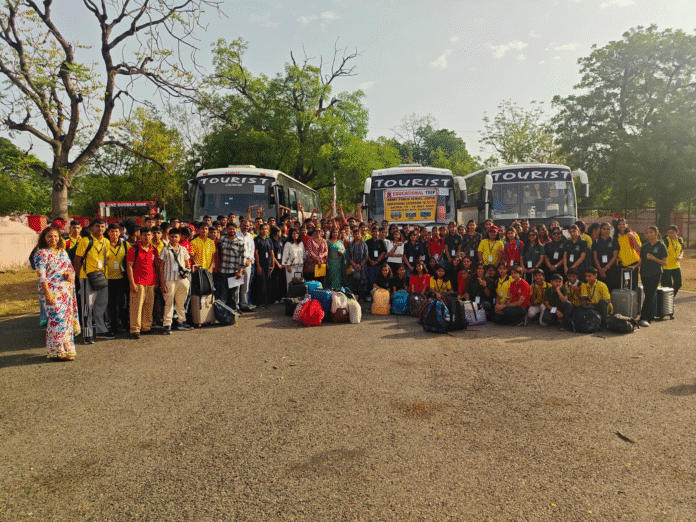
Students of Army Public School, Jaipur embarked on this enriching journey and Kota welcomed them with open arms. The famous Seven Wonders Park on the Chambal riverfront set the tone early, where life-size replicas of the world’s greatest monuments stood against the backdrop of the flowing river, offering students a world tour compressed into a single afternoon.

APS Jaipur Takes Educational Tour In Kota Exploring Seven Wonders to Chambal's Sacred Shores

The unforgettable highlight of the trip was a visit to Oxygen Park, Kota’s beloved green lung nestled along the Chambal. With its lush landscaping, wide open pathways, and stunning river views, the park was everything its name promises. Students soaked in the fresh air, explored the vibrant surroundings, and left with a renewed sense of energy and wonder. It was one of those rare places that stays with you long after you have left.

A deeply moving experience followed at Shivpuri Dham Mandir, a sacred temple complex that is home to 525 Shivlings, each one consecrated and spiritually significant. Walking through this serene space, students gained a quiet appreciation for India’s ancient Shaivite traditions and the richness of its spiritual heritage. The atmosphere was peaceful, humbling, and truly unforgettable.

APS Jaipur Takes Educational Tour In Kota Exploring Seven Wonders to Chambal's Sacred Shores

After exploration and discovery, the warm hospitality of APS Kota made the journey complete. A comfortable stay and wholesome meals were arranged with great care, reflecting the bond of brotherhood and camaraderie that defines every Army Public School family across the country. It felt less like a school trip and more like coming home.

From the rippling waters of the Chambal to the sacred glow of Shivpuri Dham, from the wonder of miniature monuments to the freshness of Oxygen Park, Kota offered something for every curious young mind. This was not just a school excursion. It was an experience that broadened horizons, stirred the spirit of adventure, and reminded every student that the greatest classroom is the world itself.

(Writer of this article is Lakshya Govani, class X student of APS, Jaipur)

Scientists Discover Fuel-Saving ‘Space Highway’ to the Moon

0

A newly discovered fuel-saving route to the Moon could reshape the future of low-cost space logistics, according to research published in April 2026 in the journal Astrodynamics. The study, led by an international team from University of São Paulo and University of Coimbra, reveals a lunar transfer trajectory that significantly reduces the amount of fuel needed for Earth-to-Moon missions.

The research was led by Allan Kardec de Almeida Júnior, with Vitor Martins de Oliveira contributing to the work. Their findings point to a route that cuts fuel use by at least 58.8 metres per second of delta-v compared with previously known optimal trajectories.

A New Path Through Space

Travel between Earth and the Moon depends on carefully calculated transfer trajectories that balance orbital mechanics with the gravitational pull of celestial bodies. In spaceflight, even small reductions in delta-v — the change in velocity required for manoeuvres — can translate into major savings in fuel, launch costs, and spacecraft mass.

The newly identified route exploits the combined gravitational influence of Earth and the Moon and follows pathways associated with the Interplanetary Transportation Network, a system of low-energy routes through the Solar System. Instead of approaching the Moon directly, the trajectory swings around the Earth-Moon L1 Lagrange point — a gravitational equilibrium zone located between the two bodies — before arriving from the Moon’s far side.

Inspired by Earlier Missions

Low-energy lunar transfers are not entirely new. Similar techniques were used by Hiten during its pioneering 1991 mission and later by GRAIL, which mapped the Moon’s gravity field using twin spacecraft.

What sets the new trajectory apart is its combination of fuel efficiency and operational advantages. According to the researchers, the route maintains uninterrupted communication with Earth throughout the journey. Traditional lunar transfers often experience signal blackouts when spacecraft pass behind the Moon, but this path avoids those communication dead zones entirely.

Millions of Simulations

To identify the route, the scientists relied on advanced computer modelling and a mathematical approach known as the theory of functional connections. The team simulated roughly 30 million possible trajectories and referenced around 280,000 cases before isolating the most efficient pathway.

The current model considered only the gravitational effects of Earth and the Moon. Future research could incorporate the Sun’s gravity, potentially uncovering even more efficient mission profiles tailored to specific launch windows.

Slow but Economical

The trade-off for the fuel savings is time. The journey takes nearly 32 days to reach the Moon, far longer than conventional lunar missions. That makes the route unsuitable for crewed missions requiring rapid transit, but highly attractive for non-urgent cargo transport, scientific payloads, and robotic missions where cost efficiency matters more than speed.

As international interest in lunar exploration grows, including plans for permanent lunar infrastructure and commercial cargo delivery, low-energy trajectories like this one could become essential for reducing mission costs and expanding sustainable access to deep space.

Haji Syed Salman Chishty Visits Bungalow New York on Restaurant’s 786th Day

0

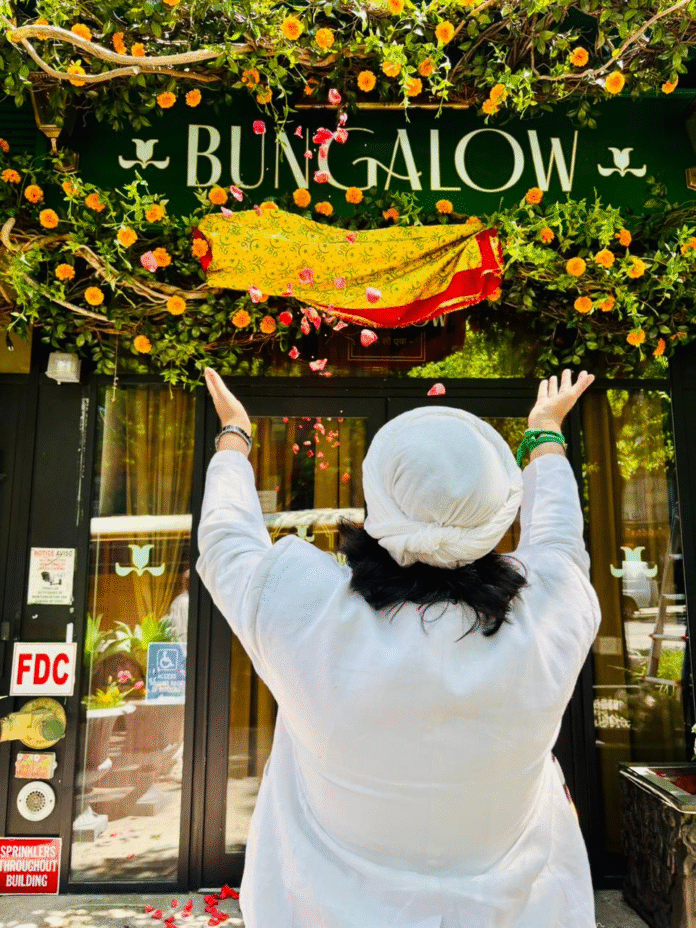
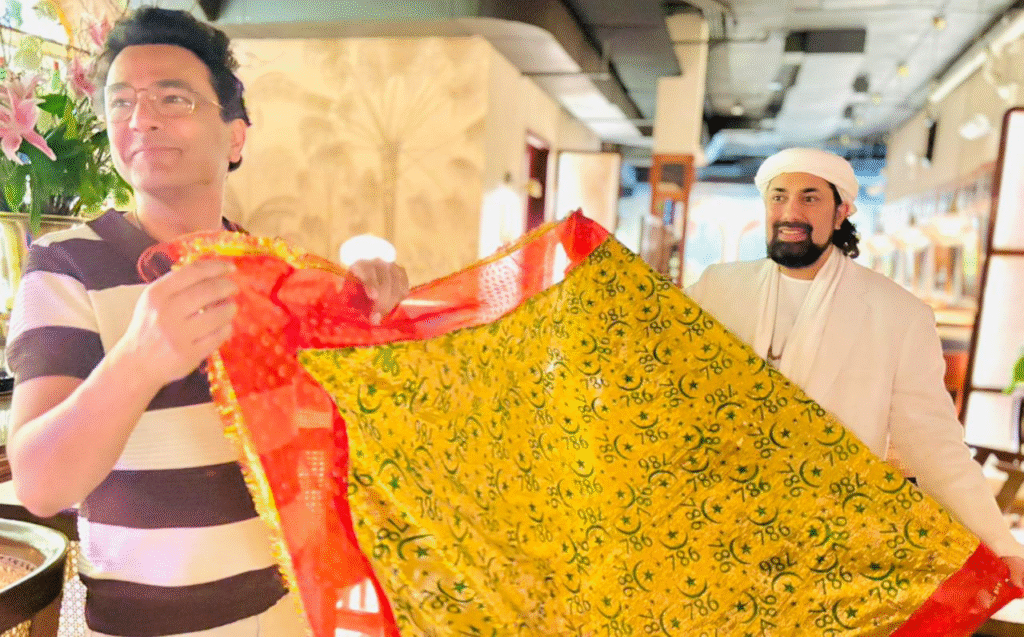
In what was described as a remarkable spiritual coincidence, Haji Syed Salman Chishty, the 26th-generation Gaddi Nashin of the Dargah of Hazrat Khwaja Moinuddin Chishty in Ajmer Sharif and Chairman of the Chishty Foundation, visited Bungalow, the New York restaurant founded by celebrity chef Vikas Khanna, on the restaurant’s 786th day since opening.

The number 786 holds special significance in Islamic and Sufi traditions, as it is associated with the phrase Bismillah ir-Rahman ir-Rahim (“In the name of God, the Most Gracious, the Most Merciful”).

According to those present, neither Chishty nor Khanna had planned the timing of the visit. Chef Vikas Khanna reportedly contacted Chishty in the early hours of the morning to request prayers and a ceremonial chadar for the occasion, only to learn that Chishty was already travelling to New York, unaware that the restaurant was marking its 786th day.

Haji Syed Salman Chishty Visits Bungalow New York on Restaurant’s 786th Day

During the visit, Haji Syed Salman Chishty brought a blessed chadar inscribed with “786” from the Dargah of Ajmer Sharif, along with blessings from the Dargah of Hazrat Nizamuddin Auliya in Delhi. The chadar was placed at the entrance of the restaurant as part of the gathering. Guests were also offered heart-shaped dates said to have been blessed at the Dargah Sharif.

Several prominent guests attended the event, including entrepreneur Jimmy Rizvi, author and investment banker Yakub Mathew, Peace Pledge executive Jonathan Granoff, and interior designer Shaila Rizvi.

Speaking on the occasion, Haji Syed Salman Chishty said the visit reflected a “divine appointment” rather than coincidence. He described Bungalow as “a living sacred space of hospitality” built on values of love and seva.

Chef Vikas Khanna said the restaurant was envisioned as more than a dining space, describing it as “a place where faith, timing, love, and the universe all arrive together at the same doorstep.”

Bungalow has emerged as a prominent Indian cultural and culinary destination in New York, blending Indian hospitality traditions with fine dining experiences.

Raghav Chadha is Chairman of the Committee on Petitions of the Upper House

0

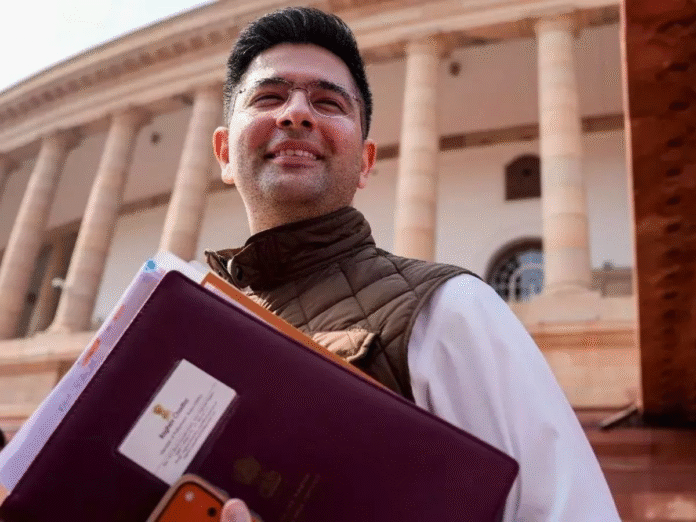
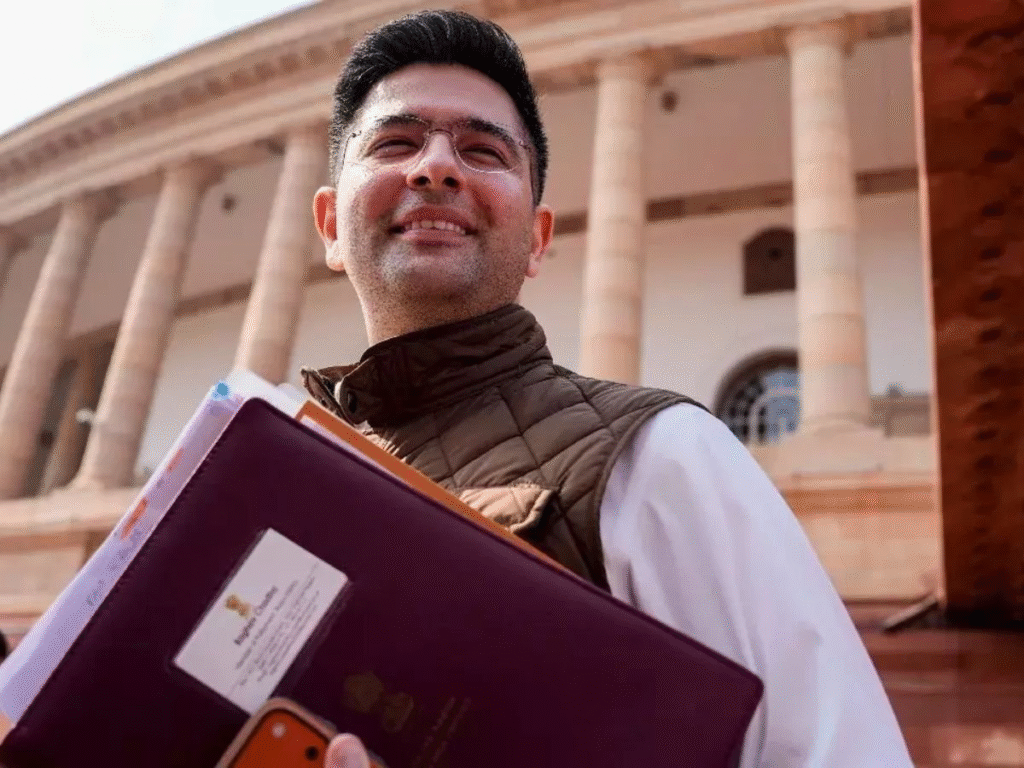
Raghav Chadha, a Rajya Sabha member, was appointed Chairman of the Committee on Petitions of the Upper House on May 23, 2026. The appointment came into effect on May 20, 2026, following the reconstitution of the committee by Rajya Sabha Chairman C.P. Radhakrishnan.

Committee on Petitions in Parliament

The Committee on Petitions is a parliamentary committee of the Rajya Sabha that examines petitions submitted before the House. It makes recommendations on matters concerning public interest and legislative issues.

Raghav Chadha is Chairman of the Committee on Petitions of the Upper House

Composition and Nomination

C.P. Radhakrishnan nominated 10 members to the Committee on Petitions. The panel includes Harsh Mahajan, Gulam Ali, Shambhu Sharan Patel, Mayankkumar Nayak, Masthan Rao Yadav Beedha, Jebi Mather Hisham, Subhasish Khuntia, Rwngwra Narzary, and P. Sandosh Kumar.

Political Background

Raghav Chadha joined the Bharatiya Janata Party in April 2026 after serving as a prominent leader of the Aam Aadmi Party. He had previously served as the Rajya Sabha leader of the Aam Aadmi Party.

Important Facts

  • The Rajya Sabha is the Upper House of the Parliament of India and functions through several standing and ad hoc committees.
  • The Committee on Petitions deals with petitions related to public grievances and legislative matters.
  • C.P. Radhakrishnan is serving as the Chairman of the Rajya Sabha in 2026.
  • Parliamentary committees in India are constituted for detailed scrutiny of legislative and administrative matters.

Parliamentary Committee System

Parliamentary committees in India include standing committees, ad hoc committees, and financial committees. The Committee on Petitions is one of the committees associated with the Rajya Sabha.

Aishwarya Rai Bachchan Reigns at Cannes 2026 with Two Spectacular Couture Moments

0

For over two decades, Aishwarya Rai Bachchan has remained one of the most anticipated faces at the Cannes Film Festival — and in 2026, she once again proved why she continues to dominate the global red carpet conversation. In her 24th appearance at Cannes, the actor delivered two dramatically different yet equally unforgettable fashion moments, blending timeless glamour with bold couture artistry.

Aishwarya’s first appearance at the 79th Cannes Film Festival came in a striking sapphire-blue couture gown by Indian designer Amit Aggarwal. Titled Luminara, the sculpted mermaid-style ensemble featured intricate crystal detailing and futuristic craftsmanship inspired by light, movement and transformation. According to reports, the gown required over 1,500 hours of handwork and incorporated thousands of crystals to create an illuminated, almost cosmic effect on the red carpet.

The dramatic silhouette, paired with diamond jewellery and deep sapphire stones, reflected a fusion of old-Hollywood glamour and avant-garde couture. Fashion observers widely described the appearance as one of Cannes 2026’s standout moments, while social media users praised Aishwarya’s commanding screen presence and timeless elegance.

If the blue gown represented power and intensity, her second appearance embraced softness and romance. For the “Lights on Women’s Worth” event hosted by L’Oréal Paris, Aishwarya wore a blush-pink couture gown by Sophie Couture. The strapless corseted ensemble featured satin draping, Swarovski crystal floral embellishments and a flowing chiffon cape that added fluidity and drama to the look.

Styled with voluminous waves, delicate jewellery and soft makeup tones, the appearance showcased a more sculpted and refined aesthetic compared to some of her previous Cannes looks. Many fashion critics described it as a refreshing evolution in her red-carpet style.

A particularly heartwarming aspect of this year’s Cannes appearance was the presence of her daughter, Aaradhya Bachchan, who accompanied her to several events and made her red carpet debut in coordinated couture looks. Their appearances together quickly became a major talking point online, with fans celebrating the mother-daughter duo’s elegance and chemistry.

Since first appearing at Cannes in 2002, Aishwarya Rai Bachchan has become one of India’s most recognisable global fashion ambassadors. From traditional Indian ensembles to experimental couture, her Cannes appearances have consistently reflected both cinematic glamour and evolving fashion sensibilities.

At Cannes 2026, however, she achieved something even more significant: she reminded audiences why she remains one of the festival’s enduring icons. Whether in luminous sapphire couture or dreamy blush-pink elegance, Aishwarya Rai Bachchan once again transformed the Cannes red carpet into a stage entirely her own.

Phoolan Devi: The Woman India Called the “Bandit Queen”

0

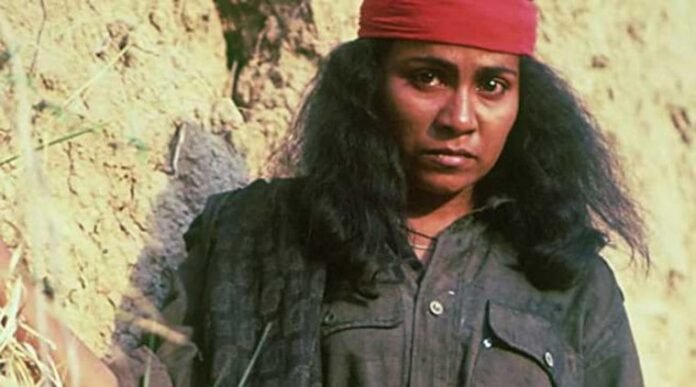
At just 11 years old, Phoolan Devi was married off in exchange for a cow and a bicycle. Born into a poor Mallah family in rural Uttar Pradesh, her childhood was shaped not by innocence or opportunity, but by poverty, caste discrimination and violence. Decades later, the same girl would become one of the most controversial and talked-about figures in India — feared as the “Bandit Queen,” remembered by many as a symbol of resistance, and eventually elected to Parliament.

Phoolan Devi was born in 1963 in the village of Gorha Ka Purwa in Uttar Pradesh. Belonging to a lower-caste community, she experienced social discrimination from an early age. Her marriage to a man much older than her reportedly exposed her to severe abuse, after which she returned to her village. But life there offered little protection. Over the years, she faced repeated violence, humiliation and exploitation, much of it tied to caste and gender oppression deeply rooted in rural society.

Her life took a dramatic turn when she was allegedly abducted by a gang of dacoits operating in the Chambal ravines. Following the death of gang leader Vikram Mallah, who reportedly treated her with respect, Phoolan Devi is believed to have faced further brutal abuse at the hands of upper-caste gang members. These events became central to the narrative surrounding her transformation from victim to outlaw.

In 1981, the Behmai massacre brought her national notoriety. More than 20 men from the village of Behmai were killed in what was widely seen as an act of revenge for the violence inflicted upon her. Authorities launched a massive manhunt, and Phoolan Devi soon became one of India’s most wanted figures.

Yet even during her years as an outlaw, public opinion around Phoolan Devi remained sharply divided. To some, she was a dangerous criminal responsible for murder and violence. To others — especially among marginalised communities — she became a symbol of rebellion against caste oppression and patriarchal brutality.

In 1983, Phoolan Devi surrendered before thousands of spectators in Madhya Pradesh under negotiated conditions. Despite not being convicted in court at the time, she spent 11 years in prison without trial. Her release in 1994 marked another astonishing turn in her life.

Just two years later, Phoolan Devi entered politics and was elected to the Lok Sabha as a Member of Parliament from Mirzapur, representing the Samajwadi Party. In Parliament, she emerged as a voice for the poor, lower castes and women facing social injustice.

Her journey — from abused child bride to feared outlaw and then elected politician — remains one of the most extraordinary and debated transformations in modern Indian history.

But her story ended as violently as it began. On July 25, 2001, Phoolan Devi was shot dead outside her residence in New Delhi. She was only 37 years old.

Even today, Phoolan Devi remains a deeply polarising figure. Her life continues to raise uncomfortable questions about caste inequality, violence against women, poverty and the failures of social and legal systems. Was she a criminal, a rebel, a survivor — or all three at once?

Perhaps the enduring significance of Phoolan Devi lies not only in what she became, but in what her story reveals about the society that shaped her.

Sanya Thakur Brings Radha Rani’s Grace to Cannes 2026, Celebrating Indian Spirituality on the Global Stage

0

The Cannes Film Festival 2026 witnessed yet another striking Indian fashion moment, but this time it came wrapped not in conventional couture glamour, but in devotion, spirituality and cultural symbolism. Actor Sanya Thakur turned heads on the Cannes red carpet with a unique Radha Rani-inspired appearance that blended Indian tradition with divine femininity, creating a powerful statement of cultural pride before a global audience.

Known for her work in films like Super 30 and the web series Spy, Sanya chose to move away from the typical high-fashion red carpet aesthetic and instead embraced the spiritual imagery of Radha Rani, a revered figure in Hindu tradition associated with love, devotion and grace. Her appearance stood out instantly amid the sea of dramatic gowns and western silhouettes at Cannes.

Dressed in an intricately embroidered traditional lehenga adorned with mirror work, floral detailing and handcrafted Indian artistry, Sanya’s ensemble reflected the richness of Indian textile traditions. Her styling further elevated the concept — long braided hair decorated with flowers and lights, traditional jewellery, bangles, maang tikka and a nose ring completed the ethereal look. Holding a flute, symbolic of Lord Krishna and Radha’s divine association, she brought a spiritual and theatrical dimension to the red carpet.

According to reports, Sanya described her Cannes appearance not merely as a fashion statement, but as a representation of peace, positivity, Sanatan culture and India’s spiritual heritage. She emphasised that spirituality and cultural identity can transcend geographical boundaries and connect people emotionally across the world.

Her appearance quickly sparked conversations across social media, where many praised her for bringing Indian tradition and devotion to one of cinema’s biggest international platforms. Several users described her look as refreshing in an era dominated by experimental couture and globalised fashion trends. Some even referred to her as the “Queen of Bihar,” celebrating the way she carried regional identity and Indian culture with confidence on the international stage.

Beyond fashion, Sanya also unveiled the poster of her upcoming project Save The God at the Bharat Pavilion during the festival. The moment added another layer to her Cannes journey, positioning her not just as a fashion figure but also as an artist using cinema and visual representation to engage with themes of culture and spirituality.

In recent years, Indian representation at Cannes has increasingly moved beyond conventional glamour to include regional identity, heritage textiles and traditional aesthetics. Sanya Thakur’s Radha Rani-inspired appearance continues that evolution — reminding global audiences that Indian fashion can be deeply spiritual, symbolic and culturally rooted while still commanding attention on one of the world’s most prestigious red carpets.

India and Cyprus Elevate Ties to Strategic Partnership During President Christodoulides’ Visit

0

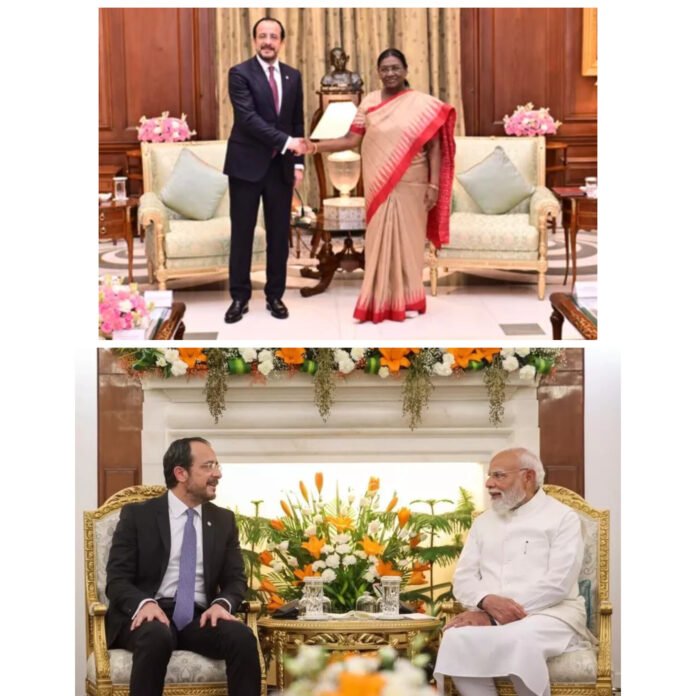
India and Cyprus have significantly upgraded their bilateral relationship by elevating their Comprehensive Partnership to a “Strategic Partnership” during the state visit of Cypriot President Nikos Christodoulides to India from May 20 to 23. The visit, held at the invitation of Prime Minister Narendra Modi, marks a major step in strengthening cooperation between the two nations across defence, trade, technology, connectivity and counter-terrorism.

The visit assumes added significance as Cyprus currently holds the Presidency of the Council of the European Union, positioning the country as an important bridge between India and Europe. The discussions built upon the momentum generated during PM Modi’s historic visit to Cyprus in June 2025, when both countries launched a Joint Action Plan for 2025–2029.

During bilateral talks in New Delhi, the two leaders reaffirmed their commitment to democratic values, rule of law and a rules-based international order. Cyprus reiterated its strong support for India’s permanent membership in a reformed United Nations Security Council, while both countries agreed to deepen coordination at the United Nations and other multilateral platforms.

One of the key highlights of the visit was enhanced cooperation in security and counter-terrorism. Both nations strongly condemned terrorism in all forms, including cross-border terrorism, and denounced the terrorist attacks in Pahalgam and near Red Fort in 2025. India and Cyprus signed an MoU to establish a Joint Working Group on Counter Terrorism, aimed at boosting intelligence-sharing, capacity-building and cooperation against terror financing, radicalisation and cyber threats.

Defence and maritime cooperation also emerged as major pillars of the partnership. The two sides welcomed the India-Cyprus Bilateral Defence Cooperation Programme signed earlier this year and agreed to strengthen collaboration in defence industries, cybersecurity, emerging technologies and maritime security. A roadmap for defence cooperation between 2026 and 2031 was also finalized.

Economic and technological collaboration featured prominently in the discussions. Both countries explored opportunities in financial services, shipping, clean energy, logistics, innovation, artificial intelligence and startups. Cyprus welcomed the growing use of India’s digital payment infrastructure, with both sides supporting interoperability between India’s Unified Payments Interface (UPI) and Europe’s payment systems to facilitate smoother cross-border transactions.

The leaders also highlighted the strategic importance of the India–Middle East–Europe Economic Corridor (IMEEC), describing it as a transformative initiative for trade and connectivity linking India with Europe through the Mediterranean region.

In education and culture, the two countries signed agreements on higher education, diplomatic training and cultural cooperation, while also promoting student exchanges, tourism and people-to-people ties.

The visit is being viewed as a major diplomatic milestone that transforms India-Cyprus ties into a modern, future-oriented strategic partnership, while also strengthening India’s broader engagement with the European Union and the Mediterranean region.

Gayatri Devi Birth Anniversary: The Remarkable Political Journey of Jaipur’s Rajmata From Royal Palaces to Tihar Jail

0

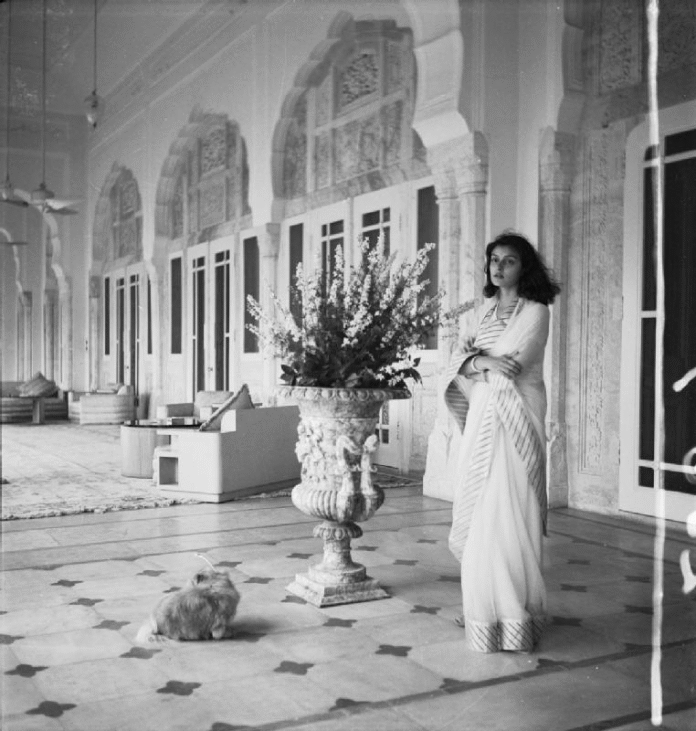
Rajasthan’s history is not confined to tales of forts, palaces and royal dynasties alone; it is also the story of personalities who transitioned from royalty to democracy and left a lasting political legacy. One such towering figure was Rajmata Maharani Gayatri Devi of Jaipur, whose birth anniversary is being observed today.

Celebrated for her elegance, beauty and royal lifestyle, Gayatri Devi was equally known for her political courage, independent thinking and commitment to public life. Her journey, from the grandeur of royal palaces to the cells of Tihar Jail during the Emergency, remains among the most fascinating chapters of Indian political history.

Born on May 23, 1919, into the royal family of Cooch Behar, Gayatri Devi was the daughter of Prince Jitendra Narayan and Princess Indira Raje of Baroda. She later became the third Maharani of Jaipur after marrying Maharaja Sawai Man Singh II in 1940. Her upbringing reflected a rare blend of royal refinement, progressive values and intellectual influence.

Royal Heritage and Bengal Renaissance Influence

Gayatri Devi represented a unique cultural confluence of Bengal, Baroda and Jaipur royalty. Her maternal grandmother, Suniti Devi, was the daughter of noted social reformer Keshav Chandra Sen, linking Gayatri Devi to the intellectual currents of the Bengal Renaissance.

This background shaped her worldview from an early age, fostering interests in art, literature, education and social reform—qualities that later distinguished her public life.

When a Maharani Entered Democratic Politics

After Independence, while many royals withdrew from public affairs, Gayatri Devi chose a different path. She entered active politics through the Swatantra Party, founded by C. Rajagopalachari, positioning herself as a vocal opponent of Congress dominance.

Her entry into politics proved historic.

The Record-Breaking 1962 Election

In the 1962 Lok Sabha elections, Gayatri Devi contested from the Jaipur parliamentary constituency and secured an extraordinary mandate.

Out of 246,516 votes cast, she won 192,909 votes, recording one of the biggest electoral victories of that period. The scale of her win earned recognition in the Guinness Book of World Records as the largest electoral landslide at the time. She retained the Jaipur seat again in 1967 and 1971, firmly establishing herself as one of Rajasthan’s most influential political leaders.

The Congress Offer She Declined

Gayatri Devi’s political career was marked not only by victories but also by ideological conviction.

A widely discussed episode dates back to 1965, when then Prime Minister Lal Bahadur Shastri reportedly invited her to join the Congress party. The offer came at a time when her husband was being appointed India’s Ambassador to Spain.

However, Gayatri Devi declined and remained loyal to the Swatantra Party and her political beliefs, reinforcing her image as a leader who valued principle over political convenience.

Alliance with Jana Sangh and Bhairon Singh Shekhawat

Rajasthan politics witnessed a major shift in 1967, when the Swatantra Party joined hands with the Bharatiya Jana Sangh, led in Rajasthan by Bhairon Singh Shekhawat.

The alliance emerged as a serious political challenge to Congress and played an important role in reshaping the state’s electoral landscape. Though Gayatri Devi lost the Malpura Assembly election, she continued her winning streak in parliamentary politics from Jaipur.

From Palace Prestige to Tihar Jail

Perhaps the most dramatic chapter of Gayatri Devi’s life unfolded during the Emergency of 1975.

Known as a critic of Prime Minister Indira Gandhi, Gayatri Devi was arrested under preventive detention and spent nearly five and a half months in Delhi’s Tihar Jail. Her imprisonment shocked many across the country and became symbolic of the political turbulence of the Emergency era.

A Legacy Beyond Glamour

Gayatri Devi was far more than a royal icon or fashion symbol. She was an educationist, parliamentarian and influential public figure who demonstrated that royalty and democratic politics could coexist through public service and conviction.

Even decades later, her life continues to intrigue historians and inspire many women in politics—standing as a rare story of grace, defiance and political independence