

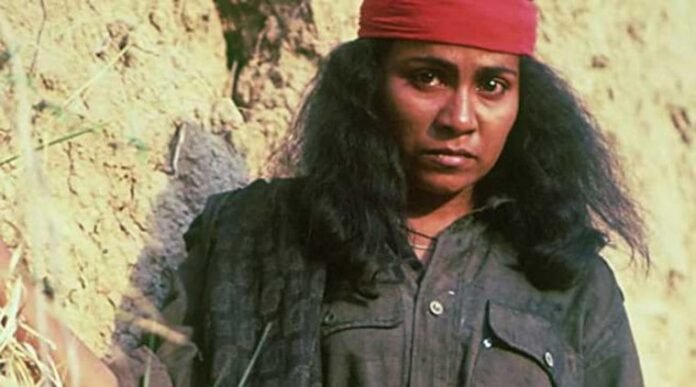
At just 11 years old, Phoolan Devi was married off in exchange for a cow and a bicycle. Born into a poor Mallah family in rural Uttar Pradesh, her childhood was shaped not by innocence or opportunity, but by poverty, caste discrimination and violence. Decades later, the same girl would become one of the most controversial and talked-about figures in India — feared as the “Bandit Queen,” remembered by many as a symbol of resistance, and eventually elected to Parliament.
Phoolan Devi was born in 1963 in the village of Gorha Ka Purwa in Uttar Pradesh. Belonging to a lower-caste community, she experienced social discrimination from an early age. Her marriage to a man much older than her reportedly exposed her to severe abuse, after which she returned to her village. But life there offered little protection. Over the years, she faced repeated violence, humiliation and exploitation, much of it tied to caste and gender oppression deeply rooted in rural society.
Her life took a dramatic turn when she was allegedly abducted by a gang of dacoits operating in the Chambal ravines. Following the death of gang leader Vikram Mallah, who reportedly treated her with respect, Phoolan Devi is believed to have faced further brutal abuse at the hands of upper-caste gang members. These events became central to the narrative surrounding her transformation from victim to outlaw.
In 1981, the Behmai massacre brought her national notoriety. More than 20 men from the village of Behmai were killed in what was widely seen as an act of revenge for the violence inflicted upon her. Authorities launched a massive manhunt, and Phoolan Devi soon became one of India’s most wanted figures.
Yet even during her years as an outlaw, public opinion around Phoolan Devi remained sharply divided. To some, she was a dangerous criminal responsible for murder and violence. To others — especially among marginalised communities — she became a symbol of rebellion against caste oppression and patriarchal brutality.
In 1983, Phoolan Devi surrendered before thousands of spectators in Madhya Pradesh under negotiated conditions. Despite not being convicted in court at the time, she spent 11 years in prison without trial. Her release in 1994 marked another astonishing turn in her life.
Just two years later, Phoolan Devi entered politics and was elected to the Lok Sabha as a Member of Parliament from Mirzapur, representing the Samajwadi Party. In Parliament, she emerged as a voice for the poor, lower castes and women facing social injustice.
Her journey — from abused child bride to feared outlaw and then elected politician — remains one of the most extraordinary and debated transformations in modern Indian history.
But her story ended as violently as it began. On July 25, 2001, Phoolan Devi was shot dead outside her residence in New Delhi. She was only 37 years old.
Even today, Phoolan Devi remains a deeply polarising figure. Her life continues to raise uncomfortable questions about caste inequality, violence against women, poverty and the failures of social and legal systems. Was she a criminal, a rebel, a survivor — or all three at once?
Perhaps the enduring significance of Phoolan Devi lies not only in what she became, but in what her story reveals about the society that shaped her.