

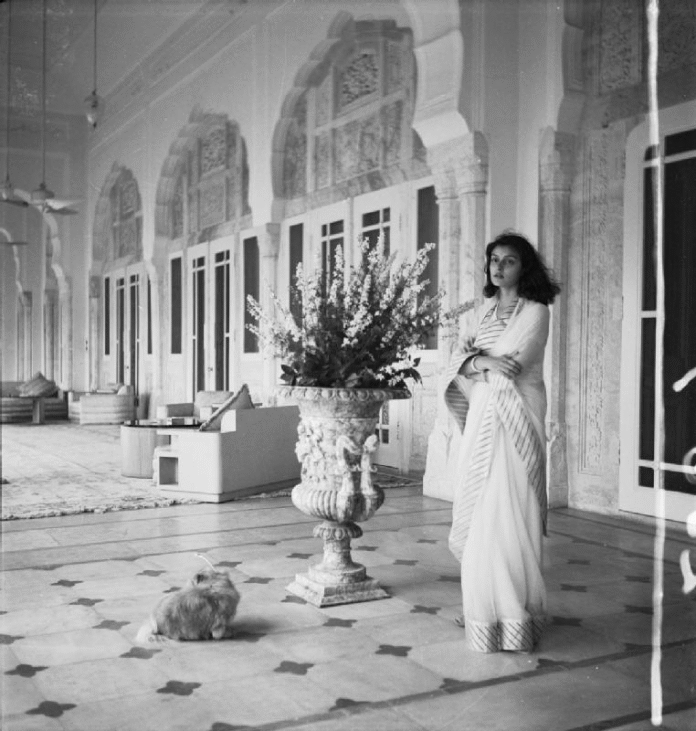
Rajasthan’s history is not confined to tales of forts, palaces and royal dynasties alone; it is also the story of personalities who transitioned from royalty to democracy and left a lasting political legacy. One such towering figure was Rajmata Maharani Gayatri Devi of Jaipur, whose birth anniversary is being observed today.
Celebrated for her elegance, beauty and royal lifestyle, Gayatri Devi was equally known for her political courage, independent thinking and commitment to public life. Her journey, from the grandeur of royal palaces to the cells of Tihar Jail during the Emergency, remains among the most fascinating chapters of Indian political history.
Born on May 23, 1919, into the royal family of Cooch Behar, Gayatri Devi was the daughter of Prince Jitendra Narayan and Princess Indira Raje of Baroda. She later became the third Maharani of Jaipur after marrying Maharaja Sawai Man Singh II in 1940. Her upbringing reflected a rare blend of royal refinement, progressive values and intellectual influence.
Royal Heritage and Bengal Renaissance Influence
Gayatri Devi represented a unique cultural confluence of Bengal, Baroda and Jaipur royalty. Her maternal grandmother, Suniti Devi, was the daughter of noted social reformer Keshav Chandra Sen, linking Gayatri Devi to the intellectual currents of the Bengal Renaissance.
This background shaped her worldview from an early age, fostering interests in art, literature, education and social reform—qualities that later distinguished her public life.
When a Maharani Entered Democratic Politics
After Independence, while many royals withdrew from public affairs, Gayatri Devi chose a different path. She entered active politics through the Swatantra Party, founded by C. Rajagopalachari, positioning herself as a vocal opponent of Congress dominance.
Her entry into politics proved historic.
The Record-Breaking 1962 Election
In the 1962 Lok Sabha elections, Gayatri Devi contested from the Jaipur parliamentary constituency and secured an extraordinary mandate.
Out of 246,516 votes cast, she won 192,909 votes, recording one of the biggest electoral victories of that period. The scale of her win earned recognition in the Guinness Book of World Records as the largest electoral landslide at the time. She retained the Jaipur seat again in 1967 and 1971, firmly establishing herself as one of Rajasthan’s most influential political leaders.
The Congress Offer She Declined
Gayatri Devi’s political career was marked not only by victories but also by ideological conviction.
A widely discussed episode dates back to 1965, when then Prime Minister Lal Bahadur Shastri reportedly invited her to join the Congress party. The offer came at a time when her husband was being appointed India’s Ambassador to Spain.
However, Gayatri Devi declined and remained loyal to the Swatantra Party and her political beliefs, reinforcing her image as a leader who valued principle over political convenience.
Alliance with Jana Sangh and Bhairon Singh Shekhawat
Rajasthan politics witnessed a major shift in 1967, when the Swatantra Party joined hands with the Bharatiya Jana Sangh, led in Rajasthan by Bhairon Singh Shekhawat.
The alliance emerged as a serious political challenge to Congress and played an important role in reshaping the state’s electoral landscape. Though Gayatri Devi lost the Malpura Assembly election, she continued her winning streak in parliamentary politics from Jaipur.
From Palace Prestige to Tihar Jail
Perhaps the most dramatic chapter of Gayatri Devi’s life unfolded during the Emergency of 1975.
Known as a critic of Prime Minister Indira Gandhi, Gayatri Devi was arrested under preventive detention and spent nearly five and a half months in Delhi’s Tihar Jail. Her imprisonment shocked many across the country and became symbolic of the political turbulence of the Emergency era.
A Legacy Beyond Glamour
Gayatri Devi was far more than a royal icon or fashion symbol. She was an educationist, parliamentarian and influential public figure who demonstrated that royalty and democratic politics could coexist through public service and conviction.
Even decades later, her life continues to intrigue historians and inspire many women in politics—standing as a rare story of grace, defiance and political independence