Home Blog Page 9

Rajiv Gandhi Death Anniversary: Why India Observes National Anti-Terrorism Day on May 21

0

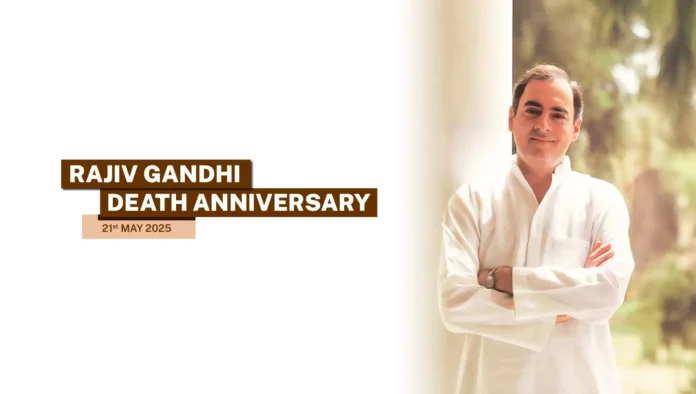
Every year on May 21, India observes National Anti-Terrorism Day in memory of former Prime Minister Rajiv Gandhi, who was assassinated on this day in 1991. The observance is not only a tribute to a former national leader but also a reminder of the devastating impact of terrorism and the importance of peace, unity and vigilance in a democratic society.

Rajiv Gandhi was born on August 20, 1944, into India’s most prominent political family. He was the elder son of former Prime Minister Indira Gandhi and grandson of Jawaharlal Nehru, India’s first Prime Minister. Despite his political lineage, Rajiv Gandhi initially stayed away from politics and worked as a commercial pilot for Indian Airlines.

His entry into politics came after the tragic death of his younger brother Sanjay Gandhi in a plane crash in 1980. Following growing public and political pressure, Rajiv joined the Indian National Congress and soon emerged as a key political figure. In 1984, after the assassination of Indira Gandhi, Rajiv Gandhi became India’s youngest Prime Minister at the age of 40.

As Prime Minister, Rajiv Gandhi was often seen as the face of a modern and technologically progressive India. He promoted computerisation, telecommunications and educational reforms at a time when India was beginning to move toward technological advancement. His government played a major role in expanding the telecom sector and encouraging scientific development. He also worked toward decentralisation through Panchayati Raj reforms and sought to modernise governance.

However, his tenure was also marked by political controversies and challenges, including the Bofors scandal and tensions in Sri Lanka. One of the most significant developments linked to his assassination was India’s involvement in the Sri Lankan civil conflict. Rajiv Gandhi had sent the Indian Peace Keeping Force (IPKF) to Sri Lanka under the Indo-Sri Lanka Accord of 1987, a move strongly opposed by the Liberation Tigers of Tamil Eelam (LTTE), a militant separatist organisation.

On May 21, 1991, during an election campaign rally in Sriperumbudur, Tamil Nadu, Rajiv Gandhi was assassinated in a suicide bombing carried out by an LTTE operative. The explosion killed Rajiv Gandhi along with several others present at the rally. The incident shocked the entire nation and became one of the darkest moments in India’s political history.

In the years that followed, the Government of India declared May 21 as National Anti-Terrorism Day. The day aims to spread awareness about the dangers of terrorism, violence and extremism. Across schools, colleges, government offices and institutions, anti-terrorism pledges, awareness programmes and discussions are organised to encourage citizens — especially young people — to uphold peace and reject violence.

Today, India’s approach against terrorism has become stronger and more coordinated. The country has enhanced intelligence systems, border security, cyber-monitoring and counter-terror operations while also raising global awareness against terrorism at international forums. Yet National Anti-Terrorism Day is not only about security measures — it is also about protecting democratic values, social harmony and humanity itself.

More than three decades after Rajiv Gandhi’s assassination, the day continues to remind India that terrorism seeks to create fear and division, but unity, resilience and peace remain the nation’s strongest answer.
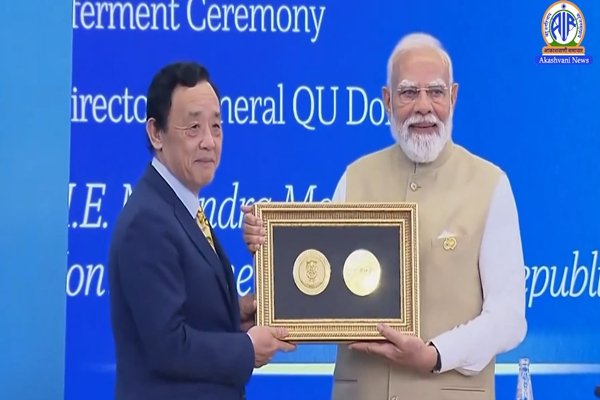

PM Modi Receives FAO’s Highest Honour ‘Agricola Medal’, Dedicates Award to India’s Farmers

0

Prime Minister Narendra Modi was conferred the prestigious “Agricola Medal” by the Food and Agriculture Organization (FAO) during his visit to Rome, becoming one of the few world leaders to receive the organisation’s highest honour. The award was presented in recognition of India’s contributions toward food security, sustainable agriculture, farmer welfare and global agricultural cooperation.

The honour was conferred at the FAO headquarters in Rome during PM Modi’s Italy visit, the final leg of his six-day, five-nation diplomatic tour. FAO Director-General Qu Dongyu presented the medal and praised India’s efforts in advancing climate-resilient agriculture, digital farming innovations and food distribution systems.

The “Agricola Medal” is the highest civilian recognition awarded by the FAO and is named after the Latin word for “farmer.” It is bestowed upon global leaders and institutions for exceptional contributions toward agricultural development, food sustainability and the fight against hunger.

After receiving the award, PM Modi dedicated the honour to the farmers of India. He stated that the recognition belonged to “millions of hardworking Indian farmers” whose dedication and resilience continue to strengthen the country’s agricultural sector and food security systems. He also emphasized India’s commitment to sustainable farming practices and supporting developing nations in agricultural innovation.

During his address at the FAO headquarters, PM Modi highlighted India’s progress in agriculture over the past decade, including growth in food grain production, digital agriculture initiatives, natural farming and direct benefit transfer schemes for farmers. He also spoke about India’s efforts to ensure food security for vulnerable populations through one of the world’s largest public food distribution systems.

The Prime Minister underlined that India’s agricultural policies increasingly focus on sustainability, water conservation, climate adaptation and technology-driven farming solutions. He noted that India is promoting millet cultivation, organic farming and renewable energy integration in agriculture as part of its long-term environmental and food security goals.

FAO officials reportedly acknowledged India’s role in supporting global food supply chains during periods of international crisis and disruption. India’s assistance to several developing countries through food aid and agricultural cooperation was also highlighted during the ceremony.

The award adds another major international recognition to PM Modi during his ongoing diplomatic outreach. In recent days, he has also received Sweden’s “Royal Order of the Polar Star” and Norway’s “Grand Cross of the Royal Norwegian Order of Merit,” reflecting India’s growing global profile across sectors ranging from diplomacy and technology to agriculture and sustainability.

Analysts view the FAO honour as significant because it recognizes not just political leadership but also India’s broader agricultural transformation and its increasing role in global food security discussions. The recognition also comes at a time when climate change, food inflation and supply chain disruptions are posing serious challenges to agricultural systems worldwide.

PM Modi’s visit to the FAO headquarters concluded with discussions on strengthening international cooperation in food security, climate-resilient agriculture and sustainable development, reinforcing India’s ambition to emerge as a leading voice for the Global South in global agricultural and development policy.

Why Corporate Sustainability Is Now a Boardroom Priority

0

Introduction

However, a short while ago, the concept of sustainability was merely discussed in the annual report of the company and then forgotten about. This is because sustainability used to be an issue that was kept in the corner of the organization, and there was no department dedicated to handling it and making decisions that would affect business. Now this is all gone.

It did not take place overnight. Rather, it was motivated by the changing needs of customers, regulatory changes, the pressure from investors, and the realization that no organization can prosper in the long term without taking into account its role in shaping people’s lives and the environment. For the modern manager seeking to succeed in this world, enrolling in a Sustainability Courses is one of the most viable things he/she could do.

From Side Project to Strategic Imperative

Consider the way most companies approached sustainability back in the day. They did it in a superficial manner. A company would participate in some tree planting initiative, release some glossy brochure, and be done with it. Whatever business decisions were being made had little or nothing to do with sustainability at all.

Consider the scenario of a multinational company producing consumer goods whose board dedicates an entire meeting to deliberations on reducing wastage of packaging materials throughout its supply chain. Alternatively, take into account that of a company in the financial services industry whose chief executive officer links the performance incentives of the top executives to quantifiable sustainability goals. This is no longer fiction but is taking place in various boardrooms today.

Those companies that only view sustainability as an obligation face the prospect of being overtaken by their peers when regulatory and social demands change, or when disruptions occur to their supply chains. Those that see sustainability as an opportunity create a sustainable competitive advantage for themselves.

What Is Driving the Boardroom Shift?

Several forces have come together to push sustainability to the top of the corporate agenda:

  • Investor expectations have evolved. In today’s world, the investors will not be fooled by empty promises anymore; they want concrete transition strategies, substantiated facts, and proof that the sustainability philosophy has been infused into the creation of value by the firm.
  • Regulations are becoming unavoidable. Around the world, mandatory sustainability disclosure and reporting are now being mandated by governments. From climate risks to supply chain transparency, board members will have to get ready to comply or else suffer grave consequences.
  • Customers are making choices based on values. Step inside any retail store, and you’ll find consumers inspecting labels, inquiring about origins, and supporting only those companies whose values mirror their own dedication to responsibility. Firms that disregard this trend risk losing both credibility and loyalty.
  • Employees want to work for purpose driven organizations. Think of a young professional who is weighing up two job opportunities. The first organization will only focus on making profits. The second one will be more concerned about ethical sourcing, corporate social responsibility, and ensuring that employees are healthy. The latter will be a winner most of the time.

These are not abstract trends. They are real pressures that boards deal with every quarter, and they are only getting stronger.

What Boardroom Sustainability Actually Looks Like

Once sustainability enters the boardroom agenda, decision-making within an organization will be completely transformed. The focus is no longer on compiling a sustainability report. Rather, it involves incorporating sustainable practices into all facets of business operations.

For instance, let us take a manufacturing firm which realizes that its source of supplies depends mainly on one particular region which experiences disruptions due to climatic factors. The sustainability-minded board will be quick to act in anticipation and ensure diversification in the source of their supplies before any disaster strikes.

Or imagine a retailer that constantly gets complaints on wasteful packaging. Rather than dealing with the issue from the point of view of a customer care problem, the board turns it into an area of sustainable development. As a result, new approaches to packaging are developed, cost savings are made, and reputation is built. This is how sustainability fuels innovation and profit.

These examples prove that the concept of sustainability within the boardroom does not mean anything out of the ordinary. Everything boils down to better decision-making that helps the company and our world.

Why Leaders Need to Build Sustainability Knowledge

A large issue that plagues the boardroom is the knowledge barrier. Most executive-level professionals have dedicated their entire professional lives to finance, operations, or technology. Sustainability is a relatively new field that demands a different way of thinking and approach to problem-solving.

And that’s when structured learning comes into play. A ESG courses enables executives and managers who are always on the go to gain necessary knowledge without having to step out of their roles. Such programs provide comprehensive insight into ESG frameworks, reporting practices, and stakeholder engagement.

The investment in such education will have far-reaching effects on the company. Leaders will ask more pertinent questions, set goals clearly, and foster a culture that takes sustainability as an obligation of everyone rather than of a single department. The encouragement of various departments within the company to enroll for a course on Corporate Sustainability will send a clear message of commitment to sustainability.

Conclusion

It has ceased to be something that exists in the periphery but now it is a fundamental aspect for corporate governance, where decisions regarding the allocation of resources, management of risks, stakeholder engagement, and planning are influenced by sustainability practices. The organizations that realize this paradigm are creating a more sustainable brand and operation as well as building relationships with those that matter. Those corporate leaders that are willing to take the next step in their career should not see this corporate sustainability course as just another means of knowledge acquisition but as a way of becoming a true leader.

PM Modi’s Italy Visit Gives New Momentum to India-Europe Strategic Partnership

0

Prime Minister Narendra Modi’s visit to Italy marked a major diplomatic milestone in India’s engagement with Europe, with New Delhi and Rome announcing a strengthened strategic partnership focused on trade, defence, connectivity, clean energy and emerging technologies. The Italy leg concluded PM Modi’s six-day, five-nation diplomatic tour covering the UAE, the Netherlands, Sweden and Norway.

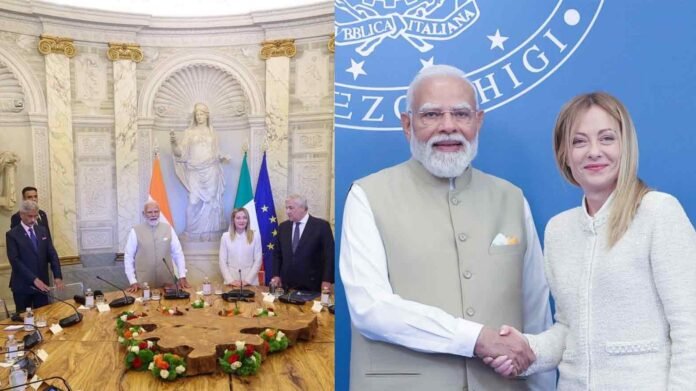
PM Modi held extensive bilateral talks in Rome with Italian Prime Minister Giorgia Meloni, during which both leaders reviewed the growing India-Italy relationship and agreed to deepen cooperation across multiple sectors. According to the joint declaration issued after the talks, the two countries reaffirmed their commitment to the India-Italy Joint Strategic Action Plan 2025–2029 and unveiled an ambitious roadmap for expanding economic and technological collaboration.

One of the key highlights of the visit was the emphasis on the India-Middle East-Europe Economic Corridor (IMEC), a major connectivity initiative aimed at linking India with Europe through the Middle East. Both India and Italy described the corridor as strategically important for trade, logistics, energy connectivity and resilient global supply chains. The leaders stressed the need for secure and diversified connectivity routes amid evolving geopolitical challenges.

Trade and investment cooperation formed another major pillar of the discussions. India and Italy agreed to enhance collaboration in manufacturing, semiconductors, artificial intelligence, renewable energy, critical minerals, aerospace and defence industries. Italy expressed strong interest in expanding investments in India’s growing manufacturing and infrastructure sectors under the “Make in India” initiative.

Defence cooperation also received significant attention during the talks. Both countries agreed to strengthen maritime security collaboration, defence industrial partnerships and counter-terrorism cooperation. Discussions reportedly included joint ventures in defence manufacturing and technological collaboration between Indian and Italian industries.

Energy transition and sustainability emerged as important areas of partnership. India and Italy committed to increasing cooperation in green hydrogen, clean mobility, climate resilience and circular economy initiatives. The two countries also discussed collaboration in scientific research, higher education and innovation ecosystems.

PM Modi and Prime Minister Meloni additionally explored ways to boost cultural and people-to-people ties. Mobility for students, researchers and professionals was discussed, along with efforts to promote tourism and cultural exchanges between the two nations.

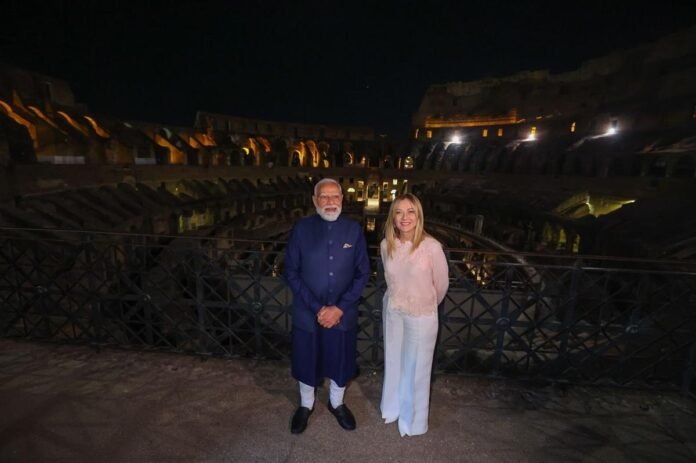
The visit also drew international attention for the warm personal rapport between PM Modi and Giorgia Meloni. Ahead of formal talks, the two leaders shared a car ride, informal dinner discussions and a visit to the historic Colosseum in Rome, images of which became widely shared across social media platforms. Analysts viewed the interactions as symbolic of the increasingly close ties between India and Italy.

During the visit, PM Modi also interacted with members of the Indian diaspora and emphasized India’s rapid economic transformation, technological progress and growing role in global affairs. He highlighted that India today is emerging as a major hub for innovation, manufacturing and digital growth.

The Italy visit is being viewed as strategically significant because it reinforces India’s expanding partnerships with major European nations at a time of shifting global economic and geopolitical dynamics. Experts believe the agreements and understandings reached during the visit could strengthen India’s access to advanced technologies, investments and European markets while also enhancing cooperation in global governance and connectivity initiatives.

With the successful conclusion of the Italy leg, PM Modi wrapped up a diplomatic tour that significantly advanced India’s partnerships in energy, technology, trade and strategic cooperation across the Gulf and Europe.

International Tea Day 2026: Celebrating the World’s Most Loved Brew

0

From the bustling tea stalls of India to elegant tea ceremonies in Japan and afternoon tea traditions in Britain, tea is far more than just a beverage — it is culture, comfort, conversation and history poured into a cup. Every year on May 21, the world celebrates International Tea Day, recognising not only tea’s global popularity but also the millions of people whose livelihoods depend on the tea industry.

The Ancient History of Tea

The story of tea dates back nearly 5,000 years. According to Chinese legend, Emperor Shen Nong accidentally discovered tea around 2737 BCE when tea leaves blew into boiling water he was preparing. Over centuries, tea evolved from a medicinal drink into a cultural and social tradition across Asia.

Tea gradually travelled beyond China through trade routes and Buddhist monks. By the 17th century, it had reached Europe and quickly became one of the world’s most traded commodities. The British later played a major role in expanding tea cultivation in India and Sri Lanka during the colonial era, leading to the rise of famous tea-growing regions such as Assam and Darjeeling.

Why International Tea Day is Celebrated

International Tea Day was officially recognised by the United Nations in 2019 and is observed annually on May 21. The day highlights tea’s cultural significance, economic importance and role in reducing poverty in tea-producing countries.

The observance also draws attention to the lives of tea plantation workers, small tea growers and sustainable tea production. Countries such as India, China, Sri Lanka, Kenya and Bangladesh are among the world’s leading tea producers, with millions dependent on the industry for employment and trade.

The Many Types of Tea

Although all traditional teas come from the same plant — Camellia sinensis — different processing methods create distinct varieties.

Black Tea: Strong and fully oxidised, black tea is among the most consumed varieties worldwide. Assam and English Breakfast tea are popular examples.
Green Tea: Minimally processed and rich in antioxidants, green tea is closely associated with East Asian cultures.
Oolong Tea: A partially oxidised tea known for its complex flavours and aromatic profile.
White Tea: One of the least processed teas, delicate in flavour and prized for its subtle taste.
Herbal Tea: Technically not true tea, herbal infusions like chamomile, peppermint and hibiscus are caffeine-free and widely enjoyed.

In India, masala chai — prepared with milk, spices and sugar — has become an inseparable part of daily life and social culture.

Tea’s Global Popularity

Tea is the second most consumed beverage in the world after water. Whether served in roadside clay cups, elegant porcelain sets or modern cafés, tea continues to connect people across cultures and generations.

Beyond taste, tea is often associated with relaxation, hospitality and wellness. Studies suggest certain teas may help improve focus, digestion and heart health, though experts advise moderation and balanced consumption.

More Than Just a Drink

International Tea Day is ultimately a celebration of heritage, labour and shared human connection. Behind every cup lies a long journey — from misty tea gardens and skilled workers to centuries-old traditions and everyday conversations.

In a fast-moving world, tea remains timeless: a simple drink capable of bringing warmth, pause and togetherness across continents.

National Anti-Terrorism Day 2026: Remembering Rajiv Gandhi and India’s Resolve Against Terrorism

0

Every year on May 21, India observes National Anti-Terrorism Day to raise awareness about the dangers of terrorism and violence while reaffirming the country’s commitment to peace, unity and national security. The day is observed in memory of former Prime Minister Rajiv Gandhi, who was assassinated on May 21, 1991, during an election campaign in Sriperumbudur, Tamil Nadu.

Rajiv Gandhi, India’s youngest Prime Minister, was killed in a suicide bombing carried out by a member of the Liberation Tigers of Tamil Eelam (LTTE). The attack shocked the nation and became one of the darkest chapters in India’s political history. In response, the Government of India later declared May 21 as National Anti-Terrorism Day to spread awareness about the destructive impact of terrorism on society and to discourage violence, extremism and radicalisation.

The observance is marked across schools, colleges, government offices and public institutions through pledge-taking ceremonies, seminars, discussions and awareness campaigns. The official anti-terrorism pledge emphasises India’s long-standing traditions of non-violence, tolerance and humanity while encouraging citizens to oppose all forms of terrorism and violence.

Over the decades, India has witnessed several devastating terror attacks — from the 1993 Mumbai blasts and the 2001 Parliament attack to the 26/11 Mumbai attacks and more recent incidents targeting civilians and security forces. These attacks have deeply shaped India’s internal security policies and strengthened its resolve against terrorism in all forms.

In recent years, “New India” has projected a far more assertive and technologically advanced response to terrorism. The country has strengthened intelligence coordination, border surveillance, cyber-monitoring and counter-terrorism operations. Security forces today use advanced technology, drones, satellite monitoring and real-time intelligence systems to combat terror networks and infiltration attempts.

India has also intensified international cooperation against terrorism, consistently urging global institutions to adopt a zero-tolerance approach toward terror financing, cross-border terrorism and extremist organisations. At international forums such as the United Nations and G20, India has repeatedly stressed that terrorism remains one of the greatest threats to global peace and human rights.

At the same time, experts emphasise that the fight against terrorism is not only about military strength or security operations. It also involves protecting democratic values, promoting social harmony and preventing the spread of hatred and radicalisation among youth. National Anti-Terrorism Day therefore serves both as a tribute to victims of terror and as a reminder of the importance of peace, vigilance and unity.

More than three decades after Rajiv Gandhi’s assassination, the day continues to carry deep national significance. It reminds Indians that terrorism seeks to divide societies through fear and violence — but unity, resilience and collective resolve remain the country’s strongest response.

World Day for Cultural Diversity 2026: Celebrating the Many Cultures That Unite Humanity

0

In a world shaped by countless languages, traditions, beliefs and artistic expressions, cultural diversity remains one of humanity’s greatest strengths. Every year on May 21, the world observes the World Day for Cultural Diversity for Dialogue and Development, a United Nations-recognised day that celebrates the richness of global cultures while promoting peace, understanding and mutual respect among people.

The observance was established by the United Nations General Assembly in 2002 following UNESCO’s adoption of the Universal Declaration on Cultural Diversity in 2001. The declaration recognised culture not merely as heritage or tradition, but as a powerful force for sustainable development, peaceful coexistence and human progress.

The day serves as a reminder that cultural diversity is far more than differences in food, clothing or festivals. It includes languages, music, literature, values, indigenous traditions, art forms and ways of life that shape communities across the globe. UNESCO believes that dialogue between cultures is essential in combating prejudice, intolerance and conflict. In an increasingly interconnected world, understanding one another’s cultures has become more important than ever.

According to the United Nations, nearly 89% of current global conflicts occur in countries with low levels of intercultural dialogue, highlighting the urgent need for greater cultural understanding and cooperation. At the same time, the cultural and creative industries contribute significantly to the global economy, supporting millions of jobs worldwide and empowering communities socially and economically.

India stands as one of the strongest examples of cultural diversity in the world. With hundreds of languages, diverse religions, regional traditions, classical art forms and festivals celebrated across states, the country reflects the idea of “unity in diversity.” From Rajasthan’s folk traditions and Kerala’s classical dance forms to the cuisines, music and crafts of the Northeast, India’s cultural landscape showcases how diversity can coexist harmoniously.

The World Day for Cultural Diversity is often marked through cultural festivals, exhibitions, educational programmes, dialogues, performances and community activities that encourage people to learn about cultures different from their own. Schools, universities, museums and cultural institutions across the world organise events promoting inclusion, tolerance and intercultural exchange.

In an age where societies are becoming increasingly polarised, this day carries a deeper message: diversity should not divide humanity but enrich it. Cultural exchange fosters empathy, creativity and innovation, helping societies become more peaceful and resilient.

Ultimately, the World Day for Cultural Diversity is not only about celebrating differences — it is about recognising the shared human values that connect people across borders. In understanding another culture, we often discover not how different we are, but how deeply connected humanity truly is.

134-Year-Old Vishnu Temple in Iran: Amitabh Bachchan’s Viral Post Speaks The Story And Touches Millions Online…

0

For millions of Indians scrolling through social media, it began as just another post by Bollywood legend Amitabh Bachchan. But within moments, the video turned into an emotional journey through history, faith, and a forgotten bond between India and Iran.

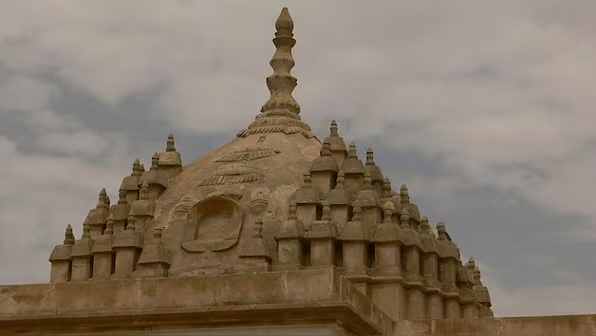
The actor shared a glimpse of a 134-year-old Vishnu temple located in Bandar Abbas, Iran, a temple many Indians never knew existed. Built in 1892 during the Qajar era, the ancient shrine stands quietly on Iranian soil as a symbol of the deep cultural and trade ties once shared between the two nations.

What made the video even more moving was its music. In the background, a Persian song praises Lord Vishnu, a rare and beautiful fusion of two civilisations, languages, and spiritual traditions. The emotional contrast left social media users stunned.

In the caption, Big B explained that the temple was built by Hindu traders from India who lived and worked in Bandar Abbas more than a century ago. His post instantly went viral, with thousands thanking him for bringing attention to a forgotten chapter of history.

For many viewers, the video was more than just architecture or nostalgia. It was a reminder that long before politics and borders hardened identities, people carried their faith, culture, and memories across oceans, building homes, communities, and even temples in distant lands.

Comments flooded social media with people calling the discovery “heart-touching,” “unbelievable,” and “a proud moment for Indian heritage.” Several users wrote that they had never imagined a Hindu temple of such historical significance existed in Iran.

At 83, Amitabh Bachchan continues to connect generations, sometimes not through films, but through stories that awaken emotion and curiosity. This time, with one quiet video, he reminded millions that history often survives in silence, waiting for someone to rediscover it.

India and Italy Strengthen Strategic Partnership as PM Modi Meets Giorgia Meloni in Rome

0

Prime Minister Narendra Modi’s visit to Italy marked the final and one of the most significant legs of his five-nation diplomatic tour, with New Delhi and Rome moving toward a deeper “Special Strategic Partnership” focused on trade, defence, connectivity, technology and global cooperation. The visit highlighted the growing importance of India-Italy relations amid changing geopolitical and economic realities across Europe and the Indo-Pacific.

PM Modi arrived in Rome on Tuesday and was warmly welcomed by Italian Prime Minister Giorgia Meloni. In a gesture that drew global attention, the two leaders shared a car ride, had dinner together and visited the iconic Colosseum ahead of formal bilateral talks. Pictures and videos from the visit quickly went viral on social media, symbolising the increasingly warm personal and diplomatic chemistry between the two leaders.

During the visit, PM Modi is scheduled to hold formal discussions with Prime Minister Meloni as well as meet Italian President Sergio Mattarella. The talks are centred around expanding cooperation under the India-Italy Joint Strategic Action Plan 2025–2029, which covers sectors such as defence manufacturing, clean energy, artificial intelligence, semiconductors, space cooperation, mobility, higher education and cultural exchanges.

One of the major strategic priorities of the visit is the India-Middle East-Europe Economic Corridor (IMEC), the ambitious connectivity initiative linking India with Europe through the Middle East. Both countries view the corridor as a transformative economic and geopolitical project that could strengthen supply chains, trade routes and energy connectivity between Asia and Europe.

Trade and investment are expected to dominate the discussions. Italy is among India’s important European economic partners, and both nations are reportedly aiming to raise bilateral trade significantly over the coming years. Agreements in maritime transport, agriculture, critical minerals, research cooperation, museum partnerships and financial crime prevention are also likely to be signed during the visit.

Technology and industrial cooperation have emerged as another key pillar of the India-Italy partnership. Italy is increasingly looking at India as a trusted partner in manufacturing, digital innovation and energy transition, especially as Europe seeks to diversify supply chains and reduce strategic dependencies. Cooperation in artificial intelligence, renewable energy and advanced industrial technologies is expected to expand further after the visit.

PM Modi’s visit also carries diplomatic significance because it reflects India’s strengthening engagement with Europe beyond traditional partnerships. Analysts believe Italy under Prime Minister Giorgia Meloni is seeking a stronger role for India in Europe’s strategic and economic framework, particularly in the Indo-Pacific and Mediterranean regions.

Apart from bilateral meetings, PM Modi is also expected to visit the headquarters of the Food and Agriculture Organization (FAO) in Rome, underlining India’s commitment to global food security and multilateral cooperation.

The visit concluded PM Modi’s broader diplomatic tour covering the UAE, the Netherlands, Sweden, Norway and Italy — a tour widely viewed as an effort to strengthen India’s global partnerships in energy, technology, innovation, trade and strategic cooperation.

Prajakta Mali Brings Maharashtrian Elegance to Cannes in Traditional Nauvari Saree

0

Marathi actress Prajakta Mali turned heads at the 79th Cannes Film Festival by bringing the elegance of Maharashtra’s traditional culture to one of the world’s biggest cinematic stages. Dressed in a striking blue Nauvari saree paired with a classic Marathi nath, kamarbandh, gold jewellery and a traditional bindi, the actress chose heritage over conventional red-carpet couture, creating a moment that resonated strongly with audiences across India and beyond.

At a festival known for dramatic gowns and international fashion statements, Prajakta Mali’s appearance stood out for its rooted simplicity and cultural authenticity. Her royal blue and purple Nauvari saree, a traditional nine-yard drape associated with Maharashtrian identity and strength, became symbolic of regional pride on a global platform. She completed the ensemble with layered gold jewellery, traditional hair accessories and folded-hand greetings that added warmth and grace to her red-carpet debut.

Prajakta attended Cannes as part of a delegation promoting Marathi cinema and the launch of the OTT platform “Abhijaat Marathi.” Her participation reflected the growing visibility of regional Indian cinema at international forums. Alongside her, veteran actors Ashok Saraf and Nivedita Saraf, creator Ankita Walawalkar and filmmaker Kedar Joshi also represented Maharashtra at the festival and events linked to the Indian Pavilion.

The appearance quickly gained attention online, with many social media users praising the actress for proudly representing Marathi culture instead of opting for western fashion trends. Several Reddit users described the moment as a “proud moment for the Marathi industry,” appreciating the global visibility being given to regional traditions and cinema.

At the same time, the discussion also highlighted how audiences today engage deeply with fashion and cultural representation. While many admired the look and confidence, some online users debated the styling and draping of the Nauvari saree, reflecting how traditional attire carries emotional and cultural significance for communities.

Prajakta Mali’s Cannes appearance ultimately became more than a fashion statement. It represented the increasing confidence of regional Indian cinema in claiming space on global platforms without losing its cultural roots. In an environment often dominated by international luxury labels, her decision to celebrate Marathi heritage through traditional attire demonstrated that cultural identity itself can become the most powerful style statement.