Home Blog Page 36

A Walk Through Time: Chandra Shekhar Azad’s Birthplace Brings Pre-Independence Era Alive

0

Chandra Shekhar Azad, originally named Chandra Shekhar Sitaram Tiwari and born on 23 July 1906 in Bhabhra, emerged as a legendary figure in the Indian independence movement. His extraordinary courage and inspirational leadership at a remarkably young age motivated countless youths and revolutionaries nationwide.

Unlike others of his generation who focused on careers, family, or personal goals, Azad devoted himself entirely to India’s freedom struggle. He confronted British rule head-on, displaying unwavering resolve and ultimately achieving martyrdom for the nation.

To this day, Azad’s bravery and ultimate sacrifice are honored in his hometown of Bhabhra, a tranquil village in Madhya Pradesh that proudly preserves the legacy of this remarkable revolutionary.

Living up to his chosen name ‘Azad’-meaning “free”-he pledged that the British would never capture him alive, a promise he kept until his final breath.

Chandra Shekhar Azad spent his formative years in Bhabhra, surrounded by an atmosphere of patriotism. His parents, Sitaram Tiwari and Jagrani Devi, instilled in him the importance of education and strong moral values. Sent to Varanasi at an early age to study Sanskrit, Azad was profoundly influenced by the growing wave of nationalism and the ideals of freedom.

Believing that peaceful protests alone were not enough to secure India’s independence, Azad joined the Hindustan Socialist Republican Association (HSRA). Working closely with Bhagat Singh and other revolutionaries, he became a key member of the organization, known for his sharp intellect, marksmanship, courage, and leadership. After the death of Ram Prasad Bismil, Azad played a crucial role in rebuilding and strengthening the HSRA, organizing important events and operations.

In 1921, inspired by Mahatma Gandhi’s Non-Cooperation Movement, Azad actively participated in protests against British rule. During one such protest, he was arrested by the authorities. When brought before the judge, he defiantly stated his name as “Azad” (meaning free), his father’s name as “Swatantrata” (freedom), and his residence as “Jail.”

This bold declaration resonated with many and marked the beginning of his legacy as Chandra Shekhar Azad-a name that would forever symbolize his unwavering dedication to the cause of freedom.

Azad worked closely with young revolutionaries such as Bhagat Singh, Sukhdev Thapar, and Shivaram Rajguru. He guided and supported them in planning revolutionary activities against British rule.

One of the major events connected to their movement was the Assassination of J. P. Saunders in 1928. This act was carried out to avenge the death of Lala Lajpat Rai, who had died after being injured during a police lathi charge while protesting against the Simon Commission.

Although Azad did not directly fire the shot, he played a crucial role in planning the operation and protecting the revolutionaries during its execution. He later helped Bhagat Singh and his companions evade arrest for some time.

Azad continued to lead and support revolutionary activities until his martyrdom in 1931, becoming a powerful symbol of courage and sacrifice in India’s struggle for independence.

On 27 February 1931, at Chandra Shekhar Azad Park (then called Alfred Park), Azad was surrounded by British police during a secret meeting of the revolutionary organization. The police discovered the location and quickly encircled the area.

A heavy exchange of gunfire followed. Azad refused to surrender and fought bravely against the police, even though they greatly outnumbered him. Despite the overwhelming forces, he resisted them fiercely and held his ground for a long time.

However, when only one bullet remained in his pistol, Azad chose to use it on himself rather than be captured by the British forces, remembering his promise to remain “Azad.” True to his name, he chose death over surrender and remained free even in his final moment.

His words echoed his spirit:

“Dushman ki goliyon ka hum samna karenge,
Azad hi rahe hain, Azad hi rahenge.”

Chandra Shekhar Azad was not merely a revolutionary who fought for India’s independence; he remains a timeless symbol of fearless courage, unwavering determination, and supreme sacrifice for the nation.

Legacy Preserved in Bhabhra
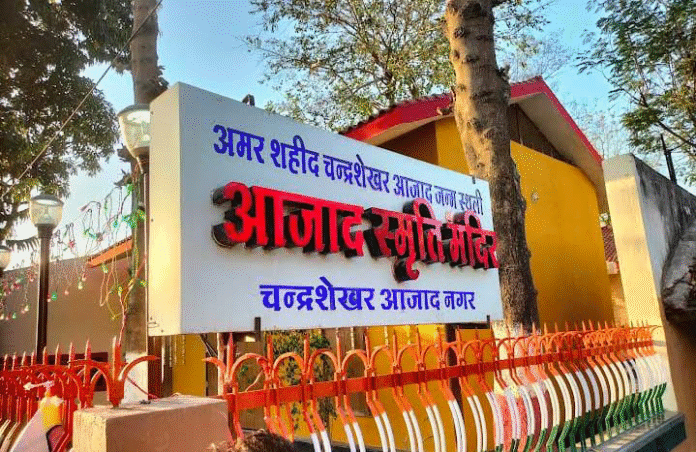
Recently I had the time to visit the birthplace of Chandra Shekhar Azad in Bhabhra which has been preserved as a memorial to honor his life and sacrifice. The site marks the place where this great revolutionary was born on 23 July 1906. Today, a statue and a memorial structure stand there, reminding visitors of the humble origins of a man who later became one of the bravest fighters of India’s independence movement. The memorial proudly preserves his legacy and serves as a source of inspiration for future generations.
During the Malwa Media Fest 3.0, we visited the memorial of Chandra Shekhar Azad in Bhabhra. It was a truly inspiring experience. The place had a calm and respectful atmosphere, and it almost felt as if the walls and statues were silently telling the stories of Azad’s courage and sacrifice.

The surroundings of Bhabhra were peaceful, which made the experience even more special. There was a quiet sense of pride and patriotism in the air. Walking through the memorial, every statue and display seemed to carry a message about his bravery, determination, and dedication to the nation. The simple yet powerful ambiance of the place made the visit feel meaningful and reflective.

While observing the exhibits, I also noticed that during the British era, a bounty had been placed on Azad. The British government had announced a reward of 50,000 rupees, which was considered a very large amount at that time, for anyone who could capture him. A poster showing this bounty notice was also preserved and displayed at the memorial.

Visiting the memorial in Bhabhra gave a deeper understanding of Azad’s life and reminded us of the courage and sacrifice that played an important role in India’s freedom struggle.

(The writer of this article is Lakshya Govani, a class X student of APS, Jaipur)

Top 7 Artificial Intelligence Courses to Build Future-Ready Skills in 2026

0

Artificial Intelligence has become one of the most valuable career skills in today’s technology-driven world. From recommendation engines and chatbots to computer vision, automation, healthcare, finance, and robotics, AI is transforming how industries operate.

As companies continue investing in intelligent systems, demand for AI professionals is growing rapidly. This has created strong opportunities for students, developers, analysts, and working professionals who want to build careers in machine learning, deep learning, and modern AI tools.

The challenge is choosing the right AI course. Some focus only on theory, while others combine practical projects, deep learning frameworks, and career-oriented training.

To help you decide, here is a balanced list of the Top 7 Artificial Intelligence Courses in 2026 based on curriculum quality, practical exposure, certification value, flexibility, and career support.

What to Look for in an Artificial Intelligence Course

Before enrolling, check whether the course includes:

  • Machine learning fundamentals
  • Deep learning and neural networks
  • Python for AI
  • TensorFlow or PyTorch
  • NLP and computer vision
  • Real-world projects
  • Certification value
  • Career guidance

1. Intellipaat Artificial Intelligence Course

The Intellipaat Artificial Intelligence Course is designed for learners who want structured training in machine learning, deep learning, and modern AI tools. According to the official course page, the program covers CNNs, RNNs, TensorFlow, Generative AI, NLP, computer vision, and hands-on projects. It also highlights live sessions, self-paced content, and mentor support.

The course is suitable for beginners, software professionals, data enthusiasts, and career switchers who want industry-ready AI skills. Many learners prefer it because it combines guided learning with practical implementation across core AI domains.

  • Best For: Students, professionals, developers
  • Mode: Online
  • Level: Beginner to Advanced

2. Coursera Artificial Intelligence Programs

Coursera offers multiple AI programs from leading universities and technology companies. These courses are ideal for learners who prefer structured, self-paced education with globally recognized credentials.

Typical programs cover Python, machine learning, neural networks, deep learning, AI ethics, and real-world applications. Learners can progress through guided modules, assignments, and projects while studying at their own pace.

This is a strong option for learners who want flexibility and academic-quality learning.

  • Best For: Beginners, graduates, global learners
  • Mode: Self-paced Online
  • Level: Beginner to Intermediate

3. Udemy Artificial Intelligence Courses

Udemy offers a wide variety of AI courses at affordable prices, making it a practical option for budget-conscious learners. Many courses focus on Python, machine learning, TensorFlow, neural networks, NLP, and business use cases.

A key advantage is lifetime access, allowing learners to revisit content whenever needed. Many instructors also refresh courses regularly as AI tools continue to evolve.

This option is suitable for learners who want flexible learning with low upfront cost.

  • Best For: Budget learners, side learners, beginners
  • Mode: Self-paced Online
  • Level: Beginner to Intermediate

4. edX Artificial Intelligence Programs

edX provides university-backed AI programs focused on core concepts and applied learning. These courses often include machine learning theory, data science fundamentals, deep learning, and AI applications.

The platform is useful for learners who prefer academic depth with flexible online delivery. Optional certificates also help learners validate their progress.

This is a good fit for learners seeking strong conceptual understanding.

  • Best For: Students, academic learners
  • Mode: Self-paced Online
  • Level: Beginner to Intermediate

5. Google Cloud AI Learning Paths

Google Cloud offers AI learning paths for professionals interested in enterprise-grade AI systems and deployment workflows. These programs commonly include machine learning models, responsible AI, cloud infrastructure, and production use cases.

Learners also gain exposure to tools used in real business environments, which is valuable for applied AI roles.

This option is ideal for professionals looking to combine AI with cloud expertise.

  • Best For: Tech professionals, cloud learners
  • Mode: Online
  • Level: Intermediate

6. LinkedIn Learning AI Courses

LinkedIn Learning provides short, practical AI courses focused on business usage, productivity, analytics, and technical foundations. Learners can quickly understand AI concepts without committing to lengthy programs.

Topics often include AI basics, ChatGPT tools, machine learning introductions, automation, and data-driven decision making.

This platform works well for busy professionals looking for quick upskilling.

  • Best For: Working professionals, managers
  • Mode: Self-paced Online
  • Level: Beginner

7. DeepLearning.AI Courses

DeepLearning.AI is one of the most respected platforms for serious AI learners. Its courses focus on modern machine learning workflows, neural networks, prompt engineering, LLM applications, and practical implementation.

The platform is widely known for combining theory with hands-on projects and industry-relevant frameworks.

This is an excellent option for learners who want technical depth and advanced AI knowledge.

  • Best For: Developers, technical learners
  • Mode: Self-paced Online
  • Level: Intermediate to Advanced

Top 7 Artificial Intelligence Courses – Comparison Table

RankCourseModeLevelBest For
1IntellipaatOnlineBeginner-AdvancedCareer-focused learners
2CourseraSelf-pacedBeginner-IntermediateGlobal certification
3UdemySelf-pacedBeginner-IntermediateBudget learners
4edXSelf-pacedBeginner-IntermediateAcademic learning
5Google CloudOnlineIntermediateEnterprise AI skills
6LinkedIn LearningSelf-pacedBeginnerQuick upskilling
7DeepLearning.AISelf-pacedIntermediate-AdvancedTechnical learners

Final Verdict

The best artificial intelligence course depends on your goals, technical background, and learning style. If you want guided mentorship, practical projects, and complete career-focused training, a structured bootcamp can be an excellent choice. If you prefer flexible schedules, self-paced platforms are strong alternatives.

For learners who want hands-on training in machine learning, deep learning, TensorFlow, and modern AI applications, the Intellipaat Artificial Intelligence Course can be a strong option to accelerate your AI career journey.

The most important step is to start now, build projects, and continuously practice as AI opportunities continue to grow.

FAQs

Which is the best AI course for beginners?

Courses like Intellipaat, Coursera, and Udemy are beginner-friendly.

Can I learn AI without coding?

Basic AI concepts can be learned without coding, but Python helps for practical implementation.

Is AI a good career in 2026?

Yes, AI remains one of the fastest-growing and highest-demand career fields.

How long does it take to learn AI?

Basic skills may take a few months, while advanced mastery can take longer.

Which framework is best for AI learning?

TensorFlow and PyTorch are among the most widely used AI frameworks.

World Book Day Special: Views and Reflections from a Reading Enthusiast

0

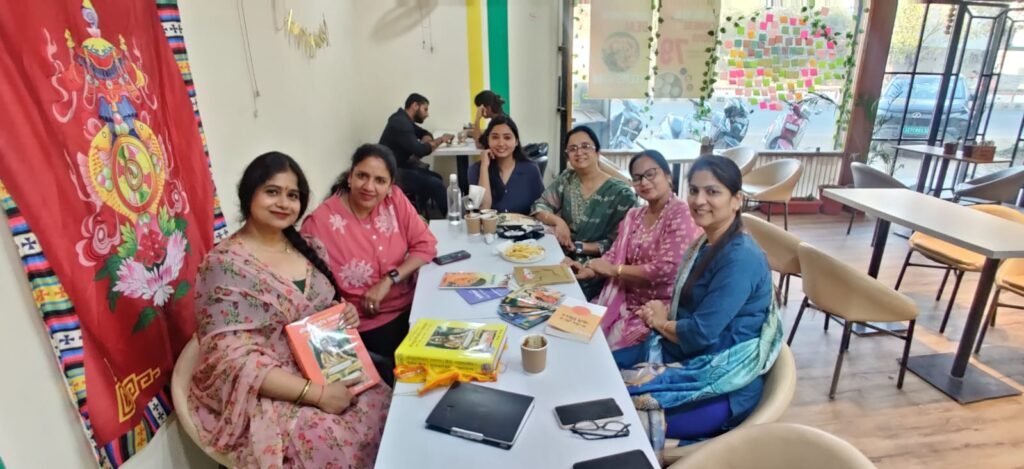
World Book Day Special | Rethinking Reading in Contemporary Times

With insights from Mrs. Ruchi Shrimali
(Book lover, Avid Reader & Founding Member of Kalpvriksh Reading Club, Udaipur)

World Book Day Special: Views and Reflections from a Reading Enthusiast

In a world where attention is constantly pulled in multiple directions—through notifications, reels, and endless scrolling—the simple act of sitting down with a book feels almost radical. Yet, every year, World Book Day reminds us to pause and reflect on the enduring value of books and reading.

At a time when digital content dominates daily life, an important question arises: are books losing their place, or are we simply redefining what it means to read? Insights from Mrs. Ruchi Shrimali, offer a nuanced understanding of this evolving relationship between readers and books.

The Enduring Power of Books

Despite the overwhelming presence of digital media, books continue to hold a unique and irreplaceable place in our lives. As Mrs. Shrimali puts it, books are not outdated relics but “powerful tools that can transform lives.” Unlike fleeting social media posts that disappear within seconds, books invite readers into deeper engagement—encouraging reflection, imagination, and sustained thought.

Reading offers knowledge that is layered and meaningful. Whether through fiction or non-fiction, books allow readers to explore ideas in depth, fostering curiosity and lifelong learning. Beyond knowledge, they stimulate creativity. A story does not simply unfold—it is co-created in the reader’s mind, making imagination an active process rather than a passive experience.

Equally important is the sense of calm that reading provides. In an age marked by stress and overstimulation, books offer a quiet escape. Even a short reading session can reduce anxiety and restore focus, making reading not just an intellectual activity but also an emotional refuge.

Reading, Thinking, and Feeling

The value of reading extends far beyond information. Regular reading sharpens critical thinking, enabling individuals to question, evaluate, and interpret ideas rather than accepting them at face value. Over time, this habit cultivates a more open and balanced perspective—one that is essential in navigating today’s complex information landscape.

Reading also plays a profound role in building empathy. By stepping into the lives of characters from different backgrounds, readers experience emotions, struggles, and perspectives that may be far removed from their own realities. This process deepens emotional intelligence and fosters a sense of connection in an increasingly fragmented world.
In this sense, books do not just inform—they humanize.

Are We Reading Less—or Reading Differently?

The past decade has witnessed a dramatic shift in reading habits. Traditional forms such as newspapers, magazines, and printed books have gradually given way to digital formats. Today, reading often happens on screens—through articles, social media threads, blogs, and e-books.

However, this shift does not necessarily indicate a decline in reading. As Mrs. Shrimali observes, people are still reading extensively, but in different ways. Younger generations, in particular, engage with a wide range of content online, often encountering diverse ideas and perspectives that were less accessible earlier.

The challenge, however, lies in the quality and depth of this engagement. The digital world is filled with both valuable insights and overwhelming distractions. Meaningful content is often buried beneath an endless stream of trivial information, making focused reading more difficult than ever.

The Rise of Short-Form Content and Its Impact

One of the most significant changes in recent years is the dominance of short-form content. Designed for quick consumption, it prioritizes speed over depth. While this format caters to convenience, it often disrupts the ability to engage with longer, more complex texts.

Frequent interruptions—notifications, messages, and the urge to switch between apps—have reduced attention spans. As a result, sustained reading requires greater effort and discipline. Even when reading books, many find themselves pausing frequently, struggling to maintain concentration.

This shift has implications not only for readers but also for writers, who increasingly adapt their styles to retain attention in shorter bursts. Yet, the essence of deep reading—the ability to immerse oneself fully in a text—remains irreplaceable.

Digital vs Physical: A Question of Experience

The debate between digital and physical books often frames them as competitors, but they may be better understood as complementary formats. Digital reading offers undeniable advantages—portability, accessibility, and convenience. E-books and audiobooks allow readers to engage with literature anytime, anywhere.

However, physical books continue to offer a sensory and immersive experience that digital formats struggle to replicate. The feel of paper, the rhythm of turning pages, and the visual memory of a book’s layout contribute to deeper engagement and retention.

As Mrs. Shrimali reflects, while digital formats may continue to grow, the charm and intimacy of physical books remain unmatched. The future of reading, therefore, may not be about replacement, but coexistence.

Rebuilding Focus in a Distracted World

A key challenge facing readers today is the decline in attention span. Constant digital engagement has conditioned the mind to seek quick rewards, making it harder to sustain focus on a single task.

Rebuilding this focus requires intentional effort. Creating dedicated reading time, minimizing distractions, and approaching reading as a mindful activity can help restore the habit of deep engagement. Even small steps—such as reading for 20–30 minutes daily—can gradually strengthen concentration.

Striking a balance between digital consumption and meaningful reading is not about rejecting technology, but about using it consciously.

The Revival of Reading Through Communities

In recent years, reading clubs and communities have emerged as vital spaces for nurturing reading culture. They transform reading from a solitary activity into a shared experience—one that encourages dialogue, interpretation, and connection.

As Mrs. Shrimali highlights, reading clubs allow individuals to encounter diverse perspectives. A book that may seem straightforward to one reader can take on entirely new meanings when discussed in a group. This exchange of ideas enriches understanding and deepens engagement.

World Book Day Special: Views and Reflections from a Reading Enthusiast

Beyond intellectual benefits, reading communities also foster social connections. They create welcoming spaces where people can bond over shared interests, making reading both enjoyable and sustainable.

Addressing the Challenges

Despite its many benefits, developing a consistent reading habit remains a challenge for many. Time constraints, digital distractions, and the perception of reading as a demanding task often act as barriers.

Addressing these challenges requires a shift in approach. Reading should be seen not as an obligation but as a source of pleasure and enrichment. Choosing books that genuinely interest the reader, setting realistic goals, and integrating reading into daily routines can make the habit more accessible.

Community support, such as joining a reading club, can further reinforce consistency and motivation.

The Role of Society in Promoting Reading

The responsibility of nurturing a reading culture does not rest solely on individuals. Schools, families, and institutions play a crucial role in shaping attitudes toward reading. Encouraging children to read from an early age, providing access to libraries, and creating environments that value books can have a lasting impact.

Public initiatives, literary events, and community-driven efforts can also help revive interest in reading. In this context, organizations like UNESCO , which promotes World Book Day globally, play an important role in emphasizing the cultural and educational significance of books.

A Quiet but Powerful Choice

Ultimately, the question is not whether books are losing relevance, but whether we are willing to make space for them in our lives. In a world designed for speed and distraction, reading requires patience and intention—but it rewards us with depth, clarity, and connection.

World Book Day serves as a reminder that books are more than just objects; they are gateways to knowledge, empathy, and imagination. They slow us down, invite us to think, and help us understand both the world and ourselves a little better.

In choosing to read, we are not just preserving a habit—we are embracing a way of seeing, feeling, and thinking that remains as vital today as ever.

Because in the end, amidst all the noise, a book still offers something rare: the space to truly pause, reflect, and grow.

Remembering Satyajit Ray: The Master Storyteller of Indian Cinema

0

The death anniversary of Satyajit Ray is an occasion to reflect on the life and legacy of one of India’s greatest cinematic minds. Passing away on April 23, 1992, Ray left behind a body of work that not only transformed Indian cinema but also earned global admiration for its depth, realism, and artistic brilliance.

Born in 1921 in Kolkata, Ray belonged to a culturally rich Bengali family. His creative journey was influenced by literature, art, and music—elements that later became integral to his filmmaking style. He began his career in advertising but soon found his true calling in cinema, where he would go on to redefine storytelling.

Ray’s most celebrated work remains the Pather Panchali (1955), the first film of the iconic Apu Trilogy. Made on a modest budget, the film portrayed rural life with honesty and sensitivity, winning international acclaim at the Cannes Film Festival. It introduced the world to a new kind of Indian cinema—rooted in realism rather than spectacle.

Over his career, Satyajit Ray directed 36 films, including masterpieces like Charulata and Shatranj Ke Khilari. His films often explored human relationships, social issues, and the complexities of modern life, all portrayed with subtlety and emotional depth. His attention to detail extended beyond direction—he was also a screenwriter, music composer, editor, and graphic designer for his films.

Ray’s contributions were widely recognized both in India and abroad. In 1992, shortly before his death, he was honored with an honorary Academy Award for his lifetime achievements in cinema. He also received India’s highest civilian award, the Bharat Ratna, cementing his status as a national icon.

What makes Satyajit Ray enduringly relevant is his universal appeal. His stories, though deeply rooted in Indian culture, resonate with audiences across the world. He portrayed ordinary lives with extraordinary insight, capturing emotions that transcend language and geography.

On his death anniversary, Satyajit Ray is remembered not just as a filmmaker, but as a visionary artist who elevated Indian cinema to the global stage. His legacy continues to inspire filmmakers and storytellers, reminding us that true art lies in simplicity, honesty, and a deep understanding of the human experience.

Pandita Ramabai: A Pioneer of Women’s Empowerment and Social Reform

0

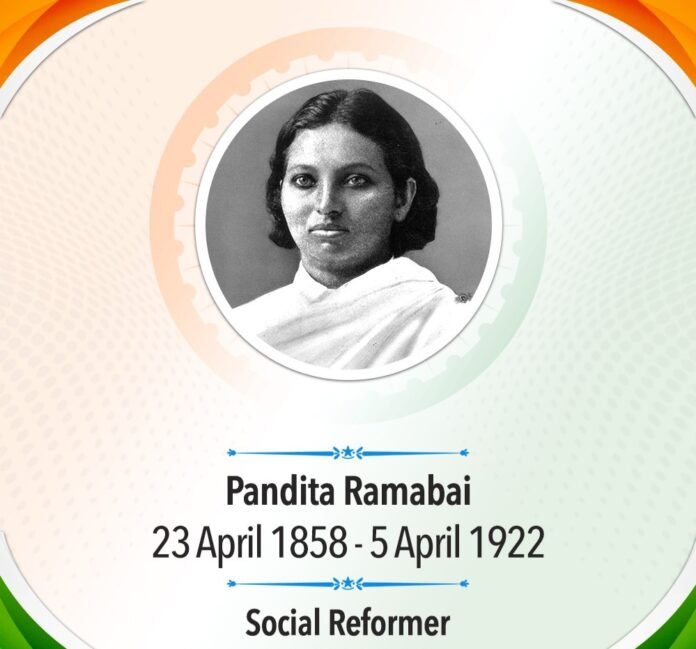
The birth anniversary of Pandita Ramabai is a moment to remember one of India’s most courageous voices for women’s rights and social justice. Born on April 23, 1858, Ramabai emerged as a trailblazer in a deeply patriarchal society, dedicating her life to uplifting women—especially widows and those denied education and dignity.

Pandita Ramabai was born into a scholarly Brahmin family at a time when women’s education was rare. Her father, an unconventional thinker, taught her Sanskrit, a language traditionally reserved for men. Her remarkable command over the language earned her the title “Pandita,” while “Saraswati” was later conferred upon her in recognition of her extraordinary intellect.

Her life’s work was shaped by her exposure to the harsh realities faced by women in 19th-century India. Widows, in particular, endured social ostracism, poverty, and exploitation. Deeply moved by their plight, Ramabai devoted herself to reform. She founded the Arya Mahila Samaj in Pune, which aimed to promote women’s education and oppose child marriage.

One of her most significant contributions was the establishment of the Mukti Mission near Pune. It became a refuge for widows, orphaned girls, and destitute women, offering them education, vocational training, and a chance to rebuild their lives with dignity. At a time when society largely ignored these women, Ramabai created a safe and empowering space for them.

She was also a prolific writer and thinker. Her book, The High-Caste Hindu Woman, critically examined the oppressive conditions faced by upper-caste Hindu women, drawing both national and international attention. Her work sparked conversations on gender inequality and inspired reform movements.

Pandita Ramabai’s achievements were not limited to social service; she was a voice of resistance against entrenched customs and injustices. She traveled widely, engaged with global audiences, and brought international support to her causes. Despite criticism and opposition, she remained steadfast in her mission.

Today, Pandita Ramabai is remembered as a symbol of courage, compassion, and progressive thought. Her legacy lives on in the institutions she built and the lives she transformed. In an era where gender equality continues to be a vital issue, her work remains deeply relevant. She is widely remembered not just for what she achieved, but for the path she paved—one of education, empowerment, and unwavering commitment to justice.

World Book Day 2026: Celebrating the Power of Reading in a Digital Age

0

Every year on April 23, the world comes together to celebrate World Book Day, an occasion dedicated to promoting the joy of reading, the value of books, and the protection of intellectual property through copyright. Established by UNESCO in 1995, the date holds symbolic significance as it marks the death anniversaries of literary giants like William Shakespeare and Miguel de Cervantes.

World Book Day is not just about honoring authors and literature; it is about encouraging individuals—especially young readers—to discover the transformative power of books. In a fast-paced, technology-driven world, this day serves as a reminder of the timeless relevance of reading.

Books play a crucial role in shaping our thoughts, personalities, and understanding of the world. They are gateways to knowledge, imagination, and empathy. Through books, readers can travel across cultures, eras, and perspectives without ever leaving their homes. Whether it is fiction that nurtures creativity or non-fiction that builds awareness, books enrich our intellectual and emotional lives. They improve language skills, enhance concentration, and foster critical thinking—qualities that are essential in both personal and professional spheres.

Moreover, books preserve human history, culture, and ideas across generations. They act as silent teachers, guiding individuals through life’s complexities. In an age dominated by short-form content and digital distractions, reading books cultivates patience and deep focus, offering a meaningful contrast to fleeting online engagement.

Each year, World Book Day may be associated with a broad theme centered on reading, publishing, and copyright awareness. While there is no single rigid global theme for every edition, the overarching message consistently emphasizes “Read Your Way”—encouraging people to explore books in their own unique manner and develop a lifelong reading habit.

Ultimately, World Book Day is a celebration of the written word and its enduring impact on humanity. It urges us to reconnect with books—not just as sources of information, but as companions that inspire, educate, and transform. In picking up a book, we open the door to endless possibilities, making reading not just a habit, but a way of life.

Top 10 Ways India Actually Uses Mangoes (Beyond Shakes & Desserts)

0

In India, mango is not just a fruit—it’s an emotion that defines the summer season. While mango shakes and desserts dominate popular imagination, the real story lies in how deeply mangoes are woven into everyday meals across regions. From tangy curries to spicy pickles and cooling drinks, Indian kitchens use both raw and ripe mangoes in incredibly diverse ways. Here’s a closer look at how India truly celebrates its favourite fruit.

1. Aam Ki Launji (Rajasthan / North India)

Top 10 Ways India Actually Uses Mangoes (Beyond Shakes & Desserts)

Aam ki launji is a perfect example of how North Indian cuisine balances flavors. Made with raw mango, jaggery, fennel seeds, and spices, this chutney delivers a mix of sweet, sour, and mildly spicy notes. The mango pieces are slowly cooked in jaggery syrup until they turn soft and glossy, absorbing all the spices. Often served with rotis or parathas, it adds a burst of flavor to otherwise simple meals and is especially popular during the hot summer months.

2. Mango Shrikhand (Gujarat / Maharashtra)

Top 10 Ways India Actually Uses Mangoes (Beyond Shakes & Desserts)

A seasonal variation of traditional shrikhand, this dish combines thick hung curd with fresh mango pulp, sugar, saffron, and cardamom. The texture is rich and creamy, while the flavor is delicately sweet with aromatic undertones. Served chilled, mango shrikhand is both a festive dessert and a cooling treat, often enjoyed with puris or as part of elaborate thalis.

3. Mavinakayi Chitranna (Karnataka)

Top 10 Ways India Actually Uses Mangoes (Beyond Shakes & Desserts)

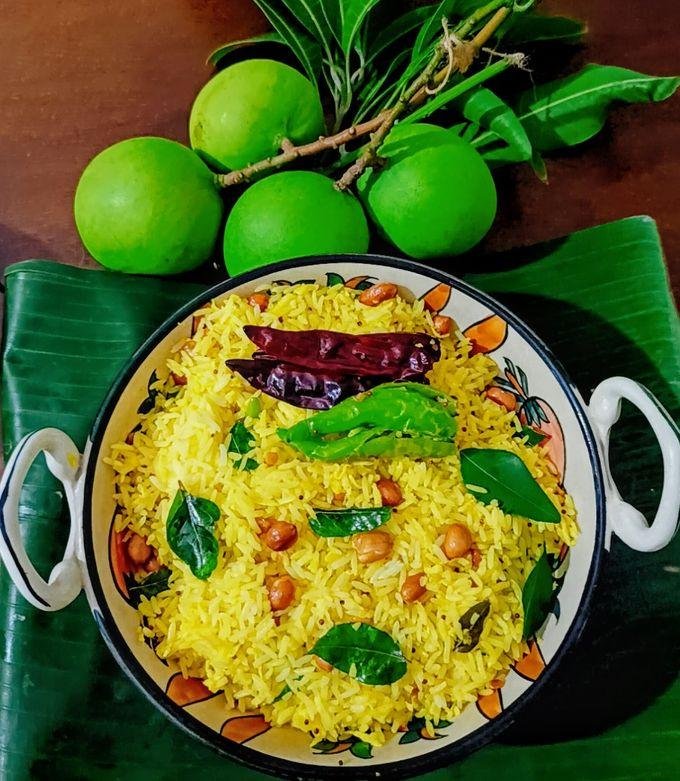
This tangy mango rice is a staple in Karnataka households during mango season. Grated raw mango is mixed with cooked rice and a tempering of mustard seeds, curry leaves, green chilies, and roasted peanuts. The dish is quick to prepare, yet packed with flavor and texture—sour from the mango, crunchy from the peanuts, and fragrant from the spices. It’s commonly made for breakfast, lunchboxes, or even festive occasions.

4. Aamras (Maharashtra / Gujarat)

Top 10 Ways India Actually Uses Mangoes (Beyond Shakes & Desserts)

Aamras celebrates mango in its purest form. Made by extracting and blending ripe mango pulp, sometimes with a touch of sugar or milk, it is served chilled alongside hot puris. The simplicity of the dish allows the natural sweetness and aroma of the mango to shine through. It’s a staple in summer meals and holds a nostalgic place in many households

5. Mango Pulissery (Kerala)

Top 10 Ways India Actually Uses Mangoes (Beyond Shakes & Desserts)

This Kerala-style curry showcases the unique combination of ripe mangoes with a tangy curd base. The mangoes are cooked until soft, then mixed with a coconut paste blended with curd and mild spices. A final tempering of mustard seeds, dried red chilies, and curry leaves enhances its flavor. The result is a beautifully balanced dish—sweet, tangy, and slightly spicy—usually served with steamed rice.

6. Aam Panna (North India)

Top 10 Ways India Actually Uses Mangoes (Beyond Shakes & Desserts)

Aam panna is more than just a refreshing drink—it’s a traditional summer remedy. Prepared by boiling raw mangoes and blending the pulp with roasted cumin, mint, black salt, and sugar, this drink helps cool the body and prevent heatstroke. Its tangy and slightly smoky flavor makes it both delicious and functional, especially during peak summer heat.

7. Mango Fish Curry (Goa / Coastal India)

Top 10 Ways India Actually Uses Mangoes (Beyond Shakes & Desserts)

In coastal regions, mango is often paired with seafood to create rich, tangy curries. In Goa, fish is cooked in a coconut-based gravy infused with spices and chunks of mango. The fruit adds a subtle sweetness and acidity that complements the flavor of the fish, creating a dish that is both comforting and complex.

8. Avakaya (Andhra Pradesh)

Top 10 Ways India Actually Uses Mangoes (Beyond Shakes & Desserts)

Avakaya is one of India’s most iconic mango pickles, known for its bold and fiery taste. Made with raw mango pieces, mustard powder, red chili powder, salt, and large quantities of oil, it is left to mature for weeks. Over time, the flavors deepen and intensify, resulting in a pickle that can last for months. It’s typically eaten with rice and ghee, adding a powerful punch to meals.

9. Aam Dal (Bengal / Odisha)

Top 10 Ways India Actually Uses Mangoes (Beyond Shakes & Desserts)

This simple yet flavorful dish combines lentils with raw mango to create a light and tangy preparation. The mango is boiled along with the dal or added later for a sharper flavor, and the dish is finished with a tempering of mustard seeds and dried chilies. It’s a comforting everyday meal that becomes especially refreshing during the summer.

10. Mango Pachadi (Tamil Nadu / Kerala)

Top 10 Ways India Actually Uses Mangoes (Beyond Shakes & Desserts)

Often prepared during festivals like Tamil New Year, mango pachadi is a symbolic dish that represents the different flavors of life. It combines the sweetness of jaggery, the sourness of mango, and the bitterness of neem flowers. Lightly spiced and tempered, it offers a unique blend of tastes in every bite, making it both culturally significant and delicious.

From hearty meals to refreshing drinks and long-lasting pickles, mangoes in India go far beyond desserts. Each dish reflects regional traditions, local ingredients, and a deep-rooted love for the fruit—proving that the king of fruits truly rules every part of the Indian kitchen.

Script by Vikash Rathor


Kedarnath Yatra 2026 Begins: A Sacred Journey of Faith and Devotion

0

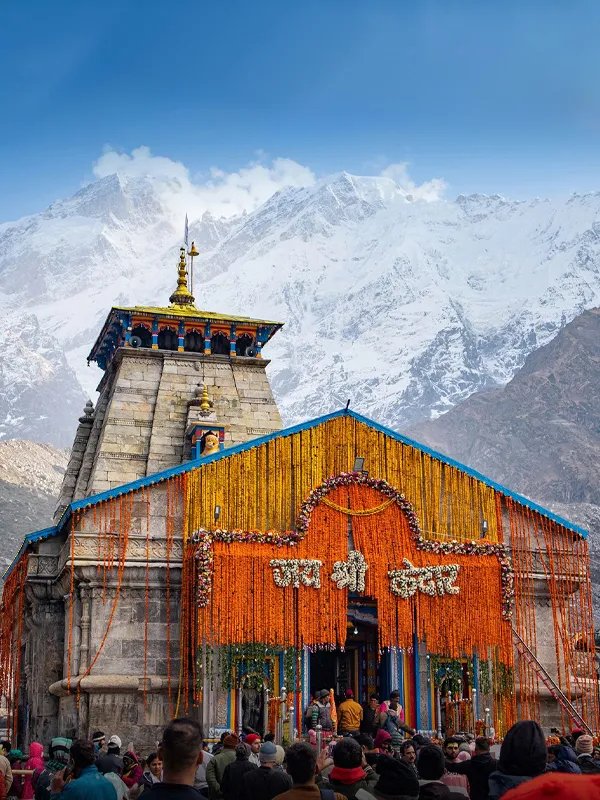
The much-awaited annual pilgrimage to Kedarnath Temple has officially begun today, marking the reopening of one of Hinduism’s holiest shrines. Situated at an altitude of about 3,583 meters in the Garhwal Himalayas, the temple doors (kapat) opened on April 22, 2026, at around 8:00 AM after months of winter closure due to heavy snowfall.

The opening of Kedarnath is part of the larger Char Dham Yatra, which began earlier this week with the opening of Yamunotri and Gangotri. Kedarnath holds a special place in this sacred circuit, followed by the opening of Badrinath. Every year, lakhs of devotees undertake this spiritually significant journey through the Himalayas, braving difficult terrain in search of divine blessings.

Dedicated to Lord Shiva, Kedarnath is revered as one of the 12 Jyotirlingas—considered the most sacred abodes of Shiva. According to mythology, the temple is believed to have been built by the Pandavas, making it deeply rooted in India’s ancient spiritual traditions. The pilgrimage is not just a physical journey but a spiritual quest, symbolizing devotion, penance, and the pursuit of moksha (liberation).

The yatra traditionally begins with ceremonial rituals, including the arrival of the Panchmukhi Doli (palanquin) of Lord Kedarnath from Ukhimath to the temple. These rituals, conducted over several days, culminate in the grand opening of the shrine, attracting pilgrims from across India and beyond.

This year, authorities have introduced several new guidelines to maintain the sanctity and safety of the pilgrimage. Notably, mobile phones, videography, reels, and drone usage have been strictly prohibited within the temple premises to preserve the spiritual atmosphere and prevent crowd disruptions. Additionally, pilgrims are required to complete registration procedures and follow safety protocols, including medical checks and regulated travel arrangements.

Reaching Kedarnath remains a challenging yet fulfilling journey. Pilgrims typically trek from Gaurikund, while helicopter services are also available for those unable to undertake the trek. Despite modern facilities, the essence of the yatra lies in its simplicity and devotion.

The Kedarnath Yatra continues to be a powerful symbol of faith, resilience, and spiritual awakening. As devotees gather once again in the lap of the Himalayas, the journey reaffirms a timeless belief—that true devotion often lies in the path one takes, not just the destination one reaches.

Planet Earth: Fascinating Facts About Our Home

0

A Unique World in the Solar System

Earth is the third planet from the Sun and the only known world where life exists. Its unique combination of water, atmosphere, temperature, and chemical composition makes it unlike any other planet discovered so far. Often called the “Blue Planet,” Earth’s appearance from space reflects its vast oceans and dynamic weather systems.

Size, Distance and Perfect Position

Earth is the fifth largest planet in the solar system and the largest of the rocky, terrestrial planets. It has a diameter of about 12,756 kilometers. Positioned around 150 million kilometers from the Sun, Earth lies in what scientists call the “habitable zone”—a region where conditions are just right for liquid water to exist. This precise distance plays a critical role in maintaining temperatures suitable for life.

A Planet of Water

One of Earth’s most defining features is water. About 71% of its surface is covered by oceans, rivers, lakes, and ice. This abundance of liquid water is essential for all known forms of life. It also helps regulate the planet’s climate by absorbing, storing, and redistributing heat around the globe.

Motion, Seasons and Time

Earth is constantly in motion. It rotates on its axis once every 23.9 hours, creating the cycle of day and night. At the same time, it orbits the Sun, completing one revolution in about 365.25 days—hence the addition of a leap year every four years. Earth’s axis is tilted at approximately 23.4 degrees, and this tilt is responsible for the changing seasons experienced across the planet.

Inside Earth: A Layered World

Beneath its surface, Earth is made up of several layers: the crust, mantle, outer core, and inner core. The inner core is extremely hot, with temperatures reaching around 5,400°C, and is composed mainly of iron and nickel. These internal processes drive plate tectonics, shaping continents, causing earthquakes, and forming mountains over millions of years

Atmosphere and Protection

Earth’s atmosphere is a thin but vital layer made mostly of nitrogen (78%) and oxygen (21%), with traces of other gases. This atmosphere allows life to breathe, regulates temperature, and protects the planet from harmful solar radiation. Additionally, Earth’s magnetic field acts as a shield, deflecting charged particles from the Sun and preventing them from stripping away the atmosphere.

The Moon and Earth’s Stability

Earth has one natural satellite, the . The Moon plays an important role in stabilizing Earth’s axial tilt, which helps maintain a relatively stable climate over long periods. It also influences ocean tides, creating rhythmic patterns that support marine ecosystems.

Earth is more than just a planet—it is a finely balanced system that supports life in countless forms. From its deep oceans to its protective atmosphere, every feature contributes to making it a rare and precious world. Understanding these facts reminds us not only of Earth’s uniqueness but also of our responsibility to protect and preserve it for future generations.

Earth Day 2026: Our Power, Our Planet – The Day We Reclaim Our Future

0

Today April 22, 2026, the world marks the 56th anniversary of Earth Day. What began as a bold American “teach-in” in 1970 has grown into the planet’s largest secular observance, uniting over a billion people across more than 190 countries every year. This year’s official theme is “Our Power, Our Planet” – a powerful reminder that environmental progress doesn’t wait for perfect governments or ideal political conditions. It depends on us – ordinary people harnessing collective energy to protect the only home we have.

A Movement Born in Crisis

Flash back to 1970. Rivers in the United States were so polluted they literally caught fire. Smog choked major cities. Industrial waste flowed unchecked into lakes and oceans. Senator Gaylord Nelson of Wisconsin, inspired by the anti-war teachings of the 1960s, had a simple but revolutionary idea: What if we treated the environment with the same urgency ?

On April 22, 1970, an estimated 20 million Americans – 10% of the U.S. population at the time – took to the streets, parks, and campuses. They protested, cleaned up, and demanded change. The impact was immediate and lasting. By the end of that year, the U.S. Environmental Protection Agency was created, followed by landmark laws like the Clean Air Act and Clean Water Act.

Earth Day didn’t just spark policy – it ignited a global consciousness. Today, it continues to prove that when people mobilize, systems shift.

Why “Our Power, Our Planet” Matters in 2026

The theme for 2026 arrives at a pivotal moment. Recent years have seen record-breaking heat, extreme weather events, and pushback against environmental protections. Yet the message is clear and optimistic: the power to drive change lies with all of us.

In 2026, with global temperatures continuing to climb and biodiversity under pressure, the theme feels especially urgent – and empowering. It’s not about Despair, it’s about Urgency.

Few Mind-Blowing Earth Facts to Spark Wonder

To truly appreciate what we’re protecting, we need to ruminate on these astonishing truths about our planet:

  • Earth is the only planet in our solar system not named after a god — and the only one we know with liquid surface water and life.
  • The Great Barrier Reef is the largest living structure on Earth and the only one visible from space.
  • A single plastic bottle can take over 450 years to break down, while millions are produced every day.
  • More than 15 billion trees are cut down annually – yet a single mature tree can absorb up to 48 pounds of CO₂ per year.

These aren’t just trivia. They’re reminders of the fragile, interconnected beauty we share – and the responsibility that comes with it.

Challenges We Face – and Reasons for Hope

In 2026, the headlines can feel heavy: accelerating climate impacts, biodiversity loss, plastic pollution, water scarcity, and emerging issues like deep-sea mining or AI-driven environmental pressures. Scientists warn we’re close to overshooting 1.5°C of warming, with heatwaves, droughts, and ecosystem shifts becoming more intense.

But here’s the inspiring flip side: clean energy is booming. Solar and wind costs have plummeted. Communities worldwide are restoring forests, reviving rivers, and innovating solutions faster than ever. Youth activists, Indigenous knowledge holders, and everyday citizens are leading the way. Earth Day 2020’s 50th anniversary showed what’s possible even during a pandemic – over a billion people participated virtually.

Progress isn’t linear, but it is real. And it starts locally.

For those who are uninitiated : Mind-Blowing Rajasthan + Earth Facts

Globally, we’re still racing against 1.5°C warming, plastic pollution, and biodiversity loss. In Rajasthan, the twin pressures of desertification and water stress are immediate – yet the response is equally powerful. Rooftop solar is booming in Jaipur homes, school eco-clubs are thriving, and the Rajasthan Environment & Energy Conservation Centre (REECC) in Jaipur is already gearing up for 2026 environment awards and summits that celebrate local green champions.

Earth Day events in past years across Rajasthan – from sapling drives at Rajasthan Technical University to clean-ups and awareness programs – show the state’s youth and communities are ready to lead.

Earth Day 2026: Our Power, Our Planet – The Day We Reclaim Our Future

Rajasthan’s Solar Revolution: Powering the Future with the Desert Sun

Rajasthan has become India’s undisputed solar powerhouse. By the end of 2025, the state crossed 36,658 MWof installed solar capacity – nearly 27% of India’s total solar output – thanks to more than 320 sunny days a year. Massive projects like the Bhadla Solar Park near Jodhpur continue to expand, while rooftop solar is transforming homes in Jaipur and beyond. Even with occasional transmission challenges, Rajasthan’s renewable energy capacity has surged past 41,000 MW, lighting up millions of households and cutting carbon emissions at breath taking speed.

This isn’t just megawatts on a chart. It’s ordinary Rajasthanis – farmers, women self-help groups, and village entrepreneurs – installing panels on rooftops and barren lands, turning scarcity into surplus. “Our Power” is literally harnessed from the sky every single day.

Cultural Resilience and Diversity: Where Tradition Meets Conservation

Rajasthan’s strength lies in its incredible human diversity and deep-rooted resilience. In the harsh Thar Desert, communities have survived centuries of water scarcity, sandstorms, and extreme heat not by dominating nature, but by coexisting with it. This spirit of humanity and balance is woven into the state’s social fabric. The Bishnoi community embodies this like no other: their 29 principles – no cutting green trees, no harming animals – turned conservation into a sacred, casteless duty. The 1730 Khejri tree sacrifice still echoes today as blackbucks and chinkaras roam freely in Bishnoi fields. This spirit ripples through Bhil and other tribal groups protecting sacred forests, and farmers reviving johads that bring back water, wildlife, and hope. The Aravallis – Earth’s ancient shield – stand guard, while these traditions prove humanity thrives when it chooses balance over dominance. Today, in Bishnoi villages, blackbucks, chinkaras, and peacocks roam freely through fields. Women nurse injured fawns; entire communities guard sacred orans (groves) that recharge groundwater and shelter biodiversity. These practices aren’t “caste rules” in a rigid sense – Bishnoi philosophy welcomes all who follow the principles, transcending traditional hierarchies to create a casteless, nature-centered way of life.

Gen Z Enthusiasm: The New Torchbearers Igniting Change

While elders guard ancient wisdom, Rajasthan’s Gen Z is injecting fresh energy and urgency into the movement. In December 2025, hundreds of young students and activists marched through Jaipur protesting threats to the Aravallis, demanding stronger protections for their city’s green lifeline. Universities and schools are buzzing with eco-clubs, while events like the Youth Eco Summit in Jaipur bring together thousands of students for workshops on e-waste, climate resilience, and green innovation.

Armed with smartphones and social media, Gen Z creators are driving a surge in eco-content, sharing stories of local clean-ups, tree-planting drives, and sustainable living. They’re not waiting for permission – they’re organizing, protesting, innovating, and demanding accountability. Their enthusiasm proves that “Our Power” is intergenerational: grandparents teaching the value of a single Khejri tree, while grandchildren use apps to track solar output and rally friends for Aravalli restoration. Their energy is intergenerational, inclusive, and unstoppable.

Aravalli Green Wall and Human-Wildlife Coexistence: A Living Model of Harmony

The Aravalli Green Wall Project is already restoring tens of thousands of hectares with native seedlings, water-body revival, and biodiversity corridors. Tigers in Ranthambore and migratory birds in Keoladeo thrive because Rajasthanis have long practiced coexistence – wildlife isn’t managed; it’s welcomed as family.

Challenges remain : desertification, water stress ( both surface & ground ), pollution, indiscriminate and un-cautioned industrial effluent discharge and occasional policy hurdles test this balance. Yet the same resilience that built johads centuries ago is now supercharged by solar tech and youthful activism and a desire to leave the earth habitable for our next of kin.

Hitherto Untried Innovations: Rajasthan’s Bold, Imaginative Leap Forward ( Mental horsing around while letting imagination run multidirectional on steroids )

While solar, johads, and the Green Wall form the proven foundation, Rajasthan’s unique blend of abundant sunshine, ancient wisdom, cultural diversity, and Gen Z creativity makes it the perfect testing ground for bold, efficient, never-before-tried solutions. I let my thoughts gallop guilt free on a extra dose of mental steroids contemplating on extremely out of the box solutions and ideas that are imaginative yet immediately doable, low-cost pilots that communities, youth groups, and the government could launch within months, delivering multiple wins for water, energy, biodiversity, conservation and livelihoods. Sharing a few of the of them for your consumption and thoughts :

  • Floating Solar-Johad Ecosystems Imagine restored johads covered with modular floating solar panels that double as “biodiversity rafts.” The panels shade the water (cutting evaporation by up to 90% in the desert heat), generate extra clean power for nearby villages, and support attached floating wetlands planted with native aquatic species. Fish, birds, and groundwater recharge all benefit – a single pilot pond could power 50 households while creating a thriving mini-ecosystem. Untried at scale on Rajasthan’s seasonal water bodies, yet simple to assemble with existing solar tech and local materials. Bishnoi and farming communities could co-design them, turning every revived pond into a power-and-life hub.
  • AI-Enhanced Bishnoi Oran Guardians A mobile app co-created by Bishnoi elders and Gen Z coders that uses AI image recognition on phone photos, drone feeds, and satellite data to monitor sacred orans (groves) and wildlife corridors in real time. The system predicts threats like illegal grazing or encroachment and instantly alerts mixed community response teams – blending 500-year-old conservation ethics with 2026 tech. No more reactive protection; proactive coexistence that reduces human-wildlife conflict to near zero. Efficient, low-cost ( just smartphones + basic drones ), and scalable across diverse castes, tribes & communities – a digital extension of the Bishnoi vow to protect every living being.
  • Mycelium-Infused Aravalli “Underground Internet” During Green Wall planting drives, inoculate soils with locally adapted mycorrhizal fungi networks (the “wood wide web” that lets plants share water and nutrients underground, Mycorrhizal fungi establish a symbiotic relationship with plant roots, acting as an extension of the root system to drastically increase nutrient especially phosphorus and water uptake ). In lab tests elsewhere, these networks boost tree survival in arid conditions by 200–300%. Rajasthan could run the world’s largest field trial across Aravalli slopes – faster, denser restoration with far less water. Gen Z volunteers and tribal groups plant the seedlings; the fungi do the heavy lifting. A low-tech, nature-mimicking solution that supercharges traditional methods while sequestering carbon faster than conventional planting.
    • Gen Z “Desert Resilience Tokens” Platform A blockchain-powered app where young people from every background “adopt” micro-plots in the Green Wall or johads. They plant, monitor via satellite and photos, and earn redeemable “Resilience Tokens” for solar kits, scholarships, or community solar shares. Gamified challenges, leaderboards, and virtual tours make conservation addictive and inclusive – bridging urban Jaipur youth with desert Bishnoi families. Efficient because every token directly funds real restoration; imaginative because it turns Earth Day into a year-round, rewarding movement that rewards diversity and builds long-term stewardship.
    • Living Solar Windbreaks with Beetle-Inspired Fog Harvest Along solar parks and desert edges, plant “living fences” of native Khejri and acacia integrated with fog-harvesting meshes inspired by Namib desert beetles ( renowned for its ability to harvest water from early morning fog using specialized, bumpy, and waxy elytra ). Tiny solar panels on the structures power small pumps that channel captured dew straight into johads. The fences reduce sandstorms, protect biodiversity corridors, generate bonus electricity, and prevent the very tree-felling conflicts solar expansion sometimes creates. A beautiful fusion of ancient Rajasthani wind-catcher architecture, modern renewables, and nature mimicry – untested anywhere in the Thar but ready for pilot implementation with existing Green Wall teams.
    These innovations aren’t distant dreams. They build directly on Rajasthan’s strengths – solar abundance, cultural reverence for nature, resilient communities, and Gen Z’s digital fluency – while solving multiple problems at once ~water scarcity, desertification, biodiversity loss, and energy access.
  • The Takeaway: Power Flows Through All of Us
  • Earth Day 2026 in Rajasthan isn’t about one hero or one solution. It’s a beautiful mosaic: solar panels gleaming under the desert sun, Bishnoi elders protecting trees with their lives, Gen Z voices echoing through Jaipur streets, communities of every background choosing coexistence, and now a burst of imaginative, untested innovations that turn challenges into opportunities.This is humanity at its best – resilient, diverse, rooted in ancient values of balance, propelled by youthful fire, and brave enough to try what’s never been tried before. The planet doesn’t need saving from afar. It needs the power we already hold: in our traditions, our innovations, our compassion, and our collective will.This April 22, whether you’re watching the sunrise over the Thar, hiking the Aravallis, piloting a floating solar-johad, or simply choosing a plastic-free day in your home – remember: This is Our Power, Our Planet.
  • And then the question persists like a repetitive sledgehammer – What will YOU do with that power ? Let’s make 2026 the year India doesn’t just celebrate Earth Day – it redefines it for the world with ideas as bold as its people. The Earth is Talking ~ Anybody Listening ?
Earth Day 2026: Our Power, Our Planet – The Day We Reclaim Our Future

The author is Vijay Singh Bainsla, President – Gurjar Arakshan Sangharsh Samiti, Trustee, Colonel Bainsla Foundation and is reachable at vijay@bainsla.com.