

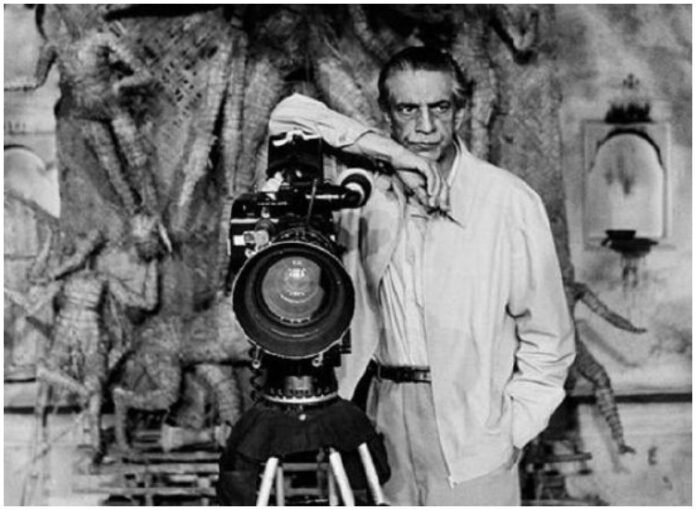
The death anniversary of Satyajit Ray is an occasion to reflect on the life and legacy of one of India’s greatest cinematic minds. Passing away on April 23, 1992, Ray left behind a body of work that not only transformed Indian cinema but also earned global admiration for its depth, realism, and artistic brilliance.
Born in 1921 in Kolkata, Ray belonged to a culturally rich Bengali family. His creative journey was influenced by literature, art, and music—elements that later became integral to his filmmaking style. He began his career in advertising but soon found his true calling in cinema, where he would go on to redefine storytelling.
Ray’s most celebrated work remains the Pather Panchali (1955), the first film of the iconic Apu Trilogy. Made on a modest budget, the film portrayed rural life with honesty and sensitivity, winning international acclaim at the Cannes Film Festival. It introduced the world to a new kind of Indian cinema—rooted in realism rather than spectacle.
Over his career, Satyajit Ray directed 36 films, including masterpieces like Charulata and Shatranj Ke Khilari. His films often explored human relationships, social issues, and the complexities of modern life, all portrayed with subtlety and emotional depth. His attention to detail extended beyond direction—he was also a screenwriter, music composer, editor, and graphic designer for his films.
Ray’s contributions were widely recognized both in India and abroad. In 1992, shortly before his death, he was honored with an honorary Academy Award for his lifetime achievements in cinema. He also received India’s highest civilian award, the Bharat Ratna, cementing his status as a national icon.
What makes Satyajit Ray enduringly relevant is his universal appeal. His stories, though deeply rooted in Indian culture, resonate with audiences across the world. He portrayed ordinary lives with extraordinary insight, capturing emotions that transcend language and geography.
On his death anniversary, Satyajit Ray is remembered not just as a filmmaker, but as a visionary artist who elevated Indian cinema to the global stage. His legacy continues to inspire filmmakers and storytellers, reminding us that true art lies in simplicity, honesty, and a deep understanding of the human experience.