

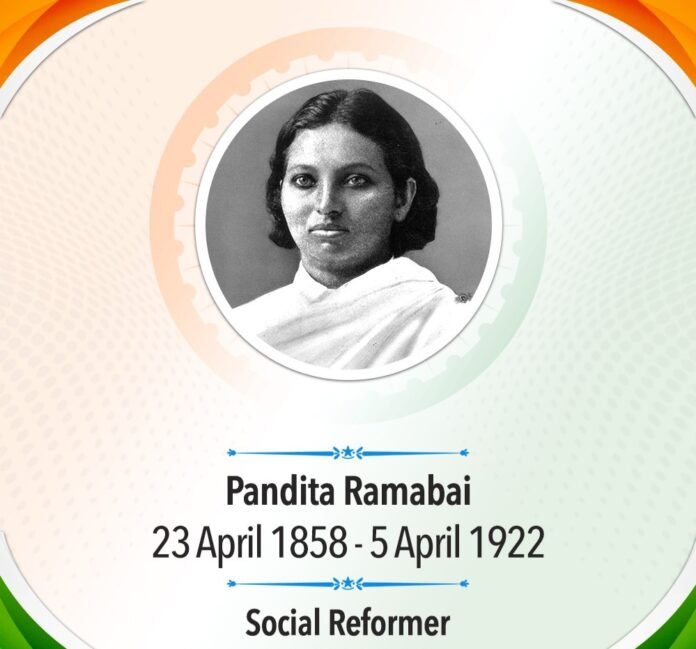
The birth anniversary of Pandita Ramabai is a moment to remember one of India’s most courageous voices for women’s rights and social justice. Born on April 23, 1858, Ramabai emerged as a trailblazer in a deeply patriarchal society, dedicating her life to uplifting women—especially widows and those denied education and dignity.
Pandita Ramabai was born into a scholarly Brahmin family at a time when women’s education was rare. Her father, an unconventional thinker, taught her Sanskrit, a language traditionally reserved for men. Her remarkable command over the language earned her the title “Pandita,” while “Saraswati” was later conferred upon her in recognition of her extraordinary intellect.
Her life’s work was shaped by her exposure to the harsh realities faced by women in 19th-century India. Widows, in particular, endured social ostracism, poverty, and exploitation. Deeply moved by their plight, Ramabai devoted herself to reform. She founded the Arya Mahila Samaj in Pune, which aimed to promote women’s education and oppose child marriage.
One of her most significant contributions was the establishment of the Mukti Mission near Pune. It became a refuge for widows, orphaned girls, and destitute women, offering them education, vocational training, and a chance to rebuild their lives with dignity. At a time when society largely ignored these women, Ramabai created a safe and empowering space for them.
She was also a prolific writer and thinker. Her book, The High-Caste Hindu Woman, critically examined the oppressive conditions faced by upper-caste Hindu women, drawing both national and international attention. Her work sparked conversations on gender inequality and inspired reform movements.
Pandita Ramabai’s achievements were not limited to social service; she was a voice of resistance against entrenched customs and injustices. She traveled widely, engaged with global audiences, and brought international support to her causes. Despite criticism and opposition, she remained steadfast in her mission.
Today, Pandita Ramabai is remembered as a symbol of courage, compassion, and progressive thought. Her legacy lives on in the institutions she built and the lives she transformed. In an era where gender equality continues to be a vital issue, her work remains deeply relevant. She is widely remembered not just for what she achieved, but for the path she paved—one of education, empowerment, and unwavering commitment to justice.