

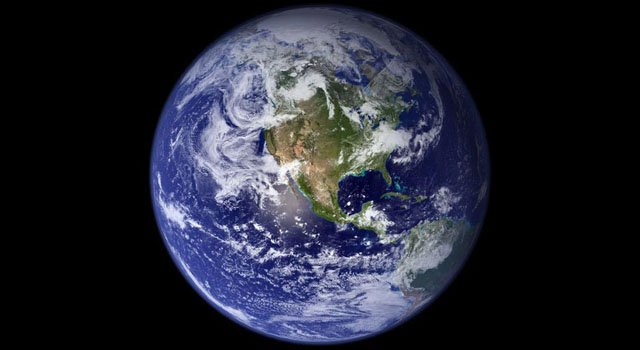
A Unique World in the Solar System
Earth is the third planet from the Sun and the only known world where life exists. Its unique combination of water, atmosphere, temperature, and chemical composition makes it unlike any other planet discovered so far. Often called the “Blue Planet,” Earth’s appearance from space reflects its vast oceans and dynamic weather systems.
Size, Distance and Perfect Position
Earth is the fifth largest planet in the solar system and the largest of the rocky, terrestrial planets. It has a diameter of about 12,756 kilometers. Positioned around 150 million kilometers from the Sun, Earth lies in what scientists call the “habitable zone”—a region where conditions are just right for liquid water to exist. This precise distance plays a critical role in maintaining temperatures suitable for life.
A Planet of Water
One of Earth’s most defining features is water. About 71% of its surface is covered by oceans, rivers, lakes, and ice. This abundance of liquid water is essential for all known forms of life. It also helps regulate the planet’s climate by absorbing, storing, and redistributing heat around the globe.
Motion, Seasons and Time
Earth is constantly in motion. It rotates on its axis once every 23.9 hours, creating the cycle of day and night. At the same time, it orbits the Sun, completing one revolution in about 365.25 days—hence the addition of a leap year every four years. Earth’s axis is tilted at approximately 23.4 degrees, and this tilt is responsible for the changing seasons experienced across the planet.
Inside Earth: A Layered World
Beneath its surface, Earth is made up of several layers: the crust, mantle, outer core, and inner core. The inner core is extremely hot, with temperatures reaching around 5,400°C, and is composed mainly of iron and nickel. These internal processes drive plate tectonics, shaping continents, causing earthquakes, and forming mountains over millions of years
Atmosphere and Protection
Earth’s atmosphere is a thin but vital layer made mostly of nitrogen (78%) and oxygen (21%), with traces of other gases. This atmosphere allows life to breathe, regulates temperature, and protects the planet from harmful solar radiation. Additionally, Earth’s magnetic field acts as a shield, deflecting charged particles from the Sun and preventing them from stripping away the atmosphere.
The Moon and Earth’s Stability
Earth has one natural satellite, the . The Moon plays an important role in stabilizing Earth’s axial tilt, which helps maintain a relatively stable climate over long periods. It also influences ocean tides, creating rhythmic patterns that support marine ecosystems.
Earth is more than just a planet—it is a finely balanced system that supports life in countless forms. From its deep oceans to its protective atmosphere, every feature contributes to making it a rare and precious world. Understanding these facts reminds us not only of Earth’s uniqueness but also of our responsibility to protect and preserve it for future generations.