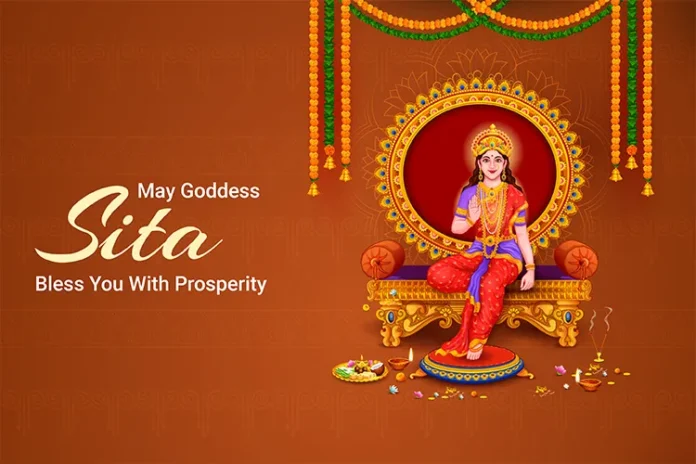
Sita Navami, also known as Janaki Navami, is a sacred Hindu festival that commemorates the birth of Goddess Sita, the revered consort of Lord Rama and one of the most admired figures in Indian epics. Observed with devotion across India, especially in regions like Bihar, Uttar Pradesh, and parts of Rajasthan, the day holds immense spiritual and cultural significance.
Tithi and Date
Sita Navami is celebrated on the Navami (ninth day) of the Shukla Paksha in the month of Vaishakha, according to the Hindu lunar calendar. In 2026, Sita Navami falls on April 25, marking an auspicious occasion for devotees to honor the divine feminine energy embodied by Mata Sita.
The Birth of Goddess Sita
According to the ancient epic Ramayan, Goddess Sita was discovered in a furrow in a field by King Janak of Mithila while he was ploughing the land as part of a ritual. This miraculous birth earned her the name Bhoomija (daughter of the Earth). She is also lovingly called Janaki, meaning the daughter of Janaka.
Sita is considered an incarnation of Goddess Lakshmi, who took birth on Earth to accompany Lord Ram, an avatar of Lord Vishnu, in his earthly journey.
Significance of Sita Navami
Sita Navami is not just a celebration of birth but a reminder of Sita’s unparalleled virtues—her strength in adversity, unwavering devotion, moral integrity, and grace. Her life story, filled with trials such as exile, abduction by Ravana, and the Agni Pariksha, reflects resilience and dignity under pressure.
For many devotees, Sita represents the ideal of patience, sacrifice, and inner strength. Her character goes beyond traditional roles, symbolizing courage and self-respect, making her a timeless figure of inspiration.
Rituals and Observances
On this day, devotees observe fasts, offer prayers, and recite passages from the and Ramayana. Temples dedicated to Lord Rama and Sita are beautifully decorated, and special pujas are conducted. In places like —believed to be the birthplace of Goddess Sita—grand celebrations take place, attracting pilgrims from across the country. Devotees also worship the Earth (Bhumi) on this day, acknowledging Sita’s divine origin.
Relevance in Today’s World In a rapidly changing world, Sita’s story continues to hold deep relevance. She is not merely a symbol of devotion but also of quiet strength and resilience. Her life encourages reflection on values such as dignity, endurance, and righteousness in the face of challenges. Sita Navami thus becomes more than a ritual—it is a day to revisit the ideals that form the moral fabric of society and to draw inspiration from a figure whose legacy transcends time. As devotees bow in reverence today, Sita Navami reminds us of the enduring power of virtue, faith, and inner strength—qualities that Mata Sita embodied with grace and courage.
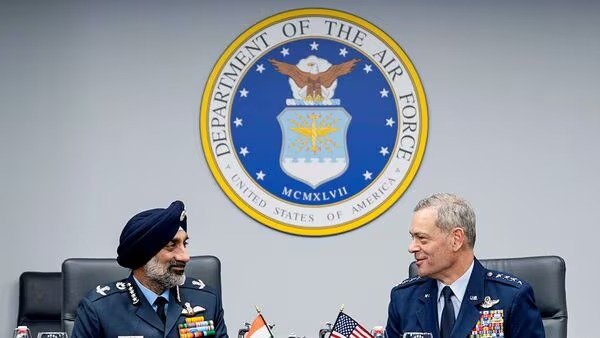
India’s Air Chief Marshal AP Singh touched down in Washington on April 6th for a week-long visit that sent a clear message: India and the US are drawing closer in the skies and beyond.
The highlight came on April 9th, when Singh flew the Boeing F-15EX Eagle II at Nellis Air Force Base, Nevada, a pointed signal amid India’s ongoing search for 114 Multi-Role Fighter Aircraft. The sortie, alongside USAF Major Matthew Benson, put one of America’s most advanced fighters squarely in the IAF chief’s hands
.At the Pentagon, top-level talks covered defense industrial collaboration, joint operational capabilities, and the Indo-Pacific theatre. A visit to Peterson Space Force Base in Colorado added another dimension: aerospace and maritime warning systems and the prospect of deeper Space Force cooperation.
Also on the agenda: accelerating the induction of MQ-9B Sky Guardian drones for Indian forces and expanding joint training exercises.The visit wrapped up April 13th, leaving little ambiguity. India-US defense ties are moving from partnership on paper to interoperability in practice.
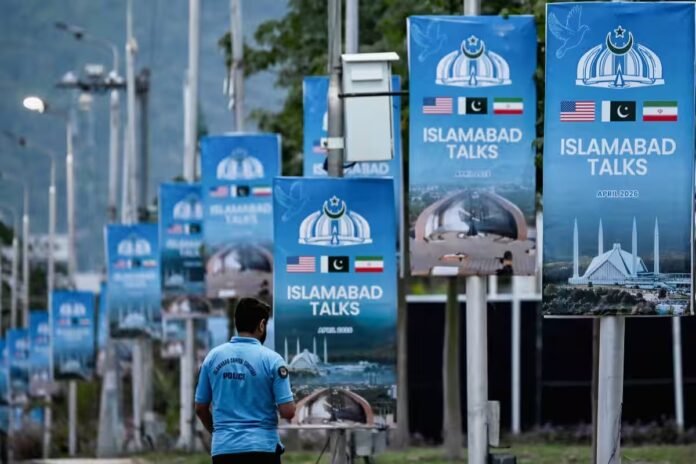
Pakistan’s capital hosted a grueling 21-hour negotiation on April 12th between US and Iranian delegations, as the world watched anxiously. The conflict -marked by Iran’s closure of the Strait of Hormuz and US strikes killing senior Iranian leaders- has sent shockwaves through the global economy.
Talks ended in a stalemate, though Iran agreed to keep the Strait open to commercial traffic. A US naval blockade, however, remains in place and risks reigniting hostilities.
Washington is demanding permanent denuclearization, dismantling of enrichment facilities, and an end to proxy funding. Tehran wants full sanctions relief, frozen assets returned, and its right to enrich uranium recognized.Both sides are on a fragile pause. Round two of negotiations is expected soon- but the clock is ticking.
(The writer of this article is Lakshya Govandi, APS Jaipur)
For decades, Rajasthan has been synonymous with sweeping deserts, golden forts, and royal grandeur. Yet, in its southeastern corner lies a region that quietly challenges this image—lush, river-fed, culturally layered, and still relatively untouched. Welcome to Hadoti, a region comprising Kota, Bundi, Baran, and Jhalawar.
Much of this nuanced understanding of Hadoti’s evolving tourism landscape is enriched by insights shared by Neeraj Bhatnagar, Director of The Royal Hadoti Travels and Vice President of the Hadoti Tourism Development Society (HTDS), who has closely witnessed the region’s transformation from an overlooked destination into one of Rajasthan’s most promising tourism frontiers.
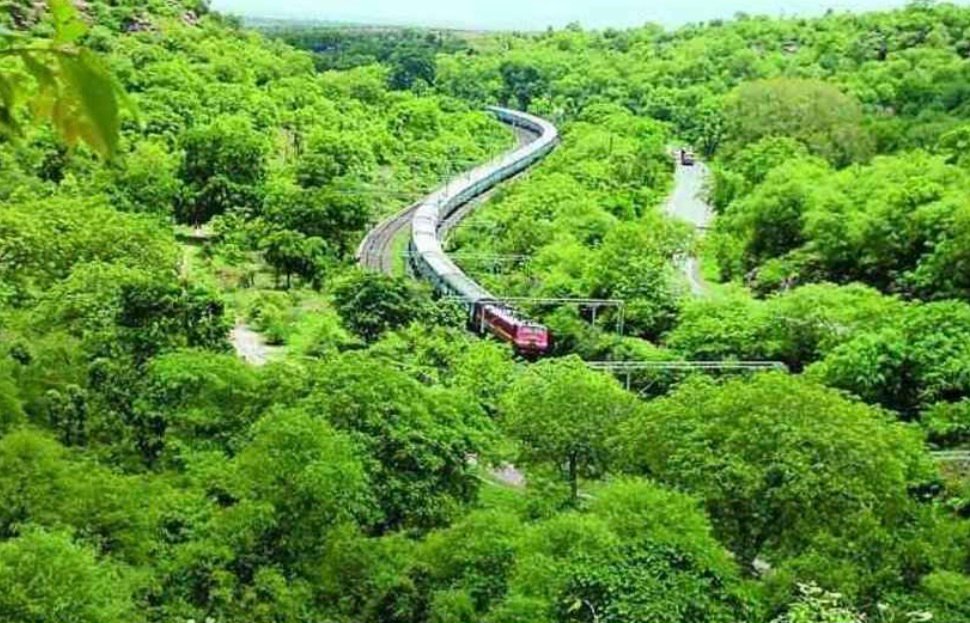
Unlike the arid imagery often associated with the state, Hadoti is defined by the life-giving presence of the Chambal River and its tributaries. The landscape here is dotted with wetlands, fertile plains, forested stretches, and rocky outcrops. During monsoons, the region turns vibrantly green—an unexpected contrast that surprises even seasoned travelers.
“Hadoti has always been rich in culture, wildlife, and heritage, but it remained undiscovered for a long time,” says Neeraj Bhatnagar.
“Now, with better connectivity and awareness, it is finally getting the attention it deserves.”
Historically, limited accessibility kept tourist footfall low. Today, infrastructure developments—especially improved highways and the Delhi-Mumbai Expressway corridor—are placing Hadoti firmly on the tourism map. What was once considered remote is now emerging as a central, well-connected destination.
Kota: Riverfront Revival and Urban Transformation
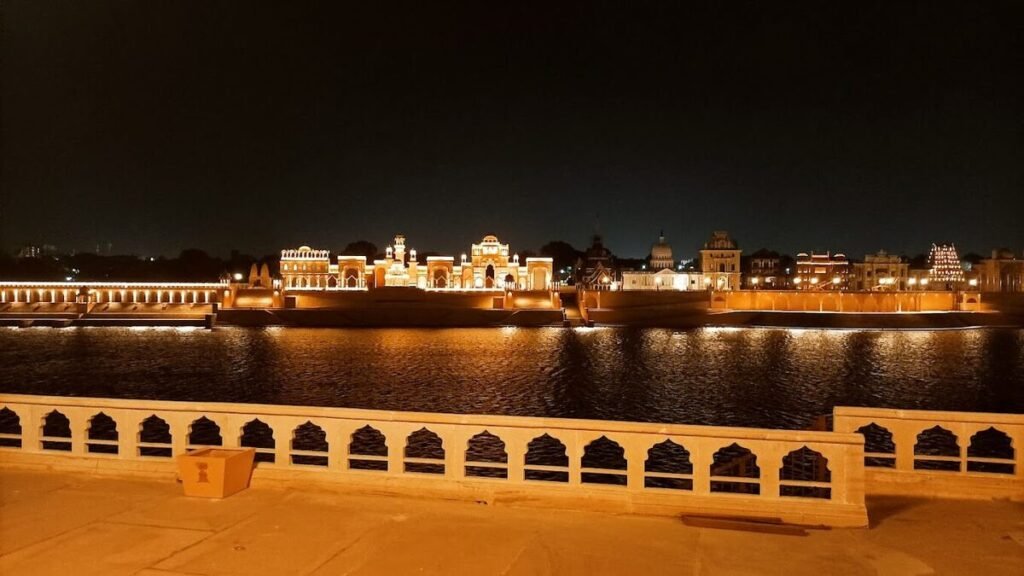
Often recognized as an educational hub, Kota is redefining itself as a tourism destination. The highlight is the ambitious Chambal Riverfront, a multi-kilometer stretch developed along the river with ghats, architectural facades, cultural spaces, and boating facilities. This project has not only enhanced the city’s aesthetic appeal but also positioned the Chambal River as a central tourism asset.
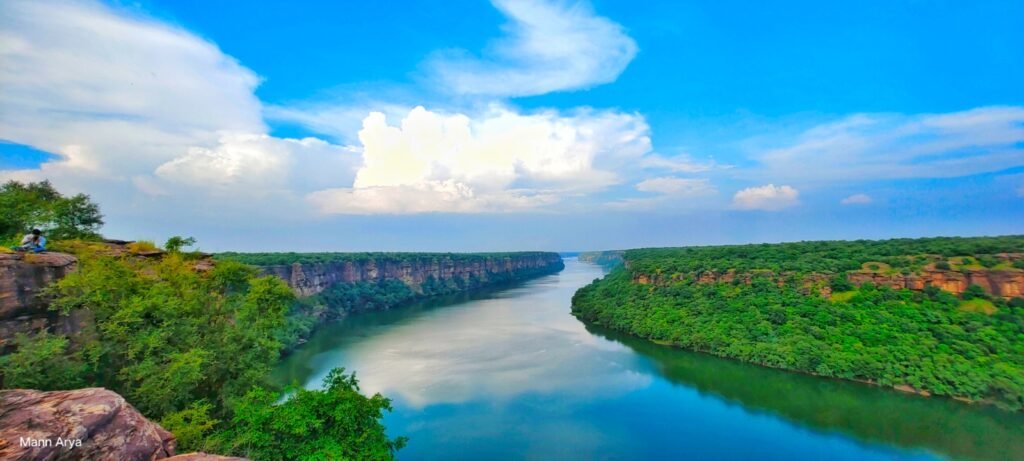
Nearby, the dramatic cliffs of Garadia Mahadev offer one of Rajasthan’s most striking viewpoints, overlooking a deep gorge carved by the river. The city also features attractions like the Seven Wonders Park and well-maintained gardens, making it increasingly attractive for domestic tourism.
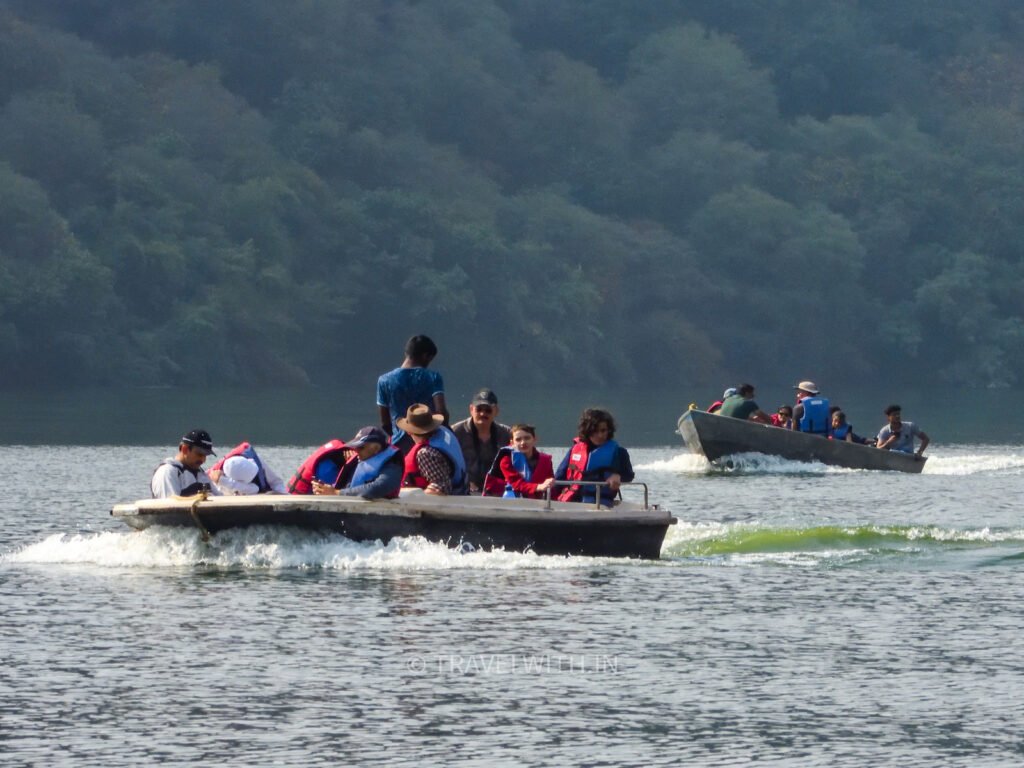
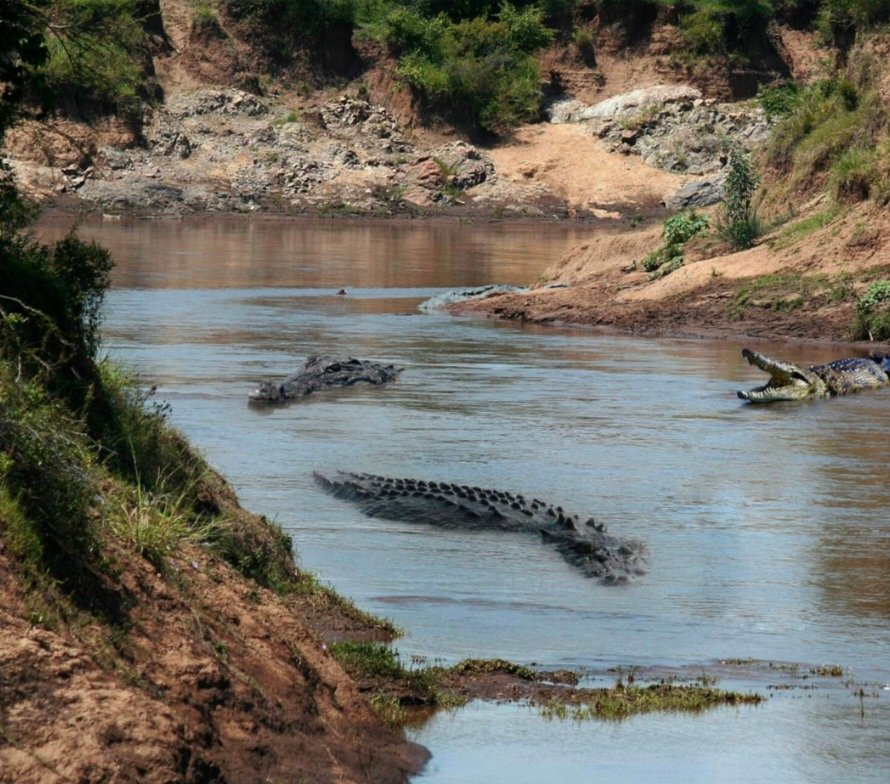
Kota is also the gateway to the National Chambal Sanctuary, where boat safaris reveal a rare ecosystem inhabited by gharials, marsh crocodiles, turtles, and a wide variety of bird species. The sanctuary is one of India’s cleanest river systems, further enhancing its ecological significance.
Bundi: A Living Canvas of Art and Architecture
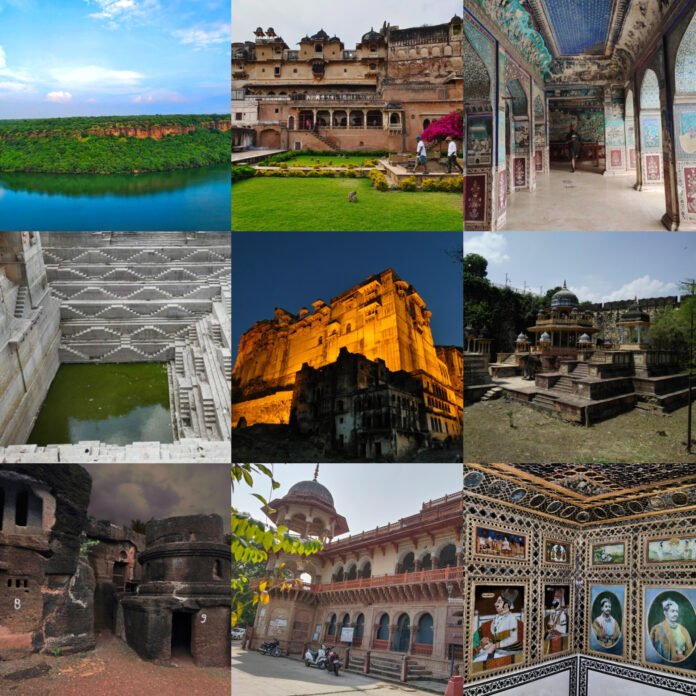
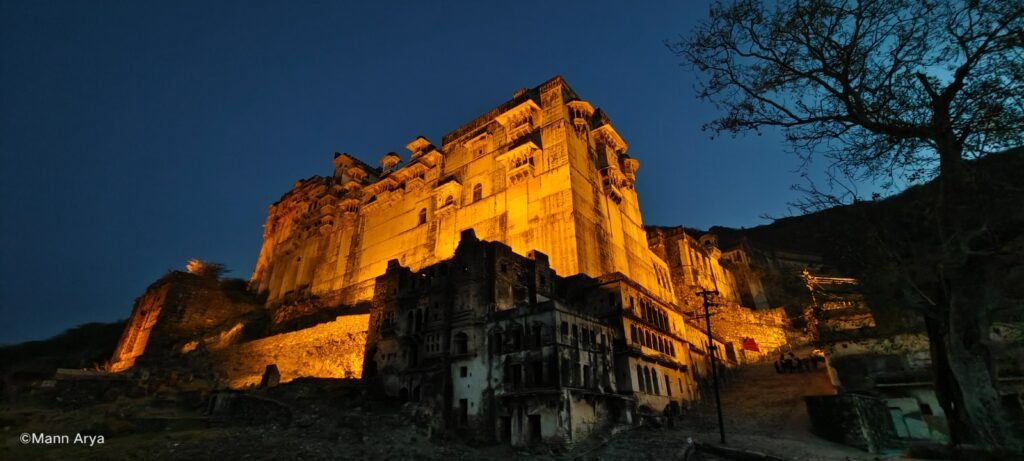
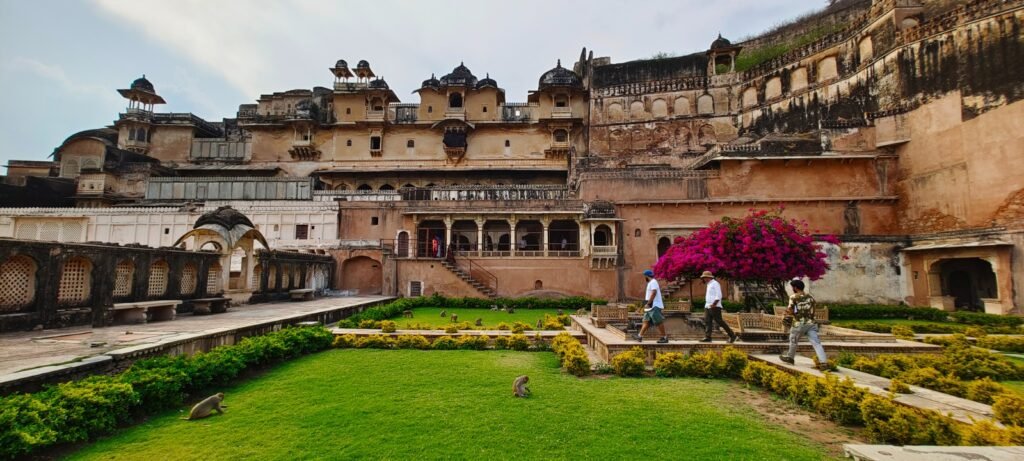
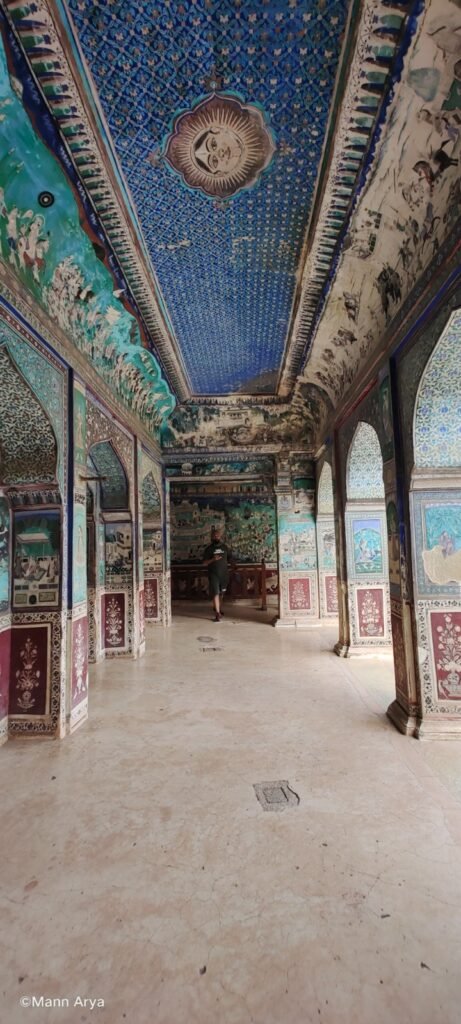
If Hadoti has a poetic heart, it beats strongest in Bundi. Often described as a hidden gem, Bundi is a town where history lingers in every alley, mural, and stepwell. Dominating the skyline is Taragarh Fort, one of the oldest hill forts in Rajasthan, offering sweeping views of the town below. At its base lies the Garh Palace, renowned for its exquisite frescoes—delicate paintings that narrate tales of courtly life, mythology, and romance.
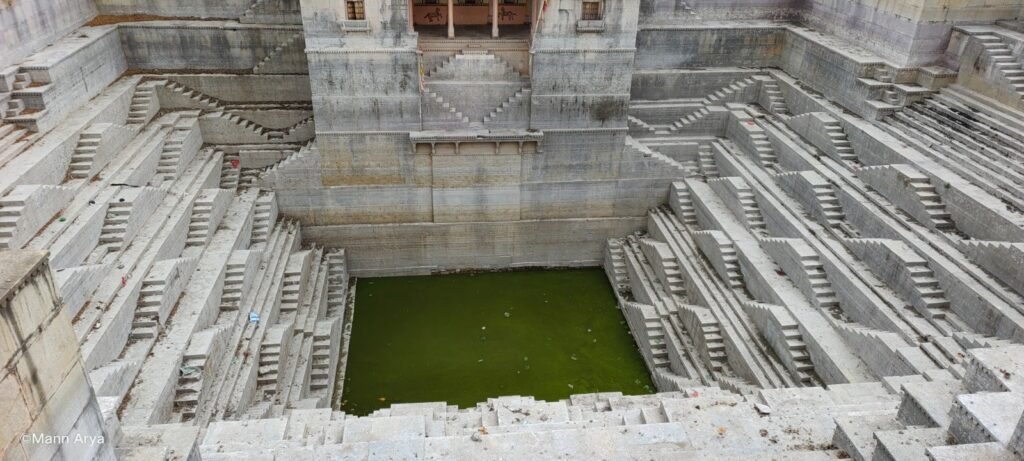
Bundi is also celebrated for its intricate baoris (stepwells), such as Raniji ki Baori, which combine utility with stunning architectural detail. Unlike more commercialized destinations, Bundi retains an authenticity that makes exploration feel personal and immersive.
Baran: Echoes of Ancient Civilizations
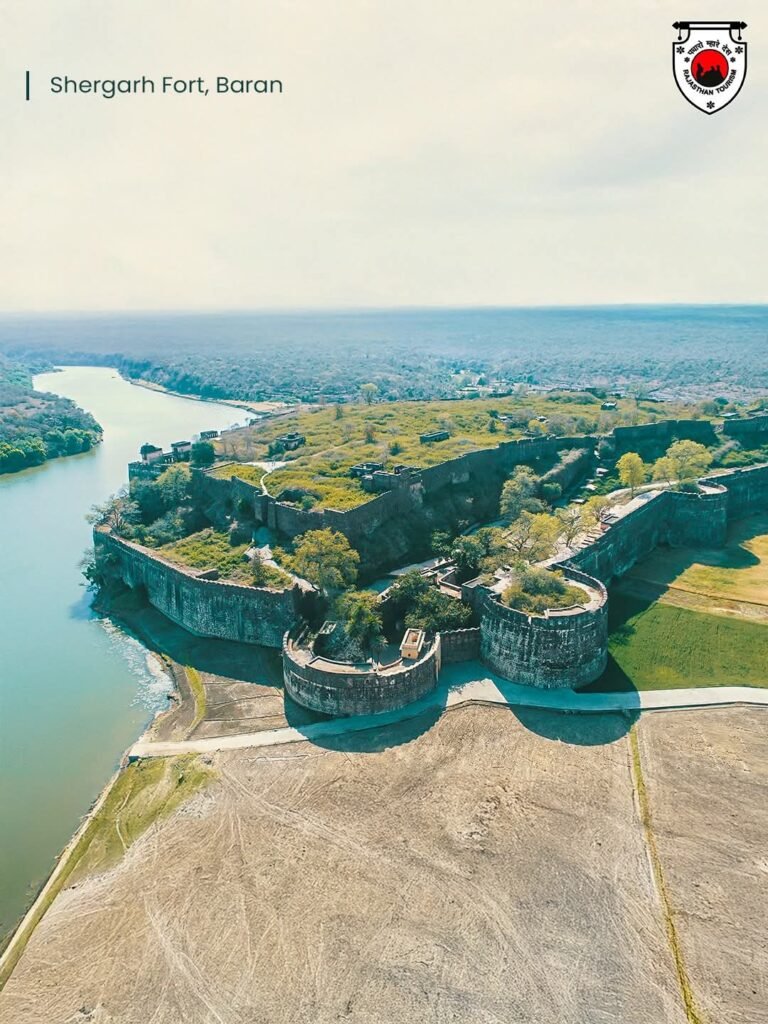
Still largely underexplored, Baran offers a rich tapestry of archaeological and spiritual heritage. Sites like Shergarh Fort reveal layers of history shaped by multiple dynasties. Archaeological surveys have uncovered remnants of ancient temples, Jain sites, and early settlements, pointing to a once-thriving cultural landscape.
Baran’s quieter profile makes it especially appealing to those interested in offbeat travel, history, and research-oriented exploration. Its temples and ruins stand not as curated exhibits, but as living fragments of the past waiting to be discovered.
Jhalawar: Rivers, Temples, and Fertile Landscapes
Known for its greenery and agricultural richness, Jhalawar presents yet another facet of Hadoti. The UNESCO-listed Gagron Fort is a standout attraction—uniquely surrounded by water on three sides and a hill on the fourth, making it one of India’s rare water forts. The Jhalawar Fort and palace complex further showcase the region’s architectural elegance.
The sacred Chandrabhaga Temple Complex and its annual fair draw pilgrims and visitors alike, blending spirituality with vibrant local culture.
The district’s rivers and fertile land support crops like rice and regulated opium cultivation, contributing to its distinct identity within Rajasthan.
Wildlife, Wetlands, and Eco-Tourism Potential
Hadoti’s natural wealth is one of its strongest assets. The forests and river systems support diverse wildlife, including leopards, sloth bears, vultures, and numerous migratory bird species. The presence of marsh crocodiles and even freshwater dolphins in the Chambal adds to the region’s ecological uniqueness.
The Mukundra Hills Tiger Reserve, spanning parts of Kota and Bundi, represents a significant step in wildlife conservation and tourism development. Though still evolving, it signals the region’s growing focus on eco-tourism.
Birdwatching, trekking, and river safaris are gradually gaining traction, offering experiences that are both immersive and sustainable.
Culture, Fairs, and Local Life
Hadoti’s cultural landscape is deeply rooted in tradition yet refreshingly uncommercialized. Events like the Chandrabhaga Fair in Jhalawar, cattle fairs, and local festivals bring together communities in vibrant displays of music, dance, and ritual.
Folk traditions, regional cuisine, and everyday rural life offer travelers an authentic connection to the land—far removed from the curated experiences of more crowded destinations.
Infrastructure, Promotion, and the Road Ahead
Recognizing its untapped potential, both government bodies and regional organizations like the Hadoti Tourism Development Society (HTDS) are actively promoting tourism in the region. Efforts include: ●Development of riverfronts and urban infrastructure ●Heritage conservation and restoration ●Promotion of wildlife tourism and safaris ●Improved road connectivity and accommodation facilities
The Delhi-Mumbai Expressway is expected to be a turning point, placing Hadoti at a strategic crossroads and significantly boosting accessibility.
Rediscovering Hadoti
Hadoti’s story is one of quiet resilience and gradual rediscovery. For years, it remained in the shadows—rich in heritage, nature, and culture, yet overlooked. Today, it stands at the cusp of transformation.
What sets Hadoti apart is not just what it offers, but how it offers it—with authenticity, diversity, and a sense of discovery that is increasingly rare. From the river-carved landscapes of Kota to the painted walls of Bundi, the ancient echoes of Baran, and the fertile beauty of Jhalawar, Hadoti invites travelers to experience a Rajasthan that feels both timeless and new.
As awareness grows and infrastructure improves, the challenge will be to preserve this authenticity while embracing progress. If done right, Hadoti may well become not just another destination—but a defining chapter in Rajasthan’s tourism story.
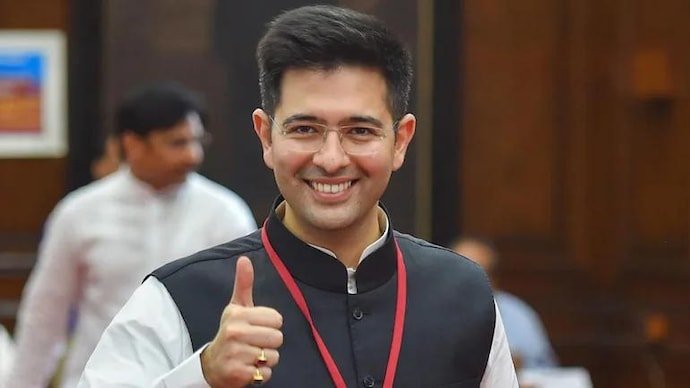
In a dramatic political development on April 24, 2026, Raghav Chadha resigned from the Aam Aadmi Party (AAP) and joined the Bharatiya Janata Party (BJP), along with six other Rajya Sabha MPs. The move marks one of the biggest internal splits in AAP’s recent history and significantly reshapes the political landscape in Parliament. Reports indicate that more than two-thirds of AAP’s Rajya Sabha members backed the merger, invoking constitutional provisions to formalise the shift.
Today, exercising the provisions of the Constitution of India, more than two-thirds of the AAP MPs in the Rajya Sabha have merged with the BJP.
Seven MPs have signed the document, which was submitted to the Hon’ble Chairman of the Rajya Sabha.
The resignation comes after weeks of visible tension between Chadha and the AAP leadership. He had recently been removed as the party’s deputy leader in the Rajya Sabha, signalling a widening rift. His remarks at the time of exit suggest ideological differences and dissatisfaction with the party’s direction, while AAP leaders have strongly criticised the move, calling it a betrayal.
Silenced, not defeated
My message to the ‘aam aadmi’ — खामोश करवाया गया हूँ, हारा नहीं हूँ
Born on November 11, 1988, in Delhi, Raghav Chadha is among the youngest prominent leaders in Indian politics. A qualified Chartered Accountant, he worked with global firms before entering public life. His association with the anti-corruption movement led by Arvind Kejriwal became the foundation of his political journey.
Political Journey
Chadha emerged as a key member of AAP soon after its formation in 2012. Known for his articulate speeches and sharp political strategy, he quickly rose through the ranks. He served as a spokesperson for the party and later contested elections, eventually becoming a Rajya Sabha MP from Punjab.
Over the years, he was seen as one of Kejriwal’s most trusted aides and part of AAP’s core leadership. His role in strengthening the party’s presence in Punjab and at the national level earned him recognition as one of the faces of AAP’s younger generation of leaders.
Tenure and Contributions
As a parliamentarian, Chadha focused on governance issues, economic reforms, and public accountability. His interventions in the Rajya Sabha often reflected his professional background in finance. He also played a role in shaping AAP’s political messaging and outreach, particularly among urban voters and youth.
However, his tenure was not without controversy or friction. The recent developments indicate that internal disagreements had been brewing for some time, culminating in his exit.
Personal Life
Raghav Chadha has maintained a relatively private personal life, though he has often been in the public eye due to his political stature. His marriage to actress Parineeti Chopra brought him additional media attention, blending the worlds of politics and entertainment.
What Lies Ahead
Chadha’s entry into the BJP signals a significant shift, both for him personally and for national politics. For the BJP, his inclusion adds a young, articulate leader with parliamentary experience. For Chadha, it presents an opportunity to redefine his political identity within a larger national framework.
At the same time, questions remain about how he will be positioned within the BJP and what role he will play in upcoming elections, especially in states like Punjab where political equations are evolving rapidly.
A Defining Moment
Raghav Chadha’s journey—from a young anti-corruption activist to a prominent AAP leader and now a BJP entrant—reflects the dynamic and often unpredictable nature of Indian politics. His latest move is not just a personal transition but a moment that could have far-reaching implications for party politics, parliamentary dynamics, and future electoral strategies.
As the dust settles, one thing is certain: Raghav Chadha remains a political figure to watch closely in the years ahead.
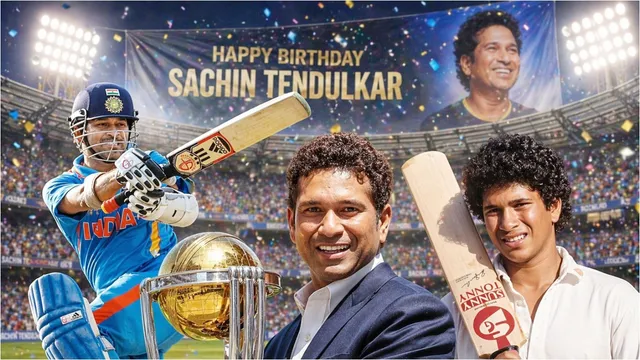
Every year on April 24, cricket fans across India and the world pause to celebrate the birthday of Sachin Tendulkar—a name that is not just associated with the sport, but has become synonymous with passion, excellence, and national pride. Fondly known as the “Master Blaster” and the “God of Cricket,” Tendulkar’s journey continues to inspire generations long after his retirement.
Born in 1973 in Mumbai, Sachin Ramesh Tendulkar showed extraordinary promise from a young age. Under the guidance of coach Ramakant Achrekar, he honed his skills with relentless discipline. At just 16, he made his international debut against Pakistan, facing a fierce bowling attack with remarkable courage. That debut marked the beginning of a legendary career that would span over two decades.
Tendulkar’s journey is a story of perseverance, consistency, and unmatched dedication. He went on to become the highest run-scorer in international cricket, amassing over 34,000 runs across formats. He holds the record for 100 international centuries—a feat that remains unparalleled. From his iconic straight drives to his composure under pressure, every aspect of his game became a benchmark for excellence.
One of the defining moments of his career came in 2011, when India lifted the ICC Cricket World Cup, fulfilling a dream he had chased for over two decades. His contribution to Indian cricket extended beyond statistics; he became the emotional backbone of the team and a unifying figure for the nation.
In recognition of his immense contribution to the sport, Tendulkar was awarded the Bharat Ratna in 2014, becoming the youngest recipient and the first sportsperson to receive the honour. Even after retirement, his association with cricket continues through mentorship roles, commentary, and his involvement with teams like Mumbai Indians in the Indian Premier League.
Today, as he celebrates another birthday, social media platforms are flooded with heartfelt wishes from fans, cricketers, celebrities, and institutions. Tributes pour in recalling his unforgettable innings, humble personality, and lasting impact. From former teammates to young aspiring cricketers, everyone acknowledges the role Tendulkar has played in shaping Indian cricket.
More than just records and achievements, what truly sets Sachin Tendulkar apart is his humility, discipline, and unwavering love for the game. His journey teaches that greatness is not achieved overnight but built through years of hard work and resilience.
Even today, decades after his debut, Tendulkar remains a guiding light for millions. His story continues to inspire not only cricketers but anyone striving to achieve excellence in their field. As the nation celebrates his birthday, one thing remains certain—legends like Sachin Tendulkar never fade; they only grow stronger with time.
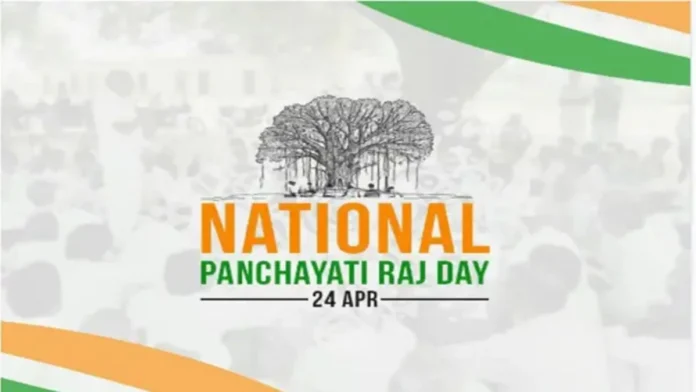
Every year on April 24, India observes National Panchayati Raj Day, a significant occasion that highlights the strength of grassroots democracy and local self-governance. The day commemorates the implementation of the 73rd Constitutional Amendment Act, which came into force on April 24, 1993, granting constitutional status to Panchayati Raj Institutions (PRIs) across the country.
#NationalPanchayatiRajDay is observed on April 24 to mark the enactment of the 73rd Constitutional Amendment Act, which granted constitutional status to Panchayati Raj Institutions in 1993.
Secretary of the Ministry of Panchayati Raj, Vivek Bharadwaj extends wishes to lakhs of… pic.twitter.com/LkmdzJfNr5
National Panchayati Raj Day was officially declared in 2010 to recognize and promote the role of local governance in rural development. Since then, it has become an important platform to celebrate the achievements of Panchayats and to reinforce the idea of decentralized governance.
The Panchayati Raj system is a three-tier structure consisting of Gram Panchayat at the village level, Panchayat Samiti at the block level, and Zila Parishad at the district level. This system ensures that governance reaches the grassroots, allowing people to actively participate in decision-making processes that directly impact their daily lives.
The significance of this day lies in its emphasis on empowering rural communities. Panchayats play a crucial role in implementing government schemes, improving infrastructure, promoting education and healthcare, and ensuring social justice. By enabling local participation, the system strengthens democracy and fosters inclusive development.
On this occasion, the Ministry of Panchayati Raj organizes national-level events, conferences, and award ceremonies to honour outstanding Panchayats for their contributions. These recognitions encourage innovation, accountability, and effective governance at the local level.
National Panchayati Raj Day is not just a celebration but a reminder of India’s commitment to democratic decentralization. It underscores the belief that true development begins at the grassroots level, where empowered communities can shape their own future. As India continues to grow, strengthening Panchayati Raj Institutions remains essential for building a more inclusive, participatory, and self-reliant nation.
In a significant push towards sustainable resource management, Uttar Pradesh has inaugurated India’s first integrated recycling facility for lithium-ion batteries and rare earth magnets at the UPSIDC Industrial Area. Developed by Rocklink India, the plant is expected to strengthen domestic recovery of critical minerals and support the country’s clean energy transition.
Integrated Recycling for Critical Materials
The state-of-the-art facility is designed to process lithium-ion batteries, rare earth magnets, and metal-bearing industrial waste. It aims to create circular supply chains for materials widely used in electric vehicles, renewable energy systems, and advanced manufacturing sectors.
Capacity and Rare Earth Recovery
The plant has an initial lithium-ion battery recycling capacity of 10,000 tonnes per year, along with the capability to process 60 tonnes of rare earth magnets every month. Additionally, a rare-earth chloride processing unit with an annual capacity of 1,500 tonnes is slated to become operational by 2026.
Advanced Recovery and Compliance
Registered under Extended Producer Responsibility (EPR) norms, the facility can handle up to 95 types of battery scrap, including both pre-consumer and post-consumer waste. Its in-house R2 recycling process ensures recovery rates exceeding 98 percent for key metals such as aluminium, copper, and iron, while maintaining strict environmental safety standards.
Boost to Circular Economy
The plant will also support battery refurbishment by testing and reusing viable cells, thereby extending battery life and reducing waste. Dedicated systems for recycling rare earth magnets such as NdFeB, SmCo, and AlNiCo will enhance material traceability and efficiency.
Officials say the project marks a crucial step in reducing India’s dependence on imports of critical minerals and advancing a sustainable ecosystem for clean energy technologies and strategic industries.
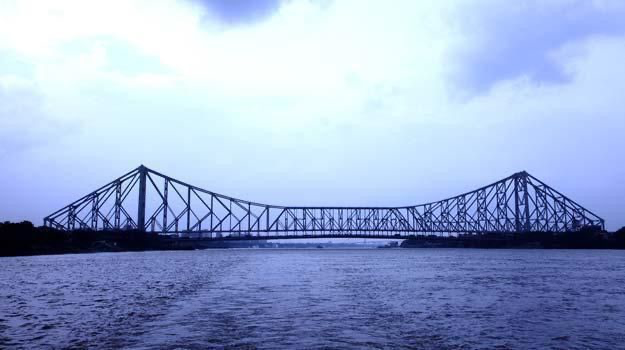
The Howrah Bridge! This name immediately brings to fore bollywood starts Rajesh Khanna and Sharmila Tagore in one frame singing a song Chingari Koi Bhadke.. which was shot under this bridge.
Officially known as Rabindra Setu, this bridge is more than a river crossing; it’s a living, breathing symbol of Kolkata. Here are ten distinctive features that make it one of the most remarkable bridges in the world:
1. A wartime engineering marvel Built between 1936 and 1942 and opened on February 3, 1943, the bridge rose during World War II, making its scale and speed of construction even more impressive.
2. A giant cantilever structure It is a balanced cantilever truss bridge, meaning it extends outward from piers without needing support in the middle of the river.
3. Among the world’s longest With a central span of about 1,500 feet (457 m), it ranks among the top cantilever bridges globally, alongside icons like the Quebec Bridge and Forth Bridge.
4. No nuts and bolts One of its most fascinating features: the bridge was assembled using rivets, no nuts or bolts—giving it exceptional structural integrity.
5. Built with Indian steel Around 26,500 tons of high-tensile steel were used, much of it supplied by Tata Steel, showcasing indigenous industrial capability.
6. Connects two bustling worlds It spans the Hooghly River, linking Kolkata with Howrah—two densely populated urban hubs.
7. One of the busiest bridges on Earth Every day, it carries over 100,000 vehicles and roughly 150,000 pedestrians, making it arguably the busiest cantilever bridge in the world.
8. A lifeline for daily commuters From office-goers to flower sellers heading to the famous Mullik Ghat market, the bridge is deeply woven into everyday life.
9. A cultural icon Beyond engineering, it has appeared in countless films, photographs, and literature—becoming synonymous with Kolkata’s identity.
10. Part of a global league It stands among notable cantilever bridges like the Minato Bridge, Commodore Barry Bridge, and Crescent City Connection—yet retains a character uniquely its own.
In essence, Howrah Bridge is not just steel and rivets—it’s motion, memory, and the enduring rhythm of a city.
Chandra Shekhar Azad, originally named Chandra Shekhar Sitaram Tiwari and born on 23 July 1906 in Bhabhra, emerged as a legendary figure in the Indian independence movement. His extraordinary courage and inspirational leadership at a remarkably young age motivated countless youths and revolutionaries nationwide.
Unlike others of his generation who focused on careers, family, or personal goals, Azad devoted himself entirely to India’s freedom struggle. He confronted British rule head-on, displaying unwavering resolve and ultimately achieving martyrdom for the nation.
To this day, Azad’s bravery and ultimate sacrifice are honored in his hometown of Bhabhra, a tranquil village in Madhya Pradesh that proudly preserves the legacy of this remarkable revolutionary.
Living up to his chosen name ‘Azad’-meaning “free”-he pledged that the British would never capture him alive, a promise he kept until his final breath.
Chandra Shekhar Azad spent his formative years in Bhabhra, surrounded by an atmosphere of patriotism. His parents, Sitaram Tiwari and Jagrani Devi, instilled in him the importance of education and strong moral values. Sent to Varanasi at an early age to study Sanskrit, Azad was profoundly influenced by the growing wave of nationalism and the ideals of freedom.
Believing that peaceful protests alone were not enough to secure India’s independence, Azad joined the Hindustan Socialist Republican Association (HSRA). Working closely with Bhagat Singh and other revolutionaries, he became a key member of the organization, known for his sharp intellect, marksmanship, courage, and leadership. After the death of Ram Prasad Bismil, Azad played a crucial role in rebuilding and strengthening the HSRA, organizing important events and operations.
In 1921, inspired by Mahatma Gandhi’s Non-Cooperation Movement, Azad actively participated in protests against British rule. During one such protest, he was arrested by the authorities. When brought before the judge, he defiantly stated his name as “Azad” (meaning free), his father’s name as “Swatantrata” (freedom), and his residence as “Jail.”
This bold declaration resonated with many and marked the beginning of his legacy as Chandra Shekhar Azad-a name that would forever symbolize his unwavering dedication to the cause of freedom.
Azad worked closely with young revolutionaries such as Bhagat Singh, Sukhdev Thapar, and Shivaram Rajguru. He guided and supported them in planning revolutionary activities against British rule.
One of the major events connected to their movement was the Assassination of J. P. Saunders in 1928. This act was carried out to avenge the death of Lala Lajpat Rai, who had died after being injured during a police lathi charge while protesting against the Simon Commission.
Although Azad did not directly fire the shot, he played a crucial role in planning the operation and protecting the revolutionaries during its execution. He later helped Bhagat Singh and his companions evade arrest for some time.
Azad continued to lead and support revolutionary activities until his martyrdom in 1931, becoming a powerful symbol of courage and sacrifice in India’s struggle for independence.
On 27 February 1931, at Chandra Shekhar Azad Park (then called Alfred Park), Azad was surrounded by British police during a secret meeting of the revolutionary organization. The police discovered the location and quickly encircled the area.
A heavy exchange of gunfire followed. Azad refused to surrender and fought bravely against the police, even though they greatly outnumbered him. Despite the overwhelming forces, he resisted them fiercely and held his ground for a long time.
However, when only one bullet remained in his pistol, Azad chose to use it on himself rather than be captured by the British forces, remembering his promise to remain “Azad.” True to his name, he chose death over surrender and remained free even in his final moment.
His words echoed his spirit:
“Dushman ki goliyon ka hum samna karenge, Azad hi rahe hain, Azad hi rahenge.”
Chandra Shekhar Azad was not merely a revolutionary who fought for India’s independence; he remains a timeless symbol of fearless courage, unwavering determination, and supreme sacrifice for the nation.
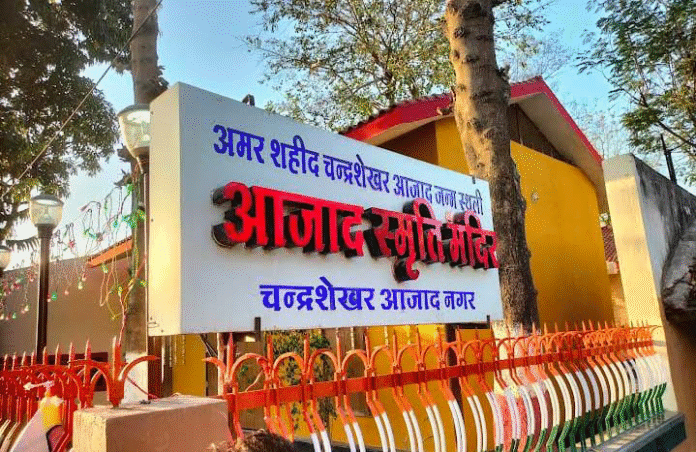
Legacy Preserved in Bhabhra Recently I had the time to visit the birthplace of Chandra Shekhar Azad in Bhabhra which has been preserved as a memorial to honor his life and sacrifice. The site marks the place where this great revolutionary was born on 23 July 1906. Today, a statue and a memorial structure stand there, reminding visitors of the humble origins of a man who later became one of the bravest fighters of India’s independence movement. The memorial proudly preserves his legacy and serves as a source of inspiration for future generations. During the Malwa Media Fest 3.0, we visited the memorial of Chandra Shekhar Azad in Bhabhra. It was a truly inspiring experience. The place had a calm and respectful atmosphere, and it almost felt as if the walls and statues were silently telling the stories of Azad’s courage and sacrifice.
The surroundings of Bhabhra were peaceful, which made the experience even more special. There was a quiet sense of pride and patriotism in the air. Walking through the memorial, every statue and display seemed to carry a message about his bravery, determination, and dedication to the nation. The simple yet powerful ambiance of the place made the visit feel meaningful and reflective.
While observing the exhibits, I also noticed that during the British era, a bounty had been placed on Azad. The British government had announced a reward of 50,000 rupees, which was considered a very large amount at that time, for anyone who could capture him. A poster showing this bounty notice was also preserved and displayed at the memorial.
Visiting the memorial in Bhabhra gave a deeper understanding of Azad’s life and reminded us of the courage and sacrifice that played an important role in India’s freedom struggle.
(The writer of this article is Lakshya Govani, a class X student of APS, Jaipur)