

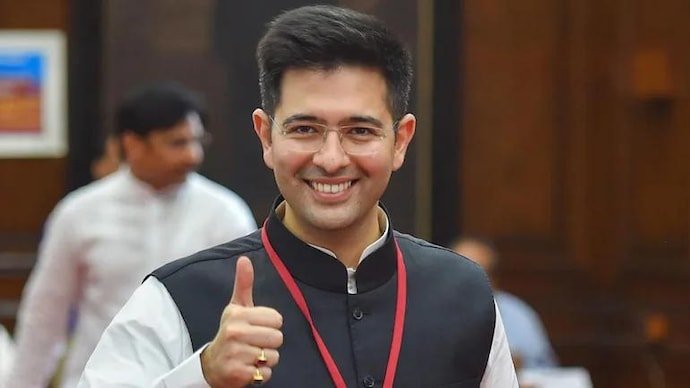
In a dramatic political development on April 24, 2026, Raghav Chadha resigned from the Aam Aadmi Party (AAP) and joined the Bharatiya Janata Party (BJP), along with six other Rajya Sabha MPs. The move marks one of the biggest internal splits in AAP’s recent history and significantly reshapes the political landscape in Parliament. Reports indicate that more than two-thirds of AAP’s Rajya Sabha members backed the merger, invoking constitutional provisions to formalise the shift.
The resignation comes after weeks of visible tension between Chadha and the AAP leadership. He had recently been removed as the party’s deputy leader in the Rajya Sabha, signalling a widening rift. His remarks at the time of exit suggest ideological differences and dissatisfaction with the party’s direction, while AAP leaders have strongly criticised the move, calling it a betrayal.
Background and Early Life
Born on November 11, 1988, in Delhi, Raghav Chadha is among the youngest prominent leaders in Indian politics. A qualified Chartered Accountant, he worked with global firms before entering public life. His association with the anti-corruption movement led by Arvind Kejriwal became the foundation of his political journey.
Political Journey
Chadha emerged as a key member of AAP soon after its formation in 2012. Known for his articulate speeches and sharp political strategy, he quickly rose through the ranks. He served as a spokesperson for the party and later contested elections, eventually becoming a Rajya Sabha MP from Punjab.
Over the years, he was seen as one of Kejriwal’s most trusted aides and part of AAP’s core leadership. His role in strengthening the party’s presence in Punjab and at the national level earned him recognition as one of the faces of AAP’s younger generation of leaders.
Tenure and Contributions
As a parliamentarian, Chadha focused on governance issues, economic reforms, and public accountability. His interventions in the Rajya Sabha often reflected his professional background in finance. He also played a role in shaping AAP’s political messaging and outreach, particularly among urban voters and youth.
However, his tenure was not without controversy or friction. The recent developments indicate that internal disagreements had been brewing for some time, culminating in his exit.
Personal Life
Raghav Chadha has maintained a relatively private personal life, though he has often been in the public eye due to his political stature. His marriage to actress Parineeti Chopra brought him additional media attention, blending the worlds of politics and entertainment.
What Lies Ahead
Chadha’s entry into the BJP signals a significant shift, both for him personally and for national politics. For the BJP, his inclusion adds a young, articulate leader with parliamentary experience. For Chadha, it presents an opportunity to redefine his political identity within a larger national framework.
At the same time, questions remain about how he will be positioned within the BJP and what role he will play in upcoming elections, especially in states like Punjab where political equations are evolving rapidly.
A Defining Moment
Raghav Chadha’s journey—from a young anti-corruption activist to a prominent AAP leader and now a BJP entrant—reflects the dynamic and often unpredictable nature of Indian politics. His latest move is not just a personal transition but a moment that could have far-reaching implications for party politics, parliamentary dynamics, and future electoral strategies.
As the dust settles, one thing is certain: Raghav Chadha remains a political figure to watch closely in the years ahead.