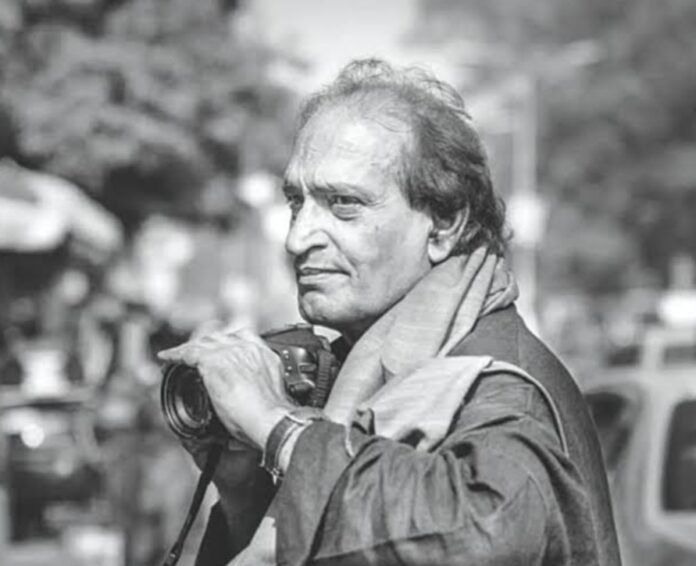
The passing of Raghu Rai on April 26, 2026, at the age of 83 marks the end of an era in Indian photography. One of the country’s most iconic visual storytellers, Rai died in Delhi after a prolonged battle with cancer, leaving behind a legacy that shaped how India has been seen—both by itself and the world.
Veteran photographer #RaghuRai died after a two-year-long battle with cancer. He was 83.
▪️Born on December 18, 1942, in Jhang (now in Pakistan), Rai became one of the most respected photographers not just in India, but across the world.
Born in 1942 in Jhang (now in Pakistan), Raghu Rai did not begin as a photographer—he trained as a civil engineer before discovering his passion for photography in the 1960s. His career began with The Statesman, where his sharp, human-centric perspective quickly stood out. By 1977, he became the first Indian photographer invited to join the prestigious Magnum Photos, nominated by the legendary Henri Cartier-Bresson.
Chronicler of India’s Defining Moments
Rai’s work is often described as a “visual history” of modern India. Over five decades, he documented some of the nation’s most critical and emotional moments—the Bangladesh Liberation War, the haunting aftermath of the Bhopal Gas Tragedy, political upheavals, and everyday life across cities and villages.
His lens captured powerful portraits of figures like Indira Gandhi, Dalai Lama, and Mother Teresa, but equally, it dignified ordinary lives—workers, pilgrims, children—turning everyday India into timeless visual poetry.
Achievements and Recognition
Raghu Rai was widely regarded as a pioneer of Indian photojournalism. He received the Padma Shri in 1972 for his work on the Bangladesh war and went on to earn global acclaim, with his photographs published in major international publications and exhibited worldwide.
Beyond awards, his true achievement lay in redefining visual storytelling—his images were not just photographs but narratives filled with emotion, context, and truth.
Why He Is Widely Remembered
Rai is remembered not merely for technical brilliance but for his sensitivity. He had an extraordinary ability to be present—close enough to feel the moment, yet distant enough to observe it truthfully. His work gave voice to both triumph and tragedy, capturing India in all its contradictions and complexities.
As many tributes noted, he was a “master of moments” and a mentor to generations of photographers who saw in him both an artist and a guide.
Nation Pays Tribute
Following his passing, tributes poured in from across the country—artists, journalists, political leaders, and citizens alike remembered him as a legend whose camera preserved India’s memory. Many described his photographs as “history frozen in time,” a legacy that will continue to educate and move generations.
An Enduring Legacy
Raghu Rai’s death is not just the loss of a photographer, but of a witness—someone who saw India deeply and showed it honestly. His images remain immortal, reminding us that photography is not just about capturing what is seen, but revealing what is felt.
In every frame he left behind, Raghu Rai ensured that India’s stories would never fade.
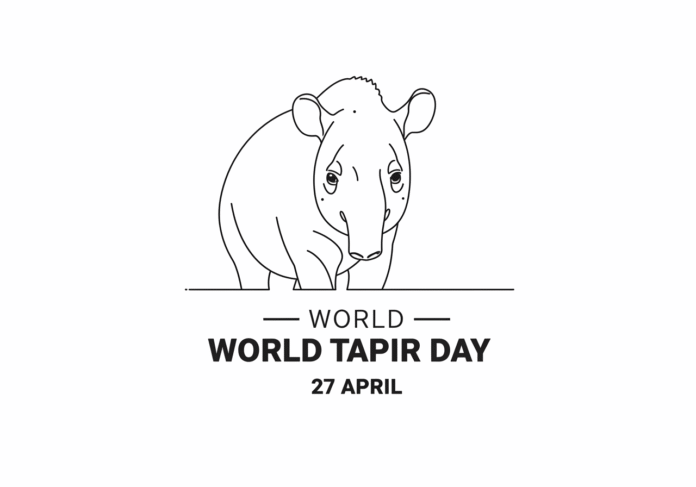
Observed every year on April 27, World Tapir Day is a global initiative dedicated to raising awareness about tapirs—one of the world’s most unique yet least recognised mammals—and the urgent need to protect them. First celebrated in 2008 by conservationists and wildlife enthusiasts, the day brings together people, organisations, and communities to support the survival of this endangered species.
Tapirs are large herbivorous mammals found in Central and South America as well as Southeast Asia. Often described as a mix between a pig and an elephant due to their body and elongated snout, they are actually more closely related to horses and rhinoceroses. Despite their ancient lineage—often called “living fossils”—tapirs remain largely unknown to the general public, making awareness efforts even more crucial.
Why is World Tapir Day celebrated?
The primary aim of the day is to highlight the threats faced by tapirs and promote conservation efforts. All four existing species of tapirs are endangered or vulnerable due to habitat destruction, deforestation, hunting, and human encroachment. As large animals that require vast, undisturbed habitats, tapirs are among the first to be affected by environmental degradation.
World Tapir Day also seeks to generate support for conservation initiatives, including funding projects that protect forests and preserve tapir habitats. It encourages people to learn about these animals, donate to conservation groups, and spread awareness through campaigns and social media.
Significance and Importance
Tapirs play a vital role in maintaining ecological balance. Often referred to as the “gardeners of the forest,” they help disperse seeds through their feeding habits, contributing to forest regeneration and biodiversity. Their survival is closely linked to the health of rainforest ecosystems, meaning that protecting tapirs also supports countless other species.
Moreover, tapirs are considered an “umbrella species”—protecting them ensures the conservation of entire ecosystems. Their decline often signals deeper environmental problems, making their conservation critical in the fight against biodiversity loss and climate change.
Conclusion
World Tapir Day 2026 is more than just a celebration of an unusual animal—it is a reminder of the fragile balance of nature. By spreading awareness and encouraging action, the day highlights how even lesser-known species play a crucial role in sustaining life on Earth. Protecting tapirs ultimately means protecting forests, biodiversity, and the future of our planet.
Observed every year on April 27, World Design Day—now widely known as International Design Day—is a global celebration of design and its transformative impact on society. The day was first introduced in 1995 (originally as World Graphics Day) and commemorates the founding of the International Council of Design in 1963.
At its core, World Design Day recognises that design is not just about aesthetics but about improving everyday life. From the layout of cities and digital interfaces to everyday objects like packaging or furniture, design shapes how people interact with the world. It blends creativity with functionality, aiming to make life more accessible, efficient, and meaningful.
Why is it celebrated?
The day is celebrated to highlight the value of design as a tool for innovation and social change. It encourages designers, students, and communities to reflect on how design can address real-world challenges—whether in sustainability, accessibility, communication, or urban development. It also honours the contributions of designers across disciplines and promotes awareness about the profession.
Theme in 2026
Each year, the celebration revolves around a central theme that reflects contemporary concerns. The 2026 theme, “The Spaces In Between,” invites people to look beyond finished products and focus on the invisible connections design creates.
This theme emphasises the physical, digital, and emotional spaces where human interaction happens—between people, communities, and environments. It highlights how design plays a subtle yet powerful role in shaping relationships, experiences, and a sense of belonging. Rather than just focusing on objects, it encourages designers to explore transitions, interactions, and shared spaces where ideas turn into meaningful experiences.
Significance and Importance
World Design Day holds great significance in today’s rapidly evolving world. Design is increasingly seen as a problem-solving tool that can address global challenges such as climate change, urbanisation, and social inequality. It fosters innovation, encourages interdisciplinary thinking, and bridges cultural differences.
Moreover, the day inspires individuals—whether designers or not—to appreciate the role of design in their daily lives. It promotes creativity, critical thinking, and a deeper understanding of how thoughtful design can improve well-being and build more inclusive societies.
In essence, World Design Day 2026 is not just a celebration of creativity—it is a reminder that design has the power to connect people, shape experiences, and ultimately, change the world for the better.
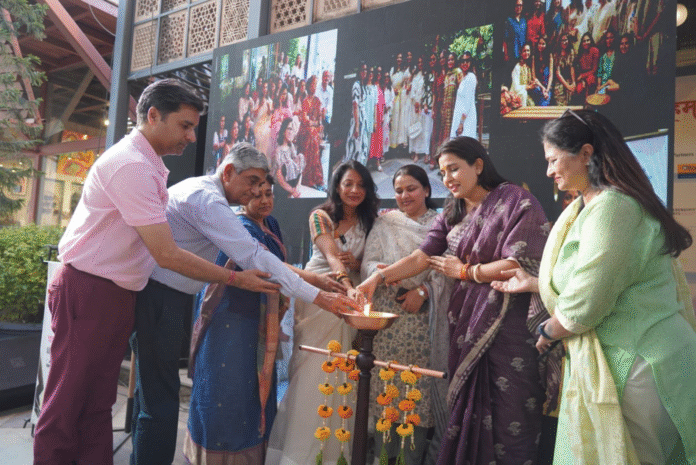
At a time when Jaipur stands at a critical crossroads, facing growing concerns around civic behaviour, encroachments, and the condition of shared spaces that threaten its UNESCO World Heritage status, Maahi Roj 2026 emerges as both a reflection and a response.
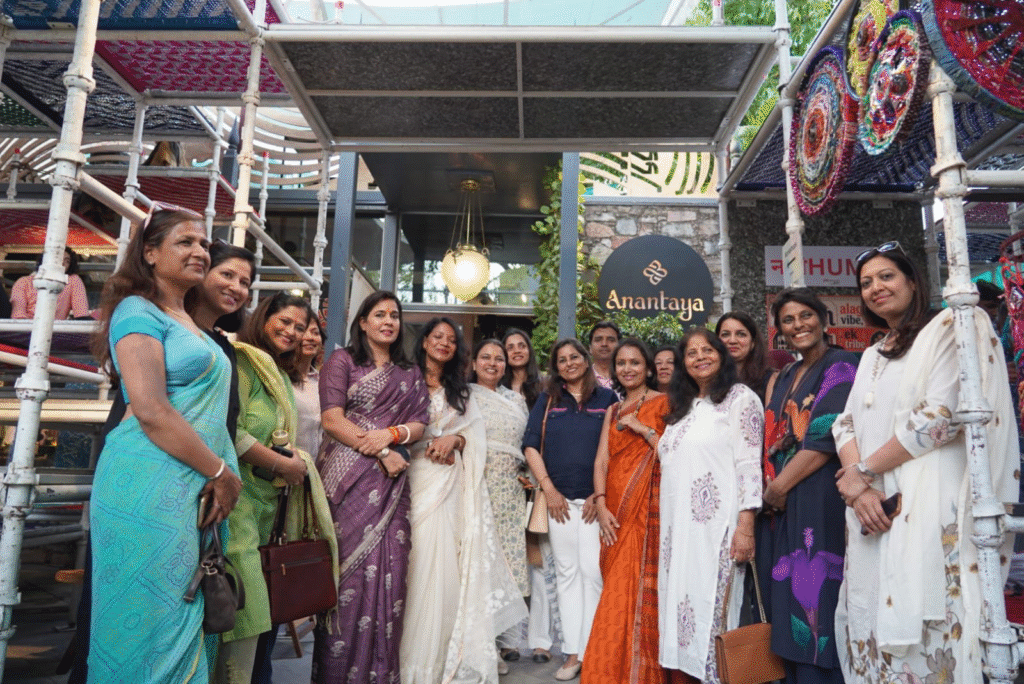
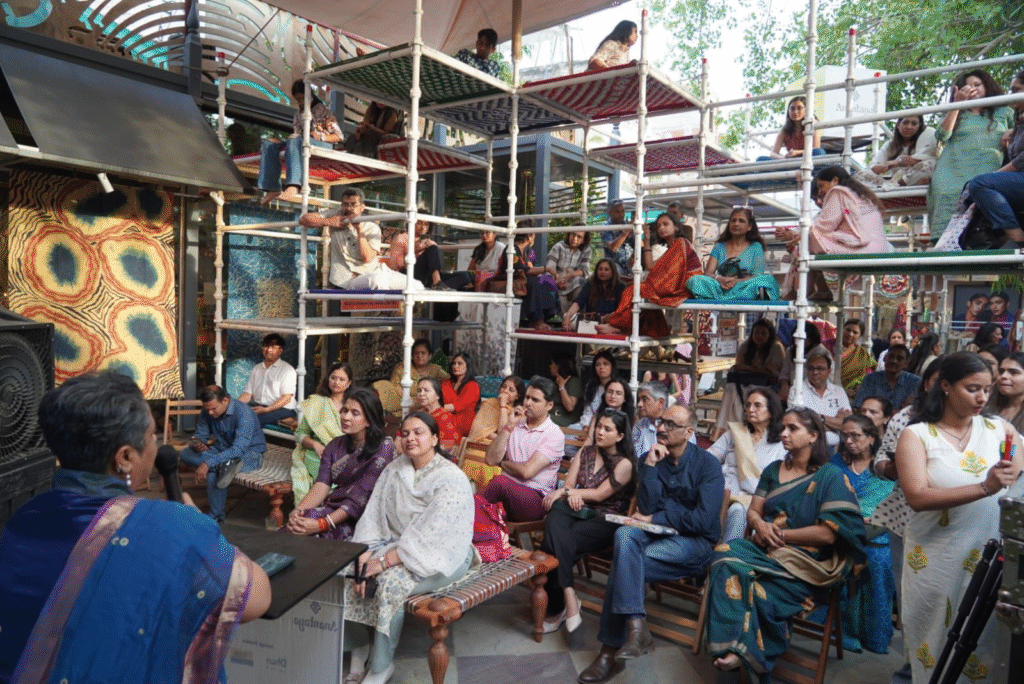
Being held on April 25–26 at Anantaya, Kanota Courtyard, Narayan Niwas Palace, Jaipur, the 12th edition of Maahi Roj brought together thinkers, practitioners, and citizens to engage in a shared conversation on the future of the city. Founded by Geetanjali Kasliwal and Ayush Kasliwal, the platform continues to bridge craft, community, design, and civic consciousness.
This year’s theme, HUMM: Many Makes One, celebrates collective intelligence, emphasising how diverse voices can come together to shape more responsible and interconnected ways of living. The festival was graced by Chief Guest Dr. Somya Gurjar and Guest of Honour was Malvika Bagaria.
Setting the Tone: From ‘I’ to ‘Hum’
The inaugural address by Geetanjali Kasliwal set a clear and compelling direction for the festival. Speaking about the essence of HUMM, she noted, “HUMM is about how we begin to listen, respond, and act together—not as individuals, but as part of something shared.”
The opening session, Sohum – From I to Hum, featuring Ankur Mehta, Namita Jain, and Ani Setia, reflected this shift from individual awareness to collective responsibility. This was followed by Tell Me What You Eat and Your Plate is a Civic Act by Monali Jain, reframing everyday choices as acts of civic participation.
A keynote by Ami Shroff brought insights from Bhuj to Jaipur, highlighting the relationship between craft, community, and sustainable futures.
Conversations that Shape Cities
Maahi Roj 2026 curated a diverse range of sessions that explored sustainability, behaviour, and urban systems. Case Study Capsules by Amanpreet (Prakrit Foundation), Ar. Saran Bhatia, and Nivedan Rathi (AI expert) presented grounded approaches to collective systems and the evolving role of technology in shaping cities.
The Civic Kumbh, moderated by Ajaita Shah, brought together Aditya Nath, Dhawal Singhal, Archana Sharma, Rohit Agarwal, and Ashutosh Nandwana, fostering a dialogue on civic participation and behavioural change.
A presentation by Dhun, led by Ar. Manisha Sharma, added further perspectives on community-driven practices.
The sessions also included the Maahi Roj Civic Warriors Awards, recognising selected initiatives by ADI Jaipur, led by Meenakshi Singh and her team.
Workshops: Participation in Practice
The festival extended beyond dialogue into hands-on engagement. Prayer Wheels for the Earth, led by Shalini Dutt, continued as a participatory weaving installation using waste—where individual contributions came together into a shared collective form.
Traces of Us: A Live Cyanotype Act by Kiranjeet Kaur (AKFD) offered a live artistic experience, while a DIY composting demonstration by Amanpreet (Prakrit Foundation) provided practical tools for sustainable living.
Art, Craft, and Living Traditions
Art installations and exhibitions formed a significant part of the experience. Navoham: Heritage to Contemporary, led by Sangeeta Singh of the Creative Experts Community, explored the relationship between craft and conduct. Participating artists included Arzoo and Yunus.
Artist’s Expression: Beyond the Block by Yunus Khimani brought together traditional craft and contemporary practice, examining material, technique, and artistic interpretation.
A key highlight was The Charpai Project, curated by Ayush Kasliwal and co-curated by Ramyudh Sahu with the Serendipity Arts Foundation. Making its Jaipur debut, the project reimagined the charpai as a living system shaped by craft, climate, and community—bridging traditional knowledge with contemporary design.
HUMM Market: Conscious and Collective
The HUMM Market brought together conscious pop-ups and collective initiatives. Highlights included the Swap Shop by Devika Kasliwal and Yohan Malvai, encouraging exchange and circular practices; recycled woven paper products by Sutrakar (Neerja); crochet torans by Rubhu; handblock garments by Craft Women Producer Company Limited; hand-embroidered artworks and accessories by Shrujan, Bhuj; and innovative startup ideas supported by I-Start Rajasthan.
Collaborative Ecosystem
Maahi Roj 2026 was supported by a wide network of partners, including Dhun as Strategic Partner, Kogta Foundation as Associate Partner, ADI Jaipur as Knowledge Partner, Department of Information Technology Rajasthan (DOITR), WICCI Architecture Rajasthan, Arya Niwas, I-Start Rajasthan, Serendipity Arts Foundation, EBNW, Neewara Academy, and TOSS—reflecting a collaborative ecosystem committed to civic and cultural engagement.
A Shared Way Forward
More than a festival, Maahi Roj 2026 became a space for collective reflection and action. It brought together civic and government stakeholders, urban designers, architects, behavioural thinkers, social designers, grassroots actors, and the creative community to rethink Jaipur’s future.
In a city where heritage and modern pressures increasingly intersect, Maahi Roj’s message is both timely and urgent: cities are not just inherited—they are co-created. And in the spirit of HUMM, it is through shared awareness and collective responsibility that more sustainable, inclusive, and meaningful urban futures can emerge.
India has lost one of its most respected spiritual thinkers and philosophers, Muni Narayana Prasad, who passed away on April 25, 2026, in Thiruvananthapuram at the age of 87. His death marks the end of an era in modern Indian spiritual and philosophical discourse, leaving behind a rich legacy of thought, writing, and service.
Born on December 9, 1938, in Nagaroor in present-day Kerala, Muni Narayana Prasad began his professional journey as a civil engineer. However, driven by a deeper quest for meaning, he left his engineering career in 1968 to join the Narayana Gurukula—a movement inspired by the teachings of Narayana Guru.
His transition from engineering to spirituality reflected a profound commitment to exploring life beyond material pursuits. Over time, he became a disciple of Nataraja Guru and emerged as a leading voice in the Gurukula tradition.
Leader of Narayana Gurukula
Muni Narayana Prasad rose to become the head of Narayana Gurukula in 1999, guiding the institution’s philosophical and educational work across India and abroad. Under his leadership, the Gurukula expanded its global presence, promoting the universal ideals of unity, spirituality, and human equality.
The Gurukula itself traces its intellectual roots to Narayana Guru, whose message—“one caste, one religion, one God for humanity”—continues to inspire millions.
A Prolific Author and Thinker
Beyond his role as a spiritual guide, Muni Narayana Prasad was a prolific writer. He authored over 130 books in Malayalam and English, covering subjects such as Vedanta, Upanishads, and comparative religion.
His works, including interpretations of texts like the Bhagavad Gita and explorations such as Christ the Guru and In the Name of Allah, sought to bridge spiritual traditions and make philosophical ideas accessible to modern readers. His writings reflected a rare ability to connect ancient wisdom with contemporary thought.
Recognition and Contributions
In recognition of his immense contribution to literature and education, he was awarded the Padma Shri in 2024, one of India’s highest civilian honours. He also received accolades from literary bodies, including the Kerala Sahitya Akademi.
His teachings emphasised harmony, rational spirituality, and a universal outlook that transcended religious boundaries—values that remain deeply relevant in today’s world.
Final Days and Passing
Muni Narayana Prasad passed away while undergoing treatment in Thiruvananthapuram. Tributes have poured in from across the country, with scholars, spiritual leaders, and followers remembering him as a guiding light of wisdom and compassion.
A Lasting Legacy
The life of Muni Narayana Prasad stands as a testament to the power of introspection, knowledge, and spiritual unity. From an engineer to a monk-philosopher, his journey reflects a rare blend of intellectual depth and spiritual clarity.
As India mourns his loss, his teachings continue to resonate—reminding us of the timeless pursuit of truth, the importance of inner peace, and the enduring vision of a united humanity.
India’s top policy think tank, NITI Aayog, has entered a new phase with the appointment of Ashok Kumar Lahiri as its Vice-Chairperson. A seasoned economist with decades of experience in public policy, academia, and global financial institutions, Lahiri’s appointment is being seen as a significant move in shaping India’s economic strategy going forward.
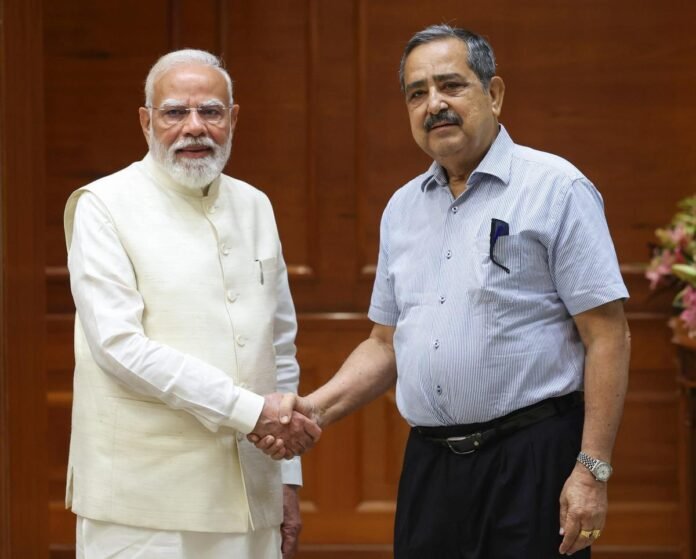
Met Shri Ashok Kumar Lahiri Ji and conveyed my best wishes on his being appointed as the Vice Chairman of NITI Aayog. His rich experience in economics and public policy will greatly strengthen India’s reform journey and the journey towards becoming a Viksit Bharat. I am confident… pic.twitter.com/NQvAGNsgoN
Ashok Lahiri has been appointed as the Vice-Chairperson of NITI Aayog, replacing Suman Bery. The Vice-Chairperson is effectively the second-most important figure in the institution after the Prime Minister, who serves as its Chairperson. This role involves guiding economic policy, advising the government, and shaping long-term development strategies.
His appointment comes at a time when India is navigating complex economic challenges, including global uncertainties, inflation concerns, and the need for sustained growth.
An Accomplished Economist
Ashok Lahiri is widely regarded as one of India’s most experienced economists. Born in 1951, he has had a distinguished academic and professional career. He studied economics at Presidency University, Kolkata and later pursued higher studies at the Delhi School of Economics.
He served as the Chief Economic Adviser (CEA) to the Government of India from 2002 to 2007, working under both the Atal Bihari Vajpayee and Manmohan Singh governments. During his tenure, Lahiri played a crucial role in shaping India’s economic policies, including fiscal planning and budget formulation.
Global and Institutional Experience
Lahiri’s expertise extends beyond India. He has worked with major international financial institutions such as the World Bank and the International Monetary Fund, gaining global exposure to economic policymaking.
He has also held key positions including: ●Director of the National Institute of Public Finance and Policy ●Executive Director at the Asian Development Bank ●Chairman of Bandhan Bank
Additionally, he served as a member of the 15th Finance Commission, contributing to critical decisions on fiscal federalism and resource allocation.
A Blend of Economics and Politics
In recent years, Lahiri has also been active in politics. He served as a Member of the Legislative Assembly (MLA) from Balurghat in West Bengal, representing the Bharatiya Janata Party (BJP). This combination of academic expertise and political experience gives him a unique perspective on governance and policymaking.
Why His Appointment Matters
Lahiri’s appointment signals a strong emphasis on economic expertise at the helm of NITI Aayog. With his deep understanding of fiscal policy, international economics, and governance, he is expected to play a key role in: ●Driving policy reforms ●Strengthening economic planning ●Supporting India’s long-term development goals
As India aims to sustain high growth while addressing inequality and global economic shifts, his leadership at NITI Aayog could prove pivotal.
Conclusion
Ashok Lahiri’s journey—from academia to global institutions, from government advisory roles to politics—reflects a career deeply rooted in economic thought and public service. His appointment as Vice-Chairperson of NITI Aayog brings both experience and credibility to one of India’s most important policy bodies.
As he steps into this influential role, all eyes will be on how his expertise shapes the next phase of India’s economic trajectory.
India is not merely experiencing a seasonal rise in temperatures—it is currently at the epicentre of a global heat crisis. Recent data from global temperature trackers shows an alarming trend: Indian cities are dominating the list of the world’s hottest places, with an overwhelming majority of the top 100 spots occupied by locations across the country.
From Azamgarh and Bareilly in Uttar Pradesh to Hisar in Haryana, Ludhiana in Punjab, Agra in Uttar Pradesh, and Rourkela in Odisha, temperatures are consistently soaring between 42°C and 45°C. What is striking is not just the intensity, but the scale—this is not a regional heatwave, but a widespread phenomenon stretching across northern, central, and eastern India simultaneously.
A Heatwave of Unprecedented Scale
Traditionally, heatwaves in India tend to be localised, affecting specific belts such as the northwest or central plateau. However, the current situation is markedly different. Over 100 cities are recording what qualifies as “extreme heat” on the same day, making it one of the most expansive heat events in recent memory.
This widespread pattern aligns with broader concerns in climate science, where scientists have long warned about the increasing frequency and geographical spread of extreme weather events.
What’s Driving the Heat?
Several factors are converging to create this intense and persistent heatwave: ●Deficit in Pre-Monsoon Rainfall: Reduced rainfall has left large parts of the country dry, allowing heat to build rapidly. ●Urban Heat Island Effect: Expanding cities with concrete surfaces trap heat, pushing temperatures even higher in urban areas. ●Hot, Dry Winds: Strong northwesterly winds sweeping across the Indo-Gangetic plains are intensifying the heat. ●Long-term Climate Shifts: Rising global temperatures linked to climate change are making heatwaves more frequent, longer, and more widespread.
The Hidden Danger: Hot Nights
One of the most concerning aspects of this heatwave is the lack of nighttime relief. When temperatures remain high even after sunset, the human body struggles to recover. This significantly raises the risk of heat-related illnesses such as dehydration, exhaustion, and heatstroke.
Could It Get Worse?
Unfortunately, current forecasts suggest that the peak of summer is still ahead. Meteorological projections indicate that temperatures in several regions could climb further, potentially nearing or even crossing 50°C in extreme cases. Combined with dry winds and ground heating, the “feels-like” temperature could be even higher.
India has witnessed extreme temperatures before—crossing 50°C is not unprecedented. However, what is changing now is the simultaneity and scale: more regions are experiencing extreme heat at the same time than ever before.
A Wake-Up Call
This ongoing heatwave is more than just a weather event—it is a stark reminder of the growing impact of climate variability and urbanisation. It highlights the urgent need for adaptive strategies, including better urban planning, increased green cover, water conservation, and public awareness about heat safety.
As India navigates the coming weeks, the focus must remain on preparedness and resilience. Staying hydrated, avoiding peak sun hours, and taking necessary precautions are crucial at an individual level, while systemic changes are needed to address the larger climate challenge.
The message is clear: this is not just another hot summer. It is a glimpse into a future where extreme heat could become the norm unless decisive action is taken.
Observed every year on April 25, World Penguin Day is a global occasion dedicated to celebrating penguins—one of the most fascinating and beloved creatures on Earth. Beyond their adorable waddling and “tuxedo-like” appearance, this day serves a deeper purpose: raising awareness about penguin conservation and the environmental challenges they face.
What is World Penguin Day?
World Penguin Day is an awareness day that encourages people to learn more about penguins, their habitats, and their importance in the ecosystem. It was initially linked to the annual migration of Adélie penguins, which begins around this time of the year, making April 25 a meaningful date for the celebration. The day has since evolved into a global effort to appreciate all penguin species and promote their protection.
Significance of the Day
The significance of World Penguin Day lies in both celebration and conservation. Penguins are not just cute birds; they are vital indicators of ocean health and environmental balance. The day highlights: ●The diversity and uniqueness of penguin species ●Their role in marine ecosystems ●The growing threats to their survival, including climate change and overfishing
It also encourages individuals, communities, and governments to take action toward protecting marine biodiversity.
About Penguins: Unique and Remarkable Birds
Penguins are flightless aquatic birds found primarily in the Southern Hemisphere, especially in Antarctica, as well as regions like South America, Africa, Australia, and New Zealand.
Some fascinating facts about penguins include: ●There are around 18 species of penguins, ranging from the large Emperor penguin to the tiny Little Penguin. ●Although they cannot fly, penguins are exceptional swimmers, reaching speeds of up to 15 miles per hour underwater. ●They are highly social animals, living in large colonies and forming strong bonds. ●Penguins are devoted parents, often sharing responsibilities of incubating eggs and raising chicks.
Threats to Penguins
Despite their resilience, penguins face numerous threats: ●Climate change: Melting sea ice affects their breeding and feeding grounds ●Overfishing: Reduces the availability of their primary food sources ●Pollution: Oil spills and plastic waste damage their habitats ●Human interference: Tourism and captivity can disrupt natural behaviors
Many penguin species are now classified as vulnerable or endangered, making conservation efforts more urgent than ever.
How Can We Help?
World Penguin Day encourages simple yet impactful actions: ●Support wildlife and ocean conservation initiatives ●Reduce plastic use and environmental pollution ●Spread awareness about penguin conservation ●Advocate for climate action and sustainable practices
Conclusion
World Penguin Day is more than just a celebration of a charming bird—it is a reminder of our responsibility toward the planet and its wildlife. Penguins, with their intelligence, social bonds, and adaptability, symbolize the delicate balance of nature.
As we celebrate this day, it is important to move beyond admiration and take meaningful steps to ensure that these incredible creatures continue to thrive in the wild for generations to come.
Observed every year on April 25, World Malaria Day is a global health awareness event that underscores the urgent need for sustained efforts to prevent, control, and ultimately eliminate malaria. Instituted by Member States of the World Health Organization during the 2007 World Health Assembly, the day serves as a reminder that despite progress, malaria continues to pose a serious threat to millions worldwide
Why World Malaria Day Matters
World Malaria Day is not just about raising awareness—it is a call to action. It highlights the importance of continued investment in healthcare systems, research, and community outreach. Governments, NGOs, and global organizations use this day to advocate for stronger political commitment and innovative strategies to combat malaria.
Despite being both preventable and treatable, malaria remains a leading cause of illness and death in many parts of the world, particularly in sub-Saharan Africa and parts of Asia. The day emphasizes equity in healthcare access, especially for vulnerable populations such as children and pregnant women.
What is Malaria and How is it Caused?
Malaria is a life-threatening disease caused by parasites of the genus Plasmodium. It is transmitted to humans through the bite of infected female Anopheles Mosquito. Once inside the body, the parasites travel to the liver, multiply, and then infect red blood cells.
There are several types of malaria parasites, with Plasmodium falciparum being the most dangerous and responsible for the majority of severe cases and deaths.
Symptoms to Watch For
Malaria symptoms usually appear 10–15 days after the infective mosquito bite. Common signs include: ●High fever with chills ●Sweating ●Headache and muscle pain ●Nausea and vomiting ●Fatigue
If left untreated, malaria can progress to severe illness, leading to complications such as anemia, organ failure, and even death.
Treatment and Cure
Malaria is treatable, especially when diagnosed early. The most effective treatment involves Artemisinin-based Combination Therapies (ACTs), which are recommended by the World Health Organization
In some cases, preventive medicines may be prescribed for people traveling to high-risk areas. Prompt medical attention is crucial—self-medication or delays can worsen the condition.
Prevention: The First Line of Defense
Preventing mosquito bites remains the most effective way to avoid malaria. Key preventive measures include: ●Using insecticide-treated mosquito nets while sleeping ●Applying mosquito repellents on exposed skin ●Wearing long-sleeved clothing, especially during dusk and dawn ●Ensuring proper sanitation and eliminating stagnant water where mosquitoes breed ●Indoor residual spraying with insecticides
Community-level efforts such as awareness campaigns and improved sanitation infrastructure also play a vital role.
A Collective Responsibility
World Malaria Day reminds us that fighting malaria requires a collective effort—from global policy-makers to local communities. With continued research, better healthcare access, and public awareness, the goal of a malaria-free world is achievable.
On this day, the message is clear: malaria is preventable, treatable, and beatable—but only if we remain committed, informed, and proactive.
Most people do not struggle because they lack musical ideas. They struggle because ideas arrive in fragments. A phrase appears before breakfast. A hook shows up in the middle of work. A mood is clear, but the arrangement is not. For years, that gap between intention and execution kept many creators from going further. That is why I wanted to test AI Music Generator in a practical way, not as a novelty, but as a working tool. The question was simple: can it help turn scattered ideas into usable music without demanding studio-level skill?
That question matters more than the usual “can AI make a song” discussion. By now, many tools can produce something that sounds like a song. The harder question is whether the process feels productive. A useful platform should not only surprise the user once. It should help them move from rough intent to repeatable output. It should also make revision less painful than starting over from scratch.
So I approached ToMusic the same way an ordinary creator might. I did not treat it like a technical benchmark. I treated it like a tool that had to earn its place in a creative workflow. I wanted to see whether it handled vague prompts, whether it responded better to specific direction, whether lyrics changed the experience, and whether the results felt usable enough for content, demos, or early-stage song development.
What I found is that ToMusic works best when it is understood as a bridge. It is not magic, and it does not remove creative judgment. But in my testing, it lowered the cost of exploration. That is not a small benefit. In real creative work, lowering the cost of exploration is often what makes progress possible.
Why I Tested It Like a Working Creator
There are many ways to review a music platform. One is to focus on promotional claims. Another is to chase a perfect demo. I chose a third route: test it under the kinds of conditions that actual users face.
The Goal Was Practical Usefulness
I was less interested in whether one output sounded impressive in isolation and more interested in whether the platform could support decision-making. Could it help someone compare moods? Could it help a lyric sheet become more concrete? Could it produce results that felt close enough to keep refining?
A Good Demo Is Not the Same as a Good Workflow
This distinction matters. A short clip can sound striking and still be hard to reproduce. For most users, the more meaningful test is whether they can move from one idea to several plausible versions without losing direction.
Ordinary Creators Need Momentum More Than Perfection
A solo creator, marketer, or songwriter often does not need final-release polish on the first pass. They need a draft that reveals where the idea could go. In my observation, ToMusic is strongest when judged by that standard.
The Real Test Was Friction
Every creative tool creates some kind of friction. The question is where that friction appears. With traditional music software, it often appears early in the process because the tools are powerful but demanding. With some generative systems, it appears later because the first result is easy but steering the second result is confusing.
ToMusic appears designed to reduce that problem by giving users more than one way to begin. That was one of the first things I wanted to test closely.
How I Structured the ToMusic Test
I did not use only one prompt and call it a review. I broke the process into several situations that reflect common creator behavior.
Scenario One Was Mood-Based Prompting
In the first scenario, I approached the platform without lyrics. I used simple descriptive intent: genre, atmosphere, pace, and emotional tone. This is the likely entry point for many beginners.
Scenario Two Was Lyric-Led Song Drafting
In the second scenario, I started with text. This matters because many people do not begin with production language. They begin with lines, phrases, or unfinished song sections. I wanted to see whether the system could interpret words in a way that felt musically coherent.
Scenario Three Was Repeat Generation
In the third scenario, I tested whether the same idea could produce multiple usable variations. This was important because one of the hidden weaknesses of some AI music tools is that they feel exciting once but unreliable over time.
Scenario Four Was Asset Management
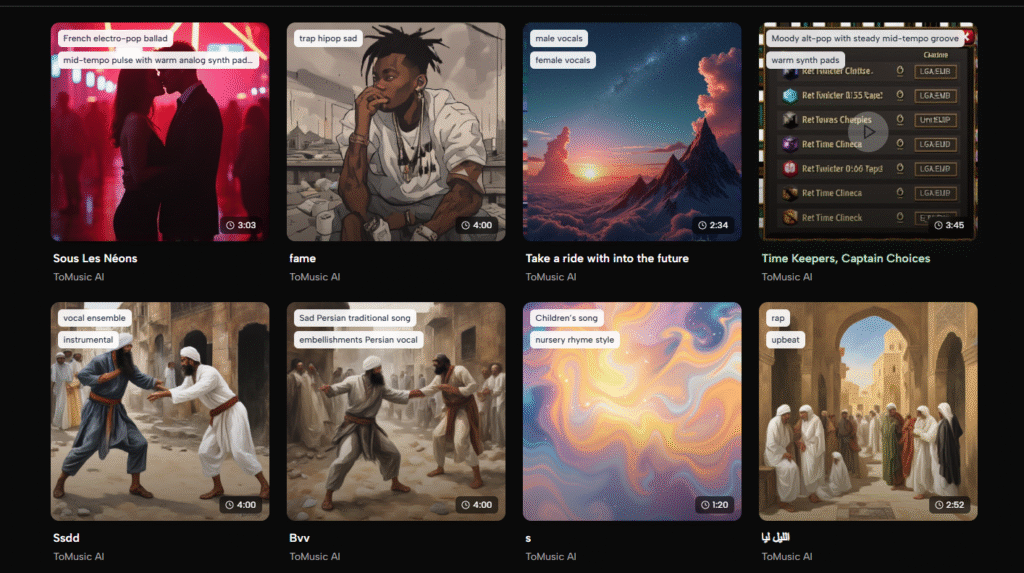
Finally, I paid attention to what happened after generation. Publicly, ToMusic includes a music library that stores outputs with titles, tags, descriptions, lyrics, and parameters. I wanted to see whether this part of the workflow actually mattered.
The First Impressions Were About Accessibility
The first strength I noticed was that the product framing feels straightforward. It does not assume the user is already a producer.
Starting Feels Manageable
Prompt-led entry lowers the emotional barrier. A user does not have to think in terms of signal chains, plugins, or arrangement software. They can begin with what they want the music to feel like.
This Helps Non-Musicians Immediately
That may sound obvious, but it changes the relationship between the user and the tool. Instead of asking, “Do I know enough to begin?” the user asks, “What do I want this track to express?”
That Change Is More Important Than It Sounds
Creative momentum often depends on starting before doubt grows too large. A platform that accepts natural-language intent gives users a better chance of acting while the idea is still alive.
The Interface Logic Supports a Faster First Draft
In my testing, the main advantage was not extreme detail control at the start. It was the ability to get to a first draft quickly enough that the idea stayed emotionally intact. For early-stage creativity, that is often the correct trade-off.
What Happened When I Used Simple Prompts
The first round of tests focused on broad musical direction. I avoided overloading the system with long instructions. Instead, I used prompts that described style and mood in normal language.
Broad Prompts Produced Broad Results
This was not surprising. When the direction was general, the outputs were often listenable but not sharply distinctive. They usually captured the emotional neighborhood, but not always the exact personality I imagined.
This Is a Useful Limitation to Understand
It would be easy to call this a flaw, but I think it is more accurate to call it a rule of the medium. Generative systems interpret direction. If the direction is loose, the result is often correspondingly broad.
The Fix Was Better Specificity
When I clarified mood, pacing, energy level, and instrument character, the results became more coherent. In practice, that means users benefit from treating prompts like creative briefs rather than casual guesses.
The Platform Responded Best to Directed Mood
The stronger outputs usually came when emotional tone and use case were both clear. Saying “sad piano song” is one thing. Saying “slow reflective piano-led song for a personal montage with warm but restrained emotion” tends to create a more useful frame.
That pattern is not unique to ToMusic, but the platform handled this kind of refinement in a way that felt approachable rather than technical.
Testing Lyrics Changed the Experience
The next part of the review involved lyric-led creation, and this is where the platform became more interesting.
Words Made the Tool Feel More Like Songwriting
A lot of AI music platforms can generate mood effectively. Fewer feel equally comfortable when the user begins from written lines. In my testing, ToMusic became much more compelling when I shifted from prompt-only requests to lyric-based direction.
Lyrics Add Structure Before Music Appears
When a user brings words, they are also bringing rhythm, emotional framing, and narrative hints. That gives the system more to interpret than genre labels alone.
This Makes the Output Easier to Judge
With lyric-led tests, it was easier to decide whether a result worked. The question was no longer only “Does this sound good?” It became “Does this serve the words?”
The Results Were Not Perfect, But They Were Useful
Some generations felt stronger than others, and that is worth saying plainly. Not every output felt like a finished song. But many felt like credible drafts. That matters because a credible draft is often enough to continue working.
Later in the process, I found myself thinking less about whether the system replaced traditional songwriting and more about whether it accelerated creative discovery. In that sense, Text to Music feels genuinely practical. It gives written language a faster path into audible form.
The Multi-Model Structure Matters More Than It First Appears
Publicly, ToMusic presents several models with different strengths. I think this is one of its most important product decisions.
Different Models Encourage Better Creative Hypotheses
When a platform treats every request as if one generation engine can solve everything, users often compensate by endlessly rewriting prompts. A multi-model structure changes that behavior. It invites the user to ask which kind of interpretation might fit the idea best.
That Reduces Blind Experimentation
Instead of treating every failure as a prompt problem, the user can also think in terms of model fit. That is a healthier workflow because it turns variation into a structured choice.
It Also Improves Confidence
In my observation, users stay calmer when they know there is more than one valid route to a result. This matters because creative frustration often comes from feeling trapped in one unclear system.
Model Choice Makes Repetition More Valuable
Repeat generation became more interesting once I thought of the models not as technical labels but as alternate creative perspectives. The same idea could be tested under different assumptions, which made the platform feel less random and more like a workspace.
What the Music Library Adds to the Workflow
This part may sound less exciting than generation, but it turned out to be important.
Saved Outputs Make Comparison Real
Publicly, the platform’s library stores songs with titles, tags, descriptions, lyrics, and parameters. In practice, this gives users a way to treat outputs as part of an ongoing process instead of disposable moments.
Creative Work Needs Memory
A common weakness in generative tools is that they produce many options but make it hard to remember what mattered about each one. When a system preserves context, comparison becomes easier.
That Encourages Iteration Instead of Chaos
People are more likely to refine ideas when previous attempts remain visible and organized. Without that, experimentation can quickly feel messy and discouraging.
This Helps More Than Power Users
At first glance, a library may seem like an advanced feature. I do not think it is. Beginners may benefit from it even more because it reduces the anxiety of losing progress.
Where ToMusic Felt Strongest
After several rounds of testing, a few strengths became clear.
It Lowers the Threshold for Beginning
The platform is approachable enough that non-musicians can start without much intimidation. That is a major advantage.
It Handles Both Prompt and Lyric Workflows
This gives it a wider audience than tools that feel optimized for only one input mode.
It Rewards Better Direction
In my testing, the platform did not punish specificity. On the contrary, it made better use of it. That is a healthy sign because it means creative skill still matters.
It Makes Reuse More Plausible
With multiple models and stored outputs, the platform feels suited to repeated experiments rather than one-off novelty use.
Where the Limitations Became Visible
A credible test should also describe where the platform does not solve everything.
The First Output Was Not Always the Best
This is probably the most important expectation to set. Useful results often appeared after more than one try. That is normal in generative systems, but users should know it upfront.
Revision Is Still Part of the Process
The platform accelerates drafting, but it does not remove the need to choose, compare, and sometimes regenerate.
Patience Improves the Experience
Users who treat the first result as a rough reveal rather than a final answer are likely to get more value.
Prompt Quality Still Shapes Outcome Quality
Loose direction usually produced looser music. Stronger inputs created stronger drafts. In other words, the platform expands access, but it does not eliminate the benefit of thoughtful intent.
Who I Think Will Benefit Most
The strongest users for ToMusic are not only musicians.
Songwriters With Unfinished Material
Someone with lyrics, hooks, or fragments can use the platform to test emotional direction quickly.
Content Creators and Small Teams
A creator making ads, explainers, reels, or short-form pieces can explore original music ideas without building a full production pipeline.
Curious Beginners
People who have always wanted to make music but never crossed the technical barrier now have a more approachable place to begin.
My Final View After Testing ToMusic
After spending time with ToMusic as a working platform rather than a demo, I think the most accurate description is this: it is a useful creative bridge. It does not replace musical judgment, and it does not eliminate iteration. But it meaningfully reduces the distance between concept and draft.
That matters because most creative projects do not fail from lack of ideas. They fail from lack of momentum. In my testing, ToMusic helped preserve momentum. It made it easier to move from feeling to sound, from words to structure, and from first attempt to revision. For a platform in this category, that is a serious achievement. The real value is not that it can generate music. The real value is that it makes creative exploration easier to continue.