

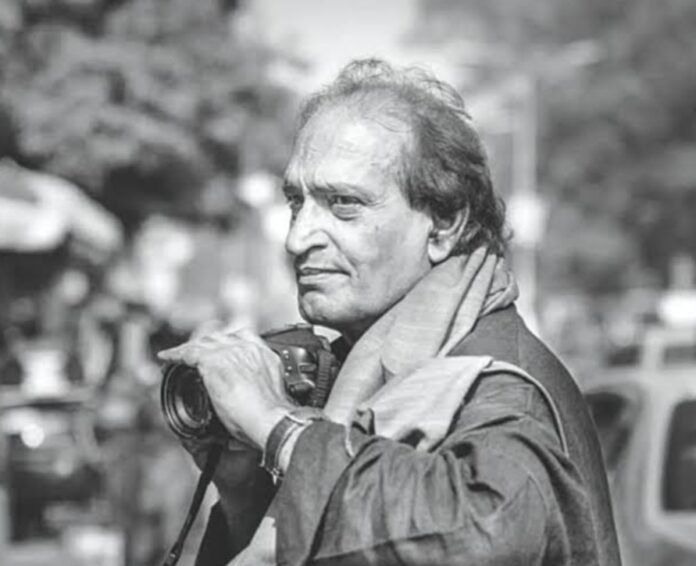
The passing of Raghu Rai on April 26, 2026, at the age of 83 marks the end of an era in Indian photography. One of the country’s most iconic visual storytellers, Rai died in Delhi after a prolonged battle with cancer, leaving behind a legacy that shaped how India has been seen—both by itself and the world.
A Life Behind the Lens
Born in 1942 in Jhang (now in Pakistan), Raghu Rai did not begin as a photographer—he trained as a civil engineer before discovering his passion for photography in the 1960s. His career began with The Statesman, where his sharp, human-centric perspective quickly stood out. By 1977, he became the first Indian photographer invited to join the prestigious Magnum Photos, nominated by the legendary Henri Cartier-Bresson.
Chronicler of India’s Defining Moments
Rai’s work is often described as a “visual history” of modern India. Over five decades, he documented some of the nation’s most critical and emotional moments—the Bangladesh Liberation War, the haunting aftermath of the Bhopal Gas Tragedy, political upheavals, and everyday life across cities and villages.
His lens captured powerful portraits of figures like Indira Gandhi, Dalai Lama, and Mother Teresa, but equally, it dignified ordinary lives—workers, pilgrims, children—turning everyday India into timeless visual poetry.
Achievements and Recognition
Raghu Rai was widely regarded as a pioneer of Indian photojournalism. He received the Padma Shri in 1972 for his work on the Bangladesh war and went on to earn global acclaim, with his photographs published in major international publications and exhibited worldwide.
Beyond awards, his true achievement lay in redefining visual storytelling—his images were not just photographs but narratives filled with emotion, context, and truth.
Why He Is Widely Remembered
Rai is remembered not merely for technical brilliance but for his sensitivity. He had an extraordinary ability to be present—close enough to feel the moment, yet distant enough to observe it truthfully. His work gave voice to both triumph and tragedy, capturing India in all its contradictions and complexities.
As many tributes noted, he was a “master of moments” and a mentor to generations of photographers who saw in him both an artist and a guide.
Nation Pays Tribute
Following his passing, tributes poured in from across the country—artists, journalists, political leaders, and citizens alike remembered him as a legend whose camera preserved India’s memory. Many described his photographs as “history frozen in time,” a legacy that will continue to educate and move generations.
An Enduring Legacy
Raghu Rai’s death is not just the loss of a photographer, but of a witness—someone who saw India deeply and showed it honestly. His images remain immortal, reminding us that photography is not just about capturing what is seen, but revealing what is felt.
In every frame he left behind, Raghu Rai ensured that India’s stories would never fade.