Observed annually on April 28, the World Day for Safety and Health at Work highlights the importance of creating safe, healthy, and dignified working conditions across the globe. Led by the International Labour Organization (ILO), the day serves as a reminder that workplace safety goes beyond physical protection—it also encompasses mental and emotional well-being.
History and Purpose
The observance was established by the ILO in 2003 to promote the prevention of occupational accidents and diseases worldwide. It also coincides with the International Commemoration Day for Dead and Injured Workers, making it both a day of awareness and remembrance. Over the years, the focus has evolved to address emerging workplace challenges, including stress, burnout, and the psychological impact of modern work environments.
Theme for 2026
The theme for 2026, “Ensuring a healthy psychosocial working environment,” shifts the spotlight toward mental health in professional spaces. It emphasises how workplace culture, leadership styles, and organisational systems directly influence employees’ psychological well-being.
In today’s fast-paced and often high-pressure work settings, issues such as stress, anxiety, and burnout have become increasingly common. The theme encourages employers and organisations to build environments where open communication, work-life balance, and strong support systems are prioritised. By doing so, workplaces can foster not just productivity, but also overall well-being.
Significance and Importance
The significance of this day lies in its holistic approach to safety. While traditional workplace safety focused on preventing physical injuries, there is now growing recognition that mental health is equally critical. A positive psychosocial environment helps employees feel valued, secure, and motivated.
Healthy workplaces contribute to stronger teamwork, increased innovation, and better decision-making. When individuals feel mentally supported, they are more likely to perform effectively and contribute meaningfully to organisational goals. Conversely, neglecting mental health can lead to decreased productivity, absenteeism, and long-term health issues.
Why It Matters Today
In an era defined by rapid technological change, remote work, and evolving job expectations, maintaining mental well-being has become a pressing concern. The 2026 theme underscores the need for organisations to adapt—by promoting empathy, inclusivity, and flexibility in the workplace.
Conclusion
World Day for Safety and Health at Work 2026 is a call to action for employers, policymakers, and individuals alike. It reminds us that a truly safe workplace is one where both the body and mind are protected. By nurturing a healthy psychosocial environment, organisations can empower individuals to thrive—building stronger teams, fostering innovation, and shaping a more resilient future for all.
Have you ever read a piece of content and felt that it had useful ideas, but it still did not feel fresh or personal enough?
That small difference often comes from originality. In digital writing, originality gives content its own identity. It helps the writing sound human, thoughtful, and worth reading. When originality is strong, even a familiar topic can feel new because the writer brings a clear voice and natural flow to it.
In modern content creation, originality is not only about writing something fully new from scratch. It is also about how ideas are explained, how examples are shared, and how the full article feels to the reader. A simple topic can still feel special when the wording is natural, and the structure is shaped with care. That is why originality matters so much in blogs, website pages, product descriptions, social posts, and long-form articles.
This topic becomes more useful when we look at the small writing habits that can reduce freshness in a draft. These are not big issues. Most of them are simple patterns that writers can notice and improve with a little attention. In a review-style view, content originality becomes stronger when the writer stays close to real thought, clear expression, and a personal tone that feels honest from start to finish.
Why Content Originality Matters In Daily Writing
Original content creates a better reading experience. It helps the reader feel that the writer has something real to say. This does not mean every line has to sound dramatic. It simply means the content should feel like it comes from a real mind, not from a repeated pattern.
When content feels original, it usually has a stronger voice, smoother flow, and more value for the reader. The writing feels alive. It carries a human touch, and that makes a big difference online. People read many articles every day, so they naturally connect more with content that sounds fresh and clear.
Originality also supports trust. If the wording feels natural and the message feels thoughtful, readers are more likely to stay with the article. They understand it more easily, and they remember it better. That is why strong originality is such an important part of quality content today.
When Writing Starts To Feel Too Familiar
Sometimes content begins with a useful idea, but slowly starts sounding too familiar. This often happens when the writer depends too much on repeated sentence patterns, common phrasing, or borrowed style. The message may still be correct, but the reading feels less personal.
In simple daily talk, it is like hearing the same line again and again in different places. It still makes sense, but it does not leave a fresh impression. That is why writers benefit from noticing these small habits early. Once they do, the article starts sounding more natural and more like their own work.
Originality Is Often About Expression
A topic can be common, yet the writing can still feel fresh. The reason is simple. Originality often comes from expression. It comes from how the writer explains the point, how they connect one paragraph to the next, and how they bring their own understanding into the content.
Small Writing Habits That Can Affect Originality
Many of the habits that affect originality are easy to improve. They are part of daily writing, so once a writer notices them, the content quality starts improving in a very natural way.
Using The Same Phrases Too Often
One common pattern is repeating the same phrases too many times. Repetition can make the article feel flat, even when the topic is useful. A fresh article usually has some variety in sentence style and word choice.
This does not mean every sentence should sound different just for effect. It simply means the writer should stay aware of repeated lines and adjust them where needed. A little variety helps the article breathe.
Relying Too Much On Generic Structure
A clean structure is always useful, but if every section follows the same rhythm without any natural flow, the article can feel predictable. Readers like order, but they also enjoy a sense of movement. A good article has structure and personality together.
This is where real human logic helps. Each section should move forward with purpose, not just fill space. When the writer explains one point clearly and then moves to the next naturally, the originality becomes stronger.
Rewriting Without Real Understanding
Sometimes writers change words in a sentence without fully shaping the meaning in their own voice. This creates content that looks different on the surface but still does not feel truly fresh. A better approach is to understand the idea first and then explain it naturally.
At this stage, some writers also use a plagiarism checker as part of the review process. That can be a helpful support step for checking freshness in wording, but the real value still comes from human understanding. The tool may help with review, but the writer’s own thinking gives the content its actual life.
How Writers Can Keep Content Fresh And Original
Originality grows when the writer stays close to clarity, natural language, and personal expression. It does not need a heavy process. It needs attention, care, and a genuine effort to make the content sound real.
Write From Meaning First
A useful way to improve originality is to focus on meaning before wording. First, understand what you want to say. Then write it in your own simple and clear way. This helps the article sound more human and less mechanical.
When the writer knows the point properly, the sentences usually come out with better flow. The message becomes easier to shape, and the content feels more grounded.
Use Daily Language Where It Fits
Simple daily language often supports originality because it sounds natural. Readers enjoy content that feels like a real person is talking to them calmly and sensibly. This is especially true in digital writing, where people prefer easy reading and clear ideas.
In Indian daily style, the logic is simple: if the line sounds normal and clean, the reader feels comfortable. That comfort matters a lot.
Review With Fresh Eyes
A final review helps a lot. When writers read the draft again, they often notice where the tone can feel warmer, where a phrase repeats, or where the wording can become more personal. This final polish practically supports originality.
Here is a simple table that shows how certain habits shape content originality:
Writing Habit
Effect On Originality
Better Approach
Repeating the same phrases
Makes the article feel familiar
Add natural variety
Following one fixed pattern
Reduces flow and freshness
Keep structure flexible
Rewording without understanding
Weakens personal voice
Write from meaning first
Using overly general lines
Makes content feel distant
Add clear and human phrasing
Skipping final review
Misses chances for polish
Read again with fresh eyes
Why A Personal Voice Matters So Much
A personal voice is one of the strongest parts of original writing. It helps the content feel sincere. The article may cover a topic many people already know, but the way the writer speaks about it can still make it memorable.
Readers Connect With Real Tone
People often connect more with writing that feels direct, warm, and clear. A real tone gives the content comfort. It makes the article easier to trust and easier to enjoy. This is why originality is closely linked with voice.
Small Changes Can Make A Big Difference
A smoother sentence, a more natural example, or a cleaner paragraph opening can change the feel of the full article. Originality is often built through these small improvements. They may look simple, but together they help the content sound fresh and complete.
Final Thoughts
Common mistakes that affect content originality are often just small writing habits that can be improved with care. Once a writer notices repeated phrasing, fixed patterns, and surface-level rewriting, the content begins to feel more natural and more personal. That is where originality starts becoming visible.
In the end, original content comes from clear thought, honest expression, and a human tone. When writers focus on meaning, write in a natural way, and review their work properly, the article feels fresher from the first paragraph to the last. That is what gives content its own identity in the digital age.
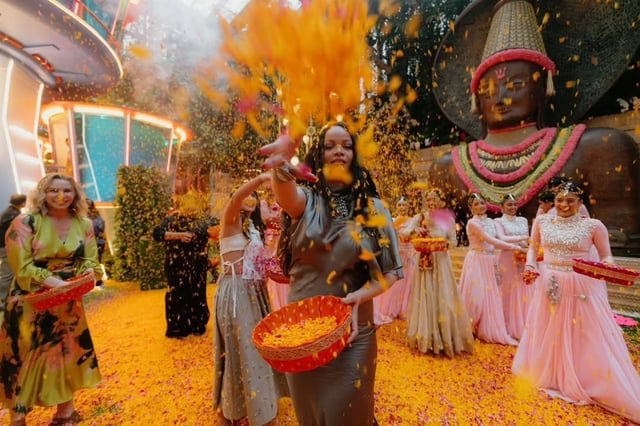
Global pop icon Rihanna recently added a unique cultural chapter to her India visit as she joined the Ambani family for an intimate gathering at their iconic Mumbai residence, Antilia. The visit, which took place on April 26, 2026, has since gone viral, capturing a rare blend of international celebrity presence and traditional Indian hospitality.
Rihanna, who is currently in India for the launch of her global beauty brand Fenty Beauty, was warmly welcomed at Antilia by Isha Ambani, Shloka Mehta, Radhika Merchant, and Anant Ambani. The reception featured traditional dance performances, setting the tone for an afternoon immersed in Indian culture and traditions.
During her visit, Rihanna participated in a spiritual puja and aarti at the family temple within Antilia. Visuals circulating online show her engaging in the rituals alongside members of the Ambani family, reflecting a respectful and enthusiastic embrace of Indian customs.
One of the highlights of the gathering was the celebration of Phoolon Ki Holi, where Rihanna joined the family in a joyful exchange of flower petals. The event also included a specially curated traditional lunch, offering the global star a taste of Indian cuisine and hospitality.
The visit stood out not just as a celebrity appearance, but as a cultural exchange. Rihanna’s willingness to participate in rituals and traditions resonated strongly with fans, with many praising her for embracing Indian culture with warmth and curiosity.
Antilia, the residence of industrialist Mukesh Ambani, is known as one of the most luxurious private homes in the world, often hosting high-profile events and global personalities.
Rihanna’s visit underscores the growing intersection of global pop culture and Indian influence. Beyond business and brand expansion, the moment reflected a deeper cultural connection—where tradition, hospitality, and global stardom came together under one roof, creating a memorable and widely celebrated occasion.
In an age where music is often consumed in seconds, Indian classical music continues to demand a lifetime. It asks not for attention, but for surrender; not for speed, but for depth.
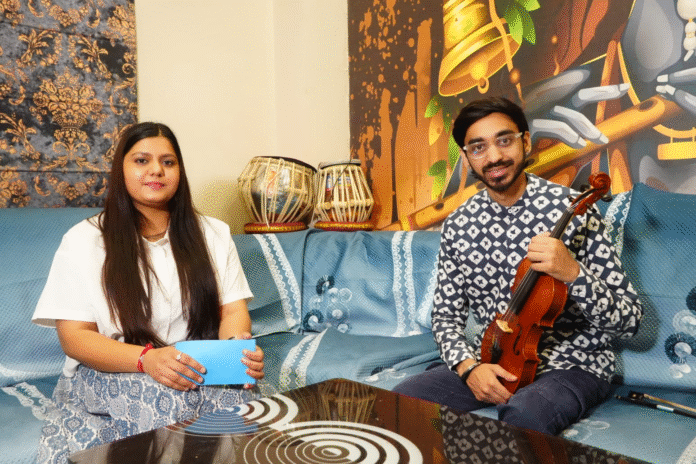
At the heart of this timeless tradition lies the Guru–Shishya parampara—a system that transcends conventional learning, shaping not only an artist’s skill but also their discipline, temperament, and way of experiencing art. It is within this continuum that the journey of Dr. Prashant Mishra, an Indian classical violinist of the Hindustani tradition, finds its meaning.
Currently serving as an Assistant Professor at Rajasthan Sangeet Sansthan, Jaipur, Dr. Mishra represents a rare confluence of performance and pedagogy. An alumnus of Banaras Hindu University, his musical roots are deeply embedded in the Banaras tradition, known for its emotive richness and expansive melodic expression. His work, including the book “Violin: Bandish Sangrah” (2022), reflects a commitment not only to performance but also to the preservation of musical knowledge. He considers his father Pt. Birendra Nath Mishra ji (Sitar Maestro) as his first guru.
Yet, beyond achievements and positions, it is the lived experience of music that defines his journey.
Reflecting on his early years, he shares, “Even before I formally began learning music, it was always around me—it lived in the environment I grew up in.” Growing up under the influence of his grandfather, Pandit Surendra Mohan Mishra ji, a distinguished sitarist, music was not introduced to him—it was inherited. “I would wake up to the sound of riyaaz. My grandfather would be practicing, students would be coming home, and my elder brother would be immersed in his own riyaaz. Music was not separate from life—it was life.”
This early immersion naturally evolved into disciplined training. But what distinguishes his journey is the uncompromising centrality of practice. “Riyaaz was never optional for us. It was compulsory then, and it remains compulsory even today,” he emphasizes—a statement that captures the essence of classical rigor.
At the core of this discipline stands his Guru, Padma Vibhushan Dr. N. Rajam, a legendary figure who redefined the role of the violin in Hindustani classical music through the pioneering of the Gayaki Ang. By bringing the expressive depth of vocal music onto the violin, she transformed the instrument into a medium capable of profound emotional articulation.
Her influence extends beyond technique into the realm of philosophy and discipline. “My Guru Maa has set a standard that is impossible to ignore. Even at the age of eighty, she continues her riyaaz every morning at five and again in the evening,” Dr. Mishra notes. The presence of the Guru, even from afar, continues to shape his practice. “Whenever I speak to her, the first question is always about riyaaz—whether I practiced or not. That discipline stays with you, no matter where you are.”
In a time where speed often overshadows depth, such an approach stands as a quiet yet powerful resistance. For Dr. Mishra, the philosophy of music is both simple and uncompromising: “If there is no practice, there is no performance—it’s as simple as that.” Consistency, self-belief, and a positive mindset, he believes, form the true foundation of growth.
Among the most defining moments of his journey is the experience of sharing the stage with his Guru. “One of the most special experiences of my journey has been sharing the stage with my Guru Maa. There is a unique sense of comfort and energy in those moments that cannot be expressed in words.” It is here that music transcends technique and becomes a shared space of trust, tradition, and transcendence.
Ultimately, the journey of Dr. Prashant Mishra reminds us that Indian classical music is not merely an art form to be performed—it is a tradition to be lived. It flows quietly across generations, carried forward through discipline, devotion, and the unseen guidance of the Guru.
And perhaps, in that quiet continuity, lies its greatest strength—that even in a rapidly changing world, its soul remains untouched. In such moments, the violin does not merely play—it speaks.
A recent security scare in the US capital has once again drawn attention to the historic Washington Hilton, a venue long associated with high-profile political events and, notably, a dramatic assassination attempt on a sitting US President over four decades ago
The hotel, known for hosting the prestigious White House Correspondents’ Dinner, was the site of a near-fatal attack on former US President Ronald Reagan on March 30, 1981. The incident remains one of the most shocking episodes in modern American political history.
The 1981 Assassination Attempt
On that day, Reagan was exiting the hotel after addressing an event when gunman John W. Hinckley Jr. opened fire. In a span of just 1.7 seconds, Hinckley fired six shots toward the President and his entourage.
While five bullets missed or were deflected, the sixth struck Reagan after ricocheting off the bulletproof limousine. The President was seriously wounded, with the bullet lodging in his chest. Initially unaware of the severity, Reagan only realized he had been hit when he began coughing up blood. He was rushed to George Washington University Hospital, where doctors performed emergency surgery and saved his life.
Three others, including aides and security personnel, were also injured in the attack but survived. Hinckley was immediately apprehended at the scene.
A Crime Driven by Obsession
Investigations revealed that Hinckley was heavily influenced by the 1976 film Taxi Driver. He had reportedly watched the film multiple times and became fixated on actress Jodie Foster. In a bid to gain her attention and achieve notoriety, he believed that assassinating a prominent political figure would make him famous.
Prior to targeting Reagan, Hinckley had also stalked then-President Jimmy Carter during the 1980 election campaign. He was briefly detained for illegal possession of firearms but later released—an episode that preceded the 1981 attack.
Aftermath and Legal Outcome
Following his arrest, Hinckley’s defense successfully argued that he was mentally unstable. The court found him not guilty by reason of insanity, and he was committed to a psychiatric institution for over three decades. In 2016, he was granted conditional release under strict supervision.
A Venue Marked by History
Today, the Washington Hilton continues to host major political and media events. However, the 1981 assassination attempt remains a defining chapter in its history—a stark reminder of the vulnerabilities even at the highest levels of power, and the unpredictable forces that can shape global events.
Ladakh Lieutenant Governor Vinai Kumar Saxena has approved the creation of five new districts in the Union Territory, marking a significant administrative reform. The move fulfils a long-standing demand of local residents and is expected to enhance governance in one of India’s most strategically important border regions.
Five New Districts Announced
The newly created districts are Nubra, Sham, Changthang, Zanskar, and Drass. With this development, Ladakh will now have a total of seven districts, compared to just Leh and Kargil earlier. The decision is being viewed as a historic step toward decentralised governance and improved public service delivery.
Why the Decision Matters
Ladakh is India’s largest Union Territory by area, covering 86,904 square kilometres, but has a sparse population of around 2.74 lakh (Census 2011). Its rugged terrain and remote settlements make administration difficult. The creation of new districts is expected to bring governance closer to people, particularly in far-flung and border areas.
Administrative and Strategic Significance
According to the Lieutenant Governor, the proposal had received approval from the Ministry of Home Affairs in August 2024 under the leadership of Union Home Minister Amit Shah. The move is expected to:
Strengthen grassroots governance
Improve access to public services
Boost employment and entrepreneurship
Accelerate regional development
Important Facts
Ladakh became a separate Union Territory on 31 October 2019 after the bifurcation of Jammu and Kashmir.
Article 370 was abrogated on 5 August 2019, ending the region’s special status.
Drass is among the coldest inhabited places in the world.
Changthang is known for Pashmina wool and nomadic pastoral communities.
Political Background and Future Impact
Since becoming a Union Territory, Ladakh has been under the direct administrative control of the Union Home Ministry. With limited elected representation, apart from one Member of Parliament—the region has faced governance challenges.
The creation of new districts is expected to improve administrative efficiency, enhance political participation, and support balanced regional development. It also holds strategic importance given Ladakh’s sensitive borders with China and Pakistan
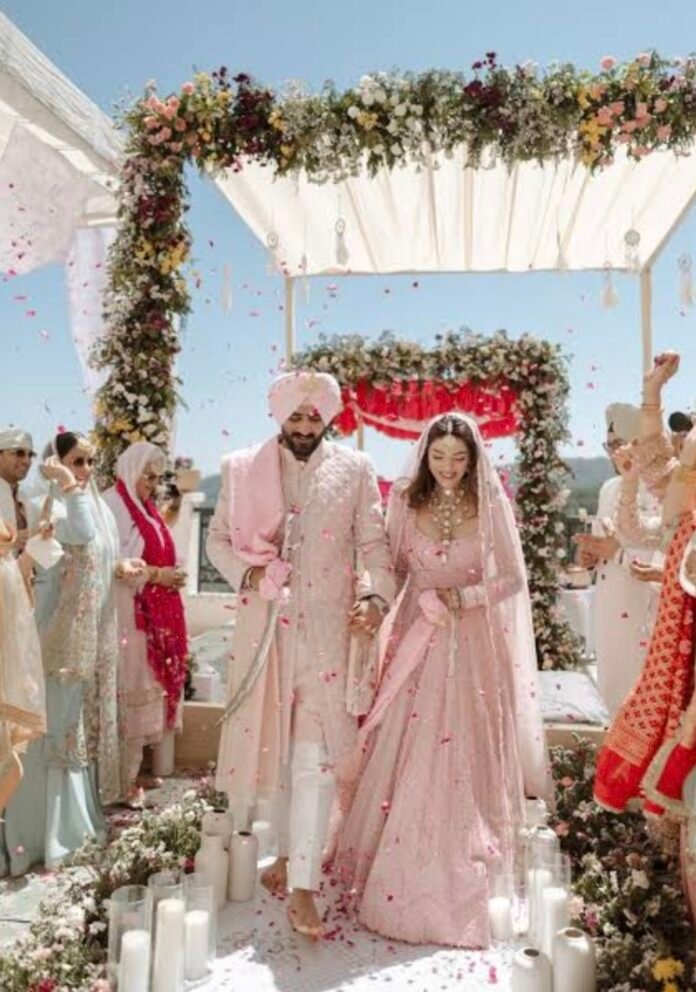
Indian actress Mehreen Pirzada has entered a new phase of her life, marrying Arsh Aulakh in a private and elegant ceremony. The wedding took place on April 26, 2026, in the scenic hill town of Chail, Himachal Pradesh, surrounded by close family members and friends.
Known for her performances in films like F2: Fun and Frustration, Mehreen surprised fans by sharing the news of her marriage through social media, along with dreamy glimpses from the ceremony. The couple kept the event intimate, choosing a serene and picturesque location for their special day.
The wedding was marked by elegance and simplicity. Mehreen and Arsh were seen in coordinated blush-pink traditional outfits, adding a soft and graceful aesthetic to the celebrations. Their pictures quickly went viral, with fans and celebrities flooding social media with congratulatory messages.
Arsh Aulakh, who largely maintains a low public profile, has now come into the spotlight following the wedding. While not much is widely known about him, the couple’s relationship has drawn attention for its privacy and understated nature.
Mehreen Pirzada, born in Punjab, has built a successful career across Telugu, Tamil, Hindi, and Punjabi cinema. She made her acting debut in 2016 and gained recognition with films such as Krishna Gaadi Veera Prema Gaadha and F2: Fun and Frustration, establishing herself as a popular face in South Indian cinema.
The wedding also marks a significant personal milestone for the actress, whose previous engagement in 2021 had been called off. Over the years, she has maintained a relatively private personal life, making this announcement all the more special for her fans.
As Mehreen embarks on this new journey, the film fraternity and her admirers continue to extend warm wishes. Her marriage to Arsh Aulakh adds a joyful chapter to her life, balancing personal happiness with a thriving career in the entertainment industry.
The legacy of Michael Jackson—one of the most influential entertainers in history—is set to be revisited in the upcoming biographical musical drama film Michael. Directed by Antoine Fuqua and written by John Logan, the film aims to present an intimate and comprehensive portrayal of the King of Pop’s extraordinary life and career.
At the heart of the film is Jaafar Jackson, Michael Jackson’s real-life nephew, who steps into the iconic role in his acting debut. This casting choice has generated considerable attention, as Jaafar not only shares a familial connection but is also said to embody the look, voice, and performance style reminiscent of his legendary uncle.
The film promises to chronicle Michael Jackson’s journey from his early days as a child star with the The Jackson 5 to his rise as a global music phenomenon. It is expected to explore defining moments of his career, including the creation of groundbreaking albums like Thriller, his revolutionary music videos, and his unmatched influence on pop culture, dance, and music worldwide.
However, Michael is not just a celebration of success. The film is also anticipated to delve into the complexities of Jackson’s personal life—the pressures of fame, his relentless pursuit of perfection, and the controversies that surrounded him. By offering a balanced narrative, the filmmakers aim to present a nuanced portrait of a man whose life was as extraordinary as it was complicated.
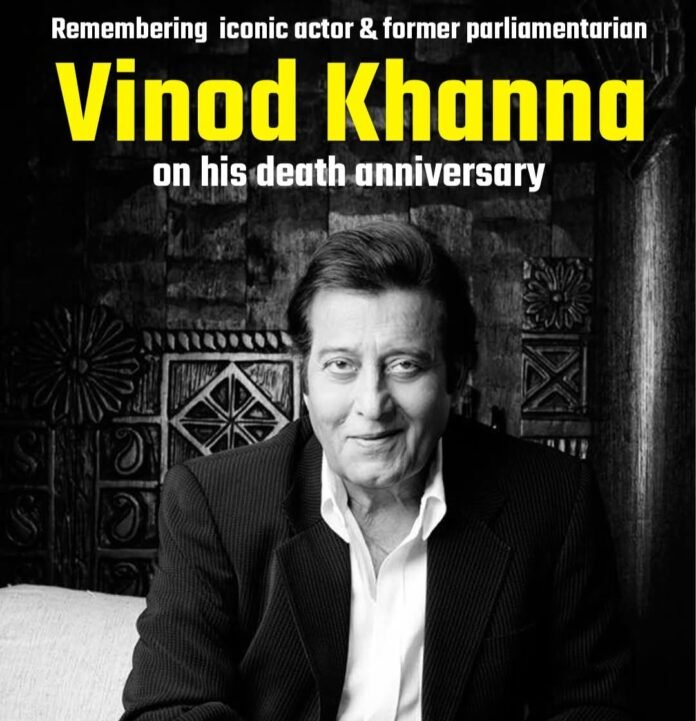
The death anniversary of Vinod Khanna, observed on April 27, is a moment to remember one of Indian cinema’s most charismatic and versatile actors. Even years after his passing in 2017, Vinod Khanna continues to be celebrated for his remarkable journey—from a Bollywood superstar to a spiritual seeker and later a respected public figure.
— Ministry of Information and Broadcasting (@MIB_India) April 27, 2026
Born on October 6, 1946, in Peshawar (now in Pakistan), Vinod Khanna’s entry into films was not conventional. He began his career in the late 1960s, often playing antagonist roles in films like Mere Apne and Mera Gaon Mera Desh. However, it did not take long for audiences and filmmakers to recognise his screen presence and intensity, paving the way for his transition into leading roles.
Throughout the 1970s and 1980s, Vinod Khanna emerged as one of Bollywood’s most bankable stars. Films such as Amar Akbar Anthony, Muqaddar Ka Sikandar, Qurbani, and Dayavan showcased his versatility, whether in action-packed roles, emotional dramas, or romantic performances. Known for his striking personality and effortless charm, he stood tall among contemporaries and carved a distinct identity in the industry.
At the peak of his career, Khanna made a surprising decision that set him apart—he stepped away from films to follow a spiritual path under the guidance of Osho. This phase of introspection reflected his quest for deeper meaning beyond fame and success. Though his hiatus left fans shocked, it added a unique dimension to his life story.
He eventually returned to cinema in the late 1980s, continuing to work in films while also venturing into politics. As a member of the Bharatiya Janata Party, Vinod Khanna served as a Member of Parliament from Gurdaspur and also held ministerial responsibilities, earning respect for his contributions to public life.
Vinod Khanna passed away on April 27, 2017, after battling cancer. His death marked the loss of not just an actor, but a personality who embodied grace, resilience, and reinvention. Tributes continue to pour in every year from fans, colleagues, and the film fraternity, remembering him as a gentleman star whose legacy transcends generations.
On his death anniversary, Vinod Khanna is remembered not only for his cinematic brilliance but also for the life he lived—with courage to evolve, the humility to step away, and the strength to return. His journey remains an enduring inspiration in the world of Indian cinema and beyond.
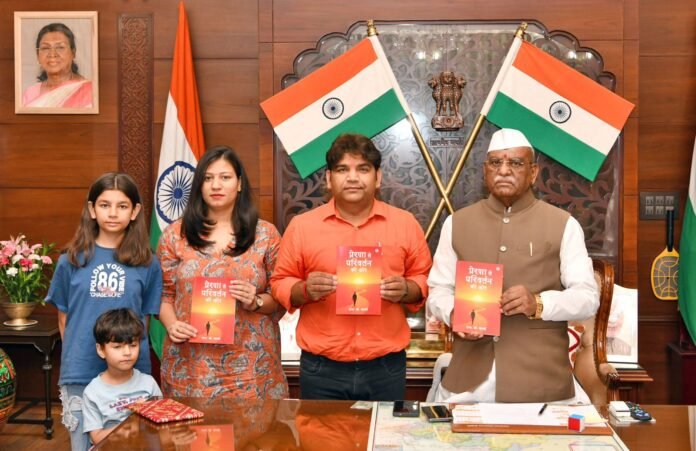
Jaipur, April 27, 2026: The book “प्रेरणा से परिवर्तन की ओर”, authored by young writer and thinker N. K. Sharma, was formally released today at the Raj Bhavan in Jaipur. The unveiling ceremony was conducted by the Hon’ble Governor of Rajasthan, Haribhau Bagde, at 10:00 AM.
On the occasion, the author presented a copy of the book to the Governor. Addressing the gathering, Governor Bagde congratulated N. K. Sharma and emphasised the importance of youth participation in nation-building. He stated that young people must actively contribute to shaping the country’s future and take responsibility for driving meaningful change.
Praising the book, the Governor noted that “प्रेरणा से परिवर्तन की ओर” has the potential to inspire and guide young readers in different spheres of life. He expressed confidence that the work would encourage youth to move forward with clarity, purpose, and a strong sense of responsibility.
The ceremony was attended by the author’s family members, including his wife, Madhuri Sharma, and daughters, Yuvika and Avika, who were present on the occasion.
The book centres on themes of inspiration and positive transformation, aiming to motivate the younger generation to choose the right direction in life and contribute meaningfully to nation-building. Through its ideas and insights, it seeks to instil purpose, discipline, and constructive thinking among readers.
N. K. Sharma, an emerging voice in motivational writing, is dedicated to fostering positive change in society through his work. The release of “प्रेरणा से परिवर्तन की ओर” marks an important milestone in his journey and underscores the growing relevance of inspirational literature in guiding the aspirations of young India.