Home Blog Page 23

7-Year-Old Ishank Singh Creates History with Record-Breaking Palk Strait Swim

0

In a remarkable display of courage, endurance, and determination, 7-year-old Ishank Singh from Ranchi, Jharkhand, has etched his name in history by becoming the youngest swimmer to cross the challenging Palk Strait. His extraordinary feat has not only brought pride to his home state but has also captured national and global attention.

A Historic Feat Across Treacherous Waters

On April 30, 2026, Ishank successfully swam nearly 29 kilometres from Talaimannar in Sri Lanka to Dhanushkodi in Tamil Nadu, India. He completed this demanding open-water journey in just 9 hours and 50 minutes, setting a new world record for being the youngest and fastest swimmer to conquer this route.

The Palk Strait is known for its unpredictable tides, strong currents, and rough sea conditions, making it one of the toughest swimming challenges even for experienced athletes. Ishank’s achievement at such a young age is therefore nothing short of extraordinary.

Breaking Records at a Tender Age

With this accomplishment, Ishank has been recognised by the Universal Records Forum as the “Youngest and Fastest Palk Strait Swimmer.”
He surpassed previous benchmarks set by older swimmers, proving that age is no barrier when determination and discipline come together.

The Journey Behind the Success

Behind this historic moment lies months of intense preparation. Ishank trained rigorously for 4–5 hours daily at the Dhurwa Dam in Ranchi under the guidance of his coaches.
His routine demanded not just physical stamina but also mental resilience—qualities rarely seen at such a young age.

A Moment of Pride for the Nation

As Ishank reached the shores of India, he was welcomed with admiration and pride. Leaders and citizens alike hailed his achievement as a shining example of dedication and perseverance. His success has inspired countless young athletes across the country, showcasing what can be achieved with focus and hard work.

More Than Just a Record

Ishank Singh’s achievement is not merely about setting a record—it is a story of passion, discipline, and fearless ambition. At an age when most children are just beginning to explore sports, he has conquered one of the most demanding open-water challenges in the world.
His journey serves as a powerful reminder that extraordinary dreams can be realised with unwavering commitment—no matter how young the dreamer may be.

Narad Jayanti: Celebrating the Divine Messenger of Wisdom and Devotion

0

Narad Jayanti is a sacred Hindu festival that commemorates the birth anniversary of Narada Muni, one of the most revered sages in Indian spiritual tradition. Known as the celestial messenger and an ardent devotee of Lord Vishnu, Narad Muni symbolizes knowledge, devotion (bhakti), and divine communication across the three worlds.

Date and Observance

In 2026, Narad Jayanti is observed on May 2, falling on the Krishna Paksha Pratipada (or Dwitiya) of the month of Jyeshtha according to the Hindu lunar calendar.
Devotees mark this day by offering prayers, performing rituals, and remembering the teachings of Narad Muni.

Who Was Narad Muni?

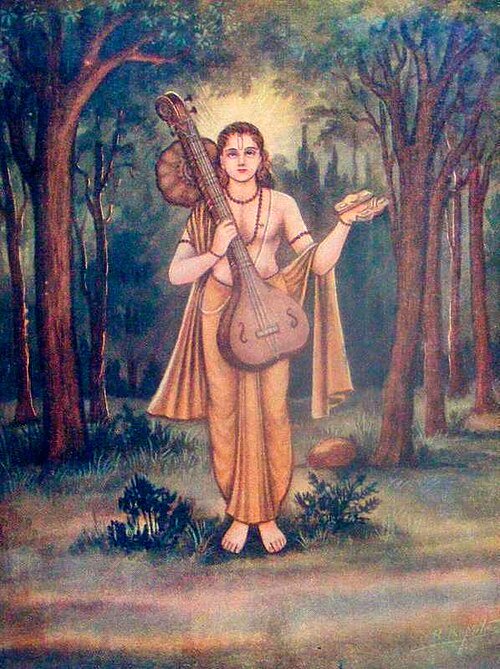
Narada is regarded as the “Devarishi” (divine sage) and is believed to be the mind-born son of Lord Brahma. He is often depicted carrying a veena and chanting “Narayana, Narayana,” symbolizing his unwavering devotion to Lord Vishnu.

Narad Muni is known as the cosmic messenger, travelling freely across heaven, earth, and the netherworld, spreading wisdom, devotion, and divine knowledge. Because of his role in sharing information and truth, he is often called the first journalist of the universe.

Significance of Narad Jayanti

Narad Jayanti holds deep spiritual importance in Hinduism. The day is not only about celebrating the birth of a sage but also about embracing the values he represents:

●Devotion (Bhakti): Narad Muni is considered a pioneer of Bhakti Yoga, teaching unconditional love for God.
●Wisdom and Communication: He is a symbol of knowledge and truthful communication, connecting gods, sages, and humans.
●Spiritual Guidance: Through texts like the Narad Bhakti Sutra, he laid down the path of devotion and inner peace.

This day reminds devotees to cultivate humility, truthfulness, and devotion in everyday life.

Rituals and Celebrations

On Narad Jayanti, devotees observe various spiritual practices:
●Offering prayers to Lord Vishnu and Narad Muni
●Chanting mantras and singing devotional hymns
●Reading scriptures and teachings associated with Narad Muni
●Visiting temples and participating in satsangs

Many consider it auspicious to seek blessings for wisdom, peace, and spiritual growth on this day.

A Timeless Spiritual Legacy

Narad Jayanti is more than a ritual—it is a celebration of a timeless guide who bridged worlds with knowledge and devotion. In a fast-changing world, the teachings of Narad Muni remain deeply relevant, reminding humanity of the power of truth, communication, and unwavering faith.

Ultimately, the festival inspires us to live with purpose, spread positivity, and stay connected to the divine—just as Narad Muni did across the universe.

International Harry Potter Day: Celebrating the Magic, Courage, and Legacy of a Global Phenomenon

0

Every year on May 2, fans across the world celebrate International Harry Potter Day, a tribute to the magical universe created by J. K. Rowling. More than just a fandom celebration, the day holds deep significance within the story itself, marking one of the most defining moments in the wizarding world.

Why May 2

The date is not random—it commemorates the legendary Battle of Hogwarts, which took place on May 2, 1998, in the final book, Harry Potter and the Deathly Hallows. This epic battle marked the end of the Second Wizarding War and the defeat of the dark wizard Lord Voldemort by Harry Potter and his allies. It symbolised the triumph of good over evil, courage over fear, and unity over division.

The emotional weight of this battle—where many beloved characters sacrificed their lives—makes the day especially meaningful for fans worldwide.

Origin of International Harry Potter Day

International Harry Potter Day was officially declared in 2012 by then UK Prime Minister David Cameron. The aim was to honour the immense cultural and literary impact of the Harry Potter series, which has inspired generations of readers and reshaped modern storytelling.

Since then, May 2 has become a global celebration of imagination, storytelling, and the enduring values embedded in the series.

Significance of the Day

Beyond its fictional roots, International Harry Potter Day represents powerful themes that resonate in real life—friendship, bravery, sacrifice, and standing up against injustice. The Harry Potter series has influenced millions, encouraging young readers to embrace books and believe in the power of hope and resilience.

It also highlights the cultural impact of the franchise, which spans books, films, theme parks, and a vast global fan community. The story’s universal appeal lies in its ability to connect people across generations and geographies.

How the Day is Celebrated

Fans, often called “Potterheads,” celebrate the day in creative and nostalgic ways:
●Re-reading favourite books or watching movie marathons
●Dressing up as iconic characters from Hogwarts
●Hosting themed parties with elements like Butterbeer and magical décor
●Sharing quotes, fan art, and tributes online

Many also revisit the deeper messages of the series, reflecting on how its lessons apply to real-world challenges.

A Magical Legacy That Lives On

More than two decades after the first book was published, the magic of Harry Potter remains as powerful as ever. International Harry Potter Day is not just about remembering a fictional battle—it is about celebrating a story that continues to inspire courage, kindness, and imagination.

In a world that often feels uncertain, the message of Harry Potter endures: even in the darkest times, light can prevail—if people choose to stand together.

World Tuna Day: Protecting a Global Lifeline Beneath the Waves

0

Every year on May 2, the world comes together to observe World Tuna Day, an international occasion dedicated to raising awareness about the importance of tuna and the urgent need to protect it. Established by the United Nations General Assembly in 2016 and first observed in 2017, the day highlights the ecological, economic, and nutritional value of one of the most widely consumed fish species in the world.

Tuna is far more than just a staple on dining tables. It plays a critical role in global food security, providing a vital source of protein for millions of people. Economically, it is equally significant. Tuna species account for nearly 20 percent of the value of global marine capture fisheries and more than 8 percent of internationally traded seafood, supporting livelihoods across coastal and island communities.

However, this immense demand has also placed tuna populations under pressure. Overfishing, illegal fishing practices, and climate-related changes in ocean ecosystems have raised concerns about the long-term sustainability of tuna stocks. Recognizing these threats, World Tuna Day serves as a global call to action to promote responsible fishing practices and strengthen international cooperation in managing marine resources.

Encouragingly, progress has been made in recent years. A growing share of tuna is now sourced from sustainably managed fisheries, with over 90 percent of tuna catches coming from stocks that are not overfished. This marks a significant improvement from earlier years and demonstrates that collective global efforts can yield positive results.

The observance is also closely linked to the United Nations’ broader sustainable development agenda, particularly goals related to life below water, responsible consumption, and zero hunger. By advocating for science-based fisheries management and conscious consumer choices, World Tuna Day underscores the importance of balancing human needs with environmental preservation.

Ultimately, World Tuna Day is not just about a species of fish. It is about safeguarding ocean health, protecting livelihoods, and ensuring that future generations can continue to benefit from this vital resource. As awareness grows, so does the responsibility to act, making sustainability not just a policy goal but a shared global commitment.

Languages, Trade and Talent: Dharmendra Pradhan’s Vision for a Globally Skilled India

0

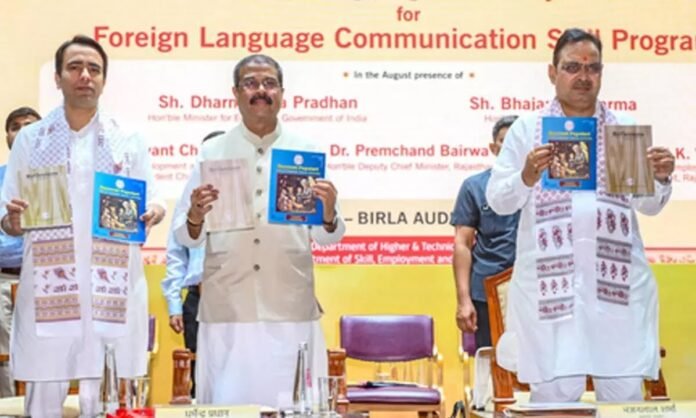
As India deepens its engagement with the global economy through new Free Trade Agreements, Union Education Minister Dharmendra Pradhan has placed a sharp focus on how these economic partnerships can transform the country’s education and employment landscape. Speaking recently, including at a programme in Jaipur on May 1, 2026, Pradhan outlined a forward-looking vision where trade policy, language skills, and youth employability are closely intertwined.

At the heart of his remarks was the proposed EU-India Free Trade Agreement, which he said would open up a wide range of employment opportunities for Indian youth. However, he emphasized that these opportunities would not be limited to traditional sectors. Instead, they would increasingly demand new-age skills, particularly proficiency in foreign languages such as French, German, Spanish, Japanese, and Korean.

Pradhan highlighted that such linguistic capabilities are no longer optional but essential in a globalised job market. From multinational corporations and international organisations to tourism and cross-border trade, language skills can act as a bridge between cultures and economies. He noted that young Indians equipped with these skills would be better positioned to access jobs not only within India but also in countries like Japan and South Korea, where demand for skilled professionals continues to grow.

Linking this vision to policy, Pradhan underscored the role of the National Education Policy 2020, which promotes multilingual and globally oriented education. According to him, the policy reflects a shift from a degree-centric approach to one that prioritises skill development, adaptability, and international competitiveness. Language learning, in this context, becomes a tool for both economic mobility and cultural exchange.

Importantly, Pradhan framed language as more than just a means of communication. He described it as a powerful connector that fosters mutual understanding and social cohesion, both within and across nations. He also pointed out that India’s youth possess a natural ability to adapt to diverse cultures, an advantage that can be leveraged in global markets.

The broader message was clear: India’s workforce must be prepared not just for domestic opportunities but for a rapidly evolving global economy. By aligning education, skill development, and trade strategies, the government aims to create a generation of job creators and globally competent professionals.

In Pradhan’s vision, Free Trade Agreements are not merely economic instruments. They are gateways to new careers, new skills, and a more confident, outward-looking India, powered by a youth that speaks the language of the world.

India Achieves Major Defence Milestone: DRDO & Indian Navy Successfully Test Advanced Naval Missile

0

In a significant boost to India’s defence capabilities and indigenous military technology, the Defence Research and Development Organisation (DRDO) and the Indian Navy have successfully carried out the maiden salvo launch of the Naval Anti-Ship Missile – Short Range (NASM-SR). This landmark test marks a major step forward in strengthening India’s maritime strike power and self-reliance in defence production.

A Historic First: Salvo Launch Capability

The test was conducted off the coast of the Bay of Bengal near Odisha, where two missiles were launched in quick succession from a naval helicopter platform. This was the first-ever salvo launch of an advanced air-launched anti-ship missile system by India.

A “salvo launch” refers to firing multiple missiles rapidly from a single platform, significantly increasing strike effectiveness and overwhelming enemy defences. The successful execution of this capability demonstrates a new level of operational readiness for India’s naval forces.

Precision and Performance: Key Highlights

The test achieved all its intended objectives, with data verified through advanced tracking systems such as radar, electro-optical instruments, and telemetry deployed at the Integrated Test Range (ITR), Chandipur.

One of the standout achievements was the missile’s “waterline hit capability”, meaning it can strike ships at or near the water surface—maximizing damage and effectiveness in naval warfare.

Advanced Indigenous Technology

The NASM-SR missile represents a culmination of cutting-edge technologies developed within India. Key features include:
●Solid propulsion booster and long-burn sustainer for enhanced range and stability
●Advanced seeker and avionics systems for precision targeting
●Fibre-optic gyroscope-based inertial navigation system
●Radio altimeter for accurate altitude measurement
●High-bandwidth two-way data link for real-time communication
●Jet-vane control system for superior maneuverability

All these subsystems have been developed indigenously by DRDO laboratories in collaboration with Indian industry partners, highlighting the country’s growing defence manufacturing ecosystem.

Strategic Importance for India

This successful test significantly enhances India’s maritime combat capabilities. Anti-ship missiles are crucial in modern naval warfare, enabling forces to neutralize enemy vessels from a distance with high precision.

The NASM-SR’s helicopter-launch capability adds flexibility, allowing deployment from airborne platforms rather than relying solely on ships or submarines. This expands operational reach and tactical options for the Indian Navy.

Leadership Reactions

India’s Defence Minister, Rajnath Singh, congratulated the DRDO, Indian Navy, Indian Air Force, and industry partners for the achievement. He emphasized that the development of such advanced systems will greatly strengthen the capabilities of India’s armed forces.

Dr. Samir V. Kamat, Secretary of Defence R&D and Chairman of DRDO, also praised the teams involved, acknowledging their role in achieving this technological milestone.

Towards Aatmanirbhar Bharat in Defence

This development aligns with India’s broader vision of Aatmanirbhar Bharat (self-reliant India), particularly in the defence sector. By designing and producing advanced weapon systems domestically, India reduces dependence on foreign imports and strengthens its strategic autonomy.

Conclusion

The successful maiden salvo launch of the NASM-SR missile is not just a technological achievement—it is a symbol of India’s growing strength in defence innovation. As the nation continues to invest in indigenous research and development, such milestones pave the way for a more secure and self-reliant future.

In an increasingly complex global security environment, advancements like these ensure that India remains prepared, capable, and resilient on the high seas.

Bargi Dam Tragedy: Who Should Be Held Accountable When Negligence Sinks Lives, Not Just Boats

0

Bagri Dam Tragedy has left each and everyone shattered… This cruise accident in Jabalpur is not just a tragic incident—it is a damning indictment of systemic failure. Nine lives have already been lost. Over two dozen people have been rescued but several are still missing and their fate remain uncertain. But the real question is not what happened but it is who allowed this to happen.

Because accidents like these don’t just occur. They are enabled.

Let’s be blunt: when 40–45 tourists are onboard a cruise that ends in disaster, responsibility doesn’t lie with fate. It lies with a chain of negligence—predictable, preventable, and repeated.

Start with the operators.
There are flurry of questions unanswered…Was the vessel overloaded? Were safety protocols followed? Were there enough life jackets—and more importantly, were passengers made to wear them? In most such tragedies across India, the answer is painfully familiar: rules exist only on paper. Who cleared this cruise to operate? Were regular inspections conducted? Was the crew trained for emergencies? Or was this yet another case of licenses handed out casually, with little follow-up? Tourism cannot be allowed to function on a “chalta hai” mindset when lives are at stake.

And what about real-time oversight?
Where were the monitoring mechanisms? Was there any weather advisory ignored? Any distress signal delayed? In a controlled water body like a dam, a disaster of this scale points to shocking lapses in supervision.

Finally, accountability.
Every time such an incident happens, the script is identical: compensation announcements, suspension of a few officials, and a promise of inquiry. And then—silence. No systemic reform. No deterrence. No justice that actually fixes the problem.

Let’s be clear:
If this tragedy fades into just another statistic, the system has already decided that these lives were expendable.

The victims at Bargi Dam were not thrill-seekers courting danger. They were tourists—families, individuals—who trusted that a licensed cruise meant a safe experience. That trust has been shattered.

And unless responsibility is fixed—clearly, publicly, and with consequences—this won’t be the last such tragedy.

Because in India, disasters aren’t rare. Accountability is.

(Please see: First Pic is AI generated)

Manna Dey Birth Anniversary: Remembering the Voice That Blended Classical Soul with Popular Melody

0

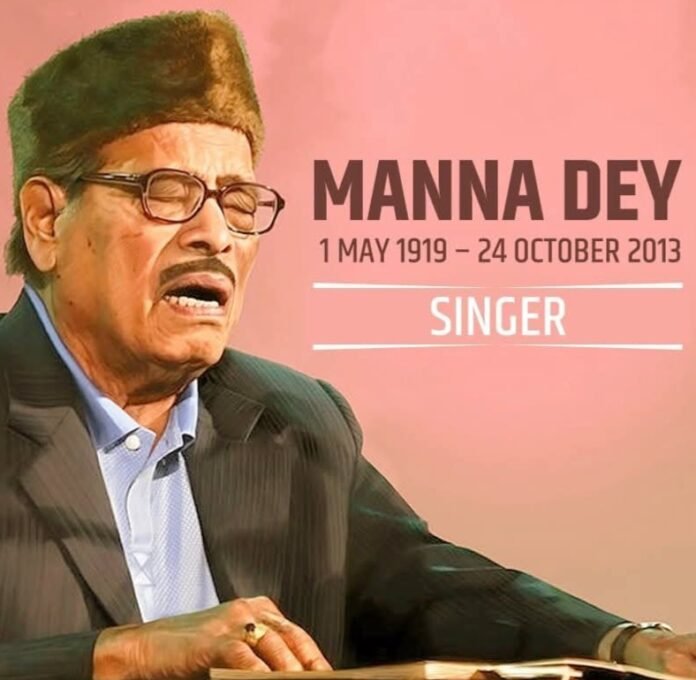
Every year on May 1, music lovers across India and beyond celebrate the birth anniversary of Manna Dey—one of the most versatile and technically gifted playback singers in the history of Indian cinema. Born as Prabodh Chandra Dey in 1919 in Kolkata, his voice became synonymous with depth, classical brilliance, and timeless emotion.

A Journey Rooted in Classical Excellence

Manna Dey’s musical foundation was deeply rooted in Indian classical traditions. He trained under stalwarts like Ustad Aman Ali Khan of the Bhendibazaar Gharana, which gave him an extraordinary command over complex ragas and intricate compositions.

He began his playback singing career in the early 1940s with the film Tamanna, marking the beginning of a journey that would span decades and thousands of songs.

What set him apart was his ability to seamlessly blend classical purity with mainstream film music—a rare skill that earned him immense respect among composers and fellow singers.

A Voice Across Genres and Generations

Unlike many singers who became associated with a particular style, Manna Dey mastered a wide range of genres:

●Classical and semi-classical compositions
●Romantic melodies
●Devotional songs
●Patriotic anthems
●Humorous and light-hearted numbers

He recorded over 3,500 songs in multiple languages including Hindi, Bengali, Marathi, and Malayalam, making him a truly pan-Indian artist.

His contemporaries included legends like Mohammed Rafi, Kishore Kumar, and Mukesh, yet Manna Dey carved his own unique niche with technically demanding songs that required exceptional skill.

Iconic Songs That Define His Legacy

Manna Dey’s songs continue to resonate across generations, each carrying a distinct emotional and musical richness. Some of his most celebrated tracks include:
●Zindagi Kaisi Hai Paheli (Anand)
●Ae Mere Pyare Watan (Kabuliwala)
●Laga Chunari Mein Daag (Dil Hi To Hai)
●Yeh Dosti Hum Nahi Todenge (Sholay)
●Aye Meri Zohra Jabeen (Waqt)
●Ek Chatur Naar (Padosan)

These songs highlight his versatility—from philosophical reflections to playful duets and classical masterpieces.

Awards and Recognition

Manna Dey’s immense contribution to Indian music earned him numerous prestigious honours:
●Padma Shri (1971)
●Padma Bhushan (2005)
●Dadasaheb Phalke Award (2007)

These accolades reflect not just his popularity, but also his artistic excellence and influence on generations of musicians.

The Underrated Genius

Despite his immense talent, Manna Dey was often considered an “underrated” legend. While other singers became the regular voice for leading actors, Dey was frequently chosen for technically complex or unconventional songs.

Ironically, this very distinction elevated his status among musicians and connoisseurs, who admired his flawless technique and ability to bring classical music into popular cinema.

A Timeless Legacy

Manna Dey passed away on October 24, 2013, but his voice continues to live on—echoing through radios, playlists, and the hearts of millions.

On his birth anniversary, we are reminded not just of a singer, but of an artist who redefined musical boundaries. His songs are not merely melodies; they are lessons in discipline, passion, and artistic integrity.

Conclusion

The birth anniversary of Manna Dey is more than a tribute—it is a celebration of musical brilliance that transcends time. In an era where trends come and go, his voice remains eternal, reminding us that true artistry never fades.

As his iconic song asks, “Zindagi kaisi hai paheli…”—perhaps the answer lies in the enduring magic of his music.

Armour Day: Honouring the Steel Backbone of the Indian Army

0

Every year on May 1, the Armoured Corps of the Indian Army celebrates Armour Day, a moment of pride and remembrance that marks a decisive turning point in India’s military history—the transition from traditional horse-mounted cavalry to modern mechanised warfare.

History: From Horses to Tanks

The origins of Armour Day trace back to May 1, 1938, when the legendary Scinde Horse became the first Indian cavalry regiment to replace its horses with tanks. This transformation symbolized the beginning of mechanisation in the Indian cavalry, aligning it with the evolving nature of warfare across the world. The induction of Vickers Light Tanks and armoured vehicles marked not just a technological upgrade but a complete shift in combat strategy, mobility, and firepower.

Why Armour Day is Celebrated

Armour Day commemorates this historic shift and honours the courage, adaptability, and service of armoured corps personnel—past and present. It celebrates the spirit of soldiers who embraced change and mastered new technologies to defend the nation more effectively. The day also pays tribute to the sacrifices made by armoured regiments in various operations and conflicts, where speed, strength, and precision often proved decisive.

Significance of the Armoured Corps

Known for its formidable tanks and rapid manoeuvrability, the Armoured Corps remains one of the most crucial combat arms of the Indian Army. It plays a key role in offensive and defensive operations, particularly in challenging terrains such as deserts and plains. Over the decades, it has evolved with cutting-edge equipment and continues to uphold its reputation for excellence and bravery.

Observances and Ceremonies

Armour Day is marked with solemn ceremonies and tributes across military establishments. A key highlight is the wreath-laying ceremony at the National War Memorial, where senior officers, along with serving personnel and veterans, pay homage to fallen soldiers. These ceremonies reflect deep respect for the “Bravehearts” who made the ultimate sacrifice in the line of duty.

A Tribute to Legacy and Modernisation

Armour Day is not just about history—it is a celebration of evolution. It reminds us how the Indian Army has continually adapted to modern warfare while staying rooted in its traditions of valour and honour. As tanks replace horses and technology advances, the spirit of the soldier remains unchanged—resilient, fearless, and ever ready to serve.

In essence, Armour Day stands as a powerful tribute to the legacy, transformation, and enduring strength of India’s Armoured Corps.

Timeless Lessons from the Life of Buddha: Teachings for Inner Peace and Wisdom

0

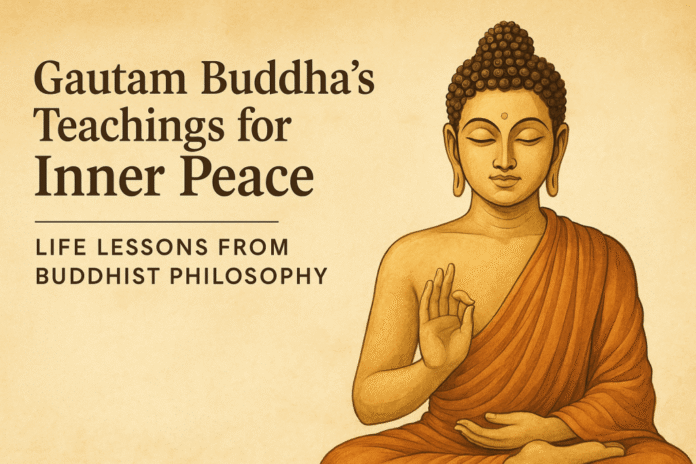
The teachings of Gautama Buddha continue to guide millions across the world even today. Rooted in deep observation of human life, his philosophy is not merely spiritual but intensely practical. Here are some of the most profound lessons from his life that remain relevant in the modern world.

1. Life Involves Suffering

Buddha’s first realization was that suffering is an inherent part of life—whether through illness, aging, loss, or unfulfilled desires. This insight, known as the First Noble Truth, encourages acceptance rather than denial of life’s difficulties.

2. Desire is the Root of Suffering

According to Buddha, suffering arises from craving—our constant desire for pleasure, possessions, or permanence. When we cling to things that are temporary, dissatisfaction naturally follows.

3. Letting Go Leads to Freedom

The third Noble Truth offers hope: suffering can end if we let go of attachments and desires. This state of liberation, known as Nirvana, represents inner peace and freedom from restlessness.

4. Follow the Middle Path

Buddha rejected extremes—neither indulgence nor severe self-denial leads to fulfillment. Instead, he advocated the Middle Way, a balanced approach to life that promotes harmony and well-being.

5. The Noble Eightfold Path

To overcome suffering, Buddha prescribed a practical guide known as the Eightfold Path. It includes right understanding, intention, speech, action, livelihood, effort, mindfulness, and concentration—covering wisdom, ethics, and mental discipline.

6. Practice Mindfulness and Awareness

Mindfulness—being fully present in the moment—is central to Buddhist teachings. By observing thoughts and emotions without judgment, one can cultivate clarity and inner calm.

7. Compassion and Non-Harm (Ahimsa)

Buddha emphasized kindness towards all living beings. His teachings encourage avoiding harm, practicing empathy, and fostering compassion in everyday actions.

8. Impermanence is the Nature of Life

Everything in life is constantly changing. Recognizing this impermanence helps reduce attachment and allows individuals to accept change with grace and wisdom.

In essence, Buddha’s teachings are a guide to understanding oneself and the world. They offer a path not just to spiritual awakening but also to a more balanced, peaceful, and meaningful life. Even centuries later, these lessons remain remarkably relevant—reminding us that true happiness lies within, not in external pursuits.