

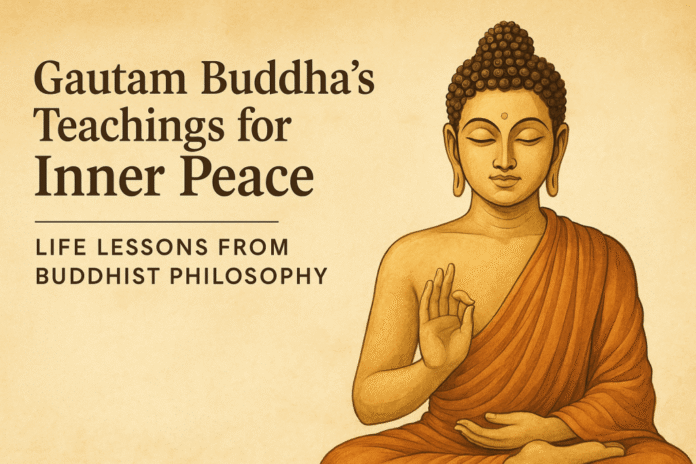
The teachings of Gautama Buddha continue to guide millions across the world even today. Rooted in deep observation of human life, his philosophy is not merely spiritual but intensely practical. Here are some of the most profound lessons from his life that remain relevant in the modern world.
1. Life Involves Suffering
Buddha’s first realization was that suffering is an inherent part of life—whether through illness, aging, loss, or unfulfilled desires. This insight, known as the First Noble Truth, encourages acceptance rather than denial of life’s difficulties.
2. Desire is the Root of Suffering
According to Buddha, suffering arises from craving—our constant desire for pleasure, possessions, or permanence. When we cling to things that are temporary, dissatisfaction naturally follows.
3. Letting Go Leads to Freedom
The third Noble Truth offers hope: suffering can end if we let go of attachments and desires. This state of liberation, known as Nirvana, represents inner peace and freedom from restlessness.
4. Follow the Middle Path
Buddha rejected extremes—neither indulgence nor severe self-denial leads to fulfillment. Instead, he advocated the Middle Way, a balanced approach to life that promotes harmony and well-being.
5. The Noble Eightfold Path
To overcome suffering, Buddha prescribed a practical guide known as the Eightfold Path. It includes right understanding, intention, speech, action, livelihood, effort, mindfulness, and concentration—covering wisdom, ethics, and mental discipline.
6. Practice Mindfulness and Awareness
Mindfulness—being fully present in the moment—is central to Buddhist teachings. By observing thoughts and emotions without judgment, one can cultivate clarity and inner calm.
7. Compassion and Non-Harm (Ahimsa)
Buddha emphasized kindness towards all living beings. His teachings encourage avoiding harm, practicing empathy, and fostering compassion in everyday actions.
8. Impermanence is the Nature of Life
Everything in life is constantly changing. Recognizing this impermanence helps reduce attachment and allows individuals to accept change with grace and wisdom.
In essence, Buddha’s teachings are a guide to understanding oneself and the world. They offer a path not just to spiritual awakening but also to a more balanced, peaceful, and meaningful life. Even centuries later, these lessons remain remarkably relevant—reminding us that true happiness lies within, not in external pursuits.