Home Blog Page 21

Isha Ambani at Met Gala 2026: When Indian Art, Heritage and Couture Became One

0

At the grand stage of the Met Gala 2026, where fashion meets fantasy, Isha Ambani once again proved why she remains one of India’s most compelling global style ambassadors. Marking yet another appearance at the world’s most prestigious red carpet, she didn’t just attend—she transformed the evening into a celebration of Indian artistry, heritage, and craftsmanship.

A Saree That Was More Than Fashion

For a theme centered on “Fashion is Art,” Isha Ambani delivered a look that quite literally embodied the idea. She wore a custom couture creation by Gaurav Gupta—a sculptural saree woven with pure gold threads and developed in collaboration with Indian artisans from Swadesh.

The saree featured delicate hand-painted motifs inspired by Pichwai art, blending traditional Indian painting techniques with modern couture design. The drape itself was sculptural, almost architectural—Gupta’s signature style—turning the garment into a living artwork rather than just an outfit.

Taking over 1,200 hours and dozens of artisans to complete, the ensemble stood as a testament to India’s rich craft legacy on a global platform.

A Blouse Worth a Fortune—and a Story

At the heart of the look was perhaps its most striking feature: a jewellery-integrated blouse embedded with over 1,800 carats of diamonds, emeralds, polki, and kundan.

These weren’t just jewels—they were heirlooms, many drawn from the personal collection of her mother, Nita Ambani. The blouse blurred the line between garment and jewellery, creating a radiant, almost armour-like surface that symbolised legacy, inheritance, and identity.

Adding to its historical depth was a rare sarpech (turban ornament) once linked to royal Indian heritage, further elevating the look into a museum-worthy ensemble.

The Mango That Stole the Spotlight

In a night full of extravagance, one unexpected detail captured global attention—a mango. But this wasn’t just a quirky accessory. It was a carefully chosen art piece: a sculpture by renowned Indian artist Subodh Gupta, carried in a delicate chain bag.

The mango, a symbol deeply rooted in Indian culture, added a poetic layer to her look—bridging tradition, nostalgia, and contemporary art in a single statement.

Styling and Final Touches

Styled by Anaita Shroff Adajania, the look was completed with a jasmine-inspired hair sculpture and glowing, minimal makeup that allowed the outfit to remain the focal point.

Every element—from the gold threads to the gemstones and artistic accessories—worked in harmony to narrate a distinctly Indian story on a global stage.

India on the Global Fashion Map

In a sea of experimental couture, Isha Ambani stood out by doing something far more powerful—she stayed rooted. Her Met Gala 2026 appearance wasn’t just about glamour; it was about representation.

By showcasing Indian textiles, traditional art forms, heirloom jewellery, and contemporary design, she turned the red carpet into a canvas of India’s cultural richness. It was a reminder that Indian fashion is not just relevant globally—it is timeless, evolving, and profoundly artistic.

In essence, Isha Ambani didn’t just follow the theme—she defined it.
Royal Elegance on the World Stage: Jaipur’s Legacy Shines at Met Gala 2026

0

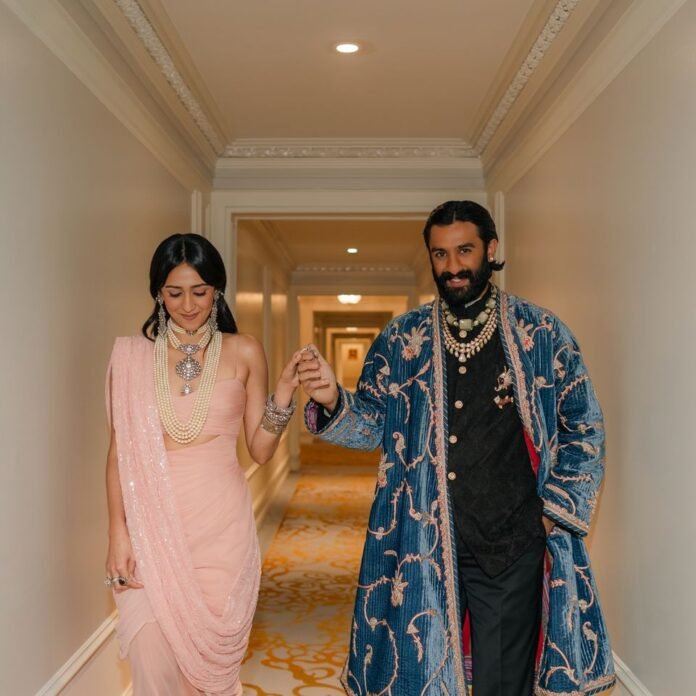
The 2026 edition of the Met Gala 2026 witnessed a remarkable cultural moment as Jaipur’s royal siblings, Princess Gauravi Kumari and Sawai Padmanabh Singh, made their much-anticipated debut. On a global platform known for avant-garde fashion, the duo chose not just to impress, but to tell a deeply rooted Indian story—one of heritage, craftsmanship, and timeless elegance.

Who Are They?

Princess Gauravi Kumari, a member of the erstwhile Jaipur royal family and great-granddaughter of the legendary Maharani Gayatri Devi, represents a new generation of Indian royalty blending tradition with modern identity. Her brother, Sawai Padmanabh Singh—popularly known as “Pacho”—is the titular Maharaja of Jaipur, a polo player and cultural ambassador of Rajasthan’s royal legacy.

Their presence at the Met Gala was not merely symbolic; it marked a rare moment where Indian royalty stepped onto one of the world’s most influential fashion stages, carrying centuries of heritage with them.

A Tribute Woven in Fabric

For her debut, Princess Gauravi Kumari chose an outfit that was as personal as it was powerful. Designed by Prabal Gurung, her gown was crafted from a vintage pink chiffon saree that once belonged to her grandmother, Maharani Gayatri Devi.

The saree, delicately reimagined into a flowing gown, featured subtle sequins and a soft Jaipur-pink hue—symbolically connecting her to both her lineage and her homeland. She paired it with pearls, rubies, and uncut diamonds sourced from Jaipur, echoing the understated elegance that Gayatri Devi was known for.
Her look was not just fashion—it was memory, legacy, and identity stitched into couture.

The Phulghar Coat: Craft Meets Couture

In contrast yet in harmony, Sawai Padmanabh Singh brought the spotlight onto Rajasthan’s artisanal brilliance. Also designed by Prabal Gurung, his standout piece was the “Phulghar coat”—a masterpiece rooted in regional textile traditions.

Crafted in deep midnight-blue velvet and developed in Jaipur, the coat took over 600 hours of intricate handwork, incorporating aari and zardozi embroidery along with resham and dabka detailing.

The ensemble was more than regal attire—it was a tribute to the skilled artisans of Rajasthan, bringing centuries-old craftsmanship into contemporary global fashion.

Representing Rajasthan and India

At an event themed around “Fashion as Art,” the Jaipur royals offered something rare—authentic storytelling. While many interpreted the theme through experimental silhouettes, Gauravi Kumari and Padmanabh Singh rooted their looks in cultural continuity.

They didn’t just wear outfits—they carried Rajasthan to New York. From the legacy of Jaipur’s royal wardrobe to the painstaking artistry of its craftsmen, their presence transformed the red carpet into a canvas of Indian heritage.

In a night dominated by global glamour, the Jaipur royals stood out for their quiet confidence and meaningful fashion. Their debut was not just a personal milestone, but a proud moment for Rajasthan and India—proving that tradition, when worn with conviction, can be the most powerful form of modern expression.

Sanatan Debate to Ballot Shift: How Vijay’s Rise Signals a New Political Mood in Tamil Nadu

0

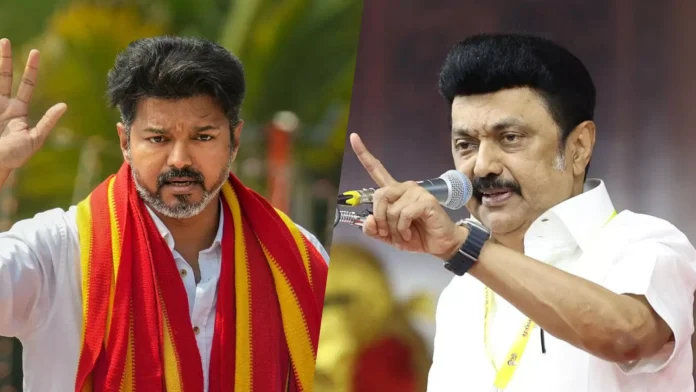
Tamil Nadu’s 2026 Assembly elections have not only reshaped the state’s political arithmetic but also brought renewed focus to an ongoing ideological debate—the place of Sanatan Dharma in public discourse and politics. With actor-turned-politician Vijay emerging as a central figure and his party, Tamilaga Vettri Kazhagam(TVK), making a powerful electoral debut, many observers see this as a shift in both political tone and voter expectations.

The Sanatan Controversy and Political Context

The debate around Sanatan Dharma intensified in recent years following remarks by leaders of the ruling Dravida Munnetra Kazhagam(DMK), including statements by Udhaynidhi Stalin that sparked national controversy. Critics argued that such remarks hurt religious sentiments, while supporters defended them as part of the Dravidian movement’s long-standing critique of caste hierarchies and social inequalities.

Under Chief Minister M.K. Stalin, the DMK government maintained that its ideological stance was rooted in rationalism and social justice. However, the Sanatan issue became a flashpoint in political debates, especially as opposition parties framed it as an attack on tradition and faith.

Governance Under the DMK

Since coming to power in 2021, the DMK government focused on welfare schemes, social justice policies, and infrastructure development. Initiatives in education, healthcare, and public distribution systems were widely discussed, and the administration retained a strong support base in several regions.

At the same time, critics pointed to concerns around law and order, political rhetoric, and governance delivery. The Sanatan controversy added to a broader narrative among some sections of voters that cultural sensitivities were not being adequately respected. It is important to note, however, that there is no official evidence of any state policy targeting Sanatan Dharma itself—the debate remained largely political and ideological rather than administrative.

Vijay’s Entry and His Position

Into this charged atmosphere stepped . While he did not centre his campaign solely on religious issues, his messaging struck a different tone—emphasising unity, governance, and respect for people’s beliefs without aggressive ideological confrontation.

Rather than direct confrontation, Vijay’s “reply” to the DMK’s narrative came through his political positioning. He avoided polarising language, focused on corruption, youth empowerment, and clean governance, and appealed to a broad voter base that included both urban youth and traditional voters.

Election Result and Changing Voter Mood

The strong performance of TVK in the 2026 elections indicates a significant shift. While final government formation dynamics depend on confirmed numbers, TVK’s emergence as a major force suggests that voters were open to an alternative beyond the traditional DMK–AIADMK divide.

For many analysts, this shift reflects:
●A desire for less confrontational politics
●Fatigue with established party narratives
●A growing youth-driven demand for governance-focused leadership

Will Vijay Change the Narrative?

If Vijay transitions from electoral success to governance, his biggest challenge will be to balance cultural sensitivity with administrative effectiveness. His campaign suggests an attempt to move away from ideological extremes and towards a more inclusive political language.

However, expectations are high. Voters will look for tangible outcomes in employment, development, and transparency—beyond symbolism or rhetoric.

Conclusion

The 2026 Tamil Nadu election is not just about who wins power—it reflects a deeper shift in public sentiment. The Sanatan debate highlighted ideological divides, but Vijay’s rise suggests that voters may be seeking a more balanced, less polarised approach to politics.

As Tamil Nadu enters a new political phase, the real test will lie not in rhetoric, but in governance—where promises meet performance, and where a new leadership must prove its ability to deliver for all sections of society.

UDF Sweeps Kerala 2026: Congress-Led Alliance Ends Left Rule with Decisive Mandate

0

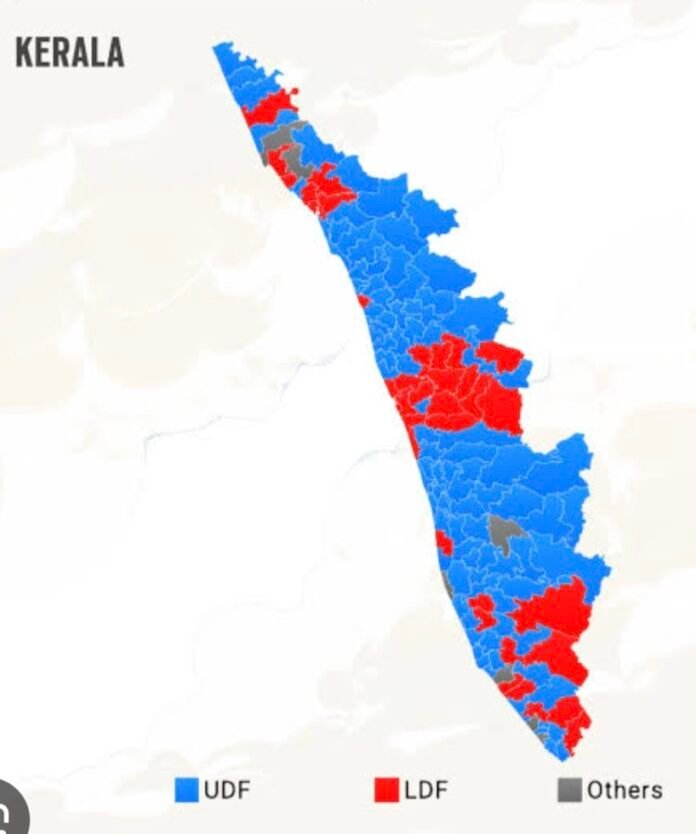
The 2026 Assembly elections in Kerala have delivered a clear and historic verdict, with the United Democratic Front (UDF) returning to power after a decade, defeating the Left Democratic Front (LDF) led by Chief Minister Pinarayi Vijayan.
The results, declared on May 4, 2026, mark a major political shift in the state and carry significant national implications.

Final Results: Accurate Seat Tally

The Kerala Assembly has 140 seats, with 71 needed for a majority.
According to final results and authoritative tallies:
●UDF: 102 seats (clear majority)
●LDF: 35 seats
●Others (including BJP): 3 seats

These numbers confirm a landslide victory for the UDF, well above the majority mark.
Within the UDF:
●Indian National Congress won 63 seats
●Indian Union Muslim League also delivered strong gains

Within the LDF:
●Communist Party of India (Marxist) saw a major decline

End of a Decade of Left Rule

The defeat of the LDF brings an end to 10 years of continuous governance (2016–2026) under Pinarayi Vijayan.
The LDF had made history earlier by breaking Kerala’s tradition of alternating governments, but in 2026, voters have reverted to that pattern decisively. The scale of defeat—dropping from around 99 seats earlier to just 35—makes it one of the LDF’s worst performances.

A Historic Political Momen

This election is historically significant beyond Kerala:
●It marks the end of the last Left-led state government in India
●For the first time in decades, no Communist party is in power in any Indian state

This gives the result a national ideological dimension, not just a state-level shift.

Why the UDF Won So Big

The UDF’s sweeping victory is rooted in multiple factors.
There was strong anti-incumbency after two consecutive terms of the LDF government. Issues related to governance, corruption allegations, and public dissatisfaction played a role. At the same time, the UDF ran a well-coordinated campaign, presenting a unified front and a strong alternative vision.
The alliance also benefited from social coalition consolidation, including support from minority communities and urban voters. Its campaign promises and messaging resonated across regions.

LDF’s Decline: What Went Wrong

The LDF’s campaign, heavily centred around Pinarayi Vijayan’s leadership, did not translate into electoral gains. Analysts note that the government failed to read early signals of public dissatisfaction, which had surfaced in previous local elections.
Despite highlighting achievements in infrastructure and welfare, the LDF could not overcome the broader mood for change.

BJP’s Limited but Notable Presence

The Bharatiya Janata Party (BJP) remained a minor player in terms of seats but managed to win around 1–3 seats, marking a small but notable presence in the Assembly.
While far from a major breakthrough, this indicates a gradual expansion of its base in a state traditionally resistant to the party.

Voter Participation and Election Context

The election saw a high voter turnout of around 78–79%, reflecting strong democratic participation across the state.
The contest remained largely bipolar between UDF and LDF, with regional and local dynamics shaping outcomes in several constituencies.

Conclusion: A Decisive Shift

The 2026 Kerala Assembly election is a clear mandate for change. With 102 seats, the UDF has not just won—it has delivered one of the most decisive victories in the state’s recent history.
For Kerala, this signals a new phase of governance under the Congress-led alliance. For national politics, it marks the end of Left rule at the state level—a development with long-term implications.

NDA Retains Puducherry: Rangasamy Leads Alliance to Comfortable Victory in 2026

0

The 2026 Puducherry Assembly election has reaffirmed the dominance of the National Democratic Alliance (NDA) in the Union Territory, with the All India N.R. Congress (AINRC)–led alliance securing a clear majority and returning to power for another term. The result ensures the continuation of N. Rangasamy as Chief Minister, marking a significant endorsement of his leadership.

The Final Verdict: Seat Tally and Majority

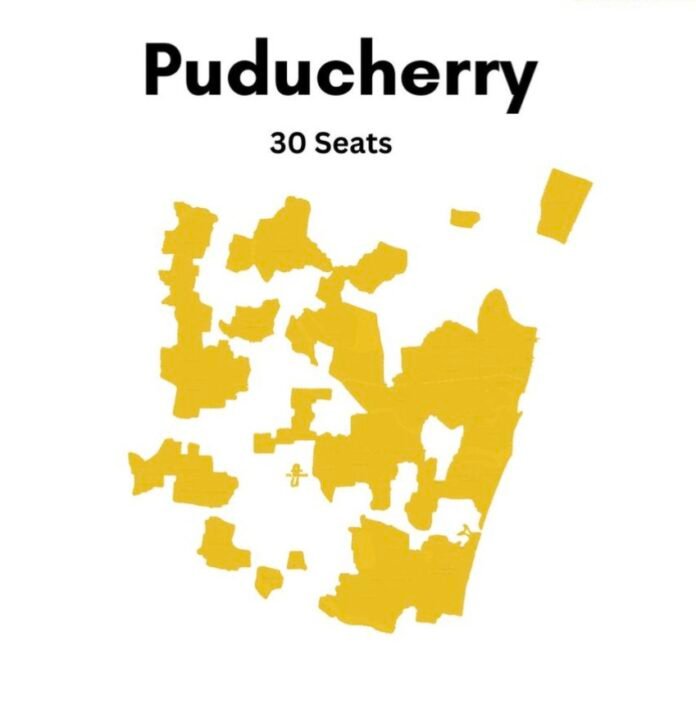
The Puducherry Legislative Assembly has 30 elected seats, with 17 required for a majority. According to the latest results and confirmed trends, the NDA has comfortably crossed this mark.
●NDA (AINRC + BJP + allies): around 18 seats (majority)
●Opposition (DMK, Congress, others): around 10–12 seats

Party-wise trends indicate that AINRC emerged as the single largest party, supported by the Bharatiya Janata Party (BJP) and smaller allies, ensuring a stable government.

Rangasamy Factor: Leadership at the Core

At the heart of the NDA’s victory is the continued popularity of N. Rangasamy. A veteran leader and founder of AINRC, Rangasamy retained his seat and is set to begin another term in office.
His appeal among voters—often described as simple, accessible, and welfare-oriented—played a decisive role. Welfare schemes, financial assistance programs, and a relatively stable administration contributed to a pro-incumbency wave, which is relatively rare in Indian politics.

A High-Turnout Election

One of the standout features of the 2026 election was the record voter turnout, touching nearly 90%, the highest in Puducherry’s electoral history.
This high participation reflects strong public engagement and interest in the political process. Analysts attribute it to increased voter awareness, mobilisation by political parties, and active participation of youth voters.

Opposition Struggles and Fragmentation

The opposition alliance—primarily comprising the Dravida Munnetra Kazhagam (DMK) and the Indian National Congress—failed to mount a cohesive challenge.

Internal coordination issues, seat-sharing disagreements, and a lack of a strong unified campaign weakened their prospects. In several constituencies, confusion among voters and divided opposition votes worked to the advantage of the NDA.

Key Highlights and Constituency Battles

The election saw several closely fought contests across constituencies. Chief Minister Rangasamy’s victory from Thattanchavady was one of the earliest major results, setting the tone for the NDA’s performance.

In constituencies like Lawspet, AINRC candidates secured narrow but decisive wins, reflecting competitive local battles but an overall favourable trend for the ruling alliance.

Why the NDA Won

The NDA’s success in Puducherry can be attributed to a combination of factors. The most important among them was leadership credibility. Rangasamy’s personal image and governance record resonated strongly with voters.

Additionally, the alliance structure—bringing together AINRC, BJP, and regional partners—helped consolidate votes across communities. The absence of a strong, united opposition further amplified the NDA’s advantage.

There was also a visible element of pro-incumbency, suggesting that voters preferred continuity over change in the Union Territory.

What This Means for Puducherry

The 2026 verdict ensures political stability in Puducherry, with the NDA continuing its governance agenda. It also strengthens the BJP’s presence in the Union Territory through its alliance with AINRC.

For the opposition, the result serves as a signal to reorganise and rebuild a stronger, more unified challenge in the future.

Conclusion

The Puducherry Assembly election of 2026 may not have delivered a dramatic political upset like some other states, but it has reinforced a clear message—voters have backed continuity and leadership stability

With N. Rangasamy set to lead once again, Puducherry enters its next political phase with a familiar face at the helm, supported by a decisive mandate.

World Hand Hygiene Day 2026: Small Actions, Big Impact on Global Health

0

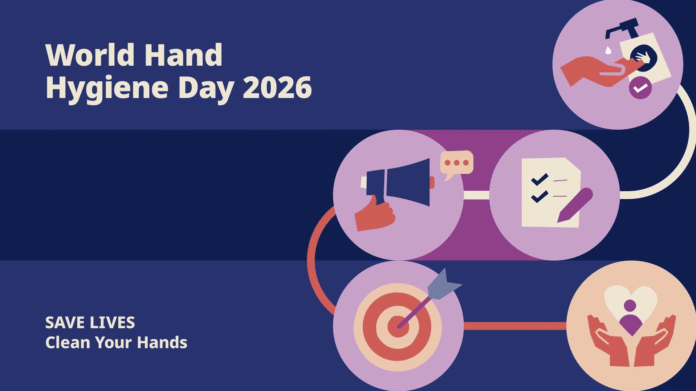
Every year on May 5, the world observes World Hand Hygiene Day, a global initiative led by the World Health Organization (WHO) to promote one of the simplest yet most powerful tools in preventing disease—clean hands. First launched in 2009 under the campaign “SAVE LIVES: Clean Your Hands,” this day highlights the critical role of hand hygiene in healthcare and everyday life.

A Strong Message for 2026

The theme for World Hand Hygiene Day 2026—“Action saves lives”—delivers a clear and urgent message. It calls on healthcare workers, policymakers, and communities to actively strengthen hygiene practices and infection prevention measures.

The emphasis is not just on awareness but on real, consistent action. Studies show that a significant number of infections acquired during healthcare can be prevented simply by proper hand hygiene at the right moments.

Why Hand Hygiene Matters

Hand hygiene is considered the cornerstone of infection prevention and control. From hospitals to homes, clean hands can dramatically reduce the spread of harmful germs, viruses, and antibiotic-resistant bacteria.

In healthcare settings, it is especially vital. Patients are often vulnerable, and healthcare workers come into constant contact with potential sources of infection. By following proper hand hygiene practices—such as the WHO’s “5 Moments for Hand Hygiene”—the risk of healthcare-associated infections can be significantly lowered.

Beyond Hospitals: A Universal Responsibility

While the campaign primarily focuses on healthcare, its message extends far beyond. Schools, workplaces, and households all play a role in maintaining hygiene standards. Simple habits like washing hands before meals, after using the toilet, or after touching public surfaces can prevent many common illnesses.

World Hand Hygiene Day reminds us that maintaining hygiene is not a complex medical procedure—it is a daily habit that everyone can adopt.

Turning Awareness into Action

The 2026 campaign urges countries to integrate hand hygiene into national health policies and ensure proper monitoring and compliance systems. It also highlights that investing in hygiene is not only cost-effective but also essential for improving global health outcomes.

A Cleaner Future Starts with You

World Hand Hygiene Day is more than a symbolic observance—it is a global call to action. Clean hands protect patients, safeguard healthcare workers, and build healthier communities.

As the world marks May 5, the message is simple yet powerful: every handwash counts. In a world still battling infectious diseases, this small act can save lives—one clean hand at a time.

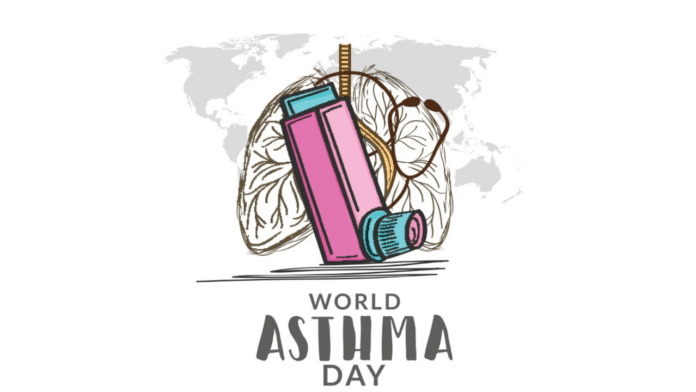
World Asthma Day 2026: Breathing Life into Awareness and Access

0

Every year, on the first Tuesday of May, the world comes together to observe World Asthma Day—an important global health initiative led by the Global Initiative for Asthma. In 2026, it is marked on May 5, continuing a tradition that began in 1998 to raise awareness about asthma and improve care for millions affected worldwide.

A Theme That Highlights Urgency

The theme for World Asthma Day 2026—“Access to anti-inflammatory inhalers for everyone with asthma – still an urgent need”—focuses on a critical global healthcare gap. It emphasizes that while asthma is treatable, many patients still lack access to essential inhaled medications, especially in low- and middle-income countries.

Anti-inflammatory inhalers, particularly those containing corticosteroids, are central to asthma management. They do more than relieve symptoms—they treat the underlying inflammation in the airways, significantly reducing the risk of severe attacks and even death. The theme is therefore not just a medical message, but a call for equity in healthcare access across the globe.

Understanding Asthma: Beyond Breathlessness

Asthma is a chronic respiratory condition that affects the airways, causing symptoms such as wheezing, coughing, chest tightness, and shortness of breath. It affects over 260 million people worldwide, making it one of the most common long-term diseases.

Despite its prevalence, asthma is often misunderstood or underestimated. Many individuals rely only on quick-relief inhalers, ignoring long-term control medications. This can lead to poorly managed asthma and preventable complications.

Why This Day Matters

World Asthma Day serves as a powerful reminder that awareness can save lives. It encourages early diagnosis, proper treatment, and education about managing triggers such as pollution, allergens, and lifestyle factors.

More importantly, it brings global attention to the inequalities in healthcare systems. A significant percentage of asthma-related deaths occur in regions where access to proper treatment is limited or unaffordable. This makes the 2026 theme especially relevant in pushing governments, healthcare providers, and pharmaceutical companies to act.

A Call to Breathe Easier Together

World Asthma Day is not just about statistics or medical guidelines—it is about people and their right to breathe freely. By spreading awareness, improving access to essential medicines, and breaking myths surrounding asthma, societies can move closer to a future where asthma is no longer a life-threatening condition.

As the world observes this day, the message is clear: better access, better care, and better awareness can transform lives—one breath at a time.

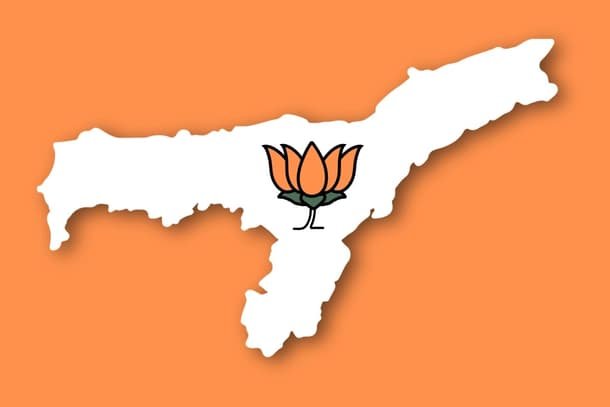
BJP Secures Historic Hat-Trick in Assam: Himanta Biswa Sarma Set for Third Term

0

In a significant political endorsement, the Bharatiya Janata Party (BJP)-led alliance has returned to power in Assam for a third consecutive term in the 2026 Assembly elections. The verdict reinforces the party’s stronghold in the Northeast and marks a continuation of the leadership of Himanta Biswa Sarma.

Clear Mandate: Seat Tally and Outcome

The Assam Legislative Assembly has 126 seats, with 64 required for a majority. Early trends and confirmed results indicate a decisive victory for the BJP-led National Democratic Alliance (NDA).
●BJP-led NDA: around 88–100 seats (clear majority)
●Congress and allies: significantly behind
●Regional parties like AGP and BPF: contributing to NDA tally

Early counting trends showed BJP leading in nearly 79 seats, far ahead of the Congress, which trailed at around 24 seats.
With this performance, the NDA has comfortably crossed the majority mark, ensuring a stable government for a third straight term.

A Hat-Trick in the Northeast

This victory is particularly significant because:
●BJP has now won Assam three times in a row (2016, 2021, 2026)
●It strengthens the party’s long-term dominance in the Northeast
●Assam remains one of BJP’s most important political bases outside Hindi-speaking regions

Reports suggest that this result reflects continuity in governance and sustained voter trust in the BJP’s leadership.

What Worked for the BJP

The BJP’s victory in Assam is rooted in a combination of governance, organisation, and political strategy.

One of the biggest factors has been the leadership of Himanta Biswa Sarma, whose administration focused on infrastructure, welfare schemes, and regional stability. The party’s campaign highlighted development projects, law and order improvements, and efforts to address identity and migration-related concerns—key issues in Assam’s politics.

Additionally, the BJP’s alliance with regional partners like the Asom Gana Parishad (AGP) and Bodoland People’s Front (BPF) helped consolidate votes across different regions and communities.

Weak Opposition and Fragmented Contest

The Indian National Congress, which led the opposition, struggled to mount a strong challenge. Despite attempts to form alliances, the opposition vote remained fragmented.

Another notable development has been the sharp decline of the All India United Democratic Front (AIUDF), which saw its influence shrink significantly in this election.

This fragmentation allowed the BJP-led alliance to convert its vote share into a larger number of seats.

Regional Dynamics and Voter Trends

The BJP performed strongly across Upper Assam, Lower Assam, and key tribal regions, indicating a broad-based appeal. High voter turnout across constituencies also reflected strong public participation in the democratic process.

Local contests in constituencies like Barkhetri and Sibsagar showed competitive races, but the overall trend remained firmly in favour of the ruling alliance.

What This Means for National Politics

The Assam result, along with victories in other states, strengthens the BJP’s national position. It demonstrates the party’s ability to retain power over multiple terms, a challenge in many Indian states where anti-incumbency often plays a decisive role.

It also weakens the opposition’s prospects in the Northeast, where the BJP has steadily expanded its footprint over the past decade.

Conclusion: Continuity and Consolidation

The 2026 Assam Assembly election result is a clear mandate for continuity. With the BJP-led alliance securing a third straight term, the state is set to continue under the leadership of Himanta Biswa Sarma.

More than just a victory, this result represents political consolidation, where governance, organisation, and strategic alliances have come together to produce a decisive outcome. Assam, once politically volatile, now appears firmly aligned with a stable ruling formation—at least for the foreseeable future.

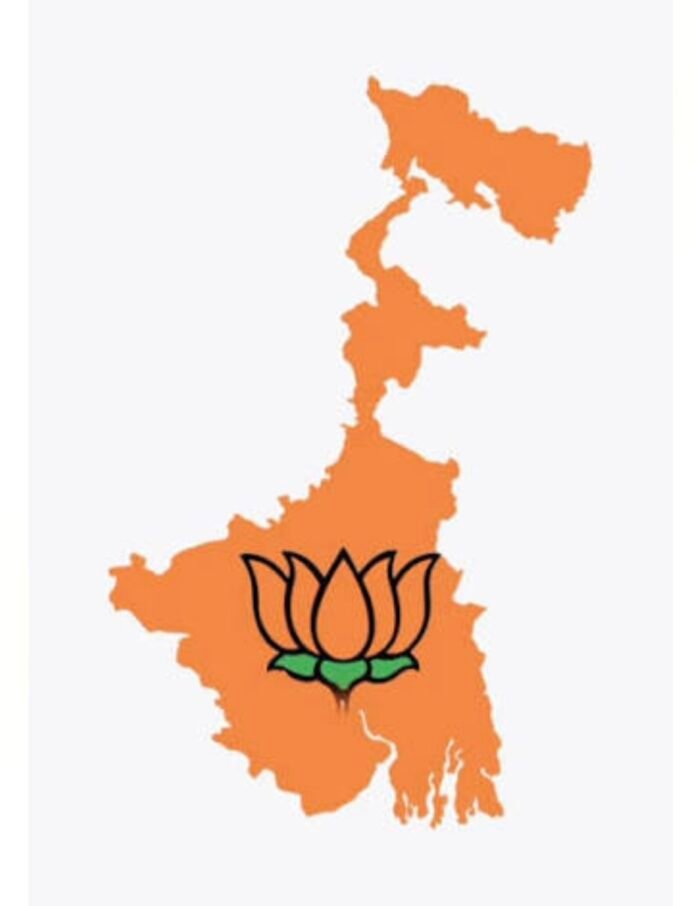
BJP Scripts History in Bengal: A Landmark Verdict Reshapes the State’s Political Landscape

0

In a dramatic and historic political shift, the Bharatiya Janata Party (BJP) has secured a decisive victory in the 2026 West Bengal Assembly elections, ending over a decade of rule by the All India Trinamool Congress (TMC). Led by Mamata Banerjee since 2011, the TMC had dominated the state’s political landscape, making this outcome one of the most significant electoral upsets in recent Indian politics.

A Clear Mandate: The Numbers Behind the Verdict

The West Bengal Assembly comprises 294 seats, with 148 required for a majority. The BJP has crossed this mark comfortably, winning roughly around 190 seats, thereby securing a strong and stable mandate to form the government on its own. The TMC, in contrast, has been reduced to under 100 seats, marking a sharp decline from its earlier dominance. The Congress-Left alliance, once a formidable force in the state, has remained largely marginal in this election.

This decisive result not only ensures BJP’s first government in Bengal but also reflects a sweeping shift in voter sentiment across regions and demographics.

The End of an Era in Bengal Politics

For decades, West Bengal’s politics has been shaped by powerful regional forces. The Left Front governed the state for over 30 years before being unseated by Mamata Banerjee in 2011 in what was termed the “Poriborton” (change). Now, in 2026, a similar moment has unfolded, but this time the change has come in favour of the BJP.

The defeat of the TMC after 15 years in power signals the end of another era. Mamata Banerjee, who once symbolised resistance and grassroots mobilisation, now faces one of the toughest political setbacks of her career.

How the BJP Achieved the Breakthrough

The BJP’s victory in Bengal did not come overnight. Over the past decade, the party steadily expanded its organisational base, investing heavily in booth-level management and grassroots outreach. Its performance in previous elections had already indicated growing support, but 2026 marks the culmination of that long-term strategy.

A key factor was the strong campaign led by Narendra Modi, whose rallies and messaging focused on development, governance, and aspirations of a “new Bengal.” The party also effectively tapped into anti-incumbency sentiments against the TMC government, particularly around issues of governance, law and order, and corruption allegations.

Shifting Voter Base and Breaking Strongholds

One of the most striking features of the 2026 results is the BJP’s ability to penetrate traditional TMC strongholds. The party performed strongly not just in urban centres but also in rural constituencies, indicating a broad-based appeal.

This shift suggests that voter preferences in Bengal are no longer confined to traditional loyalties. Instead, there is a growing openness to alternative political narratives, especially those centred on development and national integration.

High-Stakes Battles and Symbolic Contests

Several constituencies drew national attention, turning into symbolic battlegrounds. Seats like Bhabanipur and Nandigram once again became focal points of political rivalry. At the same time, constituencies like Panihati reflected emerging narratives, where candidates with personal and social causes connected deeply with voters.

These contests highlighted not just political competition but also the evolving nature of electoral politics in the state.

Election Dynamics and Public Participation

The elections witnessed a high voter turnout, reflecting strong public engagement. However, the process was not without controversy. Allegations of irregularities and demands for repolling in certain booths were reported, though the Election Commission conducted the counting process under strict supervision and security.
Despite these challenges, the overall mandate appears clear and decisive.

Implications Beyond Bengal

The BJP’s victory in West Bengal carries implications far beyond the state. It significantly strengthens the party’s footprint in eastern India, a region where it had historically struggled. At the same time, it weakens a key pillar of the opposition at the national level.

For Indian politics, this result signals that even deeply entrenched regional strongholds are not immune to change. It underscores the importance of organisational strength, narrative-building, and sustained political engagement.

Conclusion: A New Chapter Begins

The 2026 West Bengal Assembly election marks more than just a change in government—it represents a fundamental transformation in the state’s political identity. With the BJP forming the government for the first time, Bengal stands at the threshold of a new political era.

As the state transitions from one phase to another, the focus will now shift from electoral battles to governance. Whether this historic mandate translates into long-term political consolidation remains to be seen, but for now, the message from Bengal is unmistakable: change has arrived once again.

🇮🇳 Beneath the Waves, Beyond Records: India Creates History with Largest Underwater National Flag in Andaman

0

In a breathtaking blend of patriotism, precision, and adventure, India etched its name into the global record books with a remarkable feat beneath the sea. The Andaman and Nicobar Islands recently achieved a Guinness World Record by unfurling the largest national flag underwater, marking a moment of pride and innovation for the nation.

The historic event took place on May 2, 2026, at the famous Radhanagar Beach on Swaraj Dweep (Havelock Island)—a location already renowned for its natural beauty. This time, however, it became the stage for a record-breaking underwater spectacle.

At the heart of the achievement was a massive Indian tricolour measuring approximately 60 metres by 40 metres, making it the largest of its kind ever deployed underwater. The operation was far from simple—it required meticulous planning, technical expertise, and seamless coordination.

A team of over 200 trained divers, including personnel from the Indian Navy, Coast Guard, and local agencies, participated in the mission. Working together beneath the sea, they carefully unfolded and stabilized the gigantic flag, ensuring it remained fully visible and intact despite underwater currents and pressure.

The execution of this ambitious feat involved multiple agencies and was closely supervised by senior officials, including the Lieutenant Governor of the Andaman and Nicobar Islands. The presence of Guinness World Records adjudicators ensured that the attempt met all required standards and was officially recognized.

Beyond the record itself, the event carried a deeper purpose. It was part of a broader initiative to promote eco-tourism and adventure tourism in the Andaman and Nicobar Islands. By showcasing such a unique and visually stunning achievement, the administration aimed to position the islands as a global destination for underwater activities and sustainable tourism.

The symbolism of the act was equally powerful. Unfurling the national flag beneath the ocean represented not just technical prowess but also the spirit of unity and pride that transcends boundaries—even those of land and sea. The tricolour, waving silently in the depths, became a striking image of India’s growing confidence and creativity on the world stage.

This achievement stands as a testament to what can be accomplished through collaboration, discipline, and vision. It is not just a record—it is a story of ambition, teamwork, and national pride, told in one of the most extraordinary settings imaginable.

As the images and videos of the underwater flag continue to inspire millions, one thing is certain: India’s spirit knows no limits—not even the depths of the ocean. 🇮🇳