

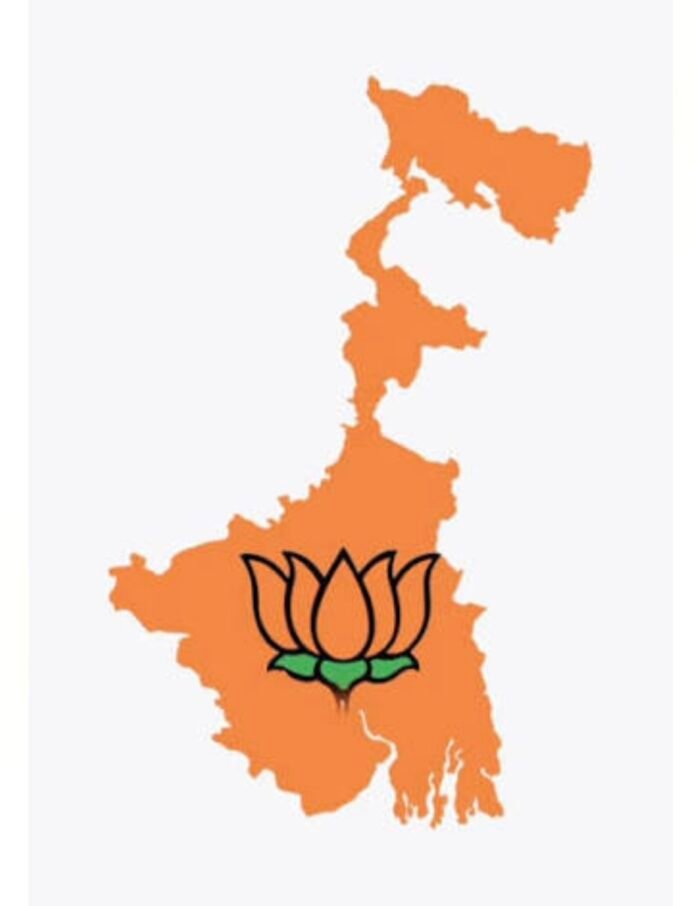
In a dramatic and historic political shift, the Bharatiya Janata Party (BJP) has secured a decisive victory in the 2026 West Bengal Assembly elections, ending over a decade of rule by the All India Trinamool Congress (TMC). Led by Mamata Banerjee since 2011, the TMC had dominated the state’s political landscape, making this outcome one of the most significant electoral upsets in recent Indian politics.
A Clear Mandate: The Numbers Behind the Verdict
The West Bengal Assembly comprises 294 seats, with 148 required for a majority. The BJP has crossed this mark comfortably, winning roughly around 190 seats, thereby securing a strong and stable mandate to form the government on its own. The TMC, in contrast, has been reduced to under 100 seats, marking a sharp decline from its earlier dominance. The Congress-Left alliance, once a formidable force in the state, has remained largely marginal in this election.
This decisive result not only ensures BJP’s first government in Bengal but also reflects a sweeping shift in voter sentiment across regions and demographics.
The End of an Era in Bengal Politics
For decades, West Bengal’s politics has been shaped by powerful regional forces. The Left Front governed the state for over 30 years before being unseated by Mamata Banerjee in 2011 in what was termed the “Poriborton” (change). Now, in 2026, a similar moment has unfolded, but this time the change has come in favour of the BJP.
The defeat of the TMC after 15 years in power signals the end of another era. Mamata Banerjee, who once symbolised resistance and grassroots mobilisation, now faces one of the toughest political setbacks of her career.
How the BJP Achieved the Breakthrough
The BJP’s victory in Bengal did not come overnight. Over the past decade, the party steadily expanded its organisational base, investing heavily in booth-level management and grassroots outreach. Its performance in previous elections had already indicated growing support, but 2026 marks the culmination of that long-term strategy.
A key factor was the strong campaign led by Narendra Modi, whose rallies and messaging focused on development, governance, and aspirations of a “new Bengal.” The party also effectively tapped into anti-incumbency sentiments against the TMC government, particularly around issues of governance, law and order, and corruption allegations.
Shifting Voter Base and Breaking Strongholds
One of the most striking features of the 2026 results is the BJP’s ability to penetrate traditional TMC strongholds. The party performed strongly not just in urban centres but also in rural constituencies, indicating a broad-based appeal.
This shift suggests that voter preferences in Bengal are no longer confined to traditional loyalties. Instead, there is a growing openness to alternative political narratives, especially those centred on development and national integration.
High-Stakes Battles and Symbolic Contests
Several constituencies drew national attention, turning into symbolic battlegrounds. Seats like Bhabanipur and Nandigram once again became focal points of political rivalry. At the same time, constituencies like Panihati reflected emerging narratives, where candidates with personal and social causes connected deeply with voters.
These contests highlighted not just political competition but also the evolving nature of electoral politics in the state.
Election Dynamics and Public Participation
The elections witnessed a high voter turnout, reflecting strong public engagement. However, the process was not without controversy. Allegations of irregularities and demands for repolling in certain booths were reported, though the Election Commission conducted the counting process under strict supervision and security.
Despite these challenges, the overall mandate appears clear and decisive.
Implications Beyond Bengal
The BJP’s victory in West Bengal carries implications far beyond the state. It significantly strengthens the party’s footprint in eastern India, a region where it had historically struggled. At the same time, it weakens a key pillar of the opposition at the national level.
For Indian politics, this result signals that even deeply entrenched regional strongholds are not immune to change. It underscores the importance of organisational strength, narrative-building, and sustained political engagement.
Conclusion: A New Chapter Begins
The 2026 West Bengal Assembly election marks more than just a change in government—it represents a fundamental transformation in the state’s political identity. With the BJP forming the government for the first time, Bengal stands at the threshold of a new political era.
As the state transitions from one phase to another, the focus will now shift from electoral battles to governance. Whether this historic mandate translates into long-term political consolidation remains to be seen, but for now, the message from Bengal is unmistakable: change has arrived once again.