Home Blog Page 80

IndiGo and Air India To Face Competition As New Airlines Get Clearance to Enter India’s Skies. Know Its Names…

0

India’s aviation sector is set for a fresh wave of expansion and competition with the entry of new carriers after years of a market dominated by just a few players. Civil Aviation Minister K Rammohan Naidu has confirmed that two new airline ventures, Al Hind Air and FlyExpress, have received no-objection certificates (NOCs) from the Union civil aviation ministry to proceed toward launch, while Shankh Air, a carrier based in Uttar Pradesh, already holds its NOC and is expected to begin operations in early 2026. These developments mark a significant shift in India’s fast-growing domestic aviation market, which has been heavily dominated by IndiGo and the Air India Group, and signal a move toward greater choice for passengers and more robust competition. 

Airlines: New Players Come In

Al Hind Air and FlyExpress are the latest entrants to receive clearances, allowing them to move forward with aviation regulatory approvals, aircraft acquisition and operational planning. Shankh Air, which secured its NOC earlier, is now preparing to scale up its fleet and finalise preparations for a planned launch in 2026. The entry of these three carriers comes as part of broader efforts by the government to encourage more participation in the aviation sector and widen access to air travel for millions of travellers across the country. 

Domestic Aviation Market in India

India’s domestic aviation market has long been characterised by a concentration of market share, with IndiGo alone commanding more than 65 per cent of domestic traffic and the combined Air India Group covering a large additional share of flights. This dominance has drawn attention in recent months, especially following major operational disruptions at IndiGo that underscored the risks of relying on few carriers for nationwide connectivity. The approval of new airlines is a move toward diversifying market participation and potentially reducing such vulnerabilities. 

For passengers, increased competition could bring tangible benefits. New airlines typically lead to more choices in terms of routes, pricing, flight frequency and service models. While established carriers like IndiGo and Air India continue to expand both domestic and international networks, newcomers may focus on regional connectivity, underserved routes and innovative service offerings that cater to emerging travel demand patterns. This could lead to more competitive fares, expanded connectivity for smaller cities and a broader range of options for frequent flyers and occasional travellers alike. 

Why Airline in India Remains A Challenge

However, launching and sustaining an airline in India remains a complex challenge. The aviation industry requires significant capital investment, efficient operations, access to aircraft, trained crew and robust logistics in order to thrive. Several airlines in the past, including well-known names like Jet Airways and Go First, struggled financially and were forced to cease operations in the face of high costs and competitive pressure. Therefore, the success of Shankh Air, Al Hind Air and FlyExpress will depend on disciplined growth strategies, sound financial planning and the ability to differentiate themselves in a crowded market.

UDAN Scheme

The government’s push for broader competition also aligns with initiatives like the UDAN scheme, which has sought to improve air connectivity to smaller cities and towns that were previously underserved. If new carriers can leverage these opportunities while maintaining operational stability, the aviation landscape in India could become significantly more diverse by 2026 and beyond. 

As these airlines prepare for take-off, India’s skies are likely to see more movement, more competition and greater choice a development that could reshape domestic travel and benefit millions of flyers across the country.
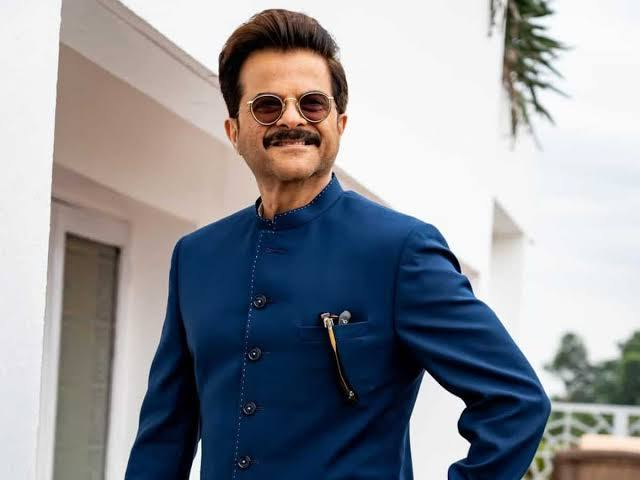
Anil Kapoor: Forever on the move, forever in our hearts

0

There are actors who shine, and then there are actors who glow, whose presence, once felt, never leaves the room. Anil Kapoor belongs to the latter. On his birthday, the film world doesn’t just celebrate a star; it celebrates a spirit that remains irrepressible, youthful and ever-evolving. In an industry obsessed with fleeting trends and narrow age brackets, Anil Kapoor has crafted a career that defies both time and typecasting.

The timeless energy of someone always in motion

Kapoor’s magic has never been about being the traditional hero. From the very beginning, he moved with electricity, a frame full of kinetic energy, a voice full of emotion, a smile that could light up an entire theatre. Whether he was joyous and goofy in Mr India, intense and gritty in Parinda, or mischievous and stylish in Tezaab, Kapoor became synonymous with movement, physical, emotional and narrative. His performances didn’t just occupy space; they pushed it.

Latest chapters and reigniting the screen with seasoned flair

Even today, Anil Kapoor continues to redefine what a leading man can be. In recent films like Fighter released in 2024, he delivered a performance that blended authority with vulnerability, embodying a military mentor whose strength came not from bravado but from belief. In Animal released in 2023, his layered portrayal of a father figure surprised audiences with its dark undertones and emotional complexity, proving that at this stage in his career he is not just relevant, he is vital.

These roles are not mere additions to a filmography; they are proof of an artist who understands his evolving self and the evolving audience. Kapoor doesn’t cling to past glory; he transforms it, using years of craft to bring depth, nuance and modern resonance to every character.

An acting style rooted in honesty and commitment

What makes Anil Kapoor’s acting unique is his total physical and emotional engagement. He never holds back. Whether he is laughing, crying, breaking down, dancing, confronting or reconciling, he commits his entire being to the moment. There is an earnestness in his eyes and a sincerity in his voice that makes every performance feel intimately human. He doesn’t just act on us; he invites us in.

Contribution to cinema beyond memorable roles

Kapoor’s contribution to Indian cinema is more than iconic characters. He has been a bridge between eras, a star who blossomed in the 1980s and 1990s, sustained his charisma through the 2000s, and continues to connect with new generations. He embraced television with the series 24, bringing Indian audiences a high-end, international style narrative long before many film stars considered digital spaces. His global presence in films like Slumdog Millionaire introduced him to international audiences not as a cameo, but as a convincing, affecting performer.

The personality audiences continue to adore

Off screen, Kapoor’s persona mirrors his screen presence, generous, earnest, energetic and authentic. He doesn’t carry ego; he carries curiosity. His fitness routine, his discipline and his joy at being part of a story make him not just a star to watch, but a person to admire. Audiences don’t just root for his characters, they root for him.

At an age when most people begin to slow down, Anil Kapoor continues to rise. He doesn’t act his age; he acts his experience, passion and love for cinema. This balance of skill, humility and tireless energy is why Anil Kapoor remains endlessly watchable and deeply loved.

On his birthday, the celebration is not about another year added. It is about a life that continues to enrich cinema, inspire actors and remind us that age is not a limitation, but a canvas for new stories.

Destination Weddings 2026: Why These Places Matter from Royal India to Romantic Europe

0
Virat and Anushka Italian wedding in Tuscany

Destination weddings 2026: Know the best places and why they matter

Udaipur and the language of royalty

Udaipur holds a special place in the destination wedding map of India because it offers what very few cities can combine so seamlessly: history, luxury and natural beauty. Weddings here feel ceremonial rather than performative. Palaces overlooking lakes, heritage courtyards lit with diyas and sunsets reflecting off marble architecture create a setting where tradition feels alive. For couples who want a wedding rooted in Indian culture yet elevated with grandeur, Udaipur becomes more than a venue, it becomes a narrative of legacy and romance.

Jaipur where grandeur meets celebration

Jaipur’s significance lies in its scale and symbolism. The city is designed for spectacle, with expansive forts, palace lawns and royal avenues that can host large, multi-day celebrations. What makes Jaipur ideal for weddings is its ability to balance heritage aesthetics with modern hospitality. From elephant-led processions to contemporary themed receptions, Jaipur allows couples to celebrate tradition while accommodating today’s expectations of comfort and creativity.

Jodhpur and the drama of history

Jodhpur offers a more dramatic, cinematic wedding setting. Perched forts, blue-washed cityscapes and desert light give ceremonies an almost mythical quality. The presence of venues like Mehrangarh Fort adds historical gravitas, making weddings feel timeless and powerful. Couples drawn to bold visuals and strong cultural identity often choose Jodhpur for its unmatched sense of place and authenticity.

Goa and the joy of informality

Goa stands out because it breaks away from formality. It is ideal for couples who want their wedding to feel relaxed, joyful and personal rather than ceremonial. Beachside vows, sunset pheras and barefoot celebrations create intimacy, even with larger guest lists. Goa’s charm lies in its ability to turn weddings into shared holidays, where guests celebrate without rigid schedules or heavy rituals.

Kerala where calm becomes celebration

Kerala holds significance for couples seeking peace, balance and understated elegance. Backwaters, hill resorts and palm-lined landscapes create a slow, immersive wedding experience. Ceremonies here feel rooted in nature and mindfulness, allowing space for emotion rather than excess. Kerala is especially meaningful for couples who value sustainability, wellness and cultural depth.

Coorg and the intimacy of nature

Coorg has emerged as a favourite for intimate weddings because of its secluded plantations and misty hills. The region offers privacy, natural beauty and a sense of escape from urban chaos. Weddings in Coorg often feel deeply personal, with smaller guest lists and organic décor blending into the surroundings. It is ideal for couples who want closeness over scale.

Tuscany and timeless romance

Tuscany’s appeal lies in its effortless romance. Vineyards, stone villas and rolling hills create a backdrop that feels both cinematic and intimate. Weddings here are less about spectacle and more about experience, long dinners, wine conversations and warm evenings. Tuscany holds significance for couples who see marriage as a shared journey rather than a single grand event.

Santorini and the power of symbolism

Santorini represents visual poetry. Cliffside ceremonies overlooking the Aegean Sea symbolise new beginnings, openness and eternity. The stark contrast of white architecture against deep blue waters gives weddings here a dreamlike quality. For couples who want a symbolic, emotionally charged setting, Santorini offers unmatched visual and emotional resonance.

Spain’s Andalusia and cultural richness

Andalusia matters because it blends celebration with culture. Courtyards, flamenco rhythms, historic palaces and Mediterranean warmth make weddings feel alive and expressive. It is ideal for couples who want guests to experience local traditions alongside wedding festivities, turning the celebration into a cultural journey.

Mauritius and Bali as soulful escapes

Mauritius and Bali continue to matter because they offer emotional versatility. They combine beach serenity with cultural rituals, allowing weddings to feel spiritual, festive and indulgent all at once. These destinations are chosen not just for beauty, but for the way they allow couples and guests to slow down, connect and truly experience the wedding rather than just attend it.

In 2026, destination weddings are no longer about picking the most beautiful place. They are about choosing a location that reflects a couple’s values, story and emotional vision. Each of these destinations holds significance not just as a backdrop, but as a partner in the celebration itself.

Instamart Forays into Offline World: From Dark to Bright Stores and Why It Matters

0

Instamart, the quick-commerce arm of Swiggy that is best known for delivering groceries in minutes through dark stores, has taken an intriguing step into the offline world with a new experiment in Gurugram. In a first for India’s fast-evolving quick commerce sector, the company has opened a physical experience store that aims to bridge the gap between online convenience and real-world product discovery. This move could signal a broader rethink about how digital-first retail intersects with physical shopping.

The difference between dark stores and the experience store

Dark stores are essentially warehouses geared for speed. They are stocked with thousands of products, hidden from public view, and fulfil orders placed on apps like Instamart, Zepto and Blinkit within minutes. Instamart’s dark stores typically carry 15,000 to 20,000 stock-keeping units across categories and rely entirely on delivery models to meet quick commerce demand.

The experience store in Gurugram, by contrast, is much smaller and more about engagement than transactions. Covering around 400 square feet and stocking roughly 100 to 200 carefully curated SKUs, it allows customers to physically touch, feel and see select items before buying. The focus is on fresh produce like fruits and vegetables, pulses, new launches and direct-to-consumer brands, categories where physical inspection can influence consumer confidence.

Why Instamart is experimenting with offline retail

The experiment is not a full pivot to conventional retail, and it is not designed to compete with supermarkets or kirana stores on range or pricing. Instead, it functions as an experiential store or showroom, a place where customers can build trust with products and with the Instamart brand itself. In a market where delivery times, discounts and assortment sizes are becoming increasingly similar across quick commerce players, brand perception and customer loyalty have emerged as potential differentiators. This offline presence could strengthen recall and help Instamart nurture deeper relationships with urban shoppers.

An asset-light, seller-run model

Unlike traditional retail outlets, these mini offline stores are expected to be operated by sellers in and around residential societies, while Instamart provides branding and service support. The proceeds from sales at these outlets go directly to the sellers rather than passing through Swiggy’s conventional payment and commission flow. This arrangement allows Instamart to test the model with minimal inventory risk and operational complexity.

What it means for quick commerce’s future

The timing of this pilot is notable. India’s quick commerce industry is fiercely competitive, with players like Blinkit, Zepto and Instamart racing to capture market share. All have expanded dark store footprints aggressively, and while this has improved delivery speeds, it has also raised questions about long-term sustainability and differentiation. By adding a physical touch point, Instamart is experimenting with a hybrid retail strategy that could influence how quick commerce platforms engage customers beyond the app.

While dark stores are expected to remain the backbone of quick commerce, this offline experiment shows that digital-first companies are exploring new ways to build trust and loyalty. Whether this pilot will scale across the country depends on results in Gurugram and how consumers respond to the touch and feel factor integrated with rapid delivery.

Canada, US, UK Remain Top Destinations for Higher Education for Indian Students, Says NITI Aayog Report

0

A new report by NITI Aayog has underlined a continuing trend in global education: Canadian, American and British universities still attract the largest number of Indian students seeking higher education abroad. The findings, part of the government’s “Internationalisation of Higher Education in India” study, show that more than 13.35 lakh Indian students were enrolled in universities abroad in 2024, with Canada, the United States and the United Kingdom topping the list of preferred destinations for Indian learners. Canada alone hosted around 4,27,000 Indian students, followed by the USA with about 3,37,630 and the UK with roughly 1,85,000 according to the report released in late December. Canada, the US, UK, Australia and Germany together remain the most popular choices, reflecting long-standing preferences and evolving priorities among Indian students. 

Canada, US, UK Remain Top Destinations for Higher Education for Indian Students, Says NITI Aayog Report

Why these three countries stand out

Canada’s popularity rests on a combination of factors including high-quality education, relatively accessible visa processes, post-study work opportunities and a multicultural environment that feels welcoming to foreign students. Its education system consistently performs well in global rankings, and many Canadian universities tout strong research programmes and industry links that appeal to Indians seeking both academic and career growth. 

The United States, with its world-renowned institutions, wide array of specialised programmes and opportunities for cutting-edge research, remains a dream destination for many. Although tuition and living costs in the US are often higher than in other countries, the long-term potential for internships and work experience, especially in fields like technology, business and science, continues to draw Indian students in large numbers. 

The United Kingdom’s appeal is rooted in its historic universities, globally recognised degrees and shorter programme durations, particularly at the postgraduate level. Master’s degrees in the UK often span one year, reducing both time and cost for students, while post-study work visas and professional networking opportunities make it an attractive option for those looking to begin their careers abroad.

Beyond the top three

While Canada, the US and the UK dominate, Australia and Germany also feature among the most popular choices for Indian students. Australia hosted around 1,22,202 Indian learners in 2024, and Germany accounted for nearly 43,000. Countries like Australia are attractive for their quality education and opportunities in sectors like engineering and business, while Germany draws interest for its strong academic programmes and comparatively lower living costs in many cities.

Implications of the global student movement

India’s position as the world’s largest source of international students highlights both the aspirations of its youth and challenges for domestic higher education systems. With the largest age cohort of 18–23-year-olds globally, Indian students continue to look abroad for opportunities they see as offering broader exposure, competitive edge and international experience. However, the large outflow also raises questions about brain drain and the need for India to strengthen its own higher education ecosystem to retain talent.

The NITI Aayog report paints a picture of sustained engagement with the world’s leading education markets, even as geopolitical shifts, visa policies and economic factors influence choices. For many Indian students and families, the decision to study abroad remains deeply strategic, balancing global opportunities with personal goals and long-term career prospects. 

Atal Bihari Vajpayee: Life, Leadership and Legacy of India’s Poet Prime Minister

0

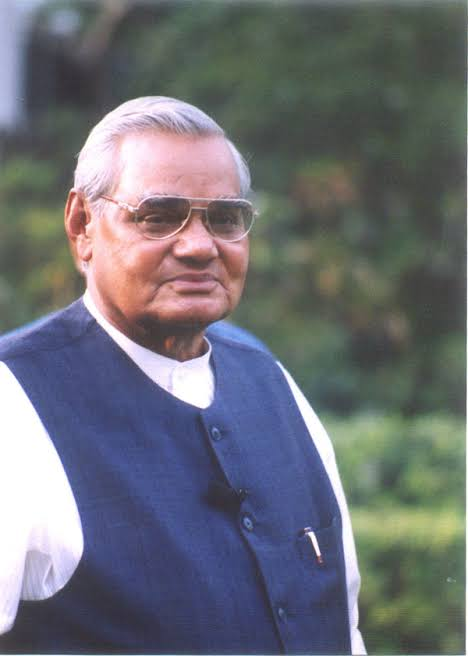
Atal Bihari Vajpayee, one of India’s most respected statesmen and former Prime Minister, remains a towering figure in the country’s political and moral history. Born on December 25, 1924, in Gwalior, Vajpayee’s journey from a humble background to the highest office in Indian democracy is a testament to integrity, intellect, and inclusive leadership.

Vajpayee served as Prime Minister of India three times—briefly in 1996 and then from 1998 to 2004, leading the National Democratic Alliance (NDA). He was the first Prime Minister since Jawaharlal Nehru to return to office with consecutive mandates, underlining his broad political acceptability and statesmanship.

A Veteran Parliamentarian and Nation Builder

With a parliamentary career spanning over four decades, Atal Bihari Vajpayee was elected nine times to the Lok Sabha and twice to the Rajya Sabha, a rare record in Indian politics. He also served as External Affairs Minister, Leader of the Opposition, and chaired several key parliamentary committees, shaping India’s domestic and foreign policy during critical decades.

One of Vajpayee’s defining moments came in 1998, when India conducted the Pokhran-II nuclear tests, firmly establishing itself as a nuclear power. Equally significant was his role in strengthening infrastructure through projects like the Golden Quadrilateral highway network, which transformed India’s road connectivity and economic landscape.

Poet, Orator and Consensus Builder

Known as the “Poet Prime Minister,” Vajpayee combined sharp political insight with literary grace. His speeches—marked by wit, restraint, and moral clarity—earned admiration across party lines. Unlike many leaders, he maintained cordial relations with opponents, believing democracy thrived on dialogue rather than confrontation.

His commitment to peace was evident during the Lahore Bus Yatra and his handling of the 1999 Kargil conflict, where decisive leadership was paired with diplomatic maturity.

Roots in Nationalist Politics

Vajpayee’s political awakening began during the Quit India Movement of 1942. He later joined the Bharatiya Jana Sangh in 1951, the ideological predecessor of the Bharatiya Janata Party (BJP). Despite firm ideological roots, he was widely respected for his liberal worldview and democratic values.

Awards and Recognition

In recognition of his exceptional service to the nation, Atal Bihari Vajpayee was awarded the Padma Vibhushan and later the Bharat Ratna, India’s highest civilian honour. In 1994, he was named India’s Best Parliamentarian, praised for articulating the aspirations of the masses with honesty and national commitment.

Enduring Legacy

Atal Bihari Vajpayee passed away on August 16, 2018, but his legacy continues to inspire generations. Rooted in India’s civilisational values yet forward-looking in vision, Vajpayee represented a politics of dignity, dialogue, and development—qualities increasingly rare in public life.

His life stands as a reminder that true leadership is built not just on power, but on character, courage, and compassion.

Atal Behari Vajpayee’s 101st Birth Anniversary: India Honours Legendary Leader With Nationwide Tributes

0

Atal Behari Vajpayee: The nation came together to light diyas and hold commemorative ceremonies under #AtalSmritiVarsh, a year-long tribute marking the legacy of former Prime Minister Atal Bihari Vajpayee, beginning with his birth centenary in 2024. Born on December 25, 1924, Vajpayee served as India’s Prime Minister three times and left an indelible mark on the country’s political and strategic landscape.

Atal Behari Achievements

His tenure is remembered for several landmark achievements, including the Pokhran-II nuclear tests that asserted India’s strategic autonomy, the ambitious Golden Quadrilateral highway project that transformed national connectivity, and his leadership during the 1999 Kargil conflict, which ended in India’s decisive victory. Beyond policy and governance, Vajpayee was widely admired for his statesmanship, oratory, and ability to build consensus across political divides.

Tributes pour from all parts of world

Across the country, tributes reflected both national pride and personal remembrance. In Tamil Nadu, senior leaders and party workers launched a week-long commemorative campaign, offering floral tributes and recalling Vajpayee’s inclusive vision and commitment to national unity. In New Delhi, a special memorial lecture was organised, where speakers highlighted his role in strengthening India’s regional diplomacy. Former Maldives Vice President Mohamed Jameel Ahmed, addressing the gathering, praised Vajpayee’s contribution to fostering peace and cooperation in South Asia, noting that his approach combined firmness on national interests with respect for dialogue.

Personal recollections added a human dimension to the commemorations. Retired Army Chief General V.P. Malik shared anecdotes that underscored Vajpayee’s compassionate and empathetic leadership style, particularly during times of national crisis. He recalled how Vajpayee balanced decisive action with deep concern for the morale and welfare of soldiers and their families.

The celebrations and reflections are set to culminate later this month, as Prime Minister Narendra Modi is scheduled to inaugurate a memorial dedicated to Atal Bihari Vajpayee in Lucknow on December 25. The memorial is expected to stand as a lasting symbol of Vajpayee’s enduring legacy—of principled politics, visionary development, and a deep commitment to India’s unity and peace.

Merry Christmas 2025: Wishes, Messages, Quotes, Images, Greetings, Facebook and WhatsApp Status

0

Christmas 2025 Wishes and WhatsApp Status Greetings: As families across the world prepare to celebrate Christmas, the season brings joy, faith, and togetherness. Children eagerly await Christmas Eve, hoping for the arrival of Santa Claus with gifts and surprises, while homes glow with lights, decorations, and Christmas trees.

Merry Christmas 2025: Wishes, Messages, Quotes, Images, Greetings, Facebook and WhatsApp Status

Celebrated every year on December 25, Christmas marks the birth of Jesus Christ and will fall on a Thursday in 2025. Churches hold special prayers and services, families gather to share festive meals, exchange gifts, and celebrate the warmth and spirit of love that define this cherished festival.

Here are some heartfelt Christmas 2025 wishes, messages, quotes, and WhatsApp/Facebook status updates to share with your loved ones.

Christmas 2025 Wishes

  • Peace and love to you this holiday season and throughout the year. Wishing you Christmas blessings wrapped in love and tied with joy.
  • May this Christmas fill your life with happiness and may that joy stay with you all year long. Merry Christmas!
Merry Christmas 2025: Wishes, Messages, Quotes, Images, Greetings, Facebook and WhatsApp Status
  • May the joy of Christ’s birth fill your heart and home this Christmas and throughout the coming year. Wishing you a Merry Christmas and a Happy New Year.
  • With warm wishes for a wonderful holiday season filled with joy and peace. Have a holy and joyous Christmas.
  • May the light of Jesus shine brightly in your life, filling your home with love, peace, and happiness.

Christmas 2025 Messages and Greetings

  • Christmas reminds us that light always triumphs over darkness. Wishing you hope, strength, and love this festive season.
  • May this season inspire you to spread kindness and positivity. Wishing you peace in your heart and purpose in your soul.
Merry Christmas 2025: Wishes, Messages, Quotes, Images, Greetings, Facebook and WhatsApp Status
  • As we celebrate the birth of our Saviour, may His everlasting love bring you comfort and joy. Merry Christmas!
  • Embrace the magic of Christmas as a time for new beginnings. May joy follow you in every step you take.
  • May the magic of Christmas fill every corner of your heart and home—now and always. Let’s make 2025 as joyful as Christmas morning.

Christmas 2025 Quotes

Merry Christmas 2025: Wishes, Messages, Quotes, Images, Greetings, Facebook and WhatsApp Status
  • “The gift of love. The gift of peace. The gift of happiness. May all these be yours this Christmas.”
  • “Christmas is the season when you sit before a tree and enjoy candy from socks—pure joy!”
  • “May all that is meaningful, beautiful, and joyful be yours this Christmas and in the year ahead.”

Christmas 2025: Facebook and WhatsApp Status

Merry Christmas 2025: Wishes, Messages, Quotes, Images, Greetings, Facebook and WhatsApp Status
  • From our family to yours, Merry Christmas and Happy Holidays!
  • Peace, joy, and love to you this Christmas and always.
  • Wishing you Christmas blessings wrapped in love and joy.
Merry Christmas 2025: Wishes, Messages, Quotes, Images, Greetings, Facebook and WhatsApp Status
  • Merry Christmas! May peace and happiness fill your home.
  • Sending holiday cheer and warm wishes for a joyful New Year.

JJS 2025 Discusses Why Coloured Gemstones Are Becoming Luxury’s New Obsession

0


JJS 2025: Jaipur holds a distinct position in the world of jewellery, and the Jaipur Jewellery Show stands as a celebration of the city’s rich heritage, tradition and artistry. This was stated by Deputy CM of Rajasthan, Dr Premchand Bairwa, while addressing the valedictory ceremony of Jaipur Jewellery Show 2025 as the Chief Guest. He further emphasised that the jewellery industry plays a vital role in economic growth and employment generation, adding that the state government remains committed to supporting and encouraging the industry through progressive policies and continued ease of doing business.

On this occasion, JJS Vice Chairman, Dinesh Khatoria said that JJS has gone from 67 booths in its early years to an impressive 1,227 today, the show has grown into the country’s largest B2B and B2C platform for the industry. This remarkable scale and sustained relevance are the result of the collective efforts of the organising committee, exhibitors, and all supporting partners, whose commitment has shaped its journey year after year. The Rashmikant Durlabhji Auditorium stands as a fitting tribute to his visionary leadership and enduring contributions that laid the foundation for this growth.

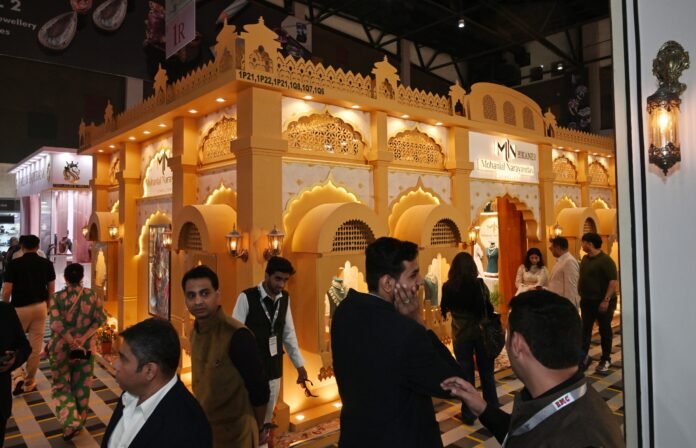
JJS Honorary Secretary, Rajiv Jain announced the winners in the Best Booth Awards (Above 18 Sq Metre) category for outstanding booth design and jewellery presentation. Birdhichand Ghanshyam Das secured the first position, while Mohanlal Narayandas Jewellers was awarded the second position. He also presented the Best Institute Award to the Indian Institute of Gems & Jewellery (IIGJ). He further announced the dates for the next edition of the show, scheduled to be held from 18–21 December 2026. Highlighting the scale and reach of the event, Mr Jain noted that the show witnessed over 46,000 visitors, including 15,000 from outstation locations. He added that December remains a significant period for the industry, as many Non-Resident Rajasthanis (NRRs) associated with the trade are in Jaipur during this time, further strengthening business engagement and networking opportunities.

JJS 2025 Discusses Why Coloured Gemstones Are Becoming Luxury’s New Obsession

The valedictory ceremony of Jaipur Jewellery Show (JJS) was conducted by JJS Spokesperson, Ajay Kala. Addressing the gathering, he stated that this year’s JJS was comprehensive and impactful not only from a business perspective but also in terms of management. He expressed gratitude to all exhibitors, vendors, and visitors for the success of the show.

During the closing ceremony, vendors associated with the event were felicitated with mementoes in recognition of their continued support. Many of these vendors have been associated with JJS since its inception in 2003.

‘UNCUT’ Unfiltered Dialogues Segment

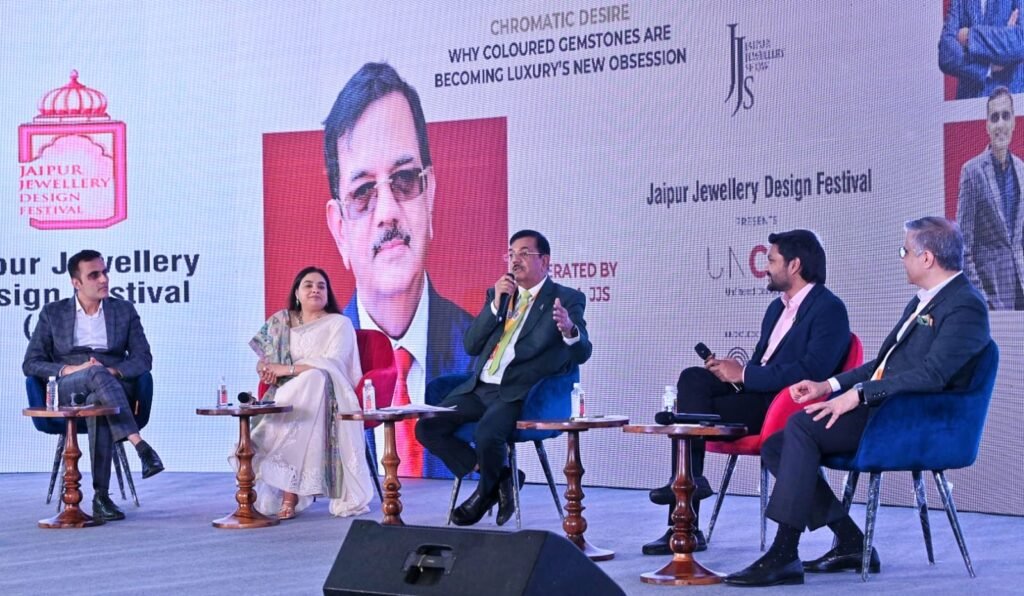
The panel discussion on “Why Coloured Gemstones Are Becoming Luxury’s New Obsession” brought together prominent industry voices to examine evolving consumer preferences, design sensibilities, and global market shifts. The session featured Abhishek Ghatiwala from Ghatiwala Jewels; Bela Badhalia from Adbhut Jewels; Nithin Betala from Raj Diamonds; and Yash Damani from National Facets. The session was moderated by JJS Joint Secretary and Spokesperson, Ajay Kala.

Abhishek Ghatiwala noted that owing to auction houses there has been a drastic change in the consistency and supply as well as quality of gemstones. Earlier, this sector was largely unorganised. People have now started valuing coloured gemstones.

Ms Bela Badhalia spoke about designing with rare gemstones, describing the process as being guided by the stone itself. She emphasised that designs are kept simple, classy and timeless to preserve the gemstone’s natural character and legacy.

Highlighting technical excellence, Yash Damani said that while coloured gemstones are now more available, their true value lies in superior cutting and brilliance. He noted that cutting significantly alters a gemstone’s character and appeal, and added that certification has become critical in building buyer confidence in today’s informed market.

Mr Nithin Betala said that international consumers, especially the younger generation, are increasingly seeking distinctive and non-traditional gemstone options. He stressed that while tastes are evolving, quality must never be compromised.

Summing up the discussion, Moderator, Mr Ajay Kala highlighted that the term “semi-precious” has been officially discontinued by the International Colored Gemstone Association (ICA), underscoring the rising stature of coloured gemstones in the global luxury landscape.

Earlier, the new book ‘Luxury Uncut: How Technology Is Rewriting the Value of Gems’ by Jaipur-based young entrepreneur Keya Agarwal Badhalia was formally launched. The occasion was attended by Honorary Secretary of JJS, Rajiv Jain; Vice Chairman of JJS, Dinesh Khatoria; Joint Secretary of JJS, Ajay Kala, along with other members of the JJS Organising Committee.

The book examines the history and heritage of gemstones while also analysing their future in an evolving technological landscape. Through old auction records, expert interviews, and gemological research reports, the author highlights the key factors that influence the value of a gemstone in today’s changing luxury market.