Home Blog Page 79

Salman Khan: Jail, Bail, and Living Under the Shadow of the Law…Prison Cells And Packed Theatre Stories

0

Few stars in Indian cinema have lived a life as publicly scrutinised as Salman Khan. Blockbusters, courtrooms, controversies, health battles, and philanthropy have all coexisted in his journey. Yet, through every storm, one image endures — Salman Khan smiling, meeting fans, returning to sets, and refusing to disappear.

This is the story of how the superstar chose resilience over retreat.

Salman Khan and Early Controversies: The Rise of the ‘Bad Boy’ Image

In the late 1990s and early 2000s, Salman Khan became a constant presence in Bollywood headlines — not just for films, but for confrontations with paparazzi and public altercations. The media labelled him Bollywood’s “bad boy,” a tag that followed him relentlessly.

By 2014, tensions had escalated to the point where some publications reportedly refused to photograph him. Fame, once an asset, had turned into a magnifying glass that never blinked.

The Blackbuck Poaching Case: A Legal Battle That Spanned Decades

The most defining controversy of Salman Khan’s life emerged from Rajasthan in 1998, during the shooting of Hum Saath-Saath Hain. He was accused of killing protected wildlife species, including blackbucks and a chinkara.

The case led to four separate trials under India’s Wildlife Protection Act and Arms Act. Over the years:

  • Two cases were overturned in 2016
  • One resulted in acquittal in 2017
  • One led to a five-year jail sentence in 2018

Salman Khan spent days in Jodhpur Central Jail before being granted bail. Even today, appeals remain pending, making the case a continuing chapter in his life.

Security Threats and Life Under Protection

The year 2018 marked another turning point. Following the blackbuck verdict, Salman Khan received an open threat from gangster Lawrence Bishnoi, linked to the Bishnoi community that reveres blackbucks as sacred animals.

Since then, Salman Khan has lived under heightened security. Public appearances, film shoots, and travel are now carefully planned — a reality far removed from the freedom of his early stardom.

The Hit-and-Run Case: When the Past Returned to the Present

Another long-running legal battle resurfaced in 2015, when Salman Khan was found guilty in the 2002 Mumbai hit-and-run case, involving the death of one person and injuries to four others.

The conviction, which included charges of driving under the influence, resulted in a five-year prison sentence. Months later, the verdict was overturned due to insufficient evidence.

The emotional toll, however, lingered — a reminder that fame does not grant immunity from the weight of tragedy.

Sultan Comment Controversy: When Words Triggered Nationwide Outrage

In 2016, during promotions for Sultan, Salman Khan’s comparison of his physical exhaustion to that of a “raped woman” sparked widespread backlash.

Despite clarifications and an attempt to retract the remark, the controversy escalated. The National Commission for Women intervened, calling his explanation unsatisfactory and summoning the actor.

It was a moment that reinforced a harsh truth: for public figures, words can wound deeper than actions.

Being Human Foundation: Philanthropy Beyond Headlines

Amid legal and public turbulence, Salman Khan quietly focused on building something lasting. In 2007, he founded Being Human – The Salman Khan Foundation, dedicated to healthcare and education for underprivileged communities.

To sustain the initiative, he launched Being Human Clothing, now managed by his sister Alvira Agnihotri Khan. Unlike controversies, this work rarely screamed for attention — yet its impact has touched thousands of lives.

Salman Khan Films and Creative Control Over His Career

In 2011, Salman Khan established Salman Khan Films (SKF), taking greater control over his creative output. The production house backed successful and meaningful projects like:

  • Chillar Party
  • Bajrangi Bhaijaan
  • Dabangg 3

He also contributed as a writer to films like Veer and Dabangg 3, proving that reinvention was as important as survival.

Health Battle: Trigeminal Neuralgia and Silent Suffering

In the same year SKF was founded, Salman Khan underwent surgery in Los Angeles for trigeminal neuralgia, a nerve disorder known for causing extreme facial pain.

For years, he worked through shooting schedules while enduring the condition in silence. The successful surgery brought relief — and revealed another layer of endurance behind his public persona.

Fitness, Discipline, and Work as Therapy

Salman Khan’s rigorous fitness routine has often made headlines, but for him, discipline became therapy. Training, films, and structure offered stability when life outside the gym felt unpredictable.

Work was not an escape — it was survival.

Why Salman Khan Still Smiles Despite Everything

Salman Khan’s smile today is not denial of the past. It is acceptance of it.

It reflects:

  • A man who has faced prison cells and packed theatres
  • A life shaped by mistakes, service, pain, and persistence
  • A star who understands that redemption is not declared — it is lived daily

Salman Khan: Beyond Controversies, a Survivor of His Own Life

Wax statues at Madame Tussauds across the world, top rankings in Forbes India Celebrity lists, and an unmatched fan following tell one story. His battles tell another.

Somewhere between verdicts and victories, Salman Khan learned to stand, wave, and smile — not because life spared him, but because he chose to endure.

In a world quick to judge, Salman Khan remains — flawed, resilient, and unbroken.

Top 5 Cult Styles of Salman Khan That Defined Popular Culture

0

Salman Khan isn’t just a superstar — he’s a trendsetter whose style moments have repeatedly turned into nationwide crazes. From fashion statements to signature moves, here are five cult Salman Khan styles that left a permanent mark on Indian popular culture:

The Suspenders Look – Hum Aapke Hain Koun..! (1994)

Long before fashion influencers existed, Salman Khan made suspenders-over-a-shirt look became an instant sensation cool. Worn casually over a shirt, this simple yet charming look from Hum Aapke Hain Koun..! became a rage among youngsters in the 90s, symbolising innocence, romance, and boy-next-door appeal.

Ripped Jeans & Bare-Chested Swagger – Oh Oh Jaane Jaana (1998)

Salman’s ripped jeans and sculpted physique in Pyaar Kiya To Darna Kya redefined masculine style in Bollywood. The look was raw, rebellious, and aspirational — gyms filled up, and ripped denim became mainstream youth fashion almost overnight

The Turquoise Bracelet – A Timeless Signature

Perhaps the most iconic Salman Khan style element, the turquoise bracelet is more than an accessory — it’s a symbol. Worn consistently on and off screen, it has become inseparable from his identity, inspiring millions of fans to wear replicas as a mark of admiration

Chulbul Pandey’s Sunglasses Swagger – Dabangg (2010)

With Dabangg, Salman unleashed Chulbul Pandey — and with him came a cult style revolution. Hooking sunglasses on the back of the shirt collar became a mass trend, instantly copied across small towns and cities, cementing Salman’s unmatched pop-culture influence.

The ‘Salman Step’ – Quirky, Fearless, Iconic

Salman Khan may not follow classical dance techniques, but his confidence-driven moves created a style of their own. From the hook step of “Hud Hud Dabangg” to “Selfie Le Le Re”, his effortless, quirky dance moves became wedding staples and viral sensations.

Beyond Style: A Cultural Phenomenon

Salman Khan’s influence goes beyond fashion and dance. His dialogues — like “Dosti ka ek usul hai, madam—no sorry, no thank you” — are etched into Bollywood history. His global appeal is reflected in wax statues at Madame Tussauds in London, New York, and Dubai. Ranked among the highest-paid Indian actors by Forbes India, Salman Khan remains a living embodiment of mass stardom.

Salman Khan doesn’t follow trends — he creates cults.

New Income Tax Act 2025 To Take Effect From April 1

0

India’s direct tax framework is set for its most sweeping reform in over six decades with the replacement of the Income-tax Act, 1961, by the Income-tax Act, 2025. The new legislation will come into force from April 1, 2026, and will apply to income earned in the financial year 2025–26 onwards. The move marks a decisive shift towards simplification, clarity, and technology-driven tax administration.

Why the Income-tax Act, 2025 Was Introduced

Over the years, the 1961 Act had expanded into a highly complex law with more than 800 sections, frequent amendments, and overlapping interpretations. To address this, the government undertook a comprehensive rewrite aimed at eliminating obsolete provisions, reducing litigation, and aligning tax law with a modern, digital economy. The new Act seeks to make compliance easier for taxpayers while improving administrative efficiency.

Effective Date and Transition Timeline

Although the Income-tax Act, 2025 received presidential assent in August 2025, it will be operational from April 1, 2026. This means tax returns filed for Assessment Year 2026–27 will still largely follow the 1961 Act. However, procedural and administrative changes linked to the new law will begin influencing compliance systems from the upcoming financial year.

Key Structural and Procedural Changes

The new Act significantly reduces complexity by cutting sections from 819 to 536 and chapters from 47 to 23. The language has been simplified, with extensive use of tables and formulas replacing long textual provisions. A major reform is the introduction of a unified “Tax Year”, replacing the dual concepts of “previous year” and “assessment year”, thereby simplifying tax computation and understanding.

Facts

  • The Income-tax Act, 2025 replaces the Income-tax Act, 1961.
  • The new law becomes effective from April 1, 2026.
  • Number of sections reduced from 819 to 536.
  • A single ‘Tax Year’ concept replaces previous year and assessment year.

While individual tax rates and slabs remain unchanged, the Act supports the revised tax regime with higher rebates and a larger standard deduction, effectively making income up to Rs 12 lakh tax-free. Redesigned income tax return forms, expanded digital and faceless procedures, and clearer provisions aim to reduce disputes and improve certainty. The emphasis on technology and simplified compliance is expected to benefit salaried individuals, professionals, and businesses alike

The Most Nerve-Shredding Cricket Moments Fans Could Not Look Away From…

0

Cricket lives on slow burns and sudden turns. For long stretches, a match feels almost calm, only for the last few overs or the final ball to flip everything. In those moments, stadium noise blends with living room shouts, and every replay looks like a referendum on fate.

Modern viewing habits amplify that feeling. Many fans now watch with a second screen open, checking stats, fantasy scores or casino and betting hubs such as 4rabet online, where the drama of a chase or a super over sits next to slots and live games. Cricket tension and casino excitement share the same heartbeat: small numbers that suddenly matter a lot.

England vs New Zealand 2019 World Cup final

The 2019 World Cup final at Lord’s often tops any list of stressful cricket finishes. England and New Zealand tied in the regular match. The super over finished level as well. A trophy ended up being decided by boundary count, a rule that felt more like a quiz question than a solution for a global final.

Flash points from a once-in-a-lifetime finish

  • Ben Stokes diving for a second run and the ball deflecting for four
  • New Zealand needing two off the final ball of the chase and finishing level
  • A super over where every mistimed stroke felt like a disaster
  • Martin Guptill’s desperate dive for the winning run ending inches short

Fans in pubs, living rooms and fan zones stared at screens without blinking. The scoreboard kept reading “tie”, but the emotions felt anything but balanced.

Australia vs South Africa 1999 World Cup semi final

Few matches capture raw tension like the 1999 semi final in Birmingham. South Africa chased 214, seemed in control, lost wickets, recovered through Lance Klusener and then melted in the final over. Two scores level, one run short of a place in the final.

The last moments almost looked scripted: Klusener cracking two boundaries, then a mix up with Allan Donald that ended with batters stranded mid pitch. Television replays captured open mouthed disbelief across both sets of supporters. Even neutral viewers felt shaken by how quickly dominance turned into elimination.

Edgbaston 2005 Ashes Test

The second Test of the 2005 Ashes at Edgbaston gave another lesson in controlled chaos. Australia chased 282, slipped to 175 for eight, then fought back through Shane Warne, Brett Lee and Michael Kasprowicz. The target shrank to three runs with one wicket in hand.

Cricket followers across England and Australia stopped doing anything else. Every ball from Andrew Flintoff, Steve Harmison and company carried the weight of a whole series. The final moment came when Kasprowicz gloved Harmison down the leg side and Geraint Jones clung on. A two run win felt smaller on paper than in the hearts of fans who had lived every delivery.

Factors that make a cricket finish truly nerve-wrecking

IngredientRole in the dramaEffect on fans everywhere
Knockout stakesWinner advances, loser goes homeRaises every ball to all or nothing level
Small target marginsA handful of runs separating victory and defeatKeeps hope alive for both sides until the end
Unlikely heroesLower order batters or part time bowlers in actionCreates storylines that feel almost mythical
Strange rule twistsSuper overs, boundary counts, Duckworth–LewisAdds confusion and arguments to pure emotion
Visual replaysMultiple angles of each key momentReplays lock tension in memory for years ahead

These factors mix differently in each match, yet the pattern feels familiar: nobody dares switch channels until the very last frame.

India vs Pakistan 2007 T20 World Cup final

The first ICC T20 World Cup produced a dream final for broadcasters and a nightmare for heart rates. India set 157, Pakistan stumbled, then almost pulled off a famous chase through Misbah ul Haq. The trophy came down to the final over from Joginder Sharma.

Misbah’s scoop to short fine leg, caught by Sreesanth, became an instant image of what happens when a bold shot meets unforgiving physics. Crowds in Johannesburg and audiences across the subcontinent erupted, but half of those celebrations came with a feeling of relief that such tension had finally ended.

Other unforgettable cricket cliffhangers

Not every iconic moment involves a World Cup or Ashes urn. In 2016, India edged Bangladesh by one run in a T20 World Cup group match where Bangladesh needed two from three balls and still lost. In 2013, the “Miracle of Headingley” saw England chase 359 against Australia in an Ashes Test, with Ben Stokes farming the strike and tailenders surviving a storm.

Domestic tournaments contribute similar drama. IPL fixtures decided on the final ball, Big Bash ties resolved by super overs and local derbies that swing with each boundary all feed into cricket’s reputation as a slow game that occasionally sprints. Those sprints stay replayed for decades.

Why fans keep returning to the tension

What links all these moments is not just the scorecard but the shared experience. Screens in homes, bars and betting lounges show the same images at the same time. People who know each other and people who never meet share the same gasp when a catch sticks or a bat misses.

Cricket results come and go, but the memory of a heart pounding finish tends to last. That is why fans still revisit old highlights, argue about tactical choices and compare new close finishes with those legendary nights. The nerves, in retrospect, become part of the appeal, proof that a match once turned a simple game of bat and ball into something close to collective theatre.

Tech Sector Outlook: How Nifty IT Moves in Sync With Nifty 50 Today

0

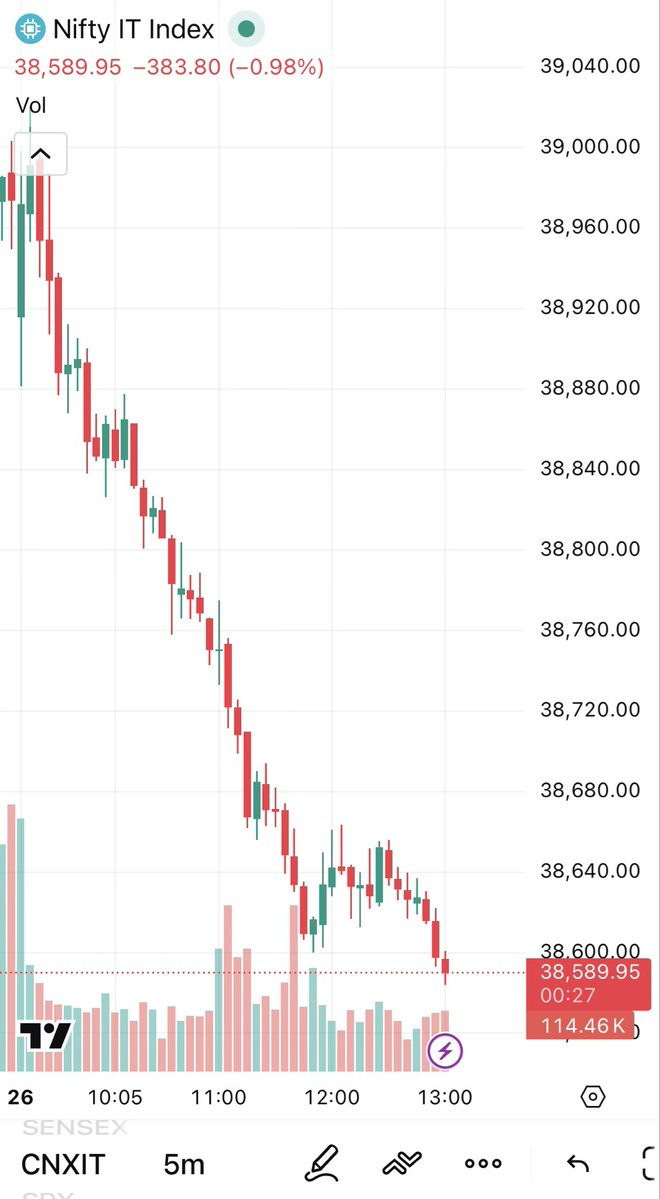
Tech Sector Outlook: How Nifty IT Moves in Sync With Nifty 50 Today

Over the past few decades, India’s IT sector has evolved from a back-office service provider to a major force in global innovation. Leading technology businesses are tracked by the Nifty IT index, while the Nifty 50 represents the market as a whole across a number of industries. Fascinating insights about market dynamics and sector-specific issues can be gained by observing how these indices move together or apart. The trading patterns between these benchmarks today provide interesting insights on global trends, economic factors, and investor psychology. Let’s look at key elements that explain their coordinated motions.

  • Global Cues Impact Technology Stocks Disproportionately

    Technology businesses are sensitive to events abroad since they rely heavily on foreign markets, especially those in the United States and Europe. Nifty IT frequently beats Nifty 50 when international markets surge on good economic news because investors expect higher demand for Indian tech services. On the other hand, IT equities are more instantly impacted than domestic-focused businesses by recession concerns or slowdown signals from outside. Because of this worldwide connection, Nifty IT occasionally leads or lags Nifty 50 depending on overnight changes in the world market rather than just domestic emotion influencing today’s trading.

    • Currency Fluctuations Create Unique Price Dynamics

    Since most sales are priced in dollars and expenditures are still based in rupees, the rupee-dollar exchange rate has a significant impact on the earnings of IT companies. IT firms profit from currency translation gains when the rupee declines, which frequently raises Nifty IT even if Nifty 50 stays muted. As a result, during times of currency volatility, technology equities exhibit intriguing divergences. Nonetheless, both indices typically move in unison during stable currency periods as overall market sentiment overrides sector-specific characteristics, indicating a shared level of investor confidence or caution.

    • Heavyweight Stocks Bridge Both Indices Together

      There is a natural association between the movements of the Nifty 50 and Nifty IT indices due to the strong presence of several large technology companies. Due to their high weighting in computations, these IT giants have a simultaneous impact on both benchmarks when their prices fluctuate significantly. Leading IT companies’ strong results dominate Nifty IT movements and significantly raise the Nifty 50. Because of this structural commonality, total divergence between indexes is uncommon because significant technology stocks serve as the threads that bind the two benchmarks together through their shared constituent influence.

      • Domestic Economic Indicators Affect Synchronization Levels

        The link between Nifty IT and Nifty 50 is strengthened when strong domestic economic data is released because investor optimism extends universally across sectors. Regardless of sector-specific realities, overall market sentiment is raised by budget announcements, GDP growth statistics, or policy initiatives. Despite their worldwide focus, technology stocks take part in larger rallies during these times. However, divergences arise as IT stocks pursue their own trajectory irrespective of the overall direction of the market when domestic variables notably favor or challenge some sectors while leaving others unscathed.

        • Risk Appetite Determines Sector Rotation Patterns

          Within the Nifty 50 mix, technology firms are generally more volatile than conservative industries like pharmaceuticals or consumer staples. Nifty IT surpasses Nifty 50 during risk-on periods when investors actively pursue growth because capital flows disproportionately into high-beta IT firms. On the other hand, Nifty IT underperforms the overall index when investors shift from risky technology equities to safer options amid market corrections or uncertainty. Based solely on the existing risk emotion, these rotation dynamics produce times of strong correlation that alternate with phases of divergence.

          Conclusion

          Global effects, currency fluctuations, structural overlaps, domestic considerations, and investor risk preferences all play a complex role in the relationship between Nifty IT and Nifty 50 today. Sector-specific drivers can produce significant divergences, even if they frequently move together because of common elements and general market mood. In order to make superior portfolio positioning decisions, astute investors monitor both indices to see if technology stocks are driving market trends or reacting to certain sectoral pressures.

          US H-1B Overhaul: Why India’s Tech Workforce Faces a Harder Road Ahead

          0

          The United States’ decision to scrap the lottery-based H-1B visa system and replace it with a weighted selection model marks the most consequential redesign of the programme in decades. For India — which accounts for the overwhelming majority of H-1B beneficiaries — the implications are stark. While the reform is being pitched as a move towards “merit-based” migration, it is likely to shut the door on thousands of entry-level Indian professionals who have traditionally used the H-1B route to access the US labour market.

          What the New H-1B Rule Changes

          Under the new regulation notified by the United States Citizenship and Immigration Services, the random lottery used to allocate H-1B visas will be replaced by a weighted selection process. This system will prioritise applications offering higher wages and requiring higher skill levels, while still nominally allowing applications across all wage bands.

          The rule, issued by the US Department of Homeland Security, will come into effect on February 27, 2026, and will apply to the FY 2027 H-1B cap registration cycle. Each year, the change will affect roughly 85,000 visas — 65,000 under the general cap and an additional 20,000 reserved for applicants with a US master’s degree or higher.

          Why the Trump Administration Is Scrapping the Lottery

          The overhaul is part of President Donald Trump’s broader push to reshape skilled immigration. The administration argues that the lottery system was being “exploited” by employers to hire foreign workers at wages lower than those paid to Americans.

          USCIS spokesperson Matthew Tragesser has said the random selection model incentivised volume-based filings rather than genuine skill shortages. A weighted system, the administration believes, will align visas more closely with economic value, productivity and wage levels.

          Why Indian Applicants Are Most at Risk

          In practice, the shift hits Indian applicants hardest. Indians receive over 70% of H-1B visas annually, many of them early-career professionals employed by IT services firms. These roles often fall in lower wage bands despite requiring technical qualifications.

          A wage-weighted selection system inherently disadvantages such applicants. Entry-level engineers, analysts and junior consultants — the traditional backbone of India’s H-1B pipeline — are likely to be crowded out by senior professionals commanding higher salaries, often sponsored by US firms rather than offshore service providers.

          The $100,000 Fee and the ‘Gold Card’ Signal

          The visa rule must also be read alongside other measures introduced by the Trump administration. A presidential proclamation now requires employers to pay an additional $100,000 per H-1B visa — a move currently under legal challenge. This sharply raises the cost of hiring foreign professionals and tilts the system further towards high-margin firms and elite talent.

          At the other end of the spectrum is Trump’s proposed $1 million “gold card” visa, which offers wealthy individuals a pathway to US citizenship. Together, these initiatives signal a clear policy direction: immigration access is increasingly being priced and filtered by economic value rather than opportunity.

          Implications for India’s IT Services Model

          For India’s IT sector, the changes strike at a long-standing operating model built on deploying young engineers to the US market. A weighted H-1B system, combined with steep visa fees, erodes the cost arbitrage that made this model viable.

          SHANTI Bill Explained: Why India Is Resetting Its Nuclear Power Framework

          0

          India’s nuclear power programme has long carried the weight of unrealised potential. Despite early technological ambition, legal complexity, liability fears and regulatory uncertainty kept private capital and global partners at arm’s length. Parliament’s passage of the “Sustainable Harnessing and Advancement of Nuclear Energy for Transforming India (SHANTI) Bill” marks an attempt to correct that trajectory. The legislation seeks not merely to amend but to reset India’s nuclear architecture, with the stated ambition of making nuclear energy a core pillar of clean, reliable power — targeting 100 GW by 2047 as part of India’s long-term decarbonisation strategy.

          Why India Needed a Nuclear Reset

          For over a decade, India’s civil nuclear programme has been constrained by a fragmented legal framework. The Atomic Energy Act and the Civil Liability for Nuclear Damage Act together created uncertainty over who could build, who would regulate, and who would pay if something went wrong.

          The liability law, shaped by the moral memory of the Bhopal gas tragedy, placed unusually expansive responsibility on suppliers. While ethically compelling, this made India an outlier in global nuclear commerce, deterring investment and freezing projects. SHANTI replaces this patchwork with a single umbrella law designed to align India with international practice without abandoning sovereign control.

          Who Can Build — And Who Cannot

          SHANTI is pragmatic about expanding capacity. It explicitly allows participation by both public and private Indian entities, recognising that scaling nuclear power requires capital, manufacturing depth and execution capacity beyond the state alone.

          However, the opening is carefully bounded. Foreign-incorporated companies are excluded as licensees, preserving sovereign control. The most sensitive elements of the nuclear fuel cycle — enrichment, reprocessing and spent fuel management — remain the exclusive domain of the central government. This calibrated openness reflects a strategic instinct: invite investment and capability where it helps, but retain control where national security demands it.

          Fixing the Institutional Architecture

          A major structural reform lies in clearer institutional separation. Licensing authority remains with the government, but safety oversight is vested in a strengthened Atomic Energy Regulatory Board, now placed on a firmer statutory footing.

          This matters. A credible nuclear expansion requires a regulator that can independently set standards from design to decommissioning, inspect emergency preparedness, and engage transparently with the public. Whether SHANTI succeeds will depend less on legislative intent and more on regulatory capacity — more inspectors, faster rule-making, and the confidence to enforce compliance without fear or favour.

          Liability: From Moral Exceptionalism to Predictability

          Liability has always been the most politically sensitive aspect of nuclear policy. The 2010 law prioritised victim protection but created uncertainty that scared away suppliers and insurers. SHANTI rebalances the framework toward global norms while retaining safeguards.

          The overall liability cap remains at 300 million Special Drawing Rights (SDR). The operator’s right of recourse is narrowed largely to contractual terms or cases of intentional wrongdoing. A new Nuclear Liability Fund shifts part of the burden beyond the operator’s cap to the central government, with additional support envisaged through the Convention on Supplementary Compensation (CSC) if claims exceed that level.

          Terrorism as a Sovereign Risk

          One of the Bill’s most consequential shifts is its treatment of terrorism. Nuclear damage caused by terrorist acts is explicitly excluded from operator liability and placed on the central government.

          The policy logic is clear: terrorism is an uninsurable sovereign risk, and victims should not be left uncompensated because liability frameworks collapse. The political implication is equally clear — if the state assumes last-resort liability, it must also be the visible guarantor of rigorous security, preparedness and accountability.

          Graded Liability and the Fear of Dilution

          SHANTI moves away from a single uniform operator cap and instead grades liability by category of installation. Not all nuclear facilities pose the same risk, and mature nuclear systems do differentiate accordingly.

          Follow The Biryani Trail: One Dish, Countless Identities

          0

          Few dishes in India inspire as much emotion, loyalty and debate as biryani. It is not just food, it is geography on a plate, history layered in rice and spice, and memory sealed with aroma. The map of biryani variants across the subcontinent proves one simple truth: there is no single biryani, only many stories sharing one name.

          The roots of biryani are believed to trace back to the Persian words birian meaning fried before cooking or birinj meaning rice. As the dish travelled through royal kitchens, trade routes and home hearths, it adapted, absorbed and transformed. What emerged was not imitation but identity, shaped deeply by local ingredients, cooking methods and cultural habits.

          In the north, Awadhi or Lucknowi biryani reflects royal restraint and finesse. Long grained basmati rice, tender meat and whole spices are cooked slowly using the dum method, allowing flavours to gently infuse without overpowering each other. Saffron, kewra water and rose essence add fragrance, while the absence of excessive chillies highlights balance over heat. Moradabadi biryani, in contrast, is robust and straightforward. Known for its generous portions of meat, mild spices and quick cooking style, it is often eaten fresh off the pot with chopped onions and green chillies, making it a favourite at roadside stalls and community feasts.

          Move east and Kolkata biryani tells a story of adaptation and elegance. Introduced by the Nawabs of Awadh during a time of economic hardship, the addition of potatoes was born out of necessity but became iconic. Lightly spiced with nutmeg and aromatic rice, it focuses on subtle sweetness and aroma rather than richness. The boiled egg, another signature element, adds texture and has become inseparable from the city’s biryani identity.

          The western belt offers bold contrasts and unapologetic flavours. Sindhi biryani is fiery, tangy and layered with tomatoes, yoghurt and green chillies, making every bite intense and vibrant. Memoni biryani, influenced by Gujarati and Middle Eastern spices, is equally spicy but richer, often cooked with slow-simmered meat and deep masalas. Bombay biryani reflects the city’s love for layered tastes, combining sweetness from dried plums, heat from spices and fried potatoes that soak up the gravy. Along the coast, Bhakali and Beary biryanis use local rice varieties, coconut based spice blends and seafood or meat, grounding the dish firmly in regional, home-style cooking traditions.

          Down south, biryani takes on even more personality. Ambur and Arcot biryanis from Tamil Nadu rely on short grain rice and a sharp, chilli-forward masala, cooked quickly to lock in bold flavours. Chettinad biryani stands out for its use of black pepper, fennel and local spices, giving it a deep, earthy heat that lingers. In Kerala, Malabar and Thalassery biryanis offer a gentler experience. Cooked with fragrant jeerakasala rice, ghee and mild spices, they focus on aroma and richness, often paired with dates pickle and raita to balance flavours.

          Then there is Kacchi biryani, a test of true skill. Here, raw marinated meat is layered with partially cooked rice and sealed for slow dum cooking. As everything cooks together, the meat releases its juices into the rice, creating unmatched depth of flavour. It demands precision, timing and experience, making it as much craft as cuisine.

          What makes this journey even more fascinating is how deeply biryani is woven into modern life. Despite evolving food trends and global influences, biryani continues to dominate food delivery charts, with millions of orders placed every year and several plates being served every second.

          The biryani trail is not about deciding which version is superior. It is about understanding how one dish became a cultural mirror. Every biryani carries the climate, history and temperament of its region. Together, they form a map not just of flavours, but of India itself.

          Smart QR Codes Every Modern Wedding Needs

          0

          Weddings today are no longer just about grand décor and picture perfect outfits. They are also about ease, interaction and creating memories that live beyond the last ritual. One quiet yet powerful upgrade that modern weddings are embracing is the use of smart QR codes. Simple to scan but impactful in experience, these tiny squares are redefining how guests engage with weddings, making celebrations smoother, smarter and far more memorable.

          Invitation and RSVP made effortless

          Gone are the days of endless follow up calls and missed confirmations. A single QR code on a physical invite or digital card can lead guests to a beautifully designed invitation page with event details, location maps and an instant RSVP option. It saves paper, time and stress while giving hosts real time guest updates. It also feels refreshingly modern without taking away the warmth of a traditional invite.

          Seating chart without the chaos

          Finding seats at a wedding can often turn into an awkward hunt. A QR code placed at the entrance can instantly open a personalised seating chart where guests simply search their name. It reduces crowding, avoids confusion and keeps the flow elegant. This small tech touch adds a layer of organisation that guests truly appreciate.

          Guest cam uploads for unseen moments

          Some of the best wedding moments never make it to the official album. A guest cam QR code allows friends and family to upload photos and videos directly to a shared folder. From behind the scenes laughter to candid dance floor madness, couples receive a treasure trove of memories captured from every angle.

          Crowd curated playlist that keeps everyone dancing

          Music connects generations, and a QR code can let guests add song requests to a live wedding playlist. Whether it is a classic retro number or a trending reel song, this feature makes guests feel involved while keeping the energy high. It turns the playlist into a shared celebration rather than a fixed list.

          Digital guest book with real emotions

          Instead of a traditional register that often gets forgotten, a digital guest book QR lets guests leave messages, voice notes or even short videos. These heartfelt notes become timeless keepsakes that couples can revisit long after the wedding day.

          Wedding timeline at everyone’s fingertips

          Multiple functions often lead to confusion about timings. A QR code linking to the wedding timeline ensures guests know exactly when and where events are happening. It brings clarity without repeated announcements and helps everyone stay in sync.

          Food and bar menu without queues

          Scanning a QR to view the food and bar menu not only feels premium but also helps guests explore options at their own pace. It works especially well for themed menus, allergen details and cocktail descriptions, adding to the overall experience.

          Thank you message that lingers

          A final QR code can lead guests to a personalised thank you message, a highlight reel or a note from the couple. It is a thoughtful way to close the celebration and leave guests with a lasting emotional connection.

          In a world where weddings are becoming more intimate yet innovative, smart QR codes quietly prove that sometimes the smallest details create the biggest impact.

          Wedding Colour Palettes That Will Rule 2026 

          0

          They are not just about what looks good on a mood board, they are about emotion, atmosphere and storytelling. As weddings become more intimate yet visually expressive, couples are choosing colours that feel personal, cinematic and timeless. From soft romance to bold sophistication, 2026 is shaping up to be a year where palettes speak before vows do.

          Lavender noir

          Lavender noir is where softness meets drama. This palette blends muted lavender tones with deep charcoal, ink black or smoky grey accents. It feels romantic yet powerful, perfect for evening weddings, luxe indoor venues or modern palace settings. Lavender brings calm and elegance while darker shades add depth and mystery. Together, they create a wedding aesthetic that feels poetic, slightly edgy and incredibly memorable, especially when paired with candlelight and metallic textures.

          Frosted pastel blue

          Frosted pastel blue captures the quiet magic of winter mornings and breezy skies. It is delicate, airy and effortlessly elegant. This palette works beautifully for daytime weddings, beachside ceremonies or minimalist celebrations. When layered with silver, pearl white or soft grey, it gives a fresh and serene look without feeling cold. Frosted blue is ideal for couples who want subtle luxury and understated charm.

          Sunset sorbet

          Sunset sorbet is playful, joyful and full of life. Think peach, coral, soft pink, mango and hints of lavender, all blended like a summer sky at dusk. This palette is perfect for destination weddings, outdoor celebrations and couples who want colour without chaos. It photographs beautifully, feels youthful and instantly lifts the mood. Sunset sorbet weddings feel like a celebration from the first look to the last dance.

          Emerald whisper

          Emerald whisper is richness done right. Deep emerald greens softened with lighter sage or eucalyptus tones create a palette that feels regal yet grounded. It pairs exceptionally well with gold accents, warm lighting and natural textures. This colour story works for heritage venues, forest weddings and elegant winter celebrations. Emerald whisper speaks of abundance, tradition and quiet luxury without being overpowering.

          Sunlit yellow

          Sunlit yellow is optimism in colour form. Unlike bold or neon yellows, this palette leans towards soft marigold, butter yellow and warm sunshine tones. It brings happiness, warmth and positivity to wedding spaces. Sunlit yellow works wonderfully for haldi inspired décor, garden weddings or intimate daytime functions. When balanced with whites, greens or soft neutrals, it feels cheerful yet refined.

          Sage meadows

          Sage meadows continues the love for nature inspired weddings but with a softer, calmer approach. Sage green paired with earthy neutrals, dusty whites and hints of floral pastels creates a soothing and organic palette. This colour story is ideal for sustainable weddings, outdoor venues and couples who love simplicity with depth. Sage meadows feels timeless, breathable and effortlessly elegant.

          Ivory and gold

          Ivory and gold remains eternal but in 2026, it evolves into something more refined and modern. Warm ivory replaces stark white, while brushed or antique gold takes over shiny finishes. This palette suits every kind of wedding, from grand celebrations to intimate affairs. It symbolises tradition, grace and quiet opulence, making it a forever favourite that never feels outdated.

          As weddings in 2026 move towards meaningful aesthetics, these colour palettes prove that the right shades can transform a celebration into an experience, one that guests remember long after the last song plays.