

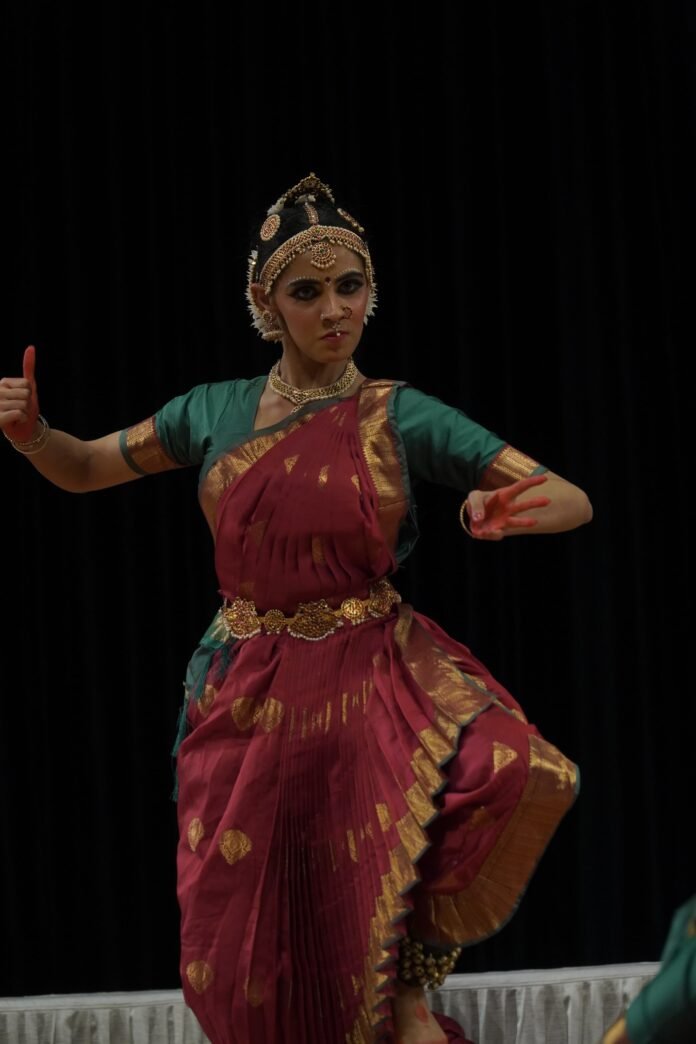
Manya Handa, a fresh graduate in Performing Arts and Psychology, is a dual classical dance degree holder and an aspiring dance movement therapist. Rooted in years of rigorous training and driven by a deep connection to her art, she shares her journey below, of pursuing dance not just as a passion, but as a purposeful career.
As the world celebrates World Dance Day, I find myself standing at a beautiful crossroads—looking back at nearly two decades of rhythmic training and looking forward to a future where dance is not just my passion, but my professional calling. For those who believe that dance is merely a hobby, my journey is a testament to the fact that when you grow up with art, the art grows within you, eventually shaping your entire world.
The Early Echoes: Roots in Kathak
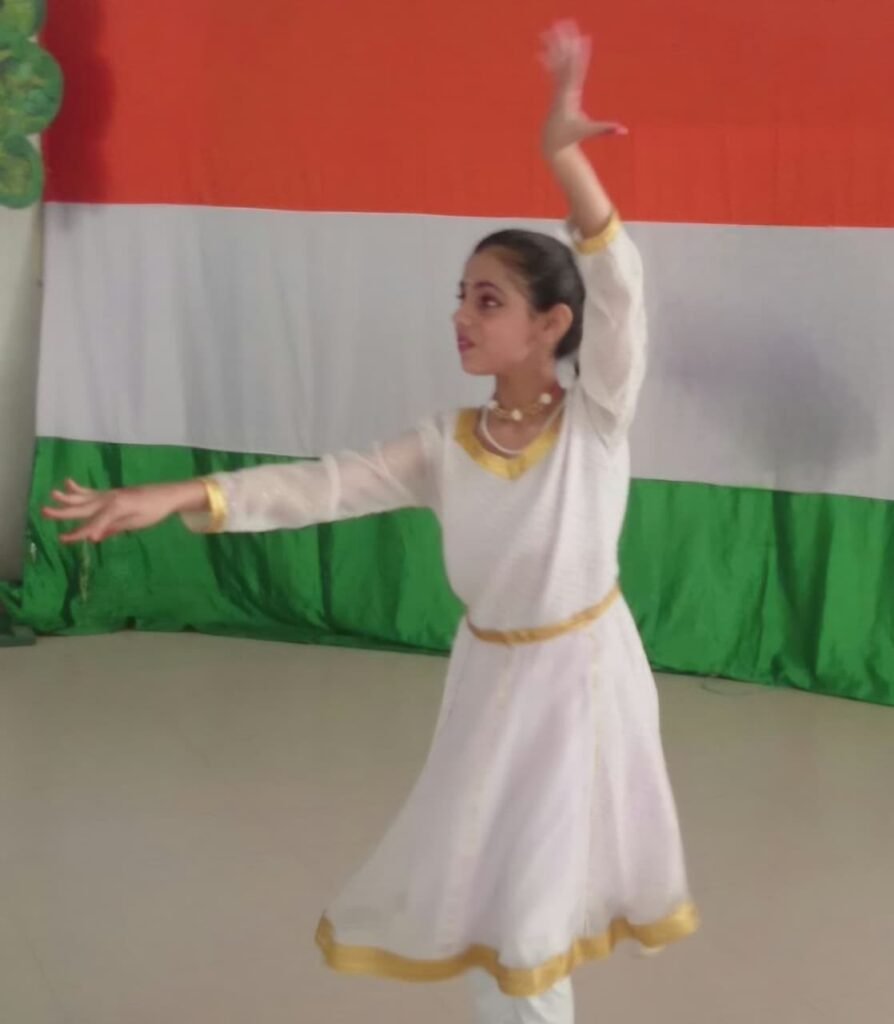
My story began at the tender age of five. While most children were just learning to tie their shoelaces, I was being introduced to the intricate footwork of Kathak under the guidance of Dr. Saroj Sharma at the Kala Ashram of Performing Arts. I am eternally grateful to her for sowing the seeds of discipline in me.
This journey was never a solitary one. I was fueled by the unwavering encouragement of my mother, who had the foresight to identify my latent talent and support me through every stumble. Beside her stood my father, the silent pillar of strength who ensured I had the foundation to pursue my dreams. However, my biggest inspiration was my grandfather (Nana). As a defense professional, he was the epitome of discipline, yet he possessed the soul of an artist and the stamina of an athlete. He taught me that an artist must have the heart of a poet but the nerves of a soldier.
The Sweat and the Soul
The initial years were far from glamorous. I vividly remember days when I felt physically drained. My young body struggled to adapt to the relentless tatkaar (footwork) sessions. There were months of repetitive training that demanded a level of patience I didn’t know I possessed. It was during these grueling hours that I realized:
Great things are not achieved through impulse, but by a series of small things brought together through high resilience and the salt of one’s own sweat.
Slowly, the exhaustion turned into exhilaration. I realized that Kathak was not just a hobby; it was sculpting my personality. It taught me poise, rhythm, and a way to communicate without words. My dedication bore fruit as I began representing my art on prestigious platforms, from national competitions in Ahmedabad and Jaipur to an international stage in Bali, Indonesia. Winning those awards was exhilarating, but the true reward was the realization that this was a lifetime passion.
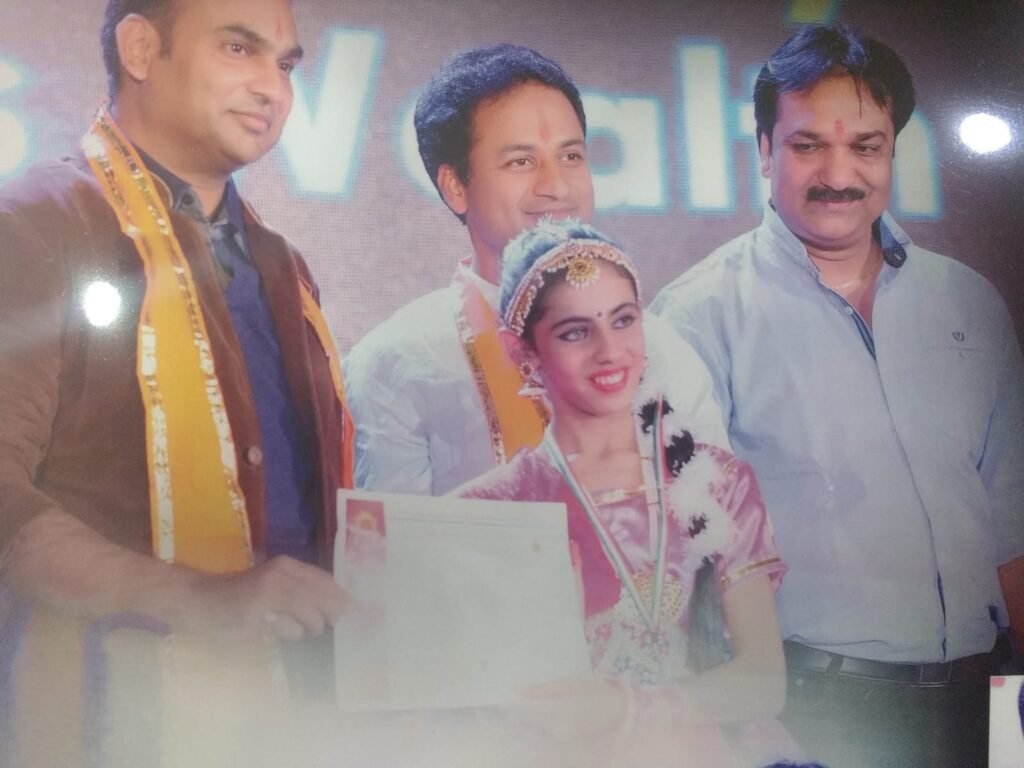
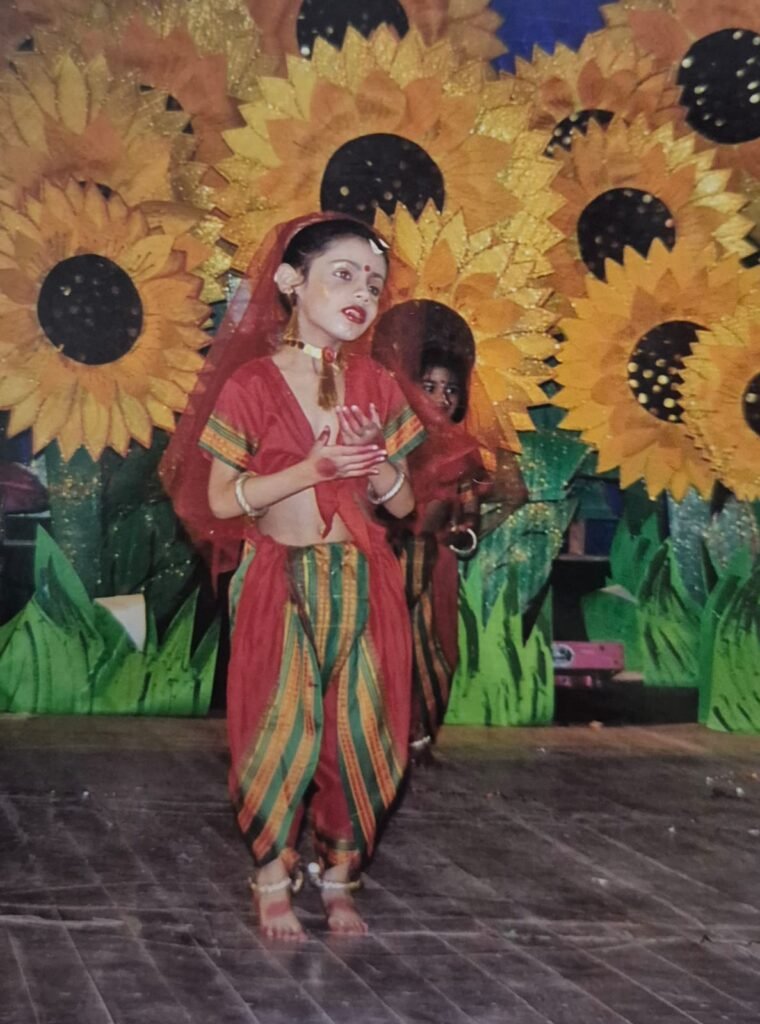
My schooling at Witty International School, Udaipur, played a pivotal role in this growth. My teachers were constant sources of encouragement, providing me with a stage whenever possible and ensuring my identity as an artist was nurtured alongside my academics. By the time I finished my schooling, I had completed a 10-year journey to become a degree holder in the Jaipur Gharana Sangeet Prabhakar from Prayag Sangeet Samiti, Prayagraj. To add more colors to my repertoire, I also completed a two-year diploma in Rajasthani folk (Bhavai and Kalbeliya) and Maharashtrian Lavani during my final years of school.
The Great Migration: From Kathak to Bharatnatyam
The next chapter of my life took me from the familiar lanes of Udaipur to the bustling metro of Bangalore. I secured a place at Christ University for a double major in Performing Arts and Psychology. This transition was perhaps the most challenging period of my life.
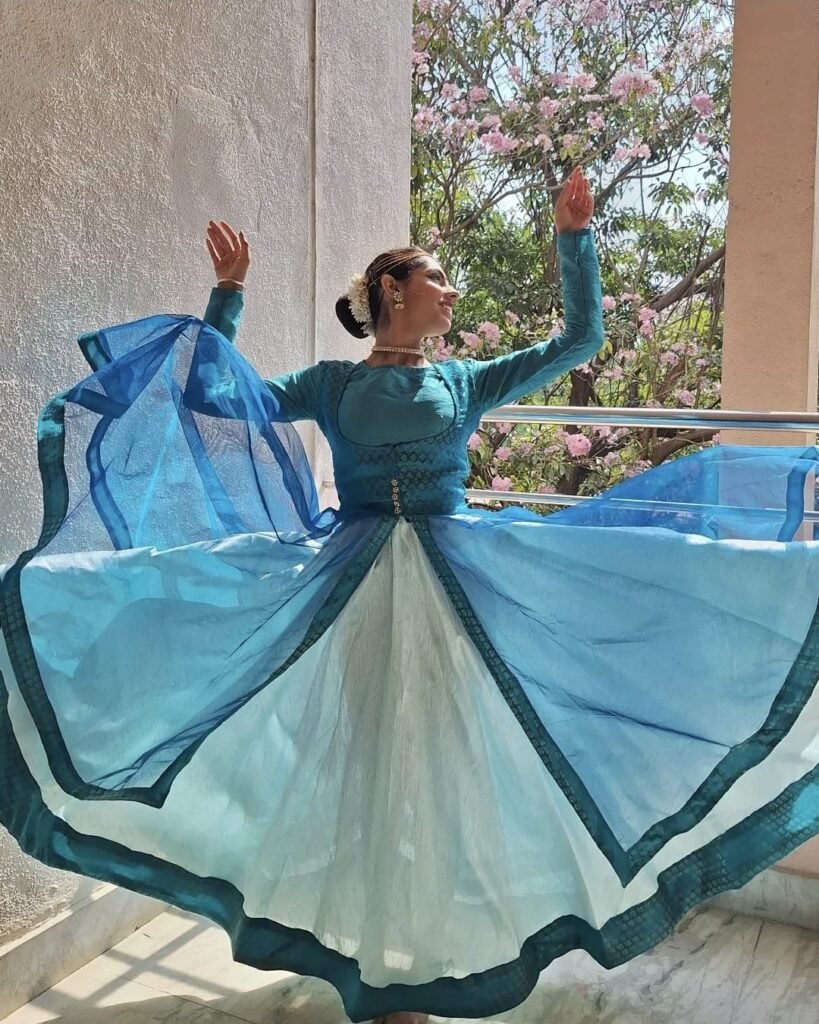
Moving from North India to a southern metropolis brought a massive cultural shift. Adapting to hostel life, new languages, and a different social fabric was daunting. Moreover, I was stepping into the world of Bharatnatyam—a dance form entirely different in its geometry, language, and technique compared to Kathak. I was plagued by self-doubt. Could a Kathak dancer master the sharp, linear precision of Bharatnatyam? During these moments of insecurity, I held onto a simple truth:>
Courage does not always roar. Sometimes courage is the quiet voice at the end of the day saying, ‘I will try again tomorrow.
My mentors at Christ University, particularly Mrs. Padmapriya Sreekanth, became my guiding lights. I am also deeply grateful to Mrs. Tejaswini Halthore, my Bharatnatyam internship teacher, for her specialized guidance and for believing in my true potential as I navigated this new form. A defining moment of my life was receiving my Bharatnatyam Ghungroos from our esteemed guru, Mr. Prabin Villareesh. His belief that I would “shine bright as a Bharatnatyam dancer” was a gift more valuable than any trophy.
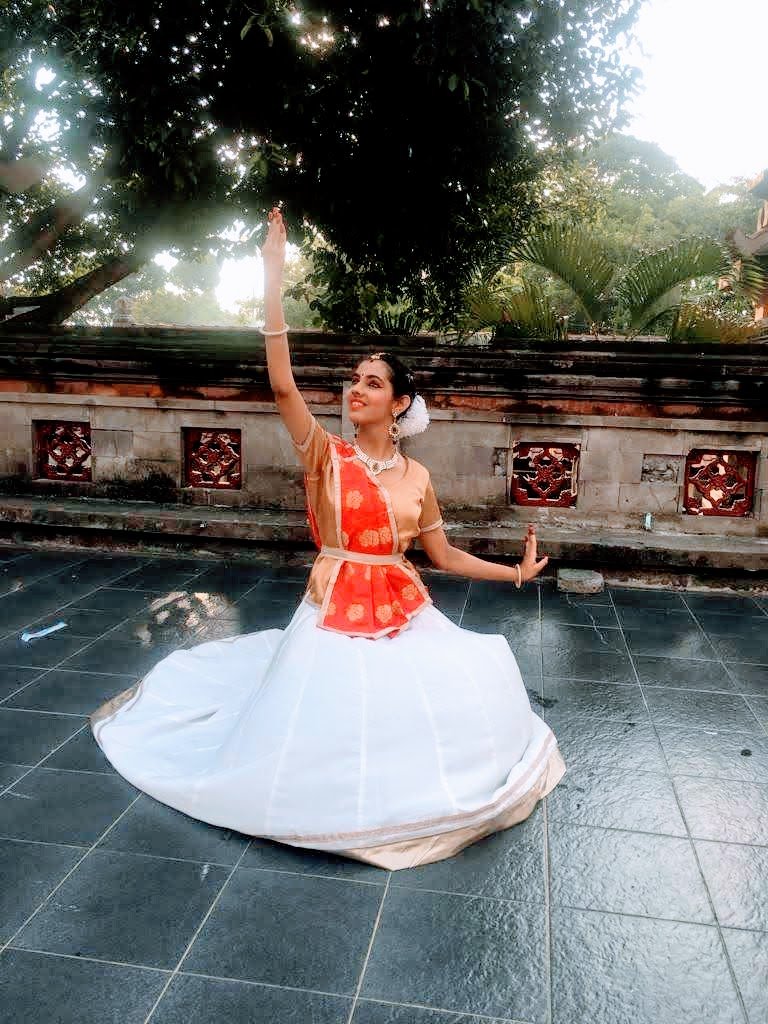
The Intersection of Art and Mind
What made my time at Christ University truly transformative was the intersection of Dance and Psychology. I began to see how the Navarasas (the nine emotions of Indian dance) mirrored the psychological frameworks of human behavior.
I discovered that the moment I step onto the stage, my fears evaporate. The “small-town girl” anxieties and the linguistic barriers vanish, replaced by a universal language of expression. Studying Psychology allowed me to understand the “why” behind the “how” of dance. It made me a more empathetic performer and a more confident individual.
Today, I am a proud degree holder in both Kathak and Bharatnatyam. But for an artist, the horizon always recedes as you move toward it. I now aim to learn the remaining six classical dances of India, for I believe that learning is a perennial river.
The Future: Healing Through Movement
As my convocation day approaches, I look forward with a heart full of gratitude. But I am not just looking for a job; I am looking for a mission.
My goal is to venture into the field of Dance Movement Therapy (DMT). By combining my training in classical dance with my background in Psychology, I want to explore Expressive Arts Therapy. Dance is not just for the stage; it is a tool for healing, a way to process trauma, and a medium to improve mental health.
The Scope of Performing Arts Today
To those who wish to follow this path, the scope is wider than ever. We are living in a golden age for performing arts. Beyond traditional stage performances, the industry offers diverse avenues:
Media & Digital: OTT platforms and social media have democratized fame and provided lucrative opportunities for choreographers and performers.
Education & Administration: There is a growing demand for qualified arts administrators and educators who can preserve our heritage.
Technical & Production: Roles in stage management, lighting design, and direction are essential and well-paying.
Therapy: As mental health awareness grows, the field of Arts Therapy is expanding rapidly in hospitals, schools, and corporate wellness programs.
Conclusion: Art as a Social Contribution
My journey from a five-year-old in Udaipur to a double-degree holder in Bangalore has taught me that dance is a bridge. It bridges the gap between the ancient and the modern, the North and the South, and the mind and the body.
By pursuing a career in Dance Movement Therapy, I hope to contribute to society by offering a holistic approach to well-being. In a world that is increasingly digital and disconnected, dance brings us back to our breath, our bodies, and our shared humanity. To grow up with a passion is a gift; to build a career out of it is a responsibility. I am ready to dance my way into this future, one rhythmic step at a time.
Happy International Dance Day!