Home Blog Page 595

Unveiling the Inaugural Marvel: Malwa Media Fest’s First Session

0
Malwa Media Fest

The first-ever Malwa Media Fest was super exciting! It was like a mix of cool ideas, new things, and a lot of passion. Right from the beginning, the event was full of awesome multimedia stuff that made everyone go “wow.” It was like stepping into a whole new world of media.

The fest had a big goal – to tell students about journalism and show them that media can be a great career choice. It was a planned event with lots of interesting sessions to make it a fun place for students. The fest was born because some people wanted to give students an opportunity to learn and try out new things.

The Opening Show was amazing! The director, Archana Sharma, started things off with a really interesting talk. There were cool presentations and workshops to check out, especially about the work of Saksham Sanchar Foundation.

Here are some cool things that happened:

There were talks by experts in writing, poetry, TV, digital media, and journalism. They talked about the interesting things happening and the challenges in the media world.

The fest kicked off with a deep dive into poetry with Azhar Hashmi’s “Ram Wala Hindustan Chahiye.” It’s like a powerful poem about wanting a society where everyone gets along. Ajhar Hashmi, the poet, shared his thoughts on the poem and even quoted some ancient verses. He connected the poem to history and society, calling it a positive link between young people and the world.

He talked about how he wrote the poem during a tough time in 1976 and faced criticism for it. He compared important figures like Vedvyas and Lord Krishna to editors, showing their importance in history. The poem talks about the real faces hidden behind masks and the struggles for respect.

“Ram Wala Hindustan Chahiye” is like a journey through our country’s history, culture, and today’s reality. It makes us think about what kind of nation we want to be. Hashmi ended the session by praising Saksham Sanchar Foundation and saying they’re like experts in searching and sculpting. He believes they’re doing a great job in the pursuit of knowledge and making a positive impact.

Zomato Enhances Delivery Partner Safety with Bluetooth-Enabled Helmets and Comprehensive Training

0

In a significant move towards prioritizing the safety and well-being of its extensive fleet of delivery partners, Zomato has announced the distribution of Bluetooth-enabled helmets to all its riders across India. With a current delivery partner base exceeding 300,000, the company aims to reinforce safety measures and create awareness about essential skills to prevent serious injuries or loss of life during emergency situations.

The announcement came at Zomato’s “India’s Emergency Heroes” program held at Talkatora Stadium in New Delhi, where the company showcased its commitment to the welfare of its delivery partners. The initiative builds on the success of the distribution of over 250,000 wearable assets, including reflector strips on jackets for enhanced night visibility, in the previous fiscal year 2022-23.

Zomato’s commitment to the safety of its delivery partners goes beyond the distribution of Bluetooth-enabled helmets. The company has also introduced a comprehensive insurance cover of Rs 10 lakh for all its riders, providing financial security in case of unforeseen incidents. Additionally, Zomato has been actively involved in training programs focused on first-aid and Cardiopulmonary Resuscitation (CPR) to equip its delivery partners with life-saving skills.

Rakesh Ranjan, Chief Executive Officer of Food Delivery at Zomato, expressed pride in the company’s efforts to enhance the capabilities of its delivery partners. “We’re proud of the fact that in the last few months, 10,000 delivery partners have received professional first-responder training to help with any emergency they might come across – including first-aid, CPRs,” Ranjan stated.

The introduction of Bluetooth-enabled helmets is a noteworthy step towards elevating the safety standards for Zomato’s delivery partners. This technological addition not only enhances communication capabilities but also ensures that riders remain connected and receive critical information during their deliveries.

The company’s commitment to safety was further highlighted through the “Zomato Bravery Awards,” where the efforts of five exceptional delivery partners were acknowledged. This recognition reflects Zomato’s appreciation for the dedication and hard work displayed by its delivery professionals.

In a statement, the company emphasized that the initiative is not just about providing safety gear but creating a holistic approach towards the well-being of both the delivery partners and the communities they serve. By fostering awareness and offering vital skills training, Zomato aims to contribute to reducing the likelihood of accidents and emergencies.

As the food delivery industry continues to evolve, Zomato’s proactive measures in safety and training set a benchmark for industry standards. The distribution of Bluetooth-enabled helmets, coupled with insurance coverage and professional training, reinforces Zomato’s commitment to the welfare and safety of its delivery partners, positioning the company as a leader in prioritizing the human aspect of its operations.

Rohan Bopanna becomes World’s No. 1 tennis player at the age of 43, scripts history!

0

Monalika Medatwal

Rohan Bopanna, the  Indian tennis player, has created a historic milestone in the Grand Slam circuit by advancing to the finals of the Australian Open 2024 men’s doubles event partnering with Matthew Ebden.

This triumph in the quarter and semi-finals not only showcases his exceptional skill but also sets Bopanna on a path to become the world’s No. 1 men’s doubles player.

Remarkably, at 43 years of age, he will be the oldest player ever to achieve the top ranking the sport’s history when the rankings are updated next week.

Bopanna, who first reached his then career-high rank of No. 3 in 2013, joins the elite list of Indian players such as Leander Paes, Mahesh Bhupathi, and Sania Mirza, who have achieved the world No. 1 rank in doubles.

This achievement follows less than a year after Bopanna became the oldest man to reach a Grand Slam final in the Open era, alongside Ebden in the US Open 2023, despite their loss in the final. Having Made his professional debut over two decades ago Bopanna’s career has been marked by sustained excellence and longevity Entering the Australian Open 2024 ranked No. 3, Bopanna’s progress to the semi-finals ensures his ascent to the No. 1 spot, while his partner Ebden will secure the No. 2 position in the men’s doubles rankings.

The Indo-Australian pair, seeded second, displayed a commanding performance with a 6-4, 7-6 (5) win over the sixth-seeded Gonzalez and Molteni, concluding the match in an hour and 46 minutes.

Now, they also defeated unseeded duo of Tomas Machac and Zhizhen Zhang in the semi-finals registering his first win as the World No. 1 by 6-3, 3-6, 7-6 (10-7) to reach the finals. Bopanna’s ascent breaks the record previously held by Rajeev Ram of the USA, who became the world’s oldest No. 1 ranked player at 30 in October 2022.

Padma Shri Awardee on 75th Republic Day 

0

Priyanshi Pareek

We all have heard about Padma Shri awards, do we know who all have recently got it?

Let us together have the knowledge about all those people who recently received Padma Shri award for their unique contribution.

As India celebrates its 75th Republic Day, on January 26, the country has recognised the contributions of 132 citizens with Padma Awards for their contributions to various fields.

Prabati Baruah 

Parbati Baruah, renowned as ‘Hasti Kanya,’ achieved distinction as India’s inaugural female elephant mahout. Honoured with the Padma Shri, she is recognized for her impactful contributions to animal conservation, breaking gender barriers in a historically male-dominated domain.

Jageshwar Yadav

Jageshwar Yadav, a dedicated Tribal Welfare Worker from Jashpur, Chhattisgarh, received the Padma Shri for his impactful contributions to Social Work (Tribal PVTG). Aged 67, Yadav devoted his life to uplifting the marginalised Birhor Pahadi Korwa communities. He established an Ashram in Jashpur, addressing illiteracy and improving healthcare through camps. During the pandemic, he actively participated in vaccination campaigns, addressing hesitancy and reducing infant mortality. Despite financial challenges, his unwavering passion centres on fostering positive social change.

Chami Murmu

Chami Murmu, a 52-year-old Tribal Environmentalist, and Women Empowerment advocate from Seraikela Kharsawan, is awarded the Padma Shri in Social Work (Environment Afforestation). Leading afforestation with 3,000 women, she planted over 30 lakh plants, empowering 30,000+ women in 40+ villages through SHGs and employment. As the founder of ‘Sahayogi Mahila,’ she addressed safe motherhood, anaemia, malnutrition, and promoted education for adolescent girls. Murmu’s unwavering efforts against illegal logging, timber mafia, and naxal activities, along with dedication to wildlife and forest protection, establish her as a force in environmental conservation.

Gurvinder Singh 

Gurvinder Singh, a 53-year-old Divyang Social Worker from Sirsa, is a Padma Shri awardee for his substantial contributions in Social Work (Divyang). Despite personal adversity, being paralyzed from the waist down after a truck accident, Singh displayed unwavering dedication to improving the lives of the homeless, destitute, women, orphans, and Divyangjan. Notable initiatives include nurturing the dreams of 300 children through Bal Gopal Dham and providing free ambulance services to over 6,000 accident victims and pregnant women. His resilience, turning personal tragedy into meaningful welfare work, stands as a remarkable example.

Sathyanarayana Beleri

Sathyanarayana Beleri, a 50-year-old paddy farmer from Kasaragod, is being awarded the Padma Shri in Others (Agriculture Cereal Rice). Recognized for preserving 650 traditional rice varieties, he introduced ‘Rajakayame’ rice, benefiting production in Karnataka, Kerala, and Tamil Nadu. Using the innovative ‘Polybag Method’ over 15 years, he conserved indigenous rice varieties and traditional seeds of arecanut, nutmeg, and black pepper. Additionally, he supported research by providing 50 rice varieties to research centres and distributed free rice seeds to farmers.

Dukhu Majhi

Dukhu Majhi, a 78-year-old Tribal Environmentalist from Sindri village, Purulia, is receiving the Padma Shri in Social Work (Environment Afforestation). He planted over 5,000 Banyan, Mango, and Blackberry trees on barren land, cycling daily to new destinations. Despite limited education due to financial constraints, he innovatively tackled wood theft, promoting tree importance for a greener future since age 12.

K Chellammal

K Chellammal, a 69-year-old organic farmer from South Andaman, will be honoured with the Padma Shri in Agriculture Organic. She successfully developed a 10-acre organic farm, implemented efficient coconut and palm tree damage control measures, and promoted intercropping methods. Chellammal’s innovations have resulted in an annual coconut harvest of over 27,000 and the cultivation of 2 hectares of coconut plantation with 460 palms. Despite her education up to class 6, she has been a pioneering force in organic farming for over five decades, inspiring 150 farmers to adopt sustainable practices.

Sangthankima

Sangthankima, a 63-year-old social worker from Aizawl, will receive the Padma Shri in Social Work (Children). Recognized for his 30-year commitment, he has tackled issues like children’s welfare, addiction, HIV-AIDS awareness, and education. Through Mizoram’s largest orphanage, ‘Thutak Nunpuitu Team,’ he provides shelter and rehabilitation services to orphans, divyangjan, drug addicts, and alcoholics. His impact also extends to North Eastern communities and Burmese populations via rehabilitation centres in four Assam districts.

Hemchand Manjhi

Hemchand Manjhi, a 70-year-old traditional medicinal practitioner from Narayanpur, will be awarded the Padma Shri in Medicine (AYUSH Traditional Medicine). Known for his five-decade dedication, he provides affordable healthcare using special herb knowledge from the remote forests of Abujhmarh. Despite facing threats and attacks by Naxals, he persists in treating patients with sincerity and zeal.

Yanung Jamoh Lego

Yanung Jamoh Lego, a 58-year-old herbal medicine expert from East Siang, will receive the Padma Shri in Agriculture Medicinal Plants. She has provided medical care to over 10,000 patients, educated 1 lakh individuals on medicinal herbs, and promoted the cultivation of over 5,000 medicinal plants annually. Despite financial constraints, she is instrumental in reviving the traditional healing system of the Adi tribe and preserving medicinal knowledge in Arunachal Pradesh.

Somanna

Somanna, a 66-year-old Tribal Welfare Worker from Mysuru, receives the Padma Shri in Social Work (Tribal PVTG). Over four decades, he secured title deeds for 500+ tribal communities, ensuring legal recognition and protection. His impact extends to environmental conservation, emphasizing the importance of preserving natural habitats. Hailing from the Jenu Kuruba tribe in Nilgiris, Somanna’s journey from bonded laborer to advocate for tribal rights has significantly contributed to the upliftment of his community and others.

Prema Dhanraj

Prema Dhanraj, a 72-year-old Plastic Reconstructive Surgeon and Social Worker, will receive the Padma Shri in Medicine (Indigenous Burns). Founder of Agni Raksha NGO, she provided free surgery to 25,000 burn victims, authored three books on Plastic Surgery, and established Ethiopia’s first burns unit. Surviving 50% burns at age 8, she triumphed over personal tragedy, becoming a Surgeon and Head of Department at Christian Medical College Vellore after undergoing over 14 surgeries as a child. Prema Dhanraj is a resilient force driving positive change in burn care and prevention.

Sarbeswar Basumatary

Sarbeswar Basumatary, a 61-year-old Tribal Farmer from Assam’s Chirang, receives the Padma Shri for successfully adopting a mixed integrated farming approach. Cultivating diverse crops like coconuts, oranges, paddy, litchis, and maize, he shares his knowledge with other farmers, uplifting livelihoods. Despite lacking formal education and starting as a daily wage laborer, Sarbeswar stands as a role model for the agricultural community, showcasing enduring spirit and enthusiasm.

Uday Vishwanath Deshpande

Uday Vishwanath Deshpande, a 70-year-old International Mallakhamb Coach, is honored with the Padma Shri in Sports (Coach – Mallakhamb). Recognized for revitalizing and popularizing the sport globally, he personally trained over 5,000 individuals from 50 countries, introducing Mallakhamb to diverse groups. As the director of Vishwa Mallakhamb Federation, he played a key role in expanding its international reach. Uday’s rule-book for judgment and competition, recognized by the Indian Olympic Association, has standardized regulations in the sport.

Yazdi Maneksha Italia

Yazdi Maneksha Italia, a 72-year-old, is honored with the Padma Shri for dedicating his life to combating sickle cell anemia among Tribals in Gujarat. Pioneering India’s Sickle Cell Anemia Control Program, he introduced newborn screening with heel prick dry blood samples in collaboration with ICMR. This initiative prevented new births with Sickle Cell Disease, screening 2 lakh tribals. His extensive efforts covered screening over 95 lakh tribal individuals, identifying 7.2 lakh Sickle Cell trait cases, and issuing colour-coded cards for effective counselling.

Shanti Devi Paswan & Shivam Paswan

A husband-wife duo from the Dusadh community, overcoming social stigma, achieved global recognition as Godna painters, exhibiting in countries like the USA and Japan. Their art, focused on the community’s epics, features Raja Sailesh as a key character. Shanti Devi, who faced caste discrimination, showcased her talent at the G20 Summit. Despite financial constraints, they trained over 20,000 women, with Shivan passing on the skill to the youth. Their journey reflects resilience, breaking barriers, and promoting cultural art globally.

Ratan Kahar

A renowned Bhadu Folk Singer from Birbhum, with over 60 years in folk music, excels in Bhadu festival songs, Tuşu, Jhumur, and Alkab genres. Known for roles in Jatra Folk theatre, his composition ‘Boro Loker Biti Lo’ is popular. Despite financial hardships, he began singing at 16, leaving a lasting impact on the folk music scene.

Ashok Kumar Biswas

A prolific Tikuli Painter, for over five decades, has been credited with reviving and modifying the Mauryan era art form. Exporting countless paintings, he provided free training to over 8,000 female artists, popularizing Tikuli art internationally through exhibitions in five countries. He left his job to dedicate his life to this artistic revival.

Balkrishan Sadanam Puthiya Veetil

A distinguished Kalluvazhi Kathakali Dancer with a 60-year career, gained global acclaim, gracing 30 festivals across 25 countries. A choreographer, he crafted 35 new plays, adapting Shakespeare into Kathakali. His literary contribution includes compiling 14 Aattakathakal. A respected Guru, he started as a Senior Artist in Delhi’s Dance Institute in 1974, later becoming its Director by 1980. Many of his disciples have become accomplished performers.

Uma Maheshwari D

The first female Harikatha exponent proficient in Telugu and Sanskrit, showcasing her skills in various ragas. She authored over four Harikathas, featuring figures like Ramana Maharshi and Potti Sriramulu. Her contribution has inspired young girls to break traditional barriers and adopt the art. Hailing from a family of musicians, she is the grandchild of the renowned Nadaswara Vidwan late Daliparti Pichihari.

Gopinath Swain

A Krishna Leela singer from Ganjam, dedicated his life to preserving and promoting the tradition. Committed to traditional techniques and improvisational methods, he bridged the gap between past and present. Teaching five ancient ragas, establishing Akhadas, and imparting knowledge to numerous disciples, he continues to propagate this unique art despite old age. Coming from a family of Krishna Leela performers, he commenced his musical journey at the young age of 5.

Smriti Rekha Chakma

A Chakma Loinloom Shawl Weaver from Tripura, she transforms eco-friendly, vegetable-dyed cotton threads into traditional designs, emphasizing the use of natural dyes. She founded Ujeia Jadha, a socio-cultural organization, to train rural women in weaving. Engaging in the entire dyeing process, she personally collects materials from forests before drying, crushing, and applying colors. Drawing inspiration from her grandmother’s traditional Naga weaving methods on the binloom during her childhood, she now imparts training to the younger generation.

Omprakash Sharma

A Mach Theatre Artist with 7 decades of dedication to promoting the 200-year-old traditional dance drama of the Malwa region. He authored scripts and adapted Sanskrit plays for Mach theater productions, serving as an educator at NSD Delhi and Bharat Bhavan Bhopal, passing on his expertise. From a humble background, he learned the art form from his father under Ustaad Kaluran Mach Akhada.

Narayanan E P

A veteran Theyyam Folk Dancer from Kannur, mastering the entire Theyyam ecosystem, including costume designing and face painting techniques. With a six-decade-long career that began at the age of 5, he has showcased his art in 300 performances across 20 variants of Theyyam. Theyyam is an ancient folk ritual encompassing theatre, music, mime, and dance, typically performed in front of village shrines with musical instruments like Chenda, Elathalam, and Kurumkuzal. Starting as a driver, he is now dedicatedly working towards conserving this ancient art form.

Bhagabat Padhan

An exponent of Sabda Nrutya Folk dance from Bargarh, dedicated over five decades to preserving and popularizing this art beyond temples. Considered the dance of Mahadev, he trained over 600 dancers, significantly contributing to sustaining the dance form. Despite financial challenges as a Lower Primary School teacher in the 1960s, he unwaveringly maintained his devotion to the art.

Sanantan Rudra Pal 

A distinguished sculptor with over 5 decades of experience, specializing in crafting Sabeki Durga idols. His work adorns more than 30 pandals each year during Durga Puja celebrations, earning recognition from UNESCO. Providing employment to over 1,500 individuals, he has developed a unique style that showcases impressive idols with captivating, radiant eyes.

Badrappan M

An exponent of Valli Oyil Kummi Folk Dance from Coimbatore, addressing social issues and spreading knowledge about Indian history and mythology. Breaking the tradition of male dominance, Badrappan championed women empowerment by training female artists in this dance form.

Jordan Lepecha

A Bamboo Craftsman from Mangan, preserving the cultural heritage of the Lepcha tribe by weaving traditional Lepcha hats and bamboo crafts for 25 years. A skilled artisan and trainer, he has taught over 150 youths, empowering them to establish their own Bamboo Crafts. Additionally, he is a marginal farmer and carpenter.

Machihan Sasa

A Longpi Potter from Ukhrul dedicated five decades to preserving the ancient Manipuri traditional pottery, Longpi Pottery, rooted in the Neolithic period (10,000 BC). Using black serpentine stone and brown clay without a wheel, he creates and markets various pottery products, infusing new designs inspired by Manipuri folk art. His training efforts have benefited over 300 individuals, reviving the art form and creating a sustainable income source for villagers.

Gaddam Sammaiah

Renowned Chindu Yakshaganam artist from Jangaon, with 50+ years of experience and 19,000 shows. Addresses social issues, founded Chindu Yaksha Kalakarula Sangham & Gaddam Sammaiah Yuva Kala Skethram to promote the art. From a humble background, learned from parents who were Chindu Yakshaganam artists.

Jankilal

Bhilwara’s Behrupiya artist for 60+ years, mastering characters from mythology. Upholding a 3-generation legacy, he promotes the local art in Mewar, Rajasthan, despite financial challenges.

Dasari Kondappa

3rd-gen Burra Veena player from Damaragidda, Narayanpet, preserving the art. Last exponent of Burra Veena, sings in Telugu, Kannada. Indigenous instrument using bamboo, gourd, and metal strings. Went beyond community tradition to attract wider audiences.

Babu Ram Yadav

Experienced Brass Marori craftsperson for 60+ years, showcasing globally, exporting products, and conducting free training for 1,000 artisans, including leprosy patients. Founded Artisan Light for economic support to artisan communities.

Nepal Chandra Sutradhar 

Third-generation Chhau mask maker with 50+ years preserving the art. Trained 70+ Chhau Dance Groups, conducted workshops nationally and internationally. Learned the craft from father and grandfather at age 8. Posthumous (Nov 2023).


India’s Tata and Airbus Forge Helicopter Manufacturing Partnership

0

India’s Tata group and France’s Airbus have joined forces to venture into the production of civilian helicopters. The partnership, announced during French President Emmanuel Macron’s state visit to India, underscores the growing collaboration between the two nations in the aerospace industry. This collaboration follows their existing cooperation on the manufacturing of C-295 transport aircraft in the home state of Prime Minister Narendra Modi.

Details of the Agreement
The formal agreement for the production of H125 helicopters was signed, emphasizing a substantial indigenous and localization component. India’s Foreign Secretary Vinay Kwatra highlighted the industrial partnership during a media briefing, shedding light on the commitment to boosting domestic capabilities and expertise in helicopter manufacturing.

Timeline and Export Plans
Airbus revealed that the final assembly line (FAL) for the helicopters is expected to take 24 months to set up, with deliveries slated to commence in 2026. Furthermore, the machines produced are not only intended for the domestic market but will also be exported to some of India’s neighboring countries, reflecting the global outlook of the collaboration.

Location of the Facility
The location of the manufacturing facility is yet to be determined, with both Tata and Airbus expected to collaborate on this decision. The establishment of the FAL will contribute to bolstering the aerospace industry and creating employment opportunities.

Defence Sector Cooperation
During President Macron’s visit, discussions on further cooperation in the defense sector took place. Notably, there were talks about the possibility of French engine maker Safran assisting in the manufacturing of fighter jet engines in India. This move aims to enhance self-reliance and technology transfer, and discussions on this matter are expected to continue.

CFM International’s Agreement with Akasa Air
In tandem with President Macron’s visit, CFM International announced an agreement with India’s Akasa Air. The deal involves the purchase of more than 300 LEAP-1B engines to power Boeing 737 MAX airplanes. This agreement underscores the strengthening ties between Indian aviation companies and global engine manufacturers.

Concerns Over Press Freedom
Amidst the positive developments, France raised concerns over the treatment of New Delhi-based French journalist Vanessa Dougnac. The Indian government served her a notice regarding a possible cancellation of her visa, citing her work as “malicious” and potentially disruptive to peace. Dougnac vehemently denied the allegations, and the incident highlights the delicate balance between press freedom and national interests.


The Tata-Airbus collaboration marks a significant step forward in the aerospace industry, showcasing the potential for international partnerships in high-tech manufacturing. As the two nations deepen their ties, the helicopter manufacturing agreement paves the way for increased self-reliance in defense production and economic growth. The evolving relationship between India and France in the aerospace sector reflects a broader trend of global collaboration for mutual benefit.

Gujarat to launch first Submarine Tourism in Dwarka

0

Apeksha Agarwal

Dwarka, often referred to as the city of Lord Krishna, holds a significant place in Hindu mythology. Located in the state of Gujarat, this ancient city is believed to be the dwelling place of Lord Krishna. According to Hindu mythological beliefs, Dwarka was submerged into the Arabian Sea approx around 1000 years ago. This mystical event has captivated the imagination of devotees and scholars alike, prompting archaeological investigations to uncover the lost city beneath the ocean’s depths.

With the surge in tourism across India, devotees of Lord Krishna are increasingly drawn to Dwarka, believed to be the city of their deity. Recognizing the growing interest and to enhance the visitor experience, the Gujarat government has taken a monumental step by launching a Submarine Tourism Project. This initiative aims to provide tourists with an unprecedented underwater tour, offering a glimpse into the mystique of the lost city of Dwarka.

Project overview

In a significant move to enhance tourism and development in Gujarat, the state government has taken a pioneering initiative by signing a Memorandum of Understanding (MoU) with Mazagon Dockyard Limited (MDL). The announcement of this ambitious submarine project was made during the Vibrant Gujarat Global Summit held on January 10th. The collaborative effort between the Gujarat government and MDL aims to not only upgrade tourism infrastructure in the state but also contribute to its overall development, with additional benefits for religious aspects.

Sanjeev Singhal, the Chairman and Managing Director of Mazagon Dockyard Limited, shared a statement during the signing ceremony, emphasizing that any official announcement regarding the submarine project will be made only after the state government’s decision. Until the government gives its approval, the construction of the submarine will not proceed.

This strategic partnership signifies a concerted effort by the Gujarat government to diversify and boost its tourism sector. The submarine project is expected to attract both domestic and international tourists, offering a unique and immersive experience. The collaboration with Mazagon Dockyard Limited, a renowned shipyard with expertise in naval construction, reflects the commitment to ensuring the project’s success and aligning it with international standards.

The decision to unveil details about the submarine project only after obtaining the state government’s approval demonstrates a prudent approach. This cautious stance ensures that all necessary considerations and evaluations are taken into account before moving forward with the construction.

 About the submarine

The state government has launched an ambitious marine project aimed at providing visitors with an unparalleled exploration of marine life around Bet Dwarka. The initiative involves the deployment of a specially designed submarine, weighing approximately 30 tones and capable of carrying 30 passengers at a time.

This state-of-the-art submarine boasts a unique feature, allowing passengers to immerse themselves in the underwater world through strategically placed windows. The vessel’s design includes two rows, ensuring that each passenger enjoys a panoramic view of the mesmerizing marine life at depths of up to 300 feet. The entire journey is expected to last approximately 2 hours, providing an immersive and unforgettable experience for tourists.

However, due to the inclusion of essential personnel such as drivers, guides, and technicians, only 24 passengers will be accommodated during each expedition. Safety measures are a top priority, with passengers provided with oxygen masks for relaxation and scuba jackets to ensure their well-being throughout the underwater journey.

While the exact cost of travel has not been announced, the project’s expenses are anticipated to be substantial. The submarine will be equipped with various amenities to enhance passenger hospitality, contributing to an overall luxurious and comfortable experience. The government envisions the completion of this unique facility before Diwali 2024, adding a distinctive attraction to the cultural and religious festivities.

Beyond providing an extraordinary adventure, the primary objective of this marine project is to engage the younger generation in religious beliefs. By exploring the mythological aspects of Bet Dwarka, the government aims to foster a deeper connection to spiritual values and beliefs. The city’s rich cultural and religious history is expected to resonate with both locals and tourists, fostering a sense of reverence and appreciation for the country’s spiritual heritage.

Who is Arun Yogiraj?

0

Monalika Medatwal

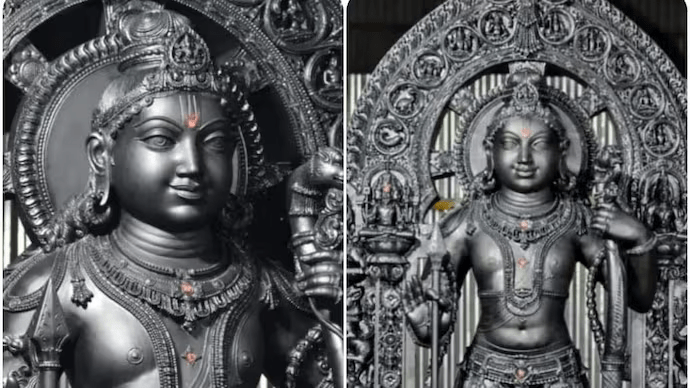
Arun Yogiraj born 1983 ,is an Indian sculptor from Mysuru. He has carved the 30-feet statue of Subhash Chandra Bose, which was installed in the canopy behind the Amar Jawan Jyoti at the India Gate in New Delhi ahead of the 125th birth anniversary of Netaji Subhash Chandra Bose. His idol of Ram Lalla, the child form of Hindu god Rama, is also installed at Ayodhya’s Ram Temple.

He hails from Agrahara, Mysore. He is from a family of five generations of sculptors from the Mysuru city in Karnataka state. Arun’s father, Yogiraj, and grandfather Basavanna Shilpi are also famous sculptors. Arun did his MBA and worked in a private company before taking up sculpting full time from 2008. His father Yogiraj Shilpi passed away while Arun was still doing the Subhash Chandra Bose statue, in October 2021.His brother Suryaprakash, who is also a sculptor, lives with them in Mysore.

Arun Yogiraj’s recent work include the divine statue of Ram Lalla. The 51-inch tall idol has been installed in the Ram Mandir at Ayodhya.

His other works include a 12-feet, tall 3-D statue of Adi Shankaracharya in Kedarnath, the 21-feet tall Hanuman statue at Chunchanakatte in Mysore district, 15-feet tall sculpture of BR Ambedkar, in Mysuru inaugurated by the then chief minister of Karnataka Siddaramaiah in 2018, the white amritashila statue of Swami Ramakrishna Paramahamsa in Mysore, six-feet monolithic statue of Nandi and a six-feet tall statue of Banashankari Devi.

He received South Zone Young Artist award by Government of India in 2014, and Rajyotsava Prashasti by Mysuru District administration, and in 2021 Karnataka government’s Jakanachari Award.  Shilpa Kousthubha honorific by Sculptors Association.

Non-Selected Ram Lalla Sculptures to Find a Place Within the Temple 

0

Priyanshi Pareek

The black stone idol of Ram Lalla, crafted by Mysuru sculptor Arun Yogiraj, has been successfully installed in the sanctum sanctorum of the grand Ayodhya temple. Meanwhile, two additional idols currently under consideration will find their places in other sections of the temple.

One of them is a white marble idol carved by Rajasthan’s Satyanarayan Pandey. The trust currently holds the idol, portraying Ram Lalla with a golden bow and arrow. Positioned behind the deity is an arch-like structure adorned with smaller sculptures depicting various incarnations of Lord Vishnu. The idol showcases exceptional craftsmanship, with marble chiselled to create intricate jewellery and clothing for the deity. The dimensions of the idol adhere to the specifications set by the trust overseeing the temple construction.

Another idol, carved from a unique black stone by sculptor Ganesh Bhatt.

The Shri Ram Janmbhoomi Teerth Kshetra Trust has provided compensation to all three sculptors. The two idols that couldn’t make it to the sanctum sanctorum will now be installed within the temple complex. Vinod Bansal of the Vishwa Hindu Parishad stated, “We have respectfully accepted all three idols, even though only one could be placed in the Garbha Griha.”

The trust has chosen the 51-inch Ram Lalla idol, crafted by Mysuru-based sculptor Arun Yogiraj, for the sanctum sanctorum among the three commissioned. Vinod Bansal mentioned that the idols by Ganesh Bhatt and Satyanarayan Pandey will also be prominently placed within the temple complex, with their specific locations to be disclosed at an appropriate time. Certain sections of the temple complex are still under construction, scheduled to be completed by December 2025.

Bhatt and Pandey expressed no disappointment that their Ram Lalla idols weren’t chosen for the sanctum sanctorum, asserting pride in their unique creations. Both sculptors have been invited by the trust to attend Monday’s consecration ceremony, joining Yogiraj in commemorating their contributions.

National Voters’ Day 2024: Date, History, Significance, and Theme

0

The ballot is stronger than the bullet, and rightfully so. The future of a republic lies in the hands of its voters, and the fundamental rights of Indian voters are enshrined in the Constitution, which also outlines the responsibilities that voters need to consider before and after casting their votes. Voting is not just a right; it’s a civic responsibility and a crucial tool that has guaranteed our inalienable rights throughout history.

Date
National Voters’ Day is celebrated annually in India on January 25, encouraging the country’s voters to actively participate in the electoral process. In 2024, the nation observes the 14th edition of this significant day.

History and Significance
The inception of National Voters’ Day dates back to January 25, 2011, with the primary objective of inspiring more young voters to engage in the electoral process. The Union government, led by Prime Minister Manmohan Singh at the time, approved a proposal from the law ministry to celebrate this day. Ambika Soni, the former information and broadcasting minister, highlighted the decreasing interest among new voters, particularly those who had just turned 18, in getting enrolled in the electoral rolls.

To address this issue, the Election Commission took a proactive step by launching a nationwide effort. This initiative aimed to identify all eligible voters reaching the age of 18 on January 1 each year, across all polling stations in India. These eligible voters would then be enrolled and provided with the Electoral Photo Identity Card (EPIC) on January 25 annually.

Theme – ‘Nothing Like Voting, I Vote For Sure’ (NVD 2024)
Dedicated to the voters, the theme for National Voters’ Day 2024, ‘Nothing Like Voting, I Vote For Sure,’ continues the focus on emphasizing the importance of voting. The President of India, Droupadi Murmu, will be the Chief Guest at the national function organized in New Delhi by the Election Commission of India. Union Minister of State for Law and Justice (Independent Charge), Arjun Ram Meghwal, will grace the event as the Guest of Honour.

The event will witness the presence of Heads and representatives of Election Management bodies from countries such as Maldives, Philippines, Russia, Sri Lanka, and Uzbekistan, reflecting the international significance and cooperation in promoting democratic values.

National Voters’ Day serves not only as a celebration but also as a reminder of the power vested in the hands of citizens to shape the destiny of the nation through their votes. It’s a day to honor the democratic spirit, encourage voter awareness, and celebrate the essence of participatory democracy. As the 2024 edition unfolds, it stands as a testament to the enduring commitment towards strengthening the roots of democracy in India.

Indore Creates Unique Replica of Ram Mandir Using Scrap Iron and Discarded Elements

0
Indore Scrap Iron Ram Mandir

Apeksha Agarwal

Indore, known as the cleanest city in the country, has undertaken a groundbreaking initiative to build a replica of the Ram Mandir of Ayodhya. The city led by Mayor Pushyamitra Bhargav, utilized 21 tons of iron and various discarded materials, such as old municipal vehicle parts, streetlight poles, broken swings, fenders, gear parts, nuts, bolts, and damaged park grills, to construct the unique temple replica of Ayodhya’s Ram Mandir. This innovative project aims to showcase the city as a clean and environmentally conscious urban space while fostering a sense of unity and celebration among its residents.

Project Overview

Mayor Pushyamitra Bhargav spearheaded the initiative, emphasizing the use of iron waste to design the replica, aligning with the city’s commitment to being recognized as the cleanest city for six consecutive years. The project, costing between Rs 60 lakh to 70 lakh, involved the collaboration of various stakeholders, including private firms.

Construction and Design

The construction of the replica commenced three months prior to the inauguration ceremony, with workers drawing inspiration from online resources, as the original temple had not been fully constructed. The 40 feet long, 27 feet wide, and 24 feet high replica showcases the creativity and dedication of the artisans involved in the project. Notably, the workforce comprised individuals from both Hindu and Muslim communities, reflecting a spirit of unity.

Mayor’s Appeal

Mayor Bhargav, anticipating objections, appealed to malls and shopkeepers to install replicas of the Ram Mandir from January 15 to 21. This initiative aimed to allow residents who couldn’t visit Ayodhya to celebrate the festival within their city.

The replica of the Ram Mandir in Indore stands as a testament to the city’s commitment to cleanliness and environmental sustainability. The innovative use of scrap iron and discarded elements, coupled with the diverse workforce involved, highlights the city’s dedication to unity and cultural celebrations. As the inauguration approaches, Indore sets an example for other cities, demonstrating that creativity and environmental responsibility can go hand in hand in shaping a cleaner and more inclusive urban landscape.