Home Blog Page 596

Ram Lalla Idol depicts 10 avatars of Lord Vishnu, know significance

0
10 avatars of Ram Idol

The inauguration of the Ram Mandir has been an eagerly awaited and momentous occasion for devotees of Lord Ram. Amidst the anticipation, the revelation of Lord Ram Lalla’s face has captured the hearts of millions, providing a divine glimpse into the sacred idol. Crafted by the skilled hands of Mysuru-based sculptor Arun Yogiraj, the Ram Lalla idol stands as a symbol of reverence, embodying not only the essence of Lord Ram but also featuring the ten avatars of Lord Vishnu.

The images originating from Arun Yogiraj’s workshop portray a five-year-old Lord Ram, standing gracefully with a golden bow and arrow in hand. What makes this idol truly remarkable is the intricate representation of the Dashavatara—the ten avatars of Lord Vishnu—adorned on both sides of the Ram Lalla idol.

On one side, the avatars Matsya, Kurma, Varaha, Narasimha, and Vamana grace the sacred depiction. On the other side, the avatars Parashurama, Rama, Krishna, Buddha, and Kalki stand in divine alignment. Lord Hanuman, the devoted disciple of Lord Ram, finds his place beside the right foot of the idol, symbolizing unwavering devotion. Meanwhile, Lord Garuda, the mount of Lord Vishnu, stands proudly in proximity to the left foot of the idol.

The symbolism within each avatar carries profound significance in the broader context of Hinduism and Sanatan Dharma. These divine forms bring with them blessings and positive cosmic energies, serving as a beacon of righteousness and spiritual harmony. The right hand of the idol is raised in a gesture of blessing (aashirwaad), holding an arrow, while the left hand firmly grasps a bow (dhanush), emphasizing the eternal cosmic order.

Crafted from stone and weighing approximately 150-200 kg, the Ram Lalla idol radiates a captivating divine presence. Lord Ram, depicted as a five-year-old standing on a lotus, symbolizes purity and innocence. The dimensions of the idol, measuring 4.24 feet in height and three feet in width, further amplify the divine aura that envelops the sacred creation.

Delving into the significance of the ten avatars of Lord Vishnu, collectively known as the Dashavatara, unveils a rich tapestry of cosmic events and moral teachings:

  1. Matsya (The Fish): Symbolizes preservation and the rescue of knowledge during the cosmic flood.
  2. Kurma (The Tortoise): Represents support and stability during the churning of the cosmic ocean.
  3. Varaha (The Boar): Illustrates the rescue of the Earth and restoration of dharma.
  4. Narasimha (The Man-Lion): Signifies the simultaneous existence of man and animal and the triumph of good over evil.
  5. Vamana (The Dwarf): Represents humility, the control of ego, and the restoration of balance.
  6. Parashurama (The Warrior with an Axe): Embodies the destruction of tyranny and the restoration of dharma through warfare.
  7. Rama (The Prince of Ayodhya): Exemplifies righteousness, duty, and adherence to dharma, as depicted in the Ramayana.
  8. Krishna (The Divine Cowherd): Represents divine love, compassion, and the teachings of the Bhagavad Gita.
  9. Buddha (The Enlightened One): Emphasizes non-violence, compassion, and enlightenment.
  10. Kalki (The Future Warrior): Anticipated to appear in the future, Kalki symbolizes the end of the current age, the destruction of evil forces, and the establishment of righteousness.

The Ram Lalla idol, adorned with the ten avatars of Lord Vishnu, stands as a testament to the rich tapestry of Hindu mythology and the enduring values of righteousness, duty, and cosmic balance. As devotees gather to witness the inauguration of the Ram Mandir, they carry with them not just the anticipation of a grand structure but the spiritual resonance of divine avatars, encapsulated in the sacred form of Ram Lalla.
Making of another Ayodhya Ram Mandir in Odisha

0

Priyanshi Pareek

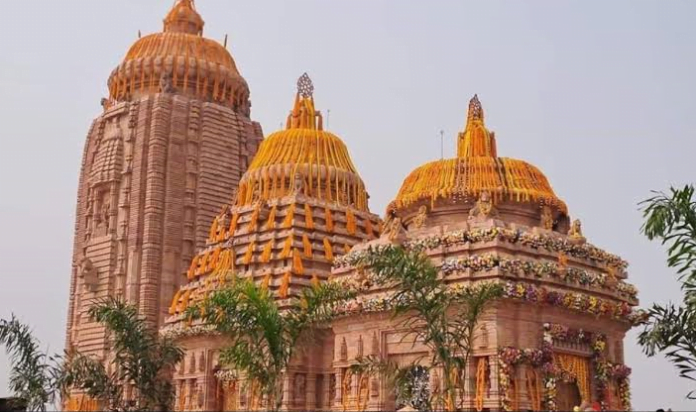
We all know about Ram Mandir of Ayodhya! Now let me introduce you to the newly inaugurated Ram Mandir of Odisha which is over 1000 km away from Ayodhya and over 1800 feet above sea level.

The temple was completed through generous donations from villagers and devotees across the state.

The Ram Temple in Fategarh, Nayagarh district, was inaugurated on Monday, coinciding with the consecration of the Ram Lalla idol in Ayodhya, Uttar Pradesh. Over a lakh people gathered at the newly constructed hilltop temple in Fategarh for the inauguration ceremony.

Kelu Charan Nanda, the eldest Vedanga Brahmin of Fategarh, performed the Pran Pratishtha of idols depicting Lord Ram, Lord Lakshman, Lord Hanuman, and Goddess Sita in the recently constructed temple. Subsequently, he inaugurated the temple nestled in the lap of nature.

The hilltop was filled with a spiritual aura as Yajna, homa (havan), hymn recitations by Vadanga Brahmins, and rituals created a religious ambiance. Traffic congestion stretched from Bhapur to Fategarh, with the atmosphere resonating with the ‘Jay Shree Ram’ slogan. Emotions ran high as people stood in queues, expressing their reverence to the lord.

The Pran Pratishtha and inauguration ceremony concluded around 2 pm. At 2:40 pm, devotees were granted access to the temple to witness the deities. Tapan Patnaik, a local resident, mentioned that following the ceremony, devotees were offered prasad.

The Yajna and recitation of hymns, initiated on January 17, will extend until January 24. According to Benudhar Pradhan, vice-chairman of Bhapur block and a member of the temple trust, the entire inauguration process will conclude with the culmination of the Yajna on Wednesday.

Construction of the temple commenced in 2017, aided by contributions from Fategarh villagers and generous donations. The village, with a population exceeding 15,000, contributed over Rs 5 crore to the temple’s construction. Approximately Rs 11 crore has been utilised for the project, with additional funds coming from donations by individuals in nearby areas and beyond the district. The temple, crafted from Baulamala stone, stands as a testament to collective effort and community support, as highlighted by Benudhar Pradhan.

The villagers have formed a trust namely Sriram Seva Parishad to manage the Ram Mandir. “The hill is known as Sriram Pahad. According to the legend, people were going to the hilltop to perform Govardhan Puja seeking rain during drought. They believe that this hill is sacred for them,” said Tapan Patnaik, a local.

He said Daru of lord Sudarshan (a log of holy tree used for making idols of lord Sudarshan) was found from the hilltop in 1912. “The villagers finally decided to construct a Ram Temple at the sacred place,” he added.

Pran Pratishtha At Ayodhya – The journey of 500 years

0

Priyanshi Pareek

After an awaited span of 500 years, Lord Shri Ram has finally taken residence in Ayodhya. Ramlala assumed his rightful place after the Pran Pratishtha ceremony. Prime Minister Narendra Modi participated in the sacred rituals, offering prayers in the innermost sanctum for the ceremony. Awadh Bihari attended the temple in a grand manner. Maryada Purushottam Prabhu Shri Ram now sits gracefully in Ayodhya’s majestic temple.

Ramlala was adorned with numerous divine ornaments, presenting a radiant sight. Manifesting as a five-year-old boy, Shri Ramlala had silver toys arranged in front for traditional play, including a rattle, elephant, horse, camel, cart, and top. A golden canopy gracefully enveloped the divine aura, with a golden garland enhancing the sacred atmosphere below the lotus adorned at the Lord’s feet.

Lord Shriramlala’s earrings are intricately crafted, mirroring the design of the Mukut or Kirat, adorned with peacock figures embellished with gold, diamonds, and rubies. The neck is graced by a necklace, featuring crescent-shaped gems, where floral motifs symbolise offerings to Mars, and the Sun God is elegantly depicted in the centre. This golden necklace is enriched with diamonds, rubies, and emeralds. Below the neck, strands of emeralds add a further touch of opulence.

In the left hand of the Lord rests a golden bow, adorned with hanging pearls, rubies, and emeralds, while a golden arrow is held gracefully in the right hand. The traditional Mangal-Tilak on God’s forehead is intricately crafted with diamonds and rubies, adding a divine radiance to the sacred visage.

Lord Ram has taken his seat in the Ayodhya temple, with Prime Minister Narendra Modi offering prayers in the inner sanctum for the consecration of life. Chief Minister Yogi Adityanath and Governor Anandi Ben Patel are also present in the sacred space. The consecration ceremony unfolded from 12:05 to 12:55 pm, marking an auspicious moment of 84 seconds when Ramlala’s life was consecrated.

Have you visited Sisodiya Rani Ka Bagh in Jaipur yet?

0

In the midst of our busy lives, taking a break becomes a necessity to rejuvenate the spirit. If you’re a Jaipurite and haven’t explored the serene heaven of Sisodia Rani Ka Bagh yet, you’re missing out on an enchanting experience. Having personally visited this historic garden, I can vouch for its worthiness as a delightful escape from the hustle and bustle of daily life. Let’s delve into the charm of this heritage garden nestled in the heart of Jaipur.

Location and Background
Situated 10 kilometers from Jaipur on the Jaipur-Agra highway, Sisodia Rani Ka Bagh was built by Maharaja Sawai Jai Singh II as a token of love for his second queen. This rich garden stands out among Jaipur’s green spaces, offering a captivating blend of cleanliness, tranquility, and impeccable infrastructure against the backdrop of picturesque mountains. It’s the perfect destination for a peaceful picnic with loved ones.

Garden Attractions
Beyond the lush greenery and vibrant floral beds, Sisodia Rani Ka Bagh is renowned for its Charbagh styled layout, featuring multi-layered palaces, pavilions, shrines, murals, frescoes, paintings, and fountains. The garden, adorned with the beauty of its surroundings, has become a popular spot for both tourists and locals alike.

Flora and Fauna
One of the enchanting aspects of the garden is the frequent presence of peacocks, gracefully roaming the premises. The verdant landscapes, combined with the presence of these majestic birds, create an atmosphere of serenity and natural beauty. Additionally, the garden has served as a backdrop for various movie shoots, including the iconic film ‘Lamhe,’ starring Anil Kapoor and Sridevi.

Historical Significance
The history of Sisodia Rani Ka Bagh dates back to 1728 when Maharaja Sawai Jai Singh II built it as a retreat for his beloved second wife. The queen, belonging to the Sisodia Rajput clan of Udaipur, found solace in this garden away from the intrigues of the royal court. The architectural layout, influenced by the Charbagh style of Mughal gardens, reflects a harmonious blend of Mughal and Indian architectural elements.

Architectural Marvel
The multi-layered gardens, typical of Mughal design, feature flower beds, fountains, and intricate pathways. The spires and pavilions of the garden are adorned with frescoes depicting Hindu motifs and scenes from the life of Lord Krishna. The Queen’s palace, strategically positioned to overlook the garden, boasts murals showcasing love stories and legends from the lives of Radha and Krishna.

Visiting Details
For those planning a visit, the ticket prices for Sisodia Rani Ka Bagh are nominal, with student discounts available. As of January 2024, the entry fee is around INR 55 per person, and with a student ID, it’s INR 25 per person. The garden is open every day from 8:00 AM to 6:00 PM, welcoming visitors to explore its historical and natural wonders.

Sisodia Rani Ka Bagh stands as an epitome of heritage and tranquility in Jaipur. It invites visitors to step back in time, marvel at architectural marvels, and connect with nature’s beauty. Whether you are a photography enthusiast, history buff, or simply seeking a peaceful retreat, this garden offers a timeless experience. Don’t forget to carry essentials like sunscreen, comfortable shoes, and water to make the most of your visit to this historical gem.

Image Gallery

Have you visited Sisodiya Rani Ka Bagh in Jaipur yet?

New guidelines for Coaching Centres by Indian Ministry of Education

0

Apeksha Agarwal

The Indian Ministry of Education has recently introduced comprehensive guidelines aimed at regulating coaching centers across the nation. These guidelines specifically target coaching institutes and bring about crucial changes to safeguard the safety and mental health of students.

In a significant move to address the growing concerns about the mental health and well-being of students, one of the key provisions outlined in the guidelines is the restriction on the participation of children below 16 years of age in coaching centers. This restriction has been implemented with the primary objective of mitigating the increasing instances of stress and mental health challenges faced by students, ultimately contributing to a rise in suicide cases. 

In addition to age restrictions, the guidelines also address issues such as infrastructure requirements, quality of teaching, and the need for periodic audits to ensure compliance. Coaching centers are expected to adhere strictly to these guidelines to maintain their operational status, and any deviation may lead to penalties or closure.

Major guidelines for coaching centers:

In the wake of the recent policy changes introduced by the Indian Ministry of Education to regulate coaching centers nationwide, several pivotal guidelines have been outlined for students, coaching centers, and parents. They carry legal implications, and any violation may result in legal actions against the offending parties.

  1. The new guidelines are the stringent restriction prohibiting students below the age of 16 from engaging in coaching center studies. This age limit is not merely a suggestion; it is a pivotal measure designed to safeguard the mental well-being of younger students. Recognizing the vulnerability of adolescents to academic stressors, the government has underscored the importance of age-appropriate learning environments that foster a balanced and supportive approach to education.
  1. Coaching centers are mandated to rigorously assess and verify the qualifications of their tutors before granting them approval to teach. Tutors possess a minimum qualification of graduation or higher. Additionally, coaching centers are required to maintain updated websites that serve as comprehensive repositories of information. These websites should encompass details about tutors, the coaching center itself, fee structures, course outlines, and other relevant guidelines.
  1. It is important for all the coaching centers to register them under government which are issued by the ministry of education. Also, every branch of the same coaching centre would be treated differently and the registration system will also be different from the other branch of the centre.
  1. Coaching centers are now mandated to carefully manage the minimum and maximum number of students based on their facilities, faculty management, and infrastructure. By aligning student numbers with available resources, coaching centers can create an environment conducive to personalized attention and academic success.
  1. To curb misleading practices and enhance transparency, coaching centers are explicitly prohibited from making false promises or providing misleading information about ranks, admissions, study materials, or facilities. Any violation of this guideline will trigger legal action against the institute. This measure is designed to protect the interests of students and parents, ensuring they receive accurate information and make well-informed decisions regarding their education.
  1. Qualified counselors should be appointed to provide support to students, fostering an environment where they can freely discuss their studies and concerns. This counseling system aims to address the emotional and psychological aspects of the students’ academic journey, promoting a positive and supportive learning atmosphere.

Many more guidelines provided by the government such as returning of the half portion of the fee if a student withdraws his /her course within 10 days.

These guidelines represent a transformative approach to the functioning of coaching centers in India. By prioritizing mental well-being and academic excellence, the government aims to create an educational landscape that not only imparts knowledge but also fosters holistic development and a positive learning environment for students across the nation. The success of these guidelines hinges on the collective commitment of coaching centers, educators, and parents to uphold these standards and contribute to the betterment of the educational ecosystem.

Ram Utsav in Jaipur- Major events happening in Pink City

0

As the nation eagerly awaits the Pran Pratishtha ceremony of Shri Ram’s temple in Ayodhya, the Pink City of Jaipur is abuzz with preparations for a grand celebration. From soulful renditions by Kathak dancers to vibrant drama performances, Jaipur is set to immerse itself in the spirit of Ram Utsav. Let’s explore the major events happening in the city and the unique ways in which Jaipur is commemorating this historic occasion.


In a first-of-its-kind event, Jaipur will witness 100 singers coming together to sing Chaupaiyaan, adding a symphonic touch to the celebrations. This musical extravaganza is a testament to the city’s commitment to making the ceremony of Shri Ram’s temple a memorable experience for its residents.

Diwali Celebrations with Mini Ram Temple Replica
Mini Ram Temple will be created in front of Albert Hall. The entire Ram Niwas Bagh will be transformed into the likeness of Ayodhya city, complete with a grand procession and a helicopter showering flowers on the festivities.

Shri Ram’s Paintings Exhibition
Jawahar Kala Kendra will host an exhibition featuring Shri Ram’s paintings crafted by 40 talented artists. This artistic portrayal of the divine adds a visual dimension to the celebration, allowing attendees to immerse themselves in the beauty and creativity inspired by the revered figure.

Padharo Mere Ram – Kathak Dance and Bhajans
Renowned Kathak Guru Swati Agarwal of Jaipur Gharana will grace the Maharana Pratap Auditorium with a mesmerizing Kathak dance performance. Accompanied by Padmashree artists reciting bhajans, this event promises to be a spiritual and cultural spectacle, showcasing the rich heritage of the city.

Van Mein Shri Ram Drama
The Shubh Vichar Drama Troupe will present “Van Mein Shri Ram” at various locations, starting from Dashrath Mahal. This unique drama performance will unfold different scenes at different stages, engaging the audience in a visual and theatrical retelling of Shri Ram’s saga.

Ram Siya ki Karun Kahani
In a historic initiative, the oldest singing style, Chaupaiyan, will be performed by more than 100 young singers and musicians at the Arch College Auditorium in Malviya Nagar. This rendition promises to be a soul-stirring experience, bridging the past and present through musical expression.

Ramotsava
Jawahar Kala Kendra will host Ramotsava, featuring Padmashree Munna Master reciting hymns of Lord Ram. Tabla player Ustad Nisar Hussain and other distinguished guests will contribute to the program, creating an atmosphere of devotional bliss.

Shriram Picture Exhibition
On January 19, Jawahar Kala Kendra will display paintings based on Shri Ram, created by 40 artists in a one-day art camp at Rajasthan Lalit Kala Academy. This exhibition promises to be a visual feast, offering diverse interpretations of the revered deity.


Jaipur’s Ram Utsav is not just a celebration; it is a harmonious convergence of music, dance, art, and drama, reflecting the city’s deep cultural roots and devotion. As the Pink City comes alive with these vibrant events, it pays homage to Shri Ram in a way that resonates with both tradition and modernity. The consecration of Shri Ram’s temple is not just an event; it is an expression of unity and reverence that transcends time.

Indian Railways launching “Aastha” train to make travelling easy for devotees

0

Apeksha Agarwal

India is eagerly anticipating the arrival of Rama Lalla on January 22, 2024, as devotees from across the nation plan to converge on Ayodhya, the sacred birthplace of Lord Rama.

 Following the inauguration ceremony of the Rama temple, the Indian Railways has announced the commencement of a special train named “Aastha.” This train is scheduled to start its journey on January 23rd, right after the pran prathishtha ceremony.

 The introduction of the “Aastha” train is poised to facilitate the pilgrimage of devotees, providing them with a convenient and spiritual mode of transportation to the revered city of Ayodhya. This initiative is a significant step in ensuring that devotees from all corners of the country can partake in the auspicious celebrations surrounding the Lord Rama temple.

The “Aastha” train, scheduled to commence operations after January 23, 2024, is designed to serve devotees from all corners of the nation over a 100-day operational period. The Indian Railways department has meticulously planned the deployment of 66 trains, each comprising 22 coaches, departing from various locations across the country to ensure convenience for passengers.

Here are some essential points that every passenger should be aware of regarding the “Aastha” train-

Diverse Departure Locations: The trains will embark on their journeys from 66 different locations, encompassing both small towns and major cities across various states.

Exclusive Ticket Bookings: To secure a seat on the “Aastha” train, passengers must exclusively book their tickets through the official website of the Indian Railway Catering and Tourism Corporation (IRCTC).

Round Trip Traveling: Given that the trains will operate for duration of 100 days, passengers can expect a round-trip travel experience, covering both tier 1 and tier 2 cities.

Booking Charges: The charges for reservations will be levied based on factors such as reservation fees, catering charges, express fees, service charges, and applicable Goods and Services Tax (GST). It is important to note that only vegetarian food will be provided as part of the train services.

Schedule of the train:

The “Aastha” train, set to cover 66 different locations across the nation, is currently scheduled to operate from key regions such as Delhi, Maharashtra, Gujarat, Telangana, Madhya Pradesh, Goa, Jammu & Kashmir, and Tamil Nadu. Predominantly, a significant number of trains will originate from Guwahati and other parts of the North East.

The introduction of the “Aastha” train not only aims to facilitate the pilgrimage to Ayodhya but also emphasizes a systematic and accessible approach to accommodating the diverse travel needs of devotees during this auspicious period. 

History of Ayodhya Ram Mandir: A Journey from 1528 to 2024″

0


The long-anticipated inauguration of the Ram Temple in Ayodhya is set to take place on January 22, marking a historic moment for India. The consecration of Ram Lalla will be presided over by Prime Minister Narendra Modi, with dignitaries such as UP CM Yogi Adityanath, RSS chief Mohan Bhagwat, UP Governor Anandiben Patel, and temple trust president Mahant Nritya Gopal Das in attendance. This momentous event is the culmination of a centuries-old history that has witnessed both religious harmony and discord.

The Mughal Era – 1528
The history of the Ayodhya Ram Mandir traces back to 1528 when, according to popular belief, Mughal ruler Babur’s general Mir Baqi constructed a mosque after demolishing a temple at ‘Ram’s birthplace’ in Ayodhya’s Ramkot. This marked the beginning of a dispute that would echo through the centuries.

British India and Religious Tensions
Religious tensions flared in 1853 during the rule of Nawab Wajid Shah of Awadh, as the Nirmohis, a Hindu sect, claimed that a temple had been destroyed during Babur’s era to make way for the Babri Masjid. In 1885, the British installed a fence, dividing the site into sections for Muslim and Hindu use.

Ram Lalla Idols Inside Babri Mosque – 1949
In 1949, the controversy escalated when idols of Lord Ram appeared inside the Babri Masjid. Legal battles ensued, with a committee led by the Vishwa Hindu Parishad (VHP) aiming to “liberate” the birthplace of Lord Ram and build a temple in his honor.

Ayodhya Court Orders Mosque to be Opened for Hindus – 1986
In 1986, following a plea by Hari Shankar Dubey, the Ayodhya district judge ordered the opening of the mosque gates for Hindu worship. This decision led to the mosque taking on a dual role as a Hindu temple, intensifying the dispute.

VHP Lays the Foundation of Ram Temple – 1989
In 1989, the VHP initiated the construction of the Ram Temple adjacent to the Babri Masjid. The BJP, under the leadership of LK Advani, organized a Rath Yatra expressing support for the temple agitation, creating widespread public rallies and debates.

The Mosque is Demolished – 1992
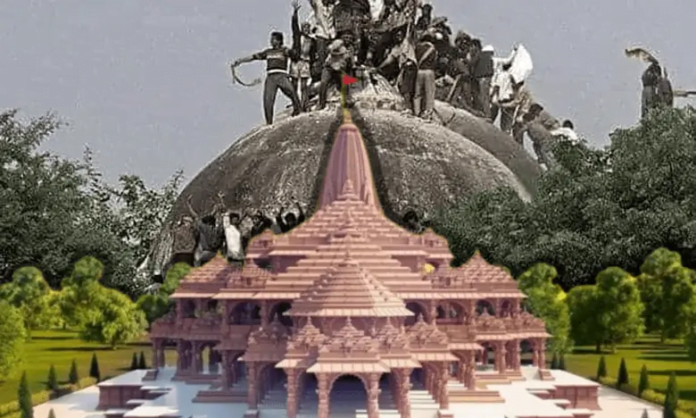
The most infamous incident in the history of the Ayodhya dispute occurred on December 6, 1992, when the Babri Mosque was demolished by karsevaks, leading to communal riots and significant loss of life.

Godhra Train Fire and Gujarat Riots – 2002
The Godhra train fire in 2002 further fueled tensions, resulting in riots and loss of lives. The Archaeological Survey of India (ASI) conducted a survey in 2003, revealing evidence of a significant Hindu complex beneath the mosque, intensifying disagreements.

Allahabad HC Divides the Disputed Site – 2010
In 2010, the Allahabad High Court ruled that the disputed land should be divided into three parts. The decision faced challenges as both the Akhil Bharatiya Hindu Mahasabha and the Sunni Waqf Board approached the Supreme Court.

Supreme Court Decree and Temple Construction – 2019
On November 9, 2019, the Supreme Court directed the disputed land to be transferred to a trust, leading to the formation of the Shri Ram Janmabhoomi Teerth Shetra. The court also allocated five acres to the Sunni Waqf Board for a mosque, signaling the beginning of temple construction.

Foundation Stone Laying Ceremony – 2020
On August 5, 2020, Prime Minister Narendra Modi laid the foundation stone for the Ram Temple, marking a significant step towards the realization of a cherished dream.


The journey of the Ayodhya Ram Mandir spans centuries, marked by conflicts, legal battles, and communal tensions. The inauguration of the Ram Temple in 2024 is a testament to the resilience of faith and the triumph of the spirit of unity over discord in the historical tapestry of Ayodhya.

Pencil Artistry- Lord Ram’s Miniature by Navratan Prajapati 

0

Priyanshi Pareek

The nation is buzzing with excitement over the upcoming consecration of Ram Lalla’s life in Ayodhya on January 22. People from all corners are immersed in Rammay, expressing their reverence for Lord Ram in various ways. In Rajasthan, sculptors are making their mark too—Sand artist Ajay Rawat crafted a stunning rendition of the largest Ram temple using over 1000 tonnes of sand, while in Jaipur, sculptor Navratna Prajapati skillfully fashioned an intricately detailed idol of Lord Ram on the tip of a pencil.

Navratna Prajapati shared that crafting the detailed artwork of Lord Ram on the tip of a pencil consumed approximately 5 days. The remarkable piece measures a mere 1.3 cm in length, showcasing Lord Ram holding a bow in one hand and an arrow in the other. Notably, Prajapati plans to present this intricate idol to the Ram Trust for display in the Ram Museum, adding a unique touch to the commemoration.

Who is Navratan Prajapati?

Residing in Mahesh Nagar, Jaipur, Navratna Prajapati initiated his journey in sculpture in 2006, focusing on marble creations. However, inspired by the art of inscribing names on rice grains he encountered online, he transitioned to miniature art. Since then, he has consistently amazed with his remarkable creations, showcasing his versatility and skill in the realm of fine craftsmanship.

Previous Works

Back in 2006, Navratna Prajapati achieved recognition in the Limca Book for crafting the smallest lantern, standing at a height of 2.3 centimetres. Notably, this tiny marvel could burn for approximately 15 seconds with just two drops of kerosene. Since then, he has continued to set world records, showcasing his exceptional talent through various sculptures and leaving a lasting imprint in the world of miniature art.

In 2020, Navratna Prajapati earned a spot in the Guinness Book of Records by fashioning a 101-link neck chain from pencil graphite. His innovative creations extend to the year 2010 when he established a unique record by crafting a bike using gram dal. Furthermore, in 2013, he secured his place in the India Book of Records by intricately sculpting a statue of Vallabhbhai Patel on the tip of a pencil. Navratna’s repertoire also includes miniature artworks featuring prominent figures like Maharana Pratap, Bhimrao Ambedkar, Ganapati, Mahavir Swami, and numerous others on the tip of his pencil.

Andhra Pradesh’s Landmark – The Largest Dr. Ambedkar Statue Globally

0

Priyanshi Pareek

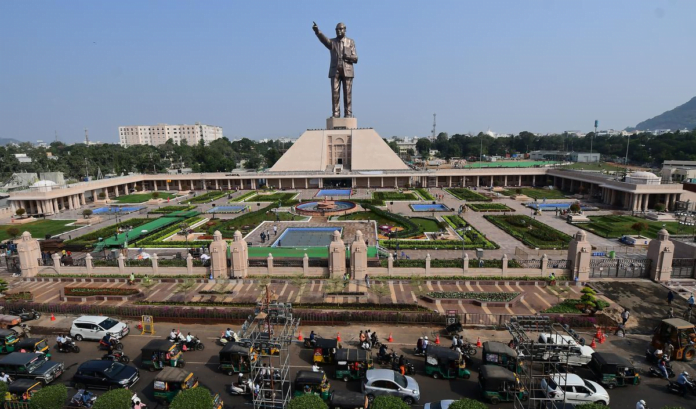
The world’s largest statue of Dr. B.R. Ambedkar was unveiled in Vijayawada, Andhra Pradesh, standing at an impressive 206 feet from the ground. This monumental statue now ranks among the top 50 tallest statues worldwide.

The statue, built at a cost of approximately Rs 404 crore, will be unveiled today by Andhra Pradesh Chief Minister Y.S. Jagan Mohan Reddy. This 125-foot statue of Dr. B.R. Ambedkar stands proudly at Swaraj Maidan in Vijayawada.

The ‘Statue of Social Justice’ rises atop an 81-foot pedestal, creating a 206-foot monument that secures its place among the world’s top 50 tallest statues. Notably, Sardar Vallabhbhai Patel’s ‘Statue of Unity’ holds the top position. In close proximity, Telangana hosts the second-tallest Ambedkar statue at 175 feet.

This remarkable statue, from raw material sourcing to design, stands as a testament to a complete ‘Made in India’ project. Approximately 400 tonnes of steel were utilized in crafting the ‘Statue of Justice’.

The vicinity of the statue, including the redeveloped Swaraj Maidan where it stands, has undergone extensive transformation. Enhancements include water features such as surrounding water bodies, a three-sided peripheral water body for the pedestal, and a captivating musical water fountain.

To provide insights into Ambedkar’s life, LED screens have been strategically placed. Furthermore, the site boasts a convention centre with a seating capacity of 2,000, an expansive food court spanning 8,000 sq ft, and a dedicated children’s playing area, contributing to the overall development of the area.

“The statue has been installed with great responsibility as the government has been implementing the Navaratnalu welfare schemes with an unfettered confidence in his ideology. Dr Ambedkar rebelled against untouchability and the dominant ideology while taking education closer to the oppressed classes,” he said, observing that the leader continues to remain a great power personifying social justice and equality.

The Chief Minister emphasised that Dr. B.R. Ambedkar’s monumental persona serves as an omnipotent guardian, safeguarding our constitutional rights. Expressing the significance of having his statues in every hamlet, the CM highlighted their role as abundant sources of inspiration, providing continuous confidence, support, and courage to the weaker sections of society.