Home Blog Page 594

Ayodhya’s Jain Trail: Discovering Tirthankaras’ Legacy

0

Priyanshi Pareek

Ayodhya, renowned as Lord Ram’s birthplace, holds a lesser-known significance as a major pilgrimage site for Jains. It witnessed the occurrence of 18 ‘Kalyanak’ events for various ‘Tirthankars,’ with five Tirthankars being born and preaching their religious teachings in this sacred city, including Adinath, Ajitnath, Abhinandannath, Sumatinath, and Ananthnath.

Certainly, in Jainism, there are 24 Tirthankaras, regarded as enlightened beings or Arihants. These spiritual leaders attain Kevalgyan (supreme knowledge) through rigorous penance, symbolizing the conquest of inner enemies, and they play a crucial role in Jain philosophy.

Rishabhdev, born in Ayodhya to Nabhiraj and Marudevi, was a significant figure in the Kulkar tradition. His birth occurred on the Ashtami-Navmi of Chaitra Krishna. Rishabhdev had two sons, Bharat-Bahubali, and two daughters, Brahmi and Sundari. After taking initiation, he attained Kaivalya on the Ashtami day of Phalgun Krishna Paksha. Eventually, he achieved Nirvana on Magh Krishna Chaturdashi in the Ashtapada region of Kailash mountain.

Ajitnath, the Second Tirthankar, was born in Ayodhya to Vijaya and Jitshatru. Initiated on Navami of Magh Shukla Paksha, he attained Kaivalya knowledge on Ekadashi of Paush Shukla Paksha. Subsequently, on the fifth day of Chaitra Shukla, Ajitnath attained Nirvana at Sammed Peak.

Abhinandan Nath, the Fourth Tirthankar, was born in Ayodhya to Siddhartha Devi and Sanwar. He took initiation on Dwadashi of Magh Shukla and achieved Kaivalya knowledge through intense penance on Chaturdashi of Paush Shukla Paksha. Abhinandan Nath then attained Nirvana at Sammed peak on the Shashthi or Saptami day of Baishakh Shukla.

Indeed, Jain texts identify Ayodhya as the birthplace of five Tirthankaras: Rishabhanatha, Ajitanatha, Abhinandananatha, Sumatinath, and Anantnath. Additionally, Ayodhya is linked with the legendary Bharata Chakravarti. Starting from the Gupta period, various sources mention Ayodhya and Saketa interchangeably, suggesting their association with the same city.

Jain temples in Ayodhya

Ayodhya in Uttar Pradesh holds significance as the birthplace of Lord Rishabh Dev (Sri Adinath), the first Tirthankara and teacher of Jainism. His teachings, preserved in Jain and Hindu scriptures, including the Srimad Bhagwat by Ved Vyas, continue to inspire. Predating Sri Ram of Hindu tradition, Rishabha Dev left a timeless legacy. 

The River Saryu, flowing through Ayodhya, silently witnessed the presence of these great personalities. The tradition of pilgrimage, stemming from a deep love for the divine, reflects a universal longing to connect with the sacred.

Indeed, the name Ayodhya originates from Sanskrit, combining ‘A,’ meaning absence, and ‘Yudha,’ meaning conflict or war. Similarly, the local name, Awadh, reflects the same essence, signifying a place where there is no killing. The name Ayodhya encapsulates the ideals of non-violence and peace.

During the Mughal period (some 500 years ago) from Akbar’s time Ayodhya was a mint city. The state currency was minted here. It became the capital city for the province of Awadh before the capital was shifted to Lucknow. Islamic culture was thus introduced to Ayodhya.

Swargadwar

The temple of Sri Rishabh Dev, also known as Sri Adinatha, Prurudev, and Adi Brahma, situated in the Swargadwar locality of Ayodhya, offers a relatively new but immersive experience. It instantly transports visitors to the time when Lord Rishabh Dev lived and taught in Ayodhya. The temple is accessible throughout the day, from 7 am to 8 pm, allowing devotees to connect with the spiritual essence of this revered figure.

Baksaria Tola

The Ajitnath ki Tok Temple in Begumpura, Ayodhya, serves as a commemoration to the life of the 2nd Tirthankara, Sri Ajitnath. This sacred space is dedicated to honouring the teachings and legacy of this revered spiritual figure in Jainism.

Ramkot Muhalla

In Ramkot Mohalla, Ayodhya, there stands a temple dedicated to Sri Abhinandannath, the 4th Tirthankara. This temple serves as a place of reverence and worship for followers of Jainism, commemorating the life and teachings of Sri Abhinandannath.

Mohalla Mondhiana Rajghat

The birthplaces of Sri Sumatinath, the 5th Tirthankara, and Sri Anantnath, the 14th Tirthankara, are honoured with a temple located at Mohalla Mondhiana Rajghat in Ayodhya. These temples stand as significant landmarks, commemorating the birth and teachings of these revered figures in Jainism.

Raiganj

The Digambar temple at Raiganj is famous for its 21ft high idol of Sri Rishabh Dev.

Ratnapuri

Ratnapuri, the birthplace of Sri Dharmanath, the 15th Tirthankara lies 24 km before Ayodhya, on the Lucknow-Ayodhya National Highway near Ronahi.

Is Six6s App Legal in India?

0

Mobile App Approved for Betting in India

Since 2018, Bookmaker Six6s has been in possession of an official document regarding the provision of gaming and betting services. You can legally use the services through the website or download Six6s app. As a result of the fact that it has an official license issued by Curacao, the betting operator is able to provide its services to Indian people who are betting. If you choose the Six6s site for lucrative betting, you will not be breaching the law, but you will be able to securely perform any payment operations and withdraw money for winning results. As a result of the fact that this website’s dependability and rating are greater than those of other bookmakers, gamblers choose the Six6s platform not only for betting but also for online enjoyment.

Details About the Company

Due to the fact that the website has unrestricted access to all of the data and information on the bookmaker, the firm does not conceal anything about itself. They are pleased with their accomplishments and the nice comments they have received from actual gamblers. The table contains all of the information that we have gathered and arranged in the prescribed order.

Year of foundation2018
Official licenseCuracao 8048/JAZ2018-040
Company ServicesSports and Live Betting, Virtual sports, Esports, Online and Live Casino 
Accepts Indian players Yes
PlatformsWebsite, Mobile site, Mobile app for Android and iOS
CurrencyINR, EUR, USD, etc.
Deposit methodsVisa, Mastercard, PayTM, UPI, Skrill, Neteller, Bitcoin, etc.
Withdrawal methodsPayTM, Skrill, Neteller, Visa, UPI, PhonePe, Perfect Money, etc.
Support24-hour chat, e-mail, phone number

As can be seen, the bookmaker extends a warm welcome to gamblers from India and provides all of the services that are feasible for betting and amusement in a manner that is both legitimate and constitutional.

The Procedure for Registering on the Six6s App 

Quick registration and social media registration are the two primary methods that are currently available for creating an account on Six6s. You have the option to pick between the two. It is important to keep in mind that registration is restricted to only adult users from India. In order to get started, we are going to use our tutorial to begin with the fast method:

  1. The official Six6s website may be accessed in any manner you want, including either the mobile app or desktop version;
  2. A button labeled “Register” may be seen in the upper left-hand corner of the document.
  3. The “Quick” registration option should be selected, and the essential data should be filled out. – a mobile phone that has a certain code, to which a code will be delivered in order to activate your account;
  4. To use the currency of your choice, choose it and then fill out the forms with your login information and a secure password.
  5. After checking all of the data that was input for mistakes, click the “Register” button.
  6. Please click the “Next” button once you have checked the box indicating that you are in agreement with the “Terms of Use” of the site.

Upon completion of the Six6s registration procedure, you will be required to advance to the settings in order to verify your identity. In order to qualify as a full-fledged user of the platform and have access to the ability to deposit and withdraw money, you are required to complete this step.

When it Comes to Betting, Why Should You Go With Six6s?

This particular bookmaker offers a variety of benefits, all of which I would like to provide you with information on. You have to be aware of them and make advantage of them in order to enjoy high-quality gaming and betting. They are described in the following:

  • Curacao’s official license to operate;
  • Extraordinary sportsbooks and betting opportunities;
  • A comprehensive assortment of online games sourced from all around the world;
  • Conditions favorable for wagering;
  • Offerings and promotions that are generous;
  • Transactions in banking that are quick and secure (payments are made quickly);
  • Outstanding reputation not just in India but also on a worldwide scale;
  • Apps for mobile devices that are both Android and iOS and are well designed.

Because of this, we strongly suggest that you try your hand at Six6s bookmaker’s real money games and improve your abilities in these games.

Options for Wagering on the Six6s App

It is possible to place bets on more than 15 different sports via the Six6s application, and there are a broad selection of betting options available: 

  • Cricket;
  • Football;
  • Volleyball;
  • Rugby;
  • Boxing;
  • Tennis
  • Golf and other sports.

Taking into consideration the betting on soccer, in addition to the matches of the highest levels of the UEFA Champions League, you can discover matches of the Indian Super League and other sports events that may be of interest to anybody who lives in the Asian area.

There are over one hundred different betting possibilities available in the Cricket Betting area, which covers a wide range of cricket competitions. The betting ranges from outcomes to draws. Bettors who are interested in placing profitable wagers on the sport of cricket will find that betting on cricket in India is an enjoyable experience. 

Live Streaming

As a means of making it simpler for you to keep up with the action, the website allows you to watch the matches in real time. Additionally, you will be presented with helpful facts and statistics on the matches, which will assist you in selecting your wagers. A good illustration of this would be the fact that football matches show both the current time of the contest and statistics data. Put all of the bookmaker’s services and features to the test in a single location for your own personal demonstration.

Six6s Casino Entertainment

Six6s is a website and bookmaker that caters not only to those betting on sports but also to those who like playing casino games online. The most reputable software developers in the world have contributed to the creation of a wide variety of games that are available on this platform. For instance, companies like NetEnt, Microgaming, Playson, and Quickspin, among others, provide a variety of entertainment options, including but not limited to:

  • Slots;
  • Roulette;
  • Blackjack;
  • Poker;
  • Video Poker;
  • Jackpots;
  • Aviator;
  • Lucky Jet, etc.

Additionally, they have excellent visuals, and they can be arranged in a certain order. In the event that you are a true enthusiast of internet entertainment, you will most certainly like reading this area.

Six6s Customer Support

The provision of customer service by appropriately trained professionals is the primary criteria of this platform. You may get in touch with them by sending an email, calling a phone number, or participating in an online chat. You should keep in mind that they are constantly prepared to assist you in whatever circumstance that you may find yourself in. As a result of their efforts, you will be able to place bets and withdraw cash without any difficulty.

Pilgrimage to Peace: Mangi Tungi Jain Temple Unveiled

0

Priyanshi Pareek

Mangi-Tungi, situated around 125 km from Nashik, Maharashtra, India, features twin pinnacles with a plateau between them. Mangi, standing at 4,343 ft (1,324 m) above sea level, is the western pinnacle, while Tungi, at 4,366 ft (1,331 m), is the eastern one. This prominent landmark is located near Tahrabad and is approximately 30 km (19 mi) from the city of Satana.

Mangi Giri

Seven ancient temples grace the hill, accompanied by numerous installations of ‘charanas’ (saints’ feet) in accordance with Jain beliefs. The hill also boasts a significant pond named Krishna Kund, believed to witness the final moments of Lord Krishna according to Jain tradition. Additionally, the site features the Balbhadra Cave, where idols of Balram and other revered figures, who pursued salvation and attained heaven, find their place.

Tungi Giri

The hill proudly hosts five temples and two caves dedicated to Bhagwan Chandraprabhu, the 8th Tirthankara, along with the Ram Chandra Cave. Within these caves, ancient idols of Hanuman, Gava, Gavaksha, Neel, and more are venerated. Notably, one cave showcases the ascetic saint form of Kritantvakra, Ram’s chief of army. Along the path connecting Mangi & Tungi Hills, two additional caves house Shuddha & Buddha Munies (ascetic saints). A colossal statue of Bhagwan Munisuvrat Nath in Padmasana posture graces the site, accompanied by idols of Lord Bahubali and others.

108 feet Rishabhdev Statue ft Jain Idol of Rishabhdev Bhagwan

In February 2016, a momentous event unfolded with the inauguration of The Statue of Ahinsa, dedicated to Lord Rishabhanatha, considered the first Tirthankara in Jainism. This towering Jain statue, reaching a height of 108 feet (113 feet with the pedestal), stands as one of the world’s tallest. The consecration drew dignitaries, including Chief Minister Devendra Fadnavis and prominent figures from the Indian Government. Revered by Jains globally, the statue is not just a symbol of faith but an architectural masterpiece.

The project’s roots trace back to 1996, marked by the laying of the foundation stone under the inspiration of Gyanmati Mataji, a Jain nun. Chandanamati Mataji provided motivation, guiding President Ravindrakirti Swamiji and Chief Secretary Dr. Pannalalji Papdiwal over two decades in crafting this religious marvel.

Philosophical Importance

According to Jain philosophy, Mangi Tungi is revered as a siddha kshetra, a place of salvation. Legendary figures like Ram, Hanuman, Sugriva, Nal, Neel, Mahaneel, Gava, Gavaksha, and 99 crores Jain ascetics are believed to have attained salvation at this sacred site.

Complementing the natural splendor are eight Digambar Jain temples, constructed over the past century and a half. The landscape is further adorned by a colossal 108-foot monolithic statue of Tirthankar Adinath, emphasizing the spiritual significance of the hills.

Ranakpur Jain Temple where construction of one pillar was intentionally never got completed!

0

Places of worship, with their serene ambiance and spiritual significance, hold a special place in the hearts of people across all age groups. Whether seeking solace, inner peace, divine connection, or appreciation for architectural beauty, these sacred spaces cater to a myriad of individual needs. One such architectural marvel and spiritual sanctuary that beckons visitors is the Ranakpur Jain Temple, nestled in the heart of Rajasthan.

History: The Ranakpur Jain Temple, dedicated to Tirthankara Rishabhanatha, stands as a testament to faith and vision. Its origins trace back to a dream that captivated a local businessman named Darna Shah. Intrigued by a celestial vehicle in his dream, Shah envisioned a temple that mirrored this divine inspiration. Despite numerous submissions from sculptors and artists, none captured the essence of his dream until architect Deepak from Mundara presented a design born out of admiration for Shah’s unwavering dedication.

Upon acquiring land from King Rana Kumbha, Shah not only initiated the construction of the temple but also oversaw the development of a town around it, now known as Ranakpur. The temple’s construction spanned the 14th and 15th centuries, resulting in a complex that has become one of the five most sacred Jain temples in India.

Architectural Grandeur: The jewel in the crown of this complex is the Chaturmukha Temple, built in the 15th century with pristine white marble. This masterpiece, honoring Adinath (Rishabhanatha), boasts a distinctive four-faced design and spans 48,000 square feet. The temple’s intricacies shine through its 1444 pillars, 426 columns, 89 domes, and 29 halls. Notably, one pillar remains intentionally incomplete, a legend surrounding its completion and subsequent breakage adding an air of mystique.

The highlight of the Chaturmukha Temple is the exquisitely carved idol of Parshvanatha, crafted from a single slab of marble. Adorned with 1008 intricately carved snakes, two chauri bears, and yaksha and yakshi figures, the idol is a testament to the unparalleled skill of ancient craftsmen. Additionally, the temple houses 84 bhonyras, underground chambers designed to safeguard Jain idols during times of disturbance.

Beyond the Chaturmukha Temple, the complex includes the Suparshvanatha Temple, known for its intricate designs and erotic art, the Surya Temple dating back to the 13th century, Seth ki Baadi Mandir dedicated to Shwetambar bhagwan, and Chougan ka Mandir dedicated to the first Tirthankar of the next cycle, Ravana.

Timings and Spiritual Experience: When planning a visit to the Ranakpur Jain Temple, it is advisable to explore the region, including nearby attractions like the Parshuram Mahadev Temple and the Golden Temple in Falna. The temple welcomes visitors from 7 AM to 6 PM, urging them to be respectful in their attire and considerate with donations to the guiding priests.

Amazing Facts Unveiled:

  1. Temple as Vimana: The design of the temple mirrors a flying chariot, a vimana, reflecting the belief of temples as celestial vehicles.
  2. 1444 Pillars: The temple stands on 1444 intricately carved pillars, each unique in design and contributing to superb interior ventilation.
  3. Changing Hues: The color of the pillars shifts throughout the day, showcasing hues ranging from golden to pale blue.
  4. Local Faith: Locals believe crawling under the belly of an elephant in the temple fulfills their desires.
  5. Top 5 Jain Temples: Ranakpur Jain Temple holds a prestigious position among the top 5 holy shrines of Jains.
  6. Idols of Lord Adinath: The temple features 6ft. tall marble idols of Saint Adinath, each facing different directions.
  7. Revival Saga: The temple, initially desecrated by Aurangzeb, underwent a revival, thanks to the efforts of Shri Kasturbhai Lalbhai and the Sheth Anandji Kalyanji Trust.

Ranakpur Jain Temple, with its rich history, architectural splendor, and spiritual significance, stands as a must-visit destination for those exploring the cultural tapestry of Rajasthan. As visitors step into its hallowed halls, they embark on a journey through time and devotion, experiencing the seamless blend of artistry and faith.

5 Indian cities named in ‘Best Food Cities in the World’

0

Monalika Medatwal

Local food is a delectable storyteller, whispering the rich narrative of a city’s history, culture, and identity. Each dish carries the imprint of regional traditions, reflecting the unique flavours and culinary heritage that have evolved over time. From street-side stalls to iconic eateries, the local food scene reveals the community’s collective memory, celebrating shared experiences and the fusion of diverse influences. To bring the soul of a city come alive, local food is often preferred by the people visiting a place. The choice of ingredients often mirrors the region’s agriculture, climate, and trade history.

Given the importance of local food, Taste Atlas, the experiential travel online guide, recently released the list of ‘Best Food Cities in the World’, in which Mumbai, Hyderabad, Delhi, Chennai, and Lucknow have been listed under the top 100. The two Indian cities that have made it to the top 50 are Mumbai and Hyderabad, at number 35th and 39th, respectively. While Delhi bagged the 56th spot, Chennai and Lucknow came in at 65th and 92nd.

Delhi and Mumbai are popular for their variety of chaats such as Aloo Tikki, Gol Gappe, Papdi Chaat, Dahi Bhalla, Sev Puri, Bhel Puri, Ragda Pattice, Vada Pav and Pav Bhaji. These are mostly street foods and you can easily find many variations in taste in different localities of both the metropolitan cities. Here, you will also get to taste other popular dishes like Aloo Paratha, Chicken Curry, Butter Chicken, Dal Makhani .

Though, Hyderabad is known for its Biryani, there are several other local dishes that people love to have there. From Haleem, Chicken 65, Boti Kebab to Keema Samosa, Paaya and Nihari, these are some of the popular local dishes that one can enjoy when in Hyderabad. 

Chennai for its delectable Dosa & Idli, but the local food is not limited to them. One can also try Paniyaram, Vada, Bhaji, Pakoda, Puttu, Filter Coffee, Mulligatawny Soup, Sundal, Murukku Sandwich, Uttapam, Atho, Kothu Parotta, etc in Chennai. Here, majority dishes are rice-based, keeping the climatic conditions in view.

Lucknow we all know is quite known for the delectable Mughlai dishes that include Kebabs & Biryani. But, the food in Lucknow is much more than these dishes. From the popular Katori Chaat, Roghan Josh, Nihari Kulcha, Khasta Kachori, to Sheermal, Bun Makkhan Chai, Kulfi Falooda and not to forget the Makkhan Malai, there are several dishes that one can savour when in Lucknow.

Sacred Wonders of Ayodhya: Must-Visit Spiritual Sites

0

Priyanshi Pareek

Ayodhya, located on the banks of the sacred Saryu River in the Indian state of Uttar Pradesh, serves as the headquarters for both the Ayodhya District and Ayodhya division. Also referred to as Saket, Ayodhya is an ancient city and holds significance as the birthplace of Bhagwan Shri Ram, playing a pivotal role in the epic Ramayana.

Here are some list of places you can visit in Ayodhya:

Ram Mandir

Ayodhya Ram Mandir, a Nagara-style temple in pink sandstone on 2.77 acres, includes a courtyard with shrines to Hindu deities. Noteworthy is the Shaligram stone from Gandaki river, symbolising Lord Ram. The 161-foot temple has three floors: Lord Ram, Lord Hanuman, and a museum depicting Ayodhya’s history. The complex features a yajnashala, a community kitchen, and a medical facility, spanning 67 acres and poised to become a global religious and cultural centre.

Ram ki Paidi

Ram Ki Paidi, a series of ghats along the Saryu River in Ayodhya, Uttar Pradesh, draws numerous pilgrims daily for a sacred dip. The riverfront presents a splendid view, particularly at night when floodlit. During Diwali, locals illuminate the ghats with lamps, creating a captivating sight.

Originally, extensive bathing ghats existed, but heavy rains and floods affected Nayaghat. In 1984-1985, a new ghat with stairs was constructed through collaborative efforts by the then Chief Minister of UP, Shri Shripati Mishra, and Irrigation Minister Shri Veer Bahadur Singh.

Hanuman Garhi

Hanuman Garhi, a prominent temple in Ayodhya, Uttar Pradesh, is dedicated to Lord Hanuman. Perched on a hill, it is renowned for its unique architecture, serving as a significant pilgrimage destination. Pilgrims ascend a staircase to reach the temple complex, providing panoramic views of Ayodhya. Particularly revered on Tuesdays and during festivals, the temple attracts devotees seeking the blessings of Lord Hanuman.

Rajdwar Mandir

In the era of the Solar Dynasty in Ayodhya, Raj Dwar was the grand entry for subjects meeting the King of Kosala. It served as the massive gateway to the palace complex, the first landmark on the journey to meet the king. Common people queued for checks, hoping to gain entry, with crowds sometimes camping for days. Official invitations or importance eased the process.

Meeting the king was rare, making this place, the first tower people looked at, significant. Now a temple and residential complex, it stands as a testament to ancient Indian architectural mastery. Contrary to some information, the temple is open daily, not on the usual tourist circuit, showcasing the expertise of ancient Indian builders.

Guptar Ghat

Guptar Ghat on the Saryu River holds religious importance, believed to be where Lord Rama took his last dip. Bathing here is thought to cleanse sins. Chants of Lord Rama resonate, and nearby temples include Raja Mandir and Chakra Harji Vishnu Temple. Built by Raja Darshan Singh in the 19th century, the well-maintained ghats are visited for spiritual significance and offer a serene atmosphere along the riverbanks.

Bharat Kund

Bharat Kund, around 15 km from Ayodhya, is traditionally regarded as the spot where Bharat, Lord Rama’s younger brother, performed tapasya during Rama’s exile and governed the Kosala kingdom on Rama’s behalf. The location offers a peaceful and serene environment, providing an ideal setting for meditation and quiet contemplation away from the noise. Visitors come to Bharat Kund to perform rituals like shraddh (prayers for departed ones) and take a sacred dip in the Kund for spiritual cleansing.

Fighter- A Riveting Tribute to Indian Airforce and Pulwama Attack Fighters

0

Apeksha Agarwal

In a spectacular celebration of India’s 75th Republic Day, acclaimed filmmaker Sidharth Anand presented his latest cinematic masterpiece, “Fighter”. The much-anticipated movie, released on January 25, 2024, showcased a star-studded cast featuring the charismatic duo of Hrithik Roshan and Deepika Padukone, alongside the evergreen Anil Kapoor.

The unveiling of “Fighter” on this significant day added an extra layer of pride and patriotism for Indian audiences, who had eagerly awaited a film that would resonate with the spirit of the nation. The movie promised to deliver a riveting narrative filled with elements of courage, resilience, and love for the country.

MOVIE ELEMENTS

Sidharth Anand’s much-anticipated film, “Fighter”, lives up to its title, delivering a cinematic experience that soars to new heights. Without delving into spoilers, the movie embarks on a thrilling journey, marked by stellar performances from Hrithik Roshan as Squadron Leader Shamsher Pathania, aka “Patty,” and Deepika Padukone in the role of Minal, aka “Mini,” both of whom bring their characters to life with conviction.

The narrative centers around the lives of dedicated Airforce officers, providing a glimpse into the challenges, sacrifices, and unwavering commitment they exhibit in service to the nation. From the very beginning, Hrithik Roshan’s portrayal of Squadron Leader Shamsher Pathania sets the tone for the film, capturing the essence of a true patriot and an exemplary officer.

Deepika Padukone, in her role as Minal, complements Hrithik’s performance with grace and strength, embodying the resilience and determination that characterize the women in the armed forces. The chemistry between the lead pair adds a layer of authenticity to the storyline, creating a connection that resonates with the audience.

Director Sidharth Anand, known for his prowess in crafting visually stunning narratives, skillfully weaves together a tale that goes beyond mere entertainment. “Fighter” pays homage to the gallant officers of the Indian Airforce, highlighting their selfless contributions to the nation. Anand’s storytelling prowess comes to the fore as he seamlessly integrates real-life events, notably the Balakot airstrikes and the Pulwama attack of 2019, into the film, adding a layer of depth and relevance to the narrative.

However, as the movie unfolds, the romantic chemistry between the lead actors may leave some viewers wanting. The inclusion of romantic elements can momentarily shift the focus from the adrenaline-pumping action, potentially slowing down the pace. While this aspect might not resonate with all audience members, it’s worth noting that these moments serve to add depth to the characters and provide a more holistic view of their lives beyond the battlefield.

Anil Kapoor, a seasoned actor known for his versatility, adds another layer of brilliance to “Fighter.” His portrayal of a key character in the film is lauded for its depth and authenticity, showcasing once again why Kapoor is a stalwart in the industry. The chemistry between Hrithik Roshan and Anil Kapoor is a highlight, bringing a unique dynamic to the film. Their on-screen camaraderie adds a layer of authenticity to the narrative, creating memorable moments that resonate with the audience.

BUDGET AND THE BOX OFFICE COLLECTION

In a groundbreaking venture, “Fighter” stands as India’s first-ever high-graphic movie, offering a cinematic experience that has not only elevated the standards of Indian cinema but also captured the hearts of audiences across the nation. Directed by the visionary Sidharth Anand, known for his previous directorial success with “Pathan,” the movie has not only showcased Anand’s distinct sense of humor but has also made a significant impact on the box office.

With an awe-inspiring budget of 250 crore INR, “Fighter” spared no expense in delivering cutting-edge graphics and immersive visual effects. The movie takes audiences on a gripping journey into the realm of air warfare, setting a new benchmark for the film industry in India. The commitment to delivering high-quality visuals has undoubtedly contributed to the film’s success, making it a trailblazer in the domain of Indian cinema.

Sidharth Anand, known for his strategic release dates, once again proved his acumen by choosing Republic Day for the movie’s launch. Riding high on the success of his previous project, “Pathan,” Anand’s keen sense of humor and timing have undoubtedly played a role in generating immense anticipation and excitement around “Fighter.”

Within just two days of its release, “Fighter” has soared to new heights at the box office, crossing the 50 crore INR mark. This phenomenal success is a testament to the movie’s widespread appeal, resonating with audiences of all ages. The impressive box office collection reflects not only the popularity of the film but also the patriotic fervor that has gripped the nation.

“Fighter” has successfully carved a niche as a full-family entertainer, offering a wholesome cinematic experience suitable for all audiences. With a U/A certificate and a runtime of 2 hours and 40 minutes, the film seamlessly weaves together emotional moments, high-octane action sequences, romantic interludes, and a powerful sense of patriotism. The U/A certification ensures that the film is accessible to a wide audience, making it a perfect choice for families to come together and enjoy the cinematic spectacle.

In conclusion, “Fighter” has not only set a new standard for high-graphic movies in India but has also become a cultural phenomenon, uniting audiences in a celebration of cinematic excellence. Sidharth Anand’s directorial finesse, coupled with the stellar cast and a substantial budget, has resulted in a film that is not just a box office hit but a testament to the evolving and thriving Indian film industry.

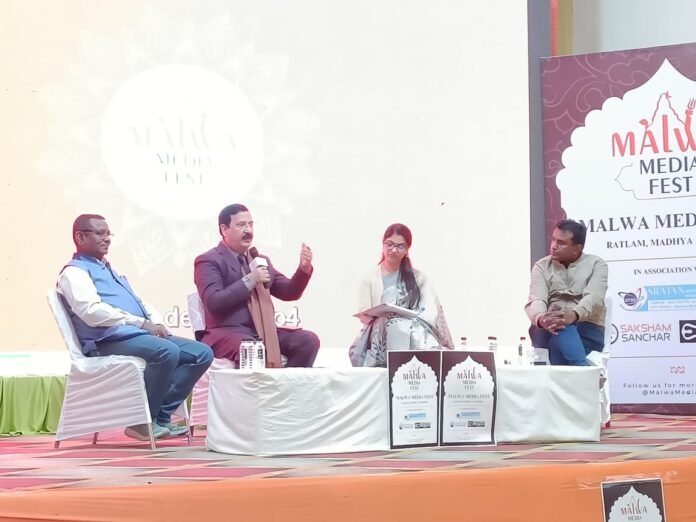
Malwa Media Fest Chronicles: Panel Discussion on New India and New Media

0

The Malwa Media Fest, a dazzling event of creativity, innovation, and passion, recently unfolded as a captivating journey into the world of media. From a vibrant kaleidoscope of multimedia marvels to thought-provoking discussions, the fest aimed to foster a culture of collaboration and experimentation, breaking boundaries in its wake.

The fest’s inception and vision were grounded in the noble goal of raising awareness about journalism among students and showcasing media as a promising career opportunity. A myriad of intriguing sessions had been meticulously organized, creating a dynamic space for students to explore the convergence of diverse media forms.

One of the key highlights was the panel discussion titled “New India, New Media,” featuring distinguished panelists – Sanjay Dwivedi, Hiren Joshi, Jitendra Jakhetia, and Suchi Shrimali as the moderator. The discussion centered around the unique theme and vision of the Malwa Media Fest.

Sanjay Dwivedi shared valuable insights, emphasizing the impact of festivals on small towns and the need to preserve folk culture and literature. Specifically, he shed light on Ratlam, a city nestled in the heart of Madhya Pradesh, highlighting its rich history, cultural achievements, and dynamic transformation over 154 years.

Delving into Ratlam’s history, Sanjay ji highlighted the contributions of women wrestlers like Kamaladevi Chattopadhyay and Sarojini Naidu, who broke societal boundaries. The city’s association with Dadasaheb Phalke, the father of Indian cinema, added a cinematic dimension to its cultural heritage.

Ratlam’s excellence in trade, industry, and its ambition to become a crucial economic hub further underscored the city’s dynamism. Sanjay Dwivedi eloquently described Ratlam as a symbol of progress, innovation, and cultural diversity in the heart of Madhya Pradesh.

The discussion on new media revealed Sanjay Dwivedi’s perspective on India’s international image, emphasizing the role of digital media in portraying the country’s positive aspects. He praised the transformative impact of new media, where information is transparent, and citizens have a powerful voice.

Intriguingly, he discussed the dawn of “New India” on May 24, 2014, marking a shift in attitude and image. This New India, as depicted through digital media, stands as a beacon of change, challenging traditional narratives and embracing a two-way communication approach.

The Malwa Media Fest, with its vibrant tapestry of events, panel discussions, and insightful talks, not only celebrated the convergence of diverse media forms but also explored the cultural richness and dynamism embedded in the heart of Ratlam. The fest served as a testament to the transformative power of media and its ability to shape narratives, celebrate diversity, and amplify the voices of the people.

Insights from the Ram Mandir Discussion at Malwa Media Fest

0

The Malwa Media Fest recently played host to a riveting discussion on the intricate and contentious topic of the Ram Temple , offering attendees a unique exploration of the complex themes surrounding the construction of the Ram Mandir. The discourse delved deep into the realms of evaluation, ego, illusion, and the legalities governing this significant socio-political issue.

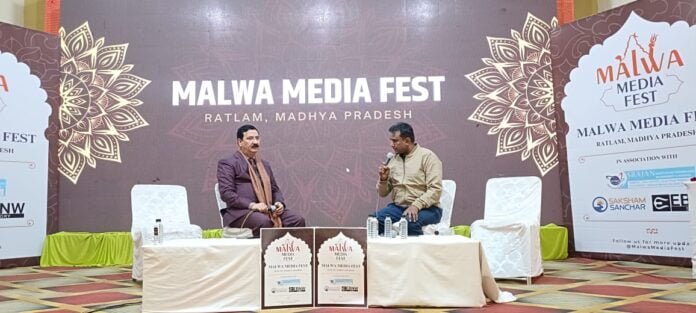
Sanjay Dwivedi, a prominent speaker, took the stage as the main presenter, while Hiren Joshi posed insightful questions, guiding the conversation through the intricate web of perspectives. The discussion commenced with an exploration of the differences among political parties concerning the Pran Pratistha ceremony, with Sanjay emphasizing how even negative comments contribute to the ongoing search for Ram.

The dialogue then touched upon the choice of January 22 for the Pran Pratistha and the associated ego involved. Sanjay clarified, referencing the Supreme Court’s decision and the careful consideration that went into selecting the date. The discourse continued, addressing controversial statements made by Shankaracharya, with Sanjay ji dispelling misconceptions by highlighting the widespread support the Shankaracharya received.

The historical contributions of Mahant Avaidyanath and Paramhans Ramchandra ji in the construction of the Ram temple were underscored, shedding light on their pivotal roles. The discussion even touched on a historical instance when the Supreme Court had once declared Lord Ram as imaginary.

Political differences were explored, with Sanjay ji speculating that confusion among parties regarding credit and motives might have fueled disagreements. Comparisons were drawn between the construction of the Ram temple and the Somnath temple, showcasing historical parallels.

Audience engagement played a vital role, with questions from the attendees adding an intriguing layer to the discussion. Sanjay ji skillfully addressed queries, contributing to a comprehensive understanding of the multifaceted Ram Mandir dispute.

The central themes of the discussion were organized around three key pillars:

Ego – A Cultural Memory and National Sentiment

  • The discussion emphasized the vital role of cultural memory and national sentiment in the construction of the Ram temple.
  • Rooted in religious and social foundations, the temple holds significant importance in shaping the transformation of Indian society.

Illusion – Religious and Social Inequality

  • Delving into the consequences of religious and social inequality, the discourse highlighted the prevalence of misconception and injustice in the Ram Mandir controversy.
  • The call for sensitivity in seeking solutions to address these issues was a central theme.

Forms of Rules and Constitution

  • The discussion critically examined the legal aspects and constitutional framework governing the Ram Mandir dispute.
  • Ideas were explored to find resolutions through the application of law and justice.

In conclusion, the Ram Mandir discussion at the Malwa Media Fest provided attendees with an insightful and thought-provoking exploration of one of India’s most debated and emotionally charged topics.

Why Jaipur’s Govind Dev Ji Temple is also known as “Vrindavan of Jaipur”?

0

Monalika Medatwal

The title “Vrindavan of Jaipur” bestowed upon Govind Dev Ji stems from the deep spiritual resonance and cultural significance associated with this revered deity and his temple in the heart of Jaipur, Rajasthan. This appellation draws parallels between the divine aura of Govind Dev Ji’s abode in Jaipur and the sacred town of Vrindavan in Uttar Pradesh, reinforcing the profound spiritual experience that the former evokes.

The Govind Dev Ji temple, situated in the City Palace complex of Jaipur, stands as a testament to the rich tapestry of Rajasthan’s cultural and religious heritage. Dedicated to Lord Krishna, specifically in his Govind Dev Ji form, the temple is a focal point for devotees and tourists alike. The reference to Vrindavan, known for its association with Lord Krishna’s early life and divine exploits, signifies the temple’s eminence as a sacred space in Jaipur.

The essence of Vrindavan lies in its deep connection to the divine love between Lord Krishna and Radha, his beloved consort. Similarly, the Govind Dev Ji temple in Jaipur exudes an air of devotion and spirituality, drawing parallels with the divine love and worship associated with Lord Krishna. Devotees flock to this temple to engage in devotional practices, including the soul-stirring arti ceremonies and kirtans that create an atmosphere resonant with spiritual energy.

The architectural grandeur of the Govind Dev Ji temple further contributes to its comparison with the sacred town of Vrindavan. The temple’s intricate designs, vibrant colors, and traditional Rajasthani architecture not only pay homage to the state’s cultural heritage but also enhance the overall spiritual experience for visitors.

The title “Vrindavan of Jaipur” encapsulates the spiritual vibrancy and cultural richness that Govind Dev Ji’s temple brings to the city. It signifies a place where devotees can immerse themselves in the divine love of Lord Krishna, reminiscent of the sacred ambiance found in the revered town of Vrindavan. This comparison underscores the temple’s role as a spiritual haven in Jaipur, inviting people to experience the transcendent connection with the divine.