

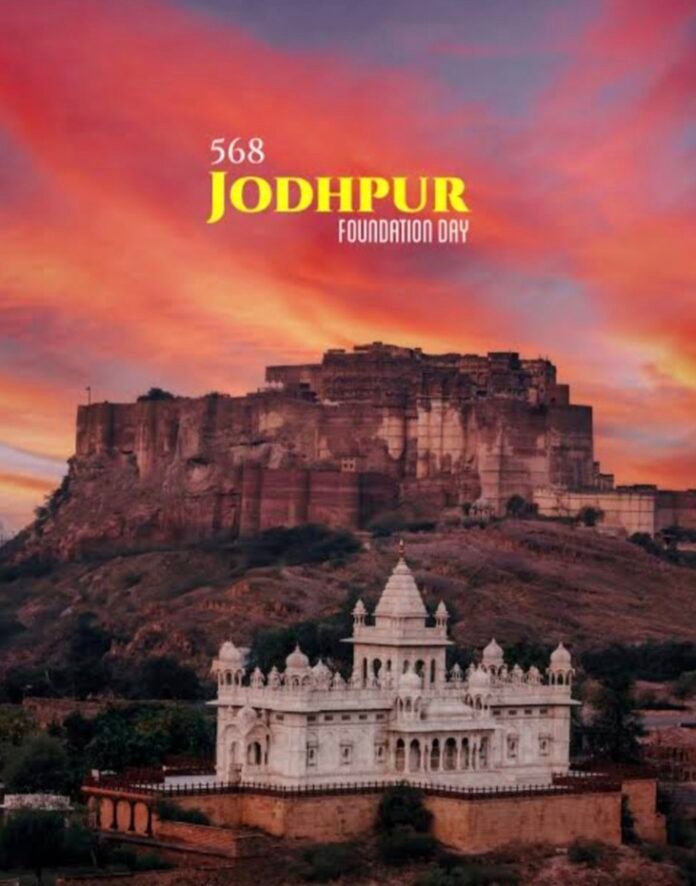
Known for its towering forts, blue-painted houses, royal heritage and vibrant desert culture, Jodhpur celebrated its Foundation Day on May 12, marking 568 years since the city was established by the Rajput ruler Rao Jodha in 1459. Often called the “Blue City” and the “Sun City,” Jodhpur remains one of India’s most culturally rich and historically significant destinations.
The city was founded by Rao Jodha, the chief of the Rathore clan, who shifted his capital from Mandore to a more secure location atop a rocky hill in the Thar Desert. The decision was strategic as the new location offered stronger natural defence and greater control over trade routes connecting Delhi and Gujarat. To protect the new capital, Rao Jodha began the construction of the magnificent Mehrangarh Fort in 1459, which today stands as one of the largest and most impressive forts in India.
Over the centuries, Jodhpur grew into the heart of the Marwar kingdom and became an important centre for trade, culture and administration. Its strategic location on ancient trade routes helped the city prosper through the exchange of silk, spices, copper, sandalwood and opium. The prosperity of the Rathore rulers can still be seen in the city’s grand palaces, temples, stepwells and havelis.
One of Jodhpur’s most recognisable identities is its sea of blue houses spread across the old city beneath Mehrangarh Fort. The blue colour is believed to have originally been used by Brahmin families, though over time it became a defining architectural identity of the city. Besides adding aesthetic charm, the colour is also believed to help keep homes cool during the harsh desert summers.
Today, Jodhpur stands among Rajasthan’s most visited tourist destinations and plays a major role in India’s heritage tourism landscape. The city attracts visitors from across the world with landmarks such as Mehrangarh Fort, Umaid Bhawan Palace, Jaswant Thada and the bustling Sardar Market near the iconic Clock Tower. The city is also famous for its handicrafts, bandhani textiles, leather goods, spices and traditional Marwari cuisine.
Jodhpur’s cultural richness extends beyond architecture. Folk traditions of the region — including performances by Manganiyar and Langa musicians, Kalbelia dancers and local artisans — continue to preserve the artistic spirit of Marwar. Every year, Foundation Day celebrations organised by the district administration and tourism department feature folk music, heritage walks, cultural events and performances at major monuments across the city. Activities such as the “Blue City Walk” and “Run for Jodhpur” have become popular among both tourists and residents.
The city has also evolved into an important urban and economic centre in western Rajasthan. Alongside tourism, sectors such as handicrafts, education, defence establishments and hospitality contribute significantly to its growth. Yet despite rapid modernisation, Jodhpur has retained much of its old-world charm, where centuries-old lanes, sandstone architecture and royal traditions coexist with modern development.
More than just a historical city, Jodhpur represents the spirit of Rajasthan itself — resilient, colourful, artistic and deeply rooted in tradition. As the Blue City marks another foundation anniversary, it continues to stand as a living symbol of Rajput heritage and one of India’s most treasured cultural destinations.