

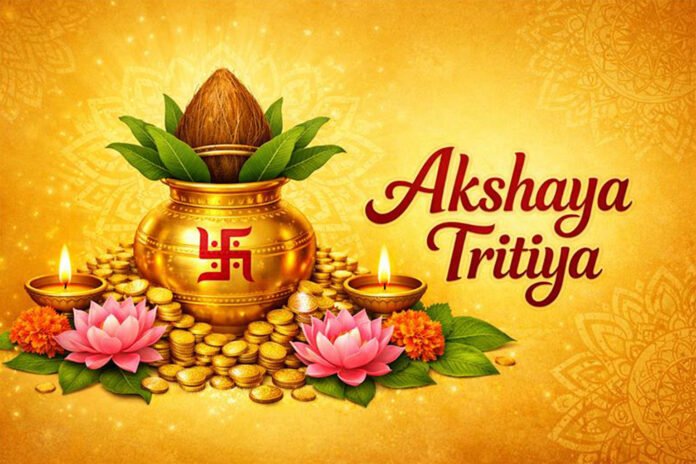
Akshaya Tritiya, popularly known as Akha Teej, is one of the most auspicious days in the Hindu calendar, symbolising eternal prosperity, success, and good fortune. The word “Akshaya” means “never diminishing,” while “Tritiya” refers to the third lunar day. It falls on the third day (Tritiya) of the bright half (Shukla Paksha) of the month of Vaishakha (April–May). What makes this day unique is that it is considered “self-auspicious”—meaning that no muhurat (specific timing) is required to begin new ventures or perform शुभ कार्य (auspicious deeds).
Why is Akshaya Tritiya so Auspicious?
Akshaya Tritiya is believed to bring unending prosperity and success. Any good deed or investment made on this day is said to multiply and yield lasting benefits. It is considered an ideal time for starting new businesses, buying property, investing in gold, or embarking on new journeys—both spiritual and material. The alignment of the sun and moon on this day is said to radiate positive energy, enhancing its spiritual significance.
Mythological Significance and Stories
Several important events in Hindu mythology are associated with Akshaya Tritiya. It is believed that Lord Vishnu’s sixth incarnation, Parshuram , was born on this day. Another popular legend connects it to the epic Mahabharata, where Lord Krishna granted Draupadi the miraculous Akshaya Patra—a vessel that provided an endless supply of food.
The day is also linked with the beginning of the composition of the Mahabharata by Ved Vyas , with Lord Ganesha acting as the scribe. Additionally, it is believed that the sacred river Ganga descended to Earth on this day, making it highly sacred for spiritual cleansing.
Cultural and Religious Significance
Akshaya Tritiya holds deep cultural importance across India, especially in states like Rajasthan, Gujarat, and Odisha. In Rajasthan, it is celebrated as Akha Teej, often marked by weddings and community festivities, as the day is considered perfect for marriage ceremonies without the need for elaborate astrological calculations.
The festival also emphasizes charity (daan). Donating food, clothes, water, and other essentials on this day is believed to bring immense spiritual merit. Feeding the poor and helping the needy aligns with the core values of compassion and selflessness associated with the festival.
Rituals and Practices
Devotees begin the day with an early morning bath, often in holy rivers, followed by prayers and पूजा (worship), especially of Lord Vishnu and Goddess Lakshmi. Many observe fasting and visit temples to seek blessings for prosperity and well-being.
Buying gold or silver on Akshaya Tritiya is a widely followed tradition, as it symbolises wealth that will never diminish. Farmers consider it an ideal day to start sowing seeds, marking a hopeful beginning for a fruitful harvest.
People also perform havan (sacred fire rituals), chant mantras, and engage in acts of generosity. Offering barley (jau), curd, and water is considered especially शुभ (auspicious).
Conclusion
Akshaya Tritiya is more than just a festival—it is a reminder of faith, generosity, and new beginnings. Rooted in mythology and enriched by tradition, it inspires people to act with positivity and purpose. Whether through spiritual devotion, charitable acts, or meaningful investments, the day encourages actions that promise lasting growth and abundance—true to its name, Akshaya, the never-ending.