Home Blog Page 808

Rani Laxmi Bai Martyrdom Day: Know Interesting facts about The Queen of Jhansi

0

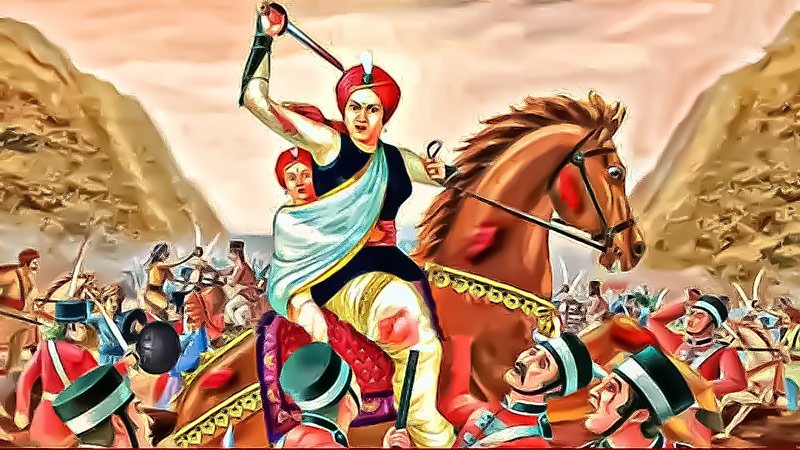
Rani Laxmi Bai Martyrdom Day: Wanna know Interesting facts about The Queen of Jhansi? Rani Lakshmibai’ martyr day is observed to remember the warrior queen of Jhansi on her death anniversary which is June 17, 1858.

Rani Laxmibai, the Queen of Jhansi, is famously known as Rani of Jhansi who was born into a Maratha Brahman family and was named Manikarnika. 

Nicknamed as Manu from Manikarnika, she was one of the leading figures of the Rebellion of 1857 which began on May 10, 1857. 

For the entire country, she emerged as an icon for the freedom struggle against the British Raj for Indians.

Manikarnika was raised in a different manner which was more associated with sons at that time.

She lost her mother at the age of four and was then raised in an unconventional way by her father who was an advisor in the court of Peshwa. 

Her father supported her in learning archery, self-defence, and shooting.

When did she become Rani Laxmibai?

Laxmibai got married to Gangadhar Rao Newalkar, the Maharaja of Jhansi in 1842 and got the name of Rani Laxmibai. In 1851, Manikarnika gave birth to a boy but he couldn’t survive and died after four months after which Laxmibai and Gangadhar Rao adopted Rao’s cousin’s son, Anand Rao, who was renamed as Damodar.

Maharaja passed away due to an illness in 1853 and she became the ruler of Jhansi when she was only 18 years old.

What is AY.1 variant of Coronavirus?

0

The World Health Organisation recently tagged B.1.617.2 strain of coronavirus as ‘Delta’ variant, which now has further mutated. Mutated form of Delta variant is being termed as “Delta Plus” or “AY.1” variant.

This Delta variant was identified as one of the factors of second wave of coronavirus infections in India.

Initial data shows that Delta plus variant have resistance against monoclonal antibody cocktail treatment, which was recently authorised by Central Drugs Standard Control Organisation (CDSCO) for COVID-19 treatment.

Delta plus variant

Variant B.1.617.2.1 of coronavirus is known as AY.1 which is characterised by acquisition of K417N mutation. Delta plus variant was identified in six genomes in India as of now. 

Health agency has also confirmed the presence of 63 genomes of Delta variant with the new K417N mutation. However, there is no immediate cause for concern since prevalence of Delta Plus Variant is still low in India.

Delta Plus variant Cases Worldwide

As per reports, 36 cases of Delta Plus variant were reported in England. Majority of the cases were associated with travel from Nepal, Malaysia, Turkey and Singapore.

Goa Revolution Day 2021: History, significance and all you need to know

0

Goa Revolution Day, also known as ‘Kranti Din’, is observed on June 18 to remember the sacrifices given by freedom fighters and Martyrs of Goa’s liberation struggle

Goa Revolution Day is observed on June 18. It was on this day in the year 1946, the suppressed patriotic feelings of Goans manifested into a mass revolution and hence the day is also known as ‘Kranti Din’.

Under the leadership of Dr. Ram Manohar Lohia, The people of Goa stood united against the colonial rule in Goa to fight for civil liberties. Communal harmony has been the faith of the Goans. 

Who are the ones responsible for this revolution?

Dr. Ram Manohar Lohia and Dr. Julião Menezes kick started the civil disobedience movement against Salazar’s dictatorial regime. These two men started a revolution that eventually got Goa its civil liberties which were taken away. They showed the way to attain freedom  from the Portuguese rule on June 18, 1946, at Margao.

Some facts about Dr. Ram Manohar Lohia and Dr. Julião Menezes:

1. Dr. Ram Manohar Lohia was born on March 23, 1910, in Akbarpur, which was later accommodated in  Uttar Pradesh in North India.

2. Born into a prosperous Vaishya family, he was raised by his father after his mother died when he was only 2 years old.

3. Dr. Julião Menezes after finishing his basic studies in Goa went to Berlin in the 1920s and graduated in Medicine.

4. He met Dr. Lohia in Berlin who was the then secretary of the Union. It was a friendship that played a great part in Goa’s history.

India exported 1.91 lakh tonne Geographical Indications (GI) certified Jalgaon banana to Dubai

0

Jalgaon Banana, Geographical Indications (GI) certified agricultural produce from Jalgaon district of Maharashtra, were exported to Dubai.

Twenty-two metric tonnes of Jalgaon banana were sourced from progressive farmers of Tandalwadi village, a part of Jalgaon district of Maharashtra.

Jalgaon District is an identified banana cluster under Agri Export Policy and is called as “Banana city” of Maharashtra. It contributes for two-third of total production of banana in the state.

Jalgaon Banana

Jalgaon Banana got GI certification in 2016. It was registered with Nisargraja Krishi Vigyan Kendra (KVK) Jalgaon.

India’s banana export

Banana export from India has been rising sharply because of adoption of farm practices in accordance with global standards. India’s banana exports have increased both in volume as well as value from 1.34 lakh metric tonne in 2018-19 to 1.95 lakh metric tonne in 2019-20. During 2020-21, India has exported banana worth of 1.91 lakh tonne which is valued at Rs 619 crore.

Banana production in India

India is world’s leading producer of bananas with its share of 25% in total output. Leading banana producing states are Gujarat, Andhra Pradesh, Kerala, Uttar Pradesh, Tamil Nadu, Maharashtra, Bihar and Madhya Pradesh. These states account for about 70% of India’s banana production.

World Day to Combat Desertification and Drought 2021: Importance, History, Significance

0

World Day to Combat Desertification and Drought is celebrated each year on June 17 to make individuals mindful about community participation at all levels in restoring degraded land.

World Day to Combat Desertification and Drought aims at creating awareness about sustainable development and the welfare of people.

The United Nations General Assembly in December 1994 declared to celebrate this day to spread awareness about the cooperation much needed to combat desertification and drought. 

What’s the theme of World Day to Combat Desertification and Drought 2021?

Amid the coronavirus pandemic, the theme for this special day is “restoration, land and recovery. We build back better with healthy land”. The events and campaign run by the UN this year will focus on how the personal impact of desertification can be reduced worldwide.

What’s the significance of World Day to Combat Desertification and Drought 2021?
The day aims at making individuals mindful about community participation at all levels and will help in the executing the plan of the United Nations Convention to Combat Desertification.

Restoring degraded land will help in increasing economic supply, creating jobs across the world, raising incomes for individuals and organisations and increase food security. 

While working to combat desertification and drought, it will lock away the atmospheric carbon warming the Earth and slow the climate change, which has become a big concern these days.

Guru Arjun Dev Ji Martyrdom Day 2021: Know how the Mughal emperor Jahangir killed him

0

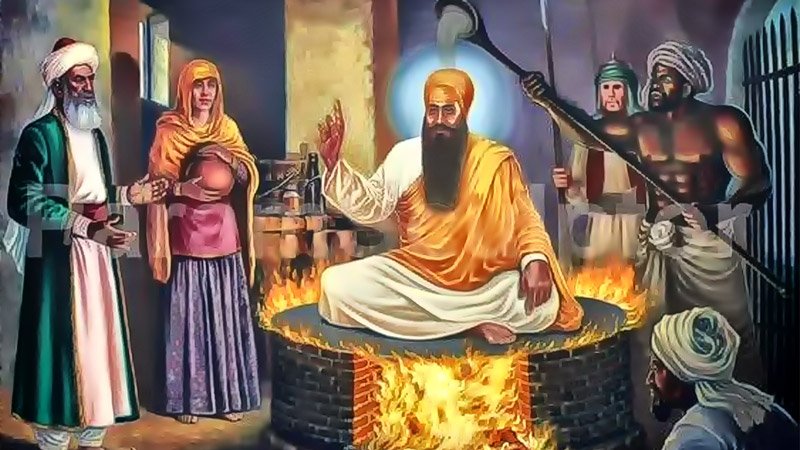
Guru Arjan Dev ji was the fifth guru of the Sikhs. Shaheed Diwas or Chabeel Day is marked on the Martyrdom Day of this Sikh Guru who laid the foundation of Harmandar Sahib which is also known as Golden Temple.

Guru Arjan Dev, the fifth Sikh Guru, compiled the first edition of the holy Sikh scripture, the Adi Granth, which was later expanded into the Guru Granth Sahib. This was his 415th Martyrdom Day which is remembered “for his supreme sacrifice” and “contribution towards the compilation of Adi Sri Guru Granth Sahib Ji and the construction of Sri Harmandir Sahib.” 

In 1588 AD, Guru Arjan Dev laid the foundation of the Harmandar Sahib known as Golden Temple.

  • Guru Arjan Dev was arrested on Mughal Emperor Jahangir orders and was asked to convert to Islam but the Guru refused. He was executed in 1606.
  • Guru Arjan Dev laid the foundation of the Golden Temple and also prepared the map of the Golden Temple under his guidance.
  • The doors of the Golden Temple symbolise acceptance of all four castes and religions.
  • Guru Arjan Dev started the Masands system urging Sikhs to donate one-tenth of their income for charity.

World Elder Abuse Awareness Day 2021: Theme, History, Significance, Quotes and More

0

The World Elder Abuse Awareness Day is celebrated each year on June 15 to educate people about the abuses suffered by senior citizens. 

This year’s World Elder Abuse Awareness Day stays relevant amid the COVID-19 outbreak. 

Experts recommend the elderly (those over the age of 60) should take precautions to safeguard themselves against the fatal virus since they are more vulnerable to it. 

World Elder Abuse Awareness Day 2021 Theme

The theme for World Elder Abuse Awareness Day is “Access to Justice” which serves as a reminder of how critical it is to completely meet the needs of older people who may seek remedy.

Quotes

  • Let us all pledge to take extra care of our elders and nurture them with love and care they deserve especially during this COVID-19 pandemic which has left them more vulnerable.
  • Just because they are aged and scientifically weak, one cannot just shower them with all kinds of abuses. Let’s oppose together on this World elder Abuse Awareness Day.
  • To care for those who once cared for us is one of the biggest honours.
  • The wiser mind mourns less for what age takes away than what it leaves behind. 
  • Let’s hope the child of the abusers doesn’t become like their parents and it is our job to create a better world for them.

Birthday Anniversary of Taraknath Das: Great freedom fighter & founder of Vivekananda Society

0

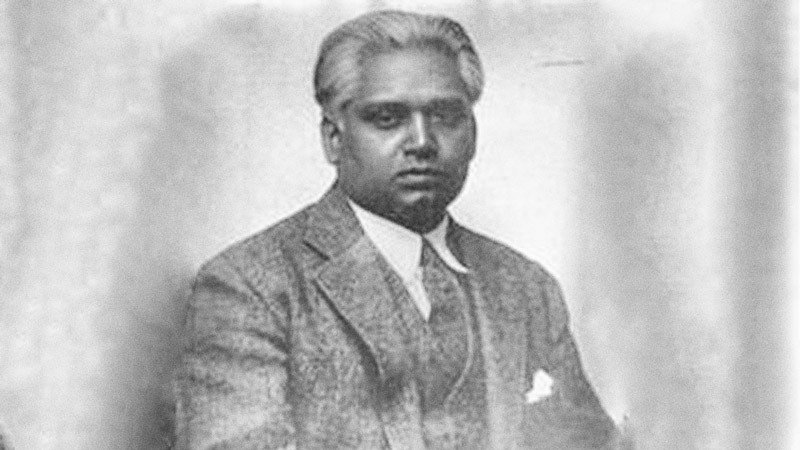
Taraknath Das was an internationalist and anti-British scholar, a freedom fighter who helped liberate India from clutches of the British rule and floated Vivekananda Society, contributing to the nation’s cause.

During his career, he served as a professor at Columbia University and taught politics.

Meanwhile, he also served as a visiting professor at various universities.

Born in Bengal in 1884 in a middle class family to Kalimohan, who worked as an employee in the Central Telegraph Office, he has had a great writing qualities which made it noticeable by the lawyer P. Mitter who had recruited him.

Later, Taraknath Das went to Calcutta for university studies and during his attempt to liberate India, he even tried to join the Vermont Military Academy but was expelled from his country because of his anti-British movements.

He passed M.A. and completed his doctorate at the University of Washington. He was married to Mary Morse who has been his friend Mary Keatinge and was also the founder of the association that discriminated against people of color. In 1935, with the support of his wife, he opened the Taraknath Das Foundation. 

The foundation aimed at promoting educational activities and even established a cultural relationship between Asians and the United States.

After 11 years of struggle in 1946, his citizenship was restored in the United States.

He also founded the Vivekananda Society in Calcutta.

Contributions made from Taraknath Das

Founder of the Indian Independence League, which is carried out with the active participation of Panduranga Khankoje. 

He even received funds to start his newspaper called Free Hindustan, which was published in English.

The newspaper was claimed as the first publication of South Asia made in Canada. 

In 1907, Taraknath Das established an association called the Hindustani Association.

Taraknath Das even founded a boarding school for children who were Asian immigrants and the school was called Swadesh Sevak Home. 

In this school, there were special night classes to learn English and mathematics, which helped the Indians send letters home.

His newspaper, Free Hindustan, was an anti-British body that led to the formation of the Gadar Party and encouraged the people. After the uprising of 1857, the Gadar Party was the first organized step for freedom.

To pay tribute to the contribution of Taraknath Das, there are several foundations that provide funds to the Indian student who studies and stays in the United States who have completed a year of study and continues his studies to complete his diploma.

Success Story of Steel King Lakshmi Niwas Mittal

0

Success story of Steel king Lakshmi Niwas Mittal has been quite inspiring as he bought the dying steel factories and rejuvenated them by sending his teams who reorganised the businesses there and turned them into profitable entity.

Lakshmi Mittal, born in Rajasthan in Sadulpur, in 1950 on June 15 has been CEO of world’s largest steelmaking company, Arcelor Mittal in 2006.

In the 1960s, Mittal’s family moved to Kolkata as his father operated a steel mill there. Mittal started working at the mill while studying at St Xavier’s College.

After graduating in the year 1970, he served as a trainee at the mill, and in 1976, opened his own steel mill in Indonesia and spent more than a decade learning how to run it efficiently. 

In 1989, Mittal purchased the state-owned steel works in Trinidad and Tobago, which was losing huge sums of money. A year later, it doubled its output and became profitable. He used a similar formula in a series of acquisitions all around the world by purchasing failing (mostly state-run) outfits and sending in special management teams to profits the businesses.

Mittal’s business philosophy emphasised consolidation in sector which had become weak and fragmented. 

Mittal’s company, however, controlled about 40 percent of the American market for the flat-rolled steel which was  used to make cars. It allowed the giant steelmaker to negotiate more favourable prices.

 In 2004, Mittal merged his companies, Ispat International and LNM Holdings, and acquired Ohio-based International Steel Group which created Mittal Steel Co. NV, the world’s largest steelmaker. Two years later, Mittal Steel joined with Arcelor to form ArcelorMittal.

Anna Hazare (Kisan Baburao Hazare): Know who is this famous Indian social activist ?

0

Anna Hazare, born in Bhingar, near Ahmadnagar, India, in a farming family on June 15, 1938, stands synonymous to honesty and activism who fights for a cause silently but ensures his voice reaches every corner.

After serving Army for 12 years, Anna started the Bhrashtachar Virodhi Jan Andolan in Ralegaon Siddhi to fight against corruption in 1991.

In 1992, for efforts in establishing this village as a model for others, Anna was awarded the Padma Bhushan by the Government of India.

On 5 April 2011, Anna started a hunger strike to exert pressure on the Indian government to enact a Lokpal Bill, a stringent anti-corruption law. After the government accepted Hazare’s demands, Anna ended fast on 9 April 2011.

Anna participated in the satyagraha movement in 2011, This aimed for a stronger anti-corruption Lokpal bill in the Indian parliament, which was drafted by Kiran Bedi, a social activist and a retired Indian Police Service officer, Prashant Bhushan, Arvind Kejriwal, a social activist, and N. Santosh Hegde, Lokayukta of Karnataka and a former justice of the Supreme Court of India.

The Indian government issued a gazette notification consisting of government, civil society representatives, and formation of a joint committee to draft the legislation.

Hazare also contributed to the structuring and development of a village named Ralegan Siddhi in Parner taluka of Ahmednagar district, Maharashtra, India. 

Anna Hazare: His childhood, young age and profession

Hazare was the eldest son of Laxmi Bai and Baburao Hazare who worked as an unskilled laborer in Ayurveda Ashram Pharmacy. He has four brothers and two sisters.

His siblings never attended school as his father struggled to support the family financially. In fact, he adopted the name Anna, which means “elder person” or “father” in Marathi, however, his real name was Kisan Baburao Hazare.

Anna started selling flowers at the Dadar railway station in Mumbai and eventually managed to own two flower shops in the city.

Anna grew up in the village of Ralegan Siddhi, near Ahmadnagar in Maharashtra state, India and led movements to promote rural development punish and investigate corruption in public life and increase government transparency.

In 1963, he joined the Army and became an army truck driver He remained in the army until 1978.

Hazare undertook army training at Aurangabad. 

Even during the Indo-Pakistani War of 1965, Anna was posted at the Khem Karan sector border where he miraculously survived an enemy attack.

After completing 12 years of service as ray driver, Anna was honorably discharged in 1975.

However, determined to use his life to improve the common welfare, he began a rural development social project in Ralegan Siddhi, which suffered from unemployment, poverty, drought, and crime.

His reading habits

He spent his spare time reading the works of Mahatma Gandhi, Swami Vivekananda, and Vinoba Bhave and also read Swami Vivekananda’s book “Call to the youth for nation-building” many times which inspired him to think deeper.

Anna started the Bhrashtachar Virodhi Jan Andolan in Ralegaon Siddhi to fight against corruption in 1991.

Hazare also contributed to the structuring and development of a village named Ralegan Siddhi in Parner taluka of Ahmednagar district, Maharashtra, India. 

In 1992, for efforts in establishing this village as a model for others, Anna was awarded the Padma Bhushan by the Government of India.

Anna Hazare lives a very austere life in a single room attached to the Sant Yadavbaba temple since 1975.

Hazare is unmarried. He owns 0.07 hectares of family land. Anna declared ₹1,500 as cash on hand and his bank balance of ₹67,183.