Home Blog Page 738

Three last stone age tribes on the earth and their current status…

0

In this digitalized world, we might not be aware of how many isolated primitive relics of a remote past exist who don’t have any idea of outside world. Well there are more than a hundred isolated tribes around the world. They are not backward people but they are our contemporaries. Their language is completely unknown to us. Yet their hunter-gatherer lifestyle of brows and spears is very interesting.

  1. 1. North Sentinel Island
Three last stone age tribes on the earth and their current status...
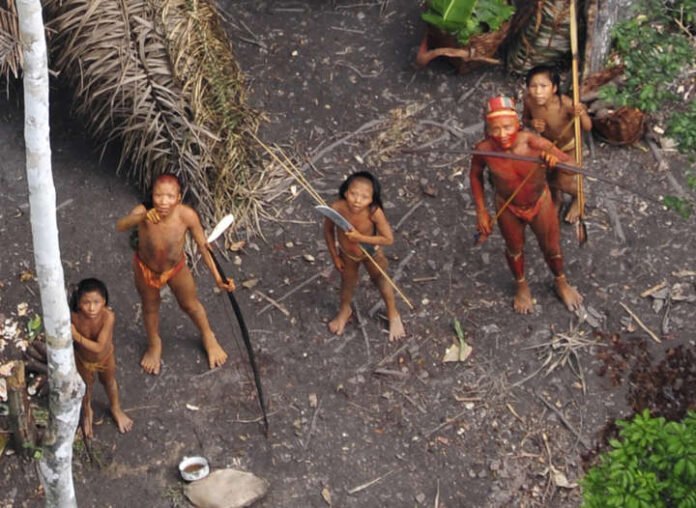
North Sentinel Islanders

On the northwest tip of Indonesia, a small group of islands locates in the deep blue waters of the Bay of Bengal. Among 573,  572 islands are unrestricted to tourists and have been visited by human beings for centuries. And that one isolated island dubbed North Sentinel Island, has always remained uncontacted after so many tries because of their violent behavior.

You might have heard of some isolated tribes, but this tribe is something different and unique. We don’t know what they call themselves as Sentinel Islanders. Being untraced and isolated, they still sustain themselves very well.

On the island, around 250 people live and through research it is found that they seem healthy with no abnormalities in body posture.  They are probably the last stone age tribe existing on the planet. Many a time the Indian government tried to contact them, the government has been met with violence.

The island is banned for trekking on the order of the Indian government but Recently, in the year 2018, one American missionary tried to contact them illegally thrice but he got killed by them. 

2. Ayoreo, Paraguay
Three last stone age tribes on the earth and their current status...
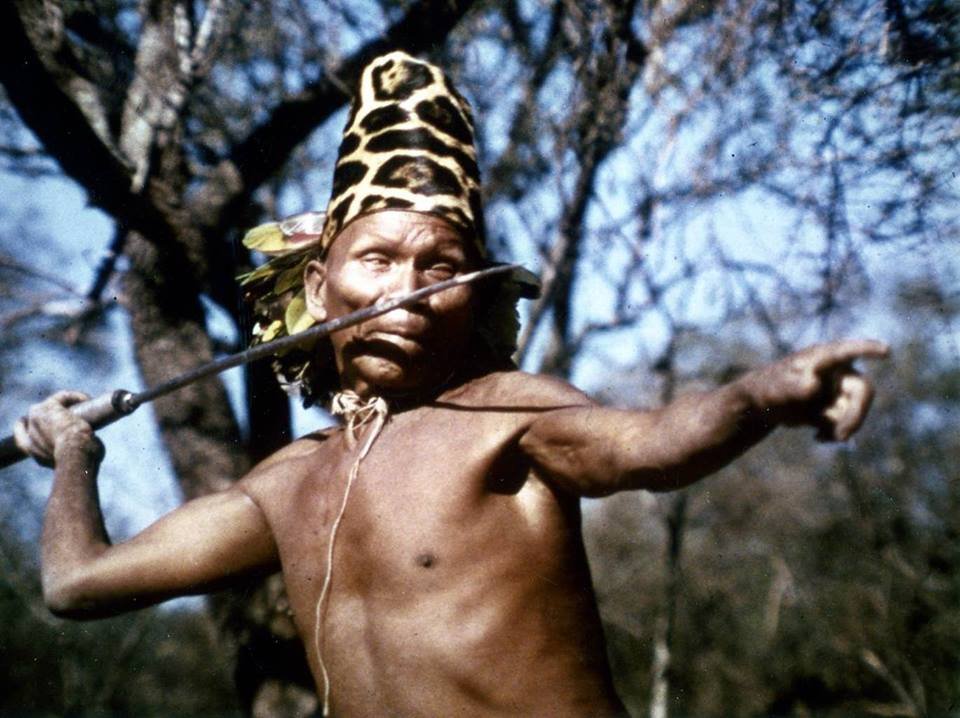
Ayoreo, Paraguay

Last uncontacted indigenous tribe in the massive forests of South America, around 5000 Ayereo people are living. They live in an well surrounded area by the Paraguay, Pilcomayo, Parapetí, and Grande Rivers.

The forest belonging Ayereo has the fastest rate of deforestation and they are facing many threats. A vast part of their land has been snatched away from them and sold to cattle ranchers.

However after years of isolating themselves, a group of Ayoreo made contact with outsiders in the year 2004 for the purpose of help because their homes were being erased by bulldozers. Tribal leaders then worked with human rights organization for them to give them back the ownership of their property.

3. Moxihatetema, Brazil/Venezuela
Three last stone age tribes on the earth and their current status...
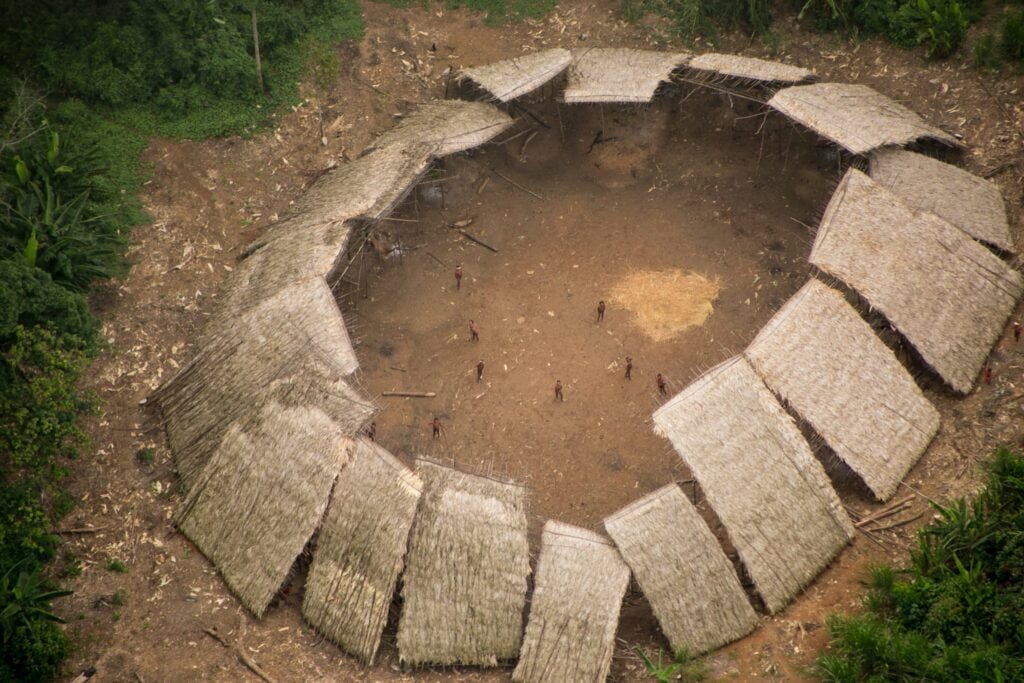
Moxihatetema, Brazil/Venezuela

Within a vast domain of 10 million hectares, in the forests of Brazil, the Yanomami reserve locates. tribe moxihatetema lives.  They are group of around 100 people who are sustaining themselves separately.

According one research, the tribe is expanding more and more.

The Moxihatetema are also exposed to grave external threat as their Yanomami relatives: illegal gold-miners, whose operations wreak environmental havoc in the ecosystem of the reserve, and whose contact with Indigenous tribes has sometimes been bloody.

Royal Rajasthan: These offbeat wedding destinations will leave you in awe of their beauty…

0

Rajasthan, being the historical home to the royals, is one of the best wedding destinations in India. From heritage palaces to luxurious hotels , Rajasthan has a lot to offer to not just leisure tourists but also to modern couples. It’s majestic fort which speaks it’s glorious past, architectural beauty, lush green gardens and the traditional vibes makes eyes sparkle and heart skip the beats. 

Here is the list of top wedding destinations in Rajasthan which will make your BIG DAY unforgettable and even more special.

1. Udaipur

Royal Rajasthan: These offbeat wedding destinations will leave you in awe of their beauty...
Udaipur

Imagine tying your knots in this beautiful city. Doesn’t it seem like a dream wedding?

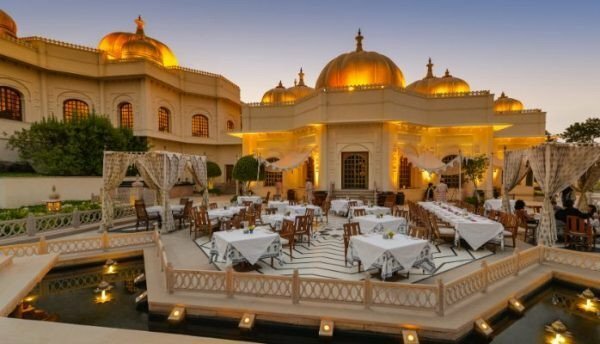
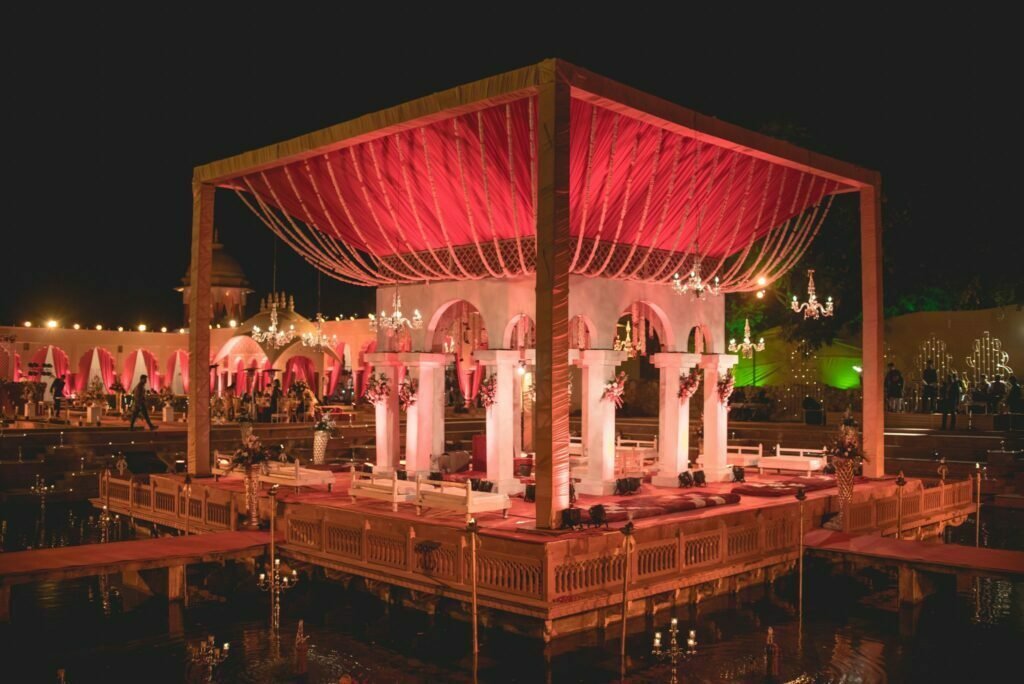
The lake city of India, Udaipur, is known to be perfect for weddings. The majestic forts and palaces, scenic lakes, breathtaking environment make it one of the best destinations for weddings. Udaipur’s hotels and palaces depict the rich culture of Rajasthan and make weddings aesthetically-pleasing and memorab

le.

3 top beautiful venues in Udaipur

1. Oberoi Udaivilas

2. The Leela palace

3. Taj Lake

Palace Best time to host a wedding in Udaipur

 September to February as the winters are usually pleasant. 

2. Jaipur 

Royal Rajasthan: These offbeat wedding destinations will leave you in awe of their beauty...
Jaipur

The capital of Rajasthan, Jaipur, is another mesmerizing destination. An image of royal wedding hits the mind when we think of Jaipur as a wedding destination. This architecturally beautiful city has been a favorite among celebrities as well. And there is no reason why Jaipur can’t be chosen for a wedding. After all, the city carries hundreds of options that make each wedding unforgettable and, of course, in a pleasant way.

3 top beautiful venues in Jaipur

1. Chomu Palace

2. Jai Mahal 

3. Le Meridien

 Best time to host a wedding in Jaipur

 November to February

3. Jodhpur

Royal Rajasthan: These offbeat wedding destinations will leave you in awe of their beauty...
jodhpur

 A royal city that owns the best wedding venues, palaces, Havelis, hotels that show Rajasthani culture and heritage, shiny colors, and decorations which can make your special day memorable. 

Being situated on the edge of the Thar desert and known as the gateway to thar, undoubtedly it is the gateway to your destination wedding.

3 top beautiful venues in Jodhpur

1. The Umaid Bhawan Palace

2. Indiana Palace

3. ITC Welcome hotel Jodhpur

Best time to host a wedding in Jodhpur

November to March 

Lok Sabha Secretariat releases booklet of Unparliamentary words unfit for the house

0

A booklet comes ahead of the monsoon session by Lok Sabha Secretariat, listing unparliamentry words and expressions which one cannot use in parliament. 

This booklet compiles words and expressions periodically deemed by legislative bodies. It emphasizes that some of the words will not be considered unparliamentary unless read in conjunction with the other expressions – essentially proving that the context matters.

The most common words listed  in the booklet consist of ashamed, betrayed, corrupt, hypocrisy, drama and incompetent. 

Anarchist, dictatorial, Khalistani, bloodshed, bloody, abuse, mischief, childishness, corrupt, coward, criminal, disgrace, donkey, eyewash, fudge, hooliganism, hypocrisy, incompetent, mislead, lie and untrue, anarchist, lollypop, foolish, and sexual harassment are also in the list of unparliamentary words.

Indian Center in the Netherlands – ICIN organized Indian Dance, Music and Food event in Eindhoven

0

The Hague: Indian Center in the Netherlands – ICIN organized a cultural event in Eindhoven
‘Discover India in Eindhoven’ event was inaugurated on dated 02nd July 2022, by Director, the Gandhi Centre, Shiv Mohan Singh at Dynamo Concert Hall, Catharinaplein 21, 5611DE Eindhoven, Noord-Brabant.


Vishwanath NG, President of Indian Center in the Netherlands – ICIN felicitated the Director of Gandhi center, The culture wing of ICCR in the Netherlands.

Event took place after a gap of two years due to Corona pandemic. Indian community in the Netherlands enjoyed Indian Food, Indian Cultural Programs and Indian atmosphere in the Netherlands during event.
The event started with official Welcome of the Indian diaspora including friends of India. Later on, various artists participated in the cultural program including dance, music, skit, fashion show and so on including Indian DJ Night.
People also enjoyed Indian cuisine at different types of food stalls which were arranged by Indian Center in the Netherlands.

By – Pranita Deshpande
Email id – advpranita@gmail.com

Top three lesser known heritage sites of India which one must explore…

0

India is incredibly rich in its culture and tradition. India’s rich and diversified cultural landscape is illustrated and highlighted by its heritage sites.  From the Indus valley civilization to the architectural wonder Taj Mahal, India has always evoked a sense of awe and wonder among tourists. 

Interestingly, India has 40 UNESCO World Heritage Sites and we are only aware of a  few famous monuments. Let’s explore  lesser known heritages that you must know about

1. Bhim Betka Rock Shelter, Madhya Pradesh

Top three lesser known heritage sites of India which one must explore...
Bhim Betka

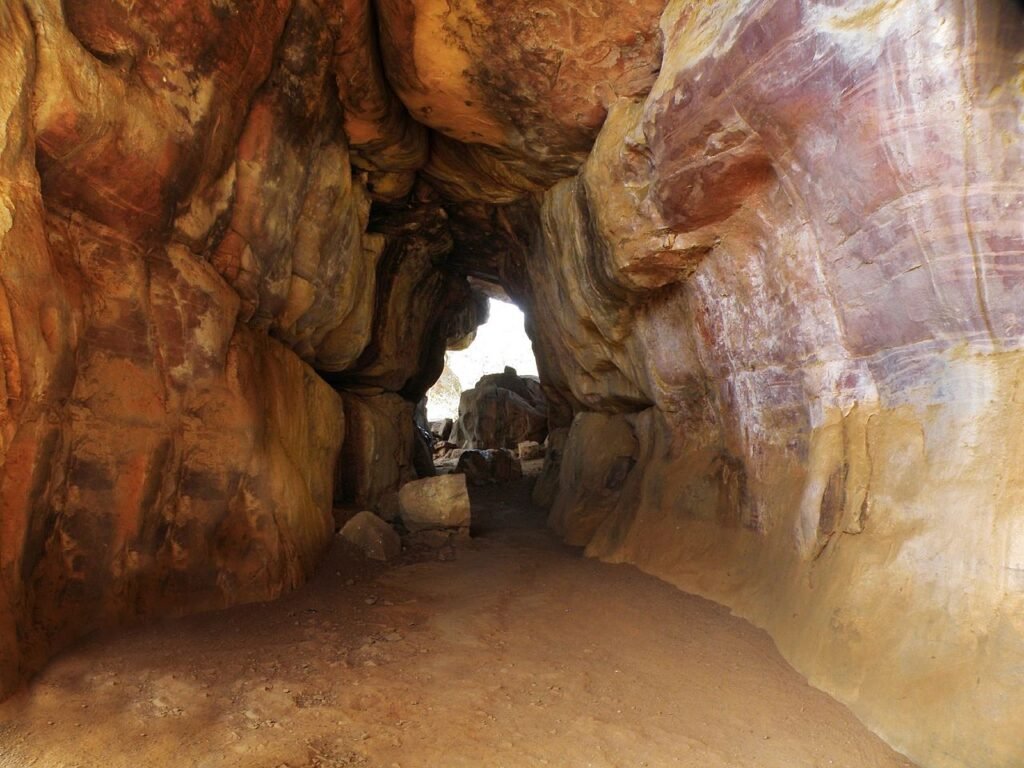
Situated at a distance of 46 km from Bhopal, Bhim Betka Rock Shelter exhibits Stone Age human life existence in India. This oldest prehistoric complex of human civilization consists of 100000-year-old paintings.

Out of 760 shelters, 500 shelters are briefly painted.  The most influential thing one can spot in Bhim Betka is that red bison attacking a man is only visible when sets it’s light just right on it. 

It is also believed that Bhima from Mahabharta used to sit in this rock shelter and hence it is named after it. 

2. Orcha, Madhya Pradesh

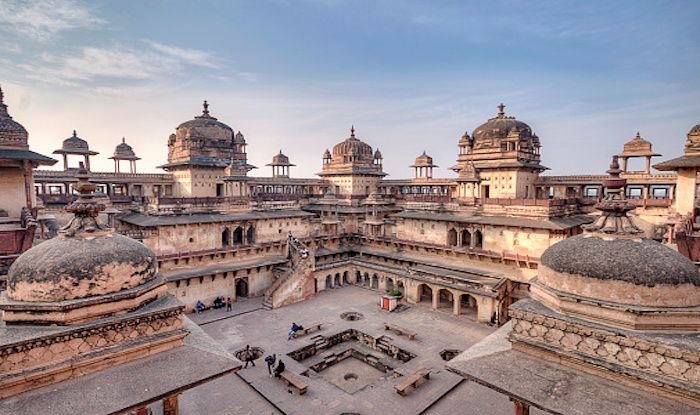
 Another majestic historical site situated in Central India, Orcha, is the 16th  century capital of the Bundela Kingdom. Orcha is basically a sleepy town located near the Betwa River with an incredible collection of palaces, temples and lush green gardens alongside the river. This place has Raj Mahal and LaxmiNarayan Temple with enormous Bundela School Paintings. 

The golden dust sunset in Orchha is particularly atmospheric, with the beautiful monuments showered with golden hue in the water of the Betwa River. 

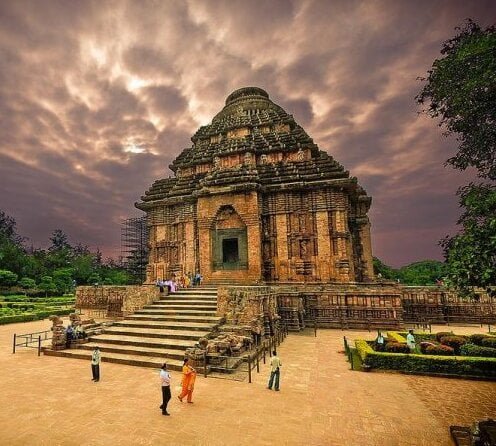
3. Konark Temple, Odisha

 Situated near the coast of the Bay of Bengal in Odisha, Konârak Sun Temple is a monumental testimony of Sun God’s chariot which allure tourists due to its architectural design. 

Designed in the 13th century by Raja Narsimha Deva, Konark was chosen as its place of construction because it has been described as the holy seat of Surya in various ancient texts.

The exquisite artistry of Konark Sun Temple is designed in the shape of a mammoth chariot that Surya rode. It is believed that Lord Surya rode across the sky in his chariot pulled by 7 horses. Believers say that the 7 horses represent the 7 days of the week, while others say that 7 horses represent the 7 components of white light that we know as the VIBGYOR.

Guru Purnima 2022 special: Know about world Gurus’ guru

0

On this occasion of Guru Purnima 2022, let’s figure out world Gurus’ guru and know their stories.

Who was Kabirdas Guru?

Kabirdas had made Swami Ramanand ji his Guru

Who is Parshuram Guru?

Parashurama received his initial education in the ashram of Maharishi Vishwamitra and Richick and duly received imperishable Vaishnava mantras from Brahmarishi Kashyap. After receiving education in the ashram of Lord Shankar situated on the Kailash Girishring, he received a special Divyastra named Vidyudabhi,. Most people consider only Lord Shiva as his guru.

Who was Tulsidas ji’s guru?

With the inspiration of Lord Shankarji, Shri Narharyanand Ji (Narahari Baba),gave education to Tulsidas ji. It was he who changed his name from Rambola to Tulsiram. After attaining knowledge, Tulsidas ji created many compositions dedicated to Lord Rama including Ramcharit Manas.

Who was Surdas guru?

There is a belief about Surdas ji that his family members did not accept him as he was blind since birth. So he had to leave the house after which Shri Vallabhacharya made him his disciple.

Who was Mirabai Guru

It is believed that Sant Ravidas ji was the guru of Mirabai. But there is no such evidence in history to confirm this.

Who was Tansen Guru?

People of Hindu religion consider Swami Haridas ji to be the guru of Tansen. Muslim people consider Hazrat Muhammad Ghaus Ji as the Guru of Tansen. But history also tells that their relationship was less with religion and more with music.

Bhagwan Ram  Guru 

Both Brahmarshi Vashishtha and Rajarshi Vishwamitra are known as the Guru of Shri Ram. If seen primarily, then Lord Shri Ram ji had received his childhood education from Brahmarishi Vashisht ji. Later, during his stay in Vishwamitra’s ashram, Vishwamitra had taught some additional special disciplines like Bala-Atibla etc. to both Rama and Lakshmana and also gave them the knowledge of some additional divine weapons.

Arjuna’s guru

In the Mahabharata, Arjuna’s guru was Dronacharya. Guru Dronacharya had resolved to make Arjuna the greatest archer. To fulfill this, Dronacharya had asked Eklavya for the thumb of his right hand in Guru Dakshina.

Guru of Gautam Buddha

The childhood guru (teacher) of Siddhartha Gautama was Acharya Sabmbmitta. There was no guru to help Siddhartha Gautama become Buddha.

Guru of Chhatrapati Shivaji

The Guru of Chhatrapati Shivaji was Samarth Guru Swami Ramdas.

Sant Ravidas Guru 

Sant Ravidas ji had made Swami Ramanand ji as Guru at the behest of Kabir Saheb ji, while his real spiritual guru was Kabir Saheb ji.

Guru of hanuman ji

The guru of Hanuman ji was the Sun God.

Guru of Luv Kush

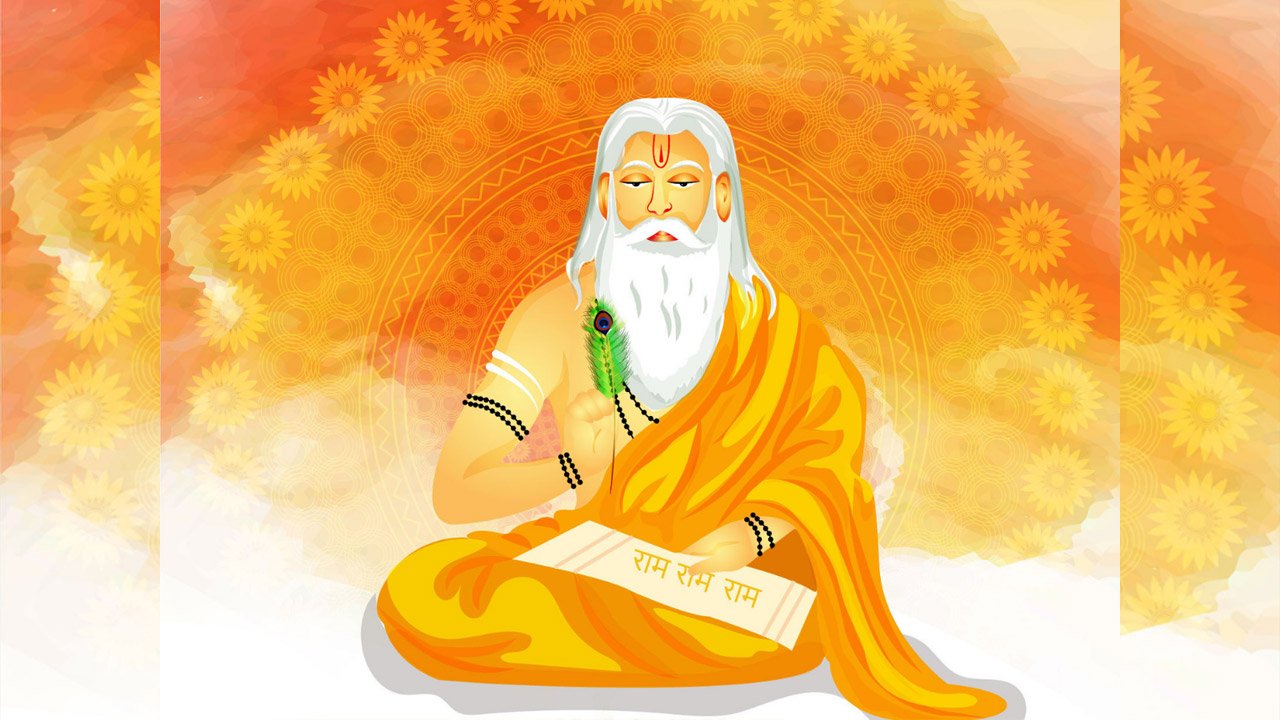
Maharishi Valmiki ji was the guru of Luv Kush, the son of Lord Rama and Sita Mata. Luv Kush was born at the time when Sita was living in Valmiki’s ashram. He was also named by Valmiki ji.

Who was Shabari’s guru

Shabari’s guru was a sage named Matang, watching the path of Lord Rama in the forest.

Who was the guru of chanakya

Although there is no description of Chanakya’s guru in any text or historical book, but according to some beliefs, his father, whose name was Chanak taught them in childhood.

Dronacharya Guru

Dronacharya received his childhood education from his father’s disciple Agnivesh ji. After receiving education, he got the knowledge of weapons and weapons from Parashuram ji. Thus Dronacharya’s gurus were Agnivesh and Parashurama.

Who was the guru of Eklavya

Eklavya had never taken education from Dronacharya in his life. Being the guru of the royal family, Dronacharya refused to teach him. Nevertheless, Eklavya, considering Dronacharya as his guru, installed his idol and learned bow lore. Thus Eklavya’s guru was Dronacharya. Eklavya had cut off his thumb in Guru Dakshina to Dronacharya.

Who was the guru of Gandhi ji

Mahatma Gandhi’s guru, who fought for freedom, was Gopal Krishna Gokhale.

Guru of Lord Krishna

The name of the guru of Lord Krishna and his friend Sudama, who was born in Dwapar Yuga, was Muni Sandipani.

Birju Maharaj Guru

Birju Maharaj was born in the house of Jagannath Maharaj, famous for Kathak dance. His father and uncle were proficient in all dance arts. He got training from his uncles Lachhu Maharaj and Shambhu Maharaj and father. Thus he was their guru.

Who was the guru of pandavas

Along with Pandavas, Kauravas also had Guru Dronacharya.

The sharpest picture of ancient galaxies captured by NASA’S JAMES WEBB SPACE TELESCOPE

0

The sharpest image to date of the ancient universe, 13 billion years ago, has finally been revealed by NASA’s JAMES WEBB SPACE TELESCOPE.

JWST has shown the farthest one could ever imagine seeing the universe. The image was unveiled by US President Joe Biden in the White House.


The stunning shot is overflowing with thousands of galaxies and we can spot some of the faintest objects, colorized in blue, orange and white tones.

The sharpest picture of ancient galaxies captured by NASA'S JAMES WEBB SPACE TELESCOPE
Joe Biden


US President Joe Biden expressed his excitement and said, “Today is a historic day. This is a historic moment for America and all of humanity.”

New Parliament building in India: Know its top 3 features… 

0

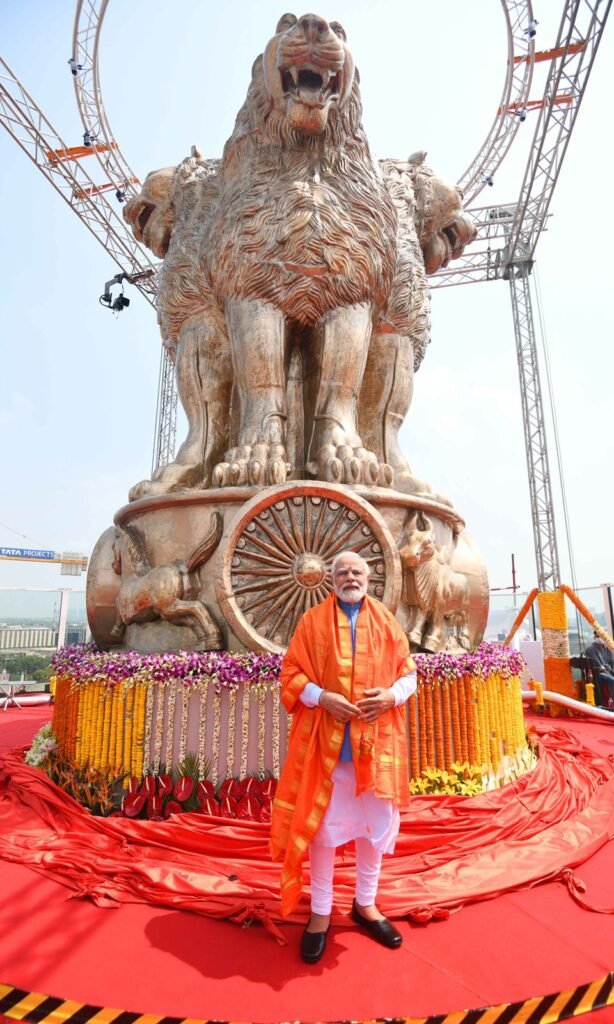
New Parliament building of India has a bronze made National Emblem which is casr on the roof of the new Parliament building.

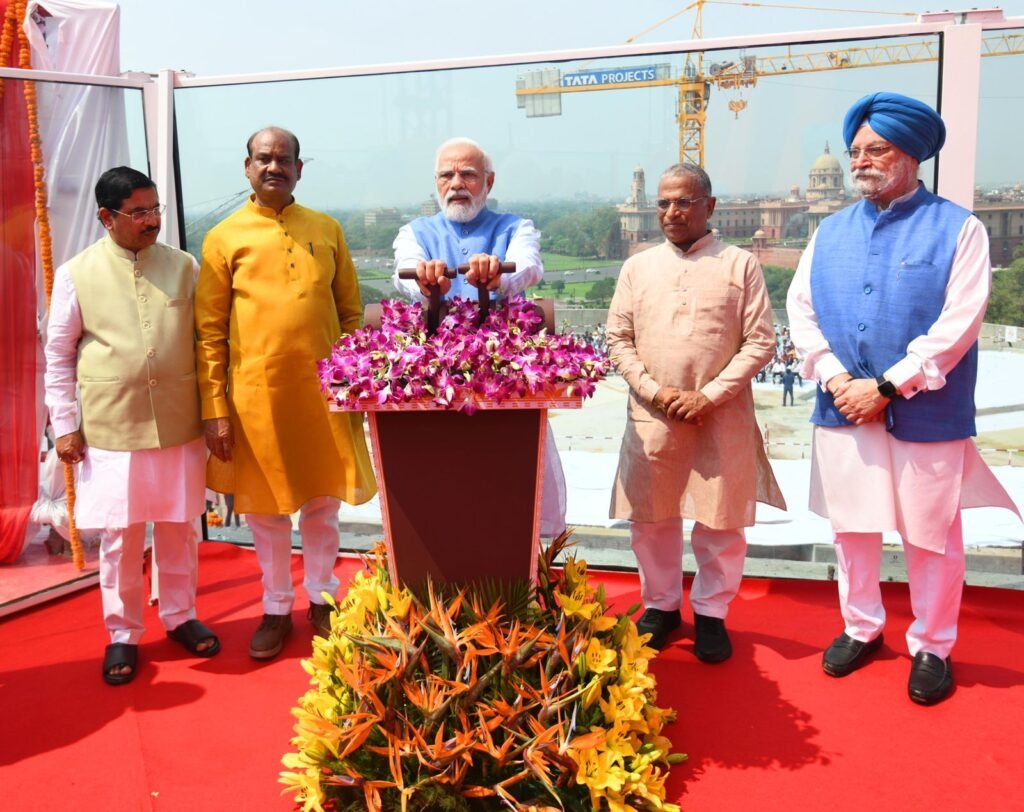
Prime Minister Narendra Modi on July 11 unveiled the bronze statue of the National Emblem cast on the roof of the new Parliament building of India on Monday. EBNW Story highlights its top 3 rare features…

There is 6.5m high bronze National Emblem cast on the roof of the new Parliament building weighs around 9,500 kg

The steel structure that would support the emblem weighs nearly 6,500 kg.

The massive bronze emblem underwent eight stages — from its conceptualisation to the final installation.

PM Modi also interacted with workers engaged in the work of the new Parliament. 

PM performing rituals while unveiling the National Emblem cast on roof of the New Parliament Building in New Delhi

Watch the visuals from the ceremony here:

Hadi Rani in Rajasthan: Know the story of her bravery & sacrifice for nation

0

Hadi Rani, a brave queen of Rajasthan, has made her name scripted in the  glorious chapters of history after she sacrificed her life for the sake of her nation. 

Had Rani was a daughter of Hada Chauhan Rajput who was married to  Ratan Singh, a senior soldier in Mewar.

According to the legend,  she sacrificed herself to motivate her husband to go to a battle.

The King Raj Singh, (1653–1680) from Mewar called Ratan Singh to join the rebellion against Mughal governor. However as Ratan Singh, the commander, had married only a few days earlier, he hesitated however later went to the battle ground with perceptions of Rajput honour disturbing him.

 He asked his wife, Hadi Rani, to give him some memento so that he can take with him to the battlefield. Had Rani chopped off her head and placed it in a plate thinking that she was an obstacle to him doing his duty for Mewar.

 A servant covered it with cloth and presented it to her husband. 

The commander tied the memento around his neck by its hair and after their rebellion ended, he did cut his neck, having lost the desire to live.

Still today, people worship Hadi Rani in Rajasthan and folklore singers tell her story in songs about her chivalry, valor, courage. 

Being an inspiration of various stories, poems and songs in Rajasthan, her name also founds place in curriculum in Rajasthan. 

In fact, Hadi Rani ki Baori is a step well in todaraisingh town in Town which was built around 12th century.

A woman battalion called as Had Rani Mahila Battalion exists in Rajasthan police too!

Amarnath Yatra 2022: history, significance, climate, distance, tips and many more

0

The ice-caped cave temple Amarnath is one of the sacred Hindu pilgrimage centres in Northern India, at an altitude of approx 17,000 ft above sea level. The cave is believed to be a house, where Lord Shiva narrated Amar Katha, the secret of life and eternity. One can feel the divine spiritual vibration at Amarnath as it is considered as one of the holiest shrines. It is the only place where Lingham takes shape on its own. The ice is collected from the water dripping from the top of the cave due to the melting of the ice on top of it and the shrine is constructed. 

Every year ‘Amarnath Yatra’ is marked by ‘Pratham Pujan’. Thousands of people from all over the world visit the cave to summon blessings. If you are planning a trip to Amarnath, then here are some important details you should know about.

History

The history of Amarnath is as interesting as the Yatra is. It is believed that the Amarnath cave is the place where Lord Shiva narrated AMAR KATHA to Parvati for her immortality. 

Shiva left all his companions- Nandi, the bull – left at Pahalgam, the moon atop his head at Chandanwari, snake around neck at Lake Sheshnag, the 5 basic essentials of life that he carried at Panchtarini and even his son- Lord Ganesha himself- at Mahaguna top and entered in cave with Parvati. 

He orders Agni Devta to demolish all the living creatures around so nobody can hear Amar Katha. On the order of Lord Shiva, Agnidev demolished everything but didn’t destroy an egg as it is not counted, unlike living creatures. After a while, the parrot hatched the egg. Lord Shiva started narrating the Amar Katha but in between, Parvati fell asleep and the parrot was the one who was nodding from behind. When he finished the narration, he realized that Goddess Parvati had actually fallen asleep and a parrot was listening all this while. Lord Shiva tried to kill the parrot but he flew away and entered into the womb of a Saint’s wife. The parrot then took birth and became a famous sage and, interestingly, his face took the shape of a parrot.

How to reach Amarnath

Amarnath Yatra 2022: history, significance, climate, distance, tips and many more
amarnath yatra

Every year Yatra is organized by the government of Jammu and Kashmir. Yatra attracts lakhs of pilgrims during Shravani Mela in July-August as it is the only time in the whole year when the Amarnath Cave is accessible.

There are two ways to reach Amarnath, which are connected to major cities – Baltal and Pahalgam. 

1. Amarnath Yatra via Pahalgam

This route  is generally preferred by

most of the devotees. The length of the trec

k varies from 36 to 48 km depending upon the devotion of the pilgrim. It usually takes 3-5 days. 

  1. Amarnath Yatra via Baltal 

This route is 14 km long and allows people to reach it in 1-2 days. One has to walk or be carried on ‘Dandies’ if they choose this route. 

However, this route is favorable for returning back.

Both the routes provide the best possible facilities organized by Indian Army, Central Government and State Government Police Forces. 

Amarnath Yatra In Helicopter

Starting Point: Baltal helipad

Starting Point: Pahalgam helipad

Cave to Drop-off point:

If a pilgrim opts for the helicopter ride, he/she will be dropped at Panjtarni, which is a 6km (2 hours) walk to the Amarnath caves but with many visiters present, the walk will take up to 4 hours.

Amarnath weather 

The climate in Amarnath fluctuates frequently. Generally, the winters are long and partly cloudy. The weather ranges between 9 to 34 degrees Celsius. 

Yatra Dates 2022 

This year, Amarnath Yatra started on 30 June 2022 and will finish on 11 August 2022. The 43-day Yatra will accommodate approx 3 lakh pilgrims.

Tips- 

While planning the trip, one must ensure to keep- 

• Warm clothes & woolen caps

• Windbreaker Jackets. 

• Waterproof shoes and raincoat.

• Trekking stick or Dandies.

• Water bottles

• First aid kit for emergency situations.

• Torch which might be helpful for you at night.