Home Blog Page 735

Peacocks in danger. Know why?

0

Do you know that Peacock is in danger? Poaching, poisoning and feather-sale are main threats Basically, the world has three species of peafowl: 1. Congo peafowl, which is listed as Vulnerable on the IUCN Red List. 2. Burmese peafowl which is listed as endangered on the IUCN Red List since 2009 and it is the national bird of Myanmar.  3. Indian peacock which is country’s national bird.

Isn’t this national bird facing danger signals? Who shall answer the question concerning Indian peacock? The Ministry of Environment, Forest and Climate Change (MoEFCC) which has listed the national bird on Schedule1 of India’s Wildlife Protection Act which means the species is receiving the highest attention and those harming or poaching it are liable to punishment with monetary fine as well.

Forest officials in all states are responsible to ensure the Act is implemented in letter and spirit. Yet all seems not well with this beautiful large plumed bird having ancient association with Lord Krishna.

The Indian Biodiversity Conservation Society (IBCS) based at Jhansi, Uttar Pradesh, has attempted in its own voluntary way delivering answers to this effect. It took the initiative to organize First World Peacock Day on 15th November 2022. Dr .Akhilesh Kumar, Secretary, IBCS, and Aman Singh, Core Committee member, IBCS, turned out to be pillars of this unique initiative. Dr. Sonika Kushwaha, a zoologist, is its President.

Peacocks in danger. Know why?
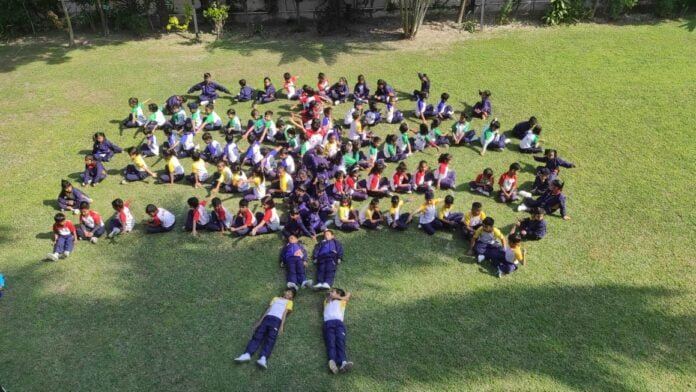
Peacocks enter class-room sessions. Dr. Sonika is on extreme right in last row, courtesy

The celebration received support from Tourism & Wildlife Society of India, IRE-Jungle- Narsinghgarh (Madhya Pradesh), Manav Organization (Lalitpur-Uttar Pradesh), Wild-CER (Nagpur-Maharashtra) and World Pheasant Association, United Kingdom. A number of other organizations and educational institutions encouraged this initiative. More than 60 nature lovers from various NGOs, Schools, Colleges, Universities, Forest Department and individuals signed with the IBCS. They represented 14 States of India. They lamented that the bird was declared National Bird of India in 1963. It, however, continues to face difficult time for 59 years facing lack of seriousness for its appropriate conservation and protection. The celebration conveyed the message — it is time to care for India’s National Bird.

Sonika and her colleagues compiled almost all news items published in the Indian dailies and magazines about Peacock’s mortality and tried to reason the causes. Not much data was available with forest authorities. They summed up: poached 279+ ; poisoned deliberately 241; pesticide consumption 107, total 627+ peacock mortalities across India within past few years. Their inquiries revealed that tonnes of Peacock feathers were collected, after being poached, and were traded all over the country, some stock going abroad.

Their finds revealed that Peacock feathers are used in making fans, fancy peafowl dolls, ear-rings, etc. The feathers are sold at high rates in foreign countries. The feathers are also used in some Ayurvedic medicines, which is another reason for rise in poaching.

Sonika stated that a study conducted by TRAFFIC India, an arm of WWF-India, revealed that Tamil Nadu is the third major source of peacock plumes in the country after Rajasthan and Gujarat. Data collected from 20 states over two years by a TRAFFIC team reveals that an aggregate of 25.71 crore bunches of feathers were found in godowns in Rajasthan, 3 crore in Gujarat and 2 lakh in Tamil Nadu. Agra and Rajasthan are the major suppliers of peacock feathers to Tamil Nadu and West Bengal while Odisha is the biggest buyer of such feathers

A study in 2016 undertaken by TRAFFIC India stated peacock feather ash (bhasma and churan) was sold in many drug stores in Kerala, Andhra Pradesh, Delhi, Gujarat in the belief that it cures hiccups, vomiting and morning sickness. “Naturally shed feathers are simply not enough to meet the demand and peacocks are being poached for the same. A single peacock normally sheds or molts 150-200 feathers annually. It is unlikely that people catch wild peacocks, pull out their feathers, and let them go.

Moreover, whether shed or plucked from dead peacocks is anyone’s guess,” says the TRAFFIC report. According to Sonika’s estimates, the Central Bureau of Investigation had booked a Delhi-based company and its director for allegedly smuggling peacock tail feathers to a China- based entity. Several consignments of feathers were sent via 26 shipping bills. The racket was unearthed when the Customs authorities seized a consignment containing about 21 lakh pieces of peacock tail feathers at the Inland Container Depot in Delhi’s Tughlakabad.

It had been booked by Galaxy Rider through two shipping bills dated February 26, 2021. The company’s director was identified as Ayaz Ahmed, a resident of north-east Delhi. The consignment, booked through Logistic Curator India Private Limited, consisted of 77 packages weighing about 2,565 kg, with an estimated value of about ₹5.25 core. The accused had declared the contents as “plastic flexible pipes”. As it turned out, Logistic Curator India had authorised a man named Amit Mishra for filing the export/import shipping bills and on its behalf, he had handled the consignment in question. Further investigation revealed that the accused had earlier shipped several consignments of peacock tail feathers to the entity in China following the same modus operandi. The First Information Report alleged that the seized feathers had been plucked by way of poaching peacocks and that its smuggling was part of a huge criminal network.

Great Himalayan National Park: Beware as bear might appear all of a sudden…

0

How many have heard name of Great Himalayan National Park (GHNP)? How many have visited it? For what objectives?

The Great Himalayan National Park (GHNP) is located in the Banjaar sub-division of the Kullu district of Himachal Pradesh. It is in the far western Himalayas in India. It was initially constituted in 1984, and formally notified as a national park in 1999. In June 2014, the Great Himalayan National Park was added to the UNESCO list of World Heritage Sites, under the criterion of outstanding significance for biodiversity conservation.

It is one of the most accessible park to observe rare Himalayan wild species: mammals, birds, reptiles, insects, etc. Reaching there is all right. But one will be wonder struck to know its internal access. You need to walk many kilometres from the main gate to reach its inner zone where better sightings may start. And you need to carry all your belongings over own shoulders. While coolies are available but they prove costly. 

Local residents act as Naturalists. They are your true guides. Need to have one to start up best of sightings. Mind you, they maintain your safety as well. Never know when a Brown Bear may confront you.

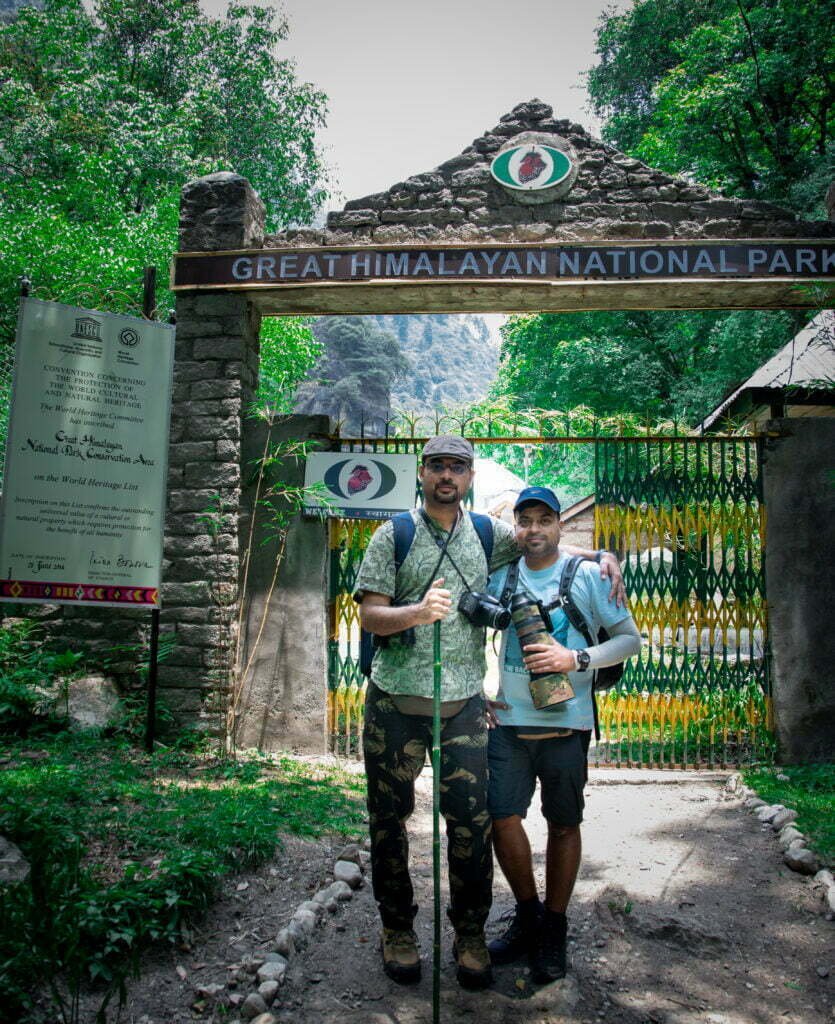
It happened with Naveen Kumar Singh and Nishant Nath Shukla who visited the park during last summer of 2022. The Bear appeared all of a sudden about 30 meters away.

Thanks to the wind blowing from its side to their side, and importantly to the Naturalist, who coughed to alert the predator. They heaved a sigh of relief!

Biodiversity surveys of GHNP in the past decade have identified 31 mammal species, 209 bird species, 12 reptile species, nine amphibian species, 125 insect species, and 832 plant species. It is a prominent attraction for bird watchers, who visit this park for many elusive Himalayan species like Western Tragopan, Lamergeier, Himalayan Griffon, Cheer Pheasant, and many passerine birds.

Experts from Tourism Wildlife Society of India (TWSI) have been visiting GHNP for the past 15 years. Nishant Nath Shukla has been there nine times. Naveen Kumar Singh, likewise, is sold out to that habitat of pristine values. They have observed many changes in its surroundings. Increased tourism activities in its surroundings have proven to be a boon to the stakeholders but at the same time increased the challenge to conserve this Himalayan Eden.

Naveen stated: the advantage is that GHNP is generally well buffered from threats because it is a high elevation remote system located in a larger complex of protected areas. However, it demands for infrastructure development from the villages within the World Heritage site pose emerging threats. Whilst concerns regarding the impacts of grazing and human settlements remain, these shortcomings in protective status are outweighed by the greatly improved integrity of the property.

Nishant added: the uncertain impacts of climate change on biodiversity values and their ecological underpinnings constitute a potential threat, which calls for timely research and adaptive action. They created a booklet of this park’s birds and handed it over to all students at a local school. It was to involve them in to wildlife conservation. Their session with students and teachers was a unique event. Its photo is published here.

Both Naveen and Nishant are Volunteers at Tourism & Wildlife Society of India (TWSI), an organization in service since 1980.

Great Himalayan National Park: Beware as bear might appear all of a sudden...
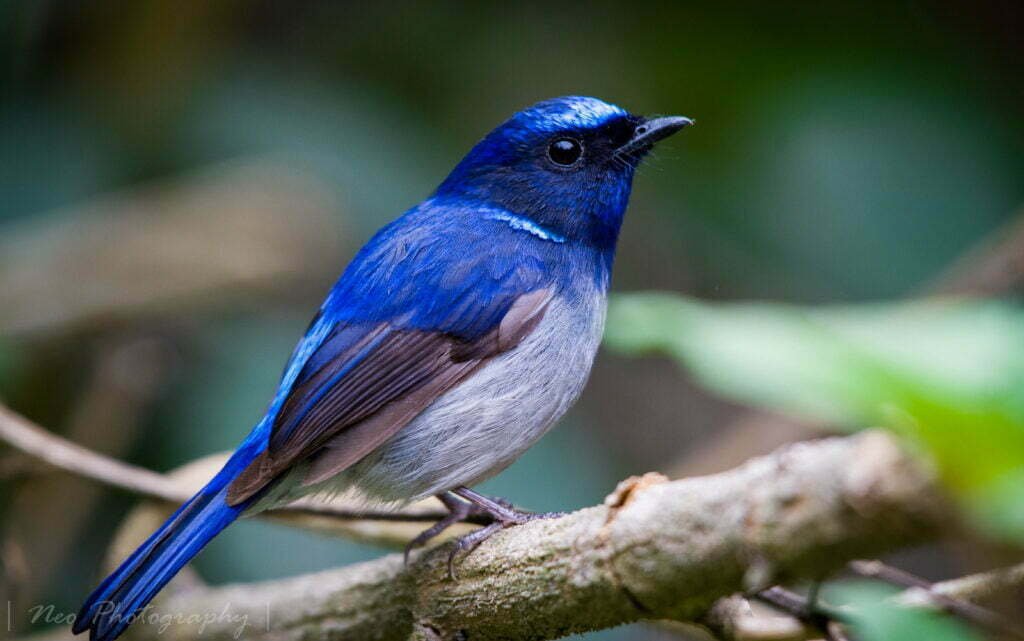
Small Niltava

Great Himalayan National Park: Beware as bear might appear all of a sudden...
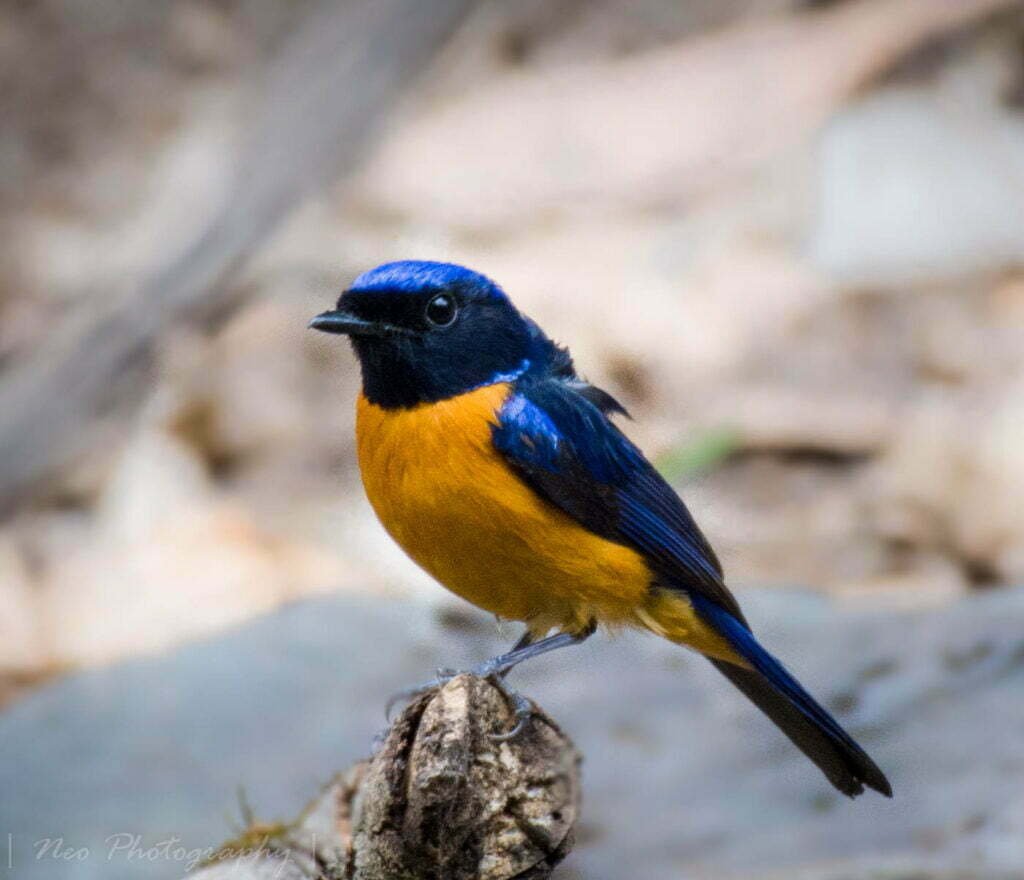
Rufous-Bellied Niltava
Great Himalayan National Park: Beware as bear might appear all of a sudden...
Nishant and Navneet
Great Himalayan National Park: Beware as bear might appear all of a sudden...
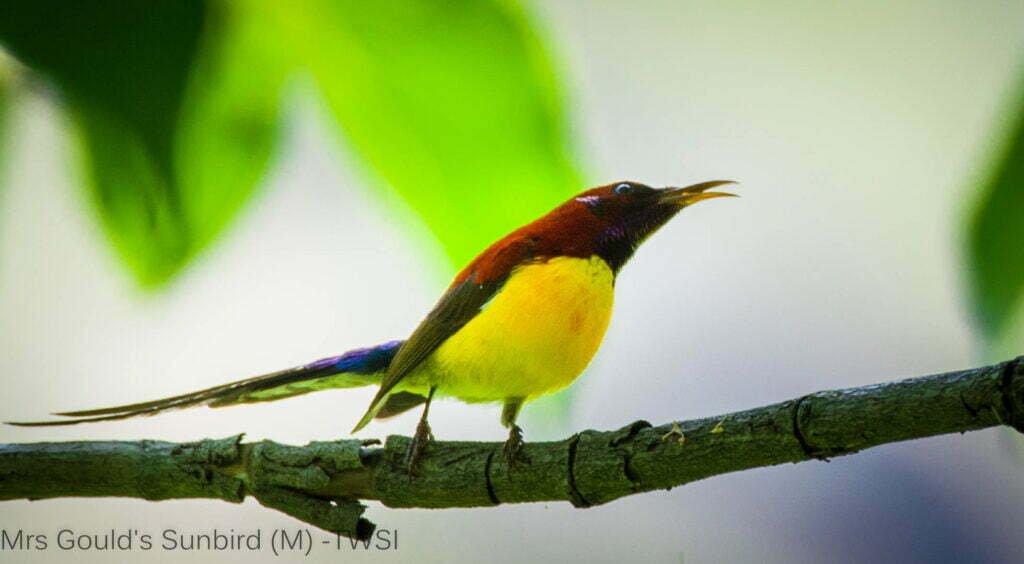
Mrs Gould’s Sunbird

IFFI Indian Film Personality of the Year Award for 2022 goes to Chiranjeevi

0

The IFFI Indian Film Personality of the Year Award for 2022 goes to megastar and actor-producer Chiranjeevi Konidela. The announcement has been made by the Union Minister for Information and Broadcasting Anurag Singh Thakur, at the grand opening of the 53rd edition of IFFI, the International Film Festival of India, in Goa today.

In an illustrious film career spanning more than four decades, Chiranjeevi starred in more than 150 feature films in Telugu, as well as some films in Hindi, Tamil and Kannada. He is regarded as one of the most successful and influential actors of Telugu cinema.

He captured the imagination of the masses with his performance in Initlo Ramayya Veedilo Krishnayya in 1982. He is admired for his zestful dance performances and fight sequences brimming with power. His influence has claimed him the title of a Megastar!

In 2006, he was honoured with the Padma Bhushan, India’s third-highest civilian award, for his contributions to Indian cinema.

Children walk on ramp, dance in Jaipur’ Magical Kitchen Restaurant

0

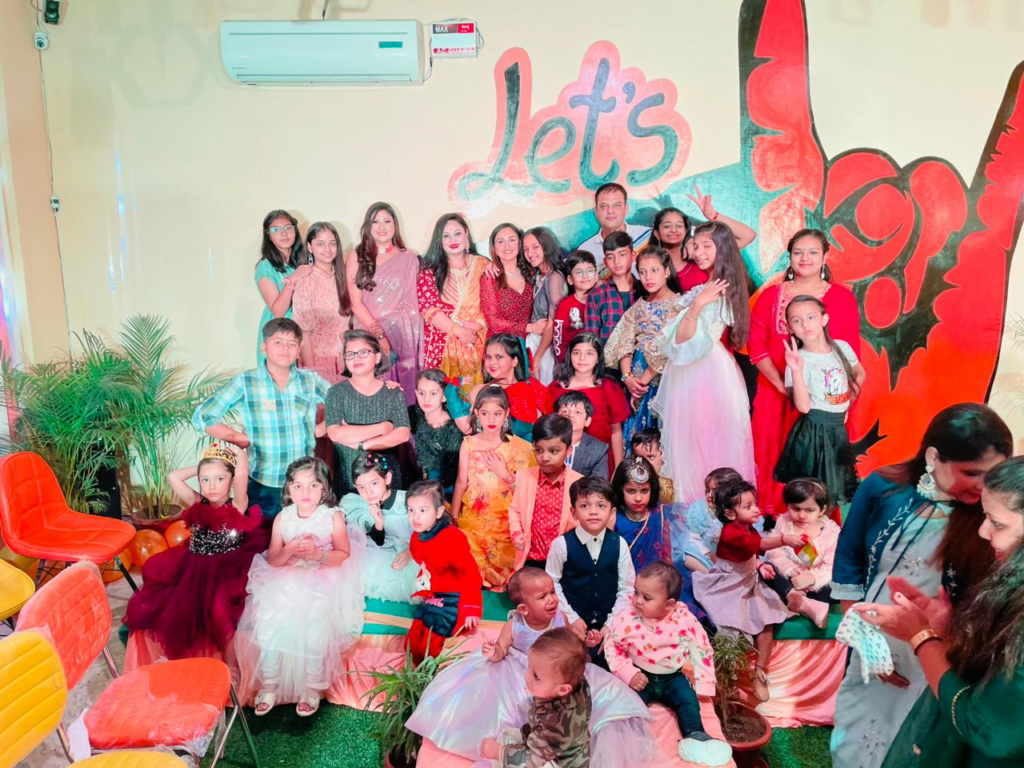
The Magical Kitchen Restaurant Murlipura Jaipur made a grand celebration on the occasion of Children’s Day.

Children walk on ramp, dance in Jaipur' Magical Kitchen Restaurant

Raja Ajmani and Deepika Ajmani, chief managers of Magical Kitchen restaurant said that the program was conducted by anchor and YouTuber Gandharv Chauhan. 

On this occasion, children enthusiastically participated in the ramp walk and dance competition. The presence of Jury Member Miss India Glam, Model Actor Mahima Chaudhary and Doordarshan Anchor and Brand Ambassador of Swachh Bharat Abhiyan Jaipur Ayushi Shekhawat added charm to the program. Gifts and food discount coupons were given to all the children in the celebration who also enjoyed the delicious dishes of the Magical Kitchen restaurant.

Shiv Aroor answers curious questions raised by Saksham Sanchar students in Jaipur

1

It was interesting to see Saksham Sanchar students asking curious question to renowned journalist and author Shiv Aroor during an event held in Jaipur recently

Saksham Sanchar acts like Gurukul of Journalism and takes students to fields to give them practical exposure to journalism.

Under the same episode, Saksham Sanchar students covered AWWA Lit Festival Abhivyakti Season 2 held in Jaipur in which Shiv Aroor was special guest,

The students raised their queries to Shiv Aroor. The first question was related to the new generation journalism.

Aishwarya Chouhan asked him “As there is plenty of clutter on social, print, and digital media, how can a journalist bringing clarity for the readers.” 

Shiv’s answered, “Yes, there is clutter. Every other journalist has a different perspective and wants to represent the story interestingly which causes the clutter. But it is the responsibility of a journalist to portray truth without any bias so that there is no clutter in theming of readers.”

Another question was related to the challenges and opportunities that a budding journalist would face in the current industry. To the question, Shiv Aroor, answered, “The media industry is very fulfilling, and very day comes as a new day in this profession.” 

He also stated, “A media industry can be challenging, but they should always bring out the new factor for their story and break the chains.”

One of the sensitive questions was about the terrorist attack in Mumbai. in 2009, some journalists were covering the story on live broadcast, despite the restriction. Shiv Aroor answered positively, “Yes, some journalists were covering so. He was also there but not among those journalists. He also cleared that those journalists were not doing anything deliberately.” He added, “Being a journalist, one cannot share anything in their capacity.”

It was a significant interaction, and students were thrilled and satisfied with the answers. 

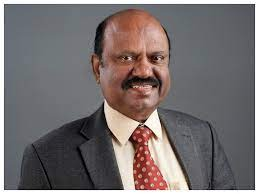
Dr CV Ananda Bose appointed West Bengal Governor

0

Dr CV Ananda Bose has been appointed as West Bengal Governor.

Women entrepreneurs of AWWA scripting success story 

1

Abhivyakti season 2, under AWWA, promotes women entrepreneurs. Here are some inspiring stories of entrepreneurs who were present at AWWA Lit Festival Abhivyakti Season 2.  NIEUWEEK , the brand owned by one of those entrepreneurs, wooed the passers by. 

This fashionable clothing Store promotes the traditional handwork of India. Engraving the enchanting Madhubani paintings, Tikuli art and Sujani embroidery  on clothes, the sarees appeal one and all.

Speaking to EBNW Story, she said, “You don’t need to go for any international brand. it’s the heritage of ours which amalgamates with the new noir culture in vogue to give a product branded under NIEUWEEK.”

Another women entrepreneur who displayed her creativity was Sanchali Saga. She has a very beautiful creative saree collection. About a saree which attracted a huge crowd with its greenish blue coloured, she says that the saree pallu is of Ghicha(Ghicha is the silken yarn obtained from cocoon) & it has traditional Picchwayi work and kalamkari on its end. She also describes another saree which was shaded by batik work. Batik is a technique of wax-resist dyeing applied to the whole cloth. 

The principal of the Asha special school run by AWWA Ms Uma was also present at the festival to promote the creativity of their children. She said that the teachers create different environments other than ordinary schools for the students who are with specific learning disabilities and have other health impairments,. Their focus is on developing the skills of students and their motive is to connect them with the mainstream. AWWA not only has a strong team of army wives and families but they are strongly working towards promoting our art and heritage and establishing milestones for society, she added.

AWWA Lit Festival in Jaipur had this session for children…

0

The Abhivyakti Season 2 organised under AWWA Lit Festival recently at JKK had many sessions and workshops. One session was marked for children it being Children’s Day on November 14. These included a workshop on Book publishing by Mr. Narendra Singh and the other TedTalk on personality development by Lokesh Nathani.

Coming to the TedTalk with Lokesh Nathani who shared the formula of becoming extrovert from introvert.

He briefed the 5 key ingredients of personality development such as talking to yourself first in front of a mirror, believing in yourself, never missing a chance to represent yourself publicly if you get a chance, keeping consistency no matter how successful you are or not, talking to strangers and interacting with them. 

He also launched a book named ‘Public speaking unlocked’. 

The other interesting workshop was about Book publishing by Narendra. He asked a question from students like how many of you like writing and why do people write. He told the students that 10 years ago, the self-publishers weren’t in trend. But nowadays where social media dominates a lot of sources are available for writers who want to publish their books. 

He showed the pros and cons about traditional and self-publishing houses and gave examples of self publishing books like ‘Rich dad and poor dad’ by Robert Kyoski and ‘Slammed’ by Colleen Hover. He described the importance of international bar code on Books ‘ISBN’. Then at last the role of royalties on Book. Role of traditional publishing houses and impact on authors.

Urdu recitation of Ramayana

0

A lyrical and beautiful performance, laced with poetry based on eternal epic ‘Ramayana’ was presented by Fouzia Dastango at JKK in Jaipur during the AWWA Lit Festival Abhivyakti Season 2. 

Fouzia has most recently been recognized and facilitated as “India’s First Woman Dastangoi Artiste ”by the Ministry of Women and Child Development, Government of India. She is a role model and an influencer. 

Dastangoi is a 13th century Urdu oral storytelling art form Persian style of Dastan evolved in 16th century. Miss Fouzia gives her outstanding performance ‘Urdu recitation of Ramayana’. A few Urdu lines of her show are following when Laxman was injured and Vaid Sushain said-

Aasara mujhe parmatma ka hai, lekin dushwaar waqt pe milna dawa ka hai..

Haan, koi dronagiri parvat jaye aur subhah hone se pahle taaro mein chhanv ki laut aaye toh, janab butti mein yeh sibbat hai ki laxman ko agar pilaye, tooti na ho jo saans toh maut ke muh se khinch laaye…..

She was glad with the responses of the audience, she said Jaipur has people who love literature. She came with Ramayana in Urdu and people loved it.

About her work, she has performed many plays like Dastan -e- Meera Kumari,  Dastan -e-Madhubala, Dastan -e-Mahabharata and Mahatama Gandhi. Coming to the challenges, she said Urdu is hard to understand for people so they are using their expressions for clear understanding of people. She established a milestone for artiste and also contributed to her immense efforts in promoting the culture.


Rajasthan Handicraft Policy 2022: All for art and artisans

0

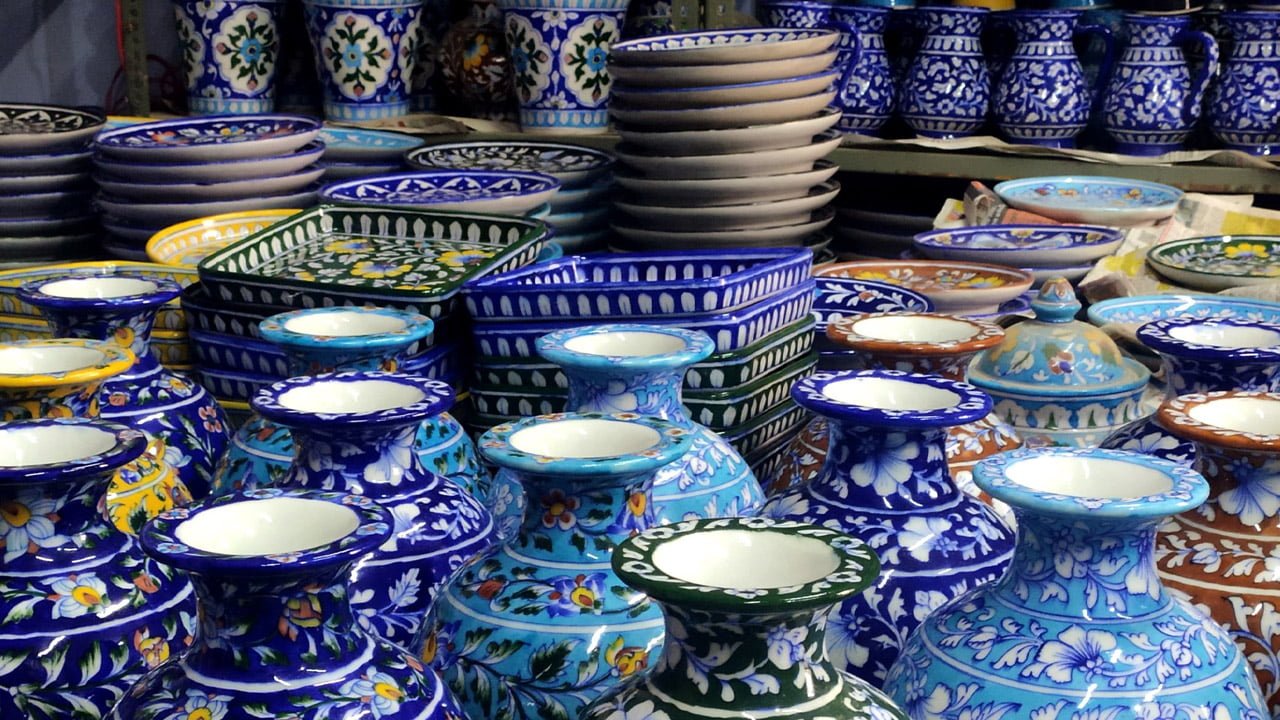
In India, craftsmanship and art are widely promoted. Rajasthan in fact stands synonymous to art and craft and hence the state government ordered the launch of the First Rajasthan Handicraft Policy 2022 on 17th September 2022. The government made the policy to highlight entrepreneurship in art and craft, plus to  Influence the investment in the field of cultural heritage. 

The Rajasthan handicraft policy aims to create more awareness about marketing enhancement, eventually bringing more handicraft growth. The policy will begin to revive art. 

Rajasthan handicraft policy 2022 will provide more significant opportunities for the people. Thus, it will eventually increase the employment rate in the state. Shakuntla Rawat stated that the Rajasthan handicraft policy 2022 is a well-executed plan to establish infrastructure in the form of Rajasthan for the benefit of art and craft. 

The planned policy is focused on authorising handicrafts, which empowers the art and craftsperson. The procedure is straight aimed at generating the effect of art and craft. The ministry also claimed that the policy emphasizes the export of art, providing coverage of international exchange. 

The policy also envisions various provisions, such as establishing state-level awards in different categories. One can also focus on brand building. Similarly, the policy will also vocalize e-marketing, loan facility, and scholarship. There will be plenty of events that will encourage the students and youth to understand the cultural heritage of Rajasthan.

The government made the policy due to the hard work of artists and handicrafts worldwide.

Therefore, the world craft council declared that Jaipur is the “world craft city” due to its Havelis, gates, and beautiful scenic heritage. Thus, the Rajasthan handicraft policy will bring out the best in the state and its people.