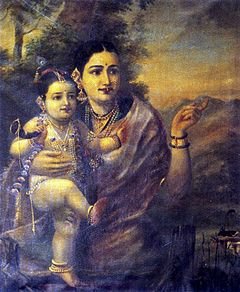
Who does not adore the adumbration of Lord Krishna as a child? We all have heard stories of little Krishna’s mischief and miracle. No matter how he played with the people of Gokul or helped them from disasters, Krishna has always been people’s favourite, and they have always admired his playful behavior.
Thus, this Hindu festival is celebrated in the whole of India. Several names are associated with Janmashtami, such as Krishnashtami or Gokul Ashtami. On this auspicious day, lord Krishna was born bringing hopes and positivity for a better world.
Lord Krishna’s birth was an unforgettable day as his uncle, Kansa, was the cruelest person alive, who was vile and wicked and tarnished people’s lives; Krishna’s birth was aimed toward Kansa’s death. In Kansas kingdom in Mathura, people would fear him. However, he loved his sister Devaki and always cared about her.
Later, Devaki was married to Vasudeva, and while she was leaving the state of Mathura, they were all interrupted by a prophecy which told Kansa that his sister Devaki’s eighth child would be the reason for his death. Thus, it blinded him with fear and made him lock his sister and her husband in a cell. He killed their children year by year. Thus, when Lord Krishna was born, Lord Vishnu told them to hand him over to Nanda baba and Yashoda.
Hence, when Krishna went to Nand Baba’s place and as he grew up, he became the reason for Kansa’s death.
Thus, the day when Krishna is born is celebrated as Krishna Janmashtami on earth.
The Confederation of Real Estate Developers’ Association of India (CREDAI) invited special children from the Anandi Lal Poddar Deaf Dumb School to hoist the national flag at Hotel Hari Mahal.
The flag hoisting was followed by felicitating plumbing, electrical, painters, carpenters and building contractors.
CREDAI President, Dhirendra Madan and General Secretary Rajendra Singh Pachar on the occasion.
President, CREDAI, Dhirendra Madan and General Secretary, CREDAI, Rajendra Singh Pachar were also present on the occasion.
World’s Highest Chenab Railway Bridge is special in many ways. As said, it is world’s highest. Besides this fact, there are many other specialities. The EBNW Story figures out the 10 unique features of this bridge…
The golden joint of the world’s highest railway bridge over River Chenab will link Srinagar to the rest of India.
The bridge will be 35 meters higher than the Eiffel Tower.
The golden joint of the world’s highest railway bridge over River Chenab was inaugurated. For the first time ever since independence, Srinagar will be linked to the rest of India.
Chenab Bridge was a famous bridge which had intricate engineering that had to overcome several challenges.
The geology, the harsh terrain, and the hostile environment were a few of the challenges that the engineers and railway officials had to overcome to get to this point.
The Chenab bridge is part of the 272-km long railway line from Udhampur to Baramulla which has been named the ‘Udhampur-Srinagar-Baramulla Rail Link Project’ – joining Jammu with the Kashmir valley as an all-weather highspeed alternative.
The 272-km long railway line will have 38 tunnels – a total length of 119 km – with the country’s longest tunnel T-49 (12.75 km), and 927 big and small bridges (total length of 13 km) part of it.
The place near the Chenab bridge often witnesses hostile weather conditions, and so a sophisticated automatic signalling system installed on both sides will stop the trains from crossing the bridge if wind speeds there touch 90 kph.
About Chenab River:
The Chenab is formed by the confluence of two streams, Chandra and Bhaga, in the western (Punjab) Himalayas in India’s Himachal Pradesh state. It flows west through Jammu and Kashmir union territory—the Indian-administered portion of the disputed Kashmir region)—between the steep cliffs of the Shiwalik Range (south) and the Lesser Himalayas (north). After receiving the Jhelum River near Trimmu, the Chenab empties into the Sutlej River, a tributary of the Indus River.
About The Builder:
Afcons is building 16 additional railway bridges for Konkan Railway Corporation Limited (KRCL) in the dangerous terrain of Jammu and Kashmir in addition to the Chenab Bridge. All the bridges are part of the Udhampur Srinagar Baramulla Rail Link (USBRL) project.
Janmashtami 2022: Shri Krishna Janmashtami is celebrated each year on Bhadrapada Krishna Ashtami. Devotees stay highly excited on this occasion and observe a day-long fast. In midnight, they eat prasadam after offering it to Krishna.
This time, the fast of Shri Krishna Janmashtami will be observed on 18th August and the festival will be celebrated on 19th August.
On the day of Janmashtami 2022, Lord Krishna’s favorite things are offered to him in worship. It is believed that by doing this, one gets the blessings of Shri Krishna. Let us know which 5 things are very dear to Lord Krishna, which are often used in worship…
Peacock feather
Peacock feather can be seen on the crown of Lord Krishna. It is believed that peacock feathers are very dear to Laddu Gopal. So, peacock feathers must be included while worship ping Kanha ji on the day of Janmashtami. It is also believed that negativity ends at any place where the peacock feather is placed.
Butter
Legends say that Lord Krishna liked Makhan since childhood. It is mentioned in the stories that he used to steal butter. This is the reason why Makhan-mishri is offered in worship on the day of Janmashtami.
Coriander Seeds
In astrology, coriander is associated with wealth. Coriander seeds are also used in the worship of Lord Krishna. It is believed that Kanha ji is very fond of coriander leaves. In such a situation, you can also offer coriander seeds to Laddu Gopal on Janmashtami.
Cow
According to mythological beliefs, Lord Krishna served Gomata during his childhood. He had a special kind of attachment to Gomata. This is the reason why the Bhog offered to Laddu Gopal is prepared from cow’s ghee. In such a situation, you can also place the idol of Gaumata in the worship of Laddu Gopal on Janmashtami.
Flute
Flute Bhagavan is one of the favorite objects of Shri Krishna. It is believed that keeping a flute in the worship of Shri Krishna gives him special grace. In such a situation, you can also keep a flute in the worship of Shri Krishna Janmashtami.
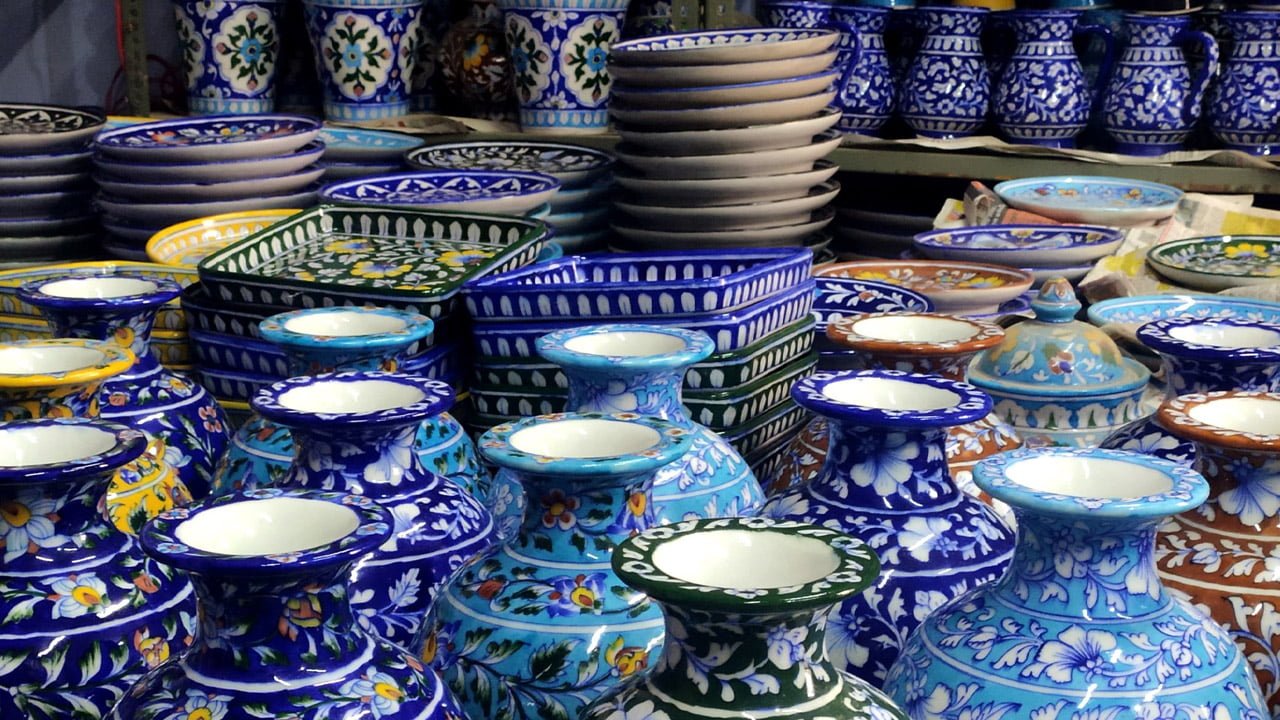
Potteryis one of the oldest and most common decorative art which speaks the tales of artistic legacy which has passed on from generations to generations, simply flowing in smoothly over decades to get a touch of modernity while retaining its basic crux…Aakanksha reports how the art has passed through testing times to stay alive and now comes with a touch of modernity…
Pottery basically consists of objects made of clay which are hardened with heat. The objects made are commonly useful, such as vessels for holding liquids or plates or bowls from which food can be served.
Pottery, since years, has been depicting elegance and fine artwork clearly. Therefore, it has won hearts of many people.
However, In India, we have found various types of evidence that clearly states that pottery was alive and thriving in India way before. Mainly, archaeologists found evidence around the early statements of Mehargarh from the very Indus valley civilization.
According to the archaeologists, pottery was one of the most valuable pieces of evidence. The art of pottery was not just a clay art but a mirror to the traditions before. The art of pottery worked like a portal between the two worlds as it became the only source of understanding.
People found the very first reference to pottery in the Neolithic age. However, archaeologists also found many advanced usages of pottery in the neolithic age. More detailed pottery was found in the Harappan civilization, where pottery was finished with more details, such as polished ware with a rough surface, ochre-colored pottery, black and white ware, and many more.
As time changes everything, pottery has also become advanced and more defined. Modern touch has made the art of pottery shine in today’s trends and give it a new path. People are more fascinated with the art of pottery and curious about its beauty. Thus, it has become a new art statement.
However, today pottery has become more of a slick and elegant art. And the art lovers are more than thrilled to accept the new modernity in the subject of pottery. The modern art of pottery is much more reflected in the home décor, interior design, fashion statements, and many more.
Thus, a touch of modernity towards pottery has redefined ancient art making it popular on global map.
The Hague: August 15 is celebrated by all the citizens of India and even Indians residing outside India as “Indian Independence Day”.
We celebrate this day with a lot of pride as a national festival. Really it is a national festival because it shows the true colors of “Vasudhaiva kutumbakam” which means the “world is one family” and it is important for everyone irrespective of caste, creed and religion.
It is a “festival of freedom” which we have today after a long struggle of fight against the British rule.
I think specially it is our duty to celebrate this “festival of freedom” outside India on a large scale to let our future generations residing outside India know the true value of the sacrifices and struggle of our freedom fighters and remind us the importance of independence and rule of self governance.
On the “Indian Independence Day”, people shed their religious and social differences and come together, filled with a feeling of patriotism and nationalism.
On this day, around 500 Indian diaspora members and friends of India gathered at “India house” – the ambassador’s residence in Wassenaar, Netherlands, to celebrate the 75th anniversary of Independence Day with zeal & patriotic fervor at India House.
The celebration began with the hosting of the Indian flag by ambassador Reenat Sandhu, singing of the national anthem and reading out President address to the nation. Ambassador also felicitated the AKAMQuiz 2022 winners at the Independence day celebrations at India House Wassenaar.
This was followed by a performance of classical and patriotic dance & songs and delicious Indian snacks.
India and the Netherlands have a long history of friendly bilateral relations going back to more than 400 years encompassing many areas of shared interests.
Every year, Independence day celebrations encourage us to begin fresh towards a more successful and healthy India by preserving our rich cultural ethics and values.
The “Global Employment Trends for Youth 2022” report, released recently suggests that the unemployment rate among youth aged 15-24 has reached to 15.6% across the world.
It is three times of the unemployment rate among adult, says this report released by International Labour Organisation (ILO), as a part of Global Call to Action for “human-centred recovery from Covid-19 pandemic”.
Important findings of the report include;
As per report, number of unemployed young population has decreased from 75 million in 2021 to 73 million in 2022. However, this number is still 6 million more than the number before covid-19 pandemic.
Unemployment rate in Africa is 12.7%, below the global average of 14.9%. This figure highlights that, young people have withdrawn from labour markets.
In India, schools were closed for 18 months. Out of 240 million school-going children, just 8% in rural and 23% in urban areas had access to online education. As a result, 92% children have lost one foundational ability in language on an average. 82% children have lost at least one foundational ability in mathematics.
Rakesh Jhunjhunwala, often referred to as big bull or warren buffet of Indian stock market died early on Sunday on August 14, 2022 at Candy Breach Hospital, Mumbai. Vidhi Mathur reports how this man made millions and billions by starting with Rs 5000.
As per the reports, the ace veteran investor and businessman, was suffering from multiple disease having an uncontrollable diabetes and was recently discharged from the same hospital a few weeks ago.
The cause of death is considered to be a kidney failure.
As per the doctors apart from kidney ailment, he had multiple organ failure too before being declared as dead.
Rakesh Jhunjhunu began who began his investing journey in 2008 with mere rupees 5000 now had an estimated net worth approximately $5.8 million (Rs. 46Cr.) .
He was considered to be one of the richest man in India. His last public appearance was earlier in August during the launch of Akasa Air, India’s newest airline, as its founder and promoter . It was then, he was seen on a wheelchair. He also owns his private trading and investment firm ‘ Rare enterprises’ and has share of investments in approximately 33 stocks including Start Health ,Tata Motors, Titan,Rallis India, Escorts ,Canara bank .
According to the Forbes, Rakesh was the 36th richest man in India. Many investors and prominent politicians including Prime Minister Narendra Modi played their tribute to the deceased.
In the tweet, PM Narendra Modi writes-“ Rakesh Jhunjhunwala was indomitable. Full of life, witty and insightful, he leaves behind an indelible contribution to the financial world. He was also very passionate about India’s progress. His passing away is saddening. My condolences to his family and admirers. Om Shanti.”
Ace investor Rakesh Jhunjhunwala, known as Big Bull & Warren Buffett of India, died on 14th August 2022 at the age of 62 due to a Cardiac Arrest.
Jhunjhunwala was born on July 5, 1960, in a Rajasthani family and his upbringing was made in Bombay.
His father was Commissioner of Income Tax, while Rakesh graduated from Sydenham College and thereafter enrolled at the Institute of Chartered Accountants of India. Rakesh then wanted to enter the stock market. On this desire, Rakesh’s father replied, “Do it on your own and don’t ask anyone for money.” With that in mind, Rakesh started his journey in the stock market with his first hard-earned Rs. 5,000
Jhunjhunwala is no doubt one of the best personalities in the Indian stock market. Let’s take a look at 5 interesting facts about Jhunjhunwala.
1. His investment skills earned him the title “India’s Warren Buffet” & Big Bull of Dalal Street.
2. When Jhunjhunwala entered the stock market, the Sensex was at 150 points and today its amazingly near 60,000 points.
3. In the year 1985, when Jhunjhunwala was a college student, he invested 5,000 in the stock market and by September 2018, it had become 11,000 crore. This is completely insane!!!
4. Jhunjhunwala’s earnings were about Rs 46,000 crore.
5. Jhunjhunwala operated a stock trading firm called RARE Enterprises. The enterprise was named from the first two alphabets of his wife’s name, Rekha.
Kedarnath, Kaleshwaram, Kalahasti, Akhaseshwar, Chidambaram and finally the Rameswaram temples
Incredible India is the phrase being used to describe India which is represented by its mystic beauty. Under the same series, we hereby bring a unique story where 8 Shiva temples in India are located in straight line on same longitude with some calling it a miracle while others calling it mystery.
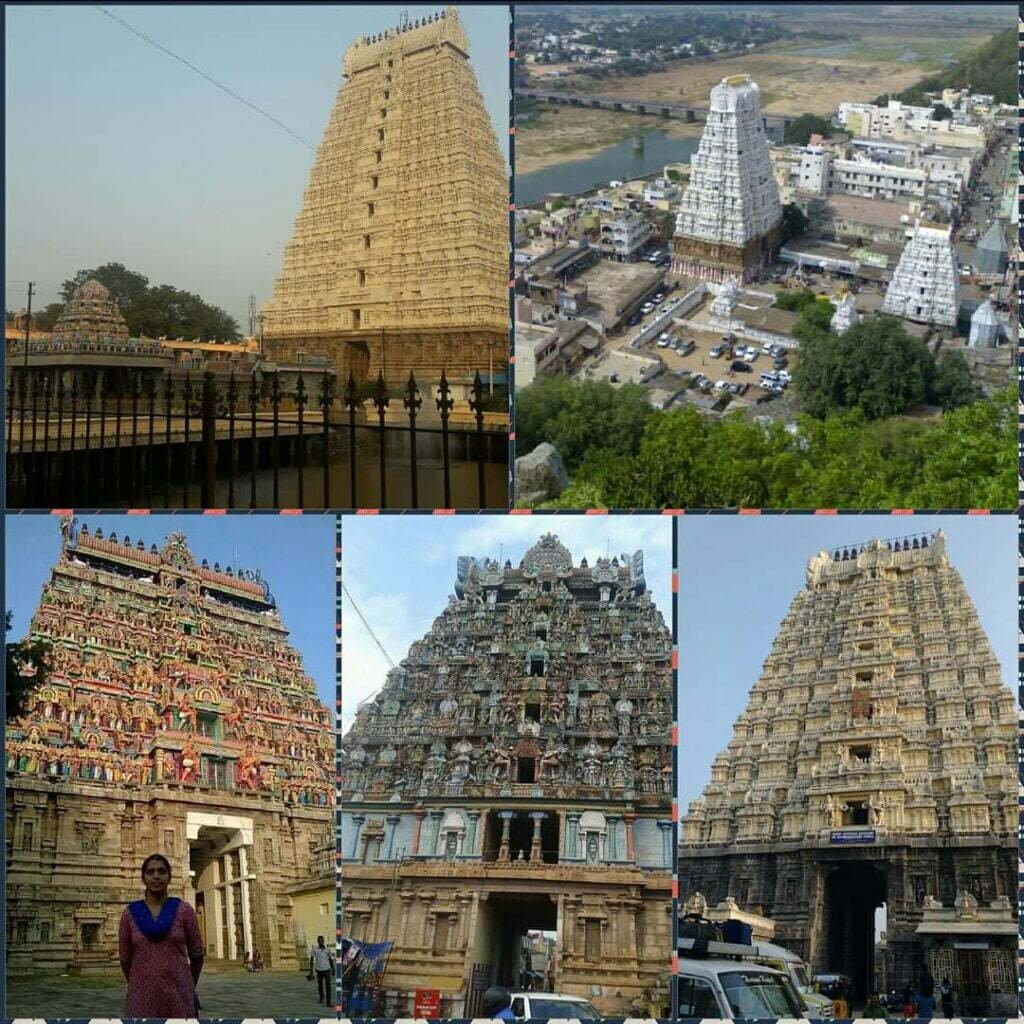
Representing the manifestation of Shivlinga in 5 elements of nature dubbed as Pancha Bhoota – Earth-Water-Fire-Air-Space, incredibly, 8 Shiva temples are located on an alignment of 79° E 41’54”. These popular temples are Kedarnath (Uttarakhand), Kaleshwara Mukteeshwara Swamy (Telangana), Srikalahasti (Andhra Pradesh), Ekambareswarar, Jambukeswara, Annamalaiyar, Nataraja and lastly Ramanathaswamy (Tamil Nadu).
Interestingly, these shiva temples were built in an era when there were no satellites, technology, GPS and Gizomas existed. Still, these temples were constructed with exact measurements of latitude and longitude using Yogic science.
The line which connects all these temples is called SHIVA SHAKTI AKSH REKHA, which begins from Kedarnath and ends at Rameswaram. Kedarnath and Rameswaram are situated between the distance of 2383 kilometres and 6 other temples lie within the same geographic longitude.
• Kedarnath 79.0669°
• Kalahashti 79.7037°
• Ekambaranatha- Kanchi 79.7036°
• Thiruvanamalai 79.0747°
• Thiruvanaikaval 78.7108
• Chidambaram Nataraja 79.6954°
• Rameshwaram 79.3129°
• Kaleshwaram N-India 79.9067°
Among these 8 temples there are 5 temples built on the Aksh Rekha, followed by Pancha Bhoota.
1. Temple of Water- Jambukeswara Temple 2. Temple of Fire- Annamalaiyar Temple 3. Temple of Air- Srikalahasti Temple 4. Temple of Earth- Ekambareswarar Temple 5. Temple of Sky- Nataraja Temple
Let’s take a walk through these 8 ancient temples, which lie on the same geographic longitude of 79° E 41’54”.
1. Kedarnath, Uttarakhand The lord of the field ‘Kedarnath’ is situated at a height of 3583m near Madakani River. It is believed that Pandva from Mahabharta built this temple to apologize to Lord Shiva. Kedarnath temple offers the zeal of a devout centre and it streams unmatchable beauty of nature.
2. Kaleshwara Mukteeshwara Swamy Temple Kaleshwara Mukteeshwara Swamy Temple has two Shivlinga placed on a single pedestal named Lord Shiva and Lord Yama, together known as Kaleshwara Mukteeshwara.
3. Rameswaram – Ramanathaswamy Temple
Rameswaram represents the panch tatwa of Vatsu Vigyan Veda. This temple is located in Rameswaram in Tamilnadu. It is believed that Lord Ram prayed to Lord Shiva in this temple to get rid of Ravana.
4. Srikalahasti Temple
The Temple of Air- Srikalahasti Temple is infused with divine energy. Here the linga is made of white stone, shaped like an elephant’s trunk. There is a mandap inside the temple which has a hundred intricately carved pillars.
5. Ekambareswarar Temple
Representing the element Earth of Pancha Bhoota, Ekambareswarar was built thousands of years ago. The Lingham here was made by Goddess Parvati herself. ‘Aayiram Kaal Mandapam’ is one of the significant features of this temple as it consists of 1008 adorning that adorn the inner walls of the temple.
6. Jambukeswarar Temple
Jambukeswara Temple in Tiruchirapalli, Tamil Nadu represents the element water. The deity is situated under a Jumbu tree that grows over a small stream and is covered with water during rainy days.
7. Annamalaiyar Temple
Representing the element Agni, this temple is located in the town of Thiruvanamalai in Tamil Nadu. Here, Lord Shiva is worshipped in a column of fire, which is an endless phenomenon.
8. Nataraja Temple
The temple that signifies Shiva’s dancing form- Nataraja-is located in Chidambaram, Tamil Nadu. This temple is also like Chidambaram Nataraja. The word Chidambaram is derived from chit, which means “consciousness”, and ambaram, meaning “sky”.