Home Blog Page 646

Quotes and Captions on Mahendra Singh Dhoni: The Legend of Indian Cricket

0

Mahendra Singh Dhoni, popularly known as MS Dhoni or Mahi, is one of the most successful and influential captains in the history of Indian cricket. He is also a brilliant batsman, wicket-keeper, and finisher, who has won many matches for India with his calm and composed approach. He is widely admired and respected by fans, players, and experts for his leadership, skills, and achievements.

Dhoni has led India to many glorious victories, including the 2007 ICC World Twenty20, the 2011 ICC Cricket World Cup, the 2013 ICC Champions Trophy, and the 2008, 2010, and 2014 Asia Cups. He is also the only captain to win all three major ICC trophies. He has also been a successful captain for Chennai Super Kings in the Indian Premier League, winning three titles and reaching eight finals.

Dhoni has also been a source of inspiration and motivation for many people, especially the youth. His journey from a humble background to becoming one of the greatest cricketers of all time is a testament to his hard work, dedication, passion, and perseverance. He has also been a role model for his humility, honesty, integrity, and sportsmanship.

Dhoni has also given many memorable quotes and captions that reflect his personality, philosophy, and wisdom. Here are some of the best quotes and captions on Mahendra Singh Dhoni that you can use to express your admiration, respect, and love for him.

Quotes by Mahendra Singh Dhoni

  • “If you don’t really have a dream, you can’t really push yourself; you don’t really know what the target is.” – MS Dhoni
  • “I like to make statements on the field.” – MS Dhoni
  • “You learn a lot more when you’re going through a rough period compared to the good times when everything goes your way.” – MS Dhoni
  • “I don’t mind repeating everything.” – MS Dhoni
  • “I like to stay away from the game when I am not playing it.” – MS Dhoni
  • “I live for the present, not the future.” – MS Dhoni
  • “It’s important to learn and not repeat the same mistakes. What’s done is done.” – MS Dhoni
  • “Take action in silence, no lion attacks in noise.” – MS Dhoni
  • “For me, it’s important to build good partnerships rather than score centuries. Once you have those partnerships, you will also get centuries.” – MS Dhoni
  • “I don’t study cricket too much. Whatever I have learned or experienced is through cricket I’ve played on the field, and whatever little I have watched.” – MS Dhoni
  • “Movies are a big part of our Indian culture.” – MS Dhoni
  • “I am in the hands of Deori Maa. Every time I come to Ranchi, I visit her temple. I still remember my first visit.” – MS Dhoni
  • “I don’t like discussing cricket off the field.” – MS Dhoni
  • “I have joked before that there is a good chance that I might retire before Tendulkar.” – MS Dhoni
  • “Self-confidence has always been one of my good qualities. I am always very confident. It is in my nature to be confident, to be aggressive. And it applies in my batting as well as wicket keeping.” – MS Dhoni
  • “The era of playing aggressive cricket and to have the mid-on up is gone. You now try to read the mindset of a batsman.” – MS Dhoni
  • “Finishing is one of the most difficult things to do in cricket. A player can’t be a finisher in just 6 months or one year. You have to be used to that responsibility, keeping on doing what is required from you over a period of time.” – MS Dhoni
  • “I’m a person who lives very in the moment.” – MS Dhoni
  • “For me, opposition is just another opposition.” – MS Dhoni
  • “The cameras used to pass by me, now they’re stopping for me.” – MS Dhoni
  • “I love being in the present. When I was playing for my school, the only thing I wanted to do was get selected for the under-16 or the under-19 district teams. When I was selected for the district team, I would think about the next level which was getting selected for state side. I’m a person who lives very in the moment.” – MS Dhoni
  • “You need to perform consistently and if you’re raising the standard, you have to stand by it. You have to keep on doing well.” – MS Dhoni
  • “Unless you know the individual, it’s very difficult to advise that individual as to what he needs to do.” – MS Dhoni
  • “I never allow myself to be pressured.” – MS Dhoni
  • “You can’t take any team lightly.” – MS Dhoni

Captions on Mahendra Singh Dhoni

  • The man who taught us how to chase dreams and win trophies. #MSDhoni #CaptainCool
  • The legend who made us believe in miracles. #MSDhoni #WorldCup2011
  • The leader who inspired a generation of cricketers. #MSDhoni #CaptainFantastic
  • The finisher who always delivered when it mattered the most. #MSDhoni #HelicopterShot
  • The wicket-keeper who changed the game with his lightning-fast reflexes. #MSDhoni #StumpingKing
  • The batsman who could hit any ball out of the park. #MSDhoni #SixMachine
  • The humble and honest person who always respected the game and the opponents. #MSDhoni #Gentleman
  • The icon who made us proud to be Indians. #MSDhoni #BleedBlue
  • The hero who never gave up and never let us down. #MSDhoni #Thala
  • The legend who will always be in our hearts. #MSDhoni #ThankYouDhoni.

Quotes on Mahendra Singh Dhoni by Fans: How the Captain Cool Won Our Hearts

0

Mahendra Singh Dhoni, or MS Dhoni, or Mahi, or Thala, or Captain Cool, is not just a name, but an emotion for millions of cricket fans across the world. He is one of the most loved and admired cricketers of all time, who has given us countless moments of joy, pride, and inspiration. He is also one of the most successful and influential captains in the history of Indian cricket, who has led India to many glorious victories, including the 2007 ICC World Twenty20, the 2011 ICC Cricket World Cup, the 2013 ICC Champions Trophy, and the 2008, 2010, and 2014 Asia Cups. He is also the only captain to win all three major ICC trophies.

Dhoni has also been a brilliant batsman, wicket-keeper, and finisher, who has won many matches for India with his calm and composed approach. He has scored over 10,000 runs in ODI Cricket with an average of over 50, most of it coming down the order while finishing games for India or accelerating the run rate. He has also been a successful captain for Chennai Super Kings in the Indian Premier League, winning three titles and reaching eight finals.

Dhoni has also been a source of inspiration and motivation for many people, especially the youth. His journey from a humble background to becoming one of the greatest cricketers of all time is a testament to his hard work, dedication, passion, and perseverance. He has also been a role model for his humility, honesty, integrity, and sportsmanship.

Dhoni has also given many memorable quotes and captions that reflect his personality, philosophy, and wisdom. But what do his fans have to say about him? How do they express their admiration, respect, and love for him? Here are some of the best quotes on Dhoni by fans that you can use to show your support and appreciation for him.

Quotes on Dhoni by Fans

  • “MS Dhoni is not just a cricketer, he is a phenomenon.” – A fan
  • “There is no one like you and there will never be anyone like you. You are our pride and our hero. We love you MS Dhoni.” – A fan
  • “MS Dhoni is not only the best captain but also the best human being. He always respects his opponents and his fans. He always smiles and makes us smile.” – A fan
  • “MS Dhoni is the reason why I started watching cricket. He is the reason why I believe in miracles. He is the reason why I never give up.” – A fan
  • “MS Dhoni is more than a captain. He is a leader, a mentor, a friend, a brother, a father figure to his teammates. He is the glue that binds the team together.” – A fan
  • “MS Dhoni is not just a name but an emotion for millions of cricket fans across the world. He is not just a cricketer but a legend who has given us countless moments of joy pride and inspiration.” – A fan
  • “MS Dhoni is the epitome of calmness and composure. He never loses his cool even in the most pressure situations. He always trusts his instincts and backs his abilities.” – A fan
  • “MS Dhoni is the master of finishing games. He always knows how to pace his innings and when to unleash his helicopter shot. He always keeps us on the edge of our seats till the end.” – A fan
  • “MS Dhoni is the best wicket-keeper in the world. His lightning-fast reflexes and acrobatic skills are unmatched. He always surprises us with his stumpings and catches.” – A fan
  • “MS Dhoni is not only a great cricketer but also a great human being. He always helps others in need and supports various social causes. He always inspires us to be better people.” – A fan

Who is failed CM in India? A question that has no easy answer

0
Image: Freepik

India is a vast and diverse country with 28 states and 8 union territories, each with its own chief minister (CM) who is the head of the state government. The CMs are elected by the people or by the members of the state legislative assembly, and they hold office for a maximum of five years or until they lose the confidence of the assembly. The CMs are responsible for the administration, development, and welfare of their respective states, and they also represent their states at the national level.

However, not all CMs are able to perform their duties effectively and efficiently. Some CMs face various challenges and difficulties such as political instability, corruption, violence, natural disasters, public health crises, etc. that hamper their governance and service delivery. Some CMs also face criticism and opposition from their own party members, allies, rivals, media, civil society, etc. that affect their popularity and credibility. Some CMs also make mistakes and blunders that cause public outrage and dissatisfaction.

But who is failed CM in India? This is a question that has no easy or objective answer. Different people may have different opinions and criteria to judge the performance and failure of a CM. Some may look at the economic indicators such as growth rate, per capita income, poverty level, unemployment rate, etc. Some may look at the social indicators such as literacy rate, health status, gender equality, human development index, etc. Some may look at the political indicators such as stability, democracy, law and order, security, etc. Some may look at the environmental indicators such as pollution level, forest cover, biodiversity, climate change, etc. Some may look at the ethical indicators such as honesty, integrity, transparency, accountability, etc.

Moreover, the performance and failure of a CM may vary over time and across different domains. A CM may do well in some areas but poorly in others. A CM may do well in some periods but poorly in others. A CM may do well in some regions but poorly in others. A CM may do well for some sections but poorly for others.

Therefore, it is not possible to give a definitive or conclusive answer to who is failed CM in India. It depends on how one defines and measures failure and success. It also depends on how one weighs and balances the various factors and aspects that influence the performance and failure of a CM. It also depends on how one views and evaluates the role and responsibility of a CM in relation to other actors and institutions that shape the governance and development of a state.

However, one can still try to identify some common indicators or parameters that can help to assess the performance and failure of a CM in India. These may include:

  • The extent to which a CM fulfills the promises and commitments made to the people during elections or otherwise.
  • The extent to which a CM implements the policies and programs that are beneficial for the people and the state.
  • The extent to which a CM responds to the needs and demands of the people and addresses their grievances and problems.
  • The extent to which a CM maintains peace and harmony among different communities and groups in the state.
  • The extent to which a CM handles crises and emergencies such as natural disasters, epidemics, riots, etc.
  • The extent to which a CM cooperates with the central government and other states on matters of national interest and inter-state relations.
  • The extent to which a CM upholds the constitutional values and principles such as democracy, secularism, federalism, etc.
  • The extent to which a CM respects the rule of law and human rights of all citizens.
  • The extent to which a CM avoids corruption, nepotism, favoritism, etc.
  • The extent to which a CM inspires confidence and trust among the people.

Based on these indicators or parameters, one can try to compare and contrast the performance and failure of different CMs in India. However, one should also keep in mind that these indicators or parameters are not exhaustive or definitive. They are also subject to interpretation and variation depending on the context and perspective of different stakeholders.

Therefore, who is failed CM in India is a question that has no easy answer. It is a question that requires careful analysis and evaluation based on facts and evidence. It is also a question that invites debate and discussion among different opinions and viewpoints. It is also a question that challenges us to reflect on our own expectations and aspirations from our leaders and representatives.

PM Modi’s Landing Plan Altered for Amritsar-Jamnagar Expressway Inauguration

0

In an unexpected turn of events, Prime Minister Narendra Modi’s landing plan for the inauguration of the Amritsar-Jamnagar Expressway in Rajasthan’s Bikaner district has been changed. The initial plan of using an army aircraft to touch down on the expressway had to be scrapped due to certain limitations.

It was discovered that the Amritsar-Jamnagar Expressway lacks a suitable airstrip for the landing of aircraft. Furthermore, the presence of high tension lines in the area posed a safety risk. As a result, army aircraft cannot be landed on the expressway.

To ensure the Prime Minister’s arrival, an alternative arrangement has been made. PM Modi will now travel by helicopter from Nal Airport in Bikaner and land on the Greenfield Expressway. In addition, vehicles from the Chief Minister’s convoy will also be stationed at Nal Airport. If any weather-related issues arise, the Prime Minister will be transported to the expressway by road.

This change in plans came after thorough investigations conducted by officials on Wednesday. Preparations had been underway for PM Modi’s visit to Bikaner for several days, with efforts made to facilitate the landing of Air Force aircraft on the Amritsar-Jamnagar Expressway. Union Law Minister Arjun Ram Meghwal had hinted at this possibility. However, the absence of an airstrip on the expressway and the presence of high tension lines deemed it unsafe for aircraft landing.

Despite this alteration, Prime Minister Modi’s visit to Bikaner remains significant. On July 8, he will interact with over 1.5 lakh people and inaugurate several projects worth Rs 25,000 crore. The Amritsar-Jamnagar Express Highway will also be officially opened on the same day.

This highway, built at a cost exceeding Rs 20,000 crore, will reduce travel time between Amritsar and Jamnagar from 23 hours to 12 hours. Additionally, it will connect five districts in Rajasthan and include amenities such as hotels, toll plazas, petrol pumps, and charging centers along the route.

In conclusion, while the landing plan for PM Modi had to be altered due to the unsuitability of the Amritsar-Jamnagar Expressway, the inauguration of the Green Express Highway remains a significant event that will bring improved connectivity and economic development to the region.

Silent Valley of Kerala: A Treasure Trove of Forest Diversity

0
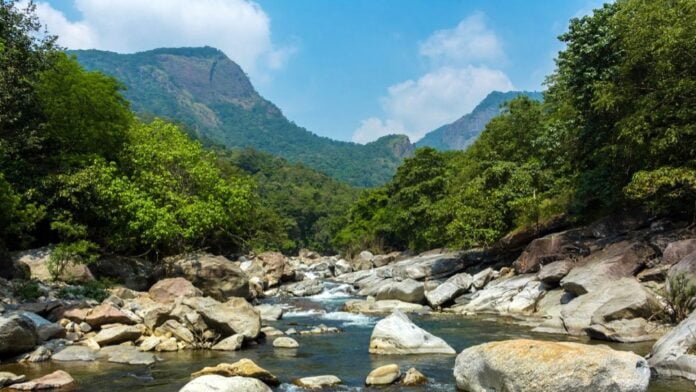
Image: Silent Valley National Park (Kerala Tourism)

Silent Valley of Kerala is a national park that is located in the Nilgiri Hills in Palakkad district. It is one of the last remaining stretches of evergreen forests in Kerala and one of the largest in India. It is also a part of the Nilgiri Biosphere Reserve, which is a UNESCO World Heritage Site. Silent Valley is home to a rich variety of flora and fauna, including many endemic and endangered species. It is also a place of historical and cultural significance, as it is associated with Lord Buddha, Mahavira, and King Bimbisara.

Forest Types in Silent Valley

Silent Valley has four types of vegetation, which reflect the different altitudes, rainfall, and soil conditions in the area. These are:

  • West Coast Tropical Evergreen Forest: This is the dominant forest type in Silent Valley, covering about 60% of the area. It is found at an altitude range of 600 to 1100 m and receives an annual rainfall of 1500 to 5000 mm. The trees in this forest are tall (up to 45 m) and dense, with many species growing together. The canopy is so thick that it blocks most of the sunlight from reaching the ground. The forest floor is covered with ferns, mosses, orchids, and other epiphytes. The undergrowth consists of cane, bamboo, and palms. Some of the common tree species in this forest are Mesua ferrea, Palaquium ellipticum, Cullenia exarillata, Calophyllum elatum, Artocarpus heterophyllus, etc.
  • Southern Subtropical Broad Leaved Hill Forest: This is a transitional forest type between evergreen and moist deciduous forests. It is found at an altitude range of 1300 to 1800 m and receives an annual rainfall of 2500 to 3500 mm. The trees in this forest are shorter (up to 30 m) and less dense than the evergreen forest. The canopy is more open and allows more sunlight to reach the ground. The forest floor is covered with grasses, herbs, and shrubs. The undergrowth consists of bamboo, cane, and climbers. Some of the common tree species in this forest are Bischofia javanica, Hopea ponga, Mangifera indica, Myristica dactyloides, etc.
  • Southern Montane Wet Temperate Forest: This is a stunted forest type that occurs at high altitudes (above 1900 m) where the climate is cold and wet. It receives an annual rainfall of more than 5000 mm. The trees in this forest are dwarfed (up to 10 m) and twisted by strong winds. The canopy is sparse and irregular. The forest floor is covered with mosses, lichens, ferns, and orchids. The undergrowth consists of rhododendrons, vacciniums, myrtles, etc. Some of the common tree species in this forest are Elaeocarpus serratus, Eugenia spp., Holigarna beddomei, etc.
  • Grassland: This is a non-forest type that occurs on hilltops and slopes where the soil is poor and rocky. It receives an annual rainfall of less than 1500 mm. The vegetation consists of grasses, sedges, herbs, and shrubs that can withstand drought and fire. Some of the common plant species in this type are Chrysopogon zeylanicus, Eragrostis spp., Strobilanthes spp., etc.

Forest Conservation in Silent Valley

Silent Valley has been a site of conservation efforts since the 1970s when a proposed hydroelectric project threatened to submerge a large part of the forest. A public campaign called Save Silent Valley was launched by environmentalists, scientists, writers, artists, and activists to oppose the project and protect the forest. The campaign succeeded in convincing the government to cancel the project and declare Silent Valley as a national park in 1980.

Since then, Silent Valley has been protected by various laws and policies such as the Wildlife Protection Act (1972), the Forest Conservation Act (1980), the Environment Protection Act (1986), etc. The park management has also taken various measures to conserve the forest such as patrolling, fire prevention, habitat restoration, research and monitoring, education and awareness, ecotourism development, etc.

Silent Valley is a precious natural heritage that needs to be preserved for future generations. It is a place where one can experience the beauty and diversity of nature and learn about its importance for our survival and well-being.

Nature Safari Rajgir: A Wildlife and Adventure Destination in Bihar

0

If you are looking for a place to enjoy nature, wildlife, and adventure in Bihar, then you should definitely visit Nature Safari Rajgir. This is a new attraction that was inaugurated in March 2020 by Chief Minister Nitish Kumar. It is located in Rajgir, a historical town that is famous for its association with Lord Buddha, Mahavira, and King Bimbisara.

Nature Safari Rajgir is a safari park that covers an area of 500 acres along the Budh Marg. It offers various facilities and activities for visitors of all ages and interests. Here are some of the highlights of Nature Safari Rajgir that you should not miss:

Glass Skywalk

One of the most thrilling features of Nature Safari Rajgir is the glass skywalk, which is the second of its kind in India after Laxman Jhoola in Rishikesh. It is also the first sky-hanging rope walk in India. The glass skywalk is a 300-meter-long bridge that hangs at a height of 80 feet above the ground. It offers a panoramic view of the surrounding hills, forests, and valleys. You can walk on the transparent glass floor and feel the adrenaline rush as you see the depth below you. The glass skywalk can accommodate up to 40 people at a time and has safety railings and harnesses for security.

Suspension Bridge

Another exciting attraction of Nature Safari Rajgir is the suspension bridge, which is a 200-meter-long bridge that connects two hills. It is made of steel cables and wooden planks and sways gently as you walk on it. The suspension bridge offers a scenic view of the Rajgir reservoir and the wildlife sanctuary. You can also spot some birds and animals from the bridge, such as peacocks, deer, monkeys, etc.

Children Play Area

Nature Safari Rajgir also has a children play area where kids can have fun and learn about nature. The play area has various swings, slides, seesaws, climbing nets, etc. It also has a mini zoo where kids can see some domestic animals such as cows, goats, rabbits, etc. The play area is surrounded by greenery and flowers and has benches and gazebos for resting.

Zipline/Flying Fox

If you are looking for some adventure, then you should try the zipline or flying fox at Nature Safari Rajgir. This is a 400-meter-long zipline that runs from one hill to another at a speed of up to 60 kmph. You can enjoy the thrill of flying over the trees and water while wearing a safety harness and helmet. The zipline can accommodate two people at a time and has trained instructors to guide you.

Zip/Sky Bike

Another adventurous activity that you can try at Nature Safari Rajgir is the zip or sky bike. This is a bike that runs on a cable suspended between two hills at a height of 50 feet. You can pedal the bike and enjoy the view of the nature and wildlife below you. The zip or sky bike can accommodate one person at a time and has safety belts and helmets for protection.

Rifle Shooting & Archery

If you want to test your skills and accuracy, then you can try rifle shooting and archery at Nature Safari Rajgir. These are two sports that require concentration, precision, and patience. You can use air rifles or bows and arrows to hit the targets at different distances. You can also compete with your friends or family members and see who scores more points.

Battery Vehicle & Cycle

If you want to explore Nature Safari Rajgir at your own pace, then you can rent a battery vehicle or cycle from the entrance gate. These are eco-friendly vehicles that run on batteries or pedals and do not cause any noise or pollution. You can drive or ride these vehicles along the designated paths and see the various attractions of Nature Safari Rajgir. You can also stop at any point and take pictures or enjoy the scenery.

Parks & Gardens

Nature Safari Rajgir also has several parks and gardens where you can relax and rejuvenate yourself. These include:

  • Butterfly Park: This is a park where you can see various species of butterflies flying around colorful flowers and plants. You can also learn about their life cycle and behavior from the information boards.
  • Medicinal Plant Garden: This is a garden where you can see various medicinal plants that have healing properties for various ailments. You can also learn about their names, uses, and benefits from the information boards.
  • Bamboo Park: This is a park where you can see various types of bamboo plants that are used for various purposes such as furniture, handicrafts, paper, etc. You can also learn about their cultivation and conservation from the information boards.
  • Cactus Garden: This is a garden where you can see various types of cactus plants that are adapted to survive in dry and harsh conditions. You can also learn about their names, shapes, and features from the information boards.

Nature Safari Rajgir is a perfect destination for nature lovers, wildlife enthusiasts, and adventure seekers. It is a place where you can enjoy the beauty and diversity of nature and have fun and excitement at the same time. It is also a place where you can learn about the history and culture of Rajgir and Bihar. So, what are you waiting for? Book your tickets online and visit Nature Safari Rajgir soon!

Post Office Launches Mahila Samman Savings Certificate for Women Investors

0

The post office has launched a new small savings scheme for women investors called Mahila Samman Savings Certificate (MSSC). The scheme was announced in the Budget 2023 by Finance Minister Nirmala Sitharaman to commemorate Azadi Ka Amrit Mahotsav and to encourage women to save and invest for their financial goals.

Features of MSSC

MSSC is a one-time deposit scheme that offers the following features:

  • The scheme is available for a two-year period up to March 2025.
  • The scheme offers a fixed interest rate of 7.5% per annum, which is higher than most bank fixed deposits.
  • The scheme allows partial withdrawal option after six months of opening the account.
  • The scheme has a minimum deposit limit of Rs. 500 and a maximum deposit limit of Rs. 2 lakh.
  • The scheme can be opened by any woman or girl in her own name or by a guardian on behalf of a minor girl or a woman of unsound mind.
  • The scheme can be opened at any post office or any registered bank with KYC documents such as PAN card, Aadhaar card, passport, etc.
  • The scheme provides nomination facility at the time of opening the account.

Benefits of MSSC

MSSC is a beneficial scheme for women investors as it offers the following benefits:

  • The scheme provides a safe and secure investment option as it is backed by the government.
  • The scheme provides a high and guaranteed return on investment as compared to other savings instruments.
  • The scheme provides liquidity and flexibility as it allows partial withdrawal in case of any emergency or financial need.
  • The scheme provides tax benefits under Section 80C of the Income Tax Act, up to Rs. 1.5 lakh per annum.
  • The scheme empowers women to take charge of their financial well-being and achieve their aspirations.

Comparison with Other Schemes

MSSC is a unique scheme that caters to the specific needs and preferences of women investors. It is different from other post office schemes such as Sukanya Samriddhi Yojana (SSY), Postal Life Insurance (PLI), etc. in the following ways:

  • MSSC is a one-time deposit scheme, whereas SSY is a recurring deposit scheme that requires annual deposits for 15 years.
  • MSSC has a shorter tenure of two years, whereas SSY has a longer tenure of 21 years or until the girl child gets married after attaining 18 years of age, whichever is earlier.
  • MSSC has a higher interest rate of 7.5%, whereas SSY has a lower interest rate of 7.1% (as of January-March 2023).
  • MSSC has a higher maximum deposit limit of Rs. 2 lakh, whereas SSY has a lower maximum deposit limit of Rs. 1.5 lakh per annum.
  • MSSC can be opened by any woman or girl, whereas SSY can be opened only by the parents or legal guardians of a girl child below 10 years of age.
  • MSSC can be opened at any post office or registered bank, whereas SSY can be opened only at designated post offices or authorized banks.
  • MSSC is a savings scheme, whereas PLI is an insurance scheme that provides life cover along with savings.
  • MSSC does not require any medical examination or proof of income, whereas PLI requires both for eligibility and premium calculation.
  • MSSC does not have any age limit, whereas PLI has an age limit of 18 to 55 years for eligibility.

MSSC is a new and attractive post office scheme for women investors that offers high returns, liquidity, flexibility, safety, security, and tax benefits. It is a suitable scheme for women who want to save and invest for their short-term and long-term financial goals.

Janmashtami 2023: Celebrating the Birth of Lord Krishna

0

Janmashtami is a grand festival celebrated all over India to commemorate the birth of Lord Krishna, the eighth avatar of Vishnu. According to the Hindu calendar, Janmashtami falls on the Ashtami of Krishna Paksha in the month of Bhadrapad (the dark fortnight of the moon) or the 8th day of the waning phase of the moon. In accordance with Vedic timekeeping, devotees take Sankalpa after finishing morning rituals and perform Krishna Puja at the midnight hour. Baby Krishan’s idol is cleaned with Pancha Amrit, dressed with new clothes and ornaments, and worshipped in a cradle with flowers, fruits, and sweets. Furthermore, Dahi Handi programs are held since Lord Krishna enjoyed Makhan (white butter), curd, and milk.

Janmashtami 2023 Date

Janmashtami is celebrated in August or September according to the Gregorian calendar. Every year, Shri Krishna Janmashtami falls on a different date. There are usually two consecutive days devoted to Janmashtami. The first one is for Smarta Sampradaya and the other one is for Vaishnava Sampradaya.

This year, Janmashtami will be celebrated on September 6 and 7¹. The table below shows the details of the date and time for both sampradayas:

SampradayaDateTime
SmartaSeptember 6Nishita Puja Time: 00:01 to 00:45
VaishnavaSeptember 7Nishita Puja Time: 00:01 to 00:45

Janmashtami Significance

Janmashtami is one of the most important festivals for Hindus as it marks the birth anniversary of Lord Krishna, who is considered to be the supreme personality of Godhead. Lord Krishna was born in Mathura at midnight in a prison cell where his parents Vasudeva and Devaki were imprisoned by his evil uncle Kansa. He was miraculously transferred to Gokul by his father where he was raised by his foster parents Nanda and Yashoda. He grew up as a mischievous and playful child who charmed everyone with his divine qualities. He also performed many miracles and killed many demons who threatened the peace and harmony of the world. He later became a great warrior, statesman, philosopher, and teacher who imparted the timeless wisdom of Bhagavad Gita to his friend and disciple Arjuna on the battlefield of Kurukshetra.

Janmashtami is celebrated to remember and honor the life and teachings of Lord Krishna, who is revered as the embodiment of love, compassion, joy, and justice. He is also worshipped as the protector of dharma (righteousness) and the destroyer of adharma (evil). He is believed to be present in every living being as the indwelling soul or Atman. By chanting his names, singing his glories, listening to his stories, and meditating on his form, devotees seek his blessings and grace for their spiritual progress and material well-being.

Janmashtami Celebrations

Janmashtami is celebrated with great enthusiasm and devotion across India with various regional and cultural variations. Some of the common ways of celebrating Janmashtami are:

  • Fasting: Many devotees observe a strict fast on Janmashtami until midnight when Lord Krishna was born. They break their fast by offering prasad (sacred food) to the deity and then distributing it among themselves.
  • Puja: Devotees perform puja (ritual worship) at home or in temples by offering flowers, incense, lamps, fruits, sweets, and other items to Lord Krishna. They also recite mantras, hymns, and prayers from scriptures such as Vishnu Sahasranama, Bhagavad Gita, Srimad Bhagavatam, etc.
  • Bhajan: Devotees sing bhajans (devotional songs) in praise of Lord Krishna throughout the day and night. They also dance in ecstasy to express their love and joy for him. Some of the popular bhajans are Hare Krishna Mahamantra, Govinda Jaya Jaya, Jai Radha Madhav, etc.
  • Jhulan: Devotees decorate a swing or jhulan with flowers and place an idol or picture of baby Krishna on it. They then rock him gently while singing lullabies or rocking songs such as Maiya Mori Main Nahin Makhan Khayo, Nand Ke Anand Bhayo, etc.
  • Dahi Handi: This is a fun-filled event where young men form a human pyramid and try to break a clay pot filled with curd or butter that is hung high from a rope. This is done to imitate the childhood prank of Lord Krishna who used to steal butter from the houses of the cowherds in Gokul. The participants are called Govindas and the spectators cheer them with slogans such as Ala Re Ala, Govinda Ala, etc.
  • Rasa Lila: This is a theatrical performance that depicts the divine love story of Lord Krishna and his consort Radha and their companions, the gopis (cowherd girls). The actors wear colorful costumes and jewelry and enact various episodes from their lives such as their meeting, separation, reunion, etc. The dance and music are based on the classical styles of Bharatanatyam, Kathak, Odissi, Manipuri, etc.

Janmashtami is a festival that celebrates the birth of Lord Krishna, who is the source of all joy and happiness for his devotees. By participating in the festivities, one can experience his presence and grace in one’s life.

Woman Gives Birth to a Snake in India: A Hoax or a Miracle?

0
Image: Snake birth image

A shocking news story has been circulating on social media, claiming that a woman in India has given birth to a snake. The story, which has been shared by thousands of users, shows a picture of a woman holding a snake-like creature wrapped in a cloth. The story also claims that the woman had a normal pregnancy and delivered the snake at a hospital.

But is this story true or just another hoax? Here is what we found out.

The Origin of the Story

The story of the woman giving birth to a snake seems to have originated from a Facebook page called “Swazi Shado”, which posted the story on July 18, 2011. The page, which has over 14,000 followers, claims to be “a platform for Swazi people to share their stories and opinions”.

The post, which was written in Swazi language, said that the woman was from Manzini, a city in Eswatini (formerly Swaziland), and that she gave birth to a seven-headed snake. The post also said that the woman was an ex-devil worshipper and that her husband was a police officer.

The post showed four pictures: one of the woman holding the snake, one of the snake’s head, one of the hospital where the delivery took place, and one of the woman’s husband.

The post received over 1,000 reactions, 500 comments and 300 shares. Many users expressed shock, disbelief and curiosity about the story. Some users also questioned the authenticity of the story and the pictures.

The Truth Behind the Story

After doing some research, we found out that the story of the woman giving birth to a snake is a hoax. Here are some reasons why:

  • The picture of the woman holding the snake is actually from a report by Bombo Radyo Koronadal, a radio station in Philippines, which revealed that a 37-year-old married woman from Koronadal City has apparently given birth to a 2-foot long snake on February 16, 2016¹. The report said that the woman had an abortion at home and then went to the hospital with abdominal pain. The doctors found out that she had delivered a snake-like creature, which they suspected to be an abnormal fetus. The report also said that the woman had no history of devil worship or witchcraft.
  • The picture of the snake’s head is actually from an article by CNN, which reported that a woman in India died from a snakebite, but the real killer was her husband². The article said that the husband had bought two cobras online and used them to kill his wife in order to claim her dowry and insurance money. The article showed a picture of one of the cobras seized by the police.
  • The picture of the hospital where the delivery took place is actually from an article by News18, which reported that a woman in India gave birth to twins with fused skulls³. The article said that the twins were born at KIMS Hospital in Hyderabad on June 30, 2023. The article showed a picture of the hospital’s entrance.
  • The picture of the woman’s husband is actually from an article by India TV News, which reported that an Indian police officer was arrested for raping and killing his colleague’s wife⁴. The article said that the officer was identified as Rajesh Kumar Singh and that he committed the crime on June 29, 2023. The article showed a picture of Singh being taken away by the police.

Conclusion

The story of the woman giving birth to a snake in India is a hoax. It is based on false and misleading information and pictures. It is likely that someone created this story by using different sources and editing them together. There is no evidence or credible source to support this story.

Therefore, we advise our readers not to believe or share this story without verifying its authenticity.

¹: Case of abortion? The truth behind the woman who gave birth to a snake revealed
²: This Indian woman died from a snakebite. But the real killer was her husband
³: Ahead Of Insidious: The Red Door A Look At Horror Movies That Drew Attention At The Box Office In 2023
⁴: Insidious: The Red Door to release in India on THIS date

Insidious: The Red Door to Scare Indian Audiences a Day Before US Release

0

The horror franchise Insidious is back with its fifth and final chapter, Insidious: The Red Door, which promises to deliver a spine-chilling conclusion to the haunting saga of the Lambert family. The film, directed by Patrick Wilson, who also reprises his role as Josh Lambert, will be released in India on July 6, 2023, a day before its US release.

The film is a direct sequel to the original Insidious film and brings back the original cast, including Rose Byrne as Renai Lambert, Ty Simpkins as Dalton Lambert, and Andrew Astor as Foster Lambert. The film also features Sinclair Daniel and Hiam Abbass in new roles.

The story follows Josh and Dalton, who must go deeper into The Further, the realm of spirits and demons, to face their family’s dark past and a host of new and more horrifying terrors that lurk behind the red door. The film also teases the return of the iconic Lipstick-Face Demon, the primary nemesis of the series.

Insidious: The Red Door is produced by Jason Blum, Oren Peli, James Wan, and Leigh Whannell, who created the franchise. The screenplay is written by Scott Teems. The film is expected to be a thrilling and terrifying ride for horror fans, who have been waiting for the final chapter of the Lambert family’s ordeal.

The film will be released in India in English, Hindi, Tamil and Telugu languages. You can watch the final trailer of the film here:

INSIDIOUS: THE RED DOOR – Final Trailer (HD)