Home Blog Page 647

8 Largest Railway Stations in India 2023

0
Photo: Howrah Junction

India has one of the largest and busiest railway networks in the world, with over 7,200 stations and more than 25 crore passengers travelling each day. The Indian railway network covers a distance of 66,687 km and connects various parts of the country with different types of trains. To manage this huge volume of traffic and passengers, India has some of the largest and most impressive railway stations in the world.

In this article, we will introduce you to the top 10 largest railway stations in India by various criteria, such as the number of platforms, the length of platforms, the size and height of the architectural structure and design, the crowd, and the junction or number of emerging railway routes. These are the railway stations that you can visit during your travel and witness their grandeur and glory.

1. Howrah Junction Railway Station

Howrah Junction Railway Station, located in the Howrah division of Kolkata, is the largest railway station in India and ranks first among the top 10 biggest railway stations. It has 23 platforms and 26 tracks, making it the station with the highest number of platforms in India. It also has the longest platform in India, measuring 1,023 meters.

Howrah Junction Railway Station is the oldest railway station in India, opening in 1854. It is also one of the busiest railway stations in India, serving more than a million passengers and 670 trains daily. It connects Kolkata with various parts of India, such as Delhi, Mumbai, Chennai, Hyderabad, Bangalore, etc. It also has a terminal for the Kolkata Metro.

Howrah Junction Railway Station is a heritage site and an architectural marvel. It has a Gothic-style building with red bricks and stone carvings. It also has a clock tower that stands at 82 meters high.

Location: Lower Foreshore Road, Howrah, West Bengal
Zone: Eastern Railway Zone
Lines: Howrah-Delhi Line, Howrah-Mumbai Line

2. Sealdah Railway Station

Sealdah Railway Station is another major railway station in Kolkata that ranks second among the top 10 biggest railway stations in India. It has 20 platforms and 29 tracks, making it one of the largest stations by area and capacity. It also has one of the longest platforms in India, measuring 900 meters.

Sealdah Railway Station is one of the oldest railway stations in India, opening in 1869. It is also one of the busiest railway stations in India, serving more than 1.8 million passengers daily. It connects Kolkata with various parts of West Bengal, such as North Bengal, South Bengal,
and Sundarbans. It also has a terminal for the Kolkata Metro.

Sealdah Railway Station is a modern and well-equipped station that has various facilities and amenities for passengers. It has escalators, elevators, foot overbridges, waiting rooms, cloak rooms, book stalls, food stalls, etc.

Location: Sealdah, Kolkata, West Bengal
Zone: Eastern Railway Zone
Station Code: SDAH

3. Chhatrapati Shivaji Terminus (CST) Mumbai

Chhatrapati Shivaji Terminus (CST) Mumbai is a world UNESCO heritage site and one of the most iconic railway stations in India. It ranks third among the top 10 biggest railway stations in India by size and height. It has 18 platforms and 7 lines,
serving both suburban and long-distance trains.

Chhatrapati Shivaji Terminus (CST) Mumbai is one of the oldest railway stations in India,
opening in 1887.
It is also one of the busiest railway stations in India,
serving more than 3 million passengers daily.
It connects Mumbai with various parts of India,
such as Delhi,
Chennai,
Hyderabad,
Bangalore,
etc.
It also has a terminal for the Mumbai Metro.

Chhatrapati Shivaji Terminus (CST) Mumbai is a masterpiece of Victorian Gothic architecture that blends Indian and Western elements. It has a majestic stone facade with turrets,
domes,
arches,
statues,
and stained glass windows.
It also has a central dome that stands at 85 meters high.

Location: Fort,
Mumbai,
Maharashtra
Zone: Central Railway Zone
Line: Mumbai-Nagpur-Howrah Line,
Mumbai-Chennai Line

4. Chennai Central Railway Station

Chennai Central Railway Station is one of the most important railway hubs in South India and ranks fourth among the top 10 biggest railway stations in India by size and design. It has 15 platforms and 11 lines,
serving both suburban and long-distance trains.

Chennai Central Railway Station is one of the oldest railway stations in India,
opening in 1873.
It is also one of the busiest railway stations in India,
serving more than 5 lakh passengers daily.
It connects Chennai with various parts of India,
such as Delhi,
Mumbai,
Kolkata,
Hyderabad,
Bangalore,
etc.
It also has a terminal for the Chennai Metro.

Chennai Central Railway Station is a landmark of Chennai and an architectural wonder. It has a colonial-style building with red bricks and white stones. It also has a clock tower that stands at 49 meters high.

Location: Park Town, Chennai, Tamil Nadu
Zone: Southern Railway Zone
Line: Chennai-Delhi Line, Chennai-Mumbai Line

5. New Delhi Railway Station

New Delhi Railway Station is the main railway station of the capital city of India and ranks fifth among the top 10 biggest railway stations in India by crowd and revenue. It has 16 platforms and 18 lines, serving both suburban and long-distance trains.

New Delhi Railway Station is one of the busiest railway stations in India, serving more than 5 lakh passengers daily. It connects Delhi with various parts of India, such as Mumbai, Kolkata, Chennai, Hyderabad, Bangalore, etc. It also has a terminal for the Delhi Metro.

New Delhi Railway Station is a modern and well-maintained station that has various facilities and amenities for passengers. It has escalators, elevators, foot overbridges, waiting rooms, cloak rooms, book stalls, food stalls, etc.

Location: New Delhi, India
Zone: Northern Railway Zone
Station Code: NDLS

6. Allahabad Junction

Allahabad Junction is one of the major railway junctions in North India and ranks sixth among the top 10 biggest railway stations in India by junction or number of emerging railway routes. It has 10 platforms and 12 lines, serving both suburban and long-distance trains.

Allahabad Junction is one of the oldest railway stations in India, opening in 1865. It is also one of the busiest railway stations in India, serving more than 3 lakh passengers daily. It connects Allahabad with various parts of India, such as Delhi, Mumbai, Kolkata, Chennai, Hyderabad, Bangalore, etc.

Allahabad Junction is a historic and important station that has witnessed many events and movements in Indian history. It has a simple and functional building with red bricks and white stones. It also has a clock tower that stands at 40 meters high.

Location: Civil Lines, Allahabad, Uttar Pradesh
Zone: North Central Railway Zone
Station Code: ALD

7. Kanpur Central Station

Kanpur Central Station is one of the busiest railway stations in North India and ranks seventh among the top 10 biggest railway stations in India by crowd and capacity. It has 10 platforms and 14 lines, serving both suburban and long-distance trains.

Kanpur Central Station is one of the oldest railway stations in India, opening in 1860. It is also one of the busiest railway stations in India, serving more than 3 lakh passengers daily. It connects Kanpur with various parts of India, such as Delhi, Mumbai, Kolkata, Chennai,
Hyderabad,
Bangalore,
etc.

Kanpur Central Station is a prominent and well-organized station that has various facilities and amenities for passengers. It has escalators,
elevators,
foot overbridges,
waiting rooms,
cloak rooms,
book stalls,
food stalls,
etc.

Location: Kanpur Central Railway Station Road,
Kanpur,
Uttar Pradesh
Zone: North Central Railway Zone
Station Code: CNB

8. Gorakhpur Junction

Gorakhpur Junction is one of the largest railway junctions in North India and ranks eighth among the top 10 biggest railway stations in India by length of platform. It has 10 platforms and 12 lines,
serving both suburban and long-distance trains.

Gorakhpur Junction is one of the oldest railway stations in India,
opening in 1881.
It is also one of the busiest railway stations in India,
serving more than 2 lakh passengers daily.
It connects Gorakhpur with various parts of India,
such as Delhi,
Mumbai,
Kolkata,
Chennai,
Hyderabad,
Bangalore,
etc.

Gorakhpur Junction is famous for having the longest platform in the world,
measuring 1,366 meters.
It also has a simple and functional building with red bricks and white stones.

Location: Gorakhpur Cantt.,
Gorakhpur,
Uttar Pradesh
Zone: North Eastern Railway Zone
Station Code: GKP

A Symbolic Union: Mayor of San Pedro Huamelula Marries Caiman for Cultural Harmony and Prosperity

0

In an extraordinary display of love and cultural significance, Victor Hugo Sosa, the Mayor of San Pedro Huamelula in southern Mexico, recently tied the knot with a caiman named Alicia Adriana. This unconventional union took place on June 30, 2023, in a traditional ceremony that showcased the town’s unique devotion to its indigenous roots and beliefs.

The decision to marry a caiman stemmed from Sosa’s disillusionment with the dating scene following a difficult breakup. Seeking a deeper connection and a stroke of good fortune, he turned to the centuries-old tradition of marrying a caiman, which has been practiced in San Pedro Huamelula for over 230 years.

The ceremony itself was a reenactment of an ancestral ritual that held deep historical significance for the Chontal and Huave Indigenous groups. These two communities had a longstanding rivalry, but through the symbolic marriage of a man to a female caiman, they were able to reconcile their differences and foster unity.

According to local legend, the man represents the Chontal king, while the caiman embodies a Huave princess girl. This symbolic union is believed to establish a connection with the earth and the powerful forces of nature. It is thought to bring blessings of rain, fertility, and overall well-being to the Chontal community, ensuring luck and prosperity for the town.

During the ceremony, Mayor Sosa expressed his love for Alicia Adriana, emphasizing the importance of love in any marriage. The celebrations included various symbolic gestures, such as Adriana wearing a green skirt, tunic, and headdress to represent her cultural significance. Later, she changed into a white dress and veil, signifying the union.

To ensure safety, precautions were taken, and Adriana’s mouth was bound, acknowledging her status as a reptile with sharp teeth. The caiman was paraded around the community, allowing locals to dance with and hold her, further reinforcing the unity between humans and nature. Finally, the wedding ceremony took place at the town hall, where Mayor Sosa proudly carried Adriana through the streets, accompanied by traditional music and joyful celebrations.

This unique and culturally rich ceremony exemplifies the harmonious coexistence of different cultures within San Pedro Huamelula. By honoring their ancestral traditions and beliefs, the town celebrates the union of two cultures and fosters a sense of unity and prosperity. The event serves as a reminder of the power of love, respect for nature, and the preservation of cultural heritage.

Gustav Klimt’s Last Portrait Painted, “Lady With A Fan,” Achieves Record-Breaking Sale of £85.3 Million at London Auction

0

In a remarkable auction event held at Sotheby’s in London, the last portrait painted by the renowned artist Gustav Klimt before his untimely death in 1918 has fetched an astonishing price of £85.3 million ($108.4 million). This historic sale has set a new record for the highest price ever achieved for an artwork sold at auction in Europe.

The masterpiece, titled “Lady With A Fan” or “Dame Mit Facher,” captivated art enthusiasts and collectors alike, leading to a 10-minute bidding war that culminated in a final hammer price of £74 million ($94.35 million). The overall sale price, including the buyer’s premium, surpassed the initial estimate of £65 million ($80 million), highlighting the immense demand and appreciation for Klimt’s work.

“Lady With A Fan” portrays an unidentified woman standing against a backdrop adorned with dragons and lotus blossoms. The painting is a testament to Klimt’s artistic genius, showcasing his signature style and his ability to evoke a sense of intrigue and allure through his brushstrokes. The rich expressive technique employed in this artwork, influenced by Chinese motifs and Japanese woodblock patterns, adds to its visual appeal and timeless beauty.

The previous record for the highest auction sale in Europe was held by Alberto Giacometti’s bronze statue, “Walking Man I,” which fetched £82 million ($104.3 million) in 2010. With the sale of “Lady With A Fan,” Gustav Klimt has now claimed this prestigious title, solidifying his position as one of the most celebrated artists in history.

Helena Newman, the auctioneer and chairman of Sotheby’s Europe, expressed her admiration for Klimt’s artistic prowess and the overwhelming response to the painting. She described “Lady With A Fan” as a work that captured the imagination of everyone who saw it, and she was honored to witness such enthusiasm and fierce bidding in London. Bringing down the hammer on this exceptional artwork marked a moment of great significance in auction history.

The buyer of this remarkable piece, hailing from Hong Kong, secured the artwork after a spirited competition among four passionate art lovers. The fact that “Lady With A Fan” has found its home in the hands of an avid collector reflects the global appeal and universal admiration for Klimt’s masterpieces.

Gustav Klimt, an Austrian artist recognized for his contribution to the Art Nouveau movement, left an indelible mark on the art world with his unique style and visionary approach. He is best known for his iconic painting, “The Kiss,” which depicts two lovers entwined in an embrace. The recent sale of “Lady With A Fan” serves as a reminder of Klimt’s artistic legacy and his ability to captivate viewers with his exceptional talent.

Throughout his career, Klimt’s artistic journey witnessed various phases, but it was during his Golden Phase, from the late 1890s to 1909, that he reached the pinnacle of his creativity. Influenced by Byzantine art during a visit to Ravenna, Italy, Klimt began incorporating gold leaf and intricate ornamentation in his works. Masterpieces like “The Kiss,” “Portrait of Adele Bloch-Bauer I,” and “Judith and the Head of Holofernes” emerged during this period, mesmerizing audiences with their opulence and symbolism.

Beyond his own artistic achievements, Gustav Klimt’s influence extended to future generations of artists. He mentored notable figures such as Egon Schiele and Oskar Kokoschka,

 and his innovative murals advocating for the integration of art and architecture inspired movements like the Bauhaus and the Russian Constructivists.

Despite his fame and recognition, Klimt remained a private individual, preferring not to discuss his personal life or work extensively. He saw himself simply as a painter committed to his craft, devoting countless hours each day to his art. Born in 1862 in Vienna, Klimt discovered his passion for painting at a young age and honed his skills at the prestigious Viennese School of Arts and Crafts. His talent and dedication, combined with his exploration of human forms and his fascination with the female figure, propelled him to the forefront of the Viennese avant-garde movement.

Gustav Klimt’s art, while revered for its beauty and allure, was not without controversy. He faced criticism for his erotic portrayals of women, which some deemed misogynistic. His University of Vienna ceiling paintings in the early 1900s, featuring sensual female nudes, sparked public outrage and accusations of obscenity. Consequently, Klimt chose to forgo future public commissions, continuing his artistic pursuits outside the confines of traditional expectations.

The recent sale of Klimt’s final portrait, “Lady With A Fan,” stands as a testament to the enduring appeal and value of his artwork. It celebrates the legacy of a visionary artist who challenged conventions and left an indelible mark on the art world. As this masterpiece finds its place in art history, Gustav Klimt’s contributions to the decorative arts and his exploration of human sensuality will continue to inspire and captivate audiences for generations to come.

Best 10 Facebook Video Downloader Tools in 2023

0

Facebook is one of the most popular social media platforms where you can find various types of viral videos like comedy, fun, emotional, and much more. Some Facebook pages upload unique videos on their page that you might want to save or download to your device. However, the Facebook site does not allow you to do that directly.

Fortunately, there are various tools available online to download Facebook videos easily and quickly. In this article, we will introduce you to the best 10 Facebook video downloader tools that you can use in 2023. These tools are compatible with different devices and operating systems, and support various file formats and quality options.

1. SnapDownloader

SnapDownloader is a powerful and reliable video downloader tool that allows you to download videos from Facebook, YouTube, and over 900 other websites. It supports up to 8K resolution and can download videos in MP4, AVI, MOV, MP3, and WMV formats. You can also download entire playlists, channels, VR videos, and subtitles with SnapDownloader.

SnapDownloader has a simple and intuitive interface that lets you download videos with just a few clicks. You can also use the built-in video trimmer to cut any part of the video before downloading it. SnapDownloader is available for Windows and Mac devices and offers a free trial version.

2. By Click Downloader

By Click Downloader is another popular Facebook video downloader tool that offers a fast and easy way to download videos from Facebook, YouTube, Vimeo, Instagram, TikTok, and many other sites. It supports MP4, MKV, FLV, 3GP, MP3, and other formats and allows you to download videos in HD, 4K, and 8K quality.

By Click Downloader has a smart detection feature that recognizes when you watch a video on your browser and offers you to download it with a single click. You can also download private videos, live videos, playlists, channels, and subtitles with By Click Downloader. It also has a built-in video converter and editor that lets you customize your videos as you like. By Click Downloader is compatible with Windows devices and has a free version with some limitations.

3. 4K Video Downloader

4K Video Downloader is a versatile and user-friendly video downloader tool that can download videos from Facebook, YouTube, Vimeo, TikTok, SoundCloud, Flickr, Instagram, Dailymotion, and more. It supports various file formats like MP4, MKV, FLV, 3GP, MP3, M4A, OGG, etc. and allows you to download videos in HD, Full HD, 4K, or 8K quality.

4K Video Downloader can also download 3D and 360-degree videos as well as subtitles and annotations. You can also download multiple videos at once or set up automatic downloads for new videos from your favorite channels or playlists. 4K Video Downloader works on Windows, Mac,
and Ubuntu devices and has a free version with some restrictions.

4. Allavsoft

Allavsoft is a professional and comprehensive video downloader tool that can download videos from Facebook, YouTube,
Netflix,
Hulu,
Spotify,
Vimeo,
and over 1000 other sites. It supports various file formats like MP4,
AVI,
MOV,
WMV,
MP3,
WAV,
FLAC,
etc.
and allows you to download videos in HD,
Full HD,
or 4K quality.

Allavsoft can also download multiple videos at once or resume broken downloads. You can also use the built-in video converter and editor to convert or edit your videos according to your needs. Allavsoft is compatible with Windows and Mac devices and offers a free trial version.

5. FBdown.net

FBdown.net is a simple and easy-to-use online tool that lets you download Facebook videos for free. You don’t need to install any software or register an account to use this tool. All you need is the URL of the video you want to download and paste it into the field on the website.

FBdown.net will then generate the download links for the video in MP4 format in SD or HD quality. You can also use FBdown.net to download private videos from Facebook by following the instructions on the website. FBdown.net also has a Chrome extension that makes it easier to download videos from your browser.

6. GetfVid

GetfVid is another online tool that allows you to download Facebook videos for free without any hassle. You just need to copy
and paste the URL of the video into the field on the website
and click on the “Download” button.

GetfVid will then provide you with the download links for the video in MP4 format in SD or HD quality. You can also use GetfVid to download Facebook live videos or convert Facebook videos into MP3 files. GetfVid works on both desktop and mobile devices and supports multiple languages.

7. Freemake Video Downloader

Freemake Video Downloader is a popular and trusted video downloader tool that can download videos from Facebook, YouTube, Vimeo, Dailymotion, and over 10,000 other sites. It supports various file formats like MP4, AVI, MKV, WMV, MP3, etc. and allows you to download videos in HD, Full HD, or 4K quality.

Freemake Video Downloader can also download playlists, channels, subtitles, and embedded videos. You can also use the built-in video converter and editor to customize your videos as you wish. Freemake Video Downloader is compatible with Windows devices and has a free version with some limitations.

8. FastVid

FastVid is a mobile app that lets you download Facebook videos on your Android device. You can use this app in several ways to download videos from Facebook. You can either browse Facebook within the app and tap on the video you want to download, or copy the URL of the video from the Facebook app or website and paste it into the app, or use the share button on the Facebook app or website and choose FastVid as the destination.

FastVid will then download the video in MP4 format in SD or HD quality. You can also use FastVid to watch or share your downloaded videos with other apps.

9. Video Downloader for Facebook

Video Downloader for Facebook is another mobile app that allows you to download Facebook videos on your Android device. This app has its own browser that lets you access Facebook and download any video you want with a single tap. You can also copy the URL of the video from the Facebook app or website and paste it into the app to download it.

Video Downloader for Facebook will save the video in MP4 format in SD or HD quality. You can also use this app to watch or share your downloaded videos with other apps.

10. MyVideoDownloader

MyVideoDownloader is a mobile app that enables you to download Facebook videos on your Android device. This app lets you browse your Facebook feed, timeline, groups, pages, or friends within the app and download any video you like with a single tap. You can also search for videos by keywords or hashtags.

MyVideoDownloader will save the video in MP4 format in SD or HD quality. You can also use this app to watch or share your downloaded videos with other apps.

Conclusion

These are some of the best Facebook video downloader tools that you can use in 2023 to save or download your favorite videos from Facebook. Whether you need a desktop software, an online tool, or a mobile app, you can find a suitable option from this list. Try them out and enjoy watching Facebook videos offline anytime and anywhere.

Ahmedabad Successfully Launches Asia’s Largest Floating Restaurant Cruise on Sabarmati River

0
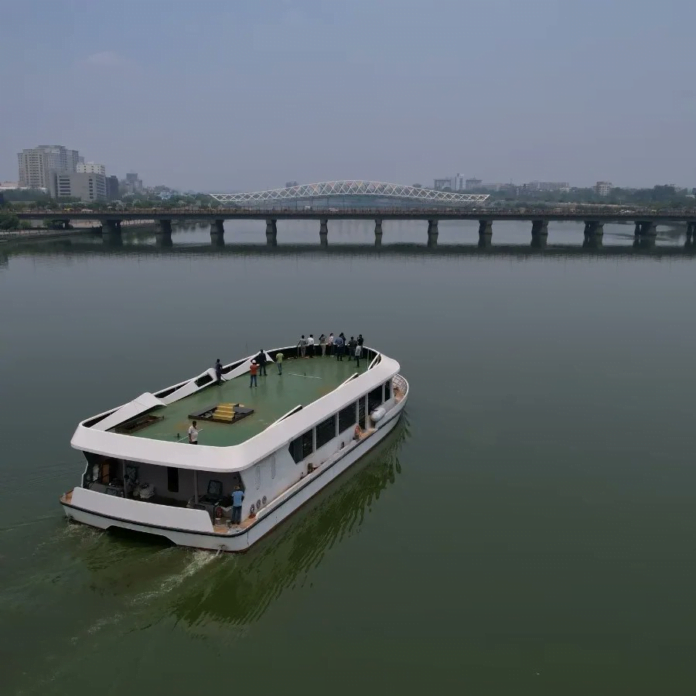
Photo credit: DeshGujarat

July 2, 2023, Today, Ahmedabad reached a new milestone in its riverfront development project with the successful launch of Asia’s largest floating restaurant cruise on the Sabarmati River. The much-anticipated inauguration ceremony, conducted virtually by Union Home Minister Amit Shah, marked the beginning of an exciting dining experience for the residents of Ahmedabad.

The idea of introducing a floating restaurant cruise on the Sabarmati River has been nurtured since Prime Minister Narendra Modi initiated the riverfront development project. The vision was to create a leisure and entertainment option within the city, eliminating the need for residents to travel elsewhere. Through a public-private partnership, Sabarmati Riverfront Development Project Limited collaborated with a private company to bring this unique attraction to life.

The floating restaurant cruise offers two distinct dining areas, providing guests with a choice of experiences. The lower deck, fully enclosed with glass and equipped with central air conditioning, ensures a comfortable ambiance. It boasts amenities such as TV, projector, lighting, DJ sound system, and life-saving equipment. From both sides of the ship, guests can enjoy their meals while overlooking the breathtaking views of the Sabarmati River.

On the upper deck, guests can savor their meals while immersing themselves in the open-air environment. Even during the monsoon season, a roof covering has been provided to shield guests from rain, allowing them to appreciate the scenic beauty of the Sabarmati River. The kitchen, located at the back of the cruise, serves freshly prepared food brought in from off-site. Only items that require on-site preparation will be cooked on board, ensuring the highest quality dining experience.

The construction of this floating restaurant cruise, undertaken by Sabarmati Riverfront Development Limited (SRFDCL), required an investment of approximately Rs 10 crore. Additionally, an annual license fee of 45 lakhs was paid to the SRFDCL. After being transported from Umargam in Valsad, the cruise underwent three months of construction and rigorous testing. Today, it officially begins its operation, promising delightful dining experiences for the people of Ahmedabad.

Key Features of the Floating Restaurant Cruise:

1. Two-story cruise-cum-floating restaurant.

2. AC cabins on the first floor and open space on the upper deck.

3. Capacity to accommodate 125 to 150 people simultaneously.

4. Entertainment facilities including live shows, music parties, birthday parties, and office meetings.

5. One-and-a-half-hour round trip from Sardar Bridge to Gandhi Bridge.

6. Construction of a jetty between Sardar Bridge and Atal Bridge.

7. Project undertaken by Akshar Travels.

The launch of Asia’s largest floating restaurant cruise not only adds to the charm and attractiveness of the Sabarmati River but also provides a new and exciting form of entertainment for Ahmedabad’s residents. As locals and tourists alike embark on this culinary journey, they can look forward to a delightful experience with scenic views and a wide array of culinary delights.

Who is Reena Roy ? Know All About Her…

0

Reena Roy is an Indian actress who was a leading lady of Hindi films from 1972 to 1985. She made her film debut at the age of 15 with the drama Zaroorat (1972), but gained wider public recognition with her roles in the romantic comedy Jaise Ko Taisa (1973) and the romance-action film Zakhmee (1975). She also starred in several hit films such as Kalicharan (1976), Nagin (1976), Apnapan (1977), Jaani Dushman (1979), Aasha (1980), Naseeb (1981), Sanam Teri Kasam (1982) and Arpan (1983).

Roy was born as Saira Ali, the third daughter of Sadiq Ali, a small-time actor and Sharda Rai, an actress and producer. She had three siblings who all disowned their father after the parents divorced. Her mother renamed all the four children after the divorce. Roy was initially named Roopa Rai, which was changed to \”Reena Roy\” by the producer of her first film, Zaroorat. ¹

Roy had a highly-publicised love affair with actor Shatrughan Sinha, but in 1983, she decided to quit the film industry to marry Pakistani cricketer Mohsin Khan. The couple later divorced in the 1990s; Roy found it difficult to adjust with Khan’s flamboyant lifestyle. ² Roy initially lost custody of her daughter Sanam, but after her ex-husband remarried, Roy regained custody. ²

Roy returned to India in 1992 and made a comeback in Hindi cinema with the drama Aadmi Khilona Hai (1993). She further acted in supporting roles notably in the romance-action films Ajay (1996) and Gair (1999), and the romantic drama Refugee (2000). Since the early 2000s, she has primarily focused on raising her daughter, but has made occasional appearances on television, most recently on Indian Idol. Along with her sister Barkha, Roy also runs an acting school.

Roy is known for her beauty, grace and versatility as an actress. She has won several awards and accolades for her performances, including the Filmfare Award for Best Supporting Actress for Apnapan, which she declined due to categorical issues. She has also been honoured with the Lifetime Achievement Award by Zee Cine Awards in 2018.

The Myth of Serbian Dancing Lady

0
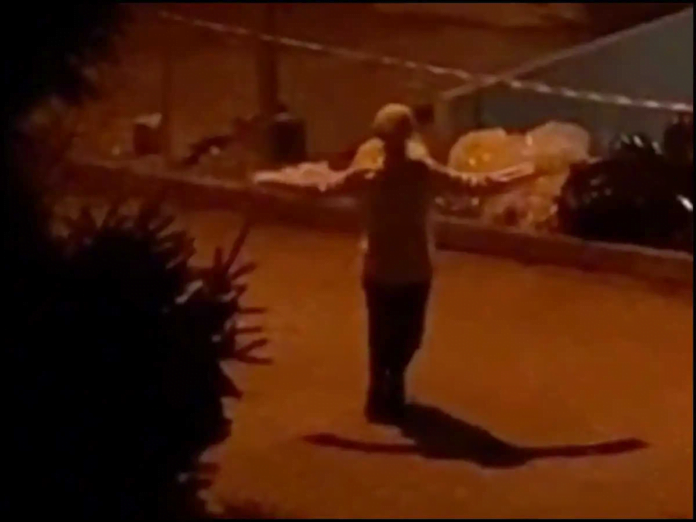
Credit: Video owner

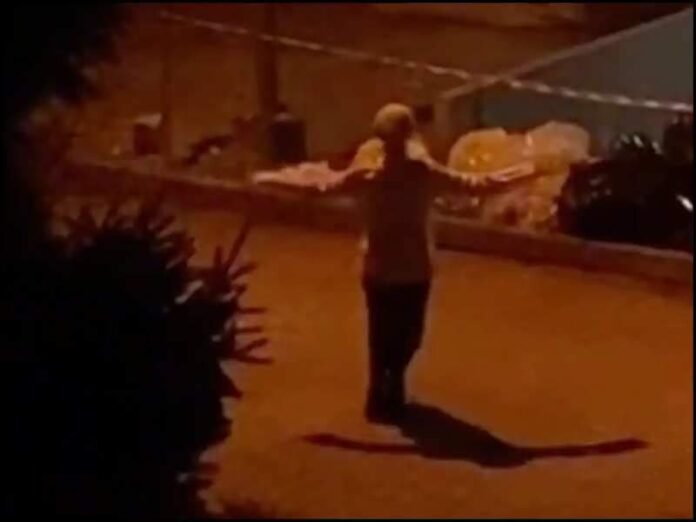
The video that has been viral in recent days is Serbian Dancing Lady. The video showcases a woman dancing in the middle of the night while being simply alone on the street.

The myth found its place on September 26, 1998. However, the video has found its place in the recent place.

Two community bloggers Niko and Solomon, were two bloggers who had been giving details about the encounters they have faced. Thus, it doesn’t mean that the information is verified as these bloggers write independently.

In the events with Niko, he described that he was going somewhere with his mother when he encountered the happening. They saw a figure dancing at some distance when at some point it charged at them. The figure shouted that they were “ambassador of death.” Thus, the figure claimed that his mother’s life was needed for the resurrection and rebirth of the Serbian king.

In the events with Solomon, he encountered weird events similar to Niko. While going around the streets, Solomon encountered the Serbian lady dancing weirdly on the streets of Serbia in the middle of the night.

Despite all the encounters and scary events, there is no proper reason to explain what might be scaring people off.

Is the Serbian Dancing Lady Real or Myth? The Truth Behind the Video Terrifying Social Media Users

0

A video of a woman dancing in a strange manner on a dark street has gone viral on social media, sparking fear and curiosity among users. The woman, dubbed as the “Serbian Dancing Lady”, is said to be a part of an urban legend that involves a mysterious lady who haunts the streets of Serbia at night and attacks anyone who sees her. But is the video real or fake? And what is the origin of the myth?

The video, which was posted on TikTok in February 2023, has garnered more than 105 million views and thousands of comments. The 11-second clip shows a woman dressed in a traditional Serbian costume, waving her hands out to the sides and moving her heels from left to right repeatedly. The video is accompanied by a creepy music and a caption that reads “Be careful guys”.

The video is claimed to have been filmed from the window of a nearby house in Zvezdara, Belgrade. However, there is no official confirmation or source for the video, and it could be a hoax or a prank. Some users have pointed out that the woman’s dance resembles a Serbian folk dance called Kolo, and that the video could be staged or edited.

The video is not the first one to feature the Serbian Dancing Lady. According to some reports, the legend dates back to 1998, when several people claimed to have witnessed an elderly woman dressed in a national outfit dancing in Serbian streets and threatening onlookers with a knife. The woman was said to be mentally unstable and was dubbed as the “Dancing Shadow”.

Since then, several videos have surfaced on the internet claiming to show the Serbian Dancing Lady in different locations and situations. Some videos show her chasing bystanders with an object in her hand, while others show her dancing alone or with other people. Some internet users have speculated that the woman is being controlled by a demon or that she is part of an ancient ritual to resurrect the king of Serbia.

However, there is no evidence or verification for any of these claims, and they could be based on rumors or imagination. There are also no reports of any injuries or deaths caused by the Serbian Dancing Lady, and she could be just an urban myth or a folklore.

The Serbian Dancing Lady is one of the many examples of how social media can spread fear and misinformation among users. While some people may find the videos entertaining or amusing, others may find them disturbing or scary. It is important to be critical and cautious when consuming online content, and not to believe everything that is posted on the internet.

Aravalli Range: India’s Oldest and Most Threatened Mountain

0

The Aravalli Range, the oldest fold mountain in India and one of the oldest in the world, is facing multiple threats from mining, deforestation, encroachment and urbanization. The 692-km-long range, which spans across four states — Gujarat, Rajasthan, Haryana and Delhi — has a rich natural and cultural heritage, but is also one of the most degraded forest ranges in the country.

According to a study by the Wildlife Institute of India (WII), the Aravalli Range has lost most of its indigenous plant species and wildlife habitats due to developmental activities that are gradually destroying the remnants of the hills. The range is home to many endemic and endangered species of flora and fauna, such as leopards, sloth bears, nilgai, chinkara, blackbuck, peafowl, vultures and crocodiles. It also serves as a natural barrier to the expansion of the Thar Desert and influences the climate and rainfall patterns of the region.

The Aravalli Range also has a history that dates back to about 1.8 billion years ago, when the Indian Plate was separated from the Eurasian Plate by an ocean. The Aravalli-Delhi Orogeny was a major event that resulted in the collision and folding of the crust, creating the Aravalli Range and other related features. The range has witnessed the rise and fall of many civilizations and kingdoms, and is dotted with many forts, palaces, temples and monuments that reflect the heritage and diversity of the region.

However, despite its significance and value, the Aravalli Range is not adequately protected by law or policy. The range is not officially notified as a forest in many parts, leaving it open to illegal mining, quarrying and encroachment. The Haryana government has also changed the definition of the Aravalli Range to exclude some areas from its purview. The Supreme Court has banned mining in the range, but it continues unabated in some places.

Environmentalists and activists have been raising their voice against the destruction of the Aravalli Range and demanding its conservation and protection. They have also been highlighting the importance of the range for the ecological security and sustainability of India. Some initiatives have also been taken by the government and civil society to restore and revive the forest cover and biodiversity of the range.

The Aravalli Range is a precious natural resource that needs urgent attention and action from all stakeholders. It is not only India’s oldest fold mountain, but also its most threatened one.

Understanding the Uniform Civil Code in India: A Quest for Equality and Uniformity

0

Introduction: In a diverse country like India, where different religious communities have their own personal laws governing matters such as marriage, divorce, inheritance, and adoption, the concept of a Uniform Civil Code (UCC) has been a topic of significant discussion and debate. The UCC aims to establish a common set of civil laws that would apply to all citizens, irrespective of their religious affiliation. Let us delve into the history, relevant articles, and the ongoing debates surrounding the Uniform Civil Code in India.

Understanding the History:

The idea of a Uniform Civil Code can be traced back to the colonial era when the British introduced certain uniform laws, such as the Indian Succession Act (1865) and the Indian Divorce Act (1869), which applied to all communities. However, after India gained independence, the Constitution granted religious communities the freedom to manage their own personal laws.

Relevant Articles in the Indian Constitution:

Article 44 of the Indian Constitution lists the Uniform Civil Code as one of the Directive Principles of State Policy. Directive Principles are guidelines for the government to strive towards achieving social and economic justice. Article 44 states that the state shall endeavor to secure a Uniform Civil Code throughout the country.

Challenges and Debates:

The proposition of a Uniform Civil Code faces several challenges and has been a subject of intense debate. Some of the key points of contention include:

  1. Religious and Cultural Diversity: India is known for its rich religious and cultural diversity. Critics argue that imposing a Uniform Civil Code may infringe upon the rights and traditions of different religious communities, as personal laws have deep-rooted connections with religious practices.
  2. Secularism and Equality: Proponents of the UCC argue that it is essential for upholding the principles of secularism and equality enshrined in the Indian Constitution. They contend that a common civil code would promote gender justice and equal rights for all citizens, irrespective of their religious backgrounds.
  3. Implementation Challenges: Implementing a Uniform Civil Code requires extensive legislative changes and consensus among various stakeholders. The complexity of the task, along with the potential resistance from religious groups, has impeded progress in this regard.