
Home Blog Page 623

Zardozi work bespeaks stories of timeless embroidery art

0

Zardozi, or Zardosi, as it’s sometimes pronounced, is an art form that has stood the test of time. This ancient embroidery technique continues to captivate contemporary artists and enthusiasts alike. In this article, we delve into the historical roots, stylistic evolution, and modern-day significance of Zardozi work, exploring its presence in both traditional and custom-made clothing.

What is Zardozi Work?

Zardozi embroidery is a traditional technique that uses metallic threads, often gold or silver, to craft intricate and ornate patterns on fabric. The method involves delicately pulling these metallic threads through the fabric using a needle with a hook-like end. The result is a stunning, enduring design that shimmers and shines.

Difference Between Zardozi and Zardosi

The name Zardozi is often anglicized to Zardosi, but the correct version is Zardozi. Though the exact origin of the term is unclear, it likely comes from the Persian words for “gold” (zar) and “embroidery” (dozi).

Zardozi Work vs. Zardozi Embroidery

While Zardozi embroidery refers to the creation of intricate motifs using metal threads, Zardozi work encompasses the overall design and pattern produced using this embroidery technique. In essence, Zardozi embroidery pertains to the method, whereas Zardozi work refers to the final product.

How is Pakistani Zardozi Work Different From Indian Zardozi Work?

Both Pakistani and Indian Zardozi embroidery share aesthetic and technical similarities, but there are notable distinctions. Pakistani Zardozi work tends to be more ornate and detailed, often using more gold and silver threads and incorporating beads, sequins, and stones. Indian Zardozi work, on the other hand, can focus on intricate borders and accents or be used to create complex patterns.

What is Zardozi Design?

Zardozi design is celebrated for seamlessly blending traditional elements with modern artistic flourishes. It involves using metallic threads, typically gold or silver, to create ornate and visually striking patterns on fabric. Each Zardozi design pattern represents a work of art, showcasing the skill and creativity of the craftspeople who craft them. From royal garments to luxurious home decor, Zardozi designs adorn a wide range of items.

Who Invented Zardozi?

Zardozi embroidery has ancient roots that stretch from modern-day Iran to India. It gained prominence during the Mughal era, becoming a symbol of opulence among the elite. The Mughal court’s adoption of Zardozi transformed it into a cultural and artistic treasure. This rich legacy continues to inspire contemporary artists, ensuring that Zardozi remains a timeless and exquisite art form.

Which Place is Famous for Zardozi?

Lucknow, in the northern Indian state of Uttar Pradesh, is often considered the spiritual and economic home of Zardozi needlework. The city’s master artisans have perfected the craft over the years, making it synonymous with Lucknow’s history and culture. Today, many workshops in Lucknow offer tourists the opportunity to witness skilled artisans at work, immersing themselves in the city’s cultural heritage.

Which Cloth is Best for Zardozi Work?

Choosing the right fabric for Zardozi embroidery depends on factors such as the intended purpose, design, and personal preference. Fabrics like silk, cotton, velvet, and satin are commonly used for Zardozi work. Silk is favored for its luxurious feel and suitability for intricate patterns, while cotton offers versatility and affordability. Velvet, with its lush texture, complements the shimmer of metallic threads, while satin’s sheen adds elegance to Zardozi designs.

Which Needle is Used for Zardosi Work?

Zardozi embroidery requires a special needle designed for the technique. Unlike standard embroidery needles, Zardozi needles have a hook-like end that is essential for pulling metallic threads through the fabric. These needles are typically crafted from strong yet pliable steel to work efficiently with metallic threads. The artist’s precise control over the Zardozi needle is crucial to achieving accurate and aesthetically pleasing stitches.

Types of Zardozi Work

Zardozi work encompasses various techniques, each with its unique characteristics:

  1. Hand Embroidery: Traditional Zardozi work involves intricate hand embroidery, meticulously crafted by skilled artisans over hours or even days.
  2. Shisha Embroidery: This style incorporates tiny mirror fragments, adding sparkle and glamour to designs.
  3. Zari Work: Zari Zardozi work uses metallic threads to create elaborate patterns, often featuring traditional Indian themes like paisley and florals.
  4. Aari Work: A hook is used in Aari work to produce beautiful, intricate motifs with uniform, duplicate threads.
  5. Dabka Work: Dabka embroidery uses raised stitches to simulate depth, resulting in sophisticated patterns and textures.
  6. Kundan Work: This style incorporates flat, small glass or metal pieces to create glittering patterns on fabric.
  7. Aari Tari Work: A combination of Aari and Tari stitches allows for delicate and detailed designs.
  8. Resham Work: Resham work employs fine silk threads to create intricate patterns with a soft and refined aesthetic.
  9. Gota Patti Work: Gold and silver threads are used to create intricate patterns in Gota Patti work, often seen on Indian garments and accessories.
  10. Royal Embroidery: Also known as “Durbar Embroidery,” this Zardozi style has a rich history, having been favored by Mughal royalty for its opulent designs.
  11. Raffia Work and Raffia Crafts: Crafts made from raffia fibres are known as raffia work, often used to create durable items like baskets and pouches.
  12. Mukesh Work Embroidery: This subset of Zardozi work features tiny mirror-like components, adding glamour to traditional Indian and Pakistani attire.
  13. Kasuti Work Embroidery: Originating in Karnataka, Kasuti work features elaborate and refined patterns on cotton fabric.
  14. Kutch Work Embroidery: This Zardozi subset is renowned for its vibrant colors and strong geometric patterns, often used in sarees and scarves.
  15. Sequence Work Embroidery: This style incorporates trim and metallic discs to create glittering patterns, often seen on borders of traditional garments.
  16. Motifs Embroidery: Motifs embroidery involves creating repeated motifs on fabric, adding decorative elements to various items.
  17. Beadwork Embroidery: Beadwork embroidery uses tiny decorative beads to create intricate patterns and embellishments on fabric, accessories, and home decor.

In conclusion, Zardozi work is a celebration of traditional craftsmanship, skill, and creativity. Whether adorning traditional clothing or enhancing modern designs, this timeless art form continues to inspire and captivate, proving that the beauty of Zardozi is truly everlasting.

Soak the sprituality spread around Annapurna Temple in Varanasi…

0

Varanasi, the ancient city nestled along the sacred Ganges River, weaves a rich tapestry of spirituality and Hindu heritage. Amidst the labyrinthine lanes, bustling ghats, and countless temples, the Annapurna Temple stands as a luminous symbol of sustenance and devout reverence.

Historical Significance:

The Annapurna Temple is a homage to Goddess Annapurna, the revered deity of food and nourishment. Her name, “Annapurna,” evokes the provider of sustenance. This temple carries profound historical and religious significance, drawing pilgrims and travellers alike into its fold.

Architectural Grandeur:

Adorned in the classical North Indian architectural style, the temple is a testament to meticulous craftsmanship, featuring intricate carvings and artistic finesse. Goddess Annapurna, seated atop her divine throne, ladle in hand and a vessel of rice, embodies the essence of benevolence. The inner sanctum is a gallery of living Hindu mythology, brought to life through captivating sculptures and paintings.

Religious Rituals:

Devotees flock to the Annapurna Temple, seeking the blessings of Goddess Annapurna. They believe that her grace ensures a life free from hunger, perpetually supplying sustenance. The temple resonates with heightened devotion during festivals like Navratri and Diwali when elaborate rituals and ceremonies take centre stage.

The Annakut Festival:

One of the most prominent events at the temple is the Annakut festival, also known as Govardhan Puja. Falling on the first day of the Hindu month of Kartik, this celebration involves a grand offering of diverse food items to the deity. It is a grand tribute to abundance and gratitude, as devotees assemble to create a mountain-like display of food offerings. 

Location and Accessibility:

Conveniently nestled in the heart of Varanasi, the Annapurna Temple warmly welcomes visitors. Its close proximity to the renowned Kashi Vishwanath Temple, another iconic Hindu shrine, makes it an integral stop for those seeking spiritual immersion in the city.

The Annapurna Temple in Varanasi transcends mere religious devotion; it embodies the profound link between food, nourishment, and spirituality in Hindu culture. It serves as a living testament to the intricate interplay between humanity and sustenance, perpetually enriching the religious and cultural tapestry of Varanasi. A visit to this temple offers not only a spiritual awakening but also a portal to explore the vibrant cultural heritage of Varanasi.

In summation, the Annapurna Temple stands as an enduring tribute to the omnipotence of Goddess Annapurna in Hinduism and the deep interconnection between spirituality and nourishment in Indian society. It remains a sanctuary of devotion, celebration, and cultural exploration, beckoning individuals from all walks of life to experience its unique fusion of spirituality and nourishment, nurturing not only the body but also the soul.

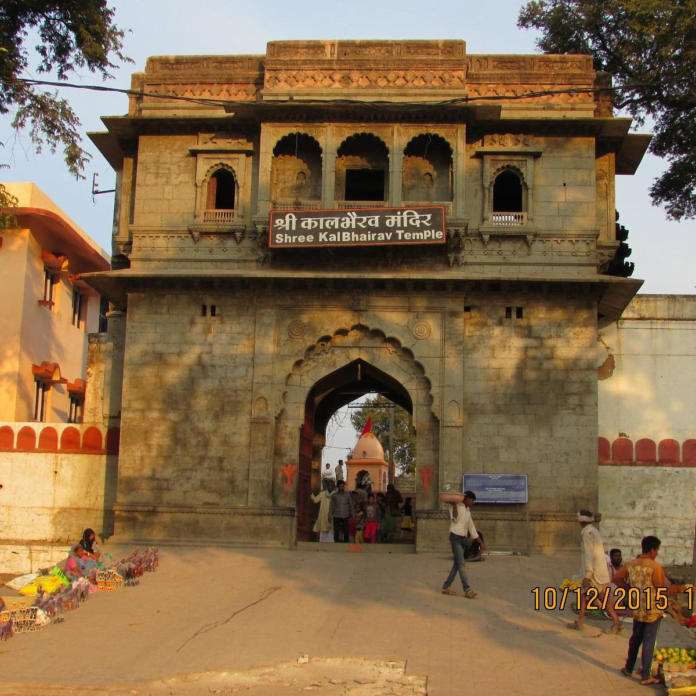
Kal Bhairav Temple in Ujjain: A Sacred Abode of Lord Shiva’s Fierce Manifestation

0

Priyanshi Pareek reports on the Kal Bhairav temple..

The Kal Bhairav temple, situated on the banks of the sacred River Shipra, stands as a prominent religious landmark in Ujjain, known as the “City of Temples” and the abode of Lord Mahakaal. This revered shrine is dedicated to Kal Bhairava, the formidable manifestation of Lord Shiva and the guardian deity of Ujjain. Its rich history dates back thousands of years and is steeped in spiritual significance.

Historical Roots and Renovation

According to ancient texts like the Skanda Purana, the presence of the Shri Kal Bhairav temple in Ujjain can be traced back over 6000 years. It holds deep connections with Tantric Vidhya and was revered by followers of Aghora and Kapalika sects. The temple, as we see it today, was initially built by King Bhadrasen in the 9th century and underwent significant renovations during the Maratha rule. The temple’s architecture is a testament to the Maratha style, with intricate paintings adorning its walls, reflecting the heritage of Malwa.

Unique Offerings and Rituals

A distinctive aspect of this temple is the offering of liquor as part of the Panchamakara ritual, one of the five tantric offerings. While traditionally all five offerings were made, today, only alcohol is presented to the deity. Devotees bring baskets filled with coconuts, flowers, and bottles of liquor, which are offered to the temple deity.

Mystical Devotion

Legend has it that the deity miraculously accepts the liquor offerings, despite claims of no physical cavity. The temple priests perform this ritual, and visitors believe that the deity swallows the liquor, with about one-third returned to devotees as prasad. The mystical aura surrounding this ritual adds to the temple’s uniqueness and spiritual allure.

Guardian of Ujjain

Kaal Bhairav, the chief of the eight Bhairav manifestations, holds the esteemed title of being the Kotwal (guardian) of Ujjain, a role assigned by Lord Mahakal himself. This temple serves as a symbol of protection and divine presence in the city, further enhancing its significance among devotees and visitors.

Shekhawati Sahitya Sangam Concludes with Enlightening Discussions on Indian Constitution and More

0

The five-day Shekhawati Sahitya Sangam concluded on a high note, with a series of stimulating discussions on contemporary topics, including the Indian Constitution, India’s identity, the Hindi language, and India’s global stature. The event brought together diverse voices and perspectives, enriching the literary and cultural landscape of the region.

During the concluding day’s first session, distinguished speakers, including Ruchi Shrimali, Anshul Saxena, Ayush Nadimpali, and Sangeeta Pranavendra, delved into the ‘Idea of India in Social Media Content.’ They explored the growing global appreciation for India, emphasizing its cultural richness and ethos of harmony, echoing Swami Vivekananda’s vision of India fostering unity among nations.

Ruchi Shrimali highlighted the transformative role of social media in shaping India’s image, noting that India has transitioned from being viewed as a third-world country to gaining global respect.

Anshul Saxena provided insights into the duality of India portrayed on social media: one that showcases India’s remarkable achievements, including its lunar mission, and another that perpetuates stereotypes of backwardness.

In the second session, ‘How to Read,’ Sangeeta Pranavendra and Ayush Nadimpali shared their perspectives, emphasizing the importance of reading and encouraging a culture of widespread reading.

The event continued with a discussion on ‘India Becoming Global,’ featuring Srikanth, Raghunandan, Amitabh Srivastava, and Sangeeta Pranavendra. The concluding session featured Bhagwat, a three-and-a-half-year-old devotee, reciting verses from the Geeta, captivating the audience and marking the end of the fourth edition of Shekhawati Sahitya Sangam.

The closing ceremony included the distribution of prizes to winners of various competitions, recognizing their literary and artistic talents.

Over the course of the five-day event, numerous thought-provoking sessions and activities unfolded. The first day witnessed discussions on ‘Revolution of Self-Based India,’ the book ‘Hanuman of Mahabharata,’ content writing, and ‘Youth Mental Health,’ which explored issues related to student stress and mental health.

The second day featured discussions on India’s self, the role of women in India’s development, and poetry readings in the Kavi Sammelan. Major Surendra Punia addressed the audience, discussing ideological scams and intellectual challenges.

On the third day, discussions centered on the Indian Constitution, India’s self, civil etiquette, and the perspective of Hindus in contemporary India. Major Poonia engaged with the youth in a dialogue session, emphasizing the importance of meaningful conversations.

On the fourth day, the dramatic staging of ‘Diver Yudh Vijay’ was presented, highlighting India’s historical achievements. The event also featured discussions on the Indian Constitution, social media narratives, the Indian film industry, and the idea of India.

In addition to intellectual discussions, the cultural evening showcased mesmerizing performances by the Crazy Hoppers dance group and captivating presentations in group dance competitions by school and college students.

The Shekhawati Sahitya Sangam left an indelible mark, fostering intellectual growth, cultural exchange, and a celebration of India’s rich heritage and potential for a brighter future.

Exploring “Mahabharat ke Hanuman” with Author Anshu Harsh

0

In a captivating session at the Shekhawati Sahitya Sangam in Sikar, our Saksham Sanchar Foundation had the privilege of interviewing the renowned writer and author Anshu Harsh about her latest book, “Mahabharat ke Hanuman.”

Unveiling the Mythological Tapestry: Mahabharat and Hanuman

Anshu Harsh, a devout follower of Lord Hanuman, shared her profound connection with the divine figure. Hanuman, for her, is not only a guiding force but also the gateway to reach Lord Ram. Her journey into writing “Mahabharat ke Hanuman” was inspired by a significant revelation. While reading the Mahabharata, she stumbled upon a depiction of Hanuman on Arjun’s chariot. This discovery ignited her curiosity, and she decided to delve deeper into the subject. Three months of rigorous research and dedicated writing brought her book to life, just in time for Hanuman Jayanti.

The Journey of Research and Exploration

For a project of this magnitude, Anshu Harsh undertook an extensive research journey. She traveled to various places and communicated with experts to gather the necessary information. Her book touches upon the enigmatic “Kale Hanuman” and “Lal Hanuman,” a figure often associated with the belief that Hanuman continues to exist in the present age. When asked about potential controversies, Anshu assured that her work steered clear of any contentious issues.

Reception and Feedback

The feedback for “Mahabharat ke Hanuman” has been overwhelmingly positive. Many readers were struck by the revelation that Hanuman was present in both the Mahabharata and the Ramayana. Anshu Harsh, known for her philosophical and poetic style, confessed that she doesn’t confine herself to rhyme but expresses her thoughts freely through her writings.

The Initiation of a Literary Journey

Anshu Harsh’s literary journey commenced in 2008 when she discovered her passion for writing. As her daughter grew older, Anshu found herself drawn further into the world of books and literature. She believes that the books we read shape our thoughts and perspectives, and that’s precisely what she aims to achieve with her writing.

The Appeal of Kindle and Adi Purush-like Movies

She appreciates the charm of physical books but acknowledges the convenience of Kindle. Regarding movies based on mythological themes, she emphasizes the importance of preserving the essence of these ancient stories while presenting them in a way that resonates with the youth, making them more accessible through simple language.

Future Projects and Inspirations

Anshu Harsh’s upcoming project involves simplifying the teachings of the Gita in a way that appeals to children. She runs a book reading club where children express a desire for a simplified version of the Gita. This endeavor reflects her commitment to making profound spiritual teachings accessible to the younger generation.

The Transformative Power of Reading

She believes that reading has the power to bring about positive changes in both children and adults. It not only nurtures self-development but also enhances public speaking skills. Through books, individuals can gain new knowledge and perspectives, ultimately driving personal growth.

Spreading the Seeds of Knowledge

Anshu Harsh actively distributes books to children in different regions, planting the seeds of knowledge in their minds. Her life changed when she came across a powerful dialogue in a movie: “Do your work, success will follow.” Ten years of dedication to reading and sharing books have truly transformed her life.

Her journey as a writer and her commitment to making complex mythological concepts accessible to all through her writing and book distribution initiatives are truly inspiring. Her dedication to connecting the youth with the wisdom of the past is commendable, and her future endeavors in simplifying spiritual teachings promise to be equally transformative. “Mahabharat ke Hanuman” is a testament to the power of curiosity and dedication in uncovering hidden gems within our ancient texts.

Mohandas Karamchand Gandhi – The Mahatma 

0

Priyanshi Pareek reports on the Mahatma Gandhi’s 154th Birth Anniversary..

Mahatma Gandhi, born as Mohandas Karamchand Gandhi on 2nd October 1869 in Porbandar, Gujarat, is an iconic figure in the history of India’s struggle for independence. He was bestowed with the title ‘Mahatma’ by Rabindranath Tagore while writing his autobiography, symbolizing his revered status as a great soul.

Gandhi’s life was a testament to his profound belief in selfless service and non-violence. His journey of activism began in South Africa, where he fought against injustice and class division. Within a decade, Gandhi propagated the philosophy of Satyagraha, leading South Africa towards a society free from class and ethnic discrimination.

In 1893, Gandhi arrived in Durban and quickly rose to become a leader in the South African Indian community. His non-violent movement left a lasting impact, and he is still revered as a leader there today. During this time, he worked as an attorney and a public worker, ultimately remarking that he was “born in India but made in South Africa.”

Upon returning to India in 1915, Gandhi joined the Indian National Congress and emerged as a prominent leader. He advocated for ‘swaraj’ or self-rule and tirelessly worked to bridge divides among various classes and religious sects, particularly Hindus and Muslims.

In 1920, Gandhi initiated a non-cooperation campaign against British rule, urging Indians to boycott British goods, courts, and government. This led to his imprisonment from 1922 to 1924.

In 1930-31, Gandhi led the famous Salt March, a protest against the British tax on salt, resulting in 60,000 arrests. In 1931, he signed the Gandhi-Irwin Pact with the British viceroy, marking a pause in civil disobedience.

However, his imprisonment did not deter him. In 1932, while in prison, he fasted to protest the segregation of untouchables. His fast forced the British to change their policy.

During World War II, Gandhi demanded immediate independence as India’s price for aiding Britain. He was imprisoned again from 1942 to 1944.

On August 15, 1947, India finally achieved independence from British rule. However, the partition into India and Pakistan saddened Gandhi, who had long advocated for Hindu-Muslim unity. Riots broke out, and Gandhi turned to nonviolence once more, fasting until rioters pledged peace.

On January 30, 1948, while on his way to prayer in Delhi, Gandhi was tragically assassinated by a young Hindu fanatic who disagreed with his efforts to reconcile Hindus and Muslims. Gandhi’s life and teachings continue to inspire generations worldwide, and his legacy as the ‘Mahatma’ lives on as a symbol of non-violence and unwavering dedication to justice and equality.

The Constitution’s Visual Story: Gita, Ramrajya, and the Essence of India

0

On the fourth day of the Shekhawati Sahitya Sangam, an event focused on contemporary topics, the spirit of India’s Constitution and its visual elements took center stage. Lakshminarayan Bhala, an expert in constitutional matters, shed light on the fascinating relationship between the Constitution’s Directive Principles of State Policy and the visual representations within it. Notably, he emphasized the addition of the Bhagavad Gita to explain these principles and the incorporation of the imagery of Ramrajya to safeguard fundamental rights. In this article, we delve into this unique aspect of India’s Constitution and its profound implications.

The Significance of Visual Elements

The Indian Constitution, a comprehensive document that governs the world’s largest democracy, is more than just a legal text. It is a living embodiment of the values, ideals, and aspirations of the nation. To help convey these principles, the framers of the Constitution employed visual elements, which serve as powerful symbols that resonate with the people.

Lakshminarayan Bhala highlighted the fact that each chapter of the Constitution is associated with a unique picture, and each image carries a deep message, making it easier for citizens to grasp the essence of that chapter. These visual representations are not mere decorations but tools that aid in comprehending the Constitution’s intricate concepts.

Explaining the Directive Principles of State Policy

Part 4 of the Constitution, which deals with the Directive Principles of State Policy, is a crucial section that outlines the socio-economic goals that the Indian government should strive to achieve. To make these principles more relatable, a picture of the Bhagavad Gita was included. The Gita’s teachings on duty, righteousness, and the path to a just society resonate with the ideals outlined in this part of the Constitution. It serves as a constant reminder of the nation’s moral compass.

Protecting Fundamental Rights with Ramrajya

Fundamental rights are the cornerstone of any democratic society. To emphasize their importance, the framers of the Constitution incorporated the imagery of Ramrajya. Ramrajya, an ideal kingdom as described in the Hindu epic Ramayana, represents a just and harmonious society where everyone’s rights are protected. By including this image, the Constitution underscores its commitment to safeguarding the rights and liberties of every citizen, ensuring that the principles of justice, liberty, equality, and fraternity are upheld.

The Evolution of the Constitution

Lakshminarayan Bhala’s insights also shed light on the historical and linguistic nuances within the Constitution. For example, the term “secular” was borrowed from the English language and later amended in the Preamble. Its original meaning, “secular activities,” was translated into Hindi as “Laukik Kriya.” However, political interests led to a reinterpretation of the term. Bhala’s caution to remain vigilant about the word “secular” reminds us of the importance of maintaining the Constitution’s core principles.

The discussion at the Shekhawati Sahitya Sangam provides a fascinating glimpse into the depths of India’s Constitution. It reveals how visual elements were strategically incorporated to make the Constitution more accessible to its diverse citizens. The Bhagavad Gita and the image of Ramrajya, in particular, serve as powerful symbols of India’s commitment to its Directive Principles of State Policy and the protection of fundamental rights. In a world where constitutions are often seen as dry legal documents, India’s Constitution stands out as a vibrant and visual representation of the nation’s values and aspirations.

ICC Photo Exhibition: “Common Bonds: From the Rome Conference to Today” Chronicles Global Conflict Survivors’ Stories

0

The Grote Kerk event venue in The Hague is currently hosting a remarkable photographic exhibition titled “Common Bonds: From the Rome Conference to Today.” This thought-provoking exhibition, open to the public free of charge until October 2, 2023, offers a deep dive into the profound narratives of survivors from conflicts worldwide.

What makes this exhibition truly exceptional is its accessibility. The Grote Kerk has generously waived its standard entry fee for the duration of this event, ensuring that these powerful stories resonate with as many individuals as possible.

The “Common Bonds” exhibition serves as a poignant reflection of the International Criminal Court’s (ICC) unwavering commitment to addressing some of the world’s most grievous crimes. Through the lens of photography, visitors are afforded a glimpse into the haunting yet inspiring accounts of survivors.

These stories, originating from diverse backgrounds and contexts, share common threads of the human experience. They are narratives marked by unimaginable violence, suffering, and loss, yet they also reverberate with themes of love, friendship, family, home, connection, community, and hope. In the face of unimaginable adversity, these survivors exemplify remarkable strength and embody the enduring spirit of resilience.

As one survivor profoundly remarked, “One must learn to survive.” This sentiment encapsulates the heart of the exhibition—a celebration of the indomitable human spirit, a testament to the enduring power of hope, and a poignant reminder of the unbreakable bonds that unite us all, transcending geographical and cultural divides. Visitors are encouraged to immerse themselves in these stories, gaining insight into the shared experiences that bind humanity together.

Adv Pranita Deshpande, deeply moved by the exhibition’s compelling displays, expressed her heartfelt gratitude to the ICC for curating this remarkable showcase. Her words of appreciation underline the exhibition’s profound impact and underscore its importance as a platform for nurturing understanding and empathy among its viewers.

“Common Bonds” stands not only as a visual testament to the resilience of humanity but also as a powerful tribute to the stories from diverse backgrounds that are intricately woven together by shared experiences of hope, love, and survival. Pranita’s expression of gratitude serves as a reminder of the exhibition’s ability to foster empathy and inspire positive change.

Theatrical Adaptation of ‘Historical Victory of the Battle of Diver’ for the First Time

0

In a historic moment that left audiences awestruck, the Shekhawati Sahitya Sangam witnessed the first-ever theatrical adaptation of the legendary ‘Diver Yudh Vijay,’ depicting the valorous victory of Maharana Pratap at the Battle of Diver. This remarkable theatrical presentation unfolded on September 30th, marking a pivotal moment in the annals of Indian cultural heritage.

The Shekhawati Sahitya Sangam, renowned for celebrating and promoting literature, art, and culture, has been a platform that cherishes the rich historical tapestry of India. In its fourth edition this year, the festival continued its tradition of commemorating significant events from the past.

Directed by the accomplished Deepak Bhardwaj, the play ‘Diver Yudh Vijay’ was brought to life by the talented Youth Tarang Sanskrit Drama Group from Jaipur. This theatrical production aimed to capture the essence of the Battle of Diver, a momentous chapter in Indian history that symbolizes courage, sacrifice, and unwavering determination.

Abhimanyu Singh, the convener of the Shekhawati Sahitya Sangam, highlighted the importance of such historical dramas in fostering a sense of national pride and awakening the spirit of victory, especially among the youth. The Battle of Diver is not merely a historical event but a source of immense pride for India, commemorated through a grand victory memorial.

Dr. Nekiram, the coordinator of the evening programs at Sahitya Sangam, underscored the gripping scenes that served as the centerpiece of the play. These scenes included Maharana Pratap’s fierce combat with Bahlol Khan, the young Prince Amar Singh’s daring confrontation with Sultan Khan at the tender age of 14, and the poignant moment of tearing apart the horse. The production received extensive support from the community, including contributions from tribes and Bhamashah’s dedication of his entire wealth for the motherland.

The cast of artists, led by co-director Sandeep, showcased their talent and dedication in bringing this historical drama to life. The play drew audiences from far and wide, who could obtain tickets through various counters and registration desks across the city.

The Shekhawati Sahitya Sangam also featured thought-provoking sessions where speakers shared their insights. Discussions ranged from the interpretation of the Indian Constitution and India’s identity to civil etiquette and the role of Hinduism in contemporary society.

Lakshminarayan Bhala, Hiren Joshi, Indushekhar Tatpurush, and others delved into topics such as the misuse of the term ‘secular,’ the significance of the word ‘Bharat,’ and the persistent influence of English in India. These discussions shed light on the complexities of India’s cultural and constitutional identity.

In another enlightening discussion, Major Poonia engaged with the youth in a ‘Dialogue with Youth’ session, encouraging them to explore their perspectives and aspirations.

One of the highlights of the event was the presence of Saint Shri Dr. Raghavacharya Ji Maharaj of Rewasa Dham, who emphasized the profound impact of literature on knowledge and the perils of ignorance.

In a soul-stirring devotional evening, Narsee, a renowned devotional rapper, captivated the audience with spiritual bhajans, igniting enthusiasm among the youth.

Additionally, a drama competition focused on environmental themes featured students from different schools in Sikar. Vardhaman Vidya Vihar Sikar clinched the first position, followed by MK Memorial and SA Pragya Bharti Shikshan Sansthan. Smt. Gulabi Devi Vidawatji Vidyalaya was awarded the consolation prize. The competition not only showcased the creative talent of students but also emphasized the importance of environmental awareness.

The Shekhawati Sahitya Sangam once again proved to be a platform where history, culture, literature, and art converge to inspire and enlighten. With the groundbreaking theatrical adaptation of ‘Diver Yudh Vijay,’ this year’s festival left an indelible mark on the hearts and minds of all those in attendance, fostering a deeper appreciation for India’s glorious past and its enduring traditions.

Unmasking the Ideological Scam: Challenges Faced by India

0

In a thought-provoking session during the Shekhawati Sahitya Sangam on September 28th, Major Surendra Punia, a special guest, addressed a captive audience on the topic of “India’s Self-Present Challenges and Our Role.” The session, which commenced with a fervent chant of “Mother India,” saw the active participation of scout guides. Major Punia began by emphasizing that the identity of an individual, a family, a society, and a nation is deeply rooted in one’s consciousness and faith. He asserted that faith in one’s country is the key to self-realization and a sense of purpose.

Major Punia articulated that the essence of India is Hindutva, which he clarified is not merely a religious term but the cultural tapestry that has woven itself through the nation for thousands of years. He challenged the notion that India gained true Independence in 1947, highlighting that a colossal ideological scam had taken place in the nation’s history. He argued that history had been systematically misrepresented. India’s glorious past was overshadowed, and the country was portrayed as a dark land, illuminated only by the Mughals and the British. To compound the issue, the responsibility of crafting this historical narrative was entrusted to leftist historians who, he contended, had a limited understanding of India. This distorted version of history was then imposed upon students who were preparing for competitive examinations, further perpetuating the skewed narrative.

Major Punia also pointed out that the Constitution had been tampered with during the Emergency when the term “secular” was inserted. He underscored that India, in its essence, is a nation that upholds equality for all religions, and its soul is encapsulated in the phrase “Vasudhaiva Kutumbakam” (the world is one family). Major Punia lamented that as a nation, India had lost its independence and had unwittingly veered onto the path of corruption. He argued that unless the citizens developed a sense of pride and admiration for their national heroes and heroines, they would continue to grapple with an inferiority complex.

Major Punia’s speech took a compelling turn when he discussed the prevailing challenges faced by India, with a particular emphasis on what he termed “intellectual terrorism.” Drawing from his own experiences, he illuminated how these intellectual terrorists operated from the comfort of air-conditioned rooms, courtrooms, and positions within government, media, and educational institutions. He asserted that these individuals actively worked to protect terrorists and traitors, effectively undermining national security. Major Punia boldly asserted that intellectual terrorism was, in many ways, more insidious and dangerous than armed terrorism.

Major Punia voiced his concern about the selective intervention of the judiciary, citing examples where courts were opened at night for notorious figures such as Burhan Wani and Yakub Memon. He contended that such selective actions only served to embolden terrorists, eroding the public’s trust in the justice system. He argued that justice delayed is justice denied, and for ordinary citizens, it often takes years to have their voices heard, whereas for individuals like Wani and Memon, special treatment seemed to be the norm.

Continuing his discourse on challenges, Major Punia questioned how Rohingya refugees had managed to find shelter not only on India’s borders but deep within the country, including in regions like Jammu and Kashmir, Bangalore, and Delhi. He raised the critical question of whether this could have occurred without assistance and support. Major Punia also critiqued Bollywood for its continued production of films that he perceived as being anti-India.

In conclusion, Major Surendra Punia’s address at the Shekhawati Sahitya Sangam shed light on the ideological scam that has affected India’s identity and history. His remarks served as a stark reminder of the challenges faced by the nation, including intellectual terrorism, selective judiciary interventions, demographic shifts caused by refugees, and perceived anti-national elements in the film industry. Major Punia’s passionate and thought-provoking speech encouraged the audience to reflect on their role in shaping India’s future and upholding its core values.