Home Blog Page 593

The Majesty of Kulpakji Jain Temple of Lord Adinath

0
Kulpakji Jain Temple

Priyanshi Pareek

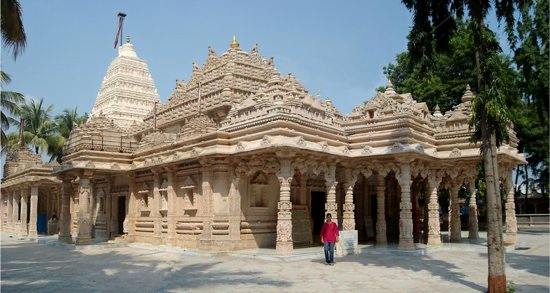
Kulpakji, a vital Jain pilgrimage center in South India, features a temple with an interior crafted from red sandstone and white marble. Dedicated to Lord Rishabha, also known as Adinath Bhagvan, the first Tirthankar in Jainism, the temple is believed to be the abode of the local manifestation of Lord Adinath, called Manikya Deva.

The main temple is flanked by eight deities representing other Tirthankars. Notably, a 130-centimeter-tall statue of Lord Mahaveer, carved from a single piece of jade, stands prominently. Adjacent to the central temple, statues of Lord Simandar Swami and Mata Padmavati are installed, alongside other revered deities like Shantinatha, Chandraprabha, Abhinandananatha, Padmavati, and Bhomyaji, contributing to the spiritual sanctity of Kulpakji.

The renowned Someshwara Temple, established by the Chalukyas approximately 800 years ago, stands as a prominent landmark in Kolanupaka. The name “Kolanupaka” is derived from “Kolanu,” meaning lake, and “Paka,” signifying a hut, reflecting the historical abundance of lakes and huts in the region.

Historically known by various names such as Bimbavatipuram, Kottiyapaka, Kollihaka, Kollipaka, and Kolanpak, the village has a rich cultural heritage. During the construction of a school and library, numerous statues were unearthed, prompting Somalingam Kallem, a government official, to relocate and exhibit them in the museum of the Someshwara Temple.

This temple, with its deep historical roots, serves as a repository of cultural artifacts, preserving the heritage of Kolanupaka for generations to come.

History

The Kolanupaka Temple, with a history spanning over 2,000 years, is a significant Jain center that flourished during the Rashtrakutas period. Dating back to the 9th century, numerous Jain antiquities have been discovered, including a grant mentioning a gift to a basadi during the reign of Sanfkaragana at Akunur.

The site, marked by over 20 Jain inscriptions, served as a major center of Kranur Gana within the Mula Sangh. Noteworthy findings include a manastambha with a 1125 AD inscription and a 12th-century temple inscription referencing Meghachadra Siddhantadeva’s sallekhana. Further contributing to its historical richness is a 151-line Kannada inscription by Someshvara III of the Western Chalukya Empire in 1125 AD. This collectively forms a captivating historical tapestry of Kolanupaka.

In the 14th-century Vividha Tirtha Kalpa by Jinaprabhasuri, specific sections discuss the Kulyapak Rishabhadeva Stuti and Kollapakamanikyadeva Tirthakalpa. According to these texts, the Manikyasami image, initially worshipped by Mandodari, Ravana’s wife, was brought to Kolanupaka by the ruler Sankar of Kalyana. This historical account enriches the sacred narrative surrounding the revered Manikyasami image at the temple.

Legend has it that the main temple in Kolanupaka was constructed by Bharat Chakravarti. Jainism, having a strong presence in Andhra Pradesh before the 4th century, identified Kolanupaka as a significant center from early times. Notably, the temple underwent recent renovations, with over 150 artisans from Rajasthan and Gujarat employed for the restoration, showcasing a commitment to preserving and enhancing its historical and cultural significance.

Mahvira Jain Temple of Rajasthan 

0
Mahavir Jain Temple

Monalika Medatwal

The Mahavira Jain Temple in Osian, Rajasthan, holds profound historical significance. Constructed in the 8th century, this temple stands as a testament to Jain architectural brilliance. Dedicated to Lord Mahavira, the 24th Tirthankara of Jainism, the temple showcases intricate carvings and architectural finesse. Osian, an ancient trading hub on the Silk Route, became a prominent center for Jainism during the medieval period. 

The temple complex includes beautifully adorned shrines and intricately carved toranas (arched gateways). Over the centuries, the temple has witnessed various cultural and historical shifts, reflecting the rich tapestry of India’s past. Pilgrims and tourists continue to visit the Mahavira Jain Temple to marvel at its architectural splendor and to connect with the spiritual heritage of Jainism in the heart of Rajasthan.

Architectural Grandeur

The Mahavira Jain Temple in Osian is an architectural marvel, showcasing intricate craftsmanship and timeless design. its sandstone structure features a blend of Nagara and Dravidian architectural styles. The temple’s main sanctum is adorned with exquisitely detailed sculptures of Lord Mahavira and other Tirthankaras, while the exterior boasts ornate carvings depicting mythological and celestial themes. 

The temple complex includes elegantly carved pillars and captivating toranas, with each element reflecting the artistic prowess of its creators. The use of geometric patterns, delicate motifs, and symmetrical layouts adds to the temple’s grandeur, making it a captivating testament to the cultural and architectural richness of ancient Jain craftsmanship in Rajasthan.

Tourism and Spiritual experience

The Mahavira Jain Temple in Osian beckons tourists and devotees alike, offering a unique blend of spiritual serenity and architectural splendor. Pilgrims find solace in the sacred ambiance, adorned with intricate Jain iconography. The temple’s historical significance attracts history enthusiasts and art aficionados, mesmerized by its ancient sandstone craftsmanship. Osian, with its tranquil surroundings, enhances the spiritual experience, allowing visitors to connect with the Jain heritage. As a prominent pilgrimage site and tourist attraction, the Mahavira Jain Temple in Osian provides a harmonious convergence of cultural exploration and spiritual reflection, making it a must-visit destination for those seeking a meaningful and enriching journey.

Humcha Padmavathi Jain Temple of Karnataka

0
Humcha Jain Temple

Humcha Padmavathi Devi Digamber Jain Temple stands as a testament to the rich history of Jainism and the cultural heritage of Karnataka, India. This sacred site, rooted in the 8th century, was established by Jinadatta Raya, a Jain prince hailing from Mathura. Jinadatta Raya not only constructed the temple but also laid the foundation for the kingdom in Humcha, making significant contributions to the spread of Jainism in the region.

Located in Humcha, Shimoga district, Karnataka, the temple is a pilgrimage site for Jains, surrounded by numerous Jain temples that have been generously donated by devotees. The main deity worshipped in this sacred space is Devi Padmavati. A remarkable feature of the area is a perennial lake, a divine gift from Jinadatta Raya, who also donated a village for the Abisheka (ritual bathing) of idols.

The temple complex boasts Gudda Basadi, built by Vikrama Santha, featuring a donated idol of Lord Bahubali by the same benefactor. In 1048 A.D., Mahamandaleshwara Chandrayas made a significant contribution by donating to Bhattaraka. Many idols within the temple were crafted by Bhattaraka, adding to the spiritual richness of the site. The presence of various temples, idols, and inscriptions enhances the sanctity of the surroundings.

Several festivals bring the temple to life, including the Ratha Yatra for Devi Padmavati, where the deity is placed on a chariot and pulled by devotees. The Moola Nakshatra festival in March and Navaratri are also celebrated with fervor.

For those planning a visit, the temple is open from 6:00 am to 8:00 pm. Nearby attractions include Jog Falls, Kodachadri, Kundadri, Keladi, Dabbe Falls, and Agumbe. Travelers can find accommodation and food facilities at the Dharamshala and Bhojanalay available on-site.

To reach Humcha Padmavathi Devi Digamber Jain Temple, one can take local transport from Shimoga to the small village near Ripponpet, known as Humcha or Hombuja. The nearest railway station is Arsalu Railway Station (25 km away), and Mangalore Airport (150 km away) serves as the closest airport.

Experience the spiritual aura and historical significance of this sacred site, where the echoes of devotion and cultural legacy resonate through the ages.

Meguti Jain Temple- 24th Tirthankara of Jains

0
Meguti Jain Temple

Monalika Medatwal

Ravikriti, a courtier of Pulakeshin II, has constructed the Meguti Jain temple between 634 and 635AD. The temple is dedicated to the 24th Tirthankara of Jains whose name was Mahavira. Sandstone is used to construct the temple and it is considered as the oldest temple . It’s an amazing place located in Aihole, Karnataka, India. 

Centuries ago, Aihole was the first capital city of the Early Chalukyan dynasty and a renowned centre of art. Its location in the Malaprabha river valley and proximity to ancient sandstone quarries made Aihole the perfect location to carry out architectural tests and trials.

The Meguti Jain Temple is known for its beautiful architecture and intricate carvings. It’s made of sandstone and stands on a hill, offering a stunning view of the surrounding landscape. The temple has a simple yet elegant design, with a pillared hall and a sanctum at the center , which attracts a number of visitors every year.

 The temple has an inscription in the Kannada language, which provides valuable historical information. The carvings on the walls depict scenes from Jain mythology and showcase the skill and craftsmanship of the artisans.

Visiting the Meguti Jain Temple is like stepping back in time. It’s a peaceful and serene place where you can admire the ancient architecture and soak in the spiritual atmosphere. 

It’s a true gem that showcases the rich cultural heritage of India.

In The Slow Lane: Bengaluru and Pune Tops India’s List of Most Congested Cities

0


As per a report by TomTom, the Amsterdam-based location technology specialist, Bengaluru and Pune have claimed the sixth and seventh positions, respectively, in the global ranking of the most traffic-congested cities for 2023. In Bengaluru, often referred to as India’s Silicon Valley, the average travel time for 10 kilometers stood at 28 minutes and 10 seconds, while Pune recorded a slightly lower average of 27 minutes and 50 seconds for the same distance. 

Additionally, Delhi secured the 44th position with a 21-minute and 40-second average commute time, and Mumbai stood at 54th place with an average travel time of 21 minutes and 20 seconds for the same distance on the TomTom Traffic Index.

Furthermore, Bengaluru earned the title of the second most congested city globally in 2023, trailing behind Dublin, the capital of Ireland. Notably, September 27, 2023, emerged as the most challenging day to travel through Bengaluru, witnessing an average travel time of 32 minutes for 10 kilometers. In Pune, September 8, 2023, was identified as the most congested day, with commuters spending approximately 34 minutes to cover the same distance. Pune secured the sixth position on the worldwide list of congested cities.

The report underscored the considerable time Bengaluru commuters spent behind the wheel. Annually, they dedicated an astonishing 257 hours to congestion, with 132 hours attributed to travel delays. To provide perspective, during this period, a commuter could complete reading approximately 51 books. Additionally, the report disclosed that Bengaluru residents emitted 984 kilograms of carbon dioxide each year, equivalent to the planting of 98 trees over a year to absorb the emissions.

Regarding Pune, individuals invested 256 hours annually in driving, with 128 hours directly linked to congestion. Pune’s carbon emissions surpassed Bengaluru, reaching 1007 kilograms per year. The report suggested planting a minimum of 101 trees to offset this level of carbon emission.

Commuters in Delhi experienced an annual driving time of 191 hours, with 81 hours lost to congestion, a span equivalent to finishing approximately 38 books. Furthermore, these commuters were responsible for 886 kilograms of carbon emissions annually, a footprint that could be offset by planting 89 trees each year.

Commuters in Mumbai dedicated a total of 198 hours to driving annually, with 92 hours impacted by congestion – a timeframe allowing an individual to read around 39 books. Despite this, Mumbai recorded the highest carbon emissions among the cities examined, reaching 1004 kilograms. To counteract this emission level, approximately 100 trees would need to be planted each year.

The TomTom Traffic Index assessed 387 cities spanning 55 countries on six continents, considering average travel time, fuel costs, and CO2 emissions. The data, gathered from over 600 million in-car navigation systems and smartphones, provided a comprehensive overview of global traffic patterns and their environmental impact.

World Cancer Day 2024- Measures to prevent yourself from cancer

0
World Cancer Day

World Cancer Day, observed annually on February 4, serves as a global initiative to spread awareness about the prevalence of cancer and the importance of taking proactive steps to prevent it. Cancer, characterized by the abnormal growth of damaged cells in the body, continues to impact millions of lives worldwide, with breast, ovarian, and lung cancer being notably prevalent in regions like India.

The National Cancer Institute highlights that cancer can originate in various parts of the body where cells grow uncontrollably, forming tumors that can be cancerous. To combat this pervasive health issue, early lifestyle changes can play a crucial role in fostering a healthy and preventive approach to cancer.

1. QUIT SMOKING: The direct link between smoking or tobacco use and an increased risk of developing cancer cannot be overstated. Tobacco contains harmful substances that can wreak havoc on cells, particularly in the lungs, throat, mouth, stomach, colon, kidneys, and pancreas. Quitting smoking is a fundamental step towards minimizing cancer risks.

2. PROTECT YOURSELF FROM UV: Exposure to ultraviolet (UV) radiation, whether from the sun or other sources like night lamps and sun lamps, poses a threat to the skin. UVA and UVB rays can damage skin cells, potentially leading to skin cancers. While the complete preventive efficacy of sunscreen remains debated, it is advisable to use it daily. Seeking shade and avoiding the sun during peak hours can further reduce UV exposure.

3. MAINTAIN HEALTHY BODY WEIGHT: Obesity is a significant risk factor for various cancers, including breast cancer after menopause, brain cancer, colon cancer, pancreatic cancer, liver cancer, thyroid cancer, kidney cancer, and gallbladder cancer. Striving for a healthy body weight through a balanced diet comprising adequate proteins, complex carbohydrates, fiber, and fats is essential for cancer prevention.

4. KEEP YOURSELF ACTIVE: Regular physical activity, coupled with a nutritious diet, plays a pivotal role in boosting immunity and maintaining overall well-being. The recommended guideline is at least 2 hours and 30 minutes of exercise per week, equating to a minimum of 30 minutes on at least 5 days.

5. REGULAR MEDICAL CARE: Self-examinations at home can serve as an initial check for any abnormalities, but it is imperative to seek professional medical advice for comprehensive screenings. Regular check-ups with healthcare professionals allow for early detection and timely intervention, significantly improving the chances of successful treatment.

On World Cancer Day, let us collectively commit to making these lifestyle changes and spreading awareness about cancer prevention, fostering a global effort to reduce the impact of this devastating disease.

Statue of belief- A Glimpse into the World’s Tallest Statue of Lord Shiva

0
Statue of Belief

Apeksha Agarwal

In the quest for a destination that encompasses joy, spiritual serenity, and memorable experiences, Udaipur in the enchanting state of Rajasthan stands out as a city that encapsulates the essence of all these elements. Beyond its renowned palaces and lakes, the city boasts Nathdwara, a place that recently achieved global recognition with the installation of the world’s tallest Shiva statue on October 29, 2022.

Nathdwara, a small town near Udaipur, has long been revered for its spiritual significance. However, the year 2022 marked a historic milestone as the city unveiled the world’s tallest Shiva statue. This monumental structure, a towering symbol of belief, has quickly become a focal point for devotees and tourists alike, drawing visitors from around the world to witness its majestic presence.

Architecture: statue of belief 

The world’s tallest statue, revered as the embodiment of belief in Lord Shiva, is known as “Vishwas Swaroopam.” Crafted by the skilled hands of sculptor Naresh Kumawat, the conceptualization of this monumental masterpiece began in 2011. The meticulous construction journey commenced in 2016 and reached completion in 2020, with the grand unveiling to tourists in 2022.

Standing at a towering height of 369 feet (112 m), the statue’s most iconic feature is its visibility from an impressive distance of 20 km. The uniqueness extends to its design and structure, characterized by a distinctive brown coating adorned with copper. Lord Shiva, seated with crossed legs on an elevated platform, holds the powerful trishula in his left hand, while his countenance reflects a meditative serenity. The entire structure sprawls across 16 acres, incorporating meticulously landscaped gardens and convenient parking facilities.

Activities and experiences

In addition to its spiritual significance, Udaipur’s charm extends to a myriad of thrilling and joyous activities, creating a perfect blend of divine serenity and recreational delight for families and friends.

At the forefront of excitement is the heart-pounding bungee jumping experience, featuring a staggering 185-feet drop that promises both an almost-death encounter and an exhilarating thrill. Complementing this adrenaline rush are a lineup of activities including zip-lining, go-karting, and an Adventure Park that houses a medley of exciting pursuits. To add to the adventure, there’s also a Jungle Café and a food court, ensuring a perfect amalgamation of culinary delights with heart-pounding escapades.

Beyond the adrenaline-fueled activities, the place boasts numerous attractions, including the towering Nandi Ji statue, a grand welcome gate, a mesmerizing musical fountain, and an enchanting light and sound show. Visitors can also immerse themselves in the divine experience of Jala Abhishek, explore the winter wonderland offering a taste of snow and coldness, pay respects at Charan Vandan, navigate through the intriguing maze garden, and discover even more hidden gems.

For those eager to explore this diverse haven, the site welcomes visitors from 5:00 in the morning to 12:30 in the afternoon and reopens from 3:00 in the afternoon to 8:30 in the evening. Ticket prices are divided based on age, catering to both children and adults, ensuring that everyone can partake in the joy and excitement that this unique destination has to offer. In Udaipur, the convergence of spirituality and adventure creates an experience that transcends traditional boundaries, making it an ideal destination for those seeking both inner peace and outer exhilaration.

Gopachal Parvat- Full Story

0
Gopachal Parvat

Monalika Medatwal

Nestled in the heart of Gwalior, Madhya Pradesh, Gopachal Parvat stands as a testament to the rich cultural and spiritual heritage of India. This ancient hill, also known as Gopachal, holds a significant place in the city’s landscape, attracting pilgrims, history enthusiasts, and nature lovers alike.

The highlight of Gopachal Parvat is the impressive rock-cut Jain sculptures that adorn its surface. Dating back to the 7th and 15th centuries, these intricately carved statues depict various Tirthankaras, revered figures in Jainism. The sculptures, carved out of the rocky terrain, showcase exceptional craftsmanship, capturing the essence of Jain artistry from centuries ago.

Apart from its historical significance, Gopachal Parvat offers breathtaking panoramic views of Gwalior. Visitors can climb the hill to witness the cityscape below and marvel at the fusion of historical and modern elements that define Gwalior.

For spiritual seekers, Gopachal Parvat serves as a serene retreat. The calm and peaceful ambiance atop the hill makes it an ideal spot for meditation and introspection. The presence of ancient temples, including the Gopachal Mahadev Temple, adds to the spiritual aura of the place.

The spiritual Gopachal caves are perched on the rocky cliffs atop Gwalior Fort hill. Gopachal Parvat is home to a number of rock-cut sculptures linked to the Jain faith, that were created between 7th to 15th century.

 Gopachal Parvat is a unique blend of history, spirituality, and natural beauty. As visitors ascend its slopes, they embark on a journey through time, experiencing the profound cultural tapestry that Gwalior has woven over centuries. Whether for religious pilgrimage, historical exploration, or simply enjoying the tranquility of nature, Gopachal Parvat stands as a beacon in the heart of Madhya Pradesh.

Mysterious band seen circling around Earth from space

0
Mysterious band seen circling around Earth from space

A high-exposure photograph taken from the International Space Station (ISS) has captured a mysterious band circling Earth.The image captured by astronaut Andreas Mogensen shows Earth’s atmospheric glow, painting a vivid tableau against the backdrop of an infinite starry sky.The image, snapped as the ISS orbited 258 miles above the Pacific Ocean northeast of Papua New Guinea, showcases a phenomenon that is not just stunning but alsoscientifically significant.

BUT WHAT IS IT?

While most were confused as to what this entirephenomenon was about including the scientists at working with ISS initially, the photograph reveals a gloden arc of light that crowns the Earth’s horizon, known as airglow. This luminescence occurs when sunlight energises atoms and molecules in the upper atmosphere, causing them to emit a soft radiance visible from space.

The colours of the glow “a palette of reds and yellows❞ are particularly telling; they indicate the presence of different particles in the atmosphere. Red hues often suggest fine aerosols like smoke or pollution, while yellow bands are typically associated with coarser particles such as dust.

Visible on the left side of the image are two critical components of the ISS: the Nauka science module and the Prichal docking module, both belonging to Russia’s space agency, Roscosmos.

The Nauka module serves as the primary laboratory for the Russian Orbital Segment, supporting a wide range of scientific experiments. Adjacent to it, the Prichal module provides five additional docking ports for Russianspacecraft, enhancing the station’s capacity for future missions and collaborations.

This photograph is more than just a visual feast; it is a snapshot of the dynamic interactions between our planet’s atmosphere and the solar radiation that constantly bathes it.

As the ISS continues its rapid orbit around our planet, it not only facilitates groundbreaking research but also provides us with these awe-inspiring glimpses into the natural artistry of our world.

Book Effiel Tower Tickets using UPI as it goes partners with France

0
Book Effiel Tower Tickets using UPI

The National Payments Corporation of India (NPCI) has revealed that Indian tourists visiting the Eiffel Tower in Paris can now conveniently book their visits using India’s Unified Payment Interface (UPI).

This initiative, launched by NPCI International Payments Limited (NIPL) in collaboration with Lyra, a prominent French company specializing in e-commerce and proximity payments, allows Indian travelers to purchase Eiffel Tower tickets online through UPI, streamlining the payment process.

This exciting development was announced during an event organized by the Indian Embassy in France tocommemorate India’s Republic Day. Prime Minister Narendra Modi commended the formal introduction of the Unified Payments Interface (UPI) at the iconic Eiffel Tower in Paris, hailing it as a significant stride toward the global adoption of UPI and the promotion of digital payments.

The occasion was graced by prominent figures such as Alain Lacour, President of the Lyra Group; Christophe Mariette, Commercial Director of Lyra France; and Patrick Branco Ruivo, CEO of Société d’Exploitation de la Tour Eiffel. PM Modi highlighted the potential for Indian tourists in France to now conduct transactions in rupees through UPI.

During a visit to India by French President EmmanuelMacron, the two leaders embraced digital payments, with Macron using UPI for a payment during their interactions.

PM Modi emphasized the transformative impact of digital platforms like UPI in India and celebrated the collaboration between India and France in this regard. This milestone marks a positive step in promoting digital payment methods and strengthening the bilateral relationship between the two nations.