Home Blog Page 592

Dancing Colours: A Vibrant Tale of Holi

0

India’s Holi, the festival of vibrant colours, signifies the arrival of the joyous Spring season. It holds special significance as the favourite festival of Lord Krishna. For an enchanting experience of this celebration, there’s no better place than the land of Shri Krishna. Mathura stands out as a vibrant hub where Holi is celebrated with unparalleled zeal, offering a blend of fun and frolic.

It’s undeniably the perfect destination during this season! With colours and mischief filling the air, the sweet aroma of treats, and joyous faces exchanging greetings, everyone aspires to be part of this incredible extravaganza. This month-long fiesta kicks off in February and culminates with the grand Mathura Holi celebrations in March. Encompassing the entire Brij Bhoomi, from Gokul and Vrindavan to Barsana, Nandgaon, and Mathura, the month-long events at these places captivate all who attend. Notably, international TV teams, esteemed dignitaries, photographers, and tourists from every continent flock to Mathura annually to witness this spectacular celebration!

Barsana’s Lathmar Holi, followed by the spirited festivities in Nandgaon, is truly exhilarating! The unique ‘Falen Ki Holi’ unfolds in the Falen village, 40 km from Mathura, where a barefoot, bare-bodied priest walks through a mound of fire, believed to be blessed by a saint for fire immunity, akin to ‘Prahlad.’ This astonishing event promises to surpass all the chills and thrills you’ve experienced! Lastly, ‘Dauji Huranga,’ played in the village of Lord Krishna’s elder brother Baldeo, also known as ‘Dauji,’ guarantees to immerse your senses in a vibrant splash of colours!

Braj Holi Schedule

17th March, 2024 – Barsana Laddu Holi

Sriji Temple Barsana

‘Ladoo Holi’ at Shri Ji temple in Mathura’s Barsana is a joyous affair. A local emissary, known as a ‘Panda,’ invites people from Nandgaon to join Holi. Upon the Panda’s return, a warm welcome ensues with laddoos and gulal. At Ladli Mandir, thousands gather to witness the start of Laddoo Holi, where the priest of Radha Rani Temple becomes the focus, bombarded with laddoos. Devotees enthusiastically participate, believing they are playing Holi with Lord Krishna himself.

18th March, 2024 – Barsana Lathmar Holi

The celebration entails women playfully showering sticks on men, who engage in a lighthearted defence. This festival serves as a powerful symbol of unity, brotherhood, and love. Despite its playful nature, the event conceals underlying themes of mutual love, trust, and respect.

19th March, 2024 – Nandgaon Holi (Lathmar)

Lathmar Holi in Nand Bhawan

20th March, 2024 – Vrindavan Holi

The Banke Bihari temple in Vrindavan is the focal point for Phoolon Ki Holi, bustling with activity on the celebration day. Gates open at 4:00 pm, prompting eager attendees to queue early for the anticipated flower shower. Upon entry, the main event unfolds with temple priests on the first floor showering flowers on devotees for 15 to 20 minutes.

21st March, 2024 – Mathura Holi

The sanctuary doors swing open at 10 am, with a lively crowd already gathered outside, engaging in Holi festivities and colouring anyone daring to cross the street. While much of it is enjoyable, the atmosphere can quickly turn chaotic. Typically, local men and children actively participate, and women are notably absent. However, several tourist women enthusiastically join in the celebration.

22nd March, 2024 – Gokul Holi

In Gokul, Holi is marked by the use of organic colours, often derived from flowers like tesu (Flame of the Forest). According to legend, Lord Krishna engaged in Holi celebrations with dried tesu flowers, and it is a longstanding belief that the Hindu deity continues to play Holi with his devotees in Gokul.

24th March, 2024 – Holika Dahan

Maha Holika Dahan is performed in Phalen village. People playing Holi reach here barefoot and play Holi. After this, a glimpse of Dwarkadhish temple of Mathura appears.

25th March, 2024 – Braj Holi

Dhulandi Festival is observed nationwide, occurring a day following Holika Dahan, and it symbolises the onset of spring.

In Brij, Holi is celebrated with Flowers (Abir Gulal) and Colourful Water festivities.

Know Prime Features of Animal Hospital to be launched by Ratan Tata

0
Ratan Tata

After stepping down as chairman of Tata Sons, Ratan Tata shifted his focus to a passion project close to his heart – the establishment of an animal hospital in Mumbai. This dream is now set to become a reality with the imminent inauguration of the Tata Trusts Small Animal Hospital in Mahalaxmi.

Named the Tata Trusts Small Animal Hospital, this initiative, spearheaded by Ratan Tata, has been constructed in Mumbai at a cost of Rs 165 crores. Spanning 2.2 acres, it will serve as one of the few hospitals catering to the medical needs of dogs, cats, rabbits, and other small animals, operating round the clock.

As per reports from TOI, the hospital is scheduled for inauguration in the first week of March.

Ratan Tata, known for his fondness for animals, shared insights into his vision for this project and why he felt a facility for small animals was essential in Mumbai.

“A pet is no different from a member of one’s family today. As the guardian of several pets throughout my life, I recognize the need for this hospital,” articulated the 86-year-old philanthropist.

Tata’s vision for a world-class animal hospital was shaped by personal experiences, including the time he had to transport a pet to the University of Minnesota for a joint replacement. Reflecting on this, he stated, “But I was too late, and so they froze the dog’s joint in a particular position. That experience enabled me to see what a world-class veterinary hospital was equipped to do.”

The new animal hospital has forged partnerships with five veterinary schools in the UK, including the Royal Veterinary College London, for training purposes. It will provide a range of services encompassing surgical, diagnostic, and pharmacy facilities, along with comprehensive multidisciplinary care.

Reports suggest that similar hospitals will be established under this initiative, forming the largest chain of animal hospitals in India, spanning major cities and states.

Rajasthan FM proposes Rs 1,000 crore for schools, colleges, hospitals; recruitment to 70,000 posts

0
Rajasthan Interim Budget 2024

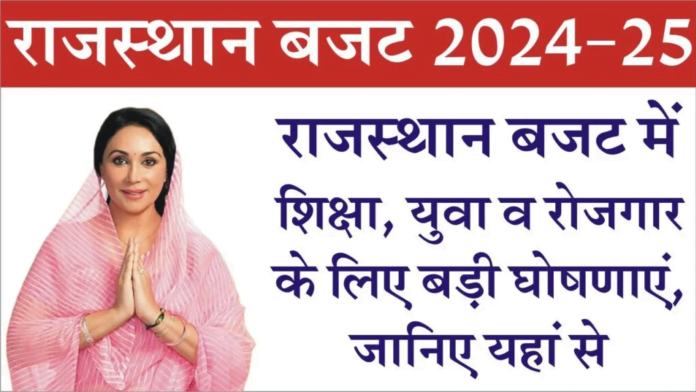
In a significant stride forward during the unveiling of Rajasthan’s interim Budget, Finance Minister Diya Kumari has put forth a bold proposal earmarking Rs 1,000 crore. This substantial funding is aimed at the establishment and enhancement of educational institutions, healthcare facilities, and administrative structures spread across various assembly constituencies. Noteworthy in this announcement is the initiation of an ambitious recruitment drive, set to fill a staggering 70,000 positions.

Minister Kumari, throughout the budget presentation, underscored the imperative of balanced development, casting a critical eye on the previous government’s apparent neglect of crucial assembly constituencies like Ladpura, Nasirabad, Siwana, Ahor, Dag, and Malpura. In response to this oversight, she unveiled a provision of Rs 1,000 crore, strategically directed towards kickstarting and upgrading additional colleges, schools, hospitals, and administrative buildings, with the overarching goal of ensuring harmonized regional progress.

A spotlight was thrown on the Mukhyamantri Jal Swavlamban Abhiyan, a noteworthy initiative aiming to construct 5 lakh water harvesting structures in 20,000 villages over the next four years. This ambitious endeavor is set to receive substantial backing with an allocation of Rs 11,200 crore. Minister Kumari emphasized the pivotal role of this initiative in rectifying the past neglect of certain assembly constituencies, constituting a crucial step towards holistic development.

Addressing the pressing issue of traffic congestion in Jaipur city, Minister Kumari announced the commencement of a Detailed Project Report for extending the Jaipur Metro from Sitapura to Ambabari. This strategic move reflects the government’s commitment to tackling urban mobility challenges and bolstering overall infrastructure.

Furthermore, Minister Kumari laid out plans for Mukhyamantri Jal Swavlamban Abhiyan-2, concentrating on the creation of an additional 5 lakh water harvesting structures in 20,000 villages over the next four years, with a substantial budgetary provision of Rs 11,200 crore. The commitment to recruiting 70,000 individuals for various positions underscores the government’s unwavering dedication to fortifying public service delivery and administrative efficiency.

Looking ahead, a comprehensive Budget for the fiscal year 2024-25 is slated for presentation in July. Following the provisions of Article 116 of the Constitution, a vote on account is presented to cover essential government expenditure for a limited period until the official approval of the Budget. This interim measure, amounting to one-sixth of the total estimates, ensures the seamless functioning of essential government operations.

Sandipani Ashram: A sneak peak into 5000 year old education system where Krishna & Balram learnt water sports, fashion and communication…

0

Wanna take a glance into the much-evolved education system which existed in India around 5000 years back? Try visiting Sandipani Ashram in Ujjain where Lord Krishna, his brother Balram and his friend Sudama studied and learnt skills in the form of communication, water sports, chanting,  prayers, practising Ayurveda, studying fashion by wearing dresses smartly and differently and designing ornaments using gems. 

Surprised? Yes, we too were surprised as we entered into the beautiful Gurukul which still resonates with the stories of Krishna, Sudama and Balram. 

The ashram is situated in Ujjain. It was a university where Lord Krishna leant the knowledge of 18 Puranas in 18 days, 4 Vedas in 4 days, 6 Shastras in 6 days, 16 arts in 16 days, Geeta in 20 days.

Sandipani Ashram: A sneak peak into 5000 year old education system where Krishna & Balram learnt water sports, fashion and communication...

The ancient Ujjain, apart from its political and religious importance, was a prestigious center of learning at the beginning of the Mahabharata period. Lord Shri Krishna with friend Sudama received regular education in the ashram of Guru Sandipani. Maharishi Sandipani’s ashram is situated on Mangalnath Road in Ujjain.

The area near the ashram is known as Ankpat, the place believed to be used by Lord Krishna to wash his stylus. There is a strong belief that the numbers 1 to 100 found on a stone were carved by Guru Sandipani. The Gomati Kund as mentioned in the Puranas was the source of water supply to the ashram in olden days. An image of Nandi near the pond dates back to the Sunga period. Followers of the Vallabha sect consider this place as the 73rd seat of Vallabhacharya out of the 84 seats where he gave his sermons all over India.

According to Skanda Purana, after killing Kansa 5266 years ago, Krishna and Balram came to Ujjain from Mathura on foot. The distance from Mathura to Ujjain city is 650 kilometers. Then his age was 11 years and 7 days. Krishna learned 64 arts in 64 days from his guru Maharishi Sandipani. Apart from this, he acquired the knowledge of 4 Vedas in 4 days, 6 Shastras in 6 days, 16 Vidhyas in 16 days, 18 Puranas in 18 days and Geeta in 20 days.

Sandipani Ashram of Ujjain is the place where Lord Krishna studied in his childhood with his brother Balram and friend Sudama. This ashram is situated in Ankpat area of Ujjain. The temple has statues of Krishna, his brother Balram and his friend Sudama studying. Not only this, Lord Krishna also learned 64 arts while studying here.

Those visiting here offer their prayers at the Pindeshwar temple in the ashram dedicated to Lord Shiva. A unique idol of Lord Krishna with a notebook and a pen is also present inside the Ashram. You can sit at the steps of the Gomti Kund for a rejuvenating meditation session. Also, one can pay respects at the ancient Sarveshwar Mahadev Temple featuring a Shiva Lingam installed by Rishi Sandipani himself.

Exploring the Vijayamangalam Jain Temple

0
Vijayamangalam Jain Temple

The Vijayamangalam Jain temple, also recognized as the Chandrapraba Tirtankarar Temple, stands as a prominent Jain temple situated in the town of Vijayamangalam within the Erode district of Tamil Nadu.

Dedicated to Chandraprabha, the eighth Tirthankara of Jainism, the Vijayamangalam Jain temple adheres to the Western Ganga architectural style. Its brick Vimana faces south, and the ardhamandapa houses idols of Pañca-Parameṣṭhi. Enclosed by a prakaram entered through a gopuram, the temple harbors numerous Jain idols dating back to uncertain times. Notably, it is under the safeguard and maintenance of the Archaeological Survey of India.

History

Historically part of Kongu Nadu, Vijayamangalam, an ancient Jain settlement, saw the construction of the Vijayamangalam Jain temple around 678 C.E. by King Konguvelir of the Velir dynasty. King Konguvelir, in this town, composed the epic Pancha-Kaviyams and hosted a Tamil Sangam, during which his maid played a pivotal role in answering scholarly questions. In commemoration, idols of King Konguvelir, his maid, and the Tamil Sangam members were installed within the temple.

An inscription within the temple eloquently praises the beauty of Perunkathai. Additionally, Vijayamangalam village, known as the birthplace of the 12th-century Jain acharya Bhavanadi, is notable for being the author of Nannūl, a significant work on Tamil grammar. Notably, the Vijayamangalam Jain temple holds the distinction of being the oldest Jain temple in the Kongu Nadu region.

In this sacred place, Pullava, the sister of Chavundaraya, a minister during the Western Ganga dynasty, observed sallekhana—a solemn fasting unto death.

How to reach?

The temple is located in close proximity to Vijaymangalam village, with the Vijayamangalam railway station just 5 kilometers away, and Erode at a distance of 20 kilometers from Vijayamangalam. There are convenient transport facilities connecting Vijayamangalam to Erode. Adequate boarding and lodging facilities are also available in Vijayamangalam.

Iran removes visa-requirements for Indian Citizens

0
Iran removes visa for 15 days

Monalika Medatwal

The Embassy of the Islamic Republic of Iran in New Delhi on Tuesday announced that Indian citizens no longer have to get visas to travel to Iran Travellers holding Indian passports can enter Iran without a visa every six months for a period of 15 days, which is non-extendable Iran approved a new visa-waiver programme for 33 countries, including India, Russia, the United Arab Emirates, Saudi Arabia, Indonesia, Japan, Singapore. Malaysia, Brazil and Mexico, in December.

 Iranian culture minister Ezzatollah Zarghami had said the move is aimed at boosting tourism and neutralising “Iranophobia campaigns” The Iranian government has abolished visas for Indian citizens from February 4 subject to four conditions, the Iranian embassy said in a statement Indians with ordinary passports will be allowed to enter Iran without a visa once every six months, with a maximum stay of 15 days which cannot be extended.

Moslem Shojai, who heads the Iranian tourism ministry’s foreign tourism marketing and development office, said in December that there had been a “notable growth” in travellers from India in 2023.Till Russia’s invasion of Ukraine, Iran was the most sanctioned country in the world. Iran’s foreign policy and nuclear programme have led to severe sanctions from several countries These sanctions also mean that Indian travel booking websites cannot list an Iranian airport online, lowever, the tickets are available online on google and other platforms.

The visa abolition specifically applies to Indian nationals who enter Iran by air. It also applies only to Indians going to Iran for tourism.

Indian nationals who wish to stay for a longer period, make multiple entries within six months or require other types of visas must obtain necessary visas from Iranian missions in India, the statement said.

A Glimpse into Jaipur’s Vibrant Flower Market

0
Jaipur Flower Market

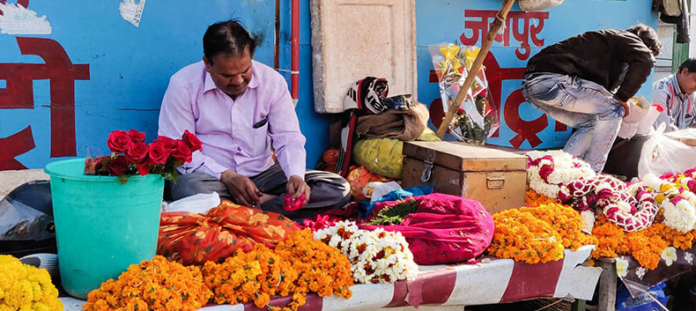
In the heart of the enchanting Pink City, amidst the hustle and bustle of its vibrant streets, lies a hidden gem that often escapes the notice of many – the Flower Market in Jaipur. In this article, we aim to shed light on this lesser-known aspect of the city, unraveling the secrets and beauty that the Jaipur Flower Market holds.

The Unveiling of Jaipur’s Flower Market

Flower markets play an integral role in connecting retailers and end-users with farm-fresh blossoms at affordable prices. Jaipur, known for its rich cultural heritage and bustling markets, also boasts a flourishing flower market that caters to the aesthetic needs of locals and tourists alike. Despite its significance, the Jaipur Flower Market often remains in the shadows, prompting the need for this article to unveil its hidden charm.

Locating the Floral Heaven

First things first, to experience the enchantment of the Jaipur Flower Market, one must navigate to its core. The market is conveniently located at Choti Chaupar, Tripolia Bazar, Modikhana, Jaipur, Rajasthan 302002. A simple addition of this address to your Google Maps application will guide you seamlessly to this floral haven.

Timing is Everything

Understanding the operational hours of the flower mandi in Jaipur is crucial for those eager to immerse themselves in the lively atmosphere. The market welcomes visitors from 9:00 AM to 9:30 PM, Saturday through Friday. However, it’s wise to note that these hours might vary, so it’s advisable to check for any updates before planning your visit.

A Kaleidoscope of Blooms

Stepping into the Jaipur Flower Market is like entering a world of enchantment, where a kaleidoscope of colors and fragrances captivates the senses. From classic Roses to exotic Orchids, the market boasts an impressive array of flowers sourced directly from farms. Among the varieties available are Carnations, Lilies, Tulips, Gerberas, Marigold, Lavender, Chrysanthemum, Lilium, and Tuberose, each offering a spectrum of hues to choose from.

Imported Flowers

For those seeking an extra touch of opulence, the Jaipur Flower Market caters to the demand for imported flowers. Imported blooms, cultivated in distant lands, find their way to the market, adding a touch of exotic allure. Flowers like Dahlia, Little Prince, Volkano, Bird Of Paradise, and Blue Passion Flower are particularly sought after, often gracing the extravagant events hosted in the city.

Bundle Prices

While the allure of the flower market is undeniable, budget-conscious shoppers will appreciate the transparency in pricing. As per general assumptions, the market offers various bundles at competitive rates. Carnations are priced at Rs. 100 per bunch, Gerberas at Rs. 30 per bunch, Marigold at Rs. 200 per bunch, and Orchids at Rs. 150 per bunch. It’s essential to note that these prices may vary based on market conditions, and the mentioned flowers are subject to seasonal availability.

Online Flower Shopping

For those who wish to skip the market hustle, the option of online flower shopping with doorstep delivery is a convenient alternative. With flower delivery services in Jaipur, one can enjoy the beauty of fresh blooms without leaving the comfort of their homes.

The Jaipur Flower Market stands as a testament to the city’s diversity, offering a floral haven that goes beyond its historical architecture and royal palaces. Whether you’re a local resident or a curious tourist, a visit to this market promises an immersive experience in the world of vibrant petals and fragrant blossoms.

India shines at Grammy Awards- Shankar Mahadevan, Zakir Hussain win under ‘Best Global Music’

0

India’s musical prowess resonated triumphantly at the 66th Annual Grammy Awards in Los Angeles, with the dynamic duo of Shankar Mahadevan and Zakir Hussain clinching the prestigious accolade for ‘Best Global Music Album.’ Their collaborative fusion band, ‘Shakti,’ orchestrated a mesmerizing sonic journey in their latest masterpiece, ‘This Moment.’

The Grammys, amplifying the celebratory moment, shared a captivating snapshot on their official X platform, showcasing Mahadevan and fellow bandmate Ganesh Rajagopalan basking in the glory of their well-deserved victory on the grand stage. The accompanying post by the Grammys exuberantly declared, “Congrats Best Global Music Album winner – ‘This Moment’ Shakti. #GRAMMYs.”

‘This Moment’ unfolds as a musical tapestry woven with eight soul-stirring compositions, a testament to the collaborative genius of John McLaughlin (guitar synth), Zakir Hussain (tabla), Shankar Mahadevan (vocalist), V Selvaganesh (percussionist), and Ganesh Rajagopalan (violinist). The album stood out amidst stiff competition, contending with acclaimed artists such as Susana Baca, Bokante, Burna Boy, and Davido.

The Grammy triumph not only solidifies the global impact of Indian musicians but also underscores the profound influence of diverse musical traditions converging seamlessly. As ‘Shakti’ basks in the glory of their Grammy win, India takes pride in this extraordinary musical feat that transcends borders and resonates with the universal language of music.

The Majesty of Kulpakji Jain Temple of Lord Adinath

0
Kulpakji Jain Temple

Priyanshi Pareek

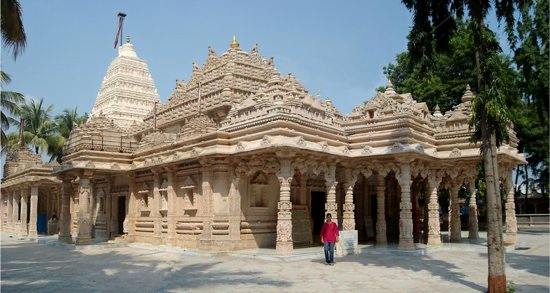
Kulpakji, a vital Jain pilgrimage center in South India, features a temple with an interior crafted from red sandstone and white marble. Dedicated to Lord Rishabha, also known as Adinath Bhagvan, the first Tirthankar in Jainism, the temple is believed to be the abode of the local manifestation of Lord Adinath, called Manikya Deva.

The main temple is flanked by eight deities representing other Tirthankars. Notably, a 130-centimeter-tall statue of Lord Mahaveer, carved from a single piece of jade, stands prominently. Adjacent to the central temple, statues of Lord Simandar Swami and Mata Padmavati are installed, alongside other revered deities like Shantinatha, Chandraprabha, Abhinandananatha, Padmavati, and Bhomyaji, contributing to the spiritual sanctity of Kulpakji.

The renowned Someshwara Temple, established by the Chalukyas approximately 800 years ago, stands as a prominent landmark in Kolanupaka. The name “Kolanupaka” is derived from “Kolanu,” meaning lake, and “Paka,” signifying a hut, reflecting the historical abundance of lakes and huts in the region.

Historically known by various names such as Bimbavatipuram, Kottiyapaka, Kollihaka, Kollipaka, and Kolanpak, the village has a rich cultural heritage. During the construction of a school and library, numerous statues were unearthed, prompting Somalingam Kallem, a government official, to relocate and exhibit them in the museum of the Someshwara Temple.

This temple, with its deep historical roots, serves as a repository of cultural artifacts, preserving the heritage of Kolanupaka for generations to come.

History

The Kolanupaka Temple, with a history spanning over 2,000 years, is a significant Jain center that flourished during the Rashtrakutas period. Dating back to the 9th century, numerous Jain antiquities have been discovered, including a grant mentioning a gift to a basadi during the reign of Sanfkaragana at Akunur.

The site, marked by over 20 Jain inscriptions, served as a major center of Kranur Gana within the Mula Sangh. Noteworthy findings include a manastambha with a 1125 AD inscription and a 12th-century temple inscription referencing Meghachadra Siddhantadeva’s sallekhana. Further contributing to its historical richness is a 151-line Kannada inscription by Someshvara III of the Western Chalukya Empire in 1125 AD. This collectively forms a captivating historical tapestry of Kolanupaka.

In the 14th-century Vividha Tirtha Kalpa by Jinaprabhasuri, specific sections discuss the Kulyapak Rishabhadeva Stuti and Kollapakamanikyadeva Tirthakalpa. According to these texts, the Manikyasami image, initially worshipped by Mandodari, Ravana’s wife, was brought to Kolanupaka by the ruler Sankar of Kalyana. This historical account enriches the sacred narrative surrounding the revered Manikyasami image at the temple.

Legend has it that the main temple in Kolanupaka was constructed by Bharat Chakravarti. Jainism, having a strong presence in Andhra Pradesh before the 4th century, identified Kolanupaka as a significant center from early times. Notably, the temple underwent recent renovations, with over 150 artisans from Rajasthan and Gujarat employed for the restoration, showcasing a commitment to preserving and enhancing its historical and cultural significance.

Mahvira Jain Temple of Rajasthan 

0
Mahavir Jain Temple

Monalika Medatwal

The Mahavira Jain Temple in Osian, Rajasthan, holds profound historical significance. Constructed in the 8th century, this temple stands as a testament to Jain architectural brilliance. Dedicated to Lord Mahavira, the 24th Tirthankara of Jainism, the temple showcases intricate carvings and architectural finesse. Osian, an ancient trading hub on the Silk Route, became a prominent center for Jainism during the medieval period. 

The temple complex includes beautifully adorned shrines and intricately carved toranas (arched gateways). Over the centuries, the temple has witnessed various cultural and historical shifts, reflecting the rich tapestry of India’s past. Pilgrims and tourists continue to visit the Mahavira Jain Temple to marvel at its architectural splendor and to connect with the spiritual heritage of Jainism in the heart of Rajasthan.

Architectural Grandeur

The Mahavira Jain Temple in Osian is an architectural marvel, showcasing intricate craftsmanship and timeless design. its sandstone structure features a blend of Nagara and Dravidian architectural styles. The temple’s main sanctum is adorned with exquisitely detailed sculptures of Lord Mahavira and other Tirthankaras, while the exterior boasts ornate carvings depicting mythological and celestial themes. 

The temple complex includes elegantly carved pillars and captivating toranas, with each element reflecting the artistic prowess of its creators. The use of geometric patterns, delicate motifs, and symmetrical layouts adds to the temple’s grandeur, making it a captivating testament to the cultural and architectural richness of ancient Jain craftsmanship in Rajasthan.

Tourism and Spiritual experience

The Mahavira Jain Temple in Osian beckons tourists and devotees alike, offering a unique blend of spiritual serenity and architectural splendor. Pilgrims find solace in the sacred ambiance, adorned with intricate Jain iconography. The temple’s historical significance attracts history enthusiasts and art aficionados, mesmerized by its ancient sandstone craftsmanship. Osian, with its tranquil surroundings, enhances the spiritual experience, allowing visitors to connect with the Jain heritage. As a prominent pilgrimage site and tourist attraction, the Mahavira Jain Temple in Osian provides a harmonious convergence of cultural exploration and spiritual reflection, making it a must-visit destination for those seeking a meaningful and enriching journey.