Home Blog Page 375

Tesla’s Big Move: Hiring Resumes in India Amid High-Level Talks

0

Rudra Pratap Singh

In a significant shift, Tesla, the electric vehicle giant owned by Elon Musk, has restarted hiring in India. The move comes just days after Prime Minister Narendra Modi met with the Tesla CEO in Washington, D.C., signaling renewed interest in the Indian market.

Job Openings & Expansion Plans
On February 18, 2025, Tesla posted thirteen job openings in Mumbai across various roles, including business operations, customer service, order operations, showroom staff, and technicians. Although these positions are based in Mumbai, the job listings indicate that identical roles are available in Delhi as well.

Tesla has historically maintained a limited presence in India due to high import tariffs on electric vehicles. Musk has long voiced concerns about these tariffs, advocating for reduced duties to test buyer interest before committing to local assembly.

The Modi-Musk Meeting: Key Discussions
While details of the discussions between Modi and Musk on February 13 remain unclear, Modi’s post on X highlighted that their conversation revolved around “space, mobility, technology, and innovation.” The topic of tariffs on EV imports—one of Tesla’s primary concerns—was not explicitly mentioned. However, the timing of Tesla’s hiring spree suggests potential developments behind the scenes.

Musk was initially expected to visit India last year before the general elections, a trip rumored to include an announcement of major investments. That visit was ultimately canceled, leaving many speculating about Tesla’s long-term strategy for India.

Trade Policy & Tariff Adjustments
The broader trade landscape has also influenced Tesla’s moves. U.S. President Donald Trump, whom Modi was visiting during his Washington trip, has taken a strong stance against tariffs globally, frequently naming India as one of the biggest offenders in imposing high duties on American goods.

In the weeks leading up to the Modi-Musk meeting, India made some tariff adjustments, including lowering duties on EV components and minerals essential for battery production. While these changes improved the landscape slightly, overall duties on EVs remain relatively high, potentially still a barrier for Tesla’s entry.

What’s Next for Tesla in India?
With hiring underway, Tesla appears to be testing the waters in the Indian market once again. While the current job openings focus on sales and operations rather than manufacturing, they indicate a growing interest in establishing a foothold.

As policy changes and discussions between the Indian government and Tesla continue, industry experts remain optimistic about Tesla’s eventual local production plans. If tariff reductions or policy incentives align with Musk’s expectations, Tesla’s long-awaited entry into India’s EV market could become a reality sooner than expected.

For now, all eyes are on Tesla’s next move—and whether India will finally become home to a Tesla manufacturing facility in the near future.
Women Leaders promoting Traditional Sarees Story 2: Delhi CM Rekha Gupta Wears Madhubani Painting Saree

0

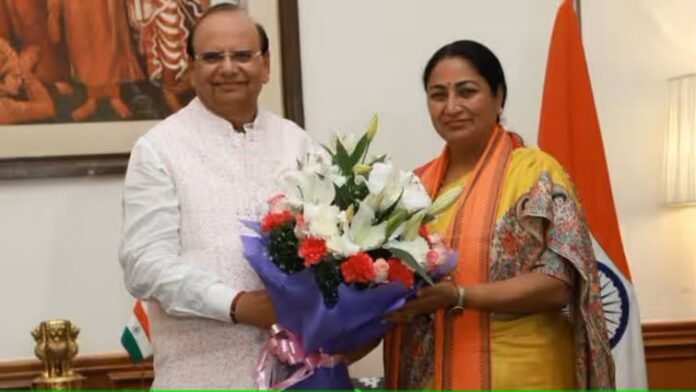
Newly elected Delhi Chief Minister Rekha Gupta made a striking statement ahead of her oath-taking ceremony by wearing a saree adorned with Madhubani paintings, a traditional art form from Bihar. Her choice of attire has drawn praise from BJP leaders in Bihar, who called it a proud representation of the state’s rich culture and heritage.

A Cultural Statement Through Attire

Rekha Gupta, who represents the Shalimar Bagh Assembly constituency, is set to take the oath as Delhi’s Chief Minister today at Ramleela Maidan. Ahead of the ceremony, a picture of her donning a Madhubani painting saree was shared by Bihar BJP on social media platform X.

Bihar BJP’s official handle posted, “Leadership in Delhi, pride of Bihar in attire. The newly elected Chief Minister Rekha Gupta met the Honorable Lieutenant Governor wearing a Madhubani painting saree while staking claim to form the government. This is not just a garment; it is a symbol of Bihar and Purvanchal’s art, culture, and heritage, which continues to shine across the country.”

Several BJP leaders from Bihar extended their congratulations to Gupta, emphasizing that her attire symbolizes a deep cultural connection between Delhi and Bihar.

A Leader with Strong Roots

Gupta, originally from Haryana, has had an active political career, beginning with the Akhil Bharatiya Vidyarthi Parishad (ABVP). She also served as the President of the Delhi University Students’ Union (DUSU) before entering mainstream politics. On Wednesday, during a BJP legislative meeting, she was elected as the leader of the legislative party, making her Delhi’s next Chief Minister.

Madhubani Painting: A Tradition in Indian Politics

Gupta is not the first political figure to make a cultural statement through Madhubani art. Earlier this year, on February 1, Union Finance Minister Nirmala Sitharaman also wore a Madhubani painting saree while presenting the Union Budget. She donned a cream-colored saree with a golden border, a special gift from Padma Shri awardee and renowned Madhubani artist Dulari Devi from Bihar.

Sitharaman had received the saree during her visit to Madhubani last year, further cementing the traditional art form’s recognition at a national level.

Oath-Taking Ceremony at Ramleela Maidan

Gupta will take the oath as Delhi’s new Chief Minister today, with Lieutenant Governor VK Saxena administering the ceremony. Several newly elected MLAs will also be sworn in as ministers. Her leadership marks a new chapter for Delhi, and her choice of attire highlights her commitment to embracing and showcasing India’s diverse cultural heritage.

Four-year-old donates stem cells to save her baby sister from blood cancer in Odisha

0

Rudra Pratap Singh

In an extraordinary display of love and resilience, a four-year-old girl has become the youngest donor to her two-year-old sister, who is battling acute myeloid leukemia (AML), a severe form of blood cancer. This marks the first-ever allogeneic bone marrow transplant (BMT) performed on such a young child in Odisha, offering new hope for families fighting similar battles.

A Race Against Time

For little Aliza Naaz, life took an unexpected turn when she was diagnosed with high-risk AML. Her parents, Sharukh Ansari and his wife, from Dhanbad, Jharkhand, had to navigate a journey no parent ever wishes to face. She initially underwent induction chemotherapy at Tata Memorial Hospital (TMH) in Jamshedpur in July 2024. But post-treatment evaluations revealed devastating news—the disease had persisted, pushing her into the high-risk category.

Her doctors recommended an allogeneic BMT, a procedure that would require a compatible stem cell donor. A ray of hope emerged when human leukocyte antigen (HLA) matching conducted at TMH confirmed a 100% match with her elder sister, Aatifa, who was just four years old.

A Family’s Struggle and a Life-Changing Decision

The cost of a bone marrow transplant outside Odisha was estimated at a staggering ₹30 lakhs—an amount well beyond the reach of Aliza’s family. When TMH doctors realized the family could not afford the procedure, they referred them to SCB Medical College Hospital (SCBMCH) in Cuttack, where the procedure is provided free of cost.

A First-of-Its-Kind Transplant

On January 7, 2025, Aliza was admitted to the BMT unit of SCBMCH. Her parents were carefully counseled on the procedure’s risks and implications. Given the complexity of the case and the donor’s young age, a special BMT team, including two pediatric faculty members, was assembled. The preparation began on January 27, and the brave little donor, Aatifa, was admitted the following day.

The stem cell collection process posed significant challenges, as no procedure like this had been performed on such a young donor before. “The same blood group was matched and used to prime the aphaeresis system, as the child’s blood volume was too low to sustain the dynamics of stem cell collection,” said Dr. Sudha Sethy, Head of Clinical Hematology at SCBMCH. The procedure began at 9 a.m. on February 6 and was successfully completed by 1 p.m. The very next day, on February 7, Aliza received her sister’s life-saving stem cells.

A Hopeful Recovery and a Milestone for Odisha

The road to recovery has not been without its hurdles. Aliza faced infections and chemotherapy-induced mucositis, but doctors at SCBMCH managed her condition with antibiotics and supportive care. As of the latest reports, she remains stable, with no fever and promising biochemical and hematological parameters.

“This landmark BMT will open doors for the treatment of many children suffering from blood disorders like Thalassemia, Sickle Cell Disease, Aplastic Anemia, various blood cancers, and other related conditions. These diseases affect thousands and place a significant socio-economic burden on our State. Now, with SCBMCH offering this procedure free of cost, many children who previously had no chance can hope for a cure,” said Prof. R.K. Jena, a renowned BMT physician.

A Beacon of Hope for the Future

Established in 2014, the BMT unit at SCBMCH was the first in the country to offer this life-saving treatment in a government hospital setting. A procedure that typically costs between ₹15-30 lakhs and comes with a long waiting period in private hospitals is being performed here at no cost to patients. Over the past 11 years, the unit has successfully conducted 176 BMTs, with more than 80% of patients showing positive recovery outcomes.

Aliza’s journey is one of courage, science, and the boundless love of a sister who, despite her young age, gave her the greatest gift—hope. Her story stands as an inspiration and a testament to the progress in medical science and the compassionate healthcare available in Odisha.

Building Hope in Malawi: A Malayali Couple’s Mission to Transform Lives

0

Rudra Pratap Singh

KOCHI: Thousands of miles from Kerala, in the heart of South-Central Africa, a young Malayali couple is making a difference in Malawi, one of the world’s least developed nations. Arun C Ashokan and his wife, Sumi, have dedicated their lives to improving the conditions of rural villagers, ensuring access to clean water, education, and sustainable livelihoods.

A Chance Encounter That Changed Everything

Arun, hailing from Nilambur in Malappuram, arrived in Malawi in 2019. His philanthropic journey began two years later, quite unexpectedly. “Everything happened by chance,” he recalls. Initially working as a warehouse manager in the city, Arun’s real awakening came when he took up a job with a construction company that required him to visit remote villages.

During one such visit to Chisasila, he witnessed children studying under a makeshift structure—four poles supporting a thatched roof. When it rained, school was simply canceled. Moved by their plight, Arun decided to take action.

Building a School from Scratch

His initial plan was modest—a temporary shelter with a tarpaulin roof. But when villagers and teachers pleaded for a permanent structure, he resolved to build a proper school. With help from his colleague, engineer Kenneth, they designed a blueprint, and the villagers enthusiastically joined the effort, producing 20,000 bricks within two weeks.

Arun’s friend Ashique, working in Dubai, stepped in to provide financial support. Refusing to crowdfund, the team pooled their salaries to finance the project. After a year and a half, their dream took shape—a fully functional school.

The project caught the attention of a visiting UN team, which funded the construction of two additional classrooms. Arun’s employer contributed an office room, and eventually, the school was taken over by the Malawian government, expanding to include grades I to VII.

Empowering Villages: Wells, Water, and Livelihoods

After completing the school, Arun and Sumi expanded their efforts, visiting other villages to better understand their needs. They introduced new cooking techniques using staple foods like tapioca and banana, taught villagers how to set up small businesses, and pioneered a simple method to store water using makeshift dams.

However, the most pressing issue remained—water scarcity. Each village relied on a single hand pump, often insufficient for its 50-plus families. Locals believed the soil was too loose for open wells, but Arun and Sumi saw an opportunity. Drawing inspiration from Kerala, they built lined wells using bricks and cement to prevent soil collapse. Their method proved successful, and to date, they have constructed seven such wells.

Innovating for the Future

Now, the couple is working on a more ambitious water supply project. By detecting underground water sources, digging wells, and using solar pumps, they aim to provide a sustainable water supply to drought-stricken villages.

Funds for these initiatives come from their YouTube channel, Malawi Diaries, as well as their personal savings and contributions from close friends. The couple’s current undertaking? Constructing a higher secondary school in Ponela village—another step in their unwavering mission to bring education and hope to Malawi’s underserved communities.

Arun and Sumi’s journey is a testament to the power of compassion and determination. Far from home, they have found a new purpose—building a better future, one village at a time.

Zeiss India and IISc Join Forces to Pioneer AI in Eyecare

0

Rudra Pratap Singh

In a groundbreaking initiative set to redefine ophthalmology, Zeiss India has partnered with the Indian Institute of Science (IISc) to establish an advanced AI-driven research lab at the IISc campus. This collaboration aims to harness artificial intelligence to improve early diagnosis, personalize treatment, and enhance accessibility in eye care solutions.

Building the Future of Eyecare with AI

The research lab, which is part of Zeiss India’s corporate social responsibility (CSR) initiative, will be equipped with state-of-the-art IT infrastructure and will support Master’s and PhD students in their research. “We will sponsor these students. Currently, we have two Master’s students enrolled, and we are looking for two PhD students,” says Ashish Modi, Head of the Centre of Application Research India (Zeiss India’s R&D Division). The plan is to have around 8-10 researchers working in the lab over the next three years.

Creating a Robust Eyecare Database

One of the lab’s primary objectives is to develop a comprehensive dataset for conditions such as glaucoma and diabetic retinopathy, two leading causes of blindness. By leveraging AI, researchers aim to facilitate early screening and intervention for these conditions. Additionally, the lab will explore AI’s potential in identifying age-related cognitive impairment through ophthalmological data.

Beyond research, the lab will focus on developing portable, AI-powered diagnostic devices that can be deployed in remote areas. These handheld tools will enable large-scale screenings, significantly reducing the burden on healthcare professionals while expanding access to quality eyecare.

Integrating AI into Healthcare at IISc

The initiative aligns seamlessly with IISc’s vision of integrating clinical research with medical practice. Dr. Rajesh Sundaresan, Dean of the Electrical, Electronics, and Computer Sciences Division at IISc, highlights the importance of this collaboration: “In India, clinical research is often separate from medical practice. Our upcoming medical school and hospital at IISc are an effort to change this. By intertwining AI-enabled healthcare with our technological expertise, we can accelerate advancements in diagnostics and treatment.”

With AI set to revolutionize modern medicine, this partnership between Zeiss India and IISc is poised to make significant contributions to the future of ophthalmology. By combining cutting-edge technology with real-world clinical applications, the initiative promises to make high-quality eyecare more accessible and effective than ever before.

Utilise Your Valuable Time for Career Development and Personal Growth, Says Col Sandeep Ahlawat, Commanding Officer, 21 MP Battalion NCC Ratlam in Badnagar

0

NCC Cadets Guided on Lifestyle, Social Responsibility, and the Significance of Uniform

Badnagar – Colonel Sandeep Ahlawat, Commanding Officer of the 21 MP Battalion NCC, Ratlam, conducted an inspection of the NCC unit at Government Postgraduate College, Badnagar, on Monday. During the inspection, he provided valuable insights to the NCC cadets on lifestyle, social responsibility, and the importance of wearing a uniform. The cadets were also guided on the misuse of social media and the significance of maintaining good company.

Cadets Display Strong Discipline

Colonel Ahlawat emphasised that NCC cadets exhibit a higher level of discipline compared to regular students. He advised the cadets to minimise their engagement with social media and instead utilise their valuable time for career development and personal growth.

Warm Welcome and Event Highlights

The event began with a warm welcome for Colonel Ahlawat and Subedar Major Jaipal Singh by NCC Officer Dr. Deepa Wadia. The session was conducted by Dr. Yujvendra Dhakad. The event witnessed the presence of esteemed faculty members, including College Principal Professor Sunil Udiwal, Professor Sanjay Joharam, Dr. Lakhan Nagar, and Professor Animesh Sharma.

Utilise Your Valuable Time for Career Development and Personal Growth, Says Col Sandeep Ahlawat, Commanding Officer, 21 MP Battalion NCC Ratlam in Badnagar

Vote of Thanks and Dignitaries in Attendance

At the conclusion of the event, a vote of thanks was delivered by the college’s Administrative Officer, Professor Manoj Lashkari. Several notable dignitaries were also present, including Department of Rural Development Co-Coordinator Ramnarayan Soni, Block Manager Umesh Gehlot, Sub-Divisional Co-Manager Rahul Parmar, Pawan Anjana from Mahudi, and Mandal Manager Jeevan Singh Thakur.

The event provided an enriching experience for NCC cadets, reinforcing the values of discipline, social responsibility, and ethical digital engagement.

Delhi Gets Its Fourth Woman CM: Who is Rekha Gupta?

0

Delhi has a new leader at the helm. Rekha Gupta, a seasoned politician and three-time MCD councillor, has been sworn in as the city’s fourth woman Chief Minister. A former president of the Delhi University Students’ Union (DUSU) and a prominent figure in the Bharatiya Janata Party (BJP), Gupta brings extensive administrative experience to the role.

A Historic Moment for Delhi

As news of her appointment broke on Wednesday evening, celebrations erupted outside her residence in Shalimar Bagh. BJP supporters, along with her family members, gathered to mark the occasion with dhol beats and chants of “Sabko dekha, aa gayi Rekha” (We have seen everyone, now Rekha has arrived) and “Jai Shri Ram”.

Her husband, businessman Manish Gupta, expressed his excitement, stating, “I am extremely proud and looking forward to supporting my wife in her new role.” Her mother-in-law, Meera Gupta, echoed the sentiment, distributing sweets and saying, “She is a wonderful daughter-in-law and will prove to be an excellent Chief Minister.”

From Student Leader to Delhi’s Chief Minister

Gupta’s political journey began in the 1990s when she joined the Akhil Bharatiya Vidyarthi Parishad (ABVP), the student wing of the Rashtriya Swayamsevak Sangh (RSS). While studying at Daulat Ram College, she quickly rose through the ranks, becoming the general secretary of DUSU from 1995 to 1996, and later serving as its president from 1996 to 1997.

Her academic credentials include a degree in commerce and a Master’s degree in management and arts from the University of Delhi. In 2002, she officially joined the BJP and played a pivotal role in the party’s youth and women’s wings, holding positions such as:

  • Secretary of Bharatiya Janata Yuva Morcha’s Delhi unit
  • National secretary of BJYM
  • General secretary of BJP Mahila Morcha (Delhi)
  • National vice-chairperson of BJP Mahila Morcha
  • National in-charge of Uttar Pradesh Mahila Morcha

Gupta’s extensive political experience made her a strong contender for leadership roles within the BJP.

Political Career: Wins and Setbacks

Gupta made her electoral debut in 2007 when she won the Municipal Corporation of Delhi (MCD) elections from the North Pitampura ward. Over the years, she served in various key positions, including:

  • Chairperson of the Women’s Welfare and Child Development Committee (MCD)
  • Vice-chairperson of the Standing Committee (MCD)
  • Chairperson of the New Delhi Municipal Council’s (NDMC) Education Department (2012-2013)

Despite her early successes in municipal politics, Gupta faced setbacks in Assembly elections. In 2015 and 2020, she contested from Shalimar Bagh but lost to AAP’s Bandana Kumari. However, she did not lose momentum. In 2022, she won the MCD elections again and was fielded as the BJP’s candidate for the mayoral elections, though she lost to AAP’s Shelly Oberoi.

Her persistence paid off in 2024 when she secured a resounding victory in the Assembly elections, defeating Bandana Kumari by a margin of 29,595 votes.

Personal Life and Political Vision

Born in Nandgarh village in Haryana’s Jind district, Gupta moved to Delhi at the age of two. Her father worked at the State Bank of India, and she grew up in the capital city, shaping her political ambitions from an early age.

Gupta’s family has always been supportive of her political journey. Her daughter is currently pursuing post-graduation in Australia, while her son is completing his engineering degree in Vellore, Tamil Nadu.

Colleagues and fellow politicians have lauded her leadership skills. MCD Leader of Opposition Raja Iqbal Singh stated, “She has vast experience and understands people’s grievances.” Saraswati Vihar councillor Shikha Bharadwaj added, “She is a strong administrator, bold and approachable. She knows Delhi’s challenges and how to tackle them.”

Challenges and the Road Ahead

As she takes charge, Gupta faces significant challenges, including addressing the city’s pollution crisis, improving public transport, enhancing women’s safety, and ensuring better governance. Her past experience in municipal administration is expected to play a crucial role in implementing effective policies.

With her appointment, Delhi gets its fourth woman Chief Minister—one with deep grassroots connections and years of experience in public service. Whether she can translate her political acumen into tangible improvements for Delhiites remains to be seen, but for now, all eyes are on Rekha Gupta as she takes on the capital’s top job.

‘I Started With a Stamp’: This Chennai Shop is Home to Antiques That Are Centuries Old

0

Rudra Pratap Singh

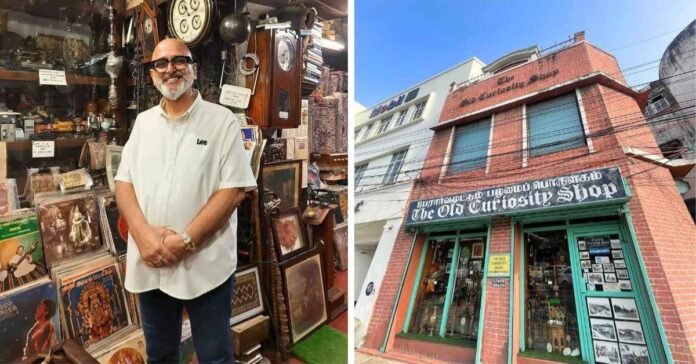
A sticky note at the entrance of the Old Curiosity Shop in Chennai’s Anna Salai reads: Please switch off your cellular phones, at least inside this shop. Let’s talk to each other. Pretend it’s 1890.

It’s a humid afternoon as I weave through the city’s bustling streets, ticking off tourist spots, when a brick-red building catches my eye. It feels like something out of a JK Rowling novel, an enchanting contrast against the modern chaos surrounding it. Intrigued, I step inside. Before I take you through my conversation with Lateef Mohammed, the shop’s owner, let me share a secret: Lateef travels back in time every day. He does so through the antiques he collects, catching up with bygone eras like old friends. For him, these relics are not mere objects—they are fragments of history, each with a story waiting to be told.

A Legacy Carved in Time

Lateef’s reverence for his collection is almost hereditary. His grandfather, Ghulam Mohammed, arrived in Chennai from Kashmir in the 1940s, looking to explore life beyond Jammu. “At that time, northern India was in turmoil under British rule. Tamil Nadu, in contrast, felt like a golden place,” Lateef shares. Ghulam Mohammed set up a shop selling Kashmiri handicrafts and souvenirs from across India, one of the first of its kind in Tamil Nadu. Foreign visitors adored the exquisite craftsmanship—and the shopkeeper’s rare ability to converse fluently in English.

A decade later, a young Lateef would spend hours at the shop, enchanted by the steady stream of visitors. “What do you like?” they would ask. “Stamps,” he’d reply eagerly. Their advice? “Go to the bank. You’ll find plenty there.” And so began his childhood tradition—waiting near dustbins outside banks, salvaging discarded envelopes with foreign stamps. At home, he would soak them in water, carefully peeling off each stamp to add to his growing collection.

His fascination soon extended beyond stamps. Foreign customers gifted him rare coins, which he treasured. Over time, his passion grew, and the boy collecting stamps and coins became the man curating an entire world of history.

The Old Curiosity Shop: Where Time Stands Still

Each time the door swings open, three things enter—city noise, a gust of wind, and a reminder that I am still in Chennai. Yet, inside, it’s easy to forget. Time bends in this space, where every object whispers tales of the past.

“This isn’t just a shop,” Lateef tells me. “The people who come here are not ordinary customers. They are the curious ones—the ones who want to touch history, to feel its weight, to hear its stories.”

The visitor list is proof enough. The Nehru family, Ustad Zakir Hussain, international cricket teams, Supreme Court and High Court justices, and film stars have all stepped into this time capsule. Lateef welcomes them all, hoping to revive an appreciation for the past, an art he believes is fading.

A Collector’s Journey Through Time

“How did you collect all of this?” I ask, marveling at the shelves teeming with vintage cameras, giant gramophones, a Blickensderfer typewriter, walls adorned with silent clocks, stacks of vinyl records, and sepia-toned photographs.

“Pen pals,” Lateef grins. “In those days, we exchanged more than letters. I swapped stamps, coins, and sometimes even stories with people from around the world.” His passion quickly grew beyond stamps and coins to records, tape recorders, antique cameras, and heirlooms from a different age.

As we talk, he invites me deeper into the shop, into a quarter reserved “only for some.” The treasures here outshine everything else. I run my fingers over a 100-year-old book on poet Mirza Ghalib—possibly the last remaining copy in existence. I see an Indian soldier’s identity card from the British Army, cloth-backed maps of undivided India, royal attire embroidered with real gold filigree, books from the Gutenberg era, handwritten literature dating back 400 years, and first editions of Harry Potter and M.K. Gandhi’s Delhi Diary (1948)—marked at just nine rupees. Each object is a portal to a forgotten time.

As I stand there, surrounded by relics older than most living generations, the weight of history settles on my shoulders. The past is alive here, breathing through the artefacts Lateef has spent a lifetime collecting.

A few hours later, I step out of the shop, reluctant to leave. When I recount my visit to my editor, she asks, “So, you went to an antique shop?”

“No,” I say, smiling. “I made friends with the past.”

‘They Never Spoke to a Man, Now They Lead Meetings’: How These Women Are Rewriting the Rules

0

Rudra Pratap Singh


For years, Amita Chouhan dreamed of a career in healthcare, but early marriage and family responsibilities put her aspirations on hold. “I don’t want to work in a hospital as a nurse — I want to do something for the people of my village,” says Amita, a mother of two from Ujjain, Madhya Pradesh. It was only when she joined Plustrust’s ‘Community Health Entrepreneurs (CHE) Fellowship’ that she found a way to bring medical services to her village while continuing her education.


Amita’s story mirrors the challenges faced by countless women across India who encounter societal barriers preventing them from achieving financial independence. However, through small but meaningful interventions, many are rewriting their narratives, and one organization is helping them do just that — Plustrust.


A Vision for Change
Plustrust, a Bengaluru-based social enterprise, has been supporting rural women entrepreneurs since 2008. Through its micro-incubation model, it provides mentorship, financial backing, and training, enabling women to turn their ideas into reality. The organization has supported 289 fellows across 13 states, with 89% of them being women from villages and small towns.
Founded by Dr. Lalitha Iyer, a former banker and consultant, Plustrust is built on the belief that women can drive change if given the right support. “Many women had never spoken to a man outside their family before becoming fellows. Now they address village meetings,” Dr. Lalitha explains. The organization’s six-month fellowship programs provide financial stipends, hands-on training, and project management skills, ensuring that women gain confidence and self-reliance.

‘They Never Spoke to a Man, Now They Lead Meetings’: How These Women Are Rewriting the Rules


Plustrust has collaborated with various organizations to bring healthcare innovations to rural areas, including rapid thyroid testing devices and home-based ECG machines. It also runs multiple fellowship programs tailored to different social needs:
• Community Health Entrepreneurs (CHE) Fellowship: Equips women with healthcare solutions, focusing on diagnostics and awareness.
• Rural Women Edupreneur (RWE) Fellowship: Supports women in creating innovative learning spaces.
• Return to Roots (RTR) Fellowship: Provides skill development for migrant workers returning to their native villages.
• Changemaker Fellowship: Helps urban youth implement grassroots social change initiatives.
Beyond these, Plustrust fellows work on initiatives promoting women’s health, social inclusion, and sustainable businesses.


Three Women, One Mission
From Ayodhya to Ujjain to Udaipur, three women have transformed their communities through Plustrust’s support. Their stories highlight resilience, determination, and the power of opportunity.
Simmi: The Educator Who Built a Movement
Growing up in Ayodhya, Uttar Pradesh, Simmi saw firsthand how girls were denied opportunities due to gender bias. Determined to challenge societal norms, she pursued a career in education. In 2016, she joined Plustrust’s RWE Fellowship, leading to the creation of Prerna Kishori Vikas Kendra, a center providing life skills education to adolescent girls.


With Plustrust’s guidance, Simmi expanded her work, securing the Wipro Seeding Fellowship (2018-2020) and establishing a teacher training center. Today, she leads a team addressing gender violence and youth health, helping over 400 girls gain confidence and awareness. Despite challenges, she remains dedicated to fostering inclusive education and empowering young women.
Amita: The Healer Who Found Her Calling
Married young and unable to pursue her education, Amita Chouhan’s dreams of working in healthcare seemed distant. However, in 2022, she joined the CHE Fellowship, learning essential medical diagnostics. Through perseverance, she built trust in her village, conducting health tests and saving lives—such as detecting dangerously low oxygen levels in an elderly woman, a moment that cemented her reputation as a community health leader.
Today, Amita earns an income from health tests and workshops, while pursuing a nursing degree. She envisions a future where she can continue serving her village through a Plustrust-supported clinic incorporating telemedicine.
Khushnoor: The Entrepreneur Who Created Opportunities
In Udaipur, Rajasthan, Khushnoor Bano defied societal norms to pursue financial independence. Forced to leave school after Class 10, she was married young, but remained determined to uplift other women. Her journey changed in 2021 when she attended a Plustrust workshop through a Self-Help Group.
With training in business planning and product development, she launched a successful soap-making enterprise, supplying cleaning products to banks and government offices. Her business now employs five women and earns over Rs 30,000 a month, inspiring other families to support women’s education and entrepreneurship.
The Ripple Effect
Plustrust’s impact extends beyond individual success stories—it creates lasting community change. Whether providing access to healthcare, improving education, or fostering economic independence, its fellows are catalysts for transformation.
“These women are breaking barriers and shaping a future where every woman can dream—and every dream has a chance to come true,” says Dr. Lalitha. Through its unwavering commitment to rural women entrepreneurs, Plustrust is proving that empowerment is not just about opportunity—it’s about redefining what’s possible.

Built by 5 Friends, This Village School in Uttarakhand Uses Films & Debates To Make Learning Fun

0

Rudra Pratap Singh

When Kamlesh Joshi joined Delhi University in 2007, he quickly realized he had little interest in physics, having chosen it due to family pressure. Coming from a rural background, he struggled with cultural and academic challenges, especially transitioning from a Hindi-medium school. Determined to overcome these hurdles, he switched to political science, studied relentlessly, and eventually earned a gold medal. His journey then led him to an MBA in tourism, but a pivotal discussion with friends ignited a greater mission—improving education in their home village.

In 2012, Kamlesh and four peers founded Nanakmatta Public School with 110 students, driven by the goal of providing holistic and modern education. Lacking financial backing and experience, they relied on perseverance and community support. They collaborated with organizations like Teach for India, Pratham Science Program, and Aavishkaar to develop innovative teaching methods. A key initiative, ‘Cinema in School,’ integrated films into the curriculum, encouraging critical thinking, discussion, and exposure to diverse perspectives.

Built by 5 Friends, This Village School in Uttarakhand Uses Films & Debates To Make Learning Fun

The COVID-19 pandemic became an unexpected catalyst for the school’s growth. While many institutions struggled, Nanakmatta adapted quickly—students set up libraries, produced newspapers, and created educational videos that gained nationwide recognition. This innovation attracted collaborations with institutions like The Heritage Schools and Teach for India, further enriching the school’s pedagogy.

Innovation remains a driving force at Nanakmatta. Students have produced award-winning documentaries, such as “Tharu Eco Weaves,” which was screened internationally. They participated in National Geographic’s biodiversity challenge, documenting 1.5 lakh species. The school has also pioneered sustainable menstruation practices, with students advocating for menstrual cups across 40 schools. Additionally, its entrepreneurship program equips students with business skills, fostering self-reliance and economic awareness.

The school’s impact is evident in its student success stories. Multiple students have secured full scholarships at Ashoka University, an achievement nearly unprecedented for a rural institution. Others have gained admission to prestigious institutions like Azim Premji University and Delhi University. To ensure smooth transitions, students from Class 9 onward receive mentorship in language, critical thinking, and soft skills from experts.

Today, Nanakmatta Public School has grown to 1,350 students and 70 teachers, becoming a self-sustaining institution. Offering high-quality education at an affordable cost, it has transformed from an obscure village school into a model for rural education reform. Through resilience, innovation, and an unwavering commitment to change, Nanakmatta Public School is proving that quality education can thrive anywhere, inspiring a new generation to dream bigger and aim higher.