Home Blog Page 376

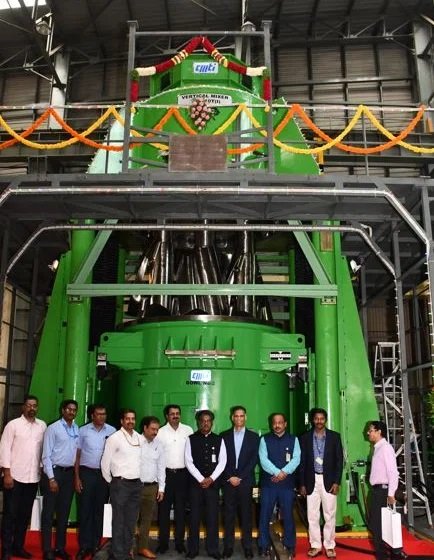
ISRO’s Latest Breakthrough: World’s Largest Vertical Propellant Mixer

0

Rudra Pratap Singh


In yet another remarkable feat, the Indian Space Research Organisation (ISRO) has developed the world’s largest vertical propellant mixer, pushing the boundaries of innovation in rocket fuel technology. This cutting-edge equipment is set to revolutionize the way solid propellants are prepared, ensuring safer, more efficient, and more powerful rocket launches.

Why This Matters?
Every space mission begins long before a rocket lifts off—it starts with meticulous engineering and perfecting the science behind propulsion. Solid propellants are the lifeline of many launch vehicles, providing the raw power needed to break free from Earth’s gravity. But for a successful launch, the fuel needs to be mixed with absolute precision. That’s where ISRO’s latest invention steps in.

What Makes This Mixer Special?
Imagine trying to bake the perfect cake, where every ingredient must be blended just right for the best texture and taste. Now, scale that up to rocket science—where the “ingredients” are powerful chemicals, and a slight inconsistency could impact an entire space mission.

ISRO’s vertical propellant mixer, the largest of its kind, ensures:

Uniformity at Scale – It can mix large quantities of solid propellant with pinpoint accuracy, crucial for maintaining rocket stability.
Faster, Safer Production – Advanced engineering minimizes risks, ensuring that India’s space ambitions remain on track with the highest safety standards.
A Leap Toward Self-Reliance – With this breakthrough, India strengthens its indigenous space technology, reducing reliance on foreign expertise.
Powering the Future of Indian Space Exploration
This development is not just about a machine—it’s about the dreams it fuels. With upcoming missions like Gaganyaan (India’s first human spaceflight program), Chandrayaan, and interplanetary explorations, ISRO is gearing up for bigger, bolder challenges.

Every milestone like this takes India one step closer to being a global leader in space exploration. From the humble beginnings of launching small satellites to now preparing for human spaceflight, India’s space journey is nothing short of inspiring.

With ISRO at the helm, the sky is not the limit—it’s just the beginning.

Asia and the Pacific SDG Progress Report 2025: Advancing Sustainable Development Through Data and Local Initiatives

0

The Asia and the Pacific SDG Progress Report 2025, released by the United Nations Economic and Social Commission for Asia and the Pacific (ESCAP), highlights both progress and challenges in achieving the Sustainable Development Goals (SDGs). The report underscores the crucial role of local, community-driven initiatives in addressing data gaps, which are essential for effective policymaking.

The Importance of Data in Achieving SDGs

Accurate and comprehensive data is a cornerstone for formulating policies that drive sustainable development. The 2025 report reveals that while data availability has improved across the region, significant gaps remain:

  • Only 54% of SDG indicators had at least two data points in 2024, limiting the ability to track long-term progress.
  • Disaggregated data—classified by age, disability, gender, and location—remains scarce, particularly for marginalized groups.
  • This lack of data hampers targeted interventions, making it difficult to address the specific needs of vulnerable populations.

Local Initiatives Bridging Data Gaps

In response to these data shortages, local communities are stepping up with innovative solutions:

  • In Rajasthan, India, efforts are underway to map nomadic tribal households, ensuring their access to essential services.
  • In Indonesia, health-monitoring mobile applications are being deployed to collect real-time health data, improving public health responses.
  • Community-led education programs are addressing literacy gaps, particularly in remote and underserved areas.

Such initiatives enhance policy effectiveness by ensuring that decision-makers have access to reliable, grassroots-level data.

Progress in Key Sustainable Development Goals (SDGs)

Despite challenges, the Asia-Pacific region has made notable advancements in several SDG targets:

  • Eradicating Poverty (SDG 1) – Significant strides have been made in reducing income poverty.
  • Zero Hunger (SDG 2) – The region has witnessed a decline in undernourishment rates.
  • Industry, Innovation, and Infrastructure (SDG 9) – Support for small-scale industries is improving economic opportunities.
  • Peace, Justice, and Strong Institutions (SDG 16) – Efforts to combat human trafficking and improve governance are showing positive results.

However, major challenges persist in areas like:

  • Quality Education (SDG 4) – Access to inclusive and equitable education remains a concern, especially in rural areas.
  • Decent Work and Economic Growth (SDG 8) – Unemployment and informal labor markets continue to hinder economic stability.
  • Climate Action (SDG 13) and Marine Conservation (SDG 14) – Rising greenhouse gas emissions and ocean degradation pose serious environmental threats.

Key Challenges Hindering Progress

Several factors continue to slow down SDG progress across the region:

  • Fossil Fuel Subsidies – Continued reliance on non-renewable energy is delaying the shift to sustainable alternatives.
  • Low Literacy Rates – Limited education opportunities, particularly for women and marginalized communities, widen the development gap.
  • Environmental Degradation – Rapid urbanization and industrial growth contribute to climate change, deforestation, and biodiversity loss.
  • Inequality and Socioeconomic Disparities – Development benefits are not evenly distributed, with disparities based on gender, location, and income levels.

Bridging the Gap: Solutions for Sustainable Progress

To address these challenges, ESCAP advocates for a transformation in national statistical systems and stronger policy interventions:

  • Enhancing Data Collection – Strengthening national statistical frameworks will provide more accurate insights into the needs of at-risk populations.
  • Increasing Political Commitment – Governments must prioritize policy reforms and legislative actions to accelerate SDG implementation.
  • Boosting Financial Investments – Greater funding is needed for education, renewable energy, and poverty alleviation programs.
  • Promoting Green Development – Expanding sustainable practices, such as clean energy adoption and climate adaptation strategies, is essential.

Summing Up

The Asia-Pacific region is making steady progress in achieving the SDGs, driven by local innovation, community engagement, and targeted policies. However, urgent action is required to bridge data gaps, reduce inequalities, and address environmental challenges. By strengthening regional cooperation, enhancing data-driven policymaking, and increasing investments, the region can accelerate its journey toward sustainable and inclusive development by 2030.

What is Solar Coronal Holes?Impact on the Indian Summer Monsoon

0

Recent studies have shed light on the fascinating connection between solar coronal holes and their influence on both space weather and the Indian summer monsoon. These findings are crucial in understanding how solar activity affects Earth’s climate, communication systems, and atmospheric patterns.

Understanding Coronal Holes

Coronal holes are dark, low-density regions on the Sun’s surface, identified through X-ray and extreme ultraviolet (EUV) imaging. First discovered in the 1970s, these holes are characterized by open magnetic field lines, which allow charged particles to escape freely into space, generating high-speed solar wind that can travel at speeds of 450 to 800 km/sec.

Effects on Space Weather

Coronal holes are major drivers of geomagnetic storms, which occur when the fast-moving solar wind interacts with Earth’s magnetic field. These storms can lead to:

  • Satellite Disruptions – Affecting GPS, communication networks, and power grids.
  • Radio Signal Disturbances – Causing fluctuations in Earth’s ionosphere, impacting aviation and long-range communication.
  • Auroras – Producing spectacular Northern and Southern Lights due to charged particles interacting with Earth’s atmosphere.

The Link Between Coronal Holes and the Indian Summer Monsoon

Emerging research suggests that coronal holes also influence Earth’s climate, particularly the Indian summer monsoon. Scientists have long studied the effects of sunspots on monsoon variability, but new findings highlight that coronal holes play an equally significant role.

  • The radiative impact of coronal holes contributes to atmospheric temperature fluctuations, which, in turn, influence monsoon rainfall patterns.
  • These variations could affect seasonal predictions, making accurate forecasting essential for agriculture, water management, and disaster preparedness.

New Research on Coronal Hole Structures

A breakthrough study by the Indian Institute of Astrophysics (IIA) analyzed eight years of data from NASA’s Solar and Heliospheric Observatory (SOHO), revealing:

  1. Consistent Temperature Structures – Coronal holes likely originate from the Sun’s deep interior, maintaining a uniform temperature pattern.
  2. Magnetic Field Variations – The strength of the magnetic field increases from the solar equator towards the poles, suggesting that coronal holes form through Alfvén wave perturbations.

These findings provide a deeper understanding of how solar activity influences Earth’s space environment and weather systems.

The Need for Continued Research

As space weather continues to impact Earth’s technological infrastructure and climate, ongoing research into coronal hole dynamics is critical. By improving our understanding of solar-monsoon interactions, scientists can enhance:

  • Satellite Protection Measures – Safeguarding critical space-based technology.
  • Weather Forecasting Models – Leading to more accurate monsoon predictions.
  • Climate Change Adaptation Strategies – Helping governments prepare for extreme weather events.

Summing Up

The study of solar coronal holes is proving to be an essential piece in understanding climate variability and space weather phenomena. With further advancements in solar physics and atmospheric science, researchers can refine predictive models that bridge the gap between solar activity and terrestrial climate systems.

As India continues to rely on monsoon rainfall for agriculture and water resources, integrating solar observations into weather forecasting could be a game-changer for climate resilience and disaster preparedness.

Diya Kumari’s Commitment to ‘Vocal for Local’: Empowering Handicrafts, Women, and Tradition

0

Rajasthan’s Finance Minister Diya Kumari is not just shaping the economic future of the state but also leading by example in promoting Vocal for Local, women empowerment, and traditional handicrafts. A strong advocate of India’s rich cultural heritage, she embodies her message through her choices—be it in governance, policy-making, or personal style.

A Tribute to Rajasthan’s Heritage in Budget 2025

During the Rajasthan Budget 2025 presentation, Diya Kumari made a striking appearance in a traditional Chunari saree, symbolizing prosperity and culture. Last year, she had worn a Lahariya saree, another traditional Rajasthani weave associated with good fortune. Her wardrobe choices reflect her commitment to promoting local artisans and the state’s vibrant textile heritage.

Speaking at the event, she expressed confidence in presenting a progressive and historic budget that aims at boosting local industries, particularly handicrafts and women-led businesses.

Reviving Handloom and Handicrafts

Diya Kumari has consistently championed Rajasthan’s handicraft industry, encouraging people to support local artisans and weavers. Her emphasis on handcrafted textiles, block printing, and traditional weaves like Chunari and Lahariya serves as a reminder of the importance of sustaining indigenous crafts. By wearing handcrafted sarees, she not only showcases Rajasthan’s rich textile heritage but also sets an example for embracing Indian craftsmanship in everyday life.

Women Empowerment and Economic Inclusion

Diya Kumari has been vocal about the need for financial inclusion and skill development among women, particularly in the handicraft sector. She has actively promoted self-help groups (SHGs) and women entrepreneurs, urging them to participate in the local economy.

Taking inspiration from Finance Minister Nirmala Sitharaman, who has consistently supported local artisans through initiatives like ‘One District, One Product’, Diya Kumari follows a similar vision for Rajasthan. She believes that empowering women in the handicraft sector will strengthen rural economies and preserve traditional arts.

Chunari and Lahariya: The Symbols of Rajasthani Identity

Both Chunari and Lahariya sarees hold deep cultural significance in Rajasthan:

  • Chunari Saree – Worn during festivals and auspicious occasions, it symbolizes prosperity and tradition. Jaipur is particularly renowned for this intricate tie-dye craft.
  • Lahariya Saree – Known for its wave-like patterns, Lahariya represents good fortune and Rajasthan’s vibrant identity.

By wearing these traditional textiles, Diya Kumari highlights their relevance and encourages sustainable fashion choices that support local weavers and artisans.

A Leader Rooted in Culture and Progress

Diya Kumari’s commitment to Vocal for Local extends beyond symbolism—she actively promotes policies that benefit local industries, women entrepreneurs, and artisans. Her efforts align with the broader vision of making Rajasthan a hub for traditional handicrafts and sustainable development.

As she continues to integrate cultural heritage with governance, she sets a powerful precedent for modern leadership rooted in tradition and empowerment.

What are Global Water Gaps?

0

Water scarcity is rapidly emerging as one of the most pressing global challenges of the 21st century. Recent studies reveal that by 2025, the world will face an estimated 458 billion cubic meters of water gaps annually—the difference between renewable water availability and consumption needs. These deficits threaten not only agriculture and drinking water supplies but also the health of aquatic ecosystems.

With climate change intensifying, these gaps are expected to widen further. Under a 1.5°C warming scenario, global water gaps could increase by 6%, and under a 3°C scenario, the figure could surge to 15%. As the world grapples with rising temperatures and shifting weather patterns, addressing this crisis is more urgent than ever.

Understanding Water Gaps

Water gaps serve as critical indicators of water scarcity, calculated by comparing renewable freshwater sources to consumption needs across industries, households, and agriculture. However, these gaps are not uniform; they vary significantly across regions based on factors such as climate, population density, and water management policies.

Climate models predict that nearly every continent will experience escalating water stress, making it imperative to develop adaptive and sustainable water management strategies to mitigate the crisis.

Regional Impact: Who Faces the Greatest Risk?

Certain regions are particularly vulnerable to worsening water gaps, with studies identifying hotspots of extreme water stress in:

  • India and China – The two most populous nations are expected to witness the largest increase in water gaps, with India alone facing an additional 11.1 cubic kilometers of water shortages annually under a 1.5°C warming scenario.
  • The Eastern United States and the Mediterranean – These regions are expected to face worsening drought conditions, threatening food production and freshwater reserves.
  • Saudi Arabia and the Middle East – While some areas may initially experience reduced water scarcity due to shifting precipitation patterns, higher warming scenarios indicate severe long-term shortages.

Major Hydrological Basins Under Threat

Several key hydrological basins are at the forefront of the water gap crisis. Among the most affected are:

  • The Ganges-Brahmaputra Basin – One of the world’s most crucial freshwater sources, supplying millions across South Asia, is projected to see a sharp rise in water deficits under both 1.5°C and 3°C warming scenarios.
  • The Indus Basin – Heavily dependent on glacial meltwater, this region faces a dual threat of shrinking glaciers and increasing water demand for agriculture.
  • The Mississippi-Missouri River System – The backbone of American agriculture, this basin is at risk due to increasing drought frequency and unsustainable groundwater extraction.

These regions are critical for global food security and economic stability, making their sustainability a priority for policymakers.

Solutions: Towards Sustainable Water Management

Addressing global water gaps demands multi-pronged, innovative strategies. Some of the most promising solutions include:

  • Investment in Water-Resilient Infrastructure – Developing advanced irrigation systems, rainwater harvesting, and groundwater recharge structures can enhance water security.
  • Desalination Technologies – Turning seawater into freshwater through cost-effective desalination plants could help alleviate shortages, particularly in coastal regions.
  • Wastewater Recycling – Treating and reusing wastewater for agricultural and industrial purposes can significantly reduce freshwater consumption.
  • Water Transfer Mechanisms – Efficiently redirecting surplus water from abundant regions to deficit areas through pipelines and reservoirs can balance water distribution.

Community-Led Initiatives: Small-Scale Solutions with Big Impact

While large-scale infrastructure projects are essential, local community-driven initiatives play a vital role in addressing water gaps.

One such example is a village in Uttar Pradesh, India, where residents have successfully implemented greywater recycling techniques. By utilizing silt chambers and soak pits, they manage local flooding while also recharging groundwater levels. Such grassroots solutions demonstrate that sustainable water management does not always require massive investments—sometimes, traditional knowledge and local engagement are enough to create a lasting impact.

The Urgency of Action

The widening global water gap is not a distant crisis—it is happening now, and its effects will intensify if urgent measures are not taken. Governments, industries, and communities must work together to implement sustainable water policies, invest in infrastructure, and promote conservation efforts.

The time to act is now. By rethinking water usage, embracing innovation, and empowering local communities, we can bridge the global water gap and secure a more sustainable future for generations to come.


Haryana’s Aravali Safari Park Project

0

The Haryana government’s proposal for a vast Aravali safari park has sparked significant debate. Envisioned as the world’s largest safari park, the project spans 3,858 hectares across Gurugram and Nuh. While officials tout it as a major tourism booster, environmentalists and conservationists have raised concerns about its ecological impact.

Project Details

The Aravali Safari Park is planned to feature animal enclosures, guest accommodations, dining options, and recreational facilities. Initially overseen by the Haryana Tourism Department, the project has now been transferred to the Forest Department for better oversight. An expert committee has been formed to assess its environmental implications.

Significance of the Aravali Range

Geographical and Geological Importance

The Aravali mountain range is among the world’s oldest fold mountains, stretching 670 km from Delhi to Gujarat, covering parts of Haryana and Rajasthan. It plays a crucial role in preventing desertification and serves as a vital aquifer for water-scarce regions like Gurugram and Nuh.

Formation and Structure

  • Part of the Aravalli-Delhi orogenic belt, formed due to tectonic plate collision in the Proterozoic era.
  • Belongs to the Indian Shield, shaped by ancient cratonic collisions.
  • Originally towering, but millions of years of erosion have significantly reduced its height.
  • Guru Shikhar (1,722 meters) is its highest peak, located in Rajasthan’s Arbuda Mountains.

Hydrological Significance

The range is the source of several rivers, including:

  • Banas River (tributary of Yamuna)
  • Sahibi River (tributary of Yamuna)
  • Luni River (flows into the Rann of Kutch)

The Aravalis also serve as a natural groundwater recharge zone, making their conservation essential for the sustainable water supply of the region.

Opposition to the Safari Park

A coalition of 37 retired Indian Forest Service officers has strongly opposed the project, citing concerns over conservation priorities. Key arguments against the park include:

  • Tourism-driven development could lead to destruction rather than restoration of the fragile ecosystem.
  • Increased construction and traffic may worsen aquifer depletion, threatening already stressed groundwater reserves.

Legal Protections for the Aravali Hills

The Aravali hills enjoy protection under multiple laws, including:

  • Punjab Land Preservation Act of 1900, restricting land use and deforestation.
  • Indian Forest Act, designating 24,000 hectares as Protected Forest.
  • National Green Tribunal (NGT) and Supreme Court rulings reinforcing conservation measures.

These protections make the proposed safari park a highly contentious issue, as it could set a precedent for future encroachments on ecologically sensitive areas.

Alternative Proposals

Environmental experts suggest that a national park or wildlife sanctuary would be a more suitable alternative to the safari park. This approach would:

  • Enhance conservation efforts by preserving the unique biodiversity of the Aravali range.
  • Support rewilding projects rather than prioritizing tourism.
  • Align with India’s environmental commitments by safeguarding endangered habitats.

Summing Up

The Aravali Safari Park project presents a complex debate between economic development and environmental conservation. While boosting tourism and local employment are potential benefits, the irreversible damage to one of India’s most fragile ecosystems cannot be overlooked. A more balanced approach, prioritizing habitat protection over commercial ventures, may prove to be the best long-term solution for Haryana and the nation at large.

Sustainable Agriculture and Tribal Communities in India

0

India has made significant strides in promoting sustainable agriculture over the past decade. The focus on organic farming has intensified, with concepts like zero-budget farming and chemical-free practices increasingly being integrated into government policies. This shift has led to remarkable growth in the organic farming sector, with substantial increases in land area, production, and exports.

Growth of Organic Farming

India’s organic farming landscape has seen a significant expansion, with the cultivated area growing from 4.72 million hectares in 2015 to 10.17 million hectares by 2023, representing 2.6% of the country’s total agricultural land. Organic production during this period reached 2.9 million metric tonnes.

Key states leading this transformation include Madhya Pradesh, Maharashtra, Gujarat, and Rajasthan, collectively contributing 76% of the total organic farming area. These states have emerged as pioneers in the organic movement, paving the way for a more sustainable agricultural model.

Connection with Tribal Communities

There is a strong correlation between organic farming and tribal populations in India. Madhya Pradesh, which leads in organic farming, also has the highest tribal population. Historically, these communities have practiced sustainable farming methods, deeply rooted in biodiversity conservation and traditional knowledge.

With 8.6% of India’s population being tribal, many are engaged in agriculture. Their time-honored farming practices, emphasizing natural pest control, indigenous seed conservation, and minimal resource exploitation, have greatly contributed to the success of organic farming in the country.

Challenges in Certification

Despite the growth of organic farming, tribal farmers face significant barriers in obtaining certification. Many traditional farming methods do not fully comply with the rigid standards of the Participatory Guarantee System (PGS) or other organic certification programs. As a result, many tribal farmers struggle with gaining official recognition, leading to a shift towards cash crops, which can endanger traditional crops and indigenous agricultural knowledge.

Policy Recommendations

To strengthen organic farming in tribal regions, policies must recognize and respect the diversity of agricultural systems. Effective interventions should build on existing traditions rather than impose standardized frameworks that may not align with local conditions.

  • Encouraging Cooperatives: Farmer cooperatives can enhance access to markets, ensuring better price realization for tribal farmers.
  • Simplifying Certification Processes: Adopting community-based certification models tailored to indigenous farming methods can help farmers overcome regulatory barriers.
  • Providing Financial Incentives: Government incentives for traditional organic farming can support the transition towards sustainable agricultural practices.

Empowering Tribal Communities

India can further leverage initiatives such as “Brand Tribes” to promote and market organic products cultivated by tribal farmers.

  • Utilizing Digital Platforms: E-commerce and digital marketplaces can help connect producers directly with consumers who value sustainable and ethically sourced agricultural products.
  • Ensuring Community Participation: Any policy must be community-led, culturally sensitive, and uphold the principle of Free, Prior, and Informed Consent (FPIC).
  • Active Consultation: Engaging tribal communities in policy formulation ensures that their traditional knowledge is preserved and integrated into national agricultural strategies.

By fostering inclusive and sustainable policies, India can ensure that tribal communities are at the forefront of its organic revolution, preserving their invaluable knowledge while securing economic opportunities for future generations.

India and the U.S. Strengthen Defense Ties with Javelin Anti-Tank Missile Collaboration

0

India and the United States have recently reinforced their military partnership by announcing plans for the procurement and co-production of the Javelin anti-tank guided missile. This development follows high-level discussions between Prime Minister Narendra Modi and former U.S. President Donald Trump, marking a significant step in enhancing India’s defense capabilities and fostering deeper bilateral cooperation.

Overview of the Javelin Anti-Tank Guided Missile

The FGM-148 Javelin, developed jointly by Raytheon and Lockheed Martin, is a highly advanced, man-portable, shoulder-fired missile system. It features a fire-and-forget capability, allowing the operator to launch the missile and immediately take cover, significantly increasing battlefield survivability. Designed primarily to defeat heavily armored vehicles, the Javelin can also target fortifications and low-flying helicopters, making it a versatile weapon in modern warfare.

Key Features of the Javelin Missile

  1. Effective Range: The missile has an operational range of up to 2.5 kilometers, making it highly effective in combat scenarios.
  2. Infrared Guidance System: Javelin employs an automatic infrared guidance system, ensuring precision targeting with minimal operator intervention.
  3. Top-Attack Profile: The missile follows a lofted trajectory, striking armored vehicles from above at their most vulnerable point, enhancing its effectiveness against modern tanks.
  4. Modular Design: The system comprises a disposable launch tube and a reusable command launch unit, improving efficiency and cost-effectiveness.

Operational Advantages

The Javelin’s soft launch design allows it to be fired from confined spaces, such as buildings or trenches, without putting the operator at risk. This feature enhances the missile’s utility in urban and guerrilla warfare scenarios.

Additionally, its fire-and-forget capability allows soldiers to relocate immediately after launching, reducing their exposure to enemy retaliation. The missile has a proven combat record, with over 5,000 successful engagements in conflict zones such as Iraq and Afghanistan. Furthermore, its ability to operate in diverse weather conditions and during both day and night makes it a reliable choice for modern militaries.

Strategic Implications of the Indo-U.S. Collaboration

The co-production of Javelin missiles signifies a deeper military alliance between India and the U.S., addressing India’s need for advanced defense technology amid regional security challenges. This initiative aligns with India’s broader push for self-reliance in defense manufacturing under the ‘Make in India’ initiative.

Moreover, the partnership facilitates technology transfer, enabling India to enhance its indigenous defense capabilities. By leveraging expertise from U.S. defense firms, India can strengthen its domestic military-industrial base and reduce dependency on foreign imports.

Future Prospects and Defense Cooperation

The agreement to co-produce Javelin missiles marks a strategic shift in India’s defense procurement approach. Rather than solely relying on direct purchases, India is actively fostering collaborations that bolster its defense ecosystem. This joint venture with U.S. defense firms may pave the way for future partnerships in cutting-edge military technologies, including next-generation missile systems, cybersecurity, and artificial intelligence-driven warfare solutions.

As India continues to modernize its armed forces, collaborations like the Javelin missile project will play a crucial role in enhancing its defense preparedness. Strengthening bilateral military ties with the United States not only boosts India’s security infrastructure but also contributes to regional stability in the Indo-Pacific region.

With this milestone agreement, India takes a decisive step toward achieving its vision of self-reliance in defense while reinforcing strategic partnerships with global military powers.

Arunachal Pradesh Foundation Day: Honoring a Land of Culture and Beauty

0

Rudra Pratap Singh

Every year on February 20, the people of Arunachal Pradesh come together to celebrate their statehood—a moment of pride, history, and progress. Once part of the North-East Frontier Agency (NEFA), Arunachal became a Union Territory in 1972 and finally achieved full statehood in 1987, marking a new chapter in its journey.

A Land of Diversity and Natural Wonders

Arunachal Pradesh is more than just a state; it’s a blend of tradition, resilience, and breathtaking landscapes. Home to 26 major tribes and over 100 sub-tribes, each with its unique customs and festivals like Losar, Nyokum, and Solung, the state thrives on its cultural richness. From the serene monasteries of Tawang to the lush greenery of Ziro Valley, every corner of Arunachal tells a story of nature’s beauty and human spirit.

How the Day is Celebrated

The day is filled with parades, cultural performances, and official ceremonies, where leaders reflect on the state’s progress in education, infrastructure, and tourism. Citizens take pride in their heritage, celebrating their identity with traditional music, dance, and festivities.

More Than Just a Celebration

Arunachal Pradesh Foundation Day is not just about looking back—it’s about moving forward. It’s a tribute to the people who have preserved their traditions while embracing modern development. As the easternmost state of India, Arunachal continues to shine as a land of unity, diversity, and endless possibilities.

Mahashivratri – The Story of Shiva and Parvati

0

Rudra Pratap Singh

On a night unlike any other, the universe stood still. The stars shimmered brighter, the air was thick with divine energy, and a sense of deep mystery filled the skies. It was Maha Shivratri—the night of Lord Shiva.

High in the mountains, Shiva, the great ascetic, had long renounced the world. But Parvati, his devoted admirer, refused to give up. She meditated for years, her love unwavering. Finally, moved by her devotion, Shiva accepted her, and on this very night, they were married. The heavens burst into celebration, for their union was not just a wedding—it was the merging of energy (Shakti) and consciousness (Shiva), the very forces that hold the universe together.

But Maha Shivratri is also a night of sacrifice. When the gods and demons churned the cosmic ocean, a deadly poison surfaced, threatening to destroy all of creation. The world turned to Shiva. Without hesitation, he drank the poison, holding it in his throat so that it would harm no one. His throat turned blue, earning him the name Neelkanth. As the poison burned within him, the gods stayed awake, offering him sacred water to soothe his pain. And so, the tradition of fasting and night-long worship was born.

In another story, a weary hunter, lost in the forest, unknowingly worshiped a Shiva Lingam by dropping bilva leaves on it from a tree. Without realizing it, he had earned Shiva’s blessings, proving that even the smallest acts of devotion can bring salvation.

And so, every year, on this night of divine magic and mystery, devotees stay awake, chant Shiva’s name, and seek his blessings. It is a night of transformation, a reminder that destruction leads to rebirth, and that in surrendering to the divine, we find true awakening.