Home Blog Page 374

Story of Shivaji, a symbol of Maharashtra’s pride ruling millions hearts, echoes across Munich during grand celebrations…

0

Shivpratishthan Munich is an organization established by followers of Chhatrapati Shivaji Maharaj in Germany. For the past three years, it has been organizing grand celebrations of Shivjayanti and Shivrajyabhishek. These events have always received an overwhelming response from all his proud followers.

Continuing this tradition, on February 9, 2025, a grand Shivjayanti celebration was held in Munich. More than 50 artists and over 300 spectators participated in the event.

The programme commenced with the ceremonial worship of Chhatrapati Shivaji Maharaj’s idol.

On this occasion, Mr. Shatrughna Sinha, a Consul General, Indian Embassy in Munich, graced the event as the chief guest.

Story of Shivaji, a symbol of Maharashtra's pride ruling millions hearts, echoes across Munich during grand celebrations...

The main organizers of Shivpratishthan, Mr. Sandip Musale, Dr. Praveen Patil, Mr. Vikrant Khemkar, and committee members Mr. Yogesh Tarte, Dr. Anil Jagtap, Mr. Vipin Gondchewar, and Mr. Ramakant Gawali welcomed him with a bouquet. Mr. Sinha then addressed the audience, offering valuable insights on the occasion of Shivjayanti.

The organizers expressed their gratitude to Maharashtra Mandal Munich for their support in making the event successful.

Following this, all Marathi entrepreneurs in Munich were felicitated with bouquets in recognition of their remarkable contributions.

The event began with a melodious musical performance dedicated to Shivaji Maharaj titled Shivkalyan Raja.

Several local artists presented various performances, including Shivstuti, Powada, historical art forms from the Shiv era and a message on fort conservation in Maharashtra.

From young children to adults, everyone participated enthusiastically, and the audience responded with great appreciation.

Young artist Charudatta Jadhav delivered a powerful Powada performance on the legendary warrior Tanaji Malusare, which captivated the audience.

The grand finale featured a spectacular theatrical presentation of the historic battle of Pawankhind, leaving the audience with goosebumps.

Despite being far from Maharashtra, Shivpratishthan Munich remains committed to spreading the legacy and ideals of Chhatrapati Shivaji Maharaj!

Jai Bhavani! Jai Shivaji! Jai Maharashtra!

Two Engineers Use Art to Transform the Lives of Bengaluru’s Slum Children

0

Forced to leave their villages in search of a better life, many migrant families in Bengaluru’s slums struggle to provide education for their children. Proud Indian, an NGO founded by two engineers, is bridging this gap through innovative education initiatives and art programs, empowering children to dream beyond mere survival.

A Glimmer of Hope in the Slums

Huddled under the dim glow of a streetlight in a crowded Bengaluru slum, 12-year-old Nadia (name changed) sketched furiously on a piece of cardboard. Her family, displaced from their drought-stricken village, barely managed to make ends meet, leaving little room for school supplies—let alone art materials.

Her parents migrated from Raichur, where poor groundwater levels make farming an unreliable source of income. “They earn just Rs 200 per day in farmlands, but in Bengaluru, daily wages can go up to Rs 800-1000,” shares Chenthil Kumar, co-founder of Proud Indian.

Despite their struggles, Nadia finds solace in painting. “Recently, I tried cake-based paint and created a vibrant sky. You can see that painting on my wall,” she says proudly. But for children like her, education and artistic expression often take a backseat as survival remains the priority. “Their parents are too focused on ensuring they don’t go to bed hungry,” explains Chenthil.

The Birth of Proud Indian

Growing up in Tamil Nadu’s Kanyakumari, Chenthil was deeply affected by the devastation of the 2004 tsunami. Witnessing families struggle for food and shelter left a lasting impact on him. Years later, while pursuing aeronautical engineering in Bengaluru, he continued his humanitarian efforts.

In 2014, while working on relief efforts, Chenthil met Sarjun H., another passionate volunteer. The two engineers recognized a shared mission: to uplift the lives of underprivileged children through education. In 2019, they founded Proud Indian with the goal of providing quality education to children with limited access to learning opportunities.

Over the last five years, the NGO has reached thousands of children, offering them food, education, and most importantly, hope.

Introducing Community Schools

For children of migrant workers, education is often disrupted as families move from one place to another. “Most parents don’t obtain transfer certificates from their child’s previous school, which makes it difficult to enroll them in government schools,” explains Chenthil.

To bridge this gap, Proud Indian collaborates with NGOs like Gubbachi Learning Community, Samriti, and Ruva to run community schools in Bengaluru. The students are grouped based on their learning levels:

  • S1: Can read a sentence
  • S2: Can read a word
  • S3: Can read an alphabet

“The community school acts as a bridge course and helps children pass at least Class 10,” says Jinchu Mariam Sunny from Gubbachi Learning Community. “We’ve impacted over 1,900 children so far.”

This alternative schooling model allows students to complete two subjects per year, ensuring they graduate within two to three years. Proud Indian also conducts spoken English classes on weekends, significantly improving the children’s communication skills.

Art as a Means of Expression and Empowerment

For underprivileged children, even basic education can feel like a luxury, making art seem like an unattainable dream. “I didn’t want external factors to decide who could practice art,” says Chenthil.

In 2024, he and Sarjun launched Kalakriti, a one-day art festival where children could showcase their talents. The first edition saw 280 students from various NGOs competing in dance, singing, rangoli, and painting competitions. “The stage was huge. I was so happy when we won second place,” says 14-year-old Sameer (name changed), who participated in group dance.

Beyond just an event, Kalakriti has become a launchpad for young artists. “We bring in professionals to mentor the winners, training them for a year so they can participate in larger competitions,” shares Chenthil.

Keeping Dreams Alive

With every passing year, Chenthil and Sarjun’s mission grows stronger. “We want to show that art is not just an extracurricular activity—it’s a sustainable career option,” says Chenthil. Through Proud Indian, thousands of children now have access to both education and artistic expression.

Looking ahead, the duo hopes to impact even more young lives, proving that education and creativity can pave the way for a brighter future—one brushstroke at a time.

India Elected Vice President of IALA: Strengthening Global Maritime Leadership

0

India has been elected as the Vice President of the International Organization of Aids to Marine Navigation (IALA) during its first General Assembly in Singapore. This significant achievement underscores India’s growing influence in global maritime affairs and highlights its commitment to ensuring safer and more efficient navigation.

Background of IALA

Established in 1957 as a non-governmental organization (NGO), the International Association of Marine Aids to Navigation and Lighthouse Authorities (IALA) was founded with the mission of uniting global marine navigation authorities. The organization facilitates knowledge-sharing among stakeholders, including government agencies, manufacturers, and scientific institutes, to enhance maritime safety standards.

In August 2024, IALA transitioned from an NGO to an inter-governmental organization (IGO). This transformation, ratified by 34 states, enables IALA to play a more authoritative role in setting global standards for marine navigation. The transition strengthens its ability to harmonize navigational systems, promote best practices, and enhance safety measures worldwide.

India’s Role in IALA

India’s election to the Vice Presidency of IALA marks a milestone in its maritime governance journey. This leadership role allows India to actively participate in shaping international maritime policies and standards. As a Vice President, India will contribute to advancing navigational safety, supporting sustainable maritime operations, and fostering collaboration among IALA member states.

Additionally, India is set to host IALA meetings in the coming years, reinforcing its leadership and commitment to maritime safety and technological advancements.

Objectives of IALA

IALA is dedicated to harmonizing global maritime navigation systems. Its primary objectives include:

  • Developing and implementing international standards for marine navigation aids.
  • Enhancing maritime safety and efficiency through collaboration among member states and industry stakeholders.
  • Encouraging technological advancements and best practices to improve navigation systems.
  • Strengthening the protection of marine environments by mitigating navigational risks.

Technical Committees and Standards

IALA operates several technical committees composed of global maritime experts. These committees work towards establishing best practice standards and issuing recommendations to enhance navigational safety. Some of IALA’s notable contributions include:

  • The IALA Maritime Buoyage System: A globally recognized system that standardizes maritime navigation aids.
  • The Automatic Identification System (AIS): A system that improves vessel tracking and communication, ensuring safer navigation in busy waterways.
  • E-Navigation Strategies: Digital advancements that integrate new technologies into maritime navigation.

Impact on Maritime Safety

The transition of IALA into an inter-governmental organization signifies a major step toward strengthening maritime governance. By enhancing its authority, IALA contributes to reducing maritime accidents, improving efficiency in global shipping routes, and protecting marine ecosystems. The organization’s efforts in promoting safety measures, sustainability initiatives, and technological integration continue to benefit the global maritime community.

Summing Up

India’s election as the Vice President of IALA is a testament to its leadership in maritime affairs. By holding a key position in IALA, India is poised to play a crucial role in shaping the future of global marine navigation, fostering safer waters, and driving innovation in maritime technology. This achievement not only elevates India’s status in international maritime governance but also strengthens its commitment to ensuring a secure and sustainable maritime environment.

How Beekeeping is Transforming Lives and the Environment

0

Rudra Pratap Singh

In an era where sustainability and entrepreneurship go hand in hand, beekeeping is making a triumphant comeback, offering a blend of environmental stewardship and financial success. For farmers and urban enthusiasts alike, this ancient practice is proving to be more than just about honey—it’s a gateway to a sustainable livelihood, biodiversity enrichment, and food security.

Unlike conventional farming, which often demands heavy investments and long waiting periods for returns, beekeeping requires a minimal one-time investment and has the potential to pay for itself within a year. If the hum of bees and the promise of golden prosperity entice you, here are some expert tips to help you embark on this rewarding journey.

  1. Beekeeping is for Everyone Above 15

Passion is the key ingredient in beekeeping, says Apoorva BV, a Karnataka-based beekeeper managing 550 hives in Bengaluru. With an annual turnover of Rs 2 crore, he reassures aspiring apiarists that vast farmlands aren’t a prerequisite.

“The only requirement is a keen interest in rearing bees and an attentive eye to monitor the progress of your hive. Anyone above the age of 15 can start a bee farm, and the time commitment is minimal—just 20 minutes a week. Once you become proficient, even less!” says Apoorva.

  1. Choosing the Right Bee Variety

Selecting the right species of bees can make all the difference in productivity. Haryana-based Jagpal Singh Phogat, who specializes in raising Apis mellifera, highlights their high honey yield and pollination benefits.

“During the flowering season, honey can be harvested within just 10 days. On average, I extract around 40 kg of honey per box annually,” he shares. This makes Apis mellifera a lucrative option for those looking to maximize their yield.

  1. Location Matters

Beekeeping can flourish in diverse settings—from rural farms to urban balconies—provided there is a good nectar source. Ideal locations should be free from industrial pollutants and fire hazards while offering a variety of flowering plants like sunflowers, hibiscus, and fruit-bearing trees. Access to fresh running water is also essential, as bees need hydration to sustain their colonies.

Kerala-based beekeeper Bensislas attributes his success to aligning his hives with seasonal blooms in his rubber plantation and moringa farm.

“Wherever we place the hive, bees collect nectar from the nearest available sources. Choosing the right spot is crucial. Annually, I produce around 1,500 kg of honey and earn Rs 15,000 to Rs 20,000 per month from sales,” he explains.

  1. Handle with Care

Beekeeping demands caution, patience, and the right protective gear. A full bee suit is essential for heavy-duty tasks, while hats with retractable veils are sufficient for routine maintenance. Handling bees gently ensures their cooperation and minimizes the risk of stings.

Recalling his early missteps, Jagpal shares, “I once suffered swollen eyes due to a lack of knowledge about bee behavior. Over time, I learned to be gentle while removing hive frames. I also advise against wearing perfumes, scented oils, or black clothing, as these can agitate bees.”

For beginners, a basic bee box and protective equipment cost around Rs 5,000—a small price to pay for a profitable and fulfilling venture.

  1. Beyond Honey: Maximizing Profits with Byproducts

While honey is the primary product, beekeepers can tap into lucrative byproduct markets to maximize returns. Specializing in niche varieties like moringa and rubber honey can attract premium buyers. Additionally, expanding into products such as beeswax, soap, bee pollen, and royal jelly can significantly boost revenue.

Jagpal, who has diversified his offerings, has seen his business flourish. “Last year, I achieved an annual turnover of Rs 2 crore by selling raw honey and byproducts,” he says.

The Bigger Picture: Beekeeping as Environmental Stewardship

Beekeeping is more than just a business—it’s a commitment to environmental conservation. Bees play a crucial role in pollination, supporting ecosystems, increasing crop yields, and maintaining biodiversity. By nurturing bees, we nurture the planet.

Whether you’re in a bustling city or a serene countryside, the promise of prosperity through beekeeping is limitless. So, take that first step today. Let the rhythmic hum of bees guide you toward a future rich with opportunity, sustainability, and the golden sweetness of success

ISRO’s Visionary Leap: Pushing Boundaries in Space Exploration

0

Rudra Pratap Singh

As humanity inches closer to an era of interplanetary travel, the Indian Space Research Organisation (ISRO) is setting its sights on a future brimming with possibilities. From next-generation rockets to human spaceflight and lunar sample return missions, ISRO’s roadmap for the coming decade is nothing short of groundbreaking. With innovation at its core, India’s space ambitions are poised to redefine the nation’s role in the cosmos.

A Giant Leap in Rocketry: The Next-Generation Launch Vehicle

Imagine a rocket so powerful that it dwarfs its predecessors, capable of carrying a staggering 30,000 kg payload to Low Earth Orbit (LEO). ISRO’s upcoming next-generation launch vehicle will be precisely that—a colossal engineering marvel, 1,000 times more powerful than the legendary SLV-3. Designed with reusability in mind, the rocket will incorporate nine engines in the first stage, each generating an astounding 110 tons of thrust, with three additional stages and two solid strap-on boosters. More than just an advancement in payload capacity, this new vehicle will revolutionize cost-efficiency and sustainability in spaceflight, setting the stage for reusable Indian rockets in the near future.

Gaganyaan: India’s First Steps Towards Human Spaceflight

The dawn of Indian human spaceflight is on the horizon. Scheduled for launch in 2026, the highly anticipated Gaganyaan Mission will send three Indian astronauts to LEO at an altitude of 400 kilometers, making history as India’s first crewed space mission. The mission will utilize the human-rated LVM 3 (HLVM 3), an upgraded version of the LVM 3 rocket, fortified with enhanced thermal and structural safety margins to protect its crew.

Before this milestone launch, six uncrewed test flights will pave the way, the first of which is set to take off from Sriharikota later this year. Meanwhile, astronauts are undergoing intensive physical and technical training, preparing them for their momentous journey into space. The success of Gaganyaan will mark India’s entry into the exclusive club of human spaceflight nations, joining the ranks of the USA, Russia, and China.

Chandrayaan-4: A Historic Lunar Sample Return Mission

Building on the success of Chandrayaan-3, India is now setting its sights on an even more ambitious lunar mission—Chandrayaan-4, scheduled for launch in 2027. This mission will take India beyond mere exploration, aiming to collect and return samples from the Moon’s enigmatic south pole.

A formidable 9,200 kg spacecraft will embark on this journey aboard two Mark III rockets. The mission will feature five specialized modules, two of which will dock in lunar orbit while the other two land on the Moon’s surface to conduct experiments and sample collection. Once its objectives in lunar orbit are completed, the sample return module will make its way back to Earth, carrying invaluable material that could unravel the Moon’s ancient mysteries. If successful, Chandrayaan-4 will position India among the elite nations capable of lunar sample return, paving the way for future deep-space exploration.

NavIC: Strengthening India’s Global Navigation System

Beyond deep space missions, ISRO is fortifying India’s Navigation with Indian Constellation (NavIC), a satellite-based navigation system essential for both civilian and military applications. Currently in its first phase, the system is set to expand with five additional satellites under Phase II, scheduled for deployment over the next two years. Once complete, NavIC will significantly enhance India’s navigation capabilities, providing independent and precise location-based services across the subcontinent and beyond.

A Decade of Innovation: ISRO’s Vision for the Future

Looking ahead, ISRO has charted an ambitious roadmap for the next decade, with key objectives including:

The Gaganyaan mission and Chandrayaan-4 to advance human spaceflight and lunar exploration.

Development of next-generation launch vehicles with increased payload capacity and reusability.

Establishing an Indian space station for scientific research and interplanetary exploration.

Expanding India’s satellite network to enhance communication, navigation, and disaster management services.

From reaching new frontiers in space travel to transforming global navigation and satellite communications, ISRO is laying the groundwork for a future where India stands tall among the world’s leading spacefaring nations. With every mission, every innovation, and every bold leap forward, India is crafting a legacy that will inspire generations to come.

25-YO HIV Survivor, Ill-Treated as a Child, Defied Stigma To Become a Marathon Champion

0

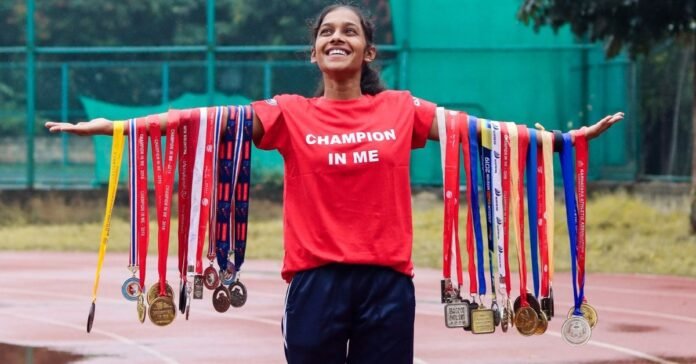
Sonika Sanju Kumar vividly remembers the first time she stepped onto the running track. With each rhythmic pound of her feet against the ground, she left behind the whispers of stigma that had followed her for years.

“The only place where I am not discriminated against is when I am on the running track,” she says, her voice filled with determination.

Born with HIV, Sonika faced more struggles due to societal prejudice than the physical challenges of her condition. But today, as an accomplished marathon runner, she is a beacon of resilience and hope, inspiring many others.

Her journey into sports began in 2009 when Elvis Joseph, a former national athlete, visited the Sneha Care Home, where Sonika lived, to introduce children to sports. It was through this visit that she learned about ‘Champion in Me’ — an initiative launched in 2009 by the Bangalore Schools Sports Foundation (BSSF) to support children living with HIV through the power of sports.

From Isolation to Inspiration

Growing up in a small town in Maharashtra, Sonika lost her parents at just one and a half years old. The discovery of her HIV status at the age of seven led to alienation.

“I was given a separate plate and tumbler. If I accidentally touched anyone, they would go and take a quick bath,” she recalls painfully. “When relatives visited, my grandfather made me sit under a tree in the backyard.”

Life changed for Sonika in 2010 when she moved to Bengaluru. “Elvis sir saw my potential and encouraged me to participate in ‘Champion in Me’,” she shares. “For the first time, I met others like me, and I felt a sense of belonging.”

Through rigorous training and mentorship, Sonika discovered her passion for running. The track became her sanctuary—a place where her strengths overshadowed her limitations. In 2018, she participated in the Kolkata Marathon, securing third place in the women’s category. Her medals now stand as a testament to her grit and perseverance.

Empowering Children with HIV

For Elvis Joseph, ‘Champion in Me’ is more than just a sports initiative; it is a movement.

“I saw a need for an empowering platform for children living with HIV,” says Elvis. “Sports build character and discipline, but more importantly, they break barriers.”

The programme integrates sports, education, and skill development to ensure holistic growth. Through annual sports meets, specialized training modules, and mentorship, it creates an inclusive environment where children can thrive.

Since its inception, the initiative has reached over 40,000 children, offering them not just the right to play but a stage to showcase their talents and rewrite societal narratives.

Competing Globally

Elvis has dedicated his life to identifying talent and placing them on the right platforms.

“We provide top-tier training and select promising athletes for marathons and competitions,” he explains. “This gives them the confidence to face the world.”

One such athlete is Manik Prabhu, who represented India at the International Children’s Games in the Netherlands in 2015. Born in North Karnataka, Manik grew up facing severe discrimination due to his HIV-positive status.

Joining ‘Champion in Me’ changed his life. Under Elvis’ mentorship, he honed his athletic skills and developed the confidence to compete. His proudest moment was wearing the Indian jersey on an international platform.

“I got the recognition I deserved, and sports created that opportunity for me,” Manik says. Over the years, he and other participants have competed in prestigious marathons in Boston, Colombo, and Bangkok, proving that HIV is no barrier to excellence.

Running Towards a Better Future

While Elvis continues to advocate for these young athletes, he urges the Government and corporate sector to step up.

“We’ve had support from Olympians and leaders, but with the Indian Government, it’s always a golden handshake,” he remarks.

To extend opportunities beyond sports, he introduced ‘The Rising 20s’, a second phase of the initiative focusing on skill development.

“We help these youth complete their education and acquire practical life skills to ensure they lead independent lives,” he explains. Many participants have successfully secured jobs and now live with dignity.

Looking ahead, Elvis is training Bharati, who is set to become the first HIV-positive person to compete in the Mount Everest Marathon this May.

“It’s a high-altitude run on rough terrain, but Bharati is determined,” he says proudly. “She’s doing this not just for herself, but to raise awareness for women like her.”

Sonika and Manik’s journeys are proof of the programme’s success. Through ‘Champion in Me’, they have found their passion and a sense of purpose. Their stories inspire hope and highlight the power of inclusive initiatives in transforming lives.

As Elvis and his team continue to champion change through sports, they remind us that with the right support, every child can rise above their circumstances and achieve greatness.


Arunachal Pradesh’s Dulari Kanya Scheme

0

Rudra Pratap Singh

The Arunachal Pradesh government has recently announced enhancements to the Dulari Kanya Scheme. This initiative aims to support the institutional births of girl children.

Key Features of the Dulari Kanya Scheme

  • The Dulari Kanya Scheme was originally designed to provide financial support for the institutional births of girl children.
  • The fixed deposit for these births has been increased from Rs 20,000 to Rs 30,000.
  • Additionally, an extra Rs 20,000 will be provided for Class XI admissions through direct benefit transfer.
  • This total of Rs 50,000 reflects the government’s commitment to empowering girls in the state.
  • The funds are accessible only when the child reaches 18 years of age.
  • This initiative encourages families to opt for institutional births, promoting better health outcomes for mothers and children.

Financial Support for Education

The direct benefit transfer of Rs 20,000 for students entering Class XI aims to ease the burden of educational expenses for families. It also encourages higher education for girls, aligning with the state’s broader goals of gender equality and educational advancement.

Other Recent Initiatives

Institute for Transforming Arunachal

The Arunachal Pradesh Cabinet has approved the establishment of the Institute for Transforming Arunachal (ITA). This institute will serve as a policy think tank focused on socio-economic development. It will provide research-backed advisory support and strategic direction for the state’s growth. The ITA aligns with national goals and aims to ensure Arunachal Pradesh’s progress towards Vision@2047.

Legislative Developments

The Cabinet has also approved the Arunachal Pradesh Arun Parivar Patra Authority Bill, 2025. This bill aims to create a family-centric citizen database. It seeks to enhance governance through evidence-based planning and resource allocation. Additionally, amendments to the Goods and Services Tax Act will be introduced to streamline tax provisions in the state.

Measures for Land Regulation

To combat land encroachment, the government has enacted amendments to the Arunachal Pradesh Public Premises (Eviction of Unauthorized Occupants) Act. This change empowers officers of the Deputy Commissioner rank to serve as appellate authorities. The aim is to simplify processes and enhance efficiency in land management.

Support for Handloom and Handicrafts

The Arunachal Pradesh Handloom and Handicrafts Policy 2024 has been launched to modernise these sectors. A digital database for weavers and artisans will be created. This initiative aims to improve resource allocation and support exceptional craftsmanship through increased awards.

Youth and Sports Development Initiatives

The Cabinet has declared the financial year 2024-25 as the year of youth. The Arunachal Pradesh Youth Policy has been approved to guide youth development programmes. Furthermore, a new initiative called Mission Olympics will provide athletes with access to top-tier training and resources to excel in international competitions.

International Mother Language Day 2025: Theme, History, and Significance

0

International Mother Language Day, observed annually on February 21, aims to promote cultural and linguistic diversity worldwide. Recognized by UNESCO, the day underscores the importance of preserving mother languages and ensuring multilingual education. The 2025 observance marks the silver jubilee of International Mother Language Day, celebrating 25 years of advocacy for linguistic rights.

International Mother Language Day 2025 Overview

The International Mother Language Day 2025 seeks to raise awareness about the significance of safeguarding endangered languages and respecting linguistic rights. The celebration includes educational programs, cultural activities, and discussions aimed at fostering a deeper appreciation for linguistic diversity.

International Mother Language Day 2025 Quick Facts

  • Date: February 21, 2025
  • Purpose: Promote awareness of linguistic and cultural diversity and multilingualism
  • Background: First announced by UNESCO on November 17, 1999; formally recognized by the United Nations General Assembly in 2002
  • Theme: “Language Matters: Silver Jubilee Celebration of International Mother Language Day”
  • Key Issues:
    • Many languages are disappearing at an accelerated pace.
    • 40% of the global population lacks access to education in a language they speak or understand.
  • Observances:
    • Poetry recitations, multilingual storytelling, and traditional music performances
    • A two-day event at UNESCO Headquarters, Paris, France
    • Recognized as a national holiday in Bangladesh
  • 2025 Focus:
    • The 25th anniversary highlights efforts to preserve linguistic diversity and promote mother tongues.
  • Event Features:
    • Technical dialogues, high-level discussions, cultural performances, and exhibitions celebrating global linguistic diversity.

International Mother Language Day 2025 Theme

The theme for International Mother Language Day 2025 is “Language Matters: Silver Jubilee Celebration of International Mother Language Day.” This theme emphasizes promoting linguistic diversity, protecting endangered languages, and encouraging multilingual education worldwide.

History of International Mother Language Day

Proclaimed by UNESCO in 1999, International Mother Language Day has been observed annually since 2000. In 2002, the UN General Assembly officially recognized its significance.

The idea for this observance originated in Bangladesh, inspired by the 1952 Language Movement. Students in Dhaka protested against the imposition of Urdu as the only state language of Pakistan. On February 21, 1952, several students lost their lives in the movement. To honor their sacrifice, UNESCO declared February 21 as International Mother Language Day, advocating linguistic diversity and multilingual education worldwide.

Since its inception, this day has played a vital role in promoting language rights and protecting endangered languages, ensuring the preservation of cultural and linguistic heritage for future generations.

What is a Mother Language?

A mother language is the native language a person learns in early childhood. It plays a crucial role in shaping identity and forming deep connections with traditions and heritage.

Key Facts About Mother Languages:

  • Studies show that multilingual and bilingual individuals have enhanced cognitive abilities and problem-solving skills.
  • The most widely spoken languages globally include Arabic, English, Hindi, and Mandarin Chinese.
  • India has 22 officially recognized languages.

Significance of International Mother Language Day 2025

International Mother Language Day 2025 highlights the importance of safeguarding languages and promoting multilingual learning. This observance is crucial because:

  • It encourages the use of mother tongues in schools to enhance learning and comprehension.
  • It advocates for the revival and protection of endangered languages.
  • It helps communities cherish and pass down their linguistic traditions.
  • It supports the linguistic rights of indigenous populations.

By celebrating International Mother Language Day, the world recognizes the vital role that languages play in fostering cultural identity, communication, and education, ensuring a more inclusive and linguistically diverse future.

India’s Bold Step: Mandating Energy Storage for Solar Power Stability

0

Rudra Pratap Singh

In a landmark decision, the Government of India has taken a significant stride toward a sustainable future by mandating energy storage systems for all upcoming solar project tenders. This forward-thinking initiative aims to amplify renewable energy adoption while tackling the challenge of solar power intermittency. The Central Electricity Authority has issued an advisory requiring a minimum of two hours of energy storage capacity equivalent to 10% of the installed capacity for future solar projects. This mandate is expected to enhance grid stability and optimize power distribution during non-solar hours.

The Power of Energy Storage

Energy storage systems are pivotal in overcoming the inherent variability of solar energy. While solar generation peaks during the day, electricity demand often surges in the evening. By enabling surplus daytime energy to be stored and deployed during high-demand periods, energy storage systems ensure a consistent power supply, significantly reducing dependence on fossil fuels.

A Robust Regulatory Framework

To support this transition, the new regulations require state utilities and renewable energy agencies to incorporate energy storage in project tenders. Additionally, distribution companies must integrate storage solutions with rooftop solar installations. This structured approach fosters a more resilient and efficient energy market while attracting investment in cutting-edge storage technologies.

Transformative Impact on India’s Energy Landscape

With the integration of energy storage systems, India is set to deploy approximately 14 GW/28 GWh of storage-backed solar projects by 2030. This initiative aligns seamlessly with the nation’s ambitious goal of achieving 500 GW of renewable energy capacity by the same year. By ensuring a stable and reliable power grid, the government is paving the way for a cleaner and more sustainable energy future.

Economic Considerations: Falling Costs, Rising Benefits

A critical driver of this initiative is the significant decline in battery prices, making energy storage solutions increasingly cost-effective. Lower energy storage costs will translate into reduced power purchase costs during non-solar hours, making renewable energy even more competitive against conventional power sources. As affordability improves, widespread adoption of energy storage becomes an economic reality.

Looking Ahead: A Greener Tomorrow

The integration of energy storage into India’s solar projects marks a transformative shift toward a low-carbon economy. By enhancing grid stability and optimizing power supply, this initiative strengthens India’s commitment to sustainable energy solutions. Furthermore, it fosters innovation in energy storage technologies, driving costs down while improving efficiency.

Key Players: The Driving Force Behind the Change

The government’s annual solar project bidding process is spearheaded by four key agencies, including the Solar Energy Corporation of India (SECI), NTPC, and NHPC. These entities play a crucial role in ensuring compliance with the new regulations and implementing mechanisms to guarantee energy storage availability during non-solar hours. Their efforts will be instrumental in reinforcing the success of this groundbreaking initiative.

Summing Up

India’s energy storage mandate represents a bold and necessary leap towards a future powered by renewable energy. By integrating storage solutions into solar projects, the country is not only strengthening its energy infrastructure but also positioning itself as a global leader in sustainable energy innovation. With continuous advancements in storage technology and regulatory support, India is on the path to redefining its energy landscape—one solar project at a time.

Microsoft Unveils Majorana 1: A Leap in Quantum Computing

0

Microsoft has introduced Majorana 1, a groundbreaking quantum chip that promises to enhance the reliability and scalability of qubits. This marks a significant advancement in quantum computing technology, bringing the company closer to its ambitious goal of developing a fully functional quantum computer by 2027-2029.

Understanding Qubits: The Core of Quantum Computing

Qubits are the fundamental units of quantum computing. Unlike classical bits, which exist in binary states (0 or 1), qubits can exist in multiple states simultaneously due to the principle of superposition. This unique property allows quantum computers to process vast amounts of information far more efficiently than traditional computers. The Majorana 1 chip is designed to harness these advantages, with the potential to scale up to a million qubits.

The Role of Topological Conductors

A key innovation in Majorana 1 is the use of topological conductors, or topoconductors. Unlike conventional silicon-based semiconductors, these materials—composed of indium arsenide and aluminum—exist in a unique topological state when cooled near absolute zero and exposed to magnetic fields. This state is essential for forming stable qubits, a critical challenge in quantum computing.

Majorana Particles: A Breakthrough in Stability

At the heart of Majorana 1 is the utilization of Majorana particles, exotic entities that offer unprecedented stability compared to conventional qubits. Microsoft has long sought to create these particles as part of its quantum computing architecture. Their stability significantly reduces the need for extensive error correction, a major hurdle in the field. The successful creation of Majorana particles marks a milestone in quantum technology, enhancing the reliability and longevity of qubits.

How Majorana 1 Compares to Other Quantum Technologies

While Majorana 1 currently features only eight qubits, this figure appears modest compared to Google’s 106-qubit Willow and IBM’s 156-qubit R2 Heron. However, Microsoft asserts that Majorana 1’s Topological Core architecture allows for future scalability to a million qubits. This potential scalability is crucial for addressing complex computational challenges, including environmental modeling and material innovation.

Quantum vs Classical and Supercomputers

Quantum computers represent a fundamental shift from classical and supercomputers. While classical computers rely on binary bits and supercomputers use advanced architectures for high-speed calculations, quantum computers employ quantum gates to manipulate qubits. This ability enables them to tackle problems that classical systems would take centuries to solve.

Potential Applications of Quantum Computing

The capabilities of quantum computing extend across numerous scientific and industrial domains. These systems can model complex material behaviors, paving the way for innovations such as self-healing materials and more efficient environmental solutions. Microsoft envisions integrating quantum computing with artificial intelligence to revolutionize research and development across various fields.

Challenges and the Future of Quantum Computing

Despite these advancements, quantum computing still faces significant challenges, with error correction being a primary concern. Quantum systems are highly sensitive to environmental interactions, which can disrupt qubits and lead to computational errors. To address this, Microsoft is developing advanced measurement techniques to enhance the accuracy and stability of quantum information storage, ensuring a robust foundation for the future of this transformative technology.

Summing Up

Microsoft’s Majorana 1 chip represents a major step forward in quantum computing. By leveraging Majorana particles and topological conductors, the company is working toward building a scalable and highly stable quantum system. While challenges remain, the innovations introduced by Majorana 1 signal a promising future for quantum computing, with the potential to revolutionize fields from artificial intelligence to environmental science and beyond.