Home Blog Page 350

Timeless Love story 1: Gujarat couple who ran away 64 years ago finally get married again, this time with family

0

In a heartwarming celebration of enduring love and resilience, Harsh and Mrudu, a couple from Gujarat, recently commemorated their 64th wedding anniversary in an extraordinary and deeply emotional way. Over 80 years old now, they finally experienced the wedding ceremony they had been denied more than six decades earlier, this time surrounded by the warmth and blessings of their grandchildren and extended family.

A Love Against All Odds

The love story of Harsh, a Jain man, and Mrudu, a Brahmin woman, began in the early 1960s in India, an era when societal norms and traditions strongly opposed inter-caste marriages. Their bond blossomed during their school years as they exchanged heartfelt letters, a silent yet powerful testament to their unwavering affection.

However, societal pressures soon caught up with their tender romance. When Mrudu’s family discovered the relationship, they vehemently opposed it, leaving the young couple with an agonizing choice.

Choosing Love Over Acceptance

Harsh and Mrudu chose love—an act of courage and faith that would define their lives. They bravely eloped, stepping into an uncertain future without the support of their families. On that fateful day, Mrudu wore a simple saree worth merely 10 rupees, a stark contrast to the opulence of a traditional Indian wedding. Yet, it was in this simplicity that their love found its most profound expression.

Their early days were humble, built on love, resilience, and a determination to carve out a life together despite the odds. As the years passed, they not only built a loving home but also slowly earned the acceptance they were once denied.

A Celebration Long Overdue

Their incredible journey became a cherished family legend, passed down through generations as a testament to love’s power to transcend societal barriers. This year, to honor their remarkable journey, their grandchildren orchestrated a surprise wedding ceremony for their 64th anniversary.

For the first time since their elopement, Harsh and Mrudu were briefly separated to prepare for the ceremony, just as any bride and groom would be. The event was imbued with all the traditional rituals they had missed in their youth. From the sacred fire around which they walked to the vows renewed with heartfelt emotion, the ceremony was a moving celebration of love that had weathered every storm.

A Legacy of Love and Resilience

The anniversary was not just a celebration of years spent together; it was a powerful reminder of love’s enduring nature. Harsh and Mrudu’s story is one of resilience, courage, and the belief that love, when true, can overcome the most formidable obstacles.

As their family gathered to witness the couple finally get the wedding they deserved, it was clear that this celebration was more than a ceremony; it was a tribute to a love story that continues to inspire generations.

In a world where love often struggles against societal expectations, Harsh and Mrudu’s journey stands as a beacon of hope, reminding us all that true love is timeless, powerful, and worth fighting for.

Places to visit: Lothal, Unveiling the Secrets of Gujarat’s Ancient Port City

0

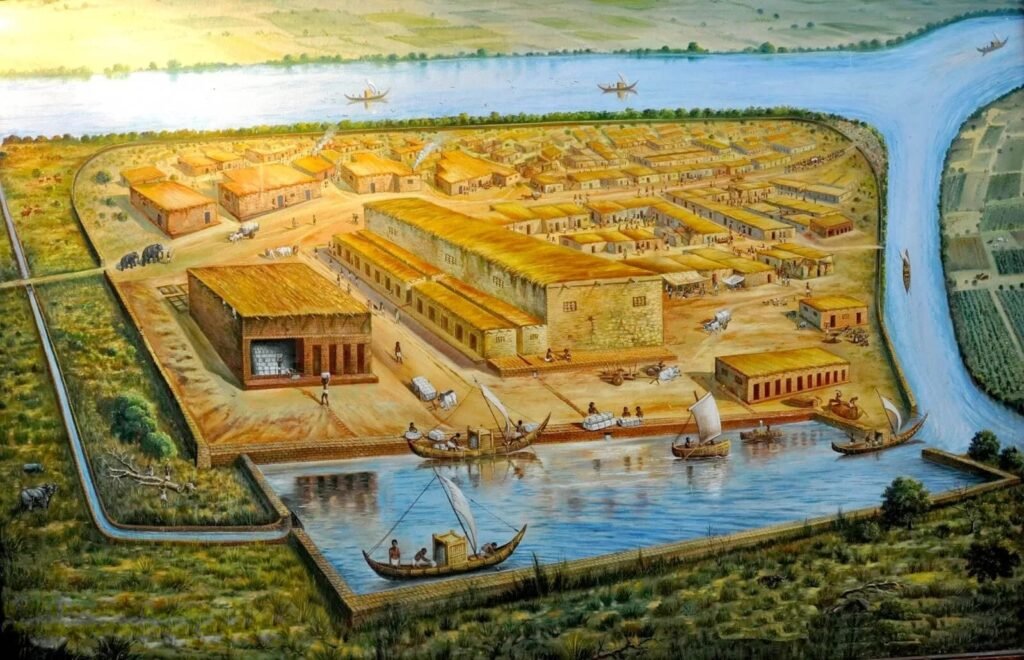
Embark on an enchanting voyage through the annals of time as you journey into the ancient marvel of Lothal, a port city steeped in a legacy spanning over 4,500 years. Located approximately 90 kilometers from Ahmedabad in Gujarat, Lothal offers a captivating glimpse into the awe-inspiring remnants of the illustrious Indus Valley Civilization. Predating even the Egyptian pyramids, this civilization thrived from 3300 BCE to 1300 BCE, leaving behind remarkable achievements in engineering, urban planning, and trade.

Sail Back to a Maritime Marvel

Step back in time to marvel at the world’s oldest dockyard, a testament to the engineering ingenuity of the Indus Valley people. Measuring an impressive 214 x 36 meters, this dock featured a unique water-locking system, facilitating seamless trade and maritime activities. Envision a bustling port city connected to the Gulf of Khambhat, where boats laden with goods sailed in, fostering cultural exchange and trade with other civilizations.

Places to visit: Lothal, Unveiling the Secrets of Gujarat’s Ancient Port City

Exploring Lothal’s Architectural Treasures

Lothal’s story unfolds as you explore its meticulously planned structures. Wander through the citadel, a fortified area that once housed the city’s elite. The towering residences, built on raised platforms, boasted amenities such as paved courtyards, baths, and an efficient drainage system that was far ahead of its time. The presence of a large warehouse hints at a thriving trade network, while a dedicated bead-making factory points to a flourishing craft industry. Unearthed semi-precious stone beads, including amethyst and onyx, offer intriguing clues about Lothal’s trade links with West Asian civilizations. The lower town, a bustling hub where artisans and merchants once thrived, adds another layer of depth to this ancient city’s vibrant past. Finally, the graveyard serves as a poignant reminder of Lothal’s inhabitants, preserving their legacy for generations to come.

A Deeper Dive: The Lothal Museum

To fully immerse yourself in Lothal’s rich history, a visit to the Archaeological Museum near the excavation site is a must. This treasure trove houses an enthralling collection of artifacts, including pottery, tools, ornaments, and seals with intriguing designs. These relics provide a vivid window into the daily lives of the Indus Valley people, shedding light on their advanced craftsmanship and the materials they used.

Experiencing Lothal: A Journey Through Time

Lothal is more than just a collection of ancient structures; it is a living narrative of human ingenuity and resilience. Imagine walking the same paths as the Indus Valley people, marveling at their advanced engineering skills, and piecing together the city’s story through the unearthed artifacts. The meticulous town planning and advanced civic amenities reflect a civilization that was truly ahead of its time. Lothal promises a journey that will leave you awestruck, pondering the achievements of a society that thrived millennia ago.

Visiting Information

Timings:

  • Opening Time: 10:00 AM
  • Closing Time: 05:00 PM
  • (Closed on Fridays)

A Call to Adventure

Lothal beckons with the promise of an unforgettable adventure. Whether you are a history enthusiast or a curious traveler, this ancient port city offers a profound connection to humanity’s past. So, pack your bags and travel back in time to discover the wonders of the Indus Valley Civilization at Lothal—an experience that will resonate with you long after you leave.

Places to Visit: Itenary to visit the Golconda Fort

0

Nestled in the western region of Hyderabad, just 9 km from Hussain Sagar Lake, Golconda Fort stands as a majestic testament to history and architectural grandeur. Dating back to 1143 when it was originally known as Mangal, this ancient fortress has borne witness to centuries of reigns, from the Bahmani Sultans to the Qutub Shahi rulers. Serving as the principal capital city of the Qutub Shahi dynasty from the 14th to 17th centuries, the fort is an exquisite blend of Hindu-Islamic architecture. Its sprawling grounds and towering structures resonate with the echoes of history, captivating everyone who steps onto its ancient pathways.

Architectural Marvels and Ingenious Engineering

Golconda Fort is not just an architectural masterpiece; it is a testament to the engineering brilliance of its time. The fort features mounted cannons, intricate drawbridges, and eight imposing gateways, with the most notable being the Fateh Darwaza (Victory Gate). One of its most fascinating features is the remarkable acoustic system near its dome entrance. A simple clap at this point can be heard reverberating all the way to a pavilion located almost a kilometer away on a hilltop, showcasing the ingenious craftsmanship of its builders.

Tales Carved in Time

As with many ancient monuments, Golconda Fort is steeped in legends that enrich its historical allure. According to one popular legend, the fort’s origins trace back to Shepherd’s Hill (Golla Konda in Telugu). It is said that a shepherd boy once discovered a divine idol upon the rocky hilltop. In reverence to this sacred discovery, the Kakatiya King constructed a mud fort around it, laying the foundation for what would later become the majestic Golconda Fort.

A Symphony of Ruins

Walking through the fort complex is like stepping back in time. The grand halls, intricately designed mosques, and imposing ramparts stand as silent witnesses to a bygone era. Each stone and ruin tells a story, and as you explore the vast complex, you can’t help but marvel at the grandeur that once defined this historical landmark.

Panoramic Views and Captivating Experiences

Beyond its architectural splendor, Golconda Fort offers stunning panoramic views of Hyderabad. From its highest points, visitors can gaze upon the city’s sprawling landscape, with the setting sun casting a golden hue over the historic monument.

Timings

  • Opening Time: 09:00 AM
  • Closing Time: 05:00 PM

Experience the Magic of the Light and Sound Show

As the sun sets, Golconda Fort undergoes a magical transformation. The captivating light and sound show brings its majestic past to life, recounting tales of valiant kings, epic battles, and architectural brilliance. The symphony of lights combined with a rich narrative leaves visitors spellbound, offering a memorable journey through time.

A Journey Through Time

Golconda Fort is more than just a historical monument; it is a journey through time. As you walk through its ancient pathways, you can almost hear the whispers of history carried by the breeze. Whether you are a history enthusiast, an architecture lover, or simply a curious traveler, a visit to Golconda Fort promises an experience that is both enlightening and awe-inspiring. So, pack your bags, step into the past, and let the echoes of Golconda Fort’s legendary tales captivate your heart and soul.

Places to Visit: Exploring the Tranquil Beauty of Ganesh Tok

0

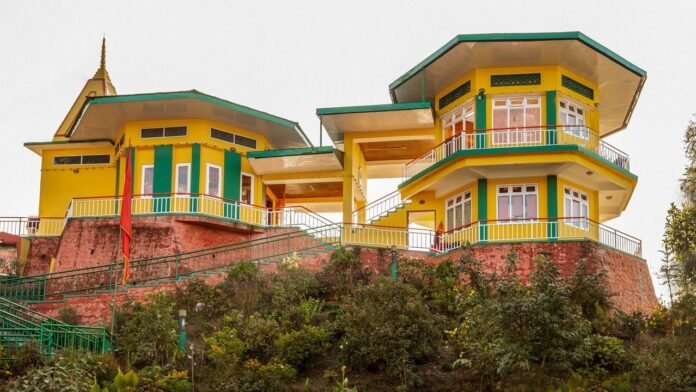
Nestled amidst the serene hills of Gangtok, Sikkim, Ganesh Tok stands as a hidden gem for travelers seeking solace and tranquility in nature’s embrace. Perched at an altitude of approximately 6,500 feet, this charming temple dedicated to Lord Ganesh offers not only spiritual solace but also breathtaking panoramic views of the Himalayan landscapes. A visit to Ganesh Tok is more than a mere journey; it is an enchanting experience that leaves an indelible mark on the soul.

A Spiritual Haven Amidst Nature’s Majesty

As you ascend the winding mountain roads leading to Ganesh Tok, the hustle and bustle of city life gradually give way to the tranquil sounds of nature. The gentle flutter of prayer flags in the mountain breeze, the rustling of leaves, and the distant chirping of birds create an atmosphere of peace and serenity. Upon arrival, the temple welcomes visitors with its vibrant colors and intricate designs, reflecting the rich cultural heritage of Sikkim.

Panoramic Vistas That Take Your Breath Away

One of the most captivating aspects of Ganesh Tok is the mesmerizing panoramic view that stretches as far as the eye can see. The snow-capped peaks of the mighty Himalayas, including the majestic Kanchenjunga, stand tall against the azure sky. As the sun rises or sets behind the mountains, the sky transforms into a canvas of gold and crimson hues, offering a magical spectacle that leaves visitors spellbound.

Timings

  • Opening Time: 06:00 AM
  • Closing Time: 07:00 PM

Embracing the Serenity of Nature

Ganesh Tok is more than just a temple; it is a sanctuary of peace amidst nature’s bounty. Visitors often take a moment to sit in quiet contemplation, surrounded by the serene beauty of hills and forests. The melodious chirping of birds and the gentle murmurs of mountain streams provide a soothing backdrop, allowing one to immerse in nature’s tranquil embrace.

Seeking Blessings and Spiritual Renewal

The temple’s serene ambiance offers the perfect setting for meditation and introspection. Visitors seek the blessings of Lord Ganesh for success, prosperity, and happiness. Many find a sense of spiritual renewal amidst the calm surroundings, reconnecting with their inner selves in this sacred space.

Preserving the Sacred Heritage

The local community and authorities have made concerted efforts to preserve Ganesh Tok as a sacred heritage site. The temple is frequently mentioned in travel guides, websites, and literature promoting tourism in Sikkim, underlining its significance as a cultural and spiritual landmark.

A Journey of Discovery and Serenity

A visit to Ganesh Tok is not just about sightseeing; it is a transformative journey of self-discovery and spiritual rejuvenation. Surrounded by the majestic beauty of the Himalayas, visitors leave with a renewed sense of purpose and peace.

Exploring Beyond Ganesh Tok

Beyond Ganesh Tok, the nearby attractions further enhance the allure of the area. Hanuman Tok, another hilltop temple dedicated to Lord Hanuman, offers equally breathtaking views of Gangtok. Leisurely strolls through surrounding forests reveal hidden waterfalls, exotic flora, and fauna thriving in this pristine ecosystem.

So, pack your bags and embark on this enchanting journey. Let Ganesh Tok in Gangtok captivate your heart and soul with its timeless charm and serene beauty.

Ballimaran to New Delhi: The Unexplored Delhi

0

Some cities stay with you, weaving their essence into your soul. Delhi—ancient yet ever-evolving—has done just that for me. When I first left for Mumbai, I felt the weight of parting, as if the city itself whispered, urging me to stay. But now, twelve years later, I find myself once again reluctant to leave. The city has held me in its quiet corners, through lonely nights, offering solace, history, and a sense of belonging.

Jan Morris, the celebrated historian, once wrote, “Tombs of emperors stand beside traffic junctions, forgotten fortresses command suburbs, the titles of lost dynasties are woven into the vernacular, if only as street names.” This is Delhi—a city that has grown in leaps and bounds but still holds its ruins close, whispering stories of its past to those who pause to listen.

Razia Sultan’s Tomb: A Hidden Legacy

Ballimaran to New Delhi: The Unexplored Delhi

Amidst the labyrinthine alleys of Turkman Gate lies the unassuming resting place of Razia Sultan, the only woman to rule Delhi during the Sultanate period. No grand dome marks her tomb, no streams of tourists flock here. Instead, locals guide curious visitors through winding lanes to find a simple, roofless enclosure with two graves—one believed to belong to her sister, Saziya. Surrounded by encroaching houses, this tomb, though neglected, stands as a quiet testament to a ruler who defied norms and carved her place in history.

Dadi-Poti Gumbad: The Tale of Two Tombs

Ballimaran to New Delhi: The Unexplored Delhi

On the busy road leading to Hauz Khas Village, two small domed structures stand as silent observers of time. The Dadi-Poti (Grandmother-Granddaughter) tombs are relics from two different eras—the smaller, built during the Tughlaq period (1321-1414), and the larger, from the Lodi period (1451-1526). Though their true inhabitants remain unknown, these structures stand resilient, their sloping walls whispering tales of dynasties past.

Sikander Lodi’s Tomb: The First Garden Tomb of Delhi

Ballimaran to New Delhi: The Unexplored Delhi

If you’ve ever strolled through Lodhi Garden’s verdant paths, you’ve walked in the shadow of history. Amidst the greenery stands Sikander Lodi’s tomb, an architectural precursor to the famed Humayun’s Tomb and, later, the Taj Mahal. Built in 1517 by his son Ibrahim Lodi, the octagonal tomb is adorned with deep verandas and towering arches. With its double dome and south-facing gateway, it marks the dawn of Delhi’s garden tombs, where nature and legacy intertwine.

Iltutmish’s Tomb: A Forgotten Jewel in the Qutub Complex

Ballimaran to New Delhi: The Unexplored Delhi

Nestled within the Qutub Complex, near the grand extensions of the Qutub Mosque, lies a gem that many overlook—the tomb of Shams-ud-Din Iltutmish, the visionary ruler of the Slave Dynasty. Built in 1235, this sandstone tomb stands on a raised platform, its walls adorned with intricate Kufic and Nakshi calligraphy. Though originally covered by a dome, time has left it open to the sky, adding to its mystique. British-era scholar Colonel Ferguson once described it as “one of the richest examples of Hindu art applied to Mohammedan purposes.”

Ghalib Ki Haveli: Echoes of a Poet’s Soul

Ballimaran to New Delhi: The Unexplored Delhi

Wander into the bylanes of Ballimaran, and you’ll find yourself at Ghalib Ki Haveli, the former residence of Mirza Ghalib, one of Urdu’s greatest poets. This 19th-century haveli, with its arched corridors and courtyard, still exudes the poet’s charm. Inside, relics of his life remain—a statue of Ghalib with a hookah in hand, walls inscribed with his couplets, and an old-world atmosphere that transports you back to an era of poetic grandeur.

Though Ghalib’s words still echo in the heart of Delhi, his tomb in Nizamuddin Basti remains in a sorrowful state, a reminder of how the city reveres its past yet often forgets to preserve it. But perhaps, as he himself wrote, “I asked my soul, what is Delhi?/ She replied: The world is the body, and Delhi its soul.”

Jamali Kamali Mosque and Tomb: Home of Sufi Saints and Jinns

Ballimaran to New Delhi: The Unexplored Delhi

In the heart of the Mehrauli Archaeological Complex lie the hauntingly beautiful ruins of the Jamali Kamali mosque and tomb. Built in 1528, this site housed Sufi saint and poet Sheikh Fazlullah (Jamali) and his enigmatic companion Kamali. While Jamali finds mention in history, Kamali remains a mystery—fueling legends that swirl around this site.

The architecture is striking, showcasing a blend of Mughal, Rajput, and Sultanate influences. The delicate lotus motifs and intricately carved arches set it apart as one of the most captivating mosques of its time. But beyond its architectural splendor, the site has gained notoriety as one of India’s most haunted places, drawing thrill-seekers and believers alike, who claim to hear whispers in the dead of night.

Delhi’s Eternal Embrace

Delhi is not just a city; it is a living, breathing archive of history. From the grandeur of emperors to the quiet legacy of poets, its walls whisper stories waiting to be heard. As Mir Taqi Mir wrote:

“Dilli jo ek sheher tha aalam me intekhab,
Rehte the muntakhib hi jahan rozgaar ke.
Jis ko falak ne loot ke veeran kar diya,
Hum rehne wale hain usi ujde dayar ke.”

(Delhi, that was a city unique in the world, where only the chosen of time once lived. Fate has plundered it and left it desolate, yet I remain—bound to this forsaken home.)

And so, even as I prepare to leave once more, I know that a part of me will always remain here, listening to the echoes of its past, held in the eternal embrace of this unforgettable city.

He Nearly Became a Lawyer — Now His London Restaurant Has Been MICHELIN-Starred for 18 Years!

0

“Please record your mother’s recipes.” This is the heartfelt plea of Chef Sriram Aylur to every millennial he meets. His words stem from a personal loss—the passing of his parents meant the disappearance of a generation’s time-tested recipes. One such treasure was a condiment crafted by his father, a smoky, aromatic spice blend that left an unforgettable aftertaste.

His recollections of the recipe are vague—his father would burn copra (dried coconut), scrape away the charred bits, and blend it with roasted chilies, coriander, and cumin. But the exact proportions and secret ingredients remain lost to time. He remembers vividly, however, the transformative power of that spice mix. Even the simplest vegetables, like potatoes or aubergines, became culinary masterpieces when cooked with it.

From Mumbai to London: A Journey in Flavors

Chef Sriram’s passion for cooking runs in his blood. Raised in Mumbai, he grew up in a household where food was a language of love. His father was in the catering business, and both his parents were exceptional cooks. Sunday lunches were a feast—tables laden with authentic South Indian dishes, sometimes shared with friends and unexpected guests.

Though he initially pursued a law degree, at his father’s encouragement, he explored a career in the culinary arts. He attended the Institute of Hotel Management, Catering Technology, and Applied Nutrition in India, followed by a post-graduate degree in food production skills and management. His time at the Taj Hotel in Mumbai exposed him to elite chefs, premium ingredients, and a world of possibilities. With every new dish he encountered, he realized the immense potential of Indian flavors on the global stage.

Bringing South Indian Cuisine to the World

In 1990, he spearheaded the launch of Karavalli in Bengaluru, a restaurant that quickly gained international acclaim. His next venture, Bombay Brasserie in London, introduced Parsi, Gujarati, and Maharashtrian cuisine to an international audience. Then, in 1999, he established Quilon, a Michelin-starred South Indian fine-dining restaurant that has maintained its prestigious star for 18 consecutive years.

At Quilon, every dish is a carefully curated cultural experience. The menu features a South Indian twist on global favorites, like the Japanese-inspired baked black cod, transformed into a dish guests describe as “soft as silk.” Classics such as pan-fried quail chop, prawn masala, Malabar paratha, and ada pradhaman pannacotta highlight the restaurant’s diverse offerings.

To Chef Sriram, food is more than sustenance—it is a storyteller, a bridge between cultures. Over the years, his culinary creations have become an integral part of London’s gastronomic landscape. His tables have welcomed dignitaries, including former Prime Ministers Atal Bihari Vajpayee and Dr. Manmohan Singh, Sir John Major, Prince Charles, Roger Federer, AR Rahman, Sunil Gavaskar, Tom Cruise, and Madonna. For 16 years, he has also been the only Indian chef invited to cook at the World Economic Forum in Davos.

He Nearly Became a Lawyer — Now His London Restaurant Has Been MICHELIN-Starred for 18 Years!

The Secret to Michelin-Worthy Cuisine

Retaining a Michelin star for nearly two decades is no small feat. According to Chef Sriram, success in the culinary world depends on three key factors: the right technique, authentic ingredients, and passion for the craft.

“If I’m making a Kerala fish curry, I want even a native to say that it tastes just like home,” he explains. To achieve this authenticity, he sources Byadgi red chilies, tamarind, and pepper directly from India. When he first started, these ingredients were unavailable in London, so he arranged for their import. Even a simple stir-fry of asparagus and beans—known as fugaath in Goa, poriyal in Tamil Nadu, and thoran in Kerala—is elevated with the right balance of mustard seeds and coconut.

A Legacy of Excellence

The accolades for Quilon reflect the chef’s commitment to culinary brilliance. The restaurant has won numerous awards, including the Best Indian Restaurant Good Curry Guide Award (2001), recognition in Time Out Food Guide (2003), and the Star Diamond Award from the American Academy of Hospitality Sciences (2004). Then, in 2008, Chef Sriram opened the newspaper to find that Quilon had earned its first Michelin star. The restaurant has held onto that honor ever since.

But for Chef Sriram, awards are only a milestone, not the destination. “Remember, you get awards for what you have done, not what you are going to do. There’s always more to prove. There’s always a long way to go.”

His journey is a testament to the power of preserving culinary heritage, embracing innovation, and sharing India’s rich flavors with the world.

India’s Indigenous Tea Culture: A Legacy Beyond Colonial Influence

0

When we think of tea in India, sprawling British-established plantations often come to mind. However, long before the British East India Company set its sights on Assam’s fertile lands, indigenous tribes like the Singphos had already cultivated and consumed tea in their daily lives. Their deep-rooted traditions challenge the widely held belief that tea culture in India is purely a colonial legacy.


The Singpho Legacy: India’s Original Tea Connoisseurs

The Singpho tribe, residing in parts of Northeast India, Myanmar, and China, have been brewing tea for centuries—possibly since as early as the 12th century. Their age-old techniques involve heating tea leaves in a metal pan until they turn brown, sun-drying them for several days, and then packing them tightly into bamboo tubes to be smoked over a fire. After about a week, the processed tea hardens into the shape of bamboo, resulting in a distinctive flavor cherished by the community.

Phalap: A Timeless Tradition

This traditional tea, known as phalap, holds a special place in Singpho culture. According to local oral traditions, the name phalap is derived from the words pha or kha, meaning “what,” and lap, meaning “leaf.” Legend has it that two weary brothers, exhausted from their travels, chewed on an unknown leaf that miraculously rejuvenated them—leading to the discovery of tea.


The British Encounter with Indigenous Tea

By the early 19th century, the British were eager to break China’s monopoly on tea. British adventurer Robert Bruce, during his travels in Assam, learned of wild tea plants from Singpho chief Bessa Gaum (also spelled Bisa Gam). This encounter, which took place in the early 1820s, marked the beginning of British interest in Assam tea.

Later, another Singpho chief, Nigro La, took the first steps toward organized tea cultivation in Assam, introducing the native plant to the British. Recognizing the commercial potential, the British soon began large-scale tea plantations. Initially, they experimented with Chinese tea varieties, but over time, they found that the indigenous Camellia sinensis var. assamica, already used by the Singphos, was better suited to the region’s climate.


From Singpho Traditions to Global Fame

Assam’s tea industry flourished under colonial rule, but its foundations were built on the knowledge and practices of indigenous communities. While British enterprises propelled Indian tea onto the world stage, the Singpho people were the original custodians of Assam’s tea heritage.

Today, there are ongoing efforts to preserve and celebrate these traditional tea-making practices. Cultural historians and tea enthusiasts are documenting the artisanal methods used by the Singpho tribe to ensure that this rich heritage is not overshadowed by commercial tea production.


Preserving a Rich Heritage

The unique flavor of phalap offers a window into India’s diverse tea traditions, reminding us that the story of tea in India is as varied and complex as the country itself. While the British played a significant role in popularizing tea cultivation, it is crucial to recognize and honor indigenous tribes like the Singphos, who were the region’s original tea artisans. Their centuries-old traditions not only highlight India’s deep-rooted connection to tea but also challenge the narrative that tea culture in India began solely with colonial intervention.

By appreciating and preserving these indigenous traditions, we not only honor the past but also ensure that the true legacy of Indian tea continues to thrive for generations to come.

Trekking with Children in India: A Family-Friendly Guide

0

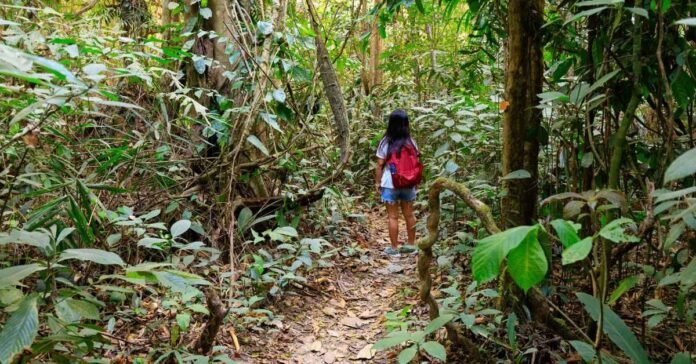
Trekking with children in India can be a rewarding adventure, offering young explorers a chance to connect with nature, build resilience, and experience the joy of the great outdoors. With a variety of beginner-friendly trails across the country, families can embark on unforgettable journeys through lush forests, serene meadows, and breathtaking mountain landscapes. Here’s a guide to some of the best child-friendly treks in India and tips to make the experience enjoyable for all.


1. Chopta-Tungnath: The Perfect First Trek

Location: Uttarakhand’s Garhwal region
Best Time to Visit: April to June for blooming rhododendrons; September to November for clear Himalayan views

Imagine walking through meadows covered in wildflowers, with the majestic Himalayas towering in the distance. The Chopta-Tungnath trek is an ideal introduction for young trekkers, with a well-marked 5 km trail leading to Tungnath, the highest Shiva temple in the world (3,680 meters). For adventurous families, an additional 1.5 km climb to Chandrashila (4,000 meters) rewards trekkers with panoramic views.

Difficulty Level: Easy to moderate. Children with basic fitness levels can enjoy the hike.
Tip: Ensure kids are acclimatized to avoid altitude sickness. Take frequent breaks and keep them hydrated.


2. Tadiandamol: A Western Ghats Adventure

Location: Coorg, Karnataka
Best Time to Visit: September to February for lush post-monsoon landscapes

Nestled in Karnataka’s Coorg district, Tadiandamol is the highest peak in the region (1,748 meters) and offers a perfect introduction to trekking in the Western Ghats. The 15 km round-trip trail starts near the Nalknad Palace and winds through enchanting shola forests, grasslands, and streams. While the majority of the trek is gentle, certain sections near the summit can be steep.

Difficulty Level: Moderate. Suitable for older children or younger ones with trekking experience.
Tip: Assess your child’s endurance level before attempting this trek. Start early to avoid the midday sun.


3. Valley of Flowers: Nature’s Classroom

Location: Uttarakhand
Best Time to Visit: July to September, when the valley transforms into a vibrant carpet of wildflowers

A UNESCO World Heritage site, Valley of Flowers is a paradise for young nature lovers. The 3.7 km trek from Ghangaria to the valley is relatively flat, making it accessible for children who can handle longer walks. Along the way, spot exotic Himalayan flora, waterfalls, and possibly even rare wildlife like the blue sheep (bharal).

Difficulty Level: Easy to moderate. Suitable for families with children comfortable with walking long distances.
Tip: The monsoon season brings frequent rains, so pack waterproof gear and sturdy shoes.


Practical Tips for Family Trekking

  • Footwear Matters: Invest in quality trekking shoes with ankle support for both adults and children.
  • Start Early: Mornings offer the best trekking conditions, avoiding midday heat and potential rain.
  • Pace Yourselves: Take regular breaks, allowing kids to rest, hydrate, and enjoy the scenery.
  • Pack Smart: Children’s backpacks should be light, carrying only essentials.
  • Stay Energized: Carry energy-boosting snacks like nuts, fruits, and energy bars.
  • Engage Young Minds: Keep children entertained with nature-based games or wildlife spotting.
  • Safety First: Research current trail conditions, hire local guides, and ensure the trek aligns with your family’s fitness levels.

With the right preparation, trekking can be a bonding experience that instills a lifelong love for adventure and the outdoors in your children. Ready to hit the trails? The mountains are calling!

Summer Adventures Through Time: Exploring India’s Heritage With Your Child

0

When I was in school, summer meant one thing—vacation. The sheer excitement of travel, the thrill of new places, and the unspoken family tradition of finding the nearest museum within minutes of arriving at our destination. My parents firmly believed that the best way to understand a city was to befriend its history. And honestly, they weren’t wrong.

Decades later, that lesson remains with me. History isn’t just about dates and battles—it’s about stories, identities, and the cultural threads that connect the past to our present. This summer, why not pass on that tradition to your children? Let them embark on an adventure where history isn’t confined to textbooks but comes alive through immersive experiences. Here’s a list of some of the most engaging heritage activities across India that will turn summer vacations into a journey through time.


1. Museum on Wheels: A Traveling Time Machine

Where: Maharashtra, Goa, Gujarat, Karnataka, and Telangana

Imagine a museum pulling up right outside your doorstep. That’s exactly what the Citi-CSMVS Museum on Wheels offers—an air-conditioned, state-of-the-art bus transformed into a traveling exhibition. Taking the magic of museums to children in remote corners, these mobile museums showcase history, science, and heritage through interactive exhibits, models, dioramas, and audio-visual presentations.

Instead of waiting for a field trip, let history come to your child. This hands-on experience ensures that young minds engage with India’s past, fostering curiosity and wonder. Book your experience here.


2. Walking the Footsteps of Freedom at Fort Aguada

Where: Goa

Picture this: the sound of waves crashing against the 400-year-old walls of Fort Aguada, a silent witness to history. Once a Portuguese bastion, later transformed into a prison for Goa’s freedom fighters, this site tells the story of courage and resilience. The former prison cells and kitchens whisper tales of defiance against colonial rule.

An interactive museum inside the fort lets visitors relive these stories, ensuring that history is more than just an abstract concept—it’s something you can walk through, touch, and experience. Book your experience here.


3. Kolkata on Two Wheels: A Colonial Odyssey

Where: Kolkata

Cycling through Kolkata’s historic lanes is like riding through a living history book. Calcutta Walks offers guided bicycle tours that weave through Chowringhee, Dalhousie Square, and the bazaars of the old city, tracing the remnants of British colonial rule.

Pedal past grand colonial-era buildings, once the epicenter of British administration, and ride through the narrow alleys of Black Town—where Indians lived under British segregation policies. This journey doesn’t just offer history; it’s an adventure through the architectural and cultural footprints of the past. Book your experience here.


4. Nandi Durg: A Trek Through Time

Where: Bengaluru

Bengaluru may be a tech hub today, but its history runs deeper than the glass towers of Electronic City. Every third Sunday, students of Sparkling Mindz Global School lead heritage walks, rediscovering the city beyond its urban sprawl.

The trek to Nandi Durg (Nandi Fort) is a chance to step back in time—exploring ancient temples, hidden lakes, and battle-scarred fortifications that once stood against invading armies. It’s more than just a trek; it’s a journey into Bengaluru’s forgotten past, one step at a time. Book your experience here.


5. The Nizams’ Hyderabad: A Royal Affair

Where: Hyderabad

Step into the opulence of the British Residency, a 19th-century mansion that once housed colonial officers and played a pivotal role in India’s freedom struggle. This heritage walk delves into the fascinating tales of Hyderabad’s Nizams, their lavish courts, and their complex relationship with the British.

One of the most intriguing stories is that of British officer James Achilles Kirkpatrick, who defied the East India Company by adopting Mughal customs and marrying Khair-un-Nissa, a Hyderabadi noblewoman. Their love story is woven into the very walls of this grand estate. Let your child witness history in its grandest form. Book your experience here.


6. Ghalib’s Delhi: A Poet’s Journey

Where: Delhi

Mirza Ghalib’s poetry has stood the test of time, but his home in Delhi remains a lesser-known gem. This summer, take your child on a poetic pilgrimage to Ghalib’s haveli, a modest yet historically rich residence gifted to him by an admirer.

Follow his footsteps through Ballimaran Street, once home to boatmen and traditional physicians, and wander through Dariba Kalan, the ‘Street of the Incomparable Pearl’, known for its exquisite jewelry and perfumes. End the tour at the National Museum, one of modern India’s finest cultural repositories. Book your experience here.


7. Mumbai’s Forgotten Fort: A City’s Origin Story

Where: Mumbai

Before Mumbai became a city of skyscrapers, it was a fortified town with a moat around it. The Fort Heritage Walk takes children on a fascinating journey back to the city’s colonial beginnings.

Cross the imaginary drawbridge and explore the original Fort of Bombay, walking past grand trading houses, gothic churches, and the old Customs House. Understand how the city evolved from a group of seven islands into the bustling metropolis we see today. Book your experience here.


This Summer, Gift Your Child the Past

History isn’t just something to read—it’s something to experience. These summer heritage activities will transport your child beyond classroom lessons, letting them touch, feel, and walk through India’s rich and complex past.

Because the best stories aren’t just told—they are lived.

Breaking the Silence: Arpan NGO’s Mission to Combat Child Sexual Abuse in India

0

In the heart of India’s bustling cities and quiet rural landscapes, an unspoken crisis continues to unfold. Child sexual abuse (CSA) remains a harsh reality, hidden behind closed doors and shrouded in silence. According to the National Crime Records Bureau (NCRB), India saw an 8.7 percent rise in child abuse cases in 2022, with incidents surging to 162,000. Yet, behind every statistic is a child whose life has been altered, whose innocence has been stolen, and whose trauma often remains unnoticed.

For Anupriya Das Singh, Senior Manager at Arpan NGO, the numbers are more than just data—they represent lives that demand protection, voices that deserve to be heard. “Every child deserves a safe environment to grow up in. We work tirelessly to make that a reality by educating, empowering, and healing the lives of children affected by sexual abuse,” she says.

A Wake-Up Call That Sparked a Movement

The roots of Arpan, one of India’s leading organizations working to address CSA, trace back to 2003, when its founder, Pooja Taparia, had a life-altering experience. A play titled “30 Days in September”—a poignant story about the long-lasting trauma of child sexual abuse survivors—left her shaken. “It was a wake-up call,” she recalls. “I understood the deep scars CSA leaves on survivors, and I felt the urge to do something about it.”

Four years later, in 2007, Arpan was born, driven by a singular mission: to prevent child sexual abuse through awareness, education, and intervention.

Breaking the Silence: Arpan NGO’s Mission to Combat Child Sexual Abuse in India

Breaking the Silence Through Education

Arpan’s approach goes beyond crisis intervention—it focuses on preventing CSA before it happens. At the heart of its efforts is the Personal Safety Education (PSE) programme, a school-based initiative designed to educate children, parents, and teachers on how to recognize, prevent, and report abuse.

“We don’t just teach children how to protect themselves; we ensure their entire support system—parents, teachers, caregivers—are part of the conversation,” explains Anupriya.

Through PSE, children from Classes 1 to 12 learn essential life skills, including how to:

  • Recognize unsafe situations
  • Say “NO” to inappropriate touch
  • Report abuse without fear or shame
  • Seek mental health support when needed

The impact has been profound. Over 150,000 children and 115,000 adults have been trained under this programme, making it one of the largest CSA prevention initiatives in India.

Breaking the Silence: Arpan NGO’s Mission to Combat Child Sexual Abuse in India

Extending the Fight Beyond Schools

Understanding that abuse is not limited to a specific demographic, Arpan collaborates with government initiatives like the School Health and Wellness Programme (SHWP) under Ayushman Bharat, ensuring its impact extends to both urban and rural India.

Through partnerships with schools, community groups, and policymakers, the NGO is actively reshaping the way society addresses CSA—not as a hushed topic, but as an urgent public health and safety issue.

Overcoming the Barriers of Stigma and Silence

Despite Arpan’s success, the battle against CSA is far from easy. The stigma surrounding child sexual abuse remains a formidable challenge. In many families and communities, the topic is considered too sensitive to discuss, leaving children vulnerable and perpetrators unchecked.

“The biggest hurdle is the culture of silence,” says Anupriya. “Many parents and educators avoid these conversations, thinking it won’t happen to their child. But statistics prove otherwise—CSA can happen anywhere, to any child, regardless of background.”

To counteract this, Arpan actively engages in awareness campaigns, educational resources, and open dialogues that challenge societal taboos and empower children and families to speak up.

Healing the Wounds of the Past

For those who have already endured abuse, Arpan provides a holistic healing approach that extends beyond psychological recovery.

“Healing is not just about counseling—it’s about restoring dignity, rebuilding trust, and offering survivors a future where they are not defined by their trauma,” explains Mansi Ashok Naik, a counselor at Arpan.

Arpan’s team of over 150 trained professionals, including psychologists, social workers, and legal experts, ensures survivors receive:

  • Trauma-informed therapy to process and heal
  • Family and community support to prevent re-traumatization
  • Legal assistance for justice and protection

The Path Forward: A Call to Action

Child sexual abuse is not just an individual tragedy—it is a societal crisis that demands collective action.

For Arpan, the fight continues. With each workshop conducted, each child empowered, and each survivor supported, they move closer to a future where no child suffers in silence.

“The more we talk about it, the more we break the chains of stigma,” says Pooja Taparia. “Every child we protect today is a life saved, a future reclaimed.”

India has taken steps forward, but the journey is far from over. It is a fight that requires parents, teachers, policymakers, and citizens to come together and say: No more silence. No more abuse. Every child deserves to be safe.


If you wish to support Arpan NGO in their mission, visit www.arpan.org.in to learn how you can contribute, volunteer, or spread awareness.