Home Blog Page 351

2030 Global Forest Vision Report

0

The “2030 Global Forest Vision: Priority Actions for Governments in 2025” report was published on March 19, 2025, by the Forest Declaration Assessment ahead of World Forest Day. Supported by the United Nations Development Programme (UNDP), Climate Land Use Alliance, and other global partners, the report underscores the urgent need for comprehensive strategies to combat deforestation and protect the world’s forests.

Alarming Deforestation Statistics

Deforestation rates continue to rise at an alarming pace. In 2023 alone, 6.37 million hectares of forest were lost—an area equivalent to nine million soccer fields. The Amazon, Southeast Asia, and Africa remain the most severely affected regions, with cattle ranching in the Amazon accounting for a staggering 80% of forest loss.

Key Drivers of Deforestation

The report identifies agricultural expansion as the primary driver of deforestation. The demand for commodities such as palm oil, soy, and beef has led to widespread forest clearance. In Indonesia and Malaysia, palm oil production poses a significant threat to endangered species, including orangutans and Sumatran tigers. The Amazon has also witnessed the loss of over 800 million trees between 2017 and 2022 due to the increasing global demand for beef.

Trade Policies and Deforestation

One of the report’s key recommendations is the implementation of stronger trade policies to curb deforestation. It advocates for banning imports of products linked to forest loss. The European Union has already taken a significant step by enacting the Deforestation Regulation, mandating proof that products do not originate from cleared forests. Similarly, the United States is tightening its regulations on illegal logging and timber imports.

Challenges in Enforcement

Despite the introduction of stringent regulations, enforcement remains a significant challenge. Small-scale farmers in producing countries often lack the necessary technology and resources to certify their products as deforestation-free. Moreover, nations such as Brazil and Indonesia express concerns that strict regulations could negatively impact their economies, as agriculture remains a primary source of income.

The Need for International Cooperation and Support

The report emphasizes the importance of international collaboration to effectively tackle deforestation. It calls for the expansion of deforestation-free trade laws to major economies like China and India. Additionally, it highlights the necessity of financial and technical support for farmers in producing countries. Improved global monitoring systems are also crucial for tracking products linked to deforestation and ensuring transparency.

A Grim Future Without Action

Without immediate and concerted action, the world faces an accelerated loss of biodiversity, which will severely hinder global climate and nature conservation goals. The upcoming COP30 summit in Brazil is expected to serve as a critical platform for addressing these pressing issues and discussing potential solutions.

The 2030 Global Forest Vision report is not just a warning; it is a clarion call for governments, corporations, and individuals to prioritize forest conservation. Protecting the planet’s forests is essential for maintaining ecological balance, combating climate change, and securing a sustainable future for generations to come.

Fire Rainbow: The Science, Geography, and Spectacular Beauty of This Rare Phenomenon

0

Introduction

A “fire rainbow” is not actually a rainbow or related to fire. Officially called a circumhorizontal arc, this breathtaking optical phenomenon occurs when sunlight passes through ice crystals in cirrus clouds, creating a brilliant spectrum of colors in the sky. Often mistaken for an actual rainbow, a fire rainbow forms high in the atmosphere and appears as a wide, horizontal band of vivid hues.

The Science Behind Fire Rainbows

Fire rainbows occur due to refraction, dispersion, and reflection of sunlight through ice crystals in cirrus or cirrostratus clouds. Here’s how it works:

  1. High-altitude cirrus clouds (found at altitudes of 20,000 feet or more) contain hexagonal plate-like ice crystals.
  2. The sun must be at least 58° above the horizon for the light to pass through these ice crystals at just the right angle.
  3. As sunlight enters the crystal, it is refracted (bent) at a precise angle of 90°, dispersing into its constituent colors—similar to a prism.
  4. The light exits the crystal, forming a horizontal band of rainbow colors parallel to the horizon.

Where and When Do Fire Rainbows Occur?

Unlike regular rainbows, which can appear after rainfall, fire rainbows are more selective in their appearances. They are geographically dependent and occur only under specific atmospheric conditions:

  • Latitude and Seasons: Fire rainbows are most commonly observed in regions between latitudes 55° N and 55° S. This means they are more frequent in places like the United States (especially the southern regions), parts of Europe, China, and India during the summer months when the sun reaches the necessary height.
  • Cloud Type: High-altitude cirrus clouds must be present, which is more common in warmer weather.
  • Sun’s Position: The sun needs to be positioned at least 58° above the horizon, meaning they are rarely seen in places too far north or south of the equator.

Fire Rainbow vs. Other Atmospheric Phenomena

Fire rainbows are often confused with other colorful sky events, such as:

  • Iridescent Clouds: These are caused by diffraction rather than refraction and appear as colorful patches near the sun.
  • Haloes and Sundogs: These occur when sunlight interacts with ice crystals but form circular patterns rather than horizontal arcs.
  • Rainbows: Traditional rainbows form due to refraction and reflection in raindrops, requiring precipitation rather than ice clouds.

Famous Sightings and Photography

Fire rainbows have been captured in various locations worldwide, often drawing attention due to their striking beauty. Some notable sightings include:

  • United States (California & Florida): Frequent sightings during summer months due to ideal sun angles.
  • Himalayas (India & Nepal): The high altitude and presence of cirrus clouds make it a great spot for fire rainbow formations.
  • Switzerland and France: These countries occasionally witness fire rainbows due to their latitude and high-altitude cloud formations.

Can You Predict a Fire Rainbow?

While rare, fire rainbows can be predicted by checking weather conditions:

  • Look for cirrus clouds on a sunny day with the sun positioned at least 58° above the horizon.
  • The best time to see them is typically during midday in the summer months.

Conclusion

Fire rainbows are among the most spectacular and rare optical phenomena in nature. Their vibrant, dreamlike appearance results from a perfect alignment of sunlight and ice crystals, painting the sky with a mesmerizing spectrum of colors. While they are uncommon, understanding their science and geography can help increase your chances of witnessing this breathtaking event.

The Beatles Ashram: Where Music Met Meditation in Rishikesh – A Timeless Journey of Creativity and Spirituality

0

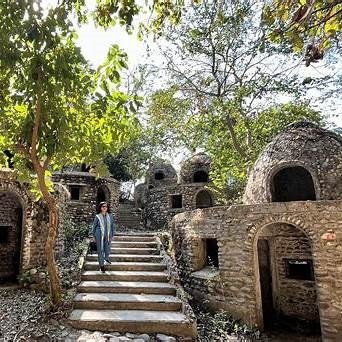
Nestled in the serene foothills of the Himalayas, where the Ganges River flows with a tranquil grace, lies a site steeped in musical legend and spiritual allure—the Beatles Ashram, officially known as Chaurasi Kutiya. This secluded retreat became an iconic landmark in 1968 when the Beatles sought solace and enlightenment within its confines, a journey that would forever intertwine Eastern spirituality with Western music.​

The Beatles Ashram: Where Music Met Meditation in Rishikesh – A Timeless Journey of Creativity and Spirituality

A Journey Back in Time

In February 1968, John Lennon, Paul McCartney, George Harrison, and Ringo Starr arrived at the ashram to study Transcendental Meditation under Maharishi Mahesh Yogi. Their stay marked a prolific period of creativity, leading to the composition of numerous songs that would later feature on the “White Album” and “Abbey Road.” The ashram’s tranquil environment offered a respite from their hectic lives, allowing them to delve deep into meditation and music.​

The Beatles Ashram: Where Music Met Meditation in Rishikesh – A Timeless Journey of Creativity and Spirituality

The Ashram’s Architecture and Art

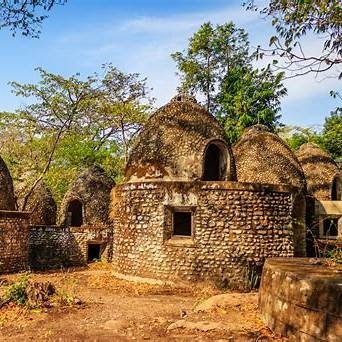
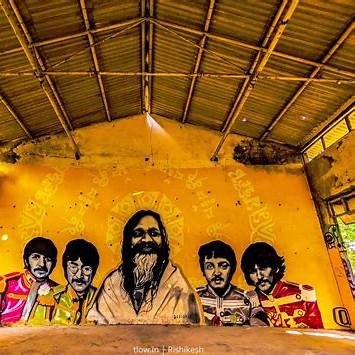
Chaurasi Kutiya, meaning “84 meditation huts,” is spread over 14 acres and comprises various structures, including the distinctive meditation pods where the Beatles practiced. Over the years, the ashram fell into disrepair, with nature reclaiming much of the space. However, this abandonment led to a unique transformation—artists and visitors adorned the crumbling walls with vibrant graffiti and murals, turning the ashram into a living gallery that reflects its rich history and the enduring legacy of the Beatles.​

Recent Developments and Future Plans

Recognizing the cultural and historical significance of the site, efforts are underway to restore and revitalize the ashram. A Gujarat-based architecture firm, HCP Design, Planning and Management Pvt Ltd, has been commissioned for a ₹90-crore project aimed at preserving the ashram’s original character while introducing exhibitions on the Beatles, Maharishi Mahesh Yogi, ecology, yoga, and music. The plan includes transforming dilapidated structures into functional spaces like souvenir shops, ensuring that the ashram continues to inspire future generations.

The Beatles Ashram: Where Music Met Meditation in Rishikesh – A Timeless Journey of Creativity and Spirituality

Untold Stories and Lasting Impact

Beyond the well-documented accounts of the Beatles’ time at the ashram, there are myriad lesser-known tales that add depth to their stay. For instance, the song “Dear Prudence” was written for Prudence Farrow, actress Mia Farrow’s sister, who became so immersed in meditation that Lennon penned the song to encourage her to “come out and play.” Additionally, the ashram became a melting pot of creativity, with fellow musicians like Donovan and Mike Love of the Beach Boys also in attendance, contributing to a unique fusion of artistic expression.​

The Beatles Ashram: Where Music Met Meditation in Rishikesh – A Timeless Journey of Creativity and Spirituality

Visiting the Ashram Today

Today, the Beatles Ashram is open to the public, attracting visitors from around the globe who seek to experience its unique blend of music history and spiritual ambiance. As you wander through the overgrown paths and graffiti-adorned halls, there’s a palpable sense of walking in the footsteps of legends. The ashram stands as a testament to a time when four musicians embarked on a journey of self-discovery, leaving an indelible mark on both music and spirituality

World Theatre Day – Celebrating the Essence of Drama and Art

0

World Theatre Day is observed annually on March 27, a day dedicated to celebrating the essence, beauty, and cultural significance of theatre arts. Established by the International Theatre Institute (ITI) in 1961, this day honors the transformative power of theatre and its profound impact on society. It also serves to highlight the potential of theatre to foster economic growth and social cohesion by informing governments, institutions, and stakeholders of its enduring value.

A Historical Perspective

The roots of theatre trace back to ancient Greece, where it was revered as a compelling art form that educated, entertained, and captivated audiences. Theatre combines multiple artistic disciplines, offering a unique live experience that transcends mere entertainment.

The inception of World Theatre Day came at the ninth World Congress of the ITI in Vienna in 1961 when President Arvi Kivimaa, representing the ITI’s Finnish Centre, proposed the establishment of this special day. The Scandinavian centers of the ITI supported this idea with great enthusiasm. On March 27, 1962, World Theatre Day was celebrated for the first time by ITI centers, theatre professionals, and enthusiasts. Today, more than 90 ITI centers worldwide participate in the festivities, involving theatre universities, academies, schools, and passionate audiences.

A hallmark of World Theatre Day is the World Theatre Day International Message, written by a prominent figure in the arts, reflecting on the history and significance of theatre. The first message was penned by French poet and playwright Jean Cocteau in 1962. In 2021, the message was delivered by the acclaimed British actress Helen Mirren, renowned for her Oscar-winning role in The Queen.

How to Celebrate World Theatre Day

Visit Your Local Theatre: Support your local theatre by attending performances or donating to theatre-related organizations. Many theatres host special events on World Theatre Day, and participating can be a meaningful way to honor the art form. For those seeking hands-on experience, signing up for theatre programs in acting or music can be both educational and enjoyable.

Join a World Theatre Day Event: ITI centers and local theatre organizations often organize special events on March 27. These events provide an opportunity for communities to come together, celebrate creativity, and appreciate the transformative power of theatre. Sharing the World Theatre Day International Message on social media using #WorldTheatreDay is another way to participate.

Involve the Next Generation: Theatre is for everyone, regardless of age or gender. World Theatre Day is an excellent opportunity to introduce children to the magical world of theatre. Family-friendly shows such as The Lion King, The Tiger Who Came to Tea, or Harry Potter and the Cursed Child offer an engaging and educational experience for young audiences.

5 Fascinating Facts About Theatre

  1. World’s Oldest Theatre: The Teatro Olimpico in Vicenza, Italy, built in 1585, is considered the oldest theatre still in use today.
  2. Smallest Operating Theatre: The Kremlhoftheater in Austria holds the title of the world’s smallest regularly operating theatre, seating just eight people.
  3. Longest-Running Broadway Show: The Phantom of the Opera is the longest-running Broadway show in history, having been performed since 1988 in 15 languages, with an estimated gross of $6 billion.
  4. Most Theatre-Crazy City: New York City boasts the highest number of theatres (420), followed by Paris (353), Tokyo (230), and London (214).
  5. Women in Theatre History: In England, it was illegal for women to act until 1660 when King Charles II decreed that all female roles must be played by women.

Why World Theatre Day Matters

Promoting the Beauty of Theatre: World Theatre Day showcases the value and diversity of theatre in its many forms, from classical drama to modern performances. It highlights how theatre can inspire, educate, and entertain, while preserving cultural heritage.

Raising Global Awareness: The day provides an opportunity to recognize various forms of theatre and their relevance in society. These forms have evolved over centuries, yet each holds educational and cultural significance.

Empowering Theatre Communities: World Theatre Day allows theatre communities to shine on a global platform. It offers a chance to advocate for support from governments and stakeholders, emphasizing the economic and cultural impact of theatre.

World Theatre Day – Upcoming Dates

YearDateDay
2025March 27Thursday
2026March 27Friday
2027March 27Saturday
2028March 27Monday
2029March 27Tuesday

On World Theatre Day 2025, let us celebrate the creativity and resilience of theatre artists, support our local theatres, and continue to champion the arts for future generations.

Chandrayaan-4: India’s Next Giant Leap in Space Exploration

0

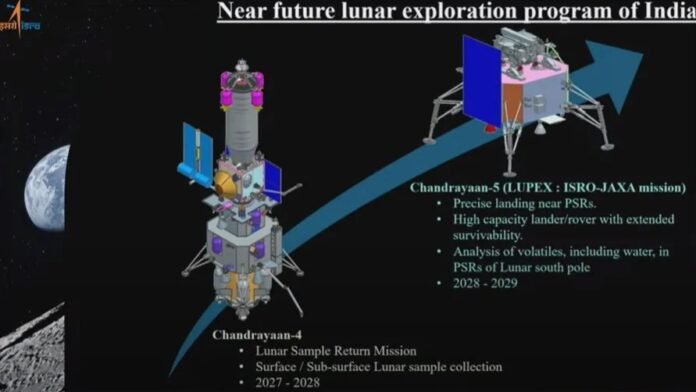
Chandrayaan-4, India’s ambitious fourth lunar mission, is scheduled to launch in October 2027, marking a significant milestone in the nation’s space exploration journey. Spearheaded by the Indian Space Research Organisation (ISRO), this mission aims to achieve not only a successful soft landing on the Moon but also the groundbreaking feat of collecting and returning lunar samples to Earth.

Mission Details

Chandrayaan-4 will comprise two spacecraft, each weighing approximately 4,750 kg. Instead of a single massive vehicle, ISRO plans to deploy two LVM3 rockets for the launch. This approach involves complex docking and undocking procedures in space, showcasing India’s growing technological prowess in advanced space operations.

Funding and Goals

The Indian government has allocated Rs 2,104 crores (around $240 million) for this mission. The primary objective is to collect samples from the Moon’s southern polar regions, a scientifically significant area believed to hold crucial clues about the Moon’s formation and the presence of water ice. With Chandrayaan-4, India aspires to join the elite club of nations — USA, Russia, and China — that have successfully executed lunar sample return missions.

Importance of Lunar Samples

Lunar samples hold immense value for scientific research. While robotic crafts can perform on-site studies, their capabilities are limited due to the restricted equipment they can carry. Returning lunar materials to Earth allows for more sophisticated analysis, potentially unlocking insights into the Moon’s geological history, composition, and the presence of resources.

Technological Innovations

Chandrayaan-4 introduces several technological breakthroughs, including a Surface Sampling Robot and an advanced drilling mechanism. These tools will enable the collection of surface as well as sub-surface samples. Remarkably, all critical technologies for this mission have been developed domestically, underscoring India’s self-reliance in space technology.

Mission Components and Operations

The mission includes five key modules:

  • Ascender Module (AM): Responsible for ascending with lunar samples.
  • Descender Module (DM): Facilitates the powered descent and landing on the Moon.
  • Re-entry Module (RM): Carries the samples back to Earth.
  • Transfer Module (TM): Manages orbital adjustments.
  • Propulsion Module (PM): Provides the necessary thrust for transit.

After the launch, the crafts will dock in an elliptical Earth orbit to form a single integrated craft. The DM and AM will then execute a powered descent to achieve a soft landing on the lunar surface.

Sample Collection Process

Upon landing, the Descender Module will deploy a robotic arm to collect surface samples, while the drilling mechanism will gather sub-surface materials. These samples will be carefully sealed in secure containers to prevent contamination during their return journey to Earth.

Return Journey to Earth

Once the sample collection is complete, the Ascender Module will lift off from the lunar surface and dock with the Re-entry Module in lunar orbit. The Transfer Module and Re-entry Module will then undock and begin the return journey to Earth. Upon re-entry, the RM will execute a ballistic descent, landing safely on Earth with the precious lunar samples.

Future Implications

Chandrayaan-4 is not just a mission; it is a stepping stone towards future manned lunar missions. By honing the technologies required for complex docking, sample collection, and re-entry, ISRO is building capabilities that will eventually support sending Indian astronauts to the Moon. Moreover, the mission is expected to spur skill development and employment opportunities in India’s burgeoning space sector, fostering innovation and positioning India as a major player in global space exploration.

Kancha Soda: The Traditional Indian Beverage Making a Global Comeback

0

Kancha Soda, fondly known as the ‘marble bottle soda’ or ‘goli soda,’ is all set to create waves in international markets, including the USA, UK, Europe, and Gulf countries. Once a beloved refreshment for both children and adults in India, this fizzy drink is now being reintroduced on a global platform, thanks to the efforts of the Agricultural and Processed Food Products Export Development Authority (APEDA) under the Ministry of Commerce.

Why is Kancha Soda Famous?

Kancha Soda stands out due to its unique packaging — a glass bottle sealed with a marble. The nostalgic popping sound when the marble is pushed down has been a cherished memory for many. However, with the advent of multinational beverage giants, this traditional drink gradually faded from the market.

The Global Revival

Under a strategic partnership with a private company, India has started supplying Kancha Soda to retail chains in the Gulf region. Branded as ‘Pop Soda,’ this initiative aims to revive the charm of this traditional beverage on the international stage. The brand has already made significant inroads in several countries.

Unique Packaging and Appeal

The quirky packaging of Kancha Soda remains a key attraction. Its distinctiveness has always captivated consumers, young and old alike. Despite losing popularity over the years due to market dominance by global beverage companies, this traditional drink is now experiencing a resurgence.

Challenges and Market Strategy

Bringing back Kancha Soda to the global market involves overcoming several challenges, including strong competition from established global brands. However, innovative branding and the emotional appeal of nostalgia are expected to give this product a competitive edge.

With this comeback, Kancha Soda is not just reviving a traditional Indian beverage but also reconnecting with millions of consumers who have fond memories attached to it. The global branding strategy emphasizes both its cultural significance and its refreshing taste, aiming to establish a lasting presence in international markets.

7th Ice Stupa Festival Showcases India’s First Automated Ice Stupa Shewang Rigzing, Leh

0

The serene landscapes of Ladakh recently witnessed the grand inauguration of the 7th Ice Stupa Festival at Oama Chorten. This year’s event was marked by the presentation of India’s first-ever automated ice stupa, a revolutionary creation made by freezing 2.5 million liters of water. Traditionally, ice stupas are manually constructed, often requiring individuals to work tirelessly through freezing nights. However, the automated version operates with the help of a sophisticated digital machine that sprays water into the air, forming the stupa naturally without the need for constant human effort.

The festival featured the construction of 25 artificial glaciers, highlighting the urgency of glacier preservation. This initiative aligns with the United Nations’ declaration of 2025 as the International Year of Glacier Preservation, aiming to raise awareness about the impact of climate change on glaciers.

The automated ice stupa was developed by the Himalayan Institute of Alternatives, Ladakh (HIAL) and is powered by solar energy. It leverages the cold night temperatures to freeze water, showcasing a sustainable and innovative approach to water conservation in arid mountainous regions.

One of the key figures at the event was Chewang Norphel, popularly known as the Ice Man of India, who has long been an advocate for artificial glacier technology to combat water scarcity in Ladakh.

This pioneering technological advancement is expected to address water scarcity issues and promote sustainable environmental practices in high-altitude regions. With such innovations, Ladakh continues to inspire the world in its efforts to mitigate climate change and preserve natural resources.

FICCI FLO Jaipur Chapter (2024-25) Hosts a Grand Handover Ceremony, Dr. Rimmi Shekhawat Announced as New Chairperson

0

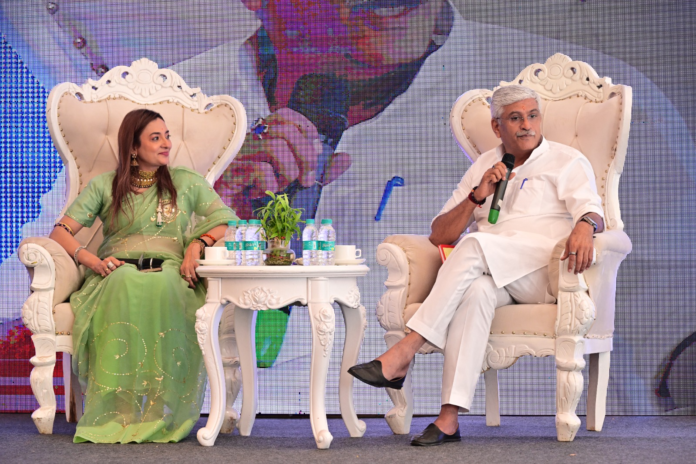
FICCI FLO Jaipur Chapter (2024-25) under the dynamic leadership of Ms. Raghushree Poddar, hosted a momentous Handover Ceremony, Awards Celebration, and Coffee Table Book Launch at Birendar Hall, Clarks Amer, Jaipur, marking a significant milestone in the organization’s journey. The event was graced by the presence of Shri. Gajendra Singh Ji Shekhawat, Honourable Minister of Culture & Tourism, Government of India, along with distinguished guests, FLO members, and esteemed dignitaries.

The grand occasion commenced with a vibrant welcome for the Guest of Honour, accompanied by the rhythmic beats of the Dhols, setting an auspicious tone for the evening. The commencing segment, hosted by Ms. Honey Paliwal, started off with a spiritual and ceremonial opening, a mesmerizing Ganesh Vandana, an enchanting dance performance symbolizing prosperity and auspicious beginnings.

FICCI FLO Jaipur Chapter (2024-25) Hosts a Grand Handover Ceremony, Dr. Rimmi Shekhawat Announced as New Chairperson

Chairperson for the year 2024-25, Ms. Raghushree Poddar, delivered a warm and heartfelt welcome speech, expressing gratitude to the members and dignitaries. She then invited Gajendra Singh Shekhawat on stage, where he was felicitated by Neeta Boochra Ji (Founder, FLO Jaipur Chapter), Shakuntala Poddar, Pankaj Kothari, and Karishma Kothari, honouring his contributions to culture and tourism in India.

The highly anticipated Coffee Table Book was launched, commemorating the remarkable initiatives, achievements, and impact of FICCI FLO Jaipur Chapter 2024-25. This book serves as a testament to the dedication and perseverance of the chapter’s members.

Gajendra Singh Shekhawat addressed the gathering, sharing his vision for India’s cultural heritage and tourism sector. His insightful conversation and interactive talk show highlighted the role of women entrepreneurs in promoting cultural tourism and fostering economic growth.

The first segment of the Awards Ceremony recognized the outstanding contributions of FLO members with prestigious trophies. This was followed by a special short AV presentation, capturing the inspiring journey of the chapter under Ms. Raghushree Poddar’s leadership.

The concluding segment was hosted by Aditi. The formal Handover Ceremony was a significant highlight, marking the seamless transition of leadership.

Outgoing Chairperson Raghushree Poddar invited Dr. Rimmi Shekhawat on stage and formally handed over the responsibility of the FICCI FLO Jaipur Chapter for the year 2025-26. Dr. Rimmi Shekhawat, in her acceptance speech, expressed gratitude for the opportunity and shared her vision for the upcoming tenure. She emphasised continuing the legacy of empowering women entrepreneurs and fostering impactful initiatives.

Neeta Boochra delivered an inspiring speech, reflecting on FLO Jaipur’s journey and its continued commitment to women’s empowerment and leadership. Recognizing the invaluable support of sponsors, a special felicitation ceremony was conducted, followed by the distribution of medals to members who contributed significantly to the chapter’s success.

The event concluded with a note of gratitude, followed by refreshments and networking, allowing members and dignitaries to connect and celebrate the remarkable year together. FICCI FLO Jaipur Chapter 2024-25 Handover Ceremony was a true celebration of leadership, achievement, and transition, marking the end of an inspiring tenure and the beginning of a new one. The evening was a testament to the chapter’s continued dedication to empowering women, fostering innovation, and making a lasting impact. With new leadership at the helm, FICCI FLO Jaipur Chapter 2025-26 is set to embark on another journey of growth, excellence, and transformative initiatives in the coming year

Rajasthan: Budget Has Been Increased to Check Falling Water Levels, Says IAS Mohammad Junaid; Appeals for Rainwater Conservation

0

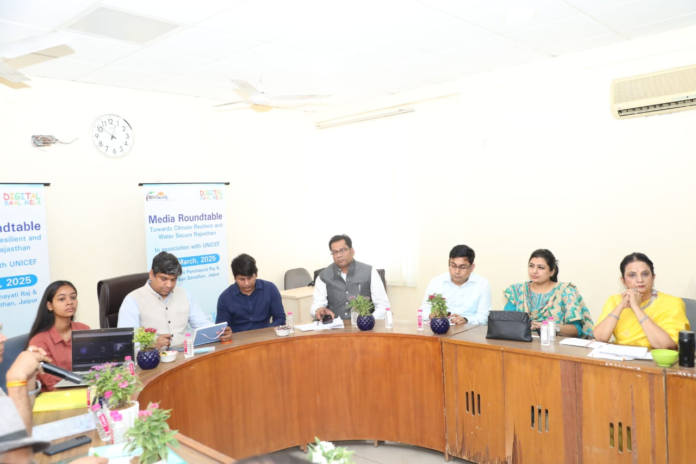
On the occasion of World Water Day, the Future Society, in collaboration with UNICEF, organised a media round table session on Friday, focusing on water conservation. The event featured IAS Mohammad Junaid, Secretary of the Water Development and Land Conservation Department, as the chief guest. Rushabh Hemani, Incharge of UNICEF Rajasthan Office, and communication specialist Ankush Singh also participated in the discussion.

UNICEF’s Rushabh Hemani, through a detailed presentation, explained various water conservation methods, their importance, and the role of media in raising awareness. He also engaged with journalists, seeking their opinions on the subject.

Several experts and officials contributed to the discussion, sharing their efforts and initiatives for water conservation. Notable panelists included:

  • Shoaib (Senior Climate Journalist)
  • Satish Jain (PHED Department)
  • PK Gupta (Watershed Department)
  • Vinay Bhardwaj (Groundwater Department)
  • Shyam Pratap Singh (Jahota Sarpanch)
  • Mishika (Climate Champion)
  • Jayesh (Vagdhara Institute)
  • Shirish Purohit (Unnati Institute)
  • Jagdish & Radhakrishna (Gram Gaurav Institute)

Each of them shared their experiences and initiatives in tackling water scarcity with the attending journalists.

At the conclusion of the event, Dr. Meena Sharma, Senior Journalist and Secretary of Future Society, extended gratitude to all participants.

Notably, the conference at Indira Gandhi Panchayat Bhawan (J.L.N. Marg) saw the participation of over 50 journalists and journalism students. Ravita Sharma, Vice President of Future Society, emphasized that the round table conference, held on March 22 (World Water Day), aimed to sensitize journalists about water conservation, empowering them to raise awareness among the public through their reporting.