Home Blog Page 343

Meet Siddharth Nandyala: The 14-Year-Old Prodigy Using AI to Revolutionize Heart Disease Detection

0

Age is merely a number; it’s the passion and vision that truly define one’s impact.” These words ring true for the world’s young innovators, and among them stands 14-year-old Siddharth Nandyala, an Indian-American prodigy shaking up the tech and healthcare industries. As the founder and CEO of STEM IT, he has created CircadiaV, an AI-powered app that detects heart diseases in just seven seconds—offering a groundbreaking, cost-effective solution to one of the world’s leading causes of death.

A Young Mind with a Vision

Born to immigrant parents from Anantapur, Andhra Pradesh, Siddharth was raised in Dallas, Texas, in an environment that fostered education and innovation. His father, Mahesh Nandyala, is a serial entrepreneur specializing in artificial intelligence, and his mother, Srilatha, introduced him to coding at the tender age of seven. Unlike most kids his age, Siddharth saw technology not just as entertainment but as a tool for change.

His insatiable curiosity and passion for problem-solving led him to earn certifications in artificial intelligence and machine learning from Oracle and ARM, making him the world’s youngest AI-certified professional. But he didn’t stop there—he began working on an AI-driven solution to detect heart diseases, ultimately developing CircadiaV.

CircadiaV: AI-Powered Heart Health at Your Fingertips

Cardiovascular diseases claim millions of lives worldwide every year, and timely detection remains one of the biggest challenges, especially in rural and economically disadvantaged regions. Siddharth’s CircadiaV app aims to change that.

By simply recording heartbeats through a smartphone microphone, CircadiaV utilizes AI to analyze data and detect potential cardiac ailments—all in just seven seconds. No lab visits, no heavy machinery, and no costly clinical tests—just a smartphone in good condition. The app has been successfully tested on 15,000 patients in the U.S. and 700 in India during its pilot trials, proving its reliability with an accuracy rate of over 96%.

A Prodigy on a Mission Beyond Healthcare

While working on CircadiaV, Siddharth encountered another major issue—prosthetic limbs. Many individuals who lose their arms due to accidents or medical conditions cannot afford prosthetics, which often cost hundreds of thousands of dollars. This problem sparked his next innovation: a brain-controlled prosthetic arm using EEG technology, reducing the cost to just $300. This invention has the potential to restore mobility and independence for countless individuals.

Recognitions and Accolades

Siddharth’s groundbreaking work has not gone unnoticed. He was named Innovator of the Year by the Frisco Chamber of Commerce and received a Certificate of Recognition from the U.S. House of Representatives. His company, STEM IT, has garnered national attention, even making an appearance on ABC’s Good Morning America.

In 2024, he was invited to deliver a keynote address at the Global IndiaAI Summit, where he shared his insights on the future of artificial intelligence. As he prepares to begin his Bachelor’s degree in Computer Science at the University of Texas, Dallas, in Fall 2025, the world eagerly watches what he will accomplish next.

Beyond Technology: A Growing Mind with Strategic Thinking

Despite his remarkable achievements, Siddharth remains a growing kid at heart. Chess is one of his biggest passions, and he credits the game for shaping his ability to think critically and solve problems strategically.

At just 14, Siddharth Nandyala has achieved what many take a lifetime to accomplish—and he’s only just getting started. With a keen mind, an unwavering vision, and an undying passion for innovation, he is undoubtedly a name the world will continue to hear for years to come.

When Computers Were Fun: A Look Back at Classic Games and Software

0

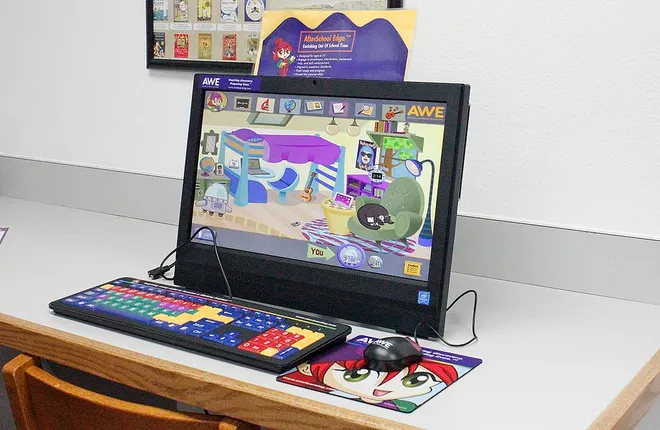
Before computers became all about work, cloud storage, and AI-driven assistants, they were a gateway to pure, unfiltered fun. Whether it was exploring pixelated worlds, creating digital art, or simply navigating the quirky, colorful interfaces of early software, classic games and programs had a magic that today’s ultra-polished software sometimes lacks.

When Computers Were Fun: A Look Back at Classic Games and Software
Image: dreamstime.com

From the 8-bit era to the golden age of DOS, and from early Macintosh creativity suites to text-based adventures, this era of computing fostered curiosity, experimentation, and a sense of wonder. This post takes a nostalgic journey through the classic games and software that made computing an adventure, shaping a generation of tech enthusiasts, gamers, and creators.


1. Classic Computer Games: When Gameplay Was King

Gaming on early computers was about creativity, challenge, and innovation. Without hyper-realistic graphics or cinematic cutscenes, developers focused on engaging gameplay, storytelling, and unique mechanics.

1.1 Text-Based Adventures and Interactive Fiction

Before graphics became mainstream, many computer games relied on text-only interfaces to craft immersive experiences. Players would type commands like “GO NORTH” or “TAKE SWORD,” allowing for deep interaction with the game world.

  • Zork (1977) – One of the first and most famous text-based adventure games, introducing players to a mysterious underground realm.
  • Hitchhiker’s Guide to the Galaxy (1984) – A hilarious and mind-bending game based on Douglas Adams’ classic novel.
  • King’s Quest (1984) – While featuring graphics, it retained a text parser that required players to type commands to interact with the world.

These games required imagination, problem-solving, and patience, making them unforgettable experiences.

1.2 The DOS Gaming Revolution

By the late 80s and early 90s, MS-DOS had become the go-to platform for PC gaming. Many legendary titles were born in this era, known for their challenging gameplay and pioneering mechanics.

  • Doom (1993) – The game that defined first-person shooters, with fast-paced action and groundbreaking 3D graphics.
  • SimCity (1989) – A genre-defining city-building simulation that let players design and manage their own virtual cities.
  • Prince of Persia (1989) – One of the first games to feature fluid animation and realistic character movement.
  • Monkey Island (1990) – A classic point-and-click adventure game full of humor, clever puzzles, and memorable characters.

These games laid the foundation for modern genres, with many still being played today through emulation or remastered editions.

1.3 Early Online and Multiplayer Gaming

While modern gaming is heavily connected, early computer games pioneered local multiplayer and online experiences.

  • MUDs (Multi-User Dungeons) – The predecessors of modern MMORPGs, where players typed commands to explore and interact.
  • Duke Nukem 3D (1996) – One of the first PC games to popularize online deathmatch gameplay.
  • Warcraft II (1995) – Laid the groundwork for real-time strategy multiplayer battles.

These games brought people together, even when playing meant sharing a keyboard or dialing up to a slow internet connection.


2. Classic Software: When Computers Were Creative Tools

Computers weren’t just about gaming—early software provided endless possibilities for creativity, learning, and experimentation.

2.1 The Rise of Creative Software

Before professional-grade tools like Photoshop and Final Cut Pro, simpler creative programs gave users an easy way to express themselves.

  • Kid Pix (1989) – A delightful, kid-friendly drawing program with wild sound effects and colorful, freeform creativity.
  • Deluxe Paint (1985) – One of the most influential early pixel art and animation programs, used for creating game graphics.
  • MacPaint (1984) – Shipped with early Macintosh computers, giving users a simple yet powerful way to create digital art.

These programs introduced many users to digital creativity, inspiring future designers, artists, and game developers.

2.2 Productivity That Was Actually Fun

Even work-related software in the early days had a playful charm. The interfaces were simple, and the experience often felt interactive and engaging.

  • Microsoft Works (1987) – An early all-in-one office suite that made word processing, spreadsheets, and databases accessible to home users.
  • Print Shop (1984) – Allowed users to create banners, greeting cards, and signs with early dot-matrix printers.
  • HyperCard (1987) – A fascinating early hypermedia authoring tool that let users build interactive presentations, games, and databases.

Many people’s first experiences with writing, drawing, and data organization happened in these programs, sparking lifelong careers in tech and design.

2.3 Educational Software That Didn’t Feel Like School

Learning on early computers didn’t feel like a chore—it was engaging and fun, often disguised as entertainment.

  • The Oregon Trail (1971, re-released in 80s-90s) – An educational game that taught history, resource management, and survival skills.
  • Math Blaster! (1983) – Made math fun with arcade-style challenges.
  • Reader Rabbit (1986) – Helped kids develop literacy skills through interactive storytelling.

These programs turned computers into learning tools, making education more interactive and enjoyable.


3. Why Classic Games and Software Still Matter Today

While technology has evolved, the charm of classic games and software has never faded. There are several reasons why people still seek out retro computing experiences.

3.1 Simplicity and Accessibility

  • Early software was often straightforward and intuitive, without complex menus or overwhelming features.
  • Games focused on pure gameplay, avoiding bloated cinematics or pay-to-win mechanics.

3.2 Nostalgia and Cultural Impact

  • Many adults today grew up with these games and programs, leading to a resurgence in retro gaming and emulation.
  • The aesthetics of pixel art, low-bit sound, and DOS interfaces remain influential in modern indie games.

3.3 The DIY Spirit and Modding Communities

  • Many classic games and software have active fan communities that preserve, modify, and enhance them.
  • Open-source recreations and remakes keep these experiences alive on modern machines.

3.4 The Fun of Hands-On Computing

  • Unlike today’s locked-down app ecosystems, early software encouraged users to tinker, modify, and customize their experiences.
  • Whether it was writing your first batch script or designing pixel art, classic software made computing feel personal.

Conclusion: When Computers Were More Than Just Tools

Looking back at classic games and software, it’s clear that computing was once about more than just productivity and efficiency—it was about discovery, experimentation, and fun. Whether you were conquering the Oregon Trail, crafting pixel art in Deluxe Paint, or battling demons in Doom, early computing experiences were memorable, engaging, and endlessly creative.

In an era where technology often feels standardized and predictable, revisiting these classics reminds us why we fell in love with computers in the first place. Whether through emulators, vintage hardware, or remastered editions, these experiences remain timeless—proving that the best software and games never truly go out of style.

Whispers of Fortune: The Casino’s Indian Charm

0

Casinos in India aren’t just about glitzy halls or slot machines. They’re a quick wager in a Delhi chai stall, a virtual spin on a Mumbai train, a hushed bet in a Bangalore café. From the bustling markets of Kolkata to the serene backwaters of Kerala, they hum with a rhythm that’s not loud, but captivating. This isn’t about high rollers or jackpot dreams alone. It’s the pulse of everyday people who chase the thrill, the risk, the fleeting moment when luck can turn a mundane day into something magical.

The charm isn’t in the spotlight. It’s the shopkeeper placing a stake in Ahmedabad, the friends laughing over a game in Chennai, the student spinning a reel in Pune during a study break. Simple and heartfelt threads weave casinos into the fabric of Indian life. They don’t need a grand stage. They thrive in the clatter of a street vendor, the glow of a smartphone, the buzz of a late-night chat from Hyderabad to Himachal Pradesh.

The Daily Gamble

Casino life sparks in the routine of India’s bustling days. Place a bet while waiting for a rickshaw in Mumbai, spin a virtual wheel during a lunch break in Bangalore, roll a digital die with cousins in a Delhi flat. These aren’t epic gambles, but the core of the excitement, small stakes and quick thrills that add a dash of spice to the daily grind, whether in Goa or Glasgow.

Sparks of Chance

A friend swears he feels the casino’s pull most when betting on a game in Kolkata, just him and his phone. It’s not extravagant but electric, a thread that ties players across cities. Even something unexpected like https://chickenroad.com.in/ can slip into a night with pals in Chennai, a quick spark that keeps the laughter flowing over chai in a Mumbai café, proof the thrill hides in the smallest moments. That’s the gamble: tiny risks that flare bright from Jaipur to Johannesburg.

Life in the Hustle

Step into any Indian scene, and you feel it. The vendor places a bet in a Delhi market. The group spins a wheel in a Bangalore café. The old man wagers low in a Pune tea stall. They don’t chase fame but fuel the vibe, a rhythm of chance and joy that hums through every honk and hustle.

Echoes of Tradition

Casinos in India carry their roots. The old betting tales still echo in a Kolkata paan shop, the vintage dice games linger in stories from a Mumbai chawl, the faded cards murmur in a Goa beach shack. But it’s not just nostalgia. It’s the players keeping it alive, the uncle in Ahmedabad recalling a legendary wager, the student in Chennai hunting retro casino apps.

Threads of the Past

I met a man in Hyderabad who still bets like his grandfather did during Diwali. He doesn’t boast. He just plays, keeping a piece of tradition alive. That’s casino life in India: the past isn’t a forgotten relic here. It’s a spark in the now, woven into late-night games in a Delhi flat or the clink of a glass in a Bangalore bar.

Wagers That Last

These echoes are everywhere. The chaiwala in Mumbai nods to a ‘90s betting tale. The kid in Pune bets like his cousin taught during a festival. They’re not stuck. They’re part of it, a bridge from then to now that keeps the stakes rolling.

The Quiet Roll

Casinos in daily life have their calm. A late wager on a Kolkata app, a soft spin on a bus to Bangalore, a solo bet in a Mumbai dusk. These are the pauses in the chaos, where the mind unwinds and the stakes soften, from Dublin to Dubai.

A Pause Between Plays

A pal in Chennai says his best moments come when he’s alone with a bet, just him and the app. It’s not loud, but enough, a break that keeps him steady. My spot’s a corner in a Delhi café, where the roll’s hum fades into the street noise. These rolls don’t demand much. They give calm, a rest for any player who needs it.

Silent Havens

They’re scattered wide: a quiet app in a Mumbai market, a lone spin in a Goa shack, a soft bet in a Kolkata night. They’re not bold, but key. The bustle finds balance here, a gentle stop that keeps us steady when the game picks up.

The Art of the Bet

Casinos thrive on drive. Hit a line in a Mumbai rush, outguess a mate in a Vegas app, drop a win in a Delhi streak. It’s not about dazzle. It’s about instinct, the thrill and focus that turn a chance into a win, from London to Lucknow.

Crafting the Odds

I saw a guy in Bangalore nail a bet after hours of tries, no crowd, just a grin to himself. That’s it: luck isn’t for show, it’s for the feel. A friend in Chennai bets daily, a pro in Mumbai sharpens his odds. It’s the art, the quiet drive that fuels every spin and call. In India, online gambling is soaring: reports suggest over 40% of urban adults wager online annually, with mobile betting apps seeing a 30% rise in usage, a trend alive in cities like Delhi and Bangalore.

Power in the Play

It’s everywhere: a call in a Kolkata game, a spin in a London app, a bet in a Mumbai stream. It’s not forced. It’s gut, a craft that cuts through the noise and keeps the stakes alive, wherever you play.

Ties in the Streets

Casinos in India bind. A laugh spills over a wager in a Delhi bar, a bet links a crew in a Bangalore night, a win lifts a Chennai chat. It’s not rehearsed. It’s real, a web of ties that turns solo spins into shared stakes.

Waves of Cheer

Once, a stranger in a Mumbai café tipped a bet that flipped the night. Word spread, we teamed up, made it a round. It wasn’t planned. It grew, a wave of cheer from one call. That’s the tie: small moves that join us, from Goa to Glasgow.

Together in the Game

It’s all around. Mates rib each other in a Kolkata session, a player shares a tip in a Pune café, a group cheers a win in a Hyderabad flat. We don’t always say it, but we live it: a silent “we’re here” that holds the vibe tight, no matter the play.

Conclusion: The Endless Stake

Casinos in Indian life aren’t a sideline. They’re a pulse, shaped by the hands that wager, the voices that laugh, the screens that hum. From the rush of its risks to the calm of its pauses, it’s a raw, real, and relentless force. Step in, feel it, and you’ll catch it: a thrill of life, spun in every chance, that never fades out.

FAQ

What keeps casino life alive in India?

It’s the players, their instinct, their small thrills that stoke the fire.

Why does the everyday matter in Indian casinos?

It’s the root, the heart that turns chance into something alive.

How does calm fit in the chaos of casino play?
The quiet, the breaks that steady you when the stakes rise.

What ties casino fans together in India?
It’s the moments, the shared bets and cheers that make it a crew.

FireSat Initiative: Transforming Wildfire Detection with AI-Powered Satellites

0

Google has taken a major step in wildfire prevention with the successful launch of the first satellite under the FireSat project. This marks the beginning of an ambitious plan to establish a constellation of over 50 satellites capable of detecting and tracking wildfires as small as 5×5 metres in real-time.

What is FireSat?

The FireSat initiative is designed to revolutionize early wildfire detection and monitoring. The first satellite was developed by Muon Space, a California-based aerospace startup, and is equipped with six-band multispectral infrared cameras. These highly sensitive cameras are fine-tuned to detect heat signatures from wildfires over long distances, providing critical data to emergency responders.

Phases and Goals of the Project

The FireSat project is being rolled out in multiple phases:

  • Phase 1: Three satellites will be launched by next year. This mini-constellation will provide coverage of every point on Earth twice daily.
  • Long-Term Goal: The network will expand to 50 satellites, offering high-resolution imagery updates every 20 minutes—a game-changer for rapid response teams.

This level of frequency and precision will enable authorities to track wildfire origins, spread patterns, and intensity with unprecedented accuracy.

Collaborative Efforts and Funding

FireSat is a multi-organization effort, bringing together:

  • Google Research – Providing AI-driven analytics and processing power
  • Muon Space – Developing and launching the satellites
  • Earth Fire Alliance & The Moore Foundation – Supporting research and implementation

Google.org has also pledged $13 million to fund the development of the satellite constellation and AI technology that will power FireSat’s advanced wildfire monitoring capabilities.

Why FireSat is a Game-Changer

Current Challenges in Wildfire Detection:

  • Existing satellite imaging lacks resolution and updates too infrequently.
  • Aerial photography is limited in reach and speed.
  • Delayed detection means wildfires spread further before intervention is possible.

How FireSat Addresses These Issues:

  • Five-metre resolution imaging ensures even small fires are detected early.
  • Frequent real-time updates empower emergency teams to respond quickly.
  • AI-driven analysis predicts fire behavior and optimizes containment strategies.

Wildfires and Climate Change: An Increasing Threat

  • Rising global temperatures are fueling more frequent and severe wildfires. Recent wildfires in Southern California led to tragic loss of life and massive economic damage.
  • The urgency for advanced detection systems like FireSat is evident, as climate change intensifies the wildfire crisis worldwide.

Future Prospects of FireSat

The FireSat initiative has the potential to transform wildfire management globally. By combining cutting-edge AI, satellite imaging, and real-time monitoring, it aims to:

  • Provide timely alerts to firefighters and disaster management teams.
  • Minimize destruction by enabling early intervention.
  • Contribute to long-term wildfire prevention strategies.

As the FireSat constellation grows, it could play a crucial role in protecting lives, forests, and ecosystems from the escalating dangers of wildfires.

World Happiness Report 2025: Key Insights and Global Trends

0

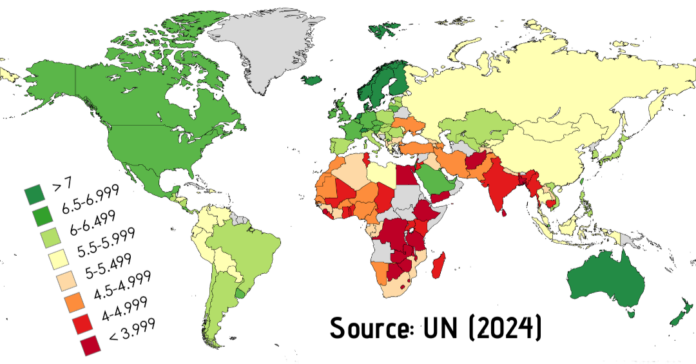
The World Happiness Report 2025 has been released by the Wellbeing Research Centre at the University of Oxford, offering a comprehensive look at global happiness levels. The report ranks countries based on citizens’ self-assessed life evaluations, providing crucial insights into what makes societies happier.

How Happiness is Measured

The report’s rankings are based on global surveys, where individuals assess their own life satisfaction. Conducted in collaboration with Gallup and the United Nations Sustainable Development Solutions Network, the study evaluates multiple factors influencing happiness, including:

  • GDP per capita – Economic prosperity and income levels
  • Healthy life expectancy – The overall well-being and longevity of citizens
  • Social support – The presence of strong community and personal relationships
  • Freedom to make life choices – The perceived autonomy in personal and professional lives
  • Generosity – Acts of kindness and the culture of giving within a society
  • Perceptions of corruption – Trust in government and institutions

Key Insights: The Role of Trust and Social Connections

Happiness is influenced by more than just wealth—social trust and meaningful relationships play a pivotal role. Researchers found that:

  • Sharing meals and having strong social support lead to higher happiness levels.
  • The belief in communal kindness boosts overall contentment.
  • People underestimate the kindness of others—for instance, studies show that lost items are returned more often than expected, highlighting a stronger sense of goodwill in society.

Global Happiness Rankings 2025

This year’s report reaffirms the dominance of Nordic countries, known for their robust social structures and high trust in governance.

Top 10 Happiest Countries:

1️⃣ Finland – Retains its position as the world’s happiest country.
2️⃣ Denmark
3️⃣ Iceland
4️⃣ Sweden
5️⃣ Netherlands
6️⃣ Costa Rica – A new entrant in the top 10.
7️⃣ Switzerland
8️⃣ Israel – Ranks high despite geopolitical tensions.
9️⃣ Norway
🔟 Mexico – Makes its debut in the top 10.

Shifts in Happiness Rankings

  • The United States has dropped to its lowest-ever position at 24, while the United Kingdom ranks 23rd.
  • Afghanistan remains the unhappiest country, followed by Sierra Leone and Lebanon, primarily due to conflict and economic instability.

Rising Loneliness Among Young Adults

A notable concern is the increase in loneliness among young adults. The report reveals that:

  • 19% of young adults reported having no social support, a significant rise since 2006.
  • Declining community interactions and digital distractions contribute to the trend.
  • Strengthening community bonds and encouraging social participation are crucial to improving overall well-being.

India’s Position in the Happiness Rankings

India ranks 118 out of 147 countries in the 2025 report. While the country scores well in social support, owing to its community-driven culture, it struggles with perceptions of personal freedom.

Neighbouring Countries’ Rankings:

  • China: 68
  • Nepal, Bangladesh, and Pakistan: Rank lower than expected
  • Sri Lanka: Also struggles with happiness indicators

The Power of Kindness and Community Connections

One of the most profound takeaways from the report is the reciprocal nature of kindness—both the giver and receiver experience increased well-being. The findings suggest that:

  • Encouraging acts of generosity within societies can foster higher happiness levels.
  • Investing in social connections and communal trust can help improve global well-being.

Final Thoughts

The World Happiness Report 2025 emphasizes that economic growth alone does not define happiness. Social bonds, trust, and community engagement are the true markers of a fulfilling life. As countries navigate global challenges, investing in mental well-being, reducing social isolation, and fostering kindness could be the key to a happier world.

Dog-Faced Water Snake Discovered in Assam: A Groundbreaking Sighting

0

In a remarkable discovery, the dog-faced water snake (Cerberus rynchops) has been documented for the first time in Assam’s Nalbari district. This finding is particularly intriguing as it places the species almost 800 km away from its known coastal habitats in Bangladesh. The sighting challenges existing knowledge about the species’ range and raises significant questions about its adaptability and movement patterns.

A Closer Look at the Dog-Faced Water Snake

The dog-faced water snake is a rear-fanged, mildly venomous, semi-aquatic species that primarily inhabits brackish waters. It has gained attention for its distinctive hunting strategy, which involves a sit-and-wait approach to ambushing fish and crustaceans in shallow waters.

Key Characteristics:

  • Habitat: Typically found in coastal ecosystems, including mangroves, mudflats, and estuaries across South and Southeast Asia, as well as parts of Australia.
  • Diet: Preys on fish and crustaceans, relying on its sharp reflexes to capture its prey.
  • Adaptability: The new discovery in Assam suggests the species might be capable of thriving far from its traditional coastal range.

Why This Discovery Matters

This unprecedented sighting challenges long-standing assumptions about the habitat preferences of the dog-faced water snake. The presence of this species in Assam suggests:

  • Potential habitat expansion – The species might have a broader ecological range than previously believed.
  • New dispersal mechanisms – Studying how this snake reached inland regions could reveal unknown migration or adaptability factors.
  • Climate and environmental shifts – Changes in water systems or ecosystems might be influencing species movement.

Further research is required to determine whether this occurrence is an isolated event or part of a larger, undocumented range extension.

The Crucial Role of Snake Rescuers in Biodiversity Studies

This discovery highlights the vital contribution of local snake rescuers to ecological research. These individuals, who regularly rescue and relocate snakes, often serve as the first point of contact for new species sightings. Their knowledge of species behavior, movement patterns, and habitat preferences makes them invaluable allies in conservation efforts.

Collaboration with Herpetologists

  • Data Collection: By training local snake rescuers in scientific data collection, they can contribute valuable information to biodiversity studies.
  • Standardized Research: Integrating rescuers into formal research networks could enhance conservation efforts and improve species documentation.
  • Community Engagement: Educating the public on snake conservation and coexistence strategies can help mitigate human-wildlife conflicts.

The Need for Evidence-Based Conservation Strategies

The unexpected presence of the dog-faced water snake in Assam underscores the importance of evidence-driven conservation strategies. Understanding species like Cerberus rynchops can help:

  • Improve habitat management practices.
  • Reduce human-snake conflicts in newly inhabited areas.
  • Inform conservation policies to protect vulnerable species adapting to environmental changes.

This discovery is only the beginning—further research, collaboration, and conservation efforts will determine how this species is adjusting to new environments. By leveraging scientific advancements and local expertise, researchers can gain deeper insights into the ever-evolving biodiversity of India.

How Tamil Nadu’s Irula Tribe Built a Sustainable Business from Snake Venom

0

In the dense forests of Tamil Nadu, a remarkable community has turned an age-old tradition into a life-saving industry. The Irula tribe, one of India’s oldest indigenous communities, has long been known for its expertise in handling snakes. Today, this knowledge plays a crucial role in India’s healthcare system—by providing the venom needed to produce life-saving antivenom.

A Deadly Threat, A Potent Solution

Snakebites are a silent but deadly menace in India. Every year, between 81,000 and 1,38,000 people succumb to snakebite-related deaths, with many more suffering permanent disabilities. The only hope for survival lies in timely treatment with effective antivenom—a crucial medical resource extracted from snake venom.

What many people don’t know is that a major portion of India’s antivenom supply comes from the Irula Snake Catchers Industrial Cooperative Society (ISCICS), an organization run by the Irula tribe.

From Snake Hunters to Snake Conservationists

The Irulas’ deep-rooted knowledge of snakes once led them to the illegal snake-skin trade, supplying the global fashion industry with exotic leather. However, when the Indian Wildlife Protection Act of 1972 banned the trade, the community was left without a livelihood.

Their fate changed when herpetologist Romulus Whitaker stepped in. In 1978, he helped establish the Irula Snake Catchers Industrial Cooperative Society (ISCICS), allowing the tribe to legally catch snakes for venom extraction. This not only provided sustainable employment but also contributed to vital medical research and conservation efforts.

The Venom Extraction Process: A Delicate Art

Snake venom extraction, or “milking,” is a highly skilled and controlled process that the Irula tribe has mastered over generations.

How It Works:

  1. Tracking the Snakes – The Irulas locate four highly venomous species:
    • Indian Cobra (Naja naja)
    • Common Krait (Bungarus caeruleus)
    • Russell’s Viper (Daboia russelii)
    • Saw-scaled Viper (Echis carinatus)
  2. Safe Housing – The captured snakes are placed in clay pots half-filled with sand, with the mouth of the pot sealed using a breathable cloth. Each pot accommodates two snakes, ensuring their well-being before venom extraction.
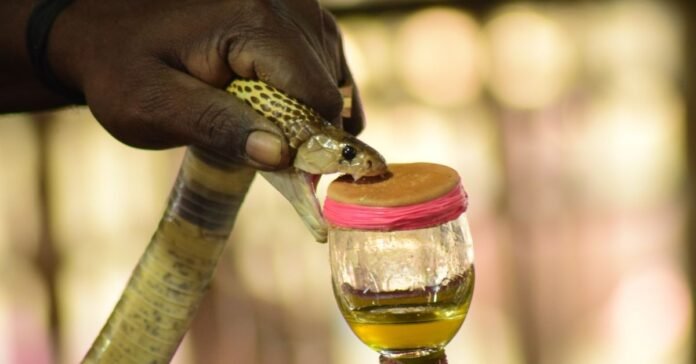
  3. Venom Milking – Trained handlers gently encourage the snake to bite onto a glass container covered with a thin membrane. As the snake strikes, venom drips from its fangs, which is then carefully collected for processing.
  4. Sustainable Catch-and-Release – The cooperative holds around 800 snakes at a time. Each snake is milked four times over 21 days before being marked and released back into the wild, preventing over-extraction from the same individual.

In the past few decades, the Irulas have safely captured and released over 100,000 snakes, contributing significantly to snake conservation efforts.

A Model for Sustainable Livelihoods

The Irula Snake Catchers Industrial Cooperative Society has not only provided a reliable source of income for the Irula community but has also helped bridge the gap between indigenous knowledge and modern science.

Their expertise has saved countless lives by ensuring the steady supply of venom for antivenom production. Additionally, their work contributes to conservation efforts, preventing indiscriminate killing of snakes and promoting ecological balance.

As the world recognizes the value of traditional knowledge in scientific advancements, the Irula tribe stands as a shining example of sustainable coexistence with nature—where an age-old skill has been transformed into a thriving, ethical, and life-saving enterprise.

A Walk Among the Mangroves: Mumbai’s Newest Eco-Attraction Opens Soon

0

Mumbai is set to welcome a green oasis amidst its urban sprawl—the Gorai Mangrove Park, scheduled to open on May 1, 2025. This long-awaited eco-tourism project features a 740-meter wooden boardwalk, educational exhibits, and immersive experiences designed to highlight the vital role of mangroves in the city’s ecological balance.

Why Mangroves Matter: Mumbai’s Natural Shield

Nestled along the Arabian Sea, Mumbai’s landscape is a mix of towering skyscrapers, sprawling highways, and reclaimed coastal land. However, with rapid urbanization comes increased vulnerability to flooding and coastal erosion. The devastating 2005 floods, which claimed nearly 700 lives and caused widespread destruction, underscored the importance of mangroves as natural flood defenses.

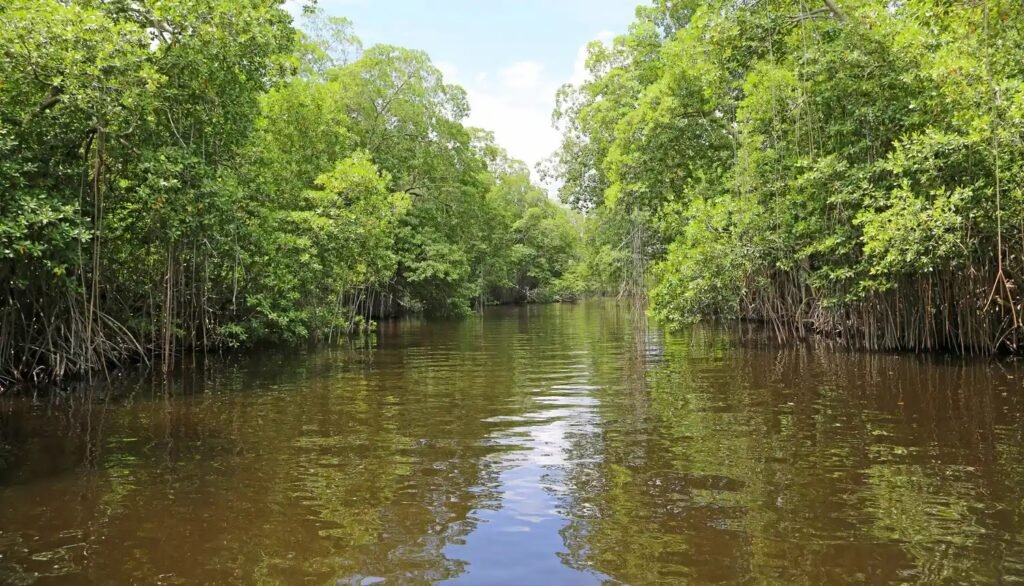
Mangroves are salt-tolerant trees thriving in intertidal zones, where land meets the sea. Their dense root systems act as natural buffers, reducing wave intensity, stabilizing shorelines, and absorbing excess water—crucial functions that help mitigate flood risks in a city like Mumbai. Additionally, these ecosystems serve as carbon sinks, absorbing four times more CO₂ than terrestrial forests, making them indispensable in the fight against climate change.

Mumbai’s Shrinking Mangroves and the Need for Conservation

Between 1991 and 2001, Mumbai lost 40% of its mangrove cover due to encroachments, pollution, and infrastructure projects. Recognizing their ecological significance, conservation efforts have gained momentum over the years. The Gorai Mangrove Park, spearheaded by the Mangrove Cell of the Maharashtra Forest Department, is one such initiative aimed at restoring and protecting this vital ecosystem.

Gorai Mangrove Park: A New Model for Eco-Tourism

With a budget of ₹23.63 crore, the park’s development began in 2021 and has been meticulously planned to balance conservation, education, and recreation. The initiative not only offers visitors an opportunity to experience Mumbai’s coastal biodiversity but also fosters a deeper understanding of mangrove preservation.

What Makes Gorai Mangrove Park Special?

  • A 740-Meter Wooden Boardwalk – The park’s elevated pathway allows visitors to explore the lush mangrove ecosystem without disturbing its delicate balance.
  • Nature Interpretation Centre – A state-of-the-art facility offering interactive exhibits, guided tours, and workshops on mangrove conservation.
  • Watchtower for Birdwatching – An observation deck providing breathtaking views of the creek and its diverse bird population.
  • Kayak Route – Visitors will soon be able to access the park via kayak, offering an immersive way to experience the mangroves.

Biodiversity Haven: A Glimpse into Mumbai’s Coastal Wildlife

The Gorai Mangrove Park is not just a recreational space; it is a thriving habitat for a wide array of flora and fauna.

Birdwatcher’s Paradise

Expect to spot an array of avian species, from the Common Kingfisher darting through the trees to the Little Egret gracefully wading in the waters. Other sightings may include the Black-winged Stilt and migratory birds visiting during seasonal shifts.

Marine and Coastal Life

Beneath the tangled roots of the mangroves, a vibrant aquatic world flourishes. The Mudskipper, an amphibious fish capable of surviving both in and out of water, is a unique inhabitant. Other marine species like the Mangrove Snapper, a commercially significant fish, thrive within these nutrient-rich waters.

The Coastal Road Controversy and the Future of Mangrove Conservation

While projects like Gorai Mangrove Park champion conservation, Mumbai’s coastal ecosystems remain under threat. The ongoing Mumbai Coastal Road Project (Phase 2) has raised concerns over habitat destruction, with environmentalists warning of severe ecological consequences. To offset damage, the Brihanmumbai Municipal Corporation (BMC) has proposed setting up mangrove nurseries between Versova and Bhayandar. However, conservationists argue that preservation of existing mangrove forests is far more effective than restoration attempts.

Planning Your Visit to Gorai Mangrove Park

Location:

The park is situated near Gorai Creek, in northern Mumbai.

How to Get There:

  • By Road: Take a bus or taxi to Gorai village.
  • By Train: Travel to Dahisar Station, followed by a short road journey.
  • By Kayak: In the near future, visitors will have the option to kayak from Dahisar to the park.
A Walk Among the Mangroves: Mumbai’s Newest Eco-Attraction Opens Soon

Facilities Available:

Wooden Boardwalk – Stroll through the heart of the mangroves. ✔ Nature Conservation Centre – Learn about the importance of mangroves. ✔ Watchtower – Enjoy panoramic views and birdwatching. ✔ Guided Tours & Exhibits – Educational programs for visitors.

A Step Towards a Greener Mumbai

The Gorai Mangrove Park is more than just an eco-attraction—it is a symbol of Mumbai’s commitment to environmental conservation. It provides a space for leisure, education, and advocacy, reminding us of the delicate balance between urban development and ecological responsibility.

As visitors walk among the mangroves, they are invited to reflect on their role in preserving this invaluable natural treasure. Whether you’re a nature enthusiast, a student, or a family looking for a peaceful retreat, Gorai Mangrove Park promises a one-of-a-kind experience—an oasis of greenery amidst Mumbai’s bustling landscape.

So mark your calendars for May 1, 2025, and embark on a journey through one of Mumbai’s last remaining green lungs. And as you explore, remember to tread lightly, respect nature, and contribute to its conservation for generations to come.

30th Session of the International Seabed Authority: A Turning Point for Deep-Sea Mining

0

The 30th Session of the International Seabed Authority (ISA) commenced on March 17, 2025, in Jamaica, bringing together nearly 170 member states and the European Union. This crucial gathering focuses on finalizing deep-sea mining regulations, a contentious issue as the mining industry pushes for access to valuable seabed resources. Amid growing environmental concerns, the ISA faces the challenge of developing a comprehensive mining code while ensuring marine conservation.

Understanding the International Seabed Authority (ISA)

The International Seabed Authority (ISA) is an independent organization established in 1994 under the United Nations Convention on the Law of the Sea (UNCLOS). Its primary role is to regulate mining activities on the international seabed, an area beyond the jurisdiction of any nation. The ISA is responsible for:

  • Overseeing seabed mineral exploration and extraction, ensuring resources benefit all of humanity.
  • Setting environmental safeguards to prevent irreversible damage to deep-sea ecosystems.
  • Balancing economic interests with marine conservation efforts to achieve sustainable development.

What is Deep-Sea Mining?

Deep-sea mining refers to the extraction of minerals from the ocean floor at depths beyond 200 meters. The seabed contains high concentrations of copper, nickel, cobalt, and rare earth elements, which are essential for electronics, renewable energy technologies, and battery production.

However, this process has sparked intense debate due to:

  • Potential destruction of fragile marine ecosystems, many of which are still unexplored.
  • Release of toxic sediments, which can harm deep-sea biodiversity.
  • Lack of clear regulatory frameworks, making enforcement and compliance challenging.

Challenges and Unresolved Negotiations

Despite ongoing efforts, several critical issues remain unresolved in the draft mining code. A November 2024 study identified over 30 key concerns, including:

  • Defining environmental baselines before mining begins.
  • Establishing monitoring and compliance measures to track mining impacts.
  • Determining acceptable levels of environmental harm and enforcing accountability.

The European Academies’ Science Advisory Council has raised alarms over the scientific uncertainty surrounding deep-sea mining’s long-term effects, warning of potential irreversible damage to marine biodiversity.

The “Two-Year Rule” and Its Implications

A major driving force behind the urgency of regulations is the “Two-Year Rule”, triggered in 2021 by Nauru Ocean Resources Inc. This rule required the ISA to finalize mining regulations within two years, or face direct applications for mining contracts without a formal legal framework.

This situation has intensified global discussions, as many argue for a moratorium on deep-sea mining until further research is conducted. Others fear that delays could lead to unregulated mining, driven by commercial interests rather than sustainability.

Legal Complexities and Industry Pressure

The ISA also faces potential legal disputes if mining applications are rejected. Proponents of deep-sea mining argue that investment law principles, such as legitimate expectations, should grant companies the right to proceed with exploration. However, legal experts counter that ISA, as an international regulatory body, is not bound by such principles.

Global Stakeholder Participation

As of January 2025, the ISA has issued 30 exploration contracts since 2001. Notable participants include:

  • India, which holds two contracts in the Indian Ocean and is actively pursuing additional seabed mining rights.
  • European nations, which have sponsored mining contracts through private and government-backed initiatives.
  • Norway, which has announced plans to exploit deep-sea resources within its Exclusive Economic Zone (EEZ).

The Future of Deep-Sea Mining: Regulation or Restriction?

The 30th ISA Session is a defining moment for the future of seabed resource management. As pressure mounts from both industry leaders and environmentalists, the ISA must find a delicate balance between economic development and ecological responsibility.

The decisions made in this session will determine whether deep-sea mining becomes a regulated global industry or faces further restrictions to protect marine biodiversity. With growing scientific evidence highlighting potential risks, the need for sustainable, well-enforced regulations has never been more critical.

Heatwave Preparedness in Indian Cities

0

With rising global temperatures, heatwaves have become an increasing threat to urban populations in India. However, recent studies indicate that major Indian cities lack adequate preparedness to combat the growing frequency and intensity of extreme heat events. A report by the Sustainable Futures Collaborative (SFC), which analyzed nine major cities—Delhi, Mumbai, Bengaluru, Faridabad, Gwalior, Kota, Ludhiana, Meerut, and Surat—revealed significant gaps in long-term strategies to address heat-related risks. These cities, home to over 11% of India’s urban population, are particularly vulnerable to extreme temperatures.

The Current State of Heatwave Preparedness

The SFC report found that most Indian cities focus only on immediate responses to heatwaves rather than developing long-term resilience plans. Heat Action Plans (HAPs), where they exist, are often reactive rather than preventive, leading to higher heat-related mortality and health risks. Furthermore, many city officials do not perceive heat as a major crisis, which hampers the development of robust policies.

Who is Most Vulnerable?

The most affected groups during heatwaves are those from lower socio-economic backgrounds. These include:

  • Construction workers, delivery personnel, and street vendors, who spend long hours under extreme heat conditions.
  • Residents of informal settlements, who lack access to proper cooling mechanisms, ventilation, or water supply.
  • Elderly individuals, children, and those with pre-existing health conditions, who are more susceptible to heat-related illnesses such as dehydration and heatstroke.

Challenges Faced by Local Governments

City administrations face multiple hurdles in tackling heatwaves effectively, including:

  • Poor coordination among departments, making it difficult to implement comprehensive policies.
  • Competing priorities, with heat resilience often taking a backseat to other urban challenges such as infrastructure development and pollution control.
  • Limited awareness about the severity of heat-related risks among policymakers and the general public.

What Needs to Be Done?

The report suggests several key measures to strengthen Heat Action Plans (HAPs) and build long-term resilience, including:

  • Establishing dedicated, funded climate specialist roles in highly vulnerable districts to ensure continuity in planning.
  • Training local government officials to implement and oversee heat-related policies more effectively.
  • Developing early warning systems, heat shelters, and cooling centres in urban areas to protect at-risk populations.
  • Integrating heatwave preparedness into urban planning, ensuring that green spaces, water bodies, and heat-resistant infrastructure are prioritized.

Capacity Building: The Need for Urgent Action

A sustained, long-term approach to heat resilience is essential to prevent public health disasters and economic damage in the coming years. Immediate action is required to implement heatwave mitigation measures, as delays could result in severe consequences for urban populations.

With climate change accelerating, Indian cities must urgently revamp their heatwave preparedness strategies to safeguard lives, health, and livelihoods. A well-structured and proactive approach will not only reduce mortality rates but also enhance urban resilience in the face of extreme climate events.