Home Blog Page 342

Kancha Soda: The Traditional Indian Beverage Making a Global Comeback

0

Kancha Soda, fondly known as the ‘marble bottle soda’ or ‘goli soda,’ is all set to create waves in international markets, including the USA, UK, Europe, and Gulf countries. Once a beloved refreshment for both children and adults in India, this fizzy drink is now being reintroduced on a global platform, thanks to the efforts of the Agricultural and Processed Food Products Export Development Authority (APEDA) under the Ministry of Commerce.

Why is Kancha Soda Famous?

Kancha Soda stands out due to its unique packaging — a glass bottle sealed with a marble. The nostalgic popping sound when the marble is pushed down has been a cherished memory for many. However, with the advent of multinational beverage giants, this traditional drink gradually faded from the market.

The Global Revival

Under a strategic partnership with a private company, India has started supplying Kancha Soda to retail chains in the Gulf region. Branded as ‘Pop Soda,’ this initiative aims to revive the charm of this traditional beverage on the international stage. The brand has already made significant inroads in several countries.

Unique Packaging and Appeal

The quirky packaging of Kancha Soda remains a key attraction. Its distinctiveness has always captivated consumers, young and old alike. Despite losing popularity over the years due to market dominance by global beverage companies, this traditional drink is now experiencing a resurgence.

Challenges and Market Strategy

Bringing back Kancha Soda to the global market involves overcoming several challenges, including strong competition from established global brands. However, innovative branding and the emotional appeal of nostalgia are expected to give this product a competitive edge.

With this comeback, Kancha Soda is not just reviving a traditional Indian beverage but also reconnecting with millions of consumers who have fond memories attached to it. The global branding strategy emphasizes both its cultural significance and its refreshing taste, aiming to establish a lasting presence in international markets.

7th Ice Stupa Festival Showcases India’s First Automated Ice Stupa Shewang Rigzing, Leh

0

The serene landscapes of Ladakh recently witnessed the grand inauguration of the 7th Ice Stupa Festival at Oama Chorten. This year’s event was marked by the presentation of India’s first-ever automated ice stupa, a revolutionary creation made by freezing 2.5 million liters of water. Traditionally, ice stupas are manually constructed, often requiring individuals to work tirelessly through freezing nights. However, the automated version operates with the help of a sophisticated digital machine that sprays water into the air, forming the stupa naturally without the need for constant human effort.

The festival featured the construction of 25 artificial glaciers, highlighting the urgency of glacier preservation. This initiative aligns with the United Nations’ declaration of 2025 as the International Year of Glacier Preservation, aiming to raise awareness about the impact of climate change on glaciers.

The automated ice stupa was developed by the Himalayan Institute of Alternatives, Ladakh (HIAL) and is powered by solar energy. It leverages the cold night temperatures to freeze water, showcasing a sustainable and innovative approach to water conservation in arid mountainous regions.

One of the key figures at the event was Chewang Norphel, popularly known as the Ice Man of India, who has long been an advocate for artificial glacier technology to combat water scarcity in Ladakh.

This pioneering technological advancement is expected to address water scarcity issues and promote sustainable environmental practices in high-altitude regions. With such innovations, Ladakh continues to inspire the world in its efforts to mitigate climate change and preserve natural resources.

FICCI FLO Jaipur Chapter (2024-25) Hosts a Grand Handover Ceremony, Dr. Rimmi Shekhawat Announced as New Chairperson

0

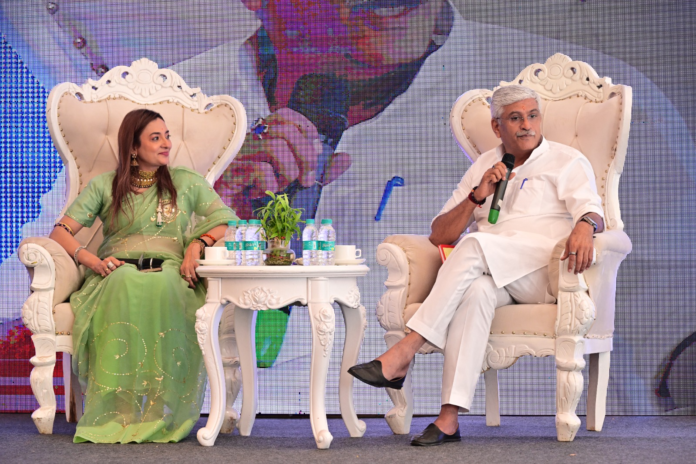
FICCI FLO Jaipur Chapter (2024-25) under the dynamic leadership of Ms. Raghushree Poddar, hosted a momentous Handover Ceremony, Awards Celebration, and Coffee Table Book Launch at Birendar Hall, Clarks Amer, Jaipur, marking a significant milestone in the organization’s journey. The event was graced by the presence of Shri. Gajendra Singh Ji Shekhawat, Honourable Minister of Culture & Tourism, Government of India, along with distinguished guests, FLO members, and esteemed dignitaries.

The grand occasion commenced with a vibrant welcome for the Guest of Honour, accompanied by the rhythmic beats of the Dhols, setting an auspicious tone for the evening. The commencing segment, hosted by Ms. Honey Paliwal, started off with a spiritual and ceremonial opening, a mesmerizing Ganesh Vandana, an enchanting dance performance symbolizing prosperity and auspicious beginnings.

FICCI FLO Jaipur Chapter (2024-25) Hosts a Grand Handover Ceremony, Dr. Rimmi Shekhawat Announced as New Chairperson

Chairperson for the year 2024-25, Ms. Raghushree Poddar, delivered a warm and heartfelt welcome speech, expressing gratitude to the members and dignitaries. She then invited Gajendra Singh Shekhawat on stage, where he was felicitated by Neeta Boochra Ji (Founder, FLO Jaipur Chapter), Shakuntala Poddar, Pankaj Kothari, and Karishma Kothari, honouring his contributions to culture and tourism in India.

The highly anticipated Coffee Table Book was launched, commemorating the remarkable initiatives, achievements, and impact of FICCI FLO Jaipur Chapter 2024-25. This book serves as a testament to the dedication and perseverance of the chapter’s members.

Gajendra Singh Shekhawat addressed the gathering, sharing his vision for India’s cultural heritage and tourism sector. His insightful conversation and interactive talk show highlighted the role of women entrepreneurs in promoting cultural tourism and fostering economic growth.

The first segment of the Awards Ceremony recognized the outstanding contributions of FLO members with prestigious trophies. This was followed by a special short AV presentation, capturing the inspiring journey of the chapter under Ms. Raghushree Poddar’s leadership.

The concluding segment was hosted by Aditi. The formal Handover Ceremony was a significant highlight, marking the seamless transition of leadership.

Outgoing Chairperson Raghushree Poddar invited Dr. Rimmi Shekhawat on stage and formally handed over the responsibility of the FICCI FLO Jaipur Chapter for the year 2025-26. Dr. Rimmi Shekhawat, in her acceptance speech, expressed gratitude for the opportunity and shared her vision for the upcoming tenure. She emphasised continuing the legacy of empowering women entrepreneurs and fostering impactful initiatives.

Neeta Boochra delivered an inspiring speech, reflecting on FLO Jaipur’s journey and its continued commitment to women’s empowerment and leadership. Recognizing the invaluable support of sponsors, a special felicitation ceremony was conducted, followed by the distribution of medals to members who contributed significantly to the chapter’s success.

The event concluded with a note of gratitude, followed by refreshments and networking, allowing members and dignitaries to connect and celebrate the remarkable year together. FICCI FLO Jaipur Chapter 2024-25 Handover Ceremony was a true celebration of leadership, achievement, and transition, marking the end of an inspiring tenure and the beginning of a new one. The evening was a testament to the chapter’s continued dedication to empowering women, fostering innovation, and making a lasting impact. With new leadership at the helm, FICCI FLO Jaipur Chapter 2025-26 is set to embark on another journey of growth, excellence, and transformative initiatives in the coming year

Rajasthan: Budget Has Been Increased to Check Falling Water Levels, Says IAS Mohammad Junaid; Appeals for Rainwater Conservation

0

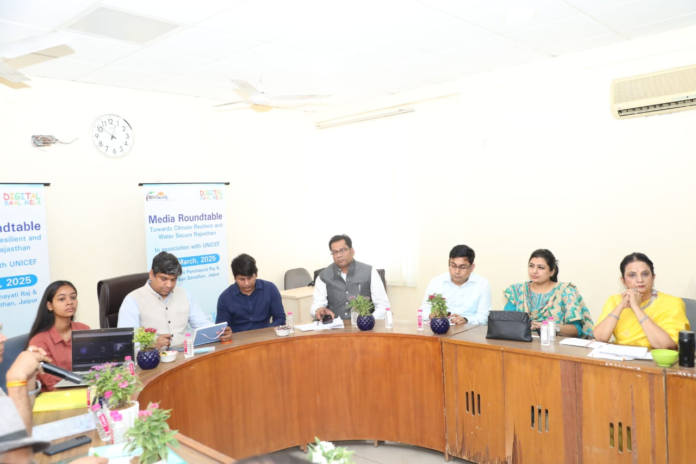
On the occasion of World Water Day, the Future Society, in collaboration with UNICEF, organised a media round table session on Friday, focusing on water conservation. The event featured IAS Mohammad Junaid, Secretary of the Water Development and Land Conservation Department, as the chief guest. Rushabh Hemani, Incharge of UNICEF Rajasthan Office, and communication specialist Ankush Singh also participated in the discussion.

UNICEF’s Rushabh Hemani, through a detailed presentation, explained various water conservation methods, their importance, and the role of media in raising awareness. He also engaged with journalists, seeking their opinions on the subject.

Several experts and officials contributed to the discussion, sharing their efforts and initiatives for water conservation. Notable panelists included:

  • Shoaib (Senior Climate Journalist)
  • Satish Jain (PHED Department)
  • PK Gupta (Watershed Department)
  • Vinay Bhardwaj (Groundwater Department)
  • Shyam Pratap Singh (Jahota Sarpanch)
  • Mishika (Climate Champion)
  • Jayesh (Vagdhara Institute)
  • Shirish Purohit (Unnati Institute)
  • Jagdish & Radhakrishna (Gram Gaurav Institute)

Each of them shared their experiences and initiatives in tackling water scarcity with the attending journalists.

At the conclusion of the event, Dr. Meena Sharma, Senior Journalist and Secretary of Future Society, extended gratitude to all participants.

Notably, the conference at Indira Gandhi Panchayat Bhawan (J.L.N. Marg) saw the participation of over 50 journalists and journalism students. Ravita Sharma, Vice President of Future Society, emphasized that the round table conference, held on March 22 (World Water Day), aimed to sensitize journalists about water conservation, empowering them to raise awareness among the public through their reporting.

A History Buff’s Tour Through Mohammed Ali Road in Mumbai for an Iftar Feast

0

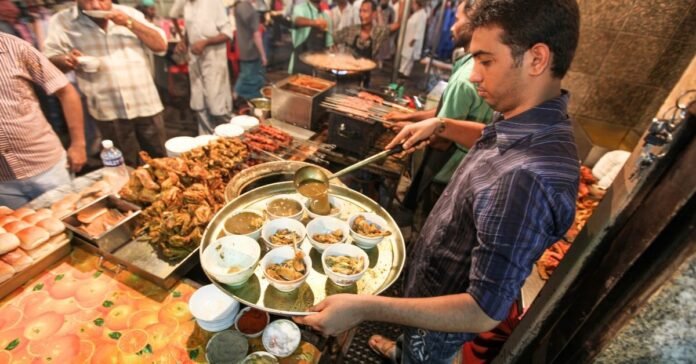
Deep in the heart of Mumbai’s legendary Mohammed Ali Road, a vibrant, food-laden wonderland emerges every Ramadan. As dusk falls, the alleyways of Bohri Mohalla awaken, sizzling with the aromas of centuries-old recipes passed down through generations.

Bohri Mohalla, named after the Dawoodi Bohra community that migrated from Gujarat and Yemen in the 20th century, has become a beacon of Mumbai’s Ramadan spirit. Over time, it has evolved into a culinary landmark, embodying the city’s festive food culture. Behind the doors of its legendary eateries, treasures await discovery.

A Sensory Overload of Flavors

Visitors stepping into these bustling bylanes are instantly struck by an overwhelming sensory experience—the intoxicating aroma of grilled meats, the rhythmic clatter of woks, and the symphony of sizzling oil. To navigate this labyrinth of flavors, many turn to Aditya Lakshay from Khaki Tours. A seasoned storyteller, he leads heritage walks across Mumbai, serving up history with a generous side of trivia.

“We visit around 12 places, alternating between sweet and savory,” Aditya explains, guiding food lovers through the culinary maze.

The Journey Begins: Seekh Kebabs and Sweet Surprises

The first stop is Nawab Seekh Corner, where visitors sink their teeth into succulent seekh kebabs, perfectly spiced and encased in warm, flaky parathas. But the adventure has just begun.

Next, at J J Jalebi, an institution since 1947, an unexpected twist awaits. Here, a hickory-colored dessert appears to be jalebi but tastes exactly like a gulab jamun. “These are spiral versions of gulab jamun,” Aditya clarifies, explaining that this treat originates from Burhanpur, Madhya Pradesh—also the original resting place of Mumtaz Mahal before her tomb was moved to Agra.

Pulao, Bazaars, and a Brush with History

At Salman Pulao, fragrant chicken and beef pulao take center stage, paired with a side of history. Aditya quizzes visitors on the difference between pulao and biryani before leading them into Chor Bazaar, Mumbai’s legendary flea market. “The name is debated,” he muses. “One theory claims it was once called ‘Shor Bazaar’ (Noisy Market), which morphed into ‘Chor Bazaar.’ Another states that Queen Victoria’s stolen violin was found here.” Considering she never visited India, the latter is likely a myth.

Trickster Drinks and Samosa Showdowns

At Imam Sharbathwala, another imposter is encountered—a watermelon milk sharbat disguised in bright orange hues. This 99-year-old stall has moved locations several times, but its legend remains firmly rooted.

Further down, Diamond Samosa, a 68-year-old haven for crispy delights, presents a difficult choice—kheema samosa, samosa pattis, spring rolls, or wontons. The kheema samosa, with its rich and spicy filling, is a standout favorite.

Sweet Mysteries and the Tale of Bhendi Bazaar

At Noor Sweets, visitors indulge in flaky malai khaja and delicate sutarfeni. As they relish the sugary layers, Aditya shares another history tidbit: “Where did ‘Bhendi Bazaar’ get its name?”

Theories abound. Some claim it’s a British corruption of ‘Behind the Bazaar,’ as it was located behind Crawford Market. Others believe it’s named after ‘bhindi’ (lady’s finger), once unloaded from boats nearby. Either way, the area is steeped in history.

Chicken Kastoori Sandwich, Slow-Cooked Meat, and Biryani Reimagined

At Jilani Fast Food Corner, the chicken kastoori sandwich infused with the distinctive bitterness of kasoori methi, sourced from Pakistan, is a must-try. The chicken baida roti, an egg-wrapped, spice-laden flatbread, is equally spectacular.

Then comes Surti 12 Handi, an experience in itself. Twelve massive pots, each simmering different cuts of meat—paya (trotters), pichota (tail), nihari (stomach), jubaan (tongue), and bheja (brain)—are slow-cooked to perfection. It’s a feast for the adventurous.

Sweet relief arrives at Shabbir Tawakkal, where visitors indulge in malpua (sweet pancakes) and phirni (rice pudding). At Firoz Farsan, they encounter patrel chicken biryani, a unique version featuring steamed colocasia leaves instead of rice. The final savory stop, Idris Cold Drinks, provides a refreshing close with variyali, a fennel-based, kiwi-green drink.

The Final Test: Goat Udders and Hand-Churned Ice Cream

At Haji Tikka, diners face their greatest challenge—a dish made from goat udders. “You’ll either love it or hate it. No middle ground,” Aditya warns. It’s an acquired taste, to say the least.

To cleanse the palate, the journey ends at the legendary Taj Ice Cream, once frequented by Bollywood icon Madhubala. Established in 1887, it still churns out creamy, fruity scoops in a time-honored copper sancha (canister). A scoop of hand-churned nostalgia serves as the perfect finale to an unforgettable night.

A Night to Remember

As visitors walk away from the neon-lit streets of Mohammed Ali Road, they carry more than just a full stomach. They have feasted on history, indulged in flavors both familiar and daring, and followed in the footsteps of generations who made this food haven what it is today.

For those in Mumbai during Ramadan, taking this walk, savoring these flavors, and immersing in the magic of Mohammed Ali Road is an experience not to be missed.


Turmeric, Aloe Vera & More: How These Farmers Doubled Their Income Through Horticulture

0

Agriculture is the backbone of India’s economy, yet traditional farming often presents challenges such as unpredictable weather, low profit margins, and high labor intensity. With a growing demand for alternative crops, many farmers are turning to horticulture for sustainable income and long-term prosperity. From spices to exotic fruits and medicinal plants, horticulture offers higher profits and resilience against climate variability.

Here are five inspiring stories of farmers who transitioned to horticulture and reaped substantial rewards.

1. Kanchan Verma, Madhya Pradesh: Cultivating Gold with Turmeric

In Narmadapuram, Madhya Pradesh, Kanchan Verma made a bold move from cultivating wheat to growing turmeric. The switch proved lucrative, doubling her income from Rs 1.5 lakh to Rs 3 lakh per acre, with an input cost of only Rs 50,000.

“With traditional crops, we had limited earnings, but turmeric has changed everything,” she shares. By harvesting 400 quintals of turmeric, she generates an annual income of Rs 12 lakh. Kanchan has also mastered direct-to-consumer sales, packaging turmeric powder into 1 kg packets and selling it straight from her farm.

Her philosophy is simple: “As farmers, it’s important to keep experimenting.”

2. Hrushikesh Jayasing Dhane, Maharashtra: Transforming Aloe Vera into a Rs 3.5 Crore Enterprise

In Padali village, Maharashtra, Hrushikesh Jayasing Dhane grew up watching his family struggle with traditional farming. Frustrated by low yields, he took a different route—aloe vera cultivation. Today, he has built a thriving business producing aloe vera-based products such as soaps, shampoos, and juices, scaling it into a Rs 3.5 crore enterprise.

“When I started, people told me that planting thorny aloe vera would bring bad luck. But today, I own a two-storey house and drive a Fortuner car,” he says with pride.

3. Mahesh Asabe, Maharashtra: Profiting from Dragon Fruit Cultivation

Farmers in Akola, Maharashtra, have long relied on pomegranates, custard apples, and grapes. However, erratic weather conditions, including unexpected rainfall and hailstorms, led Mahesh Asabe to explore alternative crops. He found success in dragon fruit farming, a highly profitable venture.

Today, Mahesh sells at least 200 tonnes of dragon fruit per season in Sangli and Kolhapur markets, earning an impressive Rs 2 crore from his 20-acre farm. “The shift was risky, but the rewards have been life-changing,” he remarks.

4. Shanker Meena, Rajasthan: Leading India’s Mushroom Revolution

Hailing from rural Rajasthan, Shanker Meena witnessed his father’s struggles with wheat and mustard farming. Determined to break the cycle of low returns, he ventured into mushroom cultivation, establishing ‘Jeevan Mushroom’—a business that now produces 80 tonnes of high-quality mushroom spawns.

Shanker uses advanced technology, including seed germination chambers and autoclaves, to enhance productivity. His mushrooms are sold across India and exported to Bhutan, Nepal, and the UAE, earning him Rs 13 lakh per month.

“Investing in horticulture is not just about growing crops—it’s about shaping the future of farming,” he says.

5. Anand Mishra, Uttar Pradesh: A Citrus Success with Lemons

Anand Mishra’s family traditionally cultivated paddy, wheat, and pulses. However, he saw an untapped opportunity in lemon farming, which remains in demand year-round.

“No one in my district was growing lemons, so I took the risk. I figured I’d either learn to swim or drown,” he recalls. The gamble paid off—Anand now earns up to Rs 7 lakh from his two-acre lemon farm, nearly five times more than what he would have made from traditional crops.

His perspective on horticulture is clear: “It’s a one-time investment that offers significant long-term benefits.”

Conclusion: A New Dawn for Indian Agriculture

These success stories highlight the immense potential of horticulture. Beyond higher profits, these farmers have found resilience, sustainability, and the freedom to innovate. As climate change continues to challenge traditional agriculture, the future may lie in embracing diverse, high-value crops that ensure economic stability and food security.

For farmers looking to break free from the constraints of conventional farming, horticulture offers a promising path forward.

No Engineers, No Big Budgets — How One Meghalaya Teacher Solved Her Village’s Water Crisis

0

In the lush and verdant landscapes of Meghalaya, where misty hills embrace the sky, the daily routine of rural women once began with an arduous trek. These women navigated steep, winding paths, balancing heavy aluminum pots on their heads and waists to fetch water from distant streams. This exhausting ritual, often spanning up to a kilometer each way, had to be performed twice daily—regardless of illness, menstruation, or exhaustion. Water was too vital a resource to forego.

Yet, the irony was striking. The village of Kyrdemkhla, located near Mawsynram—the wettest place on Earth, receiving over 11,871 mm of annual rainfall—struggled with severe water scarcity for much of the year. The Integrated Basin Development and Livelihoods Promotion Programme (IBDLP), a flagship initiative of the Meghalaya government, highlights this paradox: “Meghalaya grapples with the irony of scarcity amidst plenty. The rainfall is only for 6-8 months in a year, leaving the dry months with significant water scarcity problems. Due to the distinct topographical and geomorphological conditions of the state, there is high surface runoff to the neighboring plains very quickly.”

A Woman’s Quest for Water Self-Sufficiency

One woman decided that enough was enough. Lakmen Mary Nongkhlaw, a dedicated assistant teacher at Diengkynthong LP School for the past 15 years, took it upon herself to ease the burden on her community. Having personally experienced the grueling water collection process, she understood the inefficiency and hardship it created.

“The school started at nine, which meant I had to finish all household chores—including cooking, cleaning, and fetching water—before leaving for work,” she recalls. “I would leave to fetch water at seven in the morning, waiting in long queues to access a specific, unpolluted stream. It was exhausting.”

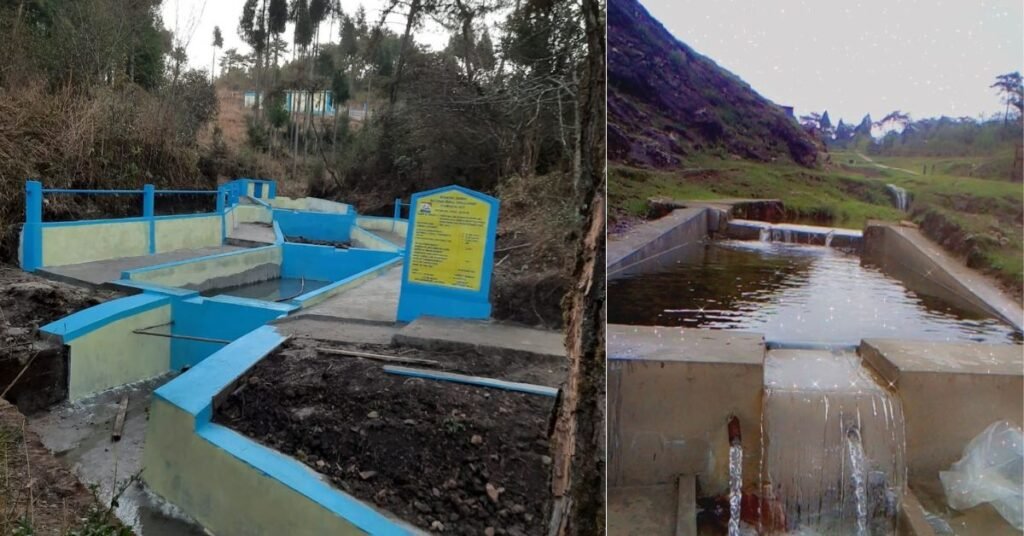
Determined to change this reality, Lakmen Mary spearheaded a movement to construct water assets such as check dams, water storage tanks, and afforestation projects to protect water catchment areas. Her relentless efforts have significantly improved water availability closer to villagers’ homes.

Building a Sustainable Future

Under her leadership, the villagers planted 16,000 saplings, constructed five water storage tanks, and renovated six spring chambers. “We built four check dams and implemented water conservation projects to ensure sustainable access to this critical resource. These efforts have resulted in six water taps being installed within the village, facilitating easy water access even during the dry winter months,” she explains. Since 2016, she has also served as the Secretary of the Village Employment Council, further reinforcing her commitment to development and conservation.

From Hardship to Empowerment

Recognized as a changemaker, Lakmen Mary’s work has transformed not only water accessibility but also the quality of life in her village. “Women now spend less time on exhausting water-fetching trips, allowing them to dedicate more time to family, education, and economic activities. These changes have revitalized community life and provided educational opportunities for women and girls, who can now attend school regularly,” she shares.

Her leadership has inspired many, particularly women, to engage actively in conservation and developmental projects, fostering a newfound sense of empowerment and agency.

“Lakmen Mary has become a role model for grassroots leadership,” says Batrity Warkri, a teacher in the village since 2007. “I have seen her devote her time after work to conservation efforts—from planting saplings to digging soil and constructing check dams. Because of her, life in the village has improved.”

No Engineers, No Big Budgets — How One Meghalaya Teacher Solved Her Village’s Water Crisis

A Labor of Love Recognized Nationally

For Lakmen Mary, her work is a labor of love. “This project did not cost me a penny, only my time. After work, I would go around the village with construction tools to repair spring chambers and build check dams. It was all done with collective community effort.”

Her selfless dedication has not gone unnoticed. She has received accolades from the Office of The District Rural Development Agency, East Khasi Hills District, Shillong, recognizing her transformative impact. In September 2024, she found herself in the distinguished company of President Droupadi Murmu at India Water Week in New Delhi.

“I couldn’t believe I was standing before the President, narrating my work,” she recalls with pride. “Back home, my community celebrated my recognition—my photos were shared in WhatsApp groups, and many villagers proudly set them as their statuses.”

Yet, for Lakmen Mary, the journey is far from over. “Now, I aim to initiate additional projects, including the construction of a large check dam and implementing three new rainwater harvesting systems, to continue improving water access and conservation in my community.”

Her story is a testament to the power of grassroots leadership, resilience, and the impact one determined individual can have on an entire community. Through her efforts, a generation of women in Kyrdemkhla is now free from the daily trek for water, able to dream bigger, and embrace a future where their time is spent not in struggle, but in growth.

World Poetry Day: Celebrating the Power of Words

0

Poetry is the rhythm of human expression, a timeless art form that captures emotions, experiences, and the essence of life in just a few lines. Every year on March 21, the world comes together to celebrate World Poetry Day, an occasion established by UNESCO in 1999 to honor poets, revive oral traditions, and promote the reading, writing, and teaching of poetry across cultures.

The Universal Language of Poetry

Poetry transcends borders and languages, offering a universal medium through which people connect, reflect, and find solace. From the sonnets of Shakespeare to the haikus of Japan, from the ghazals of Persia to contemporary spoken word performances, poetry has evolved while maintaining its profound ability to inspire and provoke thought.

The Role of Poetry in Society

More than just an artistic expression, poetry has long been a catalyst for social change. It has given voice to the oppressed, challenged societal norms, and documented the human experience. Whether in political movements, personal struggles, or celebrations of love and nature, poetry captures the spectrum of human emotions and realities.

In times of uncertainty, poetry serves as a source of comfort and resilience. It offers a means to articulate emotions that are often difficult to express, helping individuals and societies heal and grow.

Reviving the Love for Poetry

Despite the digital age’s fast-paced nature, poetry continues to thrive through new mediums. Social media platforms have given rise to a new generation of poets who share their words instantly with a global audience. Poetry slams, spoken word events, and digital poetry publications are keeping the art form alive and relevant for younger audiences.

How to Celebrate World Poetry Day

Whether you are a poet at heart or simply an admirer of the craft, there are countless ways to celebrate this day:

  • Read a poem – Explore works from classic and contemporary poets.
  • Write your own poem – Express your thoughts and emotions through verse.
  • Attend a poetry event – Join a local or virtual poetry reading or slam.
  • Share poetry – Post your favorite poem or an original piece on social media to spread the beauty of words.

A Tribute to the Poets

Poetry has shaped cultures, ignited revolutions, and left an indelible mark on history. From Rumi and Emily Dickinson to Pablo Neruda and Maya Angelou, poets have painted vivid pictures of the human experience through their words. World Poetry Day is a tribute to their creativity and a reminder that poetry remains as powerful and relevant as ever.

As we celebrate this day, let us embrace the magic of poetry, allowing words to move, inspire, and connect us across time and space.

World Water Day: A Call to Action for Our Most Precious Resource

0

Water is the essence of life. It sustains ecosystems, supports livelihoods, and fuels economies. Yet, despite covering 71% of the Earth’s surface, freshwater remains a finite and fragile resource. Every year, on March 22, the world unites to observe World Water Day, a global initiative dedicated to raising awareness about the importance of freshwater and advocating for its sustainable management.

The 2025 Theme: Water for Peace

This year’s theme, “Water for Peace,” underscores the critical role of water in fostering harmony, stability, and cooperation across nations. Access to clean water is not just a basic human right; it is a foundation for peace and development. When water is scarce or poorly managed, conflicts arise, exacerbating tensions between communities and countries. On the other hand, effective water governance can serve as a bridge for collaboration and prosperity.

The Global Water Crisis: A Reality Check

While some regions enjoy abundant water resources, others struggle with severe shortages. Over 2.2 billion people worldwide lack access to safe drinking water, and climate change is only worsening the crisis. Rising temperatures, erratic weather patterns, and increased pollution threaten our freshwater supplies, making it imperative for individuals, governments, and organizations to take action.

From the devastating droughts in Africa to the shrinking glaciers in the Himalayas, water scarcity is no longer a distant threat—it is a present reality. The time to act is now.

Innovations and Solutions: Shaping a Sustainable Future

The future of water security depends on innovation, conservation, and sustainable management. Cutting-edge technologies like desalination, wastewater recycling, and smart irrigation systems are revolutionizing water access and distribution. Governments and organizations worldwide are investing in water-saving policies and infrastructure to ensure a more resilient future.

Local communities also play a vital role. Simple actions such as reducing water waste, fixing leaks, and supporting reforestation projects contribute to the global effort to safeguard this invaluable resource.

Taking Action: How You Can Help

Every drop counts. Whether at home, in schools, or workplaces, individuals can make a difference by:

  • Reducing water waste – Turning off taps, using water-efficient appliances, and collecting rainwater.
  • Supporting water conservation efforts – Participating in clean-up drives, tree planting, and advocacy programs.
  • Educating and spreading awareness – Engaging in conversations, sharing information, and encouraging others to take part in sustainable water practices.

Looking Ahead: A Shared Responsibility

World Water Day serves as a reminder that water is more than a resource—it is a lifeline. The responsibility to protect and preserve it does not rest solely with policymakers or environmental organizations. It is a shared duty that calls for collective action from every individual on the planet.

As we celebrate this day, let us commit to valuing, conserving, and equitably sharing water, ensuring that future generations inherit a world where water is not a cause of conflict but a source of unity and peace.

UAE Unveils World’s First Giga-Scale 24/7 Solar and Battery Energy Storage Project

0

The United Arab Emirates (UAE) is cementing its position as a global leader in renewable energy with the launch of the world’s first giga-scale, round-the-clock solar photovoltaic (PV) and battery energy storage system (BESS) project in Abu Dhabi. This groundbreaking initiative, spearheaded by Abu Dhabi Future Energy Company PJSC – Masdar, in collaboration with Emirates Water and Electricity Company (EWEC), represents a transformative leap in sustainable power generation and an innovative approach to addressing energy stability and reliability challenges.

A Game-Changer in Renewable Energy

Announced in January 2025 by Dr. Sultan Al Jaber, UAE Minister of Industry and Advanced Technology and Chairman of Masdar, this ambitious project directly tackles the intermittent nature of renewable energy by ensuring a continuous 24/7 power supply. By integrating advanced solar PV and storage technology, the UAE is taking a major step toward making renewable energy as reliable as traditional fossil fuels.

With the capacity to deliver up to 1 gigawatt (GW) of baseload power, this pioneering endeavor aims to reshape the future of clean energy on a global scale. The initiative is part of the UAE’s broader strategy to advance sustainable energy solutions while maintaining energy security and economic prosperity.

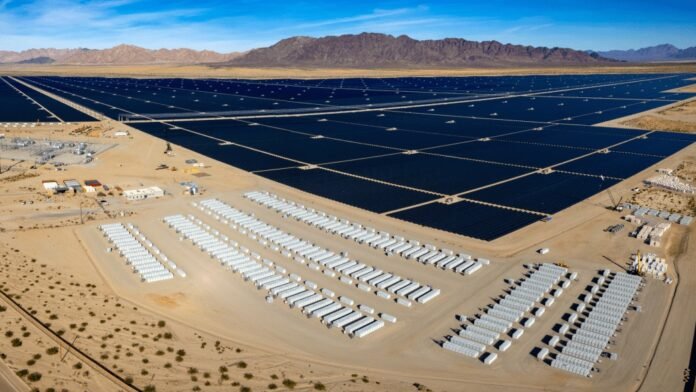
Valued at over $6 billion, the project will integrate a massive 5.2 GW solar PV plant with a state-of-the-art 19 gigawatt-hour (GWh) battery energy storage system. This combination will enable uninterrupted renewable energy supply, making it the largest solar and BESS facility in the world. By leveraging cutting-edge energy storage solutions, the UAE is setting a new benchmark for the reliability and scalability of renewable power, further positioning itself as a leader in the clean energy revolution.

Economic and Environmental Impact

Beyond revolutionizing renewable energy, the project is expected to generate substantial economic and environmental benefits. Approximately 10,000 new jobs will be created during the construction and operational phases, reinforcing the UAE’s commitment to economic diversification, technological advancement, and sustainable growth.

Dr. Al Jaber described the initiative as a “moonshot challenge” that fundamentally redefines renewable energy, proving that clean power can be a dependable and consistent source of electricity. This project is expected to significantly reduce carbon emissions, contribute to global climate action, and provide a scalable model for other nations to follow.

Masdar CEO Mohamed Jameel Al Ramahi emphasized that this project is not only the largest of its kind globally but also a testament to the UAE’s continued dedication to maintaining its leadership in the clean energy sector. With the integration of advanced AI-driven battery management systems and smart grid technology, the project aims to optimize energy efficiency and further enhance its impact on global sustainability efforts.

Aligning with UAE’s Vision for a Sustainable Future

The giga-scale solar and BESS project is a key pillar of the UAE Energy Strategy 2050, which seeks to diversify energy sources, reduce dependence on fossil fuels, and significantly increase the share of clean energy in the national grid. The initiative also aligns with the UAE’s broader commitments to global climate action, as underscored during COP28, where the country reaffirmed its ambition to achieve net-zero emissions by 2050.

Since its establishment in 2006, Masdar has been at the forefront of the UAE’s clean energy initiatives, expanding its renewable energy projects across more than 40 countries. The company is on track to grow its renewable portfolio to 100 GW by 2030, further strengthening its role as a global leader in the transition to sustainable energy.

With this pioneering project, the UAE is not just envisioning a cleaner future—it is actively building it. By setting an unprecedented standard for renewable energy deployment, the UAE continues to shape the future of global energy, demonstrating that sustainable innovation and economic growth can go hand in hand.