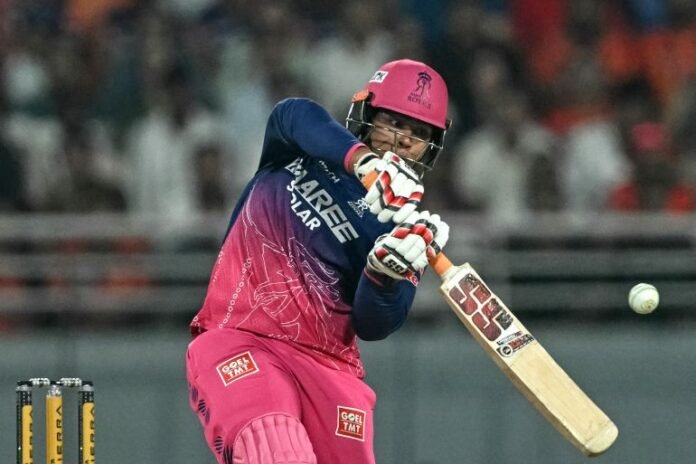
The Indian Premier League has witnessed many extraordinary talents over the years, but IPL 2026 belonged to one name above all others—Vaibhav Sooryavanshi. At just 15 years of age, the Rajasthan Royals opener produced a season for the ages, shattering records, winning multiple awards, and establishing himself as one of the brightest young stars world cricket has ever seen.
Sooryavanshi’s remarkable campaign ended with him becoming the first player in IPL history to win five major individual awards in a single season. His performances were so dominant that he not only captured the imagination of cricket fans across the globe but also drew comparisons with some of the greatest T20 batters the game has produced.
Leading from the front, the teenage sensation finished IPL 2026 as the tournament’s highest run-scorer, claiming the prestigious Orange Cap with 776 runs in just 16 innings. What made his achievement even more extraordinary was the manner in which those runs were scored. Batting with fearless intent, he maintained a staggering strike rate of 237.30, making him one of the most destructive players in the competition.
His power-hitting was equally breathtaking. Sooryavanshi smashed 72 sixes during the season, surpassing the previous IPL record of 59 held by legendary West Indian batter Chris Gayle. Bowlers across teams struggled to contain him as he consistently attacked from the very first ball. In the powerplay alone, he accumulated 521 runs, becoming the first player in T20 franchise cricket to cross the 500-run mark in the first six overs of a single season.
His brilliance earned him the Most Valuable Player (MVP) award, the Emerging Player of the Season honour, as well as the Super Striker and Super Sixes awards. The historic five-award haul underlined just how dominant he was throughout the tournament. Among his many achievements, one of the most remarkable was becoming the fastest batter in IPL history to reach 1,000 career runs. He achieved the milestone in just 440 deliveries, highlighting both his consistency and explosive scoring ability.
Beyond the statistics, however, Sooryavanshi’s story represents the arrival of a new generation of Indian cricket talent. At an age when most teenagers are balancing schoolwork and sports, he was taking on some of the world’s best bowlers and winning. His confidence, maturity, and fearless approach have earned widespread admiration from cricket experts and former players alike.
His sensational season was also rewarded financially, with the youngster receiving ₹55 lakh in prize money along with a brand-new car for his outstanding performances.
While Rajasthan Royals narrowly missed out on lifting the IPL trophy, the emergence of Vaibhav Sooryavanshi was undoubtedly one of the defining stories of the season. Cricket has always celebrated prodigies, but seasons like this are rare. At just 15, Sooryavanshi has already achieved what many players can only dream of. If IPL 2026 was any indication, Indian cricket may have found its next superstar.
The results of JEE Advanced 2026 were declared today by IIT Roorkee, bringing relief, celebration, and heartbreak to lakhs of students across the country. This year, Shubham Kumar secured All India Rank (AIR) 1 with an impressive score of 330 out of 360 marks, while Arohi Deshpande emerged as the highest-ranked female candidate. Out of nearly 1.8 lakh students who appeared for both papers, around 56,880 candidates qualified for admission into the prestigious Indian Institutes of Technology (IITs).
As the topper lists and success stories dominate headlines, another familiar pattern has once again emerged—many of the highest-ranking students prepared in coaching hubs such as Kota in Rajasthan and Sikar, which continue to produce a large share of IIT aspirants every year. In fact, several top rankers this year were associated with coaching ecosystems that have become synonymous with IIT preparation.
But why have Kota and Sikar become such powerful centres of competitive exam preparation?
The answer lies in a combination of experience, infrastructure, faculty networks, test-series systems, and a highly competitive environment. Over the years, these cities have built an industry worth thousands of crores around engineering and medical entrance examinations. Students travel from every corner of India, often leaving their families behind, to spend two or more years preparing for a single examination. However, the success stories tell only one side of the picture.
Behind giant billboards displaying AIR 1 holders and perfect scores lies a far more complex reality. Coaching institutes aggressively market toppers as proof of their success, even though many rank-holders often receive guidance from multiple platforms, personal mentors, online resources, and schools simultaneously. The race to claim toppers has become a marketing battle in itself.
Many students also find themselves trapped in a cycle of pressure. The dream of securing an IIT seat is often presented as the ultimate definition of success. Families invest significant savings, students relocate at a young age, and their lives become centred around ranks, mock tests, and performance charts. For some, the environment becomes motivating. For others, it creates immense stress, anxiety, and a constant fear of failure.
The bigger question is whether India has unintentionally created an education system where coaching centres have become more influential than classrooms. The rise of Kota and Sikar reflects not only their strengths but also the gaps in mainstream schooling and career guidance systems.
JEE Advanced remains one of the toughest examinations in the world, and every successful candidate deserves recognition for their hard work. Yet the results should also encourage a broader conversation. An AIR rank can open doors, but it does not define a person’s intelligence, potential, or future.
As another batch of students celebrates its success today, India must also reflect on the growing coaching culture that shapes millions of young lives. The real challenge is not just producing toppers—it is ensuring that ambition does not come at the cost of well-being, balance, and the true purpose of education.
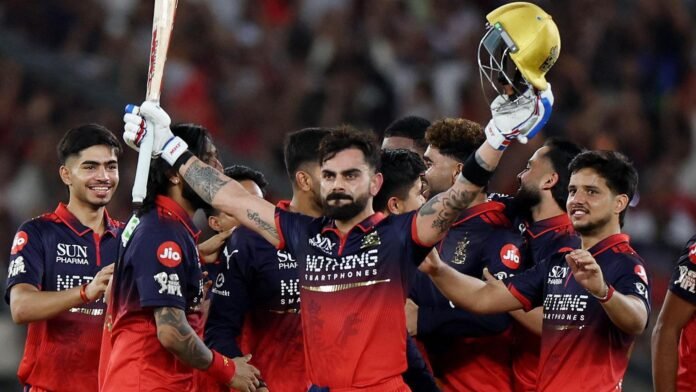
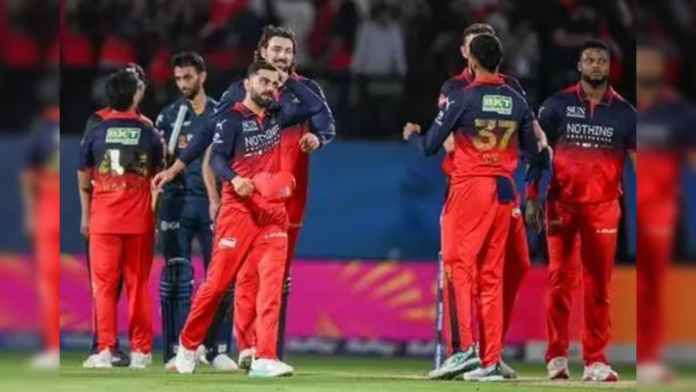
When Royal Challengers Bengaluru lifted the IPL trophy for the second consecutive year in 2026, the celebrations belonged to the entire team, but at the centre of it all stood one man—Virat Kohli. For nearly two decades, Kohli has been the face of RCB, a player whose loyalty, passion, and relentless pursuit of excellence have defined the franchise’s identity.
In the IPL 2026 final against Gujarat Titans, Kohli once again proved why he is regarded as one of the greatest batters in the history of the game. Chasing a target of 156, the veteran opener produced a masterclass under pressure, remaining unbeaten on 75 off just 42 deliveries. His innings, which included the fastest IPL half-century of his career, guided RCB to a comfortable five-wicket victory and secured the franchise’s second successive title.
For Kohli, the achievement was particularly significant. Having spent his entire IPL career with RCB, he experienced years of heartbreak, near misses, and criticism before finally tasting championship success. Today, those struggles make the victories even sweeter.
Born in Delhi on November 5, 1988, Virat Kohli’s cricket journey began at a young age. His determination was evident early on, most famously when he played a crucial innings for Delhi shortly after the death of his father. That resilience became a defining characteristic of his career. In 2008, he captained India to victory in the ICC Under-19 Cricket World Cup, announcing himself as a future star.
What followed was one of the most remarkable careers in modern cricket. Kohli became the backbone of India’s batting line-up across formats, broke numerous records, captained the national team, and earned admiration worldwide for his consistency and intensity. His commitment to fitness also transformed the standards of Indian cricket and inspired a new generation of athletes.
Yet despite his international success, RCB remained closest to his heart. Season after season, Kohli carried the hopes of millions of fans. His emotional connection with the franchise turned him into more than just a player—he became a symbol of loyalty and perseverance.
The 2026 IPL title triumph further strengthened that legacy. While younger stars continue to emerge, Kohli remains the driving force behind RCB’s success. His performances, leadership qualities, and unwavering commitment have helped shape what many fans now call the golden era of the franchise.
As RCB celebrates another championship and its growing dominance in the IPL, Virat Kohli’s story serves as a reminder that greatness is not defined only by records and trophies. It is also measured by dedication, resilience, and the ability to inspire millions. And in that regard, Kohli’s legacy extends far beyond the cricket field.
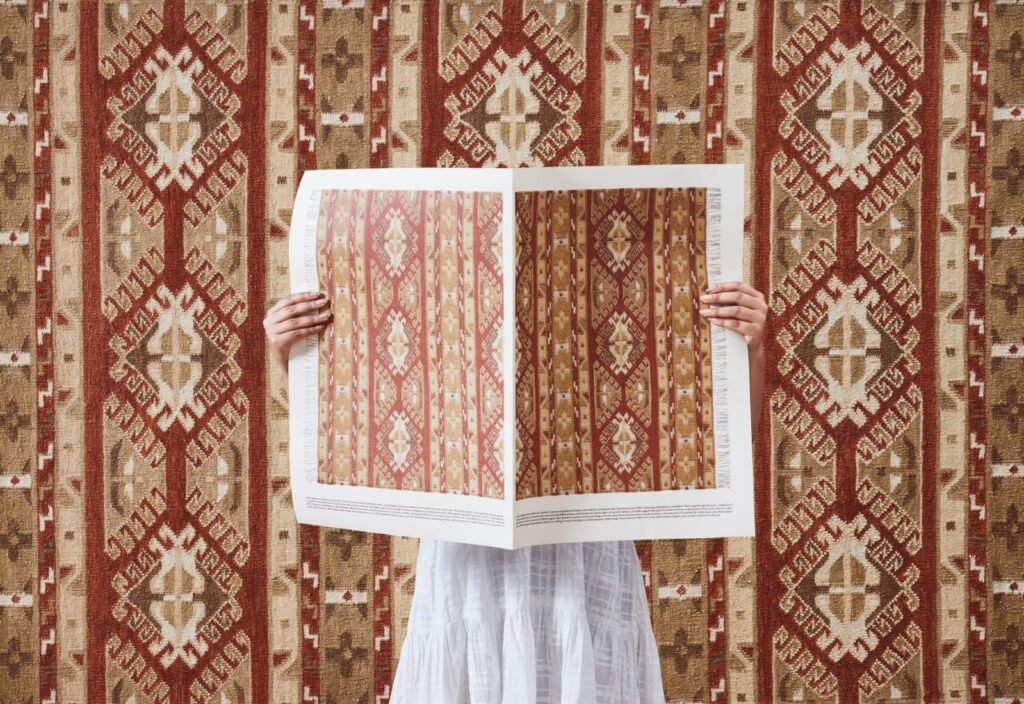
In an era dominated by fast fashion, mass production, and ever-changing trends, India’s centuries-old craft traditions are witnessing a remarkable revival. From intricate embroideries and handloom weaves to block prints and artisanal textiles, handmade fashion is once again finding favour among consumers in India and across the world.
But what is driving this renewed appreciation for craftsmanship? Are there enough artisans to meet the growing demand? Can handmade products remain accessible while ensuring fair compensation for the people behind them? And what role does this sector play in India’s economy and global identity?
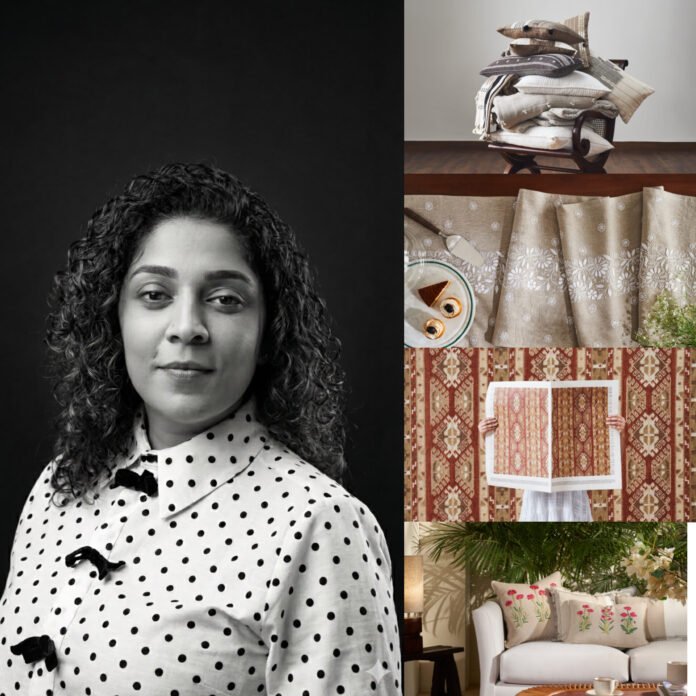
In this conversation, Richa Jain, Head of Design, Home Linen at Swadesh, Reliance Retail, shares her insights on the resurgence of handmade fashion, the challenges facing India’s artisan communities, and why she believes Indian craftsmanship has the potential to redefine luxury and sustainability for the future.
Q. Why is India’s handmade fashion making such a strong comeback in an age of fast fashion?
Richa Jain: I think the comeback is actually a correction. For decades, we collectively chased speed and scale, and somewhere in that pursuit, we lost texture, both literally and emotionally. What’s happening now is that consumers, especially post-pandemic, are craving meaning. They want to know where something came from, whose hands touched it, and what tradition it carries. Handmade fashion answers all of that in a single object. At Swadesh, we see this intimately in home linen. The moment a customer understands that a border was hand-block-printed in Sanganer or a weave came off a loom in Banaras, the product transforms for them. It stops being a bedsheet and becomes a relationship with a place and a person. Fast fashion simply cannot compete with that emotional register.
Q. Are today’s consumers valuing story, craftsmanship, and heritage more than before?
Richa Jain: Absolutely, and I’d say they’re also becoming more discerning about authenticity. It’s no longer enough to use the word “handmade” as a label—consumers are asking follow-up questions. Which region? Which community? Is this a dying craft or a living one? That level of curiosity is genuinely new and genuinely exciting. What I find particularly encouraging is the younger buyer—the 25 to 35-year-old—who is consciously choosing a hand-embroidered cushion or a jamdani quilt not just for aesthetics but as a values statement. Heritage has become a form of identity expression, and that is a powerful shift for the industry.
Q. What has changed that is making Indian handwork a major luxury and mainstream trend again?
Richa Jain: Several things converged at once. Global luxury houses such as Dior, Valentino, and Chanel have been sourcing Indian embroidery for years, which gave our crafts a certain aspirational revalidation in the domestic market. Then came a generation of Indian designers who stopped apologising for their roots and started leading with them. Add to that the rise of conscious consumption globally, and suddenly Indian handwork sits precisely at the intersection of luxury, sustainability, and cultural pride. What’s different now versus earlier revivals is that it isn’t charity-driven or nostalgia-driven—it’s commercially confident. Brands like Swadesh are built on the premise that craft can be contemporary, scalable, and profitable without being diluted.
Q. Are enough artisans still practising crafts like chikankari, zardozi, handloom weaving, and embroidery to meet growing demand?
Richa Jain: Honestly, supply is under serious pressure. The artisan base is there, but it is ageing and geographically concentrated. Chikankari clusters in Lucknow, kantha and jamdani in Bengal, brocades and hand-knotted carpets in Uttar Pradesh—these are functioning ecosystems, but fragile ones. When demand spikes suddenly, as it has in the past few years, the supply chain strains badly. Turnaround times stretch, quality becomes inconsistent and artisans get fatigued. What we need is not just more artisans but better infrastructure around them—design support, fair pricing, working capital and market access. The craft exists; the ecosystem around it needs urgent strengthening.
Q. Is India facing an artisan shortage, and do we urgently need to train a new generation?
Richa Jain: Yes, and I would say the urgency is not theoretical—it is already here. In my own sourcing work, I regularly encounter situations where a particular technique exists in perhaps one or two villages with a handful of practitioners, most of them in their fifties or sixties. Their children have moved to cities for more predictable incomes. Can you blame them? We never made craft economically aspirational for young people. That has to change. Training alone isn’t sufficient—we need to make being a skilled artisan a dignified, well-compensated and respected profession. Government schemes like NIFT’s craft documentation initiatives and the Office of the Development Commissioner (Handicrafts) programmes are a start, but industry has to step up and create sustained demand that makes it worthwhile for someone to spend years learning a craft.
Q. What actually goes into creating a handcrafted piece that people may not fully understand?
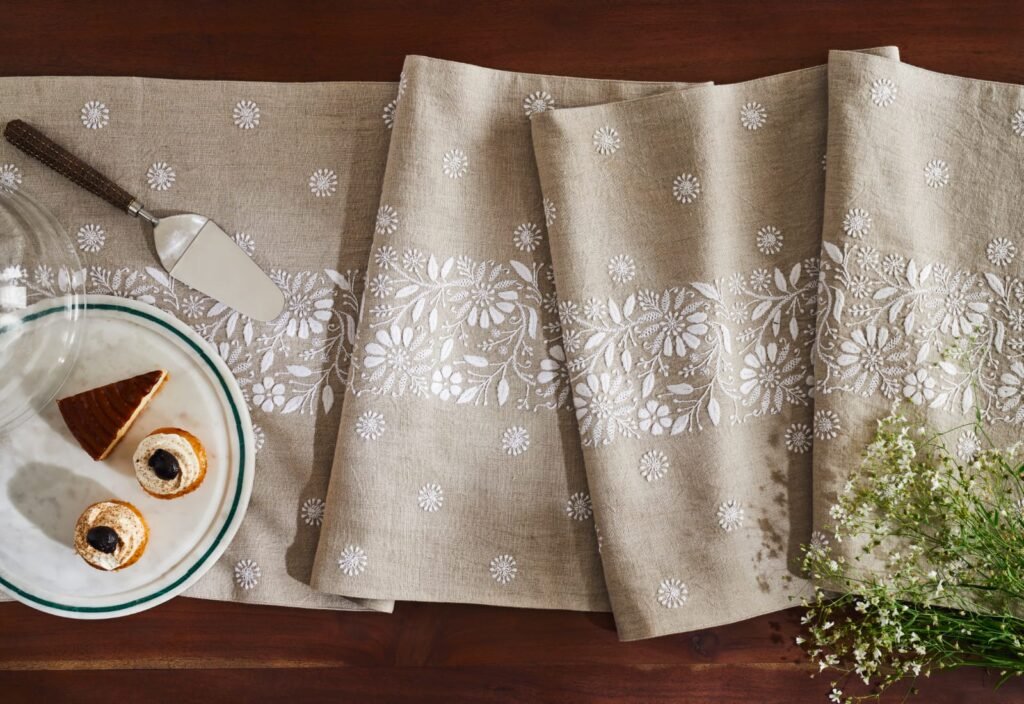
Richa Jain: Almost everything that is invisible. Take a hand-embroidered linen cushion cover. Before a single stitch is placed, there is the sourcing of the base fabric, the preparation and sizing of the ground, the transfer of the design, the dyeing or printing of threads, and then the actual embroidery work, which can take a skilled artisan anywhere from two days to two weeks depending on density. Each of those steps has its own supply chain, its own craft knowledge and its own quality variables. When you price a handcrafted piece, you are pricing all of that invisible labour plus the years of skill embodied in the person doing it. What people see is a beautiful object. What they’re actually holding is compressed human time, and that framing changes everything.
Q. Is handcrafted Indian fashion becoming accessible to the middle-class consumer, or is it still largely a luxury market?
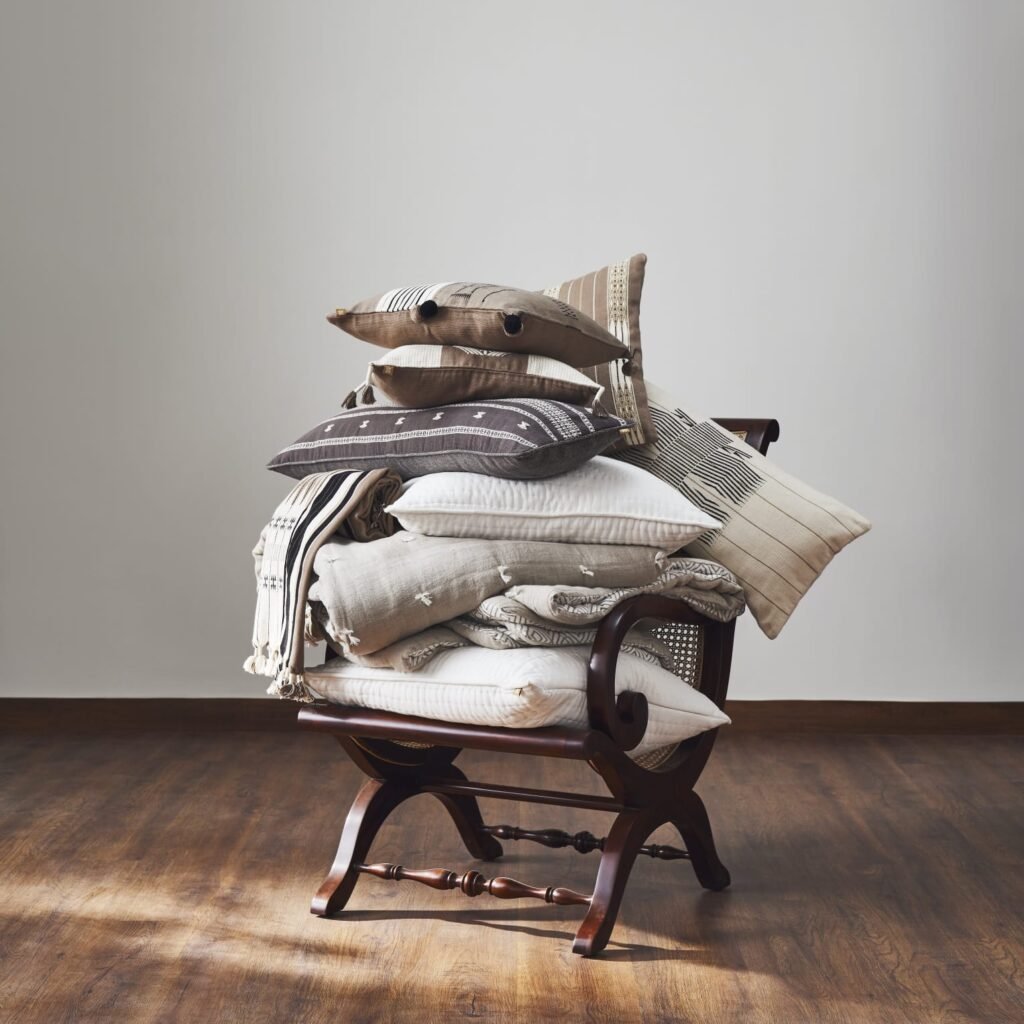
Richa Jain: It’s a spectrum and I think the market is genuinely opening up at multiple price points. The super-premium—heavily worked zardozi or custom handloom silks—will always be luxury by nature of input costs. But block-printed cottons, simple kantha work and handwoven khadi are accessible, and the middle class is absolutely engaging with them. What Swadesh is trying to do and I’m proud of this, is create a credible, well-designed craft product that a middle-income household can buy for their home without it being either unaffordable or dumbed down. The challenge is educating consumers on why a hand-block-printed duvet cover costs more than a digitally printed one while keeping that gap reasonable. That’s a design and communication challenge as much as a pricing one.
Q. How can designers balance authenticity and craftsmanship while making handmade fashion commercially sustainable?
Richa Jain: This is the central creative tension of my work every single day. My belief is that you protect the technique, but you don’t freeze the aesthetic. A Sanganeri block print doesn’t have to look like it did in 1970 to be authentic. Authenticity lives in the process, the materiality, and the human hand—not in a static visual vocabulary. When I develop a collection, I work closely with artisan clusters, understand what their hands can do best and then let contemporary design sensibility guide the colour, scale, and application. That collaboration—where the artisan’s expertise and the designer’s market awareness meet—produces something that is both genuinely crafted and commercially relevant. Sustainability comes when artisans are paid fairly and orders are consistent, not seasonal bursts. That requires discipline on the brand side.
Q. How important is the handmade fashion industry to India’s economy, employment, and rural livelihoods?
Richa Jain: It is the second-largest employer in India after agriculture. That statistic alone should anchor every policy conversation about this sector. We are talking about millions of livelihoods, the majority of them women working from home in semi-rural and rural contexts, earning incomes that are woven directly into household economics. When a craft cluster thrives, it sustains not just the artisan but schools, local markets and community structures around it. When it collapses—as many have—it triggers migration, social disruption and the permanent loss of intangible cultural heritage. This isn’t romantic; it’s economic and developmental reality. The handmade industry is India’s most scalable rural employment programme, and we are chronically underinvesting in it relative to its potential.
Q. Do Indian artisans finally get the recognition they deserve as Indian textiles are celebrated on global runways?
Richa Jain: Not yet, and I feel strongly about this. There is a fundamental asymmetry that hasn’t been corrected: the global fashion house gets the headline, while the Indian artisan gets a footnote in the press release, if they’re lucky. I’ve seen collections where karigar communities from Uttar Pradesh or Rajasthan did months of intricate work and received zero credit in any public communication. Recognition means attribution—naming the cluster, the region, the technique, and the community. It means fair compensation, not just fair wages but royalty-type arrangements for techniques that are the intellectual property of communities. The global runway loves Indian craft. The question is whether that love translates into equity. That conversation is only just beginning.
Q. Has social media and celebrity fashion helped revive interest, or has it also led to over-commercialisation?
Richa Jain: Both, and I think we have to acknowledge that honestly. Social media has been transformative for awareness. A weaver in Kutch now has a direct window to a global audience and that is genuinely revolutionary. Celebrities wearing handloom saris or chikankari ensembles have normalised and glamourised craft in a way that no government campaign could. But the flip side is the commodification of aesthetics without respect for origin. Trends move so quickly that crafts get consumed as visual motifs—block print becomes a “pattern”, ikat becomes a “look”—stripped of context and replicated in factories within weeks. That’s deeply damaging. The answer isn’t to resist social media but to use it more intentionally—to tell complete stories, credit artisans and build literacy alongside aspiration.
Q. What does the future of Indian handmade fashion look like—revival, reinvention, or complete global takeover?
Richa Jain: All three, sequenced. We are in the revival phase right now—reclaiming pride, rebuilding supply chains and rediscovering techniques. Reinvention is already happening in parallel, as younger designers and brands recontextualise craft for global sensibilities without apology. The global takeover? I genuinely believe it’s coming, but only if we solve the infrastructure problem.
India sits on an unparalleled depth of craft knowledge, a density and diversity of textile traditions that no other country on earth can match. If we pair that indigenous genius with better design education, technology-enabled supply chains, fair trade frameworks and a new generation of artisans who choose craft as a career of choice rather than compulsion, Indian handmade will not just be a trend on a global runway. It will set the terms of what luxury, sustainability, and beauty mean for the next century. That’s not a romantic notion, that’s just following the logic ofwhat we already have.
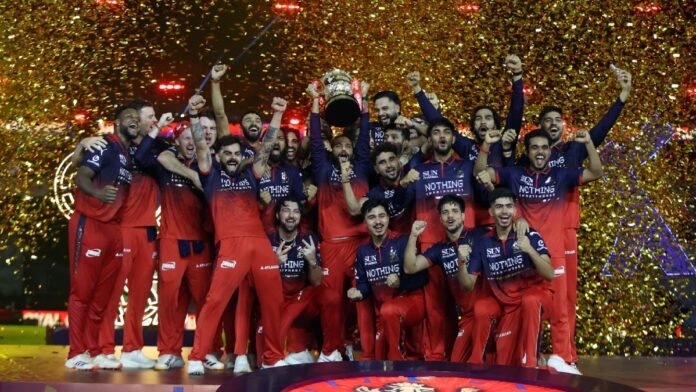
Royal Challengers Bengaluru (RCB) continued their dominance in the Indian Premier League by winning the IPL 2026 title, defeating Gujarat Titans by five wickets in the final at the Narendra Modi Stadium in Ahmedabad. The victory marked RCB’s second consecutive IPL championship, further cementing their place among the league’s elite teams.
After being asked to chase a target of 156, RCB produced a composed batting performance, reaching 161/5 in just 18 overs. The chase was led by veteran batter Virat Kohli, who delivered yet another memorable knock under pressure. Kohli remained unbeaten on 75 runs off 42 deliveries and recorded the fastest half-century of his IPL career, reaching the milestone in just 25 balls. His innings combined aggression with control and ensured that Bengaluru stayed firmly on course throughout the chase.
Earlier in the evening, Gujarat Titans struggled to build momentum against a disciplined RCB bowling attack and finished with 155/8 in their allotted 20 overs. Rasikh Salam emerged as the standout performer with the ball, claiming three crucial wickets. He was well supported by experienced pacers Bhuvneshwar Kumar and Josh Hazlewood, who picked up two wickets each and kept the Titans’ batting line-up under constant pressure.
RCB’s triumph was the culmination of another remarkable season in which every department contributed consistently. The team displayed resilience, tactical discipline, and depth throughout the tournament, qualities that ultimately helped them retain the coveted trophy.
For Virat Kohli, the final was another chapter in his long and illustrious association with the franchise. His match-winning innings not only guided RCB to victory but also highlighted his enduring ability to perform on the biggest stage when it matters most.
The title win sparked celebrations among RCB supporters across the country, although reports indicated that Bengaluru would not host a grand victory parade this year. Nevertheless, the achievement remains a landmark moment for the franchise and its passionate fan base.
With two successive IPL titles now in their cabinet, Royal Challengers Bengaluru have firmly established themselves as one of the most formidable teams in the competition. Their successful title defence in 2026 will be remembered as a season where experience, teamwork, and championship mentality came together to produce another historic triumph.
On August 14, 2023, I visited the holy village of Machail in the Kishtwar district of Jammu and Kashmir along with my family. It was a memorable journey filled with devotion, natural beauty, and spiritual peace.
The Story of Machail Mata
The Machail Mata Mandir is dedicated to Goddess Chandi, a powerful form of Goddess Durga, who is also worshipped as Kali. The temple holds great significance for devotees from different parts of the country.
According to local beliefs, many Indian soldiers prayed to Mata Machail during the Indo-Pak wars and were blessed with success in their missions. It is also believed that General Zorawar Singh was a devoted follower of the goddess and offered special prayers after achieving victory.
The Machail Mata Yatra gained popularity through the efforts of Guru Kulveer Singh Ji, whose deep devotion inspired many devotees to undertake the pilgrimage.
One of the unique beliefs associated with the temple is that Mata blesses her devotees by slightly moving her earrings or the ornaments on her hands. Another fascinating belief is that although the eyes of the goddess’s idol remain closed, some fortunate devotees have experienced the divine blessing of seeing them open.
My Journey
Our journey began at 4 a.m. from Udhampur. Along with our family friends, we set out on an exciting road trip towards Machail. Throughout the journey, we enjoyed the scenic beauty of the region and made a few stops to rest and admire the magnificent Chenab River flowing through the mountains.
Around noon, we reached Gulabgarh in Kishtwar. From there, pilgrims can either undertake a 21-kilometre trek on foot or take a helicopter ride to reach Mata’s Bhawan. We chose the helicopter ride, which took only about ten minutes and offered breathtaking aerial views of the surrounding mountains.
After reaching Machail, we booked a tent for our stay. The stunning views of the Kishtwar Himalayas left us amazed. Surrounded by towering peaks and fresh mountain air, the place felt truly magical.
As I entered the sacred temple premises, a deep sense of peace and positivity filled my heart. The ringing bells, devotional atmosphere, and divine presence of Mata created a feeling of spiritual connection that is difficult to describe in words. Every corner of the temple radiated faith and devotion, making the experience truly unforgettable.
After spending the night there, we began our journey back home. The memories of this pilgrimage remain close to my heart, and I will cherish this beautiful experience for the rest of my life.
The Machail Mata Yatra was not just a journey to a holy place; it was a journey of faith, devotion, and inner peace that brought me closer to the divine.
(The writer of this article is Akhilesh Saproo, a student of Grade X, APS Jaipur)
Some journeys are not just about visiting a place; they become cherished memories filled with peace, faith, and meaningful experiences. My trip to Kubereshwar Dham in Sehore, Madhya Pradesh, was one such journey. It was not only a family outing but also a spiritually enriching experience that brought positivity and calmness to my mind.
Our journey began early in the morning at around 5:00 a.m. Although waking up so early was challenging, the excitement of visiting such a renowned spiritual destination kept everyone energetic. My family and I left for Sehore between 5:30 and 6:00 a.m. and reached our destination at around 7:00 a.m.
Located about 37 kilometres from Bhopal, Sehore is a peaceful city in Madhya Pradesh known for its spiritual significance and cultural heritage. Over the years, it has become a popular destination for devotees due to Kubereshwar Dham and the spiritual teachings of Pandit Pradeep Mishra Ji. Thousands of people from across the country visit the temple to seek blessings and experience its divine atmosphere.
As soon as we arrived in Sehore, we headed directly to Kubereshwar Dham. The devotional energy of the place was evident from the moment we entered. Outside the temple, numerous local stalls and shops sold snacks, religious items, and souvenirs. The surroundings felt lively yet peaceful at the same time.
For visitors planning an overnight stay, accommodation options are readily available near the temple. Rooms generally range from ₹600 to ₹2,500, depending on the facilities offered. In my opinion, winter is the best season to visit, as summers in Sehore can be quite hot.
The temple itself was beautiful and serene. We offered prayers to the Parthiv Shivling, one of the main attractions of Kubereshwar Dham and an important symbol of devotees’ faith. One of the most memorable moments of our visit was getting the opportunity to see Pandit Pradeep Mishra Ji, which made the experience even more special.
Another aspect that deeply impressed me was the hospitality and arrangements made for devotees. A free Bhandara (community meal) is organised every morning and evening, serving food to countless visitors without any discrimination. Free drinking water, resting areas, and large tents are also available for pilgrims travelling from distant places or those unable to afford accommodation.
The next morning, we visited the temple once again to receive Rudraksha, which holds great spiritual significance in Hinduism and is believed to bring positivity and blessings. Watching thousands of devotees patiently waiting with faith and devotion was a truly inspiring sight.
Apart from Kubereshwar Dham, Sehore is also known for attractions such as Kolar Dam, ancient temples, and other nearby religious sites. These places make the city an appealing destination for both spiritual seekers and cultural travellers.
Overall, my visit to Sehore was peaceful, memorable, and spiritually uplifting. The positive energy, unwavering faith of the devotees, and the calm atmosphere made this journey truly unforgettable. For anyone seeking spiritual peace or wishing to experience a place filled with devotion and positivity, Kubereshwar Dham in Sehore is definitely worth visiting at least once in a lifetime.
(The writer of this article is Ishita, a student of APS, Jaipur)
Every year on June 1, countries across the globe observe World Milk Day to recognize the importance of milk as a nutritious food and to celebrate the contributions of the dairy sector to livelihoods, economies, and food security. Established by the Food and Agriculture Organization(FAO) in 2001, the day highlights milk’s role in promoting health and supporting millions of dairy farmers worldwide.
Milk is often regarded as one of nature’s most complete foods. Rich in protein, calcium, vitamins, and essential minerals, it plays a vital role in growth, bone health, and overall well-being. From children and athletes to senior citizens, milk remains an important part of balanced diets across cultures.
For India, World Milk Day holds special significance. The country is the world’s largest producer of milk, a remarkable achievement made possible by the White Revolution. Spearheaded by Verghese Kurian , the movement transformed India from a milk-deficient nation into a global dairy powerhouse. Through cooperative models and farmer-centric policies, millions of rural households gained sustainable livelihoods while ensuring greater access to milk for consumers.
No discussion about India’s dairy success story is complete without mentioning Amul. Founded in Gujarat, the cooperative became a symbol of empowerment for dairy farmers and a driving force behind the White Revolution. Today, Amul’s success stands as a testament to the strength of collective action and rural entrepreneurship.
World Milk Day 2026 also shines a spotlight on the often-unsung heroes of the dairy industry—women dairy farmers. Across villages and towns, countless women manage cattle, oversee milk production, and contribute significantly to household incomes. Their efforts form the backbone of India’s dairy ecosystem and play a crucial role in strengthening rural economies.
This year’s observance is also an opportunity to reflect on the future of dairy. Sustainable farming practices, animal welfare, technological innovation, and reducing environmental impact are becoming increasingly important as the sector evolves to meet growing global demand.
As the world celebrates World Milk Day, the occasion serves as a reminder that every glass of milk represents the hard work of millions of farmers, the success of agricultural innovation, and a commitment to better nutrition. Beyond being a daily staple, milk symbolizes nourishment, resilience, and the transformative power of collective effort.
On this World Milk Day, let us celebrate not only the nutritional value of milk but also the people whose dedication brings it from farms to our tables every day.
The stage is set for a blockbuster showdown as defending champions Royal Challengers Bengaluru (RCB) take on Gujarat Titans (GT) in the IPL 2026 Final at the Narendra Modi Stadium in Ahmedabad on Sunday. With a second consecutive title at stake, RCB are aiming to achieve a feat accomplished by only two teams in Indian Premier League history.
Having ended their long wait for an IPL trophy in 2025, Royal Challengers Bengaluru now have the opportunity to become only the third franchise after Chennai Super Kings and Mumbai Indians to successfully defend an IPL title.
The Royal Challengers Bengaluru vs Gujarat Titans IPL 2026 Final will begin at 7:30 PM IST on Sunday at the Narendra Modi Stadium in Ahmedabad.
Live Streaming: JioHotstar
Live Telecast: Star Sports 1, Star Sports 1 Hindi, Star Sports 1 Tamil, Star Sports 1 Telugu, and Star Sports 1 Kannada, along with their HD channels.
Cricket fans across India and around the world will be eagerly watching as RCB attempt a historic title defence and Gujarat Titans chase their second IPL championship.
The coastal state of Goa celebrated its 39th Statehood Day on May 30 with pride and enthusiasm, marking nearly four decades since it attained full statehood and became the 25th state of the Indian Union in 1987. The main celebrations were held at the Kala Academy in Panaji and were attended by Vice President C. P. Radhakrishnan as the chief guest.
Statehood Day is one of the most significant occasions in Goa’s history. While Goa was liberated from Portuguese rule on December 19, 1961, it initially became a Union Territory along with Daman and Diu. A crucial turning point came in 1967 through the historic Opinion Poll, when the people of Goa voted to preserve the region’s distinct identity rather than merge with Maharashtra. The recognition of Konkani as the official language in 1987 further strengthened Goa’s cultural identity and paved the way for statehood. On May 30, 1987, Goa officially became a state of India.
The celebrations highlighted Goa’s remarkable journey from a former Portuguese colony to one of India’s most developed states. Known for its high human development indicators, literacy rate, tourism sector, and quality of life, Goa has emerged as a major cultural and economic hub in the country.
As part of the Statehood Day programme, several important initiatives and commemorative events were organized. These included the release of a special commemorative stamp dedicated to renowned Goan cartoonist Mario Miranda, the launch of a coffee table book, presentation of awards, and announcements related to citizen welfare initiatives.
Vice President C. P. Radhakrishnan participated in the official function and later visited the CSIR–National Institute of Oceanography, where he interacted with scientists, viewed research and technology exhibits, and released a coffee table book showcasing the institute’s contributions to marine and oceanographic research.
Chief Minister Pramod Sawant and other state leaders also joined the celebrations, reflecting on Goa’s progress over the past 39 years and reaffirming their commitment to sustainable development, cultural preservation, and public welfare.
Goa Statehood Day not only commemorates a historic constitutional milestone but also celebrates the state’s unique heritage, linguistic identity, and democratic spirit. As Goa marks its 39th year of statehood, the occasion serves as a reminder of its rich history and its continuing journey toward growth, innovation, and inclusive development.