Home Blog Page 19

World Thalassaemia Day 2026: Spreading Awareness, Inspiring Hope

0

Every year on May 8, the world observes World Thalassaemia Day to raise awareness about thalassaemia, a serious inherited blood disorder that affects thousands of families worldwide. The day is dedicated not only to patients battling the condition every day, but also to doctors, caregivers, blood donors, and health workers who support them tirelessly.

Thalassaemia is a genetic disorder in which the body produces insufficient or abnormal haemoglobin — the protein in red blood cells responsible for carrying oxygen. Patients suffering from severe forms, especially beta-thalassaemia major, often require regular blood transfusions throughout their lives. Without proper treatment, the disease can lead to severe anaemia, fatigue, organ complications, and growth problems.

Thalassaemia International Foundation initiated World Thalassaemia Day to educate people about prevention, early diagnosis, and treatment. The observance also highlights the importance of genetic counselling and screening before marriage or pregnancy, as thalassaemia is passed from parents to children through genes.

India is among the countries with the highest number of thalassaemia patients in the world. According to health experts, thousands of children are born with the disorder in India every year. Lack of awareness, limited screening facilities, and social stigma often make the challenge even greater, particularly in rural areas. This is why awareness campaigns, voluntary blood donation drives, and affordable healthcare support are extremely important.

One of the most effective ways to prevent thalassaemia is carrier screening. Many people unknowingly carry the thalassaemia trait without showing symptoms. If both parents are carriers, there is a significant chance their child may inherit the severe form of the disease. Timely testing and awareness can therefore save future generations from lifelong suffering.

Over the years, advancements in medical science — including bone marrow transplantation and improved iron-chelation therapy — have significantly improved the life expectancy and quality of life of thalassaemia patients. However, access to treatment remains unequal in many developing countries.

World Thalassaemia Day serves as a reminder that healthcare is not just about treatment, but also about awareness, compassion, and collective responsibility. It encourages society to support patients not with sympathy alone, but through action — by donating blood, promoting screening, and ensuring equal access to healthcare.

The day ultimately carries a powerful message: with awareness, timely diagnosis, and community support, thalassaemia can be prevented and managed, giving patients the opportunity to lead healthier and more dignified lives.

World Red Cross Day 2026: Honouring Humanity Beyond Borders

0

Every year on May 8, the world observes World Red Cross and Red Crescent Day to celebrate the spirit of compassion, service, and humanity. The date marks the birth anniversary of Henry Dunant, the Swiss humanitarian who founded the global Red Cross movement after witnessing the horrors of the Battle of Solferino in 1859. His efforts eventually led to the creation of the International Committee of the Red Cross and the first Geneva Convention.

World Red Cross Day is not merely a ceremonial occasion; it is a reminder of the countless volunteers, doctors, nurses, and relief workers who dedicate their lives to helping people affected by wars, natural disasters, epidemics, and humanitarian crises. From earthquake-hit regions to war zones and refugee camps, the Red Cross and Red Crescent volunteers often become the first ray of hope for those suffering.

The Red Cross movement today operates in nearly every country through national societies, including the Indian Red Cross Society. Established in 1920, the Indian Red Cross has played a vital role in disaster relief, blood donation drives, health awareness campaigns, first-aid training, and support during emergencies such as the COVID-19 pandemic. During times of floods, cyclones, and heatwaves in India, Red Cross volunteers have consistently provided food, shelter, medicines, and emotional support to affected communities.

The theme of World Red Cross Day changes each year, but its core message remains constant — humanity above all. In a world increasingly divided by conflict, climate disasters, and inequality, the Red Cross stands as a symbol of neutrality, compassion, and selfless service. Its seven fundamental principles — Humanity, Impartiality, Neutrality, Independence, Voluntary Service, Unity, and Universality — continue to guide millions of volunteers worldwide.

This day also encourages ordinary citizens to contribute to society through blood donation, volunteering, community service, and disaster preparedness. Even small acts of kindness can make a significant difference in someone’s life.

World Red Cross Day reminds humanity that helping others is not limited by nationality, religion, or politics. At a time when the world faces growing humanitarian challenges, the values represented by the Red Cross are more relevant than ever. It is a day to honour those who save lives silently and selflessly, often risking their own safety to protect human dignity.

Santiniketan: Rabindranath Tagore’s Timeless “Abode of Peace”

0

A Cultural Jewel in the Heart of Bengal

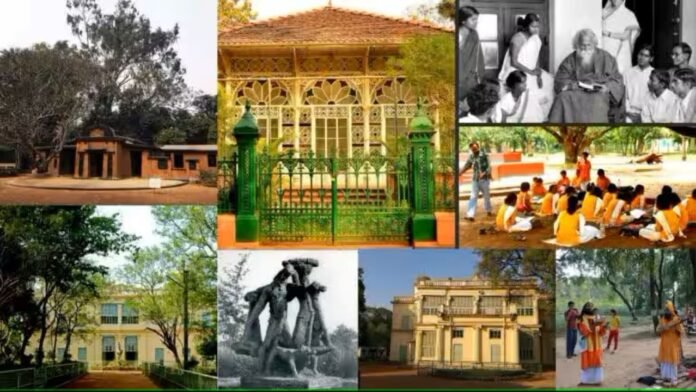
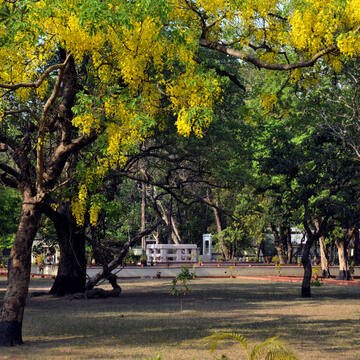
Nestled amidst the red soil, open skies, and lush greenery of Birbhum district in West Bengal, Santiniketan stands as one of India’s greatest cultural and educational landmarks. Founded by Nobel laureate Rabindranath Tagore, Santiniketan is far more than a university town — it is a philosophy, a way of life, and a vision of education rooted in harmony with nature, creativity, and humanity. Appropriately, the word “Santiniketan” means “Abode of Peace.”

Santiniketan: Rabindranath Tagore’s Timeless “Abode of Peace”

From Spiritual Retreat to Educational Revolution

The origins of Santiniketan date back to 1863, when Tagore’s father, Maharshi Debendranath Tagore, purchased a stretch of land near Bolpur to establish a peaceful retreat for meditation and spiritual contemplation. A prayer hall and an ashram were built there, surrounded by nature and silence. Years later, Rabindranath Tagore transformed this spiritual retreat into an educational experiment that would challenge the rigid colonial system of learning prevalent in British India.

Santiniketan: Rabindranath Tagore’s Timeless “Abode of Peace”

Tagore’s Vision of Learning Under the Open Sky

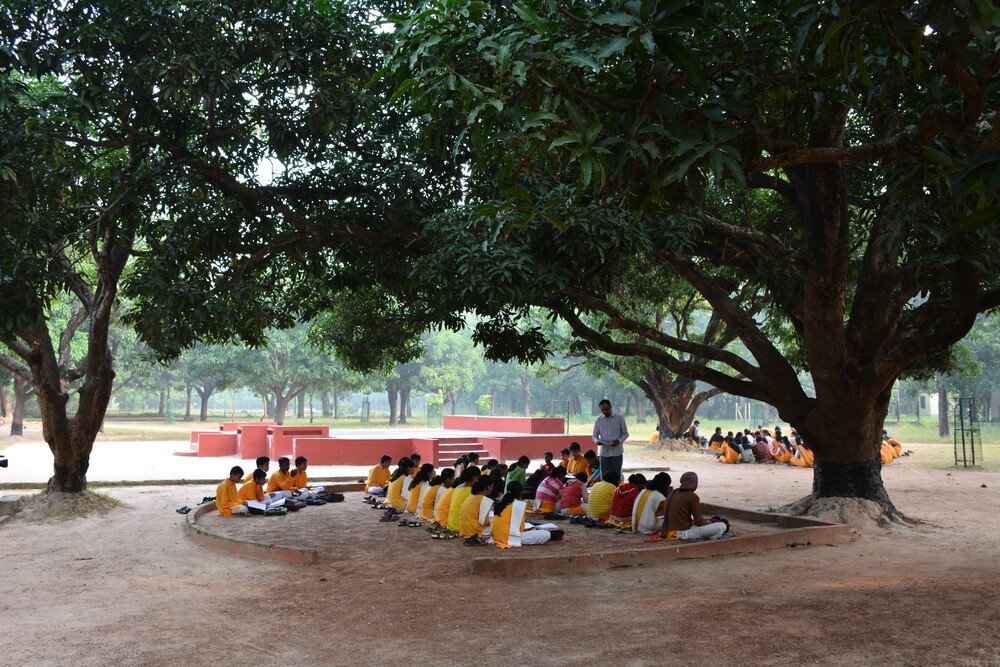
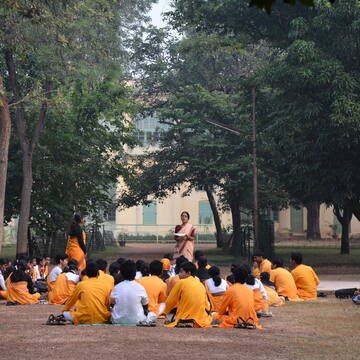
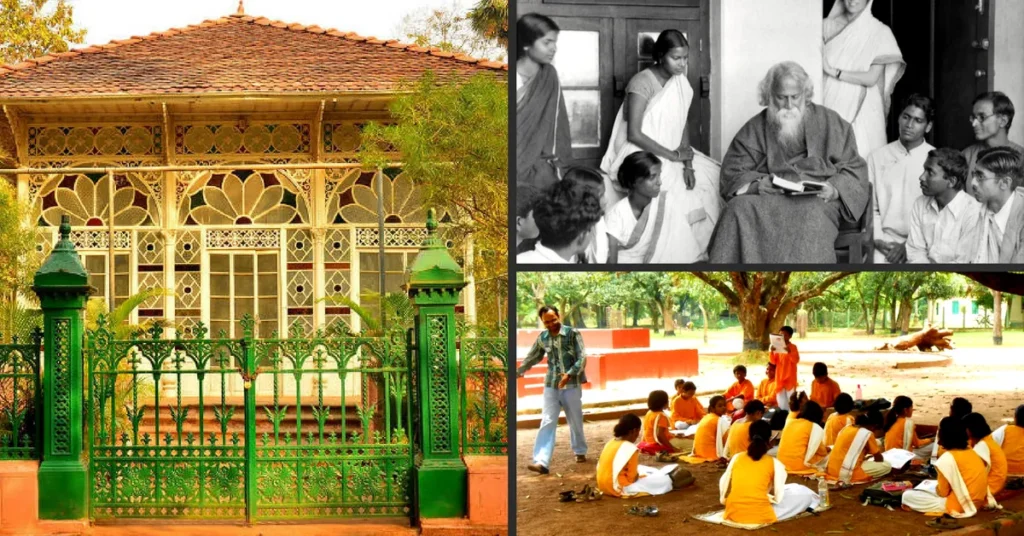
In 1901, Tagore founded a small school called Patha Bhavana at Santiniketan with only a handful of students. Dissatisfied with conventional classroom education, he envisioned a system where children could learn freely under the open sky, close to nature, without fear or excessive discipline. Classes were often conducted beneath trees, encouraging curiosity, creativity, music, literature, and independent thinking rather than rote memorization.

Santiniketan: Rabindranath Tagore’s Timeless “Abode of Peace”

Education Beyond Books and Examinations

Tagore believed education should nurture the complete human being — intellectually, emotionally, artistically, and spiritually. His philosophy emphasized freedom of thought, respect for nature, global understanding, and the unity of humanity. He once wrote that the “highest education is that which does not merely give us information but makes our life in harmony with all existence.” This philosophy became the soul of Santiniketan.

Santiniketan: Rabindranath Tagore’s Timeless “Abode of Peace”

The Birth of Visva-Bharati University

In 1921, Tagore expanded his vision by establishing Visva-Bharati University. The institution was conceived as a “world university” where the cultures of the East and West could meet in mutual respect and learning. Scholars, artists, and thinkers from across the world visited Santiniketan, turning it into a vibrant international center of culture and intellectual exchange.

Santiniketan: Rabindranath Tagore’s Timeless “Abode of Peace”

A Flourishing Centre of Art, Music and Culture

Santiniketan soon became a major hub for art, music, dance, and literature. Institutions like Kala Bhavana nurtured legendary artists such as Nandalal Bose, Benode Behari Mukherjee, and Ramkinkar Baij, whose works revolutionized modern Indian art. Rabindra Sangeet, the songs composed by Tagore, continue to echo through the campus during festivals and cultural gatherings.

Festivals that Celebrate Nature and Community

One of the most unique aspects of Santiniketan is its celebration of seasons and traditions. Festivals such as Vasantotsav (spring festival), Poush Mela, and Briksharopan blend culture, music, dance, and nature into joyful community experiences. Unlike conventional institutions, Santiniketan promotes learning through participation, art, and emotional connection with the environment.

Architecture Rooted in Simplicity and Harmony

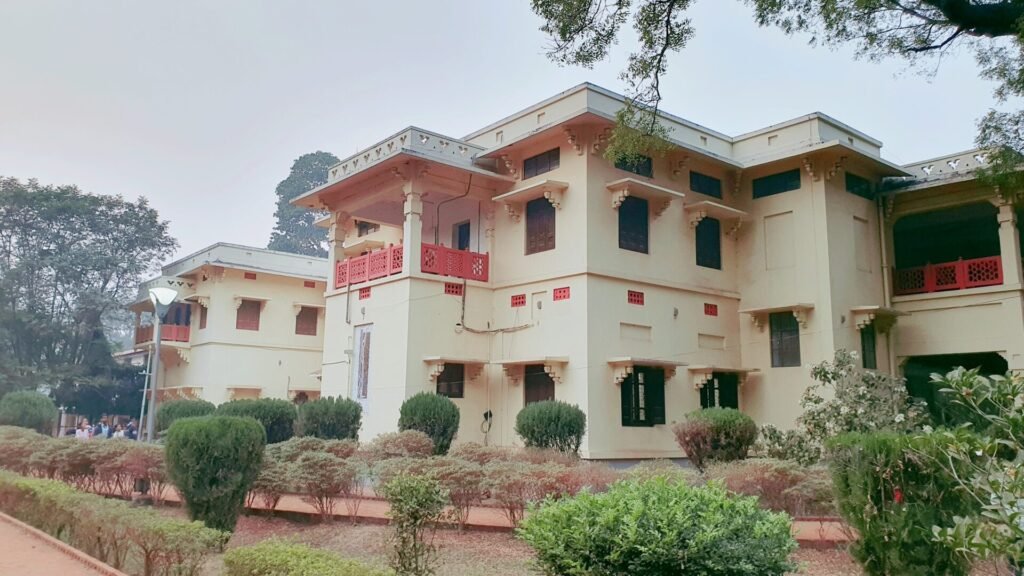
The campus itself reflects Tagore’s ideals. Places such as Chatimtala, where Debendranath meditated, the Uttarayan Complex where Tagore lived, and the mud-built Kalo Bari showcase simplicity, creativity, and harmony with the landscape. The architecture avoids grandeur and instead embraces openness and natural beauty.

Santiniketan: Rabindranath Tagore’s Timeless “Abode of Peace”

UNESCO Recognition and Global Significance

Recognizing its immense cultural and historical significance, UNESCO included Santiniketan in the UNESCO World Heritage List in September 2023. UNESCO described it as an outstanding example of a living cultural tradition that combines education, art, human values, and environmental consciousness. The recognition brought global attention to Tagore’s revolutionary educational ideas and India’s rich cultural heritage.

Santiniketan: Rabindranath Tagore’s Timeless “Abode of Peace”

Santiniketan’s Timeless Legacy

Today, Santiniketan remains a symbol of intellectual freedom and artistic excellence. Even more than a century after its founding, Tagore’s dream continues to inspire educators, artists, and students around the world. In an age dominated by competition and technology, Santiniketan reminds humanity of the importance of peace, creativity, cultural harmony, and learning in the lap of nature — ideals that are perhaps more relevant today than ever before.

Milind Soman Conquers the Strait of Gibraltar at 60: A Remarkable Test of Endurance and Willpower

0

Indian fitness icon and actor Milind Soman has once again inspired millions with an extraordinary feat of endurance. On May 1, 2026, the 60-year-old completed a grueling open-water swim across the legendary Strait of Gibraltar, swimming from Tarifa in Spain to the coast of Morocco in Africa. The distance covered was approximately 15 kilometres, and Soman completed the challenge in nearly four and a half hours.

The achievement is being celebrated not just because of his age, but because the Strait of Gibraltar is regarded as one of the world’s toughest and most unpredictable open-water swimming routes. Connecting the Atlantic Ocean and the Mediterranean Sea, the strait is notorious for its rapidly changing tides, freezing water temperatures, strong currents, and heavy international ship traffic.

Sharing glimpses of the swim on social media, Milind described the experience as “beautiful beautiful beautiful,” expressing joy and gratitude after completing the demanding challenge. Photos posted online showed him smiling with the Indian flag after reaching the Moroccan coast.

What makes the feat even more remarkable is that Soman completed it at an age when most people slow down physically. Instead, he continues to redefine ideas around ageing and fitness. Over the years, he has become synonymous with endurance sports and unconventional fitness. From completing the prestigious Ironman Triathlon at 50 to running ultra-marathons barefoot and promoting a simple, gym-free lifestyle, Milind has consistently challenged stereotypes about age and physical capability.

This was not an isolated achievement either. In recent months, he had already completed a 20-kilometre sea swim in Goa and participated in several long-distance endurance activities. His disciplined lifestyle, natural fitness philosophy, and mental resilience have made him one of India’s most admired wellness icons.

Experts note that swimming across the Strait of Gibraltar is not merely about stamina. The constantly shifting currents can drag swimmers off course, while cold waters ranging between 16°C and 18°C place immense stress on the body. Add to this the psychological pressure of navigating one of the busiest maritime routes in the world, and the swim becomes a true test of mental toughness.

Social media has since been flooded with praise for Soman, with many calling him an inspiration for proving that age is no barrier to ambition. His latest achievement serves as a powerful reminder that discipline, consistency, and courage can push human limits far beyond expectations.

At 60, Milind Soman is not merely staying fit—he is redefining what it means to live fearlessly.

Colonel Sofiya Qureshi: The Officer Who Became the Voice of Operation Sindoor

0
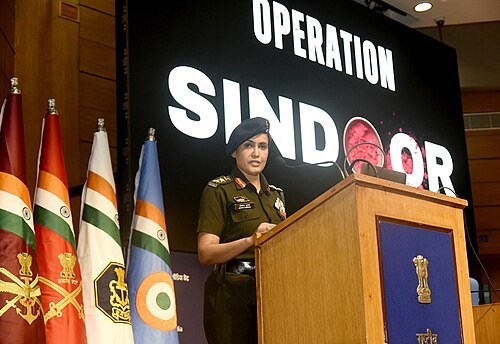
Colonel Sofiya Qureshi, addressing the media on ?Operation Sindoor? at National Media Centre, in New Delhi on May 07, 2025.

When India launched Operation Sindoor in May 2025 after the horrific Pahalgam terror attack, one of the faces that captured the nation’s attention was Colonel Sofiya Qureshi of the Indian Army. Calm, confident, and composed, she stood alongside Wing Commander Vyomika Singh during the official military briefing explaining India’s precision strikes on terror camps in Pakistan and Pakistan-occupied Kashmir. Her professionalism during a tense national moment earned admiration across the country.

But Colonel Sofiya Qureshi’s journey to that historic briefing began years earlier through discipline, leadership, and dedication to the nation.

Born in Gujarat, Sofiya Qureshi came from a family with a military background, which inspired her to join the armed forces. She pursued higher education in science before entering the Indian Army through the Officers Training Academy. Over time, she built a respected career in the Corps of Signals — the branch responsible for military communication and information systems.

Long before Operation Sindoor, Colonel Qureshi had already made history. In 2016, she became the first woman officer to lead an Indian Army contingent at a multinational military exercise. She headed the Indian team during “Exercise Force 18,” a large ASEAN military exercise hosted in Pune. Her achievement was seen as a major milestone for women officers in the Indian Army.

She also served in United Nations peacekeeping missions, gaining valuable experience in international military operations and conflict management. Colleagues have often described her as disciplined, technically strong, and an effective leader under pressure.

Her biggest national recognition, however, came during Operation Sindoor.

The operation was launched by India on May 7, 2025, after terrorists killed 26 innocent civilians in the Pahalgam terror attack in Jammu and Kashmir. Survivor accounts suggested that the attackers identified victims on the basis of religion and allegedly forced some tourists to recite the Kalma before shooting those unable to do so. The brutality of the attack shocked the nation and triggered widespread anger.

India responded with Operation Sindoor, carrying out precision strikes on terror infrastructure linked to groups such as Lashkar-e-Taiba and Jaish-e-Mohammed. Terror launch pads and camps in Pakistan and Pakistan-occupied Kashmir were reportedly destroyed during the operation.

During the official briefing, Colonel Sofiya Qureshi clearly explained the objectives and execution of the mission using maps and operational details. Her calm communication and confidence made a strong impression on the public.

The image of Colonel Sofiya Qureshi standing beside Wing Commander Vyomika Singh also carried deep symbolism. Two women officers from different communities jointly representing India during a major counter-terror operation reflected the unity, diversity, and strength of the Indian armed forces.

Today, Colonel Sofiya Qureshi is regarded as one of the prominent faces of Operation Sindoor and modern India’s military leadership. Her journey — from serving in peacekeeping missions to briefing the nation during one of India’s most significant military operations — represents courage, professionalism, and the growing role of women in the country’s defence forces.

In many ways, she symbolises a new India: confident, united, and fearless in defending its people and its sovereignty.

Wing Commander Vyomika Singh: The Woman Who Became the Face of Operation Sindoor

0

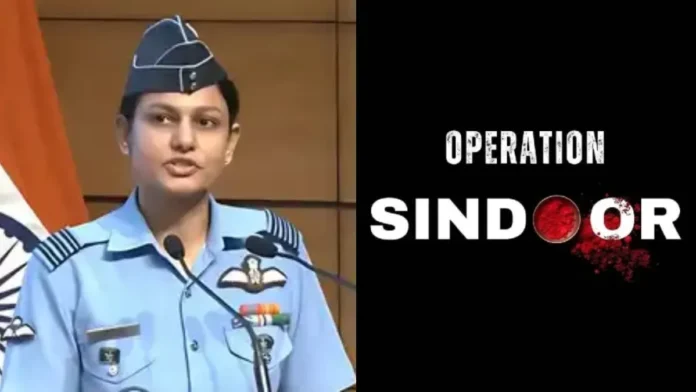
When India launched Operation Sindoor in May 2025 after the horrific Pahalgam terror attack, one face that instantly drew national attention was that of Vyomika Singh. Calm, confident, and composed, the Indian Air Force officer stood alongside Colonel Sofiya Qureshi during the official media briefing, explaining India’s precision strikes on terror camps in Pakistan and Pakistan-occupied Kashmir. In a moment filled with national emotion and tension, her professionalism made her one of the most recognised military faces in the country.

But behind that briefing room appearance lies a long journey of discipline, courage, and service to the nation.

Interestingly, the name “Vyomika” itself means “daughter of the sky.” According to several reports, she developed a fascination for flying from a very young age. Raised in Delhi, she studied at St. Anthony’s Senior Secondary School and later pursued engineering before joining the Indian Air Force. She was also associated with the NCC during her school years, where her interest in military life became stronger.

Vyomika Singh was commissioned into the Indian Air Force as a helicopter pilot on December 18, 2004. Over the years, she built an impressive career flying helicopters such as the Chetak and Cheetah in some of India’s toughest terrains, including Jammu and Kashmir and the Northeast. She reportedly logged more than 2,500 flying hours — a major achievement for any military pilot.

Her career has included rescue operations, supply missions, and flying in high-risk mountainous regions where weather conditions can become extremely dangerous. One of her notable assignments reportedly came in Arunachal Pradesh, where she participated in difficult rescue operations under harsh conditions. Her colleagues and teachers have often described her as fearless, disciplined, and mentally strong.

Wing Commander Vyomika Singh also became an example of the growing role of women in India’s armed forces. In 2019, she received a permanent commission in the flying branch of the Indian Air Force, reflecting the increasing opportunities being given to women officers in leadership and operational roles. She also participated in a tri-services all-women mountaineering expedition to Mount Manirang, which stands over 21,000 feet high in Himachal Pradesh.

Her national recognition, however, came during Operation Sindoor. The operation was launched by India on May 7, 2025, in response to the deadly Pahalgam terror attack in which 26 innocent civilians were killed. Survivor accounts and investigations suggested that terrorists identified victims on the basis of religion and allegedly forced some tourists to recite the Kalma before shooting those unable to do so. The brutality of the attack shocked the nation and triggered widespread anger.

India responded with coordinated precision strikes targeting terror infrastructure linked to groups such as Lashkar-e-Taiba and Jaish-e-Mohammed. Several terror camps and launch pads in Pakistan and Pakistan-occupied Kashmir were reportedly destroyed during the operation.

During this critical moment, Wing Commander Vyomika Singh emerged as one of the official voices of the Indian Armed Forces. Along with Colonel Sofiya Qureshi and Foreign Secretary Vikram Misri, she briefed the media about the objectives and execution of Operation Sindoor. Her calm communication and clear explanation of military details earned widespread appreciation across the country. Many Indians viewed her as the face of a modern and confident Indian military.

The image of two women officers — Vyomika Singh and Sofiya Qureshi — leading the national briefing also carried powerful symbolism. It reflected the rise of “Nari Shakti” in India’s defence forces and showcased how women officers are increasingly taking frontline leadership roles in matters of national security.

Today, Wing Commander Vyomika Singh is seen as much more than just an officer who briefed the media. She represents courage, professionalism, and the spirit of a new India — an India where women are not only participating in defence forces but are also leading from the front during some of the country’s most important military moments.

Rubio to Visit India for Quad Talks in May 2026

0

United States Secretary of State Marco Rubio is scheduled to visit India in May 2026 for bilateral talks and the Quad Foreign Ministers’ Meeting in New Delhi. The visit is expected to last from 24 May to 26 May 2026 and will be Rubio’s first trip to India after taking office in January 2026.

India–United States Bilateral Framework

Rubio is expected to meet External Affairs Minister S. Jaishankar, National Security Adviser Ajit Doval, and Prime Minister Narendra Modi. The discussions are expected to cover trade, critical minerals, defence cooperation, and the Quad framework.

Quad Foreign Ministers’ Meeting

The Quad is a diplomatic grouping of India, the United States, Japan, and Australia. The Foreign Ministers’ Meeting is a ministerial-level format within the Quad and is used for coordination on regional security, technology, supply chains, and critical minerals.

Trade and Strategic Cooperation

An interim trade agreement between India and the United States remains under discussion. The temporary tariff measures linked to the arrangement are due to expire on 24 July 2026, which has been described as a deadline for the next phase of negotiations.

India–US Economic Links

Indian companies have invested $20.5 billion in the United States, with major sectors including technology, manufacturing, and pharmaceuticals. The India–United States economic relationship also includes trade in goods, services, and investment flows.

Important Facts for Exams

  • The Quad consists of India, the United States, Japan, and Australia.
  • Marco Rubio became United States Secretary of State in January 2026.
  • New Delhi hosts several major multilateral meetings, including Quad ministerial engagements.
  • Critical minerals are used in batteries, electronics, renewable energy systems, and defence technologies.

Why Term Insurance for Women Is More Important Than Ever 

0

Have you ever questioned what keeps a house functioning? Is it the money in the bank? Is it the person who cooks the meals? Or is it the one who plans for the future? Usually, it’s all these things. Nowadays, most women in families are the soul of the home. Whether they go to the office or take care of the house, the impact of their role is very significant.

Since women do so much, it is essential to secure their future, for which the ladies’ term insurance plays an important role. It is an easy and affordable way to ensure that your family members remain secure, irrespective of the circumstances.

Term Insurance: What is It?

Let’s start with a basic definition: term insurance is like a financial protection program. You make a small payment (the premium) regularly, either monthly or yearly. The insurance company, on the other hand, assures your family a substantial amount of money if you are no longer their provider.

It’s strictly protection. It isn’t a bank account or a complicated investment vehicle. Its sole function is to make money available to your family when they need it the most.

Why Has It Become More Significant for Women?

Societies are evolving rapidly. A long time back, it was assumed that only the “provider” of the family should be insured. Nowadays, it is widely acknowledged that women’s contributions are priceless. That’s why getting insured is more necessary than ever:

1. Women are Earning More

Women’s share in the workforce is increasing day by day. Whether they work for large companies, become managers at departmental stores, or even decide to go into business for themselves, the result is the same: women are becoming primary breadwinners. Consequently, they are taking on house loan EMIs and children’s school fees, as well as day-to-day purchases of groceries. But in case the income stops, the family will be left to face difficult situations. So, getting the best term insurance in India is one way to make sure that the financial aspirations of your family are not jeopardized.

2. The “Homemaker” Factor

At first glance, if a woman does not work and does not get paid, you may underestimate the work she does at home. Let me ask you, what will happen if one day the mother is gone? Your home will no longer be the same. In fact, some services like cleaning, cooking, and taking care of the children will have to be hired, which can get very expensive. Term insurance will adequately cover these costs and help the family maintain the lifestyle they are used to.

3. Higher Risks of Life

Life nowadays is very hectic and stressful. None of us is immune from getting sick. For women, apart from general health issues, illnesses like breast cancer and osteoporosis are increasing. While health insurance will cover the medical bills, it is the term insurance that will present the family with a substantial amount of money to assist them in moving on with life after the loss.

Why Women Actually Get a Better Deal

Let me share with you a little secret that most people don’t know: presenting policies to women is actually the favorite thing for insurance companies!

  • Lower Costs: Statistically, women outlive men by quite a few years. Since this is the case, insurance companies often give women more affordable prices than men for the exact same plan.
  • Health Benefits: The present-day plans offer additional assistance when a woman suffers a diagnosis of a major illness.
  • Special Discounts: We are witnessing a trend in which more and more women are going for insurance. So, to motivate them to keep taking care of themselves, many firms now have “women-only” offers.

How to Find the Best Term Insurance in India

Choosing a plan can be intimidating, but it should not be. Here is a simple checklist to help you find the right fit:

  • Think about the Claim Ratio: This phrase just means, “How many families did the company really pay?” Find the company that pays out 98%-99% of its claims.
  • Keep it Simple: You do not need 10 different “add-ons.” Just make sure the entire amount (the cover) is enough to provide for your family for at least 10 to 15 years.
  • Compare the Price: Since you are getting term insurance for women, check 3 or 4 different companies online. You will be amazed at how much you can save just by comparing your options.

Common Myths (And the Truth!)

Myth 1: “I am a housewife; I don’t need it.” Truth: You are running the home (finance manager). Not having you would be a large financial and emotional void. Your family needs that support.

Myth 2: “Insurance is too pricey.” Truth: A term plan might be priced lower than a pizza delivery once a month. It is the most economical type of insurance you can buy.

Myth 3: “My husband already has a plan.” Truth: His plan covers him. Your plan covers you. If both the parents are insured, the children have a double layer of safety.

A Step Toward Independence

Buying insurance is more than just a safeguard against “unlucky events.” It is about the control. Saying “I love my kids, my parents, and my spouse so much that I have taken care of their future” is very emotionally comforting.

You get very relaxed and comfortable as a result of it. At bedtime, you can rest assured that your home loan will be covered, your daughter’s education fund will be intact, and your parents will be cared for. That is the feeling that money cannot buy.

Conclusion

Though the world is a very risky place, it should not be the same for your family’s security. Term insurance for women can be seen as a lifelong investment in yourself, whether you are a young person entering into the workforce for the first time or a mom juggling a busy home.

Do not wait for the “right moment.” The perfect moment to safeguard your family was yesterday. The very next best moment is today. First, you need to take a little time, find the best term insurance in India, and make that initial decision towards being a worry-free person. You put your family first every single day, so allow a simple insurance policy to take care of them when you’re not able. It is simple, it is smart, and it is the most loving thing you can do for them.

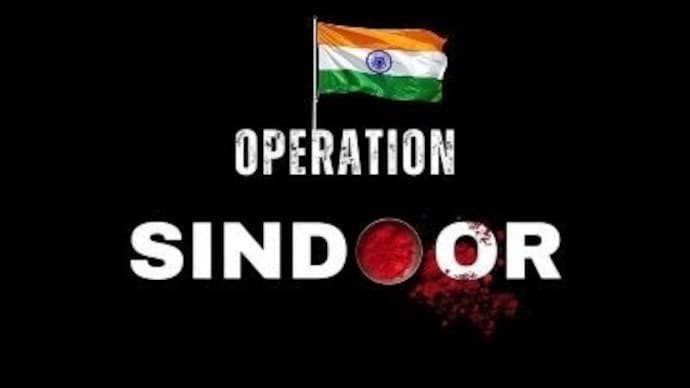
One Year of Operation Sindoor: The Strike That Defined New India

0

A Year Since India’s Defining Response to Terror

One year has passed since India launched “Operation Sindoor”, one of the most decisive military responses in the country’s modern history. Conducted in the aftermath of the horrific Pahalgam terror attack of April 2025, the operation was far more than a retaliatory strike. It became a symbol of India’s changing national security doctrine, military preparedness, and political resolve against terrorism.

On the first anniversary of Operation Sindoor, the operation is remembered not only for its strategic success, but also for the powerful message it sent to the world, that the blood of innocent Indians would not be ignored and terrorism would receive a strong and precise response.

The Pahalgam Terror Attack That Shook the Nation

The chain of events began on April 22, 2025, when terrorists attacked innocent tourists in the Baisaran Valley near Pahalgam in Jammu and Kashmir. Families visiting Kashmir during the tourist season suddenly found themselves caught in one of the deadliest civilian terror attacks in recent years.

According to multiple survivor accounts and reports, the terrorists allegedly identified victims on the basis of religion. Several eyewitnesses stated that the attackers forced tourists to recite the Kalma (an Islamic declaration of faith), and those who failed to do so were shot at point-blank range. The brutality of the attack horrified the country and triggered nationwide grief and outrage.

Twenty-six innocent people lost their lives, including tourists from different states and one local Kashmiri who reportedly tried to save visitors during the attack. The incident once again exposed the continuing threat of Pakistan-backed terrorism operating in Jammu and Kashmir.

India’s Swift Response: Birth of Operation Sindoor

India’s response came within days. In the early hours of May 7, 2025, the Indian Armed Forces launched Operation Sindoor, a coordinated tri-services operation involving the Indian Army, Indian Air Force, and Indian Navy.

The mission targeted terror infrastructure across Pakistan and Pakistan-occupied Kashmir. Unlike earlier retaliatory operations, Operation Sindoor was larger, technologically advanced, and executed with exceptional coordination between intelligence agencies and the armed forces.

Prime Minister Narendra Modi closely monitored the operation along with the national security leadership and top military commanders. The message was clear: India would strike terror at its roots and would no longer remain passive after attacks on civilians.

Why the Name ‘Sindoor’ Carried Deep Meaning

The name “Operation Sindoor” carried strong emotional symbolism. Sindoor, traditionally worn by married Hindu women, represents dignity, commitment, sacrifice, and is a symbol of martial life.

After the Pahalgam terror attack left several women widowed and families devastated, the name became a tribute to the victims and especially to the wives and mothers whose lives were shattered by terrorism. The symbolism touched millions across the country and transformed the operation from a military action into an emotional national moment.

It was not merely the name of an operation, it became a reflection of grief, justice, and national resolve.

The Military Power Behind the Operation

Operation Sindoor showcased the growing strength of India’s modern warfare capabilities. Reports suggest that the operation involved precision-guided missiles, advanced drones, loitering munitions, surveillance satellites, electronic warfare systems, and fighter aircraft working in coordination.

The Indian Air Force reportedly played a major role in carrying out deep precision strikes on terror launch pads and command centres. Indigenous defence systems developed under the “Atmanirbhar Bharat” initiative were also used extensively, highlighting India’s increasing self-reliance in military technology.

Military analysts described the operation as an example of “network-centric warfare,” where intelligence gathering, satellite surveillance, real-time communication, and strike capabilities were integrated seamlessly. Many experts noted that the operation reflected a new generation of Indian military preparedness based on speed, precision, and technology.

Terror Camps and Infrastructure Destroyed

According to reports and official briefings released after the operation, several terror launch pads, training camps, ammunition depots, and command facilities linked to Pakistan-based terror organisations were destroyed.

Major terror hubs associated with groups such as Lashkar-e-Taiba and Jaish-e-Mohammed reportedly suffered heavy damage. Strategic locations in Bahawalpur, Muridke, and areas across Pakistan-occupied Kashmir were among the primary targets.
India maintained that the strikes were carefully focused on terror infrastructure and avoided civilian areas, reinforcing the operation’s precision-oriented approach.

The Forces Behind the Success

While operational details remained classified, senior commanders of the Indian Army, Air Force, and Navy coordinated closely throughout the mission. Intelligence agencies and surveillance units also played a crucial role in identifying targets and ensuring accuracy.

Defence experts later praised the professionalism of the Indian armed forces and their ability to execute a complex operation within a short time frame. The operation highlighted the growing synergy between India’s military branches and showcased the country’s ability to conduct integrated warfare operations.

A New India’s Security Doctrine

Operation Sindoor became more than just a military strike, it marked a shift in India’s strategic mindset.

For years, India had faced cross-border terrorism while often exercising restraint. But Operation Sindoor demonstrated that modern India was prepared to respond decisively and with technological superiority. It reflected a nation that was confident in its military capabilities and determined to protect its citizens.

The operation also strengthened the image of India as an emerging defence power capable of carrying out precision operations while maintaining strategic restraint.

One Year Later: A Symbol of Resolve and National Unity

As India marks one year of Operation Sindoor, the memory of the Pahalgam victims continues to remain fresh in the nation’s conscience. Across the country, tributes have been paid to the victims, soldiers, intelligence personnel, and everyone involved in the mission.

Prime Minister Narendra Modi described Operation Sindoor as a “fitting response to terrorism” and praised the courage and professionalism of the armed forces. Military establishments also commemorated the anniversary by honouring the sacrifices and dedication of the personnel involved.

One year later, Operation Sindoor stands as a defining chapter in India’s fight against terrorism. It symbolises a modern, empowered, and resolute India, a nation that mourns its innocent citizens, honours its soldiers, and responds to terror with strength, precision, and determination.


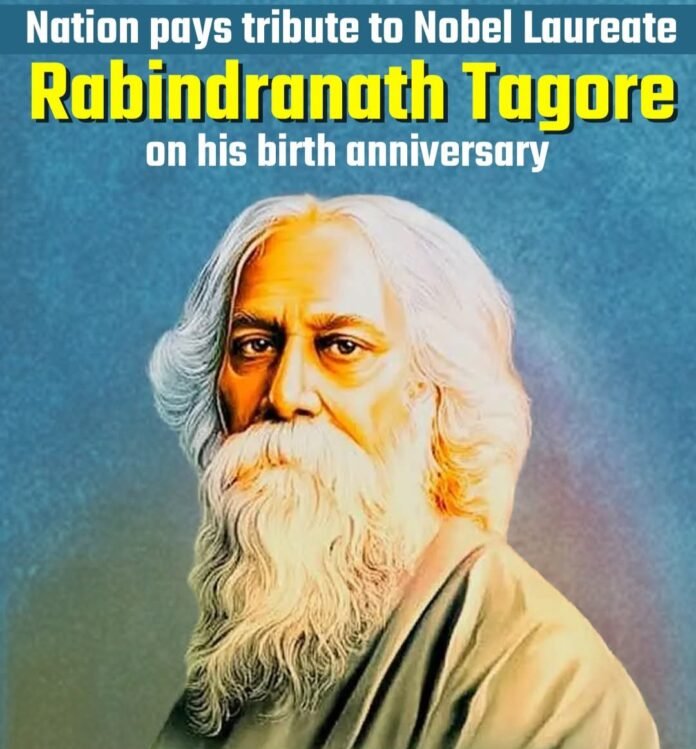
Rabindranath Tagore: Celebrating the Eternal Voice of India on His Birth Anniversary

0

Every year on May 7, India remembers one of its greatest literary and cultural icons — Rabindranath Tagore. Revered as Gurudev, Tagore was not just a poet, but a philosopher, educationist, musician, painter, and nationalist thinker whose influence continues to shape Indian culture and global literature even today. His birth anniversary, popularly celebrated as Rabindra Jayanti, is observed with great respect across India, especially in Kolkata and the state of West Bengal.

Born on May 7, 1861, into the illustrious Tagore family of Jorasanko in Calcutta, Rabindranath Tagore displayed extraordinary literary talent from a very young age. He began writing poetry as a child and went on to transform Bengali literature with his unique style and deep philosophical insight. Over his lifetime, he authored thousands of poems and songs, along with novels, essays, short stories, and plays. His timeless works such as Gitanjali, Gora, Kabuliwala, and Ghare Baire remain literary treasures.

Tagore achieved global recognition in 1913 when he became the first non-European to win the Nobel Prize in Literature for Gitanjali (Song Offerings). This historic achievement placed Indian literature on the world map and made him a symbol of India’s intellectual and artistic brilliance.

One of Tagore’s most remarkable contributions was in music and nationalism. He composed over 2,000 songs, collectively known as Rabindra Sangeet, which continue to be deeply cherished in Bengali culture. Remarkably, he also penned the national anthems of two countries — India’s Jana Gana Mana and Bangladesh’s Amar Shonar Bangla.

Beyond literature and music, Tagore was a visionary educator. He founded Visva-Bharati University at Santiniketan with the belief that education should nurture creativity, freedom of thought, and harmony with nature. His educational philosophy was far ahead of its time and continues to inspire modern learning systems.

Rabindranath Tagore’s birth anniversary is celebrated through cultural programs, poetry recitations, musical performances, seminars, and tributes across schools, universities, and cultural institutions. Artists perform Rabindra Sangeet, while readers revisit his poetry and essays that speak of humanity, freedom, nature, and universal brotherhood.

Even decades after his passing in 1941, Tagore’s words continue to inspire millions around the world. His famous prayer, “Where the mind is without fear and the head is held high,” remains a timeless vision of an enlightened and progressive society. On his birth anniversary, India not only celebrates a literary genius but also remembers a thinker whose ideas transcended borders and generations.