Home Blog Page 18

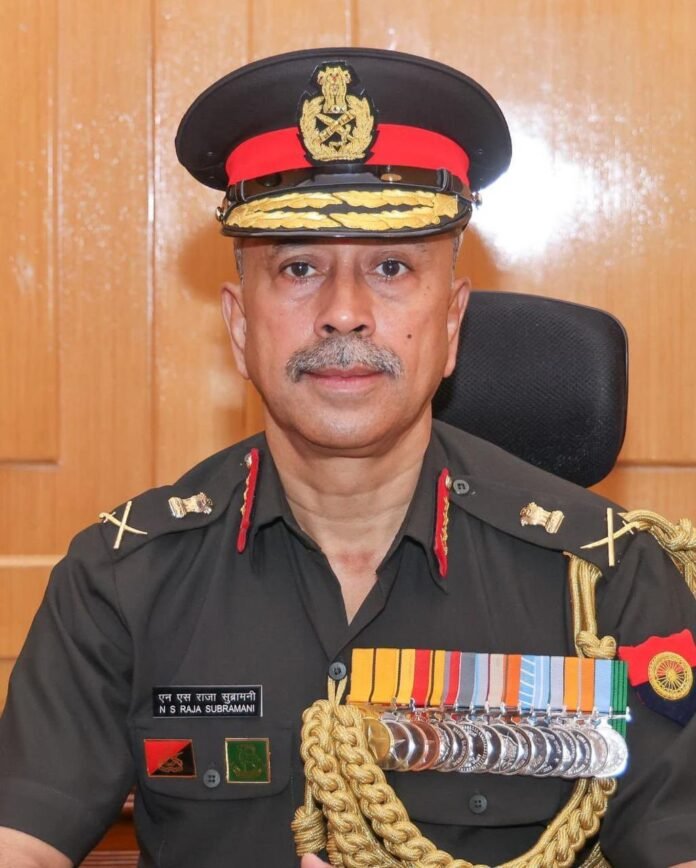
Lt Gen N.S. Raja Subramani Appointed India’s Next Chief of Defence Staff

0

India has appointed N. S. Raja Subramani as its next Chief of Defence Staff (CDS), placing one of the country’s most experienced military strategists at the apex of the armed forces’ integrated command structure. He will succeed Anil Chauhan and become India’s third CDS, a role created to strengthen coordination among the Army, Navy and Air Force and drive theatre command reforms.

A highly decorated officer of the Indian Army, Lt Gen Raja Subramani brings with him more than three decades of operational, strategic and administrative experience. Over the years, he has commanded formations across some of India’s most sensitive military zones, including Jammu and Kashmir, the Northeast and the northern borders.

Born in Mumbai and commissioned into the 8th Battalion of the Garhwal Rifles in December 1985, Subramani belongs to a generation of officers shaped by counter-insurgency operations, border tensions and evolving modern warfare doctrines. He is an alumnus of the National Defence Academy and the Indian Military Academy. He later pursued higher military education at the Joint Services Command and Staff College in the United Kingdom and the National Defence College in New Delhi. He also earned advanced degrees in defence studies from the University of Madras and King’s College London.

Throughout his career, he held several crucial command appointments. These included leading the 17 Mountain Division in Sikkim, commanding the strategically important II Corps, serving as Chief of Staff of Northern Command, and later heading the Army’s Central Command as General Officer Commanding-in-Chief. In July 2024, he was appointed Vice Chief of the Army Staff — effectively the second-highest position in the Indian Army. After retirement, he continued contributing to national security as Military Adviser at the National Security Council Secretariat.

Military observers view his appointment as significant because of his extensive operational exposure and experience in joint planning. As CDS, his primary responsibilities will include promoting integration among the three services, overseeing military modernisation, and advancing the long-discussed theatre command structure aimed at improving combat readiness and coordination. The CDS also serves as Secretary of the Department of Military Affairs and acts as the government’s principal military adviser on tri-service matters.

Lt Gen Raja Subramani is also among the Indian Army’s most decorated officers. His honours include the Param Vishisht Seva Medal, Ati Vishisht Seva Medal, Sena Medal and Vishisht Seva Medal, recognising distinguished and exceptional service to the nation.
His elevation comes at a critical moment for India’s defence establishment, with growing focus on indigenous military capability, border preparedness, cyber warfare, maritime security and integrated battle strategies. With experience spanning field operations, intelligence, strategic planning and military diplomacy, Lt Gen Raja Subramani is expected to play a central role in shaping the next phase of India’s defence transformation.

His journey — from a young officer in the Garhwal Rifles to the country’s highest military post — reflects not only professional excellence but also the changing face of India’s modern military leadership: operationally seasoned, strategically trained and increasingly joint-force oriented.

Sir David Attenborough Turns 100: A Century of Wildlife Storytelling and Conservation

0

Sir David Attenborough, the renowned British broadcaster, natural historian, and author, marked his 100th birthday on 8 May 2026. He is globally celebrated for his pioneering wildlife documentaries and long-standing advocacy for environmental conservation.

Centenary Observance

The BBC organised a special live celebration at London’s Royal Albert Hall on 8 May 2026 to honour his centenary. The event featured wildlife storytelling, public tributes, and musical performances celebrating his extraordinary contribution to natural history broadcasting.

Natural History and Species Naming

In recognition of his legacy, the Natural History Museum named a newly discovered parasitic wasp species Attenboroughnculus tau after him. The museum is also hosting an immersive exhibition titled Our Story With David Attenborough, which will run until August 2026.

Conservation Work and Wildlife Advocacy

Attenborough’s work has played a significant role in global conservation awareness and wildlife education. His landmark 1979 series Life on Earth included iconic footage of mountain gorillas in Rwanda and helped bring global attention to their conservation. As a result of long-term conservation efforts, the mountain gorilla population has increased from around 250 to over 1,000 individuals.

Centenary tributes have also been organised by organisations such as WWF UK, the United Nations Environment Programme, and New Zealand’s Department of Conservation.

Climate Action and Public Messaging

In 2021, Attenborough delivered a widely noted address at the COP26 Climate Change Summit in Glasgow. He has continued contributing to environmental communication and documentary work well into his later years.

Key Facts

  • Sir David Attenborough was born on 8 May 1926 in the United Kingdom.
  • Life on Earth first aired in 1979 and became a landmark wildlife documentary series.
  • Mountain gorillas are found in the Virunga Mountains and Bwindi Impenetrable National Park in Central Africa.
  • COP26 was the 26th United Nations Climate Change Conference held in Glasgow in 2021.

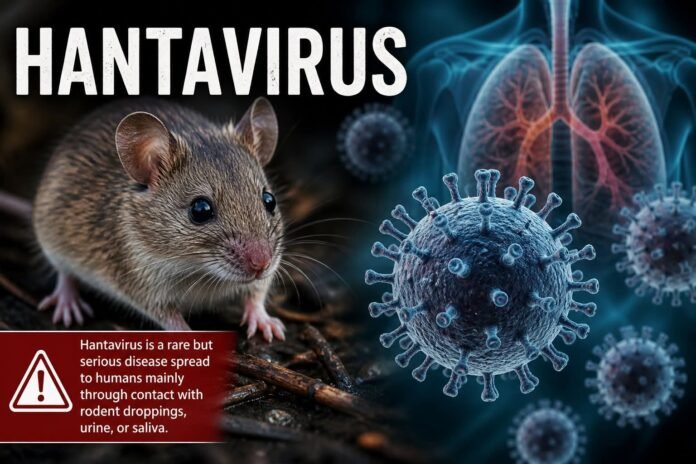
US CDC Classifies Hantavirus Outbreak as Level 3 Emergency Response

0

The United States Centers for Disease Control and Prevention (CDC) has officially classified the recent hantavirus outbreak as a Level 3 emergency response. The announcement was made on 8 May 2026 as health authorities intensified monitoring and international contact-tracing efforts linked to the outbreak.

The classification represents the CDC’s lowest emergency activation level but still involves active surveillance, deployment of emergency support teams, and activation of emergency operations systems to manage the public health situation.

What Is the CDC Level 3 Emergency Response?

The CDC uses a tiered emergency response system to coordinate actions during disease outbreaks, natural disasters, and other health emergencies.

A Level 3 emergency response indicates:

  • Continuous public health monitoring
  • Emergency Operations Center activation
  • Deployment of specialized support teams
  • Coordinated communication with global health agencies

According to the CDC, the current hantavirus outbreak poses a low risk to the general public, but authorities remain cautious due to the international nature of the exposure.

What Is Hantavirus?

Hantavirus refers to a group of viruses primarily spread through contact with infected rodents, especially through:

  • Rodent urine
  • Droppings
  • Saliva
  • Contaminated surfaces or dust particles

Hantavirus infections can lead to severe respiratory illnesses and other complications in humans. Most outbreaks are associated with rodent exposure in rural or poorly sanitized environments.

Andes Strain Raises Concerns

The outbreak involves the Andes strain of hantavirus, a rare variant that has drawn attention because of its potential for limited human-to-human transmission.

Unlike most hantavirus strains, which spread only from rodents to humans, the Andes strain has previously shown evidence of transmission between people in isolated cases. Health officials are therefore closely monitoring all identified contacts.

MV Hondius Cruise Ship Linked to Outbreak

The outbreak has been connected to the Dutch-flagged cruise ship MV Hondius, operated by Oceanwide Expeditions.

Key details include:

  • Approximately 150 passengers were onboard
  • Travelers represented 23 different nationalities
  • The first confirmed case was reported on 2 May 2026
  • Passengers disembarked on 24 April 2026

International health agencies have launched extensive tracing efforts to identify and monitor potentially exposed individuals.

WHO Reports Confirmed Cases and Deaths

As of 8 May 2026, the World Health Organization (WHO) reported:

  • 5 confirmed hantavirus cases
  • 3 suspected cases
  • 3 deaths linked to the outbreak

More than two dozen people across at least 12 countries are currently being traced following possible exposure during the voyage.

Despite the seriousness of the infections, the WHO stated that the outbreak is not expected to develop into a large-scale global epidemic similar to COVID-19.

Ship to Undergo Medical Assessment in Canary Islands

Health officials confirmed that the MV Hondius was expected to dock in the Canary Islands, Spain, where further medical evaluations and containment procedures would be conducted.

Authorities continue to coordinate internationally to prevent additional transmission and ensure passenger safety.

Important Facts

  • The CDC is the national public health agency of the United States.
  • Hantavirus infections are mainly linked to rodents and contaminated environments.
  • The Andes strain is one of the few hantavirus variants studied for possible human-to-human transmission.
  • The WHO is the specialized health agency of the United Nations.
  • Level 3 is the CDC’s lowest emergency response activation level.

Conclusion

The CDC’s Level 3 classification of the hantavirus outbreak highlights the importance of rapid monitoring and international coordination during emerging health threats. While experts believe the risk to the wider public remains low, ongoing investigations into the Andes strain and the cruise ship exposure continue to attract global attention.

Suvendu Adhikari Becomes West Bengal CM: From Freedom Fighter’s Grandson to BJP’s Biggest Face in Bengal Politics

0

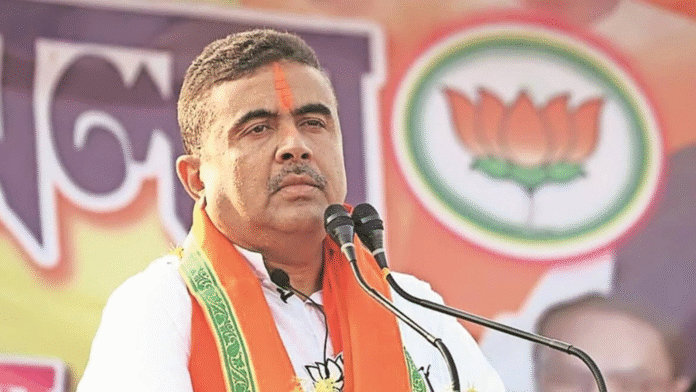
In a dramatic political shift that could redefine West Bengal’s future, Suvendu Adhikari has been elected as the new Chief Minister of West Bengal. The decision was announced after a BJP legislative party meeting held at a convention centre in Kolkata, where Union Home Minister Amit Shah officially declared his name.

Suvendu Adhikari will take oath as Chief Minister at 10:00 AM tomorrow at the iconic Brigade Parade Ground in the presence of Prime Minister Narendra Modi, Amit Shah, and several senior NDA leaders.

The BJP’s massive victory in the 2026 West Bengal Assembly Elections — winning 207 seats — marks a historic breakthrough in Bengal politics. At the centre of this political earthquake stands Suvendu Adhikari, the man who twice defeated Mamata Banerjee and emerged as BJP’s most powerful face in the state.

Suvendu Adhikari: The Leader Who Challenged Mamata Banerjee

Born on December 15, 1970, in the Kanthi region of Purba Medinipur district, Suvendu Adhikari comes from one of Bengal’s most politically influential families. His father, Shishir Adhikari, served as MP from the Kanthi constituency and remained a dominant political force in the Medinipur belt for decades.

Before joining the BJP, Suvendu was among the closest aides of Mamata Banerjee in the All India Trinamool Congress. He played a crucial role in expanding the party at the grassroots level and became known for his exceptional organizational skills and strong booth-level network.

The Nandigram Movement That Changed Bengal Politics

Suvendu Adhikari’s political rise accelerated during the historic Nandigram Movement in 2007. The movement against land acquisition by the then Left Front government became a turning point in Bengal politics and significantly weakened the CPI(M)’s decades-long dominance.

Suvendu emerged as one of the key mobilizers of the agitation, helping create a massive anti-Left wave across the state.

Shift to BJP and Defeat of Mamata Banerjee

In December 2020, Suvendu quit the Trinamool Congress and joined the BJP, delivering a major political setback to Mamata Banerjee ahead of the 2021 Assembly elections.

In one of Bengal’s most high-profile electoral battles, Suvendu defeated Mamata Banerjee in the politically symbolic Nandigram constituency in 2021. In 2026, he repeated history by defeating her again from Bhabanipur by a margin of 15,000 votes.

Suvendu Adhikari’s Family Legacy: Born Into Politics, Patriotism and Resistance

Long before Suvendu became a major political force, patriotism and political resistance were deeply embedded in his family history.

His grandfather, Kenaram Adhikari, was an active freedom fighter during India’s independence movement. According to accounts associated with the family, British authorities allegedly burned down their home three times — in 1929, 1942, and 1943 — due to his nationalist activities.

That legacy of sacrifice shaped the political atmosphere in which Suvendu grew up.

His father, Shishir Adhikari, remained Chairman of Kanthi Municipality for over 25 years and wielded enormous influence in the region. Politics was not just part of public life in the Adhikari household — it was part of everyday existence.

Suvendu has often recalled that he decided to enter politics after watching his father contest and win elections when he was just 12 years old.

Student Politics and Grassroots Training

By the age of 19, Suvendu had already entered student politics. During his time at PK College in Kanthi, campus politics was heavily dominated by the SFI, the student wing of the CPI(M).

Suvendu aligned with the Congress-backed student council and challenged the Left’s dominance on campus. Those years became a training ground where he learned political strategy, cadre-building, grassroots mobilization, and direct political confrontation.

From Political Heir to Mass Leader

What distinguishes Suvendu Adhikari’s journey is that although he inherited a political legacy, he built his own identity through relentless grassroots politics, organizational strength, and electoral battles.

From being a key architect of the Nandigram movement to becoming BJP’s strongest leader in Bengal, Suvendu’s rise reflects a blend of legacy, ambition, and aggressive political strategy.

With his elevation as Chief Minister, West Bengal now enters a new political era — one led by a leader who transformed from Mamata Banerjee’s trusted lieutenant into her biggest political challenger.

Instagram Ends End-to-End Encryption for Direct Messages Globally, Sparking Privacy Debate

0

Instagram users will no longer be able to send ultra-private direct messages after parent company Meta decided to switch off end-to-end encryption (E2EE) for Instagram DMs worldwide.

The move marks a significant reversal in Meta’s long-standing push toward encrypted messaging. In 2019, the company had declared that “the future is private” and pledged to expand E2EE across its platforms, including Facebook Messenger and Instagram.

While Meta successfully rolled out end-to-end encryption on Facebook Messenger in 2023 and later introduced it as an optional feature on Instagram, the company has now abandoned plans to make it the default system for Instagram messages.

What Is End-to-End Encryption (E2EE)?

End-to-end encryption is considered the highest standard of online message security. It ensures that only the sender and recipient can read messages, while even the platform itself cannot access the content.

By removing E2EE from Instagram direct messages, Meta will now be able to access and review all DM content, including:

  • Text messages
  • Photos and videos
  • Voice notes
  • Shared media files

Instagram will instead rely on standard encryption, a common security model used by services such as Gmail, where platforms and internet service providers can access data if required.

Why Meta Removed Instagram End-to-End Encryption

The decision comes amid growing pressure from child safety groups and regulators who have argued that encrypted messaging can make it harder to detect online abuse, grooming, and the spread of harmful content.

Child protection organizations welcomed the move. NSPCC, one of the UK’s leading children’s charities, said the removal of E2EE would help authorities identify and prevent online exploitation.

Rani Govender from NSPCC stated that end-to-end encryption “can allow perpetrators to evade detection, enabling the grooming and abuse of children to go unseen.”

Privacy Advocates Criticize Meta’s Decision

Privacy campaigners and digital rights groups have strongly criticized Meta’s decision, calling it a major setback for online privacy and digital security.

Big Brother Watch described the move as disappointing, arguing that encrypted communication is essential for protecting user data online.

Maya Thomas from the organization said E2EE remains “one of the key ways children can keep their data safe online” and expressed concerns that Meta may be yielding to government pressure.

What This Means for Instagram Users

With end-to-end encryption removed, Instagram users should be aware that their direct messages may no longer offer the same level of privacy previously associated with encrypted communication.

The change also reignites the global debate between:

  • Online privacy and digital freedom
  • Child protection and law enforcement access
  • Platform accountability and user security

As governments worldwide continue to tighten regulations around online safety, Meta’s decision could influence how other social media and messaging platforms approach encryption in the future.

India-EU Free Trade Agreement to Take Effect in 2027

0

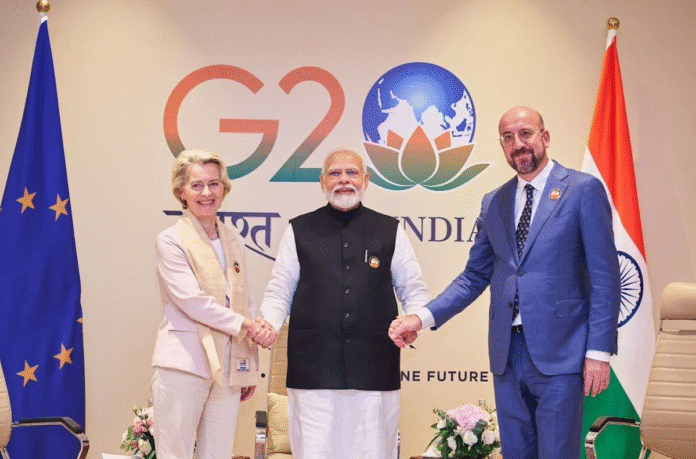
The India–European Union Free Trade Agreement (FTA) was politically concluded on 27 January 2026 after nearly two decades of negotiations. The agreement is expected to come into force in early 2027, following legal review and ratification procedures in both India and the European Union.

India–EU Trade Framework

The India–EU FTA is a bilateral trade agreement between India and the European Union (EU), a 27-member economic and political bloc. The pact aims to:

  • Liberalise trade in goods and services
  • Increase investment flows
  • Promote regulatory cooperation
  • Strengthen long-term economic partnership between the two sides

Ratification Process in the European Union

The European Union’s ratification process generally takes about one year. The agreement must receive:

  • Approval from the Council of the European Union
  • Consent from the European Parliament

EU legal teams are currently reviewing the negotiated text, and this legal scrutiny is expected to conclude by July 2026.

Investment Protection Agreement and Sectoral Concerns

The main FTA does not include comprehensive investment protection provisions. Therefore, negotiations on a separate Investment Protection Agreement (IPA) are still ongoing.

European companies have expressed concerns regarding the absence of a full investment chapter in the primary trade agreement.

Important Facts

  • The European Union has 27 member states and follows a common trade policy for external trade agreements.
  • Free Trade Agreements (FTAs) generally reduce or eliminate customs duties on selected goods and services between partner economies.
  • The Council of the European Union and the European Parliament play key roles in EU treaty approval.
  • India and the European Union are major trading partners in goods and services.

Trade Data and Economic Context

  • Bilateral trade in goods between India and the EU stood at USD 136.54 billion in 2024–25.
  • Trade in services between the two sides reached USD 83.10 billion in 2024.
  • The agreement is expected to influence nearly one-third of global trade and impact around 2 billion people worldwide.

Kolkata: A Paradise for Art Lovers

0

Kolkata, often regarded as the cultural capital of India, is a vibrant hub of art, heritage, literature, and creativity. The city’s artistic legacy spans centuries and continues to thrive through its galleries, museums, cultural institutions, handicrafts, and folk traditions. From traditional Bengali art forms to modern artistic expressions, Kolkata offers visitors an immersive cultural experience unlike any other.

An Immersive Artistic Experience in Kolkata

Kolkata’s thriving art scene reflects the city’s deep-rooted cultural identity and historic significance. The city is home to numerous renowned galleries, museums, and cultural centers that showcase the works of celebrated Indian and international artists.

Art enthusiasts visiting Kolkata can explore iconic cultural landmarks such as the Academy of Fine Arts, Birla Academy of Art and Culture, and the majestic Victoria Memorial Hall. These institutions host exhibitions, workshops, and cultural programs throughout the year, celebrating creativity across various forms.

Festivals, theatre performances, art fairs, and literary gatherings further enrich Kolkata’s cultural landscape, making the city a paradise for artists, writers, performers, and art lovers.

Pattachitra: Kolkata’s Famous Folk Art Tradition

One of the most celebrated traditional art forms associated with Bengal is Pattachitra painting. Known for its intricate detailing and vibrant storytelling, Pattachitra is a centuries-old folk art tradition created using natural colors and handmade dyes.

These paintings typically depict scenes from Hindu mythology, folklore, epics, and social themes through bold outlines and vivid hues. Traditionally painted on cloth or canvas, Pattachitra artworks beautifully blend spirituality, culture, and storytelling.

Today, Kolkata continues to preserve and promote this unique artistic heritage through exhibitions, workshops, and artisan markets.

Kolkata’s Rich Tradition of Terracotta Art

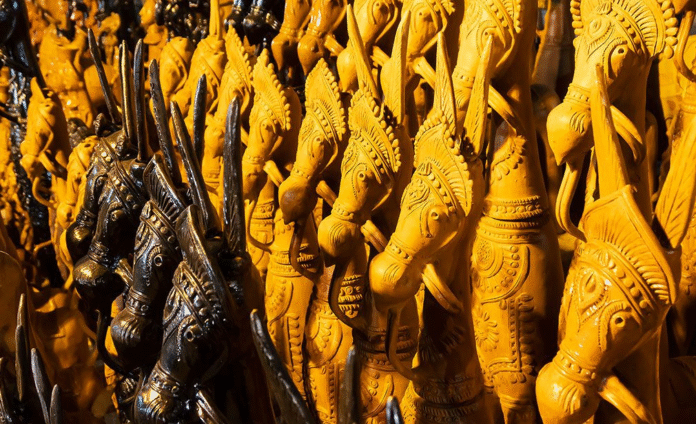
Kolkata and the surrounding regions of West Bengal are also renowned for their exquisite terracotta craftsmanship. Terracotta Art has long been an integral part of Bengali culture and temple architecture.

Skilled artisans create stunning figurines, idols, sculptures, and decorative items using clay, showcasing exceptional craftsmanship passed down through generations.

Terracotta Tiles

Among Bengal’s oldest artistic traditions, terracotta tiles remain especially popular. Historically used to decorate temples and heritage structures, these intricately carved tiles are now widely used in home décor items such as trays, flower pots, pen holders, wall panels, and decorative tiles.

Their earthy texture and detailed patterns continue to attract collectors and art enthusiasts from around the world.

Handicrafts and Textiles of Kolkata

Kolkata is also celebrated for its rich textile and handicraft traditions. The city is home to highly skilled artisans specializing in weaving, embroidery, block printing, and handloom textiles.

Some of the most sought-after traditional textiles from Bengal include:

  • Muslin
  • Jamdani
  • Baluchari Saree

These handcrafted textiles are admired for their elegance, intricate motifs, and rich cultural heritage.

Why Kolkata Is a Must-Visit Destination for Art Lovers

Whether it is folk paintings, terracotta crafts, textile traditions, colonial architecture, literature, theatre, or modern art galleries, Kolkata offers a deeply enriching cultural journey. The city’s timeless charm lies in its ability to preserve tradition while embracing contemporary creativity.

For anyone passionate about art, culture, history, and heritage, Kolkata remains one of India’s most inspiring destinations.

Dakshineswar Temple Kolkata: How Maa Kali Inspired Rani Rashmoni to Create a Spiritual and Architectural Wonder…

0

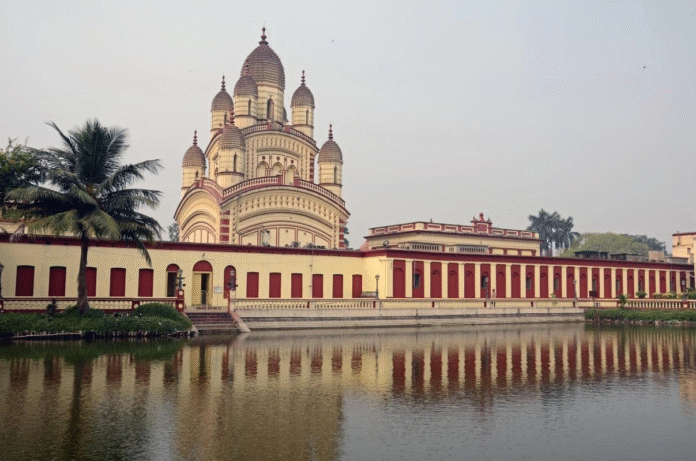
Nestled in a serene green stretch on the outskirts of Kolkata, the iconic Dakshineswar Kali Temple stands as a magnificent blend of spirituality, history, and architectural grandeur. Overlooking the sacred Hooghly River, this ochre-yellow marvel continues to attract devotees, tourists, historians, and spiritual seekers from around the world. Across the river, the peaceful presence of Belur Math adds to the divine atmosphere surrounding the temple complex.

Dakshineswar Temple: A Symbol of Faith Beyond Boundaries

The Dakshineswar Temple was commissioned by the legendary Bengal queen and philanthropist Rani Rashmoni. Known for her progressive outlook and deep devotion, Rani Rashmoni envisioned the temple as a spiritual sanctuary open to people of all religions, castes, and communities.

Her belief in universal spirituality transformed the temple into a symbol of communal harmony and inclusivity. Even today, the temple remains a place where people from diverse backgrounds gather in search of peace, devotion, and divine blessings.

Architectural Beauty of Dakshineswar Kali Temple

The temple complex reflects the elegance of traditional Bengali architecture and is built in the famous Nava-Ratna style. The three-storeyed main shrine is crowned with nine towering spires, creating an awe-inspiring skyline visible from afar.

Intricate carvings, ornate domes, colorful motifs, and mythological sculptures adorn the temple walls, making Dakshineswar Temple one of the finest examples of spiritual architecture in India.

At the heart of the complex lies the sanctum dedicated to Goddess Kali, worshipped here as Bhavatarini — “the redeemer of the universe.” The idol depicts Goddess Kali standing on the chest of Lord Shiva, both placed upon a thousand-petaled lotus crafted from pure silver.

Surrounding the central shrine are 12 smaller Shiva temples built in the traditional Aat Chala architectural style. These shrines house black stone Shivlings and attract thousands of devotees every day. The complex also includes the famous Radha-Krishna temple, popularly known as the Radha Kanta Temple.

The Divine Dream Behind Dakshineswar Temple

The history of Dakshineswar Temple began with a dream. Before embarking on a pilgrimage to Varanasi, Rani Rashmoni dreamt that Goddess Kali instructed her to build a grand temple on the banks of the Ganges and install an idol where devotees could worship and seek solace.

Inspired by this divine vision, she began searching for the perfect location. Eventually, she selected a 20-acre plot along the eastern bank of the river. Interestingly, portions of the land included a Muslim burial ground and property owned by a European named John Hasty. The construction of the temple on this land eventually transformed the site into a powerful symbol of unity among faiths.

It took nearly eight years for artisans and craftsmen to complete the temple. On May 31, 1855, during the sacred Snana Yatra festival, the idols were ceremonially installed amid grand celebrations attended by nearly one lakh Brahmins. The temple was formally named Sri Sri Jagadishwari Mahakali Temple.

Places to Visit Inside Dakshineswar Temple Complex

A visit to Dakshineswar Temple is incomplete without exploring its spiritually significant landmarks associated with Sri Ramakrishna Paramahamsa.

Sri Ramakrishna’s Room

This sacred room preserves memories and artifacts associated with Sri Ramakrishna, who spent nearly 14 years here before moving to the Kuthi Bari.

Kuthi Bari

The Kuthi Bari served as the residence of Rani Rashmoni, her daughter, and son-in-law. Today, it remains open to visitors interested in the temple’s rich heritage.

Nahabat Khanas

One of the Nahabat towers still resonates with the rhythmic sounds of dhak, dhol, and kashi during daily aarti ceremonies, enhancing the spiritual ambience.

Bakul Tala Ghat

Named after the Bakula tree, this ghat was the bathing place of Sarada Devi and the site where Sri Ramakrishna was initiated into Tantra Sadhana.

Panchavati

This sacred grove marks the place where Sri Ramakrishna undertook twelve years of intense meditation and spiritual practice.

Dakshineswar Temple Timings

  • Opening Time: 6:30 AM
  • Closing Time: 7:30 PM

Best Places to Visit Near Dakshineswar Temple

After visiting Dakshineswar Temple, travelers can explore some of Kolkata’s most iconic cultural landmarks.

Jorasanko Thakur Bari

The ancestral home of Rabindranath Tagore offers a glimpse into Bengal’s literary and artistic heritage.

Eden Gardens

Known as one of the most historic cricket stadiums in the world, Eden Gardens is a paradise for sports lovers.

College Street

Famous for its endless rows of bookstores and intellectual charm, College Street remains a cultural landmark for students, scholars, and book enthusiasts.

Why Dakshineswar Temple Is a Must-Visit Spiritual Destination

A journey to Dakshineswar Temple is far more than a pilgrimage. It is an experience that combines spirituality, architecture, history, culture, and peace. Whether you seek divine blessings, architectural beauty, or a deeper connection with India’s spiritual heritage, Dakshineswar Temple offers an unforgettable experience that lingers long after the visit ends.

Hantavirus: Understanding the Rare but Dangerous Virus Making Headlines

0

A recent outbreak of Hantavirus linked to a cruise ship has once again brought global attention to a virus that is rare, but potentially deadly. While health agencies across the world are monitoring the situation closely, experts stress that hantavirus is very different from highly contagious diseases such as COVID-19 and does not currently pose a pandemic-level threat.

Hantaviruses are a group of viruses primarily carried by rodents such as rats and mice. Humans usually become infected after coming into contact with infected rodent urine, saliva, or droppings, especially in poorly ventilated spaces where contaminated particles can become airborne. According to the World Health Organization, hantaviruses can cause severe illnesses affecting the lungs, heart, kidneys, and blood vessels.

The virus was first identified in the 1950s during the Korean War near the Hantan River, from which it gets its name. Over time, different strains have been discovered across Asia, Europe, and the Americas. In Asia and Europe, hantavirus commonly causes a disease called haemorrhagic fever with renal syndrome (HFRS), which affects the kidneys. In the Americas, it can lead to hantavirus cardiopulmonary syndrome (HCPS), a severe respiratory illness with a high fatality rate.

The current global concern emerged after several suspected and confirmed cases were reported aboard the cruise ship MV Hondius travelling from South America. At least three deaths have been linked to the outbreak, and health authorities are tracing passengers across multiple countries. Scientists suspect the outbreak may involve the Andes strain of hantavirus, which is the only known strain capable of limited human-to-human transmission, mainly among close contacts. However, such transmission remains extremely rare.

The Centers for Disease Control and Prevention and WHO have both stated that the overall public health risk remains low. Experts emphasise that hantavirus does not spread easily between people under normal conditions, and most infections still occur through exposure to infected rodents.

Symptoms generally begin with fever, body aches, fatigue, headache, nausea, and abdominal discomfort. In severe cases, breathing difficulties and lung failure can develop rapidly. There is currently no specific antiviral cure or widely available vaccine for hantavirus, making early diagnosis and supportive medical care extremely important.

In India, hantavirus cases remain very rare compared to diseases like dengue, malaria, or tuberculosis. India has not witnessed large-scale outbreaks, though isolated cases and rodent-borne infections have occasionally been studied. Public health experts believe the risk in India is currently low, but increasing urbanisation, climate changes, and poor sanitation in some regions highlight the importance of rodent control and disease surveillance.

Globally, health authorities are now focusing on monitoring outbreaks, strengthening laboratory testing, and improving awareness. The recent cruise ship incident has also demonstrated how quickly infectious disease concerns can spread in an interconnected world. Still, experts caution against panic. Unlike highly transmissible respiratory viruses, hantavirus remains a relatively uncommon infection with limited transmission patterns.

The most effective protection continues to be simple preventive measures — maintaining hygiene, controlling rodent populations, safely cleaning rodent-infested areas, and seeking medical attention if symptoms appear after possible exposure. In an age of rapid global travel, the hantavirus situation is a reminder that vigilance and public awareness remain essential tools in preventing future outbreaks.

World Ovarian Cancer Day 2026: Raising Awareness for the Silent Threat

0

Every year on May 8, the world observes World Ovarian Cancer Day to spread awareness about ovarian cancer, one of the most serious and often overlooked cancers affecting women. The day serves as a global call to improve early detection, encourage timely treatment, and support patients and survivors battling the disease.

Ovarian cancer begins in the ovaries, the organs responsible for producing eggs and female hormones. It is often referred to as a “silent killer” because its symptoms are usually vague and difficult to recognise in the early stages. Common signs such as bloating, abdominal pain, frequent urination, fatigue, loss of appetite, or unexplained weight changes are often mistaken for routine health issues. As a result, many cases are diagnosed only after the disease has advanced, making treatment more difficult.

World Ovarian Cancer Coalition launched World Ovarian Cancer Day to unite organisations, healthcare experts, survivors, and communities across the world in the fight against the disease. The campaign focuses on educating women about symptoms, risk factors, and the importance of regular medical consultation.

According to global health studies, ovarian cancer remains one of the leading causes of cancer-related deaths among women. Factors such as age, family history, inherited gene mutations like BRCA1 and BRCA2, obesity, and certain hormonal conditions can increase the risk. However, experts emphasise that awareness and early diagnosis can significantly improve survival rates.

In India too, ovarian cancer has emerged as a growing health concern. Lack of awareness, delayed diagnosis, and limited access to specialised healthcare in many regions often worsen outcomes for patients. Doctors stress the importance of paying attention to persistent symptoms rather than ignoring them as minor digestive or hormonal issues.

Medical advancements in recent years — including targeted therapies, chemotherapy improvements, genetic testing, and precision medicine — have offered new hope to patients. Support groups and counselling services also play an important role in helping women cope emotionally and mentally during treatment.

World Ovarian Cancer Day is not only about discussing a disease; it is about empowering women with knowledge and encouraging societies to prioritise women’s health. It also highlights the importance of research funding, accessible healthcare, and compassionate support systems for patients and families.

The observance carries a powerful message: awareness can save lives. By recognising symptoms early, encouraging open conversations about women’s health, and ensuring timely medical care, countless lives can be protected from this silent but dangerous disease.