

A recent outbreak of Hantavirus linked to a cruise ship has once again brought global attention to a virus that is rare, but potentially deadly. While health agencies across the world are monitoring the situation closely, experts stress that hantavirus is very different from highly contagious diseases such as COVID-19 and does not currently pose a pandemic-level threat.
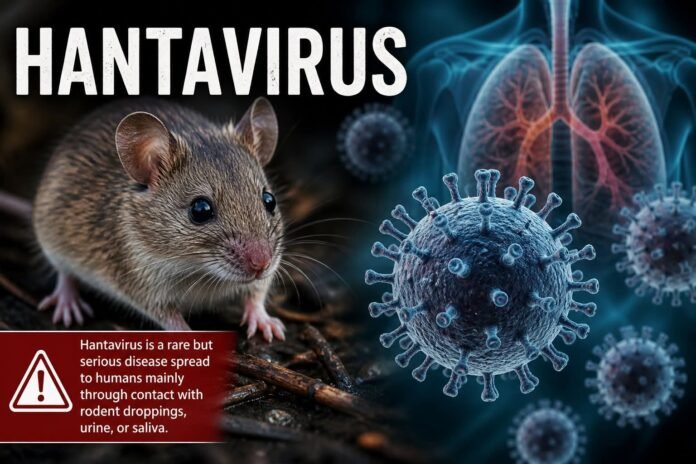
Hantaviruses are a group of viruses primarily carried by rodents such as rats and mice. Humans usually become infected after coming into contact with infected rodent urine, saliva, or droppings, especially in poorly ventilated spaces where contaminated particles can become airborne. According to the World Health Organization, hantaviruses can cause severe illnesses affecting the lungs, heart, kidneys, and blood vessels.
The virus was first identified in the 1950s during the Korean War near the Hantan River, from which it gets its name. Over time, different strains have been discovered across Asia, Europe, and the Americas. In Asia and Europe, hantavirus commonly causes a disease called haemorrhagic fever with renal syndrome (HFRS), which affects the kidneys. In the Americas, it can lead to hantavirus cardiopulmonary syndrome (HCPS), a severe respiratory illness with a high fatality rate.
The current global concern emerged after several suspected and confirmed cases were reported aboard the cruise ship MV Hondius travelling from South America. At least three deaths have been linked to the outbreak, and health authorities are tracing passengers across multiple countries. Scientists suspect the outbreak may involve the Andes strain of hantavirus, which is the only known strain capable of limited human-to-human transmission, mainly among close contacts. However, such transmission remains extremely rare.
The Centers for Disease Control and Prevention and WHO have both stated that the overall public health risk remains low. Experts emphasise that hantavirus does not spread easily between people under normal conditions, and most infections still occur through exposure to infected rodents.
Symptoms generally begin with fever, body aches, fatigue, headache, nausea, and abdominal discomfort. In severe cases, breathing difficulties and lung failure can develop rapidly. There is currently no specific antiviral cure or widely available vaccine for hantavirus, making early diagnosis and supportive medical care extremely important.
In India, hantavirus cases remain very rare compared to diseases like dengue, malaria, or tuberculosis. India has not witnessed large-scale outbreaks, though isolated cases and rodent-borne infections have occasionally been studied. Public health experts believe the risk in India is currently low, but increasing urbanisation, climate changes, and poor sanitation in some regions highlight the importance of rodent control and disease surveillance.
Globally, health authorities are now focusing on monitoring outbreaks, strengthening laboratory testing, and improving awareness. The recent cruise ship incident has also demonstrated how quickly infectious disease concerns can spread in an interconnected world. Still, experts caution against panic. Unlike highly transmissible respiratory viruses, hantavirus remains a relatively uncommon infection with limited transmission patterns.
The most effective protection continues to be simple preventive measures — maintaining hygiene, controlling rodent populations, safely cleaning rodent-infested areas, and seeking medical attention if symptoms appear after possible exposure. In an age of rapid global travel, the hantavirus situation is a reminder that vigilance and public awareness remain essential tools in preventing future outbreaks.