Home Blog Page 12

International Museum Day: Celebrating the Guardians of History and Culture

0

International Museum Day is observed every year on May 18 to highlight the importance of museums in preserving history, culture, art, and human civilisation. The day serves as a global reminder that museums are not just buildings filled with ancient objects, but living institutions that connect people with their heritage, educate future generations, and promote cultural understanding.

The observance was established in 1977 by the International Council of Museums (ICOM) with the aim of raising awareness about the role museums play in society. Since then, International Museum Day has been celebrated worldwide with exhibitions, educational programs, workshops, guided tours, and cultural events organised by museums and heritage institutions.

Every year, the celebration revolves around a special theme focusing on contemporary global issues such as sustainability, digital innovation, cultural identity, education, and social inclusion. Through these themes, museums are encouraged to evolve beyond traditional displays and become interactive spaces for dialogue, creativity, and community engagement.

Museums hold immense significance because they preserve the collective memory of humanity. They safeguard priceless artefacts, manuscripts, sculptures, paintings, fossils, and historical records that tell the story of human progress across centuries. From ancient civilisations to freedom movements and scientific discoveries, museums help people understand the past and its connection to the present.

In India, museums play a crucial role in preserving the country’s rich and diverse heritage. Institutions such as the Indian Museum, the National Museum, and the Chhatrapati Shivaji Maharaj Vastu Sangrahalaya house remarkable collections reflecting India’s art, archaeology, history, and cultural traditions. These museums attract students, researchers, historians, and tourists from around the world.

International Museum Day also reminds society about the urgent need to protect cultural heritage from threats such as war, climate change, illegal trafficking of artefacts, and neglect. In recent years, digital technology has transformed museums as many institutions now offer virtual tours and online archives, making knowledge more accessible to people globally.

Beyond education, museums inspire curiosity, creativity, and critical thinking. They allow people to experience different cultures, understand historical struggles, and appreciate artistic achievements. For children especially, museums can turn learning into an engaging and memorable experience.

In a rapidly changing world, museums remain vital bridges between the past, present, and future. International Museum Day celebrates these institutions for preserving humanity’s shared legacy and encouraging cultural dialogue across borders. It is a day to recognise that history and heritage are not just about remembering the past, but also about shaping a more informed and connected future.
International Museum Day: Jaipur Museum to Unveil Rare ‘Brahma-Vishnu-Mahesh’ Amethyst Agate from Brazil

0

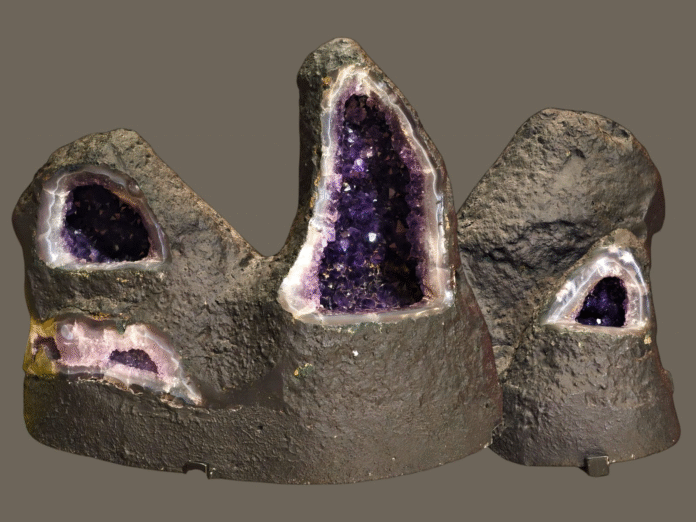
A remarkable blend of geology, spirituality, and artistic wonder is set to greet visitors at Jaipur’s Khazana Mahal Gem and Jewellery Museum this International Museum Day. The museum has announced the exhibition of an exceptionally rare Amethyst Agate geode sourced from Brazil — a naturally formed stone whose unique structure is said to resemble the divine trinity of Brahma, Vishnu, and Mahesh.

Weighing nearly 100 kilograms, the single-piece specimen is drawing attention not only for its imposing size but also for its striking natural formation. The stone comprises three interconnected spherical Amethyst Agate sections that together evoke the image of Mount Kailash, creating what museum officials describe as a “self-manifested” representation of the Hindu trinity.

Adding to its rarity is the presence of embedded Calcite within the Amethyst crystal structure, making the specimen significant from both geological and spiritual perspectives.

Museum Director Anoop Srivastava said the new acquisition represents far more than a rare mineral display. According to him, the stone also carries deep cultural and spiritual symbolism, while Amethyst Agate itself is traditionally associated with emotional balance, mental healing, stress relief, and protection from negative energies.

To mark International Museum Day, the museum will place the geode at the entrance of its ‘Johari Bazaar’ gallery so that it becomes the very first exhibit visitors encounter. The placement reflects the museum’s larger vision of narrating the journey of gemstones from their raw, natural state to exquisitely crafted jewelry.

“This piece perfectly captures the essence of our museum,” Srivastava said, noting that the stone remains entirely uncut and unpolished, allowing visitors to witness nature’s artistry in its purest form.

The Khazana Mahal Museum already houses an 8.5-foot-tall Amethyst Agate Druzy displayed in two sections, and officials believe the addition of this Brazilian geode further elevates the institution’s stature among India’s few museums dedicated exclusively to gemstones, minerals, and jewelry heritage.

Situated in Jaipur, long regarded as one of the world’s historic centres for gemstone cutting and jewelry craftsmanship, the museum showcases an extensive collection of raw minerals, polished gems, heritage ornaments, and interactive exhibits explaining grading, cutting, and jewellery-making techniques. Visitors can also witness live demonstrations of stone cutting and intricate inlay work.

Beyond exhibition, the museum has increasingly positioned itself as an educational and cultural space. It regularly hosts learning sessions for students, designers, researchers, and tourists aimed at deepening understanding of both the science and symbolism of gemstones.

By combining geological specimens with stories of craftsmanship and cultural tradition, the museum offers visitors a rare opportunity to explore the intersection of science, spirituality, and art.

With the unveiling of the Brahma-Vishnu-Mahesh Amethyst Agate, Khazana Mahal hopes to attract not only gemstone enthusiasts and collectors, but also devotees and tourists visiting Jaipur during the upcoming travel season.

Kalpasar Project: Know The Project on Which India and Netherlands Have Joined Hands Aiming At Gujarat’s Mega Water Vision

0

India and the Netherlands have signed a major agreement to cooperate on one of Gujarat’s most ambitious infrastructure plans — the Kalpasar Project. The Letter of Intent, signed on 17 May 2026 between India’s Ministry of Jal Shakti and the Netherlands’ Ministry of Infrastructure and Water Management, marks a new step toward transforming the Gulf of Khambhat into a massive freshwater reservoir.

The project is not just about building a dam. It represents a bold attempt to address water scarcity, irrigation needs, transport connectivity and renewable energy generation through a single integrated infrastructure initiative.

What is the Kalpasar Project?

The Kalpasar Project is a proposed multipurpose water infrastructure project in Gujarat. Its central idea is to construct a large dam across the Gulf of Khambhat — also known as the Gulf of Cambay — on India’s western coast.

The aim is to trap freshwater flowing from several rivers into the gulf and create a giant reservoir for irrigation, drinking water and industrial use. If completed, the project would become one of the world’s largest freshwater reservoir schemes built in a marine environment.

Beyond water storage, the project also includes plans for:

  • Tidal power generation
  • Irrigation infrastructure
  • Flood management support
  • Improved transport connectivity between South Gujarat and Saurashtra

The name “Kalpasar” is derived from Kalpavriksha, the mythical wish-fulfilling tree in Indian tradition, symbolising abundance and prosperity.

Why is the Netherlands Involved?

The Netherlands is globally recognised for its expertise in water engineering and coastal management. Much of the country lies below sea level, making advanced flood control and water management essential to Dutch survival and development.

Under the new agreement, the Netherlands will provide technical expertise and engineering cooperation for the Kalpasar Project. The collaboration is linked to the India-Netherlands Strategic Partnership on Water, a bilateral framework focused on climate adaptation, sustainable infrastructure and water governance.

A major inspiration for the cooperation is the famous Afsluitdijk Dam in the Netherlands.

The Afsluitdijk Connection

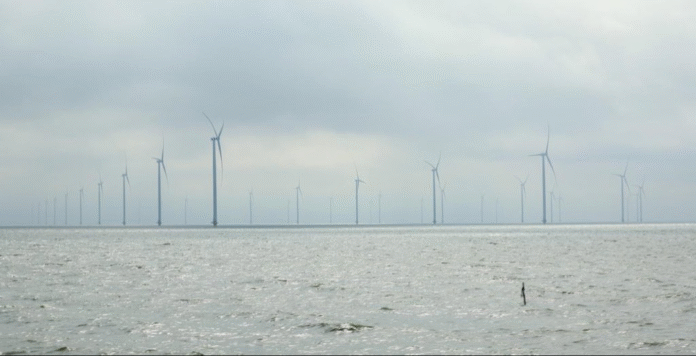
The Afsluitdijk is a 32-kilometre-long dam built by the Dutch in the early 20th century. It transformed a saline inlet of the North Sea into a freshwater lake, now used for flood protection, water storage and agriculture.

Indian planners see similarities between the Dutch project and the proposed Kalpasar reservoir. Dutch expertise in marine engineering, salinity control and coastal infrastructure is expected to help address the technical challenges of building a freshwater reservoir in the Gulf of Khambhat.

How Will the Project Benefit Gujarat?

The Kalpasar Project is expected to have major economic and environmental impacts across Gujarat.

Irrigation and Water Supply

The project aims to store freshwater from seven rivers flowing into the Gulf of Khambhat. It is projected to provide irrigation benefits to nearly 10 lakh hectares of land across 42 talukas in nine districts of Saurashtra — a region often affected by water scarcity.

The reservoir could also strengthen drinking water supply and support industrial growth in the state.

Improved Connectivity

One of the most discussed features of the project is a proposed transport corridor across the dam.

Currently, travel between South Gujarat and Saurashtra requires a long road journey around the gulf. The Kalpasar structure could reduce the travel distance from nearly 240 kilometres to about 60 kilometres, significantly improving connectivity and logistics.

Renewable Energy Potential

The Gulf of Khambhat experiences strong tidal movements, making it suitable for tidal energy generation. The project includes plans to harness tidal power as a renewable energy source alongside water storage infrastructure.

Challenges and Environmental Concerns

Despite its ambitious vision, the Kalpasar Project has also raised environmental and technical questions.

Experts have pointed to challenges related to:

  • Marine ecosystem disruption
  • Sedimentation and silt accumulation
  • Salinity management
  • Coastal biodiversity impacts
  • Engineering complexity in high-tide conditions

Large-scale environmental assessment and long-term feasibility studies remain essential before the project can move into full implementation.

Why the Project Matters

As climate change intensifies water stress and extreme weather events, countries are increasingly investing in large-scale water management systems. Gujarat’s long coastline and river systems make it a strategic location for such infrastructure experiments.

The India-Netherlands partnership reflects a growing trend of combining global engineering expertise with local development priorities. If successful, the Kalpasar Project could become one of India’s most transformative water infrastructure projects of the century.

Important Facts

  • The Kalpasar Project is proposed across the Gulf of Khambhat in Gujarat.
  • The Gulf of Khambhat is also called the Gulf of Cambay.
  • India and the Netherlands signed a Letter of Intent on 17 May 2026 for technical cooperation on the project.
  • The Netherlands is contributing expertise based on the Afsluitdijk Dam project.
  • The project aims to benefit around 10 lakh hectares of agricultural land.
  • The proposed transport corridor may reduce travel distance between South Gujarat and Saurashtra from 240 km to 60 km.

Smiling Buddha to Operation Shakti: How Pokhran Changed India’s Nuclear Destiny

0

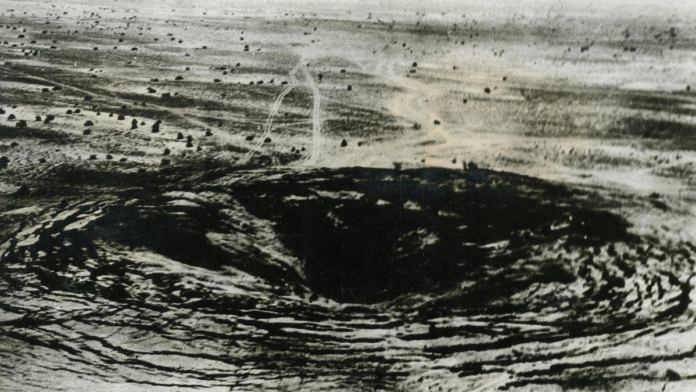
On 18 May 1974, deep beneath the sands of Rajasthan’s Thar Desert, India quietly announced its arrival among the world’s nuclear powers. The operation carried an unusual codename, Smiling Buddha, but its impact reshaped India’s strategic and scientific future forever.

The successful underground nuclear test at Pokhran marked a turning point in India’s post-independence journey. Conducted during the tenure of Prime Minister Indira Gandhi, the test demonstrated India’s growing scientific capability at a time when the global nuclear order was tightly controlled by a handful of nations.

The Desert That Made History

The remote Pokhran Test Range in Rajasthan was chosen for its isolation and geological suitability. Hidden beneath layers of desert rock, Indian scientists detonated a plutonium-based nuclear device in what the government officially described as a “Peaceful Nuclear Explosion.”

Despite the cautious terminology, the message to the world was unmistakable: India had become the sixth country capable of conducting a nuclear test, joining the ranks of the United States, the Soviet Union, the United Kingdom, France and China.

For a young nation still building its industrial and scientific base, the achievement symbolized technological self-reliance and strategic confidence.

Why the Codename “Smiling Buddha”?

The test took place on Buddha Purnima, the birth anniversary of Gautama Buddha, which inspired the codename Smiling Buddha. The contrast between the peaceful spiritual imagery and the immense destructive potential of nuclear technology made the name globally memorable.

Yet for India, the event was not only about military capability. It reflected decades of investment in atomic research led by pioneering scientists and institutions that envisioned nuclear technology as essential for national development, energy security and strategic autonomy.

Pokhran-II: India Declares Itself a Nuclear Weapons State

Twenty-four years later, Pokhran returned to global headlines.

In May 1998, India carried out a series of five nuclear tests under Operation Shakti, popularly known as Pokhran-II. Unlike the ambiguity surrounding the 1974 test, the 1998 explosions openly established India as a nuclear weapons state.

The mission brought together some of India’s most respected scientists, including A.P.J. Abdul Kalam, R. Chidambaram and Anil Kakodkar.

The tests triggered international sanctions and global debate, but they also transformed India’s strategic standing. Over time, India emerged as an accepted nuclear power with growing international partnerships in civilian nuclear energy.

National Technology Day: Celebrating Scientific Achievement

To commemorate the success of Pokhran-II, India observes National Technology Day every year on 11 May.

First celebrated in 1999, the day honours Indian achievements in science, engineering and innovation. It serves as a reminder that breakthroughs in technology often emerge from years of quiet research, institutional commitment and national ambition.

Today, the legacy of Pokhran extends beyond defence. It influences India’s expanding civil nuclear energy programme and broader technological aspirations.

India’s Nuclear Energy Future

India’s nuclear programme has now entered a new phase focused increasingly on clean energy and long-term sustainability.

In a major milestone, the Prototype Fast Breeder Reactor at Kalpakkam in Tamil Nadu achieved first criticality on 6 April 2026, advancing the second stage of India’s three-stage nuclear power programme. The development is significant because fast breeder technology can improve fuel efficiency and reduce long-term dependence on imported uranium.

India’s nuclear power capacity stands at nearly 9 GW in 2026, with an ambitious target of 100 GW by 2047. The expansion is closely tied to India’s commitment to achieving net-zero carbon emissions by 2070.

International interest in India’s civil nuclear sector is also growing. A delegation of senior executives from the American nuclear industry is visiting India from 18–21 May 2026 to explore cooperation opportunities following the enactment of the SHANTI Act.

Key Facts at a Glance

  • India’s first nuclear test in 1974 was codenamed Smiling Buddha.
  • Pokhran-II in 1998 was conducted under Operation Shakti.
  • National Technology Day is observed on 11 May.
  • India became the sixth nation to conduct a nuclear test in 1974.
  • The Prototype Fast Breeder Reactor at Kalpakkam achieved first criticality on 6 April 2026.
  • India aims to increase nuclear power capacity to 100 GW by 2047.

From the silent sands of Pokhran to ambitious clean-energy goals, India’s nuclear story is not merely about weapons or geopolitics. It is also a story of scientific ambition, technological confidence and a nation determined to shape its own future.

Why Is the Woman Always the Villain? The Vijay-Trisha Debate Exposes Society’s Bias

0

The recent speculation surrounding Vijay and Trisha Krishnan has once again sparked intense debate across social media and entertainment circles. Over the past few months, rumours about the two Tamil cinema stars allegedly being in a relationship have repeatedly surfaced online, especially after their public appearances together, social media interactions, and continued professional closeness. Though neither Vijay nor Trisha has officially confirmed any romantic involvement, the gossip has continued to dominate headlines and fan discussions.

Vijay, often referred to as “Thalapathy” by his fans, is one of the biggest stars in South Indian cinema and is now also the Chief Minister of Tamil Nadu. He has been married to Sangeetha Sornalingam for over two decades and is the father of two children. Trisha Krishnan, meanwhile, is among the most celebrated actresses in Indian cinema, known for films across Tamil and Telugu industries and admired for her long and successful career.

But amid all the speculation, one thing has become painfully familiar, much of the public criticism is directed toward Trisha, while Vijay often receives comparatively less blame. Social media comments, online trolling, and moral judgments largely target the woman involved, even though any alleged relationship would involve two consenting adults.

This unequal treatment raises an uncomfortable but necessary question: why does society still place the burden of morality almost entirely on women?

If people believe there is wrongdoing in the situation, then accountability cannot be selective. Vijay is a married man with a family, and if the public conversation revolves around loyalty, ethics, or responsibility, then those standards should apply equally to him as well. Yet, as seen repeatedly in celebrity culture and even in ordinary life, women are often labelled as “home-breakers” while men are excused, defended, or forgiven far more easily.

This mindset is deeply rooted in societal conditioning. Indian society has long expected women to uphold dignity, sacrifice, patience, and moral perfection, while men are often granted greater social leniency. Ironically, despite worshipping goddesses and celebrating feminine strength in culture and tradition, society continues to judge real women more harshly.

Even in epics like the Ramayana, women are remembered for their endurance and grace. Sita Mata chose exile alongside Lord Ram with dignity and unwavering devotion. Across history and mythology, women have often carried emotional and moral burdens silently. Yet in modern society, women are still the first to be blamed whenever controversy arises.

The digital age has only amplified this imbalance. Rumours spread instantly, assumptions become facts overnight, and public outrage often turns deeply misogynistic. The language used against women in such controversies is frequently far more personal and cruel than what men face.

This does not mean women should never be questioned. It means accountability must be equal. Morality cannot be gender-specific. If society truly believes in values, then those values should apply to everyone involved — regardless of gender or celebrity status.

The Vijay–Trisha controversy is therefore not just celebrity gossip. It reflects a larger social reality: women continue to carry disproportionate blame, while men are often allowed to walk away with their image largely intact. And perhaps that is the real conversation society needs to have.

Scientists Uncover Earth’s Oldest Known Air Sample in Antarctica

0

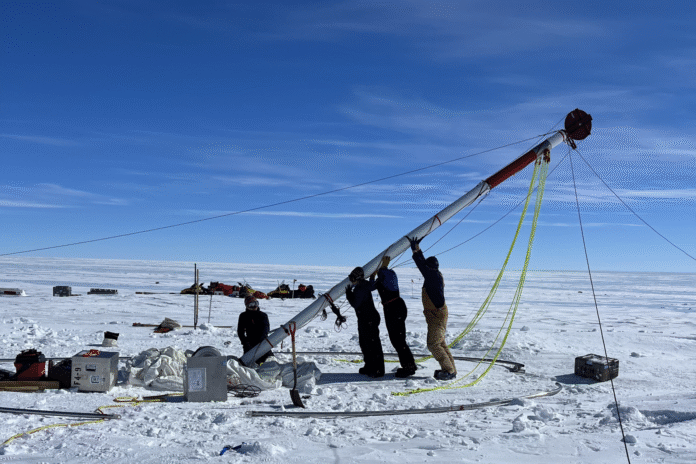
Scientists working in Antarctica have identified the oldest directly dated ice and air sample on Earth from the Allan Hills region of East Antarctica. The sample contains tiny air bubbles in 6-million-year-old ice and was dated through argon isotope analysis of trapped air.

Allan Hills Ice and Air Sample

The Allan Hills site lies in East Antarctica, a region known for ancient blue ice exposures. The sample from this area provides directly dated air, which is different from older climate records inferred from other proxies. The ice sample is 6 million years old and contains trapped air bubbles that preserve ancient atmospheric composition. The dating work found evidence of about 12 degrees Celsius of long-term cooling in Antarctica over the last 6 million years.

Scientific Institutions and Publication

The discovery was made by a team affiliated with the National Science Foundation-funded Center for Oldest Ice Exploration, also known as COLDEX. The study was led by Sarah Shackleton of Woods Hole Oceanographic Institution and John Higgins of Princeton University. The findings were published in the Proceedings of the National Academy of Sciences in late October 2025. The research used isotope measurements from argon in the trapped air bubbles to establish the age of the ice.

Beyond EPICA and Antarctic Ice Cores

The European Beyond EPICA–Oldest Ice project completed its final Antarctic campaign in May 2026. The project recovered a 1.7-mile, or 2.8-kilometre, ice core from Little Dome C in East Antarctica. This core dates back 1.2 million years and contains trapped air bubbles with greenhouse gases such as carbon dioxide and methane. The project involves 14 laboratories across 10 European countries and studies the Mid-Pleistocene Transition, when the rhythm of Earth’s ice ages changed.

Important Facts

  • Antarctica is the coldest continent and contains the largest reserve of fresh water on Earth in the form of ice.
  • Ice cores are cylindrical samples drilled from glaciers or ice sheets and are used to study past climate and atmospheric composition.
  • Argon isotopes are used in geochronology because noble gases can remain trapped in ancient air bubbles.
  • The Mid-Pleistocene Transition occurred roughly between 1.2 million and 0.7 million years ago and altered glacial cycles.

Directly Dated Air and Continuous Ice Records

The Allan Hills sample is the oldest directly dated air known from ice. The Beyond EPICA core is the longest continuous ice record recovered from Antarctica and serves a different scientific purpose.

Netherlands Returns Chola Copper Plates to India

0

The Netherlands has officially returned the famous Anaimangalam copper plates, also known as the Leiden Plates, to India. But this was more than the return of centuries-old inscriptions. For historians, archaeologists, and heritage lovers, it marked the homecoming of a lost piece of India’s past, a silent witness to the glory of the Chola Empire that had spent generations far from the land where its story began.

The story of the plates begins during the reign of the great Chola emperor Rajaraja Chola I, who ruled South India from 985 CE to 1014 CE. His empire was powerful, wealthy, and deeply connected to trade routes across Asia. Rajaraja Chola I is remembered not only as a conqueror but also as a visionary ruler who built the magnificent Brihadisvara Temple, now recognised as a UNESCO World Heritage Site.

During his reign, the Anaimangalam copper plates were created to record royal grants and tax arrangements for the Chudamani Vihara, a Buddhist monastery located at Nagapattinam in present-day Tamil Nadu. In ancient India, copper-plate inscriptions were the official documents of kings. They preserved important announcements such as land donations, tax exemptions, and royal orders. Unlike paper, copper could survive centuries.

The plates themselves are remarkable. The collection contains 21 large plates and three smaller ones, weighing nearly 30 kilograms altogether. They are held together by a thick copper ring stamped with the royal seal of the Cholas — a symbol of authority and power from an empire that once ruled much of South India between the 9th and 13th centuries.

But over time, the plates drifted far from home.

In the 18th century, Dutch official Florentius Camper acquired them on the Coromandel Coast, then part of the Dutch colonial sphere in India. Eventually, the artefacts were taken to Leiden University in the Netherlands, where they remained for generations. Scholars studied them, historians translated them, and museums preserved them — yet the plates stayed separated from the land whose story they told.

The return of the Leiden Plates did not happen overnight. It followed years of diplomatic discussions between India, the Dutch government, and Leiden University. In 2022, the Netherlands introduced a restitution policy for colonial-era artefacts, opening the path for the return of cultural treasures taken during colonial times.

When the copper plates finally returned to India in 2026, the moment carried deep symbolic meaning. It reflected a growing global effort to restore cultural property to its rightful home. More than ancient objects, these plates are witnesses to India’s rich past — to the administrative brilliance of the Cholas, the spread of Buddhism in South India, and the enduring power of written history.

After centuries abroad, the voice engraved on copper had come home again.

How Synthetic Data is Solving AI’s Biggest Data Problem

0

The Internet is powered by data created by billions of people — and AI has already consumed most of it. So what happens next?

The true power of AI lies in data. While many people assume that code is the core of artificial intelligence, in reality, code is only a small part of the equation. AI learns patterns, decision-making, and contextual understanding from massive amounts of data. Without data, AI loses its ability to learn, make predictions, and function intelligently.

But why does AI need a constant flow of data? The answer lies in how these systems operate. The reason we can receive real-time global updates from large language models (LLMs) is because AI models require periodic retraining as the world changes. They need fresh information to remain relevant and accurate. Unlike traditional software, AI systems cannot simply run indefinitely on static programming — they evolve through continuous learning. Without updated data, their performance gradually degrades as they face constantly changing environments.

This brings us to the rise of synthetic data.

Think of surgeons practicing on lifelike dummies before performing real operations. They use simulations because mistakes in actual surgeries are too costly. Synthetic data functions in a similar way. It is artificially generated information designed to mimic real-world data, allowing AI systems to train without depending entirely on real human-generated datasets.

Synthetic data offers several advantages. It is cost-effective, easier to scale, and can help reduce bias because researchers can manipulate and balance datasets more efficiently. It also addresses growing concerns around privacy and copyright. In industries like finance and healthcare, real-world data often contains highly sensitive information that can lead to privacy breaches or legal complications. Synthetic datasets provide a safer alternative.

One of the primary methods used to generate synthetic data is through advanced machine learning systems such as Generative Adversarial Networks (GANs). These models create highly realistic images, videos, audio, and other forms of data that closely resemble real-world variations. Many people today encounter AI-generated images or videos so realistic that they fail to recognize they are artificial. Given the pace of AI development over the past three years, distinguishing between real and synthetic content is only expected to become more difficult.

Its realism is both fascinating and unsettling.

This raises an important question: can synthetic data eventually replace a significant portion of real-world data due to its limitless availability?

Major organizations across finance, healthcare, and technology are already embracing synthetic data to overcome data scarcity and regulatory barriers. Technology giants such as NVIDIA, Meta, Google, and Microsoft are using it to simulate 3D environments, improve computer vision systems, advance spatial computing, and train voice assistants and natural language processing models. Financial institutions including Wells Fargo and JPMorgan Chase are using synthetic datasets to train fraud detection systems and conduct regulatory stress testing for financial AI models.

However, synthetic data is far from perfect.

While it offers solutions related to privacy, scale, and accessibility, it also introduces significant risks. One of the biggest concerns is “model collapse,” where AI systems gradually lose their connection to real-world human behavior. In this recursive cycle, models begin learning from AI-generated data rather than authentic human-created information, resulting in performance decay and distorted outputs over time.

Bias is another major issue. Although synthetic data can help reduce discrimination, it can also amplify existing biases if the original seed data used to generate it is flawed. In such cases, AI systems may unknowingly normalize and reproduce discriminatory patterns at a much larger scale. Synthetic datasets may also fail to accurately represent cultural, regional, or demographic diversity, potentially harming underrepresented communities.

Another danger is the development of false confidence within AI systems. If synthetic and real-world data are mixed without proper monitoring and validation, models may appear accurate while drifting further away from reality.

The internet was built by humans, for humans. But the data powering tomorrow’s AI systems may not come from the real world at all.

The defining question for the future is no longer whether synthetic data will shape AI — it already is. The real question is how far it will take AI away from its human origins.

How Synthetic Data is Solving AI’s Biggest Data Problem

(The writer of this article is Snigdha, a B.Tech student from BITS Dubai)

Who is V.D. Satheesan? The New Chief Minister Leading Keralam’s Political Shift

0

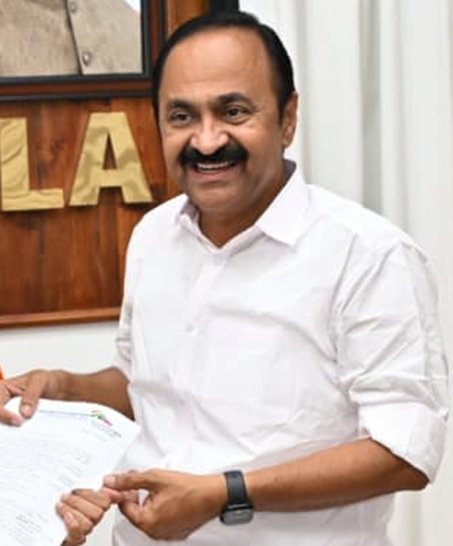
V. D. Satheesan has emerged as one of the most prominent faces in Kerala politics after being chosen as the new Chief Minister of Kerala following the Congress-led United Democratic Front’s sweeping victory in the 2026 Assembly elections. Known for his sharp debating skills, grassroots political connect, and consistent organisational work within the Congress party, Satheesan’s rise marks a significant political transition in the state after a decade of Left Democratic Front rule.

Born on May 31, 1964, in Nettoor near Kochi in Ernakulam district, Vadassery Damodaran Satheesan comes from a middle-class family. He pursued his education in Kerala and later completed postgraduate studies in Social Work along with degrees in law. Before entering full-time politics, Satheesan practised as an advocate in the Kerala High Court for nearly a decade, which helped shape his reputation as a strong legal and policy-oriented thinker.

His political journey began through student politics. During his college years, he was actively associated with the National Students’ Union of India (NSUI) and later rose through the ranks of the Indian National Congress organisation in Kerala. He served as chairman of the Mahatma Gandhi University Union and gradually established himself as a dedicated party worker with strong organisational abilities.

Satheesan first contested the Kerala Assembly elections in 1996 from the Paravur constituency but lost in what was then considered a Communist stronghold. However, he made a successful comeback in 2001 by winning the seat and has retained it continuously ever since. Over the years, he built a reputation as a consistent performer and articulate legislator inside the Kerala Assembly.

Within the Congress party, Satheesan was often viewed as a leader who steadily rose despite factional politics and internal challenges. Though several top organisational positions reportedly eluded him in earlier years, he remained active and loyal to the party structure. His persistence eventually paid off when he was appointed Leader of the Opposition in the Kerala Legislative Assembly in 2021 after the Congress defeat in that year’s Assembly elections.

As Opposition leader, Satheesan became one of the strongest critics of the Left government led by Pinarayi Vijayan. He actively raised issues related to corruption allegations, governance, unemployment, and welfare delivery. His aggressive campaigning and leadership during the 2026 elections are widely credited for helping the UDF secure a massive mandate of over 100 seats in the 140-member Assembly.

Political observers often describe Satheesan as a leader who combines traditional Congress ideology with a modern communication style. He is known for his secular political positioning, organisational discipline, and ability to connect with both youth and grassroots workers. During the election campaign, he strongly projected themes of welfare, governance reforms, women’s empowerment, and employment opportunities.

Now, as Chief Minister, V.D. Satheesan faces the challenge of fulfilling the promises made during the election campaign while steering Kerala through economic and developmental challenges. For many Congress supporters, his appointment represents the rise of a leader who spent decades patiently building his political career through perseverance, public engagement, and steady leadership.

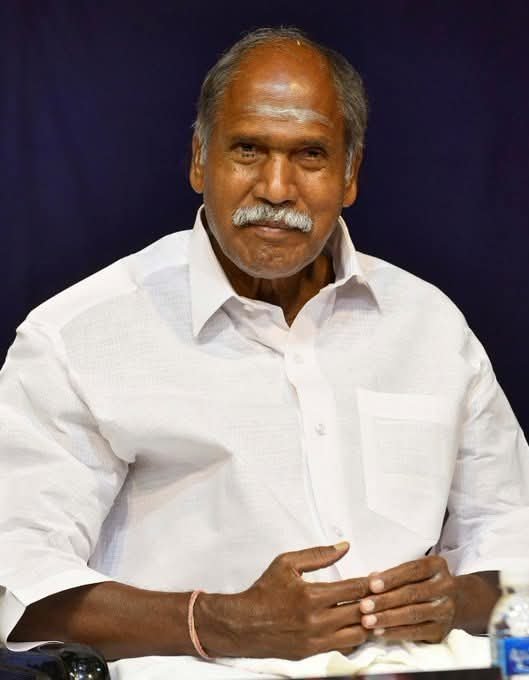
Who is N. Rangasamy? The Veteran Leader Shaping Puducherry Politics

0

N. Rangasamy is one of the most influential and widely recognised political leaders in Puducherry. Known for his simple lifestyle, welfare-oriented governance, and strong grassroots connection, Rangasamy has played a major role in shaping Puducherry’s political landscape for more than two decades. In 2026, he created history by becoming the Chief Minister of Puducherry for the fifth time, further cementing his position as one of the Union Territory’s most enduring political figures.

Born on August 4, 1950, in Puducherry, N. Rangasamy’s full name is Natesan Krishnasamy Gounder Rangasamy. He completed his Bachelor of Commerce degree from Tagore Arts College and later earned a law degree from Dr. Ambedkar Government Law College in Puducherry. Before entering active politics, he developed a reputation as a calm and approachable public figure.

Rangasamy began his political journey with the K. Kamaraj-inspired Congress tradition in southern India. He entered the Puducherry Legislative Assembly in 1990 as a Congress candidate from the Thattanchavady constituency. Over the years, he served in various ministerial positions and gradually emerged as one of the most popular leaders in the Union Territory.

He first became Chief Minister of Puducherry in 2001 as a Congress leader and quickly gained popularity for his welfare schemes and development initiatives. During his tenure, he introduced several public welfare programs related to education, housing, healthcare, and social welfare. Schemes such as subsidised housing, educational assistance for students, free textbooks, and welfare pensions earned him strong support among ordinary citizens.

Due to his simplicity and accessible leadership style, Rangasamy earned the nickname “Junior Kamaraj,” referring to the legendary Tamil Nadu leader K. Kamaraj. Unlike many politicians, he became known for travelling with minimal security and maintaining close contact with the public. His supporters often refer to him as “Makkal Mudhalvar,” meaning “People’s Chief Minister.”

However, political differences with the Congress leadership led him to resign as Chief Minister in 2008. In 2011, he broke away from the Congress and founded his own regional party, the All India N.R. Congress (AINRC). The move proved highly successful, as the party won the 2011 Assembly elections and brought Rangasamy back to power.

Since then, Rangasamy has remained a dominant force in Puducherry politics. Under his leadership, the AINRC formed alliances with the BJP-led NDA and retained power in subsequent elections. In 2026, he once again took oath as Chief Minister for a historic fifth term, highlighting his continued popularity and influence in the region.

Rangasamy is also known for advocating greater autonomy and even statehood for Puducherry, often arguing that the Union Territory requires stronger administrative powers for faster development.

Over the years, N. Rangasamy has built an image of a grounded, welfare-driven leader who combines regional politics with practical governance. Whether admired for his simplicity, political resilience, or development initiatives, he remains one of the defining faces of Puducherry’s modern political history.