

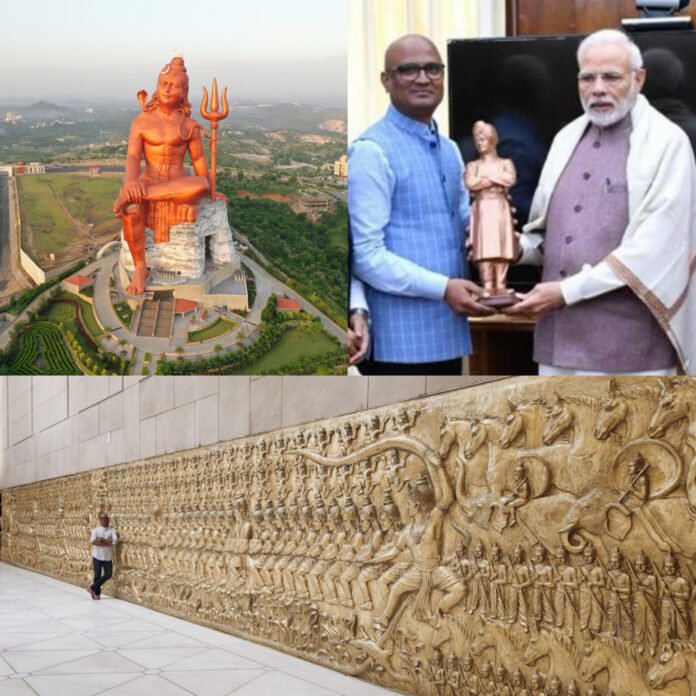
Few artists possess the ability to transform stone and metal into enduring symbols of faith, culture and national identity. Among them is Naresh Kumar Kumawat, Director of Matu Ram Art Centres Pvt. Ltd., who has emerged as one of India’s foremost master sculptors. Carrying forward a remarkable three-generation legacy from Rajasthan, Kumawat has blended traditional craftsmanship with modern engineering to create some of the country’s most iconic public monuments.
His works include the 369-foot Statue of Belief in Nathdwara- the world’s tallest statue of Lord Shiva, the magnificent 75-foot Samudra Manthan Relief at the New Parliament Building, monumental Mahatma Gandhi sculptures installed in over 30 countries and much more. Through these projects, he has established himself not only as an artist but also as a custodian of India’s cultural heritage.
In this exclusive conversation, Naresh Kumar Kumawat speaks about his artistic journey, monumental projects, leadership, innovation, and the future of Indian sculpture.
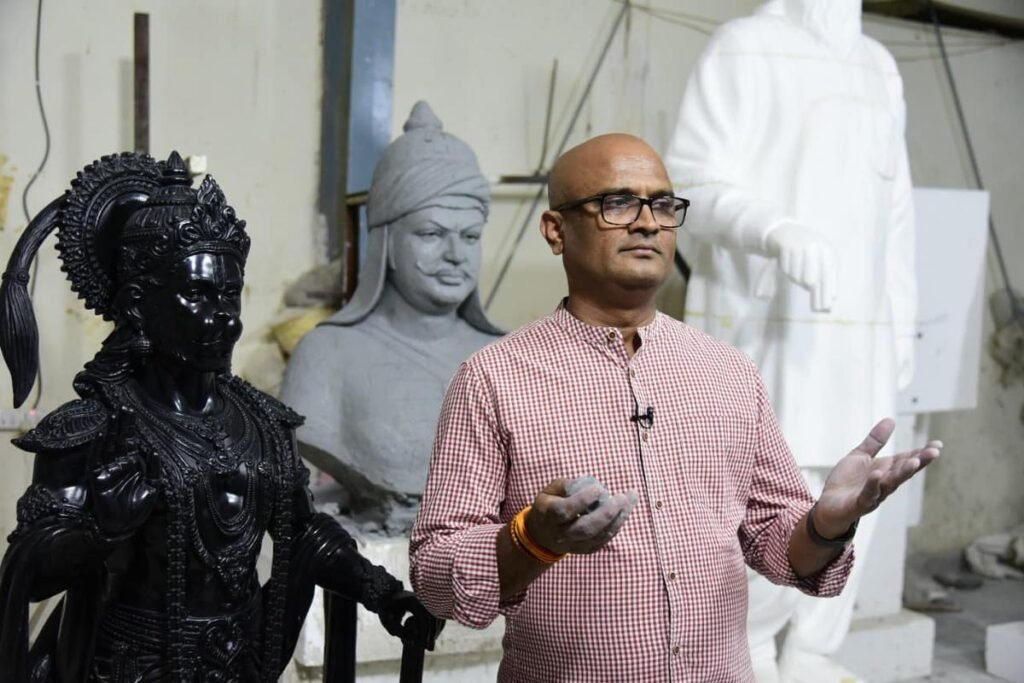
Q. You come from a three-generation lineage of sculptors. How did this legacy shape your earliest understanding of art?
I grew up in a family of sculptors, so art became a way of life instead of a separate pursuit for me. Sculpting requires patience and discipline. However, with determination and devotion, something magical can be created. From an early age, I realised that art is deeply rooted in tradition while constantly evolving with time.
Q. Was there a defining moment in your childhood when you knew sculpture would be your life’s path?
Born into a family that viewed sculpting not just as a profession but as a way of life, I grew up surrounded by clay, tools and the artistic energy of my father, Shri Matu Ram Verma. There wasn’t a single defining moment. Sculpture gradually became a natural extension of my identity. As I matured, my purpose shifted from merely creating sculptures to preserving India’s cultural heritage through monumental public art.
“Creativity has no boundaries. Respect tradition, embrace innovation, and let your work develop a voice that speaks across cultures and generations.” ~ Naresh
Q. How did your training, formal or traditional, help you develop your distinct artistic voice?
My greatest education came through the traditional guru-shishya system in my family workshop. While craftsmanship and observation formed my foundation, I also embraced modern technologies, engineering principles, metallurgy, structural design and digital sculpting. My artistic voice is a blend of heritage and innovation. I believe sculptures should remain historically authentic while being structurally sound and emotionally expressive.
Q. What inspired your shift from traditional sculpture to monumental, large-scale public art?
It wasn’t a shift but a natural evolution. Traditional sculpture builds the foundation, while monumental art expands that vision into a public experience. I wanted art to move beyond galleries and become part of everyday life, engaging with architecture and public spaces while creating lasting emotional connections.
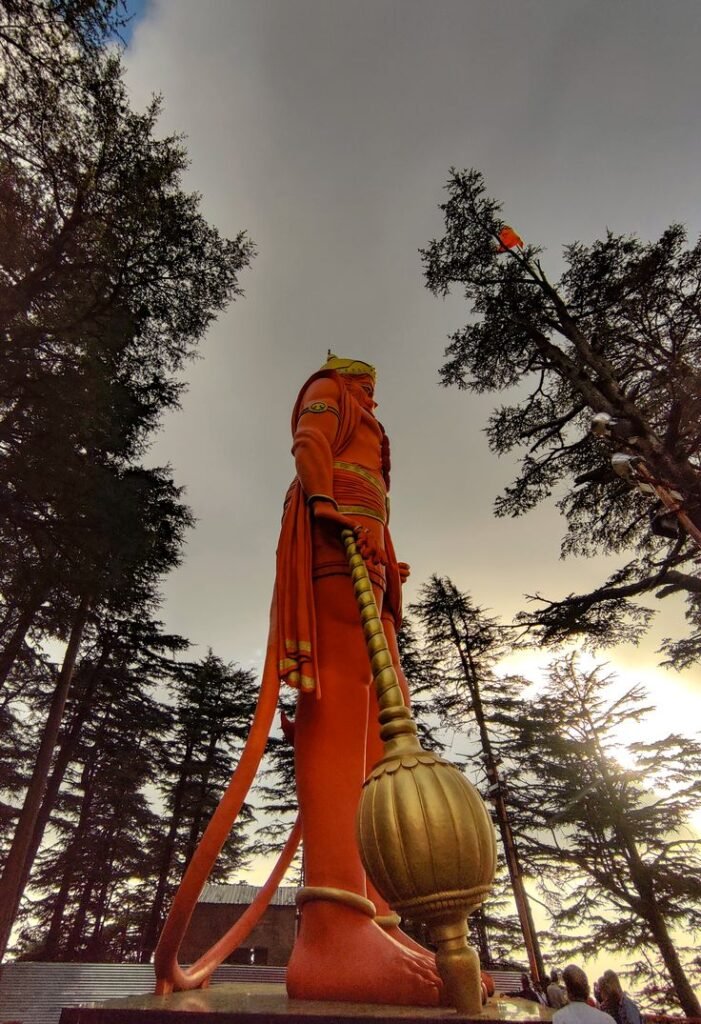
Q. Which project would you call your true breakthrough, and why?
Rather than a single project, my breakthrough came when my work began resonating with people beyond geographical boundaries. When sculptures become symbols of heritage and values, they become part of a larger legacy.
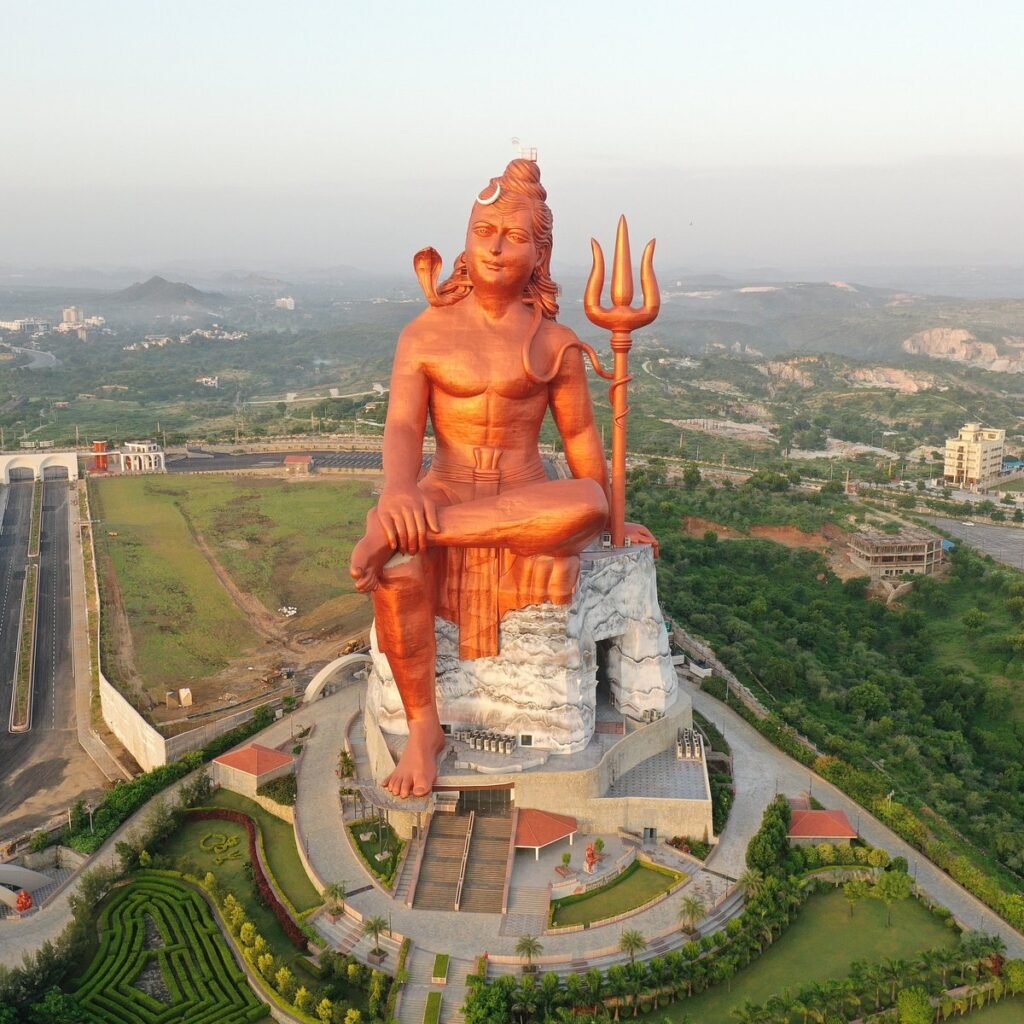
Q. The 369-ft Statue of Belief is an engineering and artistic marvel. What was the most challenging aspect of creating it?
The greatest challenge was integrating art with engineering on an unprecedented scale. Every proportion, expression and detail had to remain harmonious whether viewed from a few metres away or several kilometres away. Achieving structural stability while preserving artistic integrity required close collaboration between sculptors, engineers and architects.
Q. Beyond scale, what emotional or spiritual vision did you aim to capture in the Statue of Belief?
My intention was never to impress people with its height. I wanted to create a divine presence that evokes peace, strength, compassion and spiritual confidence. Inspired by Lord Shiva’s meditation, balance and universal consciousness, every detail was designed to encourage inner reflection and spiritual connection, regardless of one’s background.
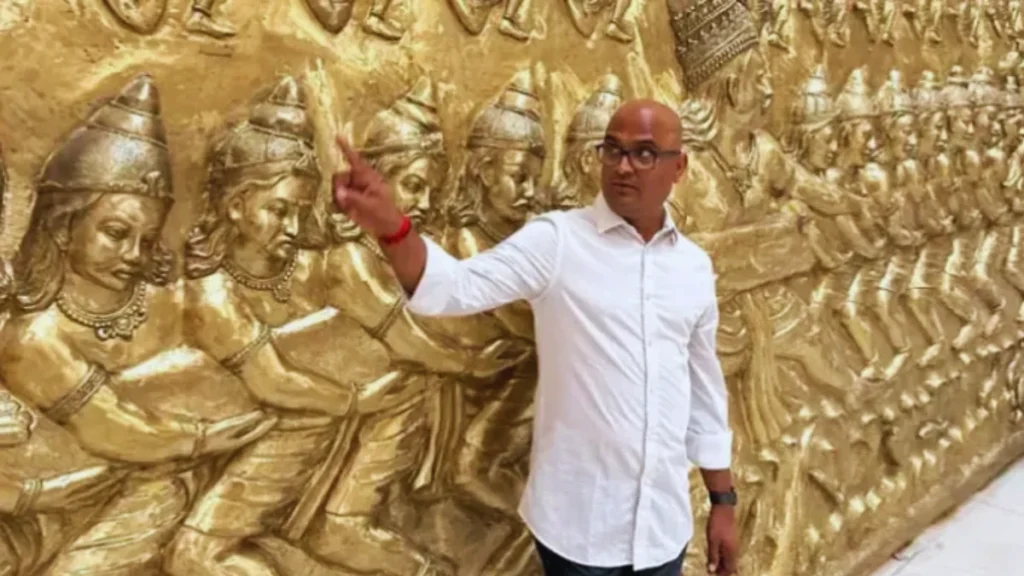
Q. Your work on the Samudra Manthan relief at the new Parliament carries deep symbolism, how did you approach translating mythology into modern public art?
Samudra Manthan is one of India’s greatest philosophical narratives. While creating the Parliament relief, I honoured its historical significance while making it relevant for contemporary India. Every figure and symbol was carefully studied so the artwork reflected collaboration, wisdom and harmony, the same values that strengthen a democratic nation.
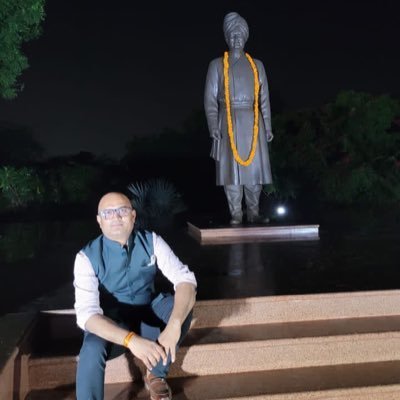
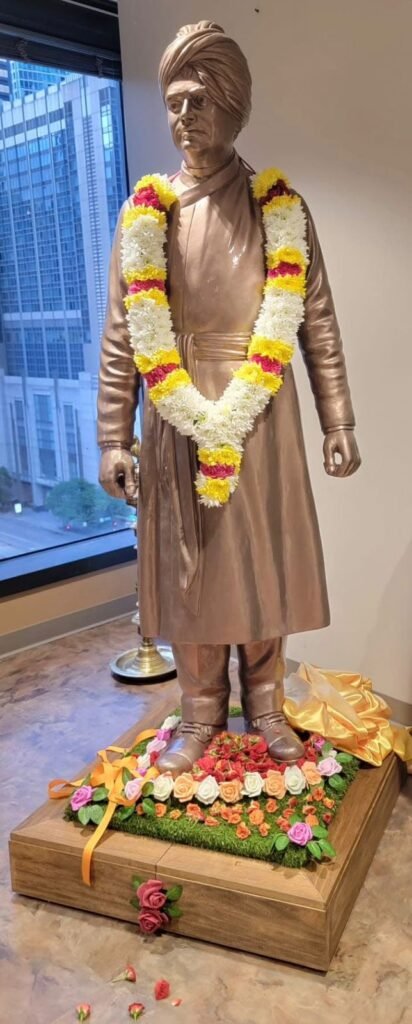
Q. Having installed Mahatma Gandhi sculptures in over 30 countries, how do you balance global appeal with Indian cultural authenticity?
The key is remaining true to the essence while adapting to the context. Gandhi represents universal values like peace and humanity. While preserving authentic Indian symbolism, I also consider the environment, audience and scale of each location so the sculpture connects emotionally across cultures.
Q. Monumental projects demand large teams, how do you lead, coordinate, and maintain artistic consistency at such a scale?
Large-scale sculptures are collaborative efforts. My leadership begins with establishing a clear conceptual vision so every member understands the objective. I value individual expertise while ensuring that all contributions come together cohesively to preserve artistic consistency.
Q. What are the biggest technical or logistical challenges in creating public sculptures of this magnitude?
Large public sculptures demand a delicate balance between artistic vision and engineering precision. Structural stability across different terrains, transportation, installation and strict timelines all present unique challenges. Every project brings new complexities, but overcoming them transforms an idea into a monumental reality.
Q. How do you see Indian sculpture evolving in the global public art space today?
Indian sculpture is undergoing a remarkable transformation by combining tradition with innovation. Artists are embracing new materials and technologies while remaining rooted in cultural narratives. As global audiences increasingly value authenticity and meaningful storytelling, India is emerging as a major contributor to public art.
Q. Has there been a failure or setback that significantly shaped your journey as an artist?
Challenges are inevitable in the creative process. Delays and unexpected obstacles have taught me patience, adaptability and resilience. Rather than seeing setbacks as failures, I view them as valuable learning experiences that strengthen my artistic vision.
Q. What upcoming projects or dream visions are you most excited about right now?
I look forward to projects that push creative and technological boundaries while redefining how sculptures interact with people and public spaces. My aspiration is to create works that achieve lasting cultural and emotional significance while standing monumental in scale.
Q. How do you see sculpture evolving as a profession, and is there a need for more structured training or workshops to bring in the next generation?
Sculpture today extends beyond traditional art into architecture, technology and public design. There is a strong need for structured training, mentorship and workshops alongside traditional learning. Young artists should be encouraged to preserve cultural authenticity while embracing new techniques and global perspectives.