Home Blog Page 878

Wanna know the historic tale of how Jaipur turned into ‘Gem City’? Read the story here

0

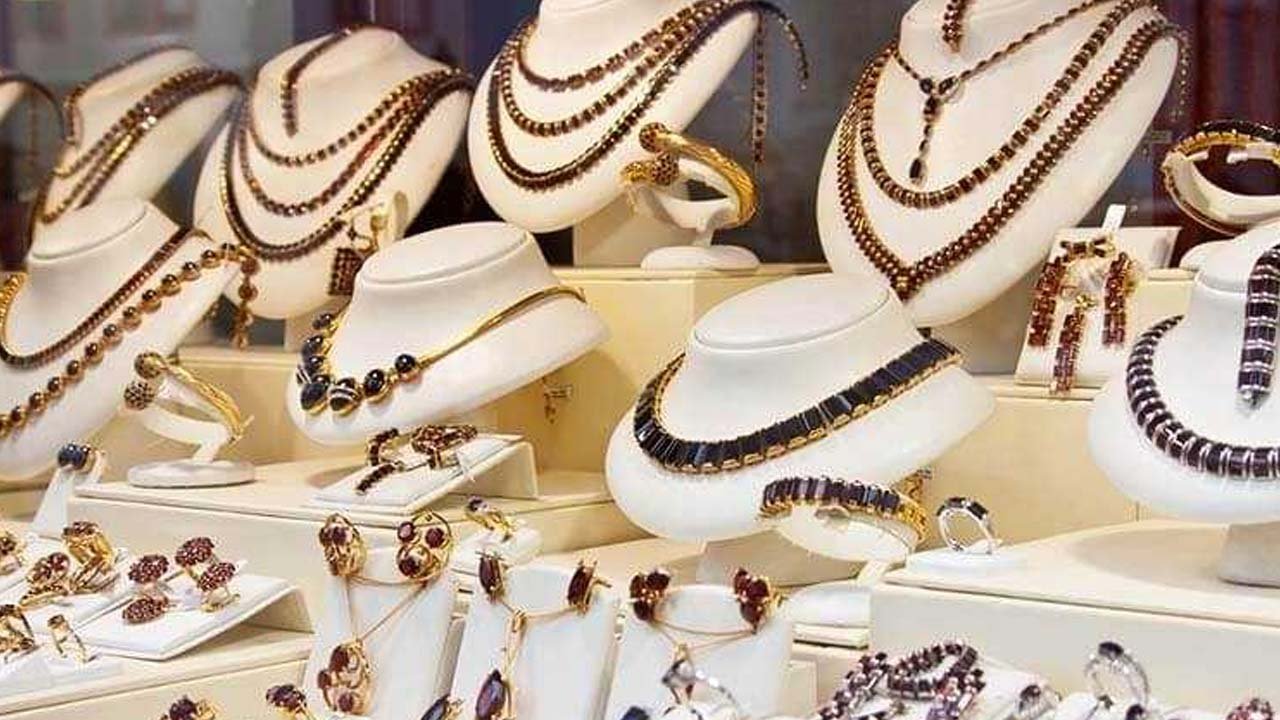
Jaipur has an interesting historic tale of its emergence as the gem city.

The story goes back to the eighteenth century (first half) when Maharaja Sawai Jai Singh ruled this city.
In an endeavour to sustain Jaipur’s flourishing gem and jewellery trade, he invited jewellers from across India to this city. Since then, jewellers from across the country came and settled in Jaipur, giving this city a rich legacy which continues till today.

The contemporary gem craftsmen mostly come from a long line of jewellers; they are skilled in their art; they cut and shape around 90 per cent of the gemstones used in India’s gem and jewellery trade.
While a few of these gems are mined in India, Jaipur’s traders run a big import industry allowing the local trade to manage the show successfully.

Wanna know the historic tale of how Jaipur turned into ‘Gem City’? Read the story here

The gems, globally imported, are being cut and polished to be given the local specifications in the city’s workshops. The craftsman, irrespective of their caste and creed, work in unison to continue making a mark in cutting and shaping stones in tiny workshops behind their gem-filled stores.

Several of the stones are imported from Brazil and Africa. Also many stones are bought and shipped in from Bangkok.
These stones are first cut to size, then its impurities, spots and blemishes are removed.

Cutting, rough shaping, and then shaping it more closely, to get sharper edges and flat base and polishing are a few stages which help them in giving the flawless shape and transparency in stone.

This industry initially started with a handful of artisans which worked on unpolished precious stones and today, it has turned into the largest industry in Jaipur exporting gems and jewellery of thousands of crores each year.
Wanna know why Johari Bazaar inspires the top accessory designers of the world; here comes the reasons!

0

Wanna know why Johari Bazaar inspires the top accessory designers of the world; here comes the reasons!

Do you know that Johari Bazaar is an inspirational source for the world’s top
accessory designers since last many centuries.

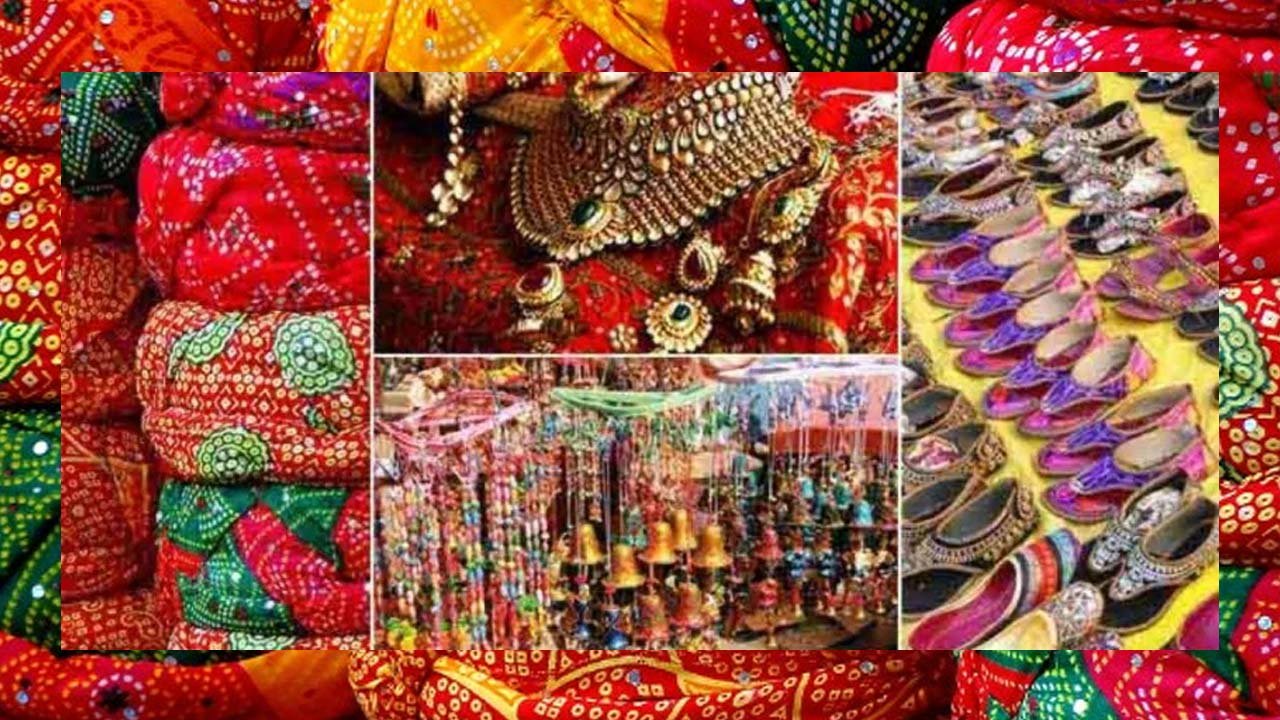
Whenever these jewellers need inspiration, they often turn to Johari Bazaar in Jaipur. This is because each artisan, craftsman, stonecutter, metalworker, and store owner comes with a rich lineage of skilled legacy here.
The secrets of their artistry and craftsmanship have been passed down through many generations. Their unique perspective is that they are used to work with international designers and hence you’ll be surprised to find a wide range of on-trend pieces as well as the more traditional Rajasthani kind in their collection.

In fact, Jaipur, over the centuries, have also emerged as gem capital of the world.
The credit of transforming it as the gem city goes to the most skilled and well-trained craftsmen residing here who have been shaping the dream designs for customers who visit here from different parts of the world. Hence, Jaipur remains to be the ‘gem of the city’, enjoying distinguished distinction of giving the most aesthetic jewellery designs to the world, inspiring many to follow its jewellery trends across the globe.

Wanna see 500 year old printing process? Visit Sanganer and watch the marvel…

1

Want to see a wide variety of folk patterns on pure white cotton? Try visiting Sanganer which has become a hub of block and screen printing. The motifs in Sanganeri print are generally made by using thin black outlines and red dye is used to colour the figures and flowers on cloth.

Sanganeri textile printing is around 5 centuries old which constitute delicate patterns and lines coming along with vibrant coloured designs.

Even today, it holds a prominent place in the world of weavers and craftsmen.

It was developed between the 16th and 17th century following the constant wars between the Mughals and Marathas which resulted in migration of several craftsmen from Gujarat to Rajasthan. Most of them settled in Sanganer which ultimately became its haven and this art has been thriving ever since.

Sanganeri prints once constituted major export products for the East India Company with its trademark being the original dye used for printing designs. Even the European culture accepted the use of this original dye with open hearts and it became a part of their culture too.
Sanganer with a great variety of these prints has now become a hub for home linens and furnishing. The wide variety of bed covers, table cloths etc will leave you spoilt for choice.

The great cultivation in this form of craft, has been around for years, and is almost as old as the country itself. Inspired by the royal patronage and heritage, the rich traders and royal families have been propagating this art . With times, influence of Sanganeri print has spread far and wide into the fundamental nature of Indian culture, legacy and tradition.

The dyers involved in Sanganeri print originally came from Sindh and were from the ‘chippa‘ community with majority of them being Muslims. The beauty of the process is that entire family, including children, are involved in the process. Today, thousands of people are employed in practising this craft working on a professional level.

Wear the luxe look with Rajasthani Leheriya this monsoon!

0

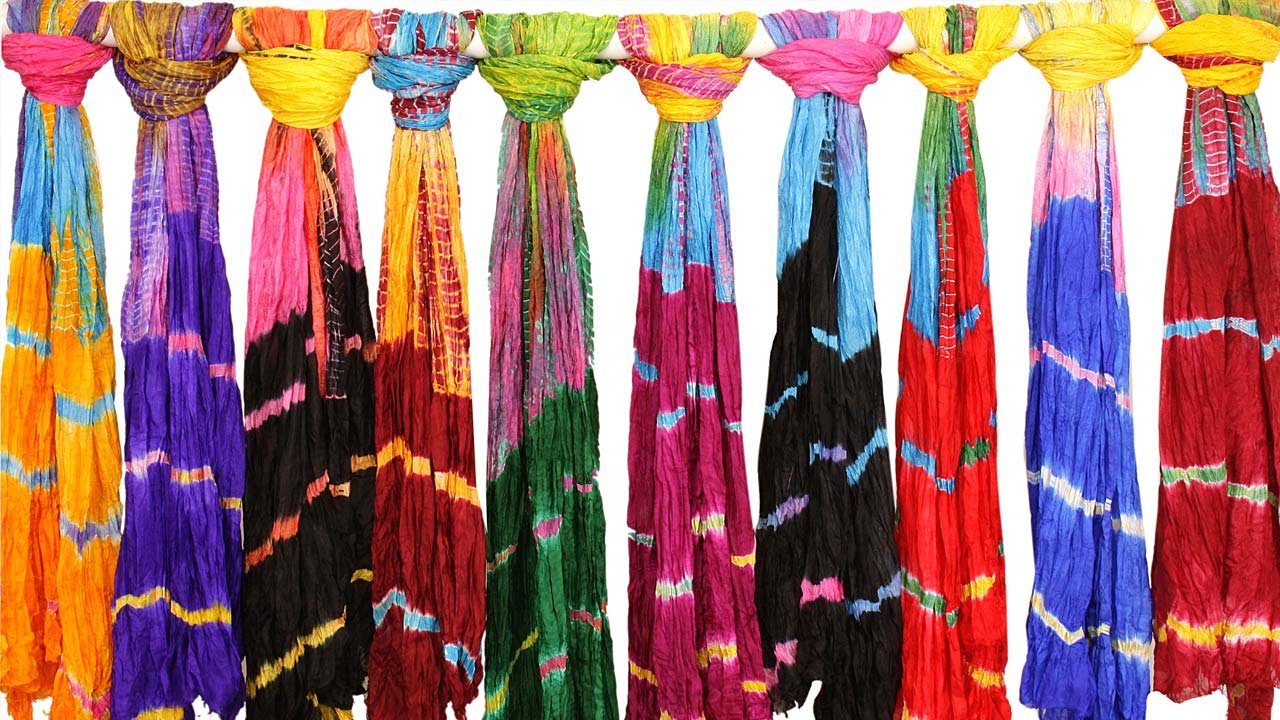
If you ever visit Rajasthan during monsoon, you will see women draped in beautiful sarees with wavy stripes stroked on bright colours.
This soothing design is called Leheriya, a form of tie and dye art discovered in desert state.
Lahariya creates complex wavy patterns aesthetically on a thin cotton or a smooth silk cloth, mostly seen on sarees and turbans. Symbolisig luxe look, Leheriya has now become a designer quotient with all leading designers accommodating it in their ensemble to create a difference!

Its natural, ripple effect accommodated in mesmerizing colours makes it the most unique form and its colour resist dyeing technique is other distinguished feature.
Leheriya was patronized in the nineteenth and early twentieth century by the local traders and merchants who wore turbans of bright Leheriya fabric.
These are harmoniously arranged diagonal stripes, which were originally, dyed in the auspicious colors of yellow and red.
This making process of leheriya is quite interesting and runs smooth in a story form.

The diagonal stripes are first harmoniously arranged, they are then dyed in yellow and red shades.
Dyeing comes with the tie-resist method under which the cloth piece is rolled in a diagonal pattern. A few portions resist the process of binding threads before the dying of cloth starts. The shorter is the distance, the larger are the efforts required to prevent colour spilling. The process is repeated until the fabric attains the requisite number of colours.

The bewitching and brilliant colour combinations of leheriya appeal all with its calm, gentle and restful feel. This traditional style was patronised in the 19th and 20th century with the help of local traders who used to wear bright leheriya turbans.
Leheria turbans were a significant part of male business attire in Rajasthan during the nineteenth and early twentieth centuries.
Today, it is being produced in Rajasthan cities namely Jodhpur, Jaipur, Udaipur and Nathdwara among many others.

Do you know Bandhini is a must-to have-souvenir for guests in Rajasthan?

0

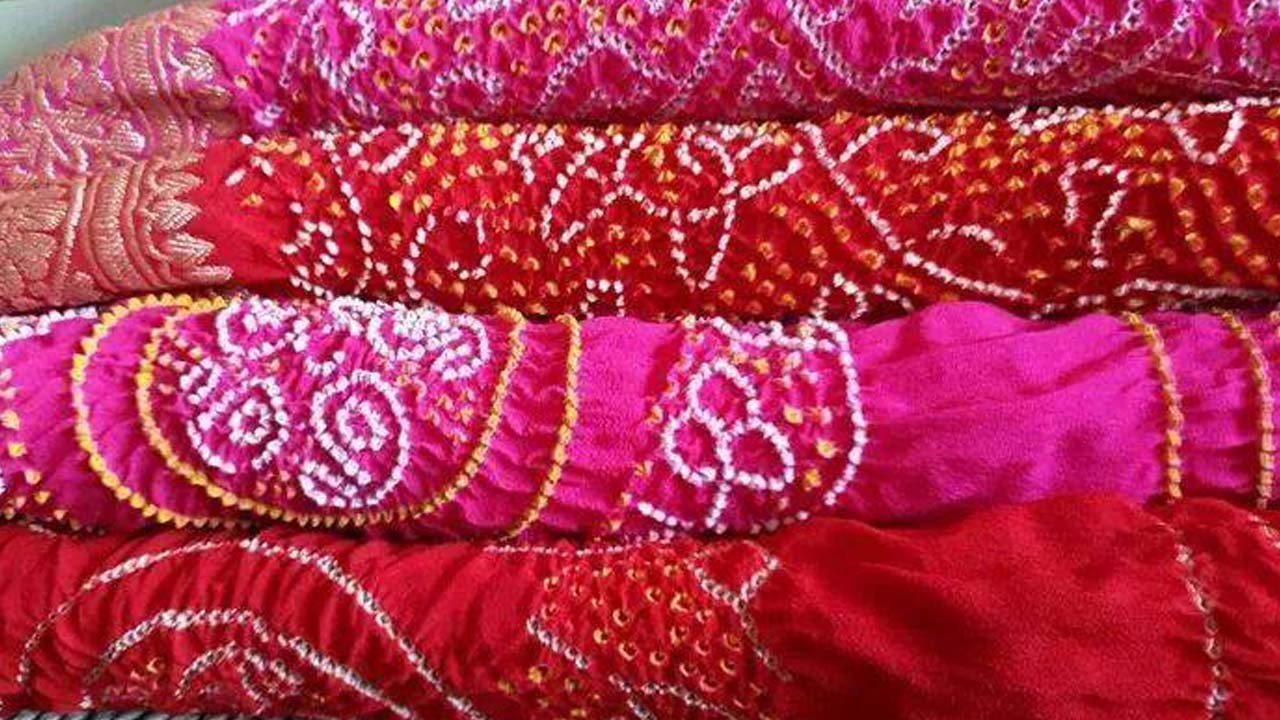
Are you aware of an art form where small dots are being tied on a fabric with the help of thread which is followed by an elaborate dyeing process?

If not, then you should visit Rajasthan to see this beautiful art folding up to bring a beautiful piece of cloth showcasing the rhymes and rhythms of saffron, emerald, sapphire, vermillion and yellow yields. This pristine work of art is a must-to have-souvenir for guests in Rajasthan…

The design is called as Bandhini, which is created on a cloth after tying and plucking thread at regular intervals.
The result is seen in the form of small precise designs made on chosen textile which reveals artwork in its utmost form.

The Bandhini style also merges with symbolism where red represents an attire for Hindu bride, while yellow stands as a code for maternity occasion. In Hindu rituals, red is considered as an auspicious colour for a bride while a yellow colour spells auspicious during different religious ceremonies.
The turbans, sarees, and dupattas use Bandhini styles in diverse colours. Rich embroidery, mirror, and appliqué work add more to the beauty of this art.

What makes Bandhini look appealing is its vibrant colours with its eye-catchy combinations coming with swift swirls and twirls.

‘Bandhini’ has been derived from the Hindi word Bandhan which means ties and relations. An ancient art practised in Western India, it uses a long finger nail, which picks the fabric portion that needs to be tied.

The art connoisseurs have been walking down the rural lanes of this state from distant corners of the world to know more about Bandhini. As they return to their native place, they take many beautiful pieces as the souvenirs to be gifted to their loved ones, while they retain a few which are kept as a legacy they had brought with them from India.

Handshake says good-bye as Namaste replaces it in New Normal

0

We, as humans, have survived many crises. Over the years, we have defeated many pandemics and with our constant efforts, we shall be wining over the COVID-19 crisis too. But for this to happen, presently, we will have to adapt to the New Normal lifestyle on a daily basis. Yes friends! Life won’t be the same and here are the 5 highlights of the New Normal lifestyle post Covid-19 that we will see in the coming times where handshake will be the thing of past. Let’s see the new changes coming in with New Normal:

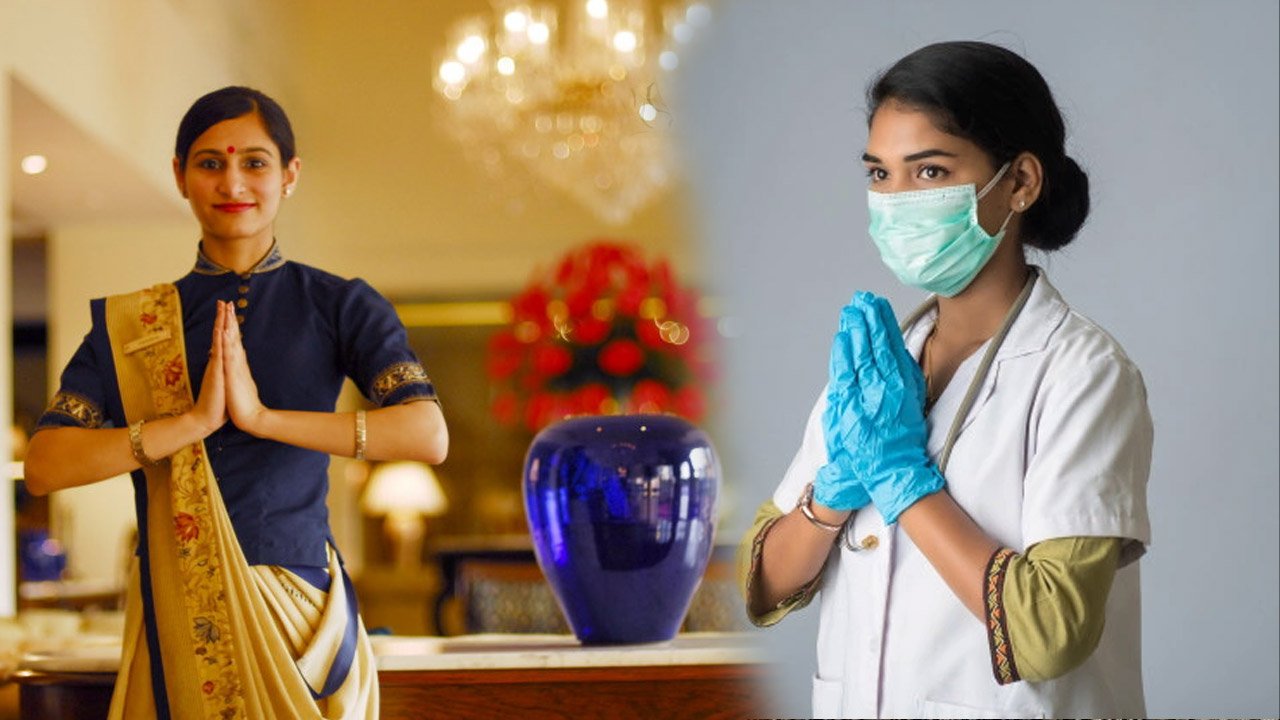
Handshake replaced by Namaste: We saw the likes of Prince Charles greeting people with the Indian Namaste, a traditional greeting style of India where our hands reach is limited to ourselves. Viruses are known to be transmitted by physical contact and therefore in order to keep ourselves and others safe, Namaste is becoming a global norm of greeting people.
Online Teaching for students: Schools are considered as the Temples of Knowledge where students interact with the teachers and play with their classmates while learning a million things besides. They develop their personalities, and make lifelong friends. However, things, it seems, will no longer be the same. We will see that a lot of teaching will be done via online classes on the laptop in order to keep our little ones safe from this pandemic.
Work from home allowed: Internet giant Twitter has allowed its employees ‘Work from Home Forever’. Mostly all offices will go for the ‘only 33% employee attendance’ for a day. This means you will have to go for your office only twice a week. Rest of the time you can work from the comfort of your home and enjoy the extra family time. Yes office gossip and party time will be missed. But then, it will bring families closer who till a few months back, were longing to be together after being busy in their office schedules.
No large weddings, celebrations and tickets for cricket matches: The great Indian fat weddings will be missed! Sad, isn’t it? But what can we do, the government rule says not more than 50 people at a wedding. Weddings and celebrations will become an intimate family affair and stadiums will have no audience for cheering up their beloved cricket teams. Of course we’re going to miss the socializing, but all in the name for a better and healthier future.
Growth of food take-away and online shopping: Going to a restaurant for a nice meal and catching up with friends will be off limits for a while. Restaurants will only provide take-away meals which you can relinquish at home and malls will remain closed giving way to online shopping in a big way. Also we will see the use of online platforms like Facebook, zoom online chat, Whatsapp, etc for socializing in the coming times.
No doubt all these above things are life altering but we can overcome it by the best human traits of ingenuity, resilience and grace. May God bless us.

Look how the New Normal is changing life for our betterment

0

Our human lifestyle has been drastically altered by COVID-19 pandemic. The way, we moved around the city, hugged and greeted dear ones and did catch up with our friends at a cafe, worked at offices and socialised in the evenings; seems to have changed in an unexpected manner. Life, as we knew, has taken a U-turn and seriously we do not like it.

But as every black cloud has a silver lining, this pandemic also has improved a few things in the human lifestyle. Here are 3 ways the New Normal can change life for the better:

Increase of Healthy Lifestyle: People are fruitfully using their time in the lockdown by working out, doing Yoga, cooking organic food and bonding with family like never before. The forgotten hobbies are taken up again, people have a time-out from the rat race of going to the office; and so have enough time to contemplate their options and wisely plan for their futures. We learnt from the cooking videos of ace chefs and from film actors giving us free ‘How to get fit’ lessons. These are the times when we learn the true value of life and family.

Innovations and inventions: Musicians are composing music and playing it from their balconies and rooftops for the whole world to enjoy. Teachers are making extra efforts for conducting online classes in an innovative and interesting manner; and lots of free online courses are invented to sharpen your skills. Many are trying and putting up videos of new cuisines, handmade crafts, methods of meditation, etc making our lockdown time worthwhile. All in all, we humans are up with a fighting spirit devising better and faster methods for doing things; and these improvements for taking the human race forward will stay with us post Covid-19.

Less Polluted Environment: The sky has got back its blue colour, we can hear the birds chirping, deer and ducks hopping out from the forest and taking a stroll on the vehicle-less roads. And the mighty Himalayan peaks are visible from 200 kms away! It seems the earth is healing itself from the human led destruction. It seems to be undergoing the cleansing itself from the harmful toxics produced by fossil fuels giving way to a greener and healthier environment. In the coming time also, we would have relatively cleaner air, thanks to the only 33% employee attendance allowed on a given day leading to less use of transportation. We, as dwellers of planet earth, should promise ourselves to keep our environment clean and healthy. As the saying goes- ‘We do not own the earth and its resources but have borrowed it for our children’.

We have seen doctors, nurses NGOs, welfare groups and police officers working day and night for treating the patients, providing food, shelter and making our surroundings safe. This pandemic has shown us the true spirit of humanity, selflessness, duty and kindness. When these tough times are over, let us take the valuable lessons we learnt from it and leave behind the negative aspects. As this way we can build a much brighter future.

International Tea Day: History and importance of this day

0
Image - Pixbay

It’s official! Tea, one of the world’s oldest beverages, officially celebrated its day across the world on May 21!

The world, it seems, to have joined hands to celebrate the first celebration of tea, in the form of International Tea Day on Thursday as called by the United Nations.

The day was chosen as May 21 because the season of tea production starts in May in most of the tea producing countries.

The United Nations came on Twitter extending greetings on the day to mark the celebrations.

Showering praises for tea, it said, “Tea has many health benefits due to its anti-inflammatory & antioxidant properties.

On Thursday’s first #InternationalTeaDay, find out more about one of the world’s oldest beverages. https://un.org/en/observances/tea-day.”

The United Nation, earlier in 2019, did recognise the importance of one of the world’s oldest beverages.

UN, besides recognising the medicinal property of tea, has also considered tea as an important ingredient of its Sustainable Development Goal programme.

The organisation hopes that tea shall play a strong role in combating poverty and hunger across the world

The UN’s Food and Agriculture Organisation (FAO) made a start to celebrate the international Tea Day on May 21.
Earlier, on December 15, International Tea Day was celebrated but only in tea producing nations which included Bangladesh, Nepal, Sri Lanka, India, Tanzania among others.

This small village earns big laurels on global map!

0

Bagru, a small village situated in the interiors of Rajasthan, has made a big mark on fashion industry with its patent printing process which is called as Bagru print.

The speciality of Bagru print lies in natural colours which are used diligently to allow the designs bespeak a story while being spread on a piece of cloth .

The other surprising part is the engagement of women in each household in making these designs. Sitting in clusters, they can be seen carving beautiful timeless artistry on cloth to leave a mark of their skills on it.

In fact, it is this handmade artistry of the village which has made this village earn name and fame across the globe and the travellers hence keep thronging here to take the timeless handmade art back home to gift it to their loved ones while keeping the best with them.

‘Bagru’ print is centuries old traditional art of hand block printing which has been kept alive by the artisans here.

While there is no confirm date as to when the Bagru print was originated here, but the locals say that it is a three-centuries old tradition of printing which took off with the splendid efforts of artisans.

The art is unique and is known for its indigenous printing style using natural colours with wooden blocks. Over the years, it has garnered laurels and acclaims as ’Bagru printing’.

The art proves how india pioneered in the art of dyeing and printing with natural colours and hence earned laurels in global world. Villagers say that this art is a mystery for foreigners who are unable to crack how the natural colours can be used so proficiently to make beautiful designs.

Will this mystery ever be decoded is still a question amongst the visitors here.
What do you say? Can this mystery be solved? May be, one you visit this village, you can answer it better too!

Women reeling behind bars in Jaipur and Udaipur have joined hands in the fight against COVID-19

0

Women reeling behind bars in Jaipur and Udaipur have joined hands in the fight against COVID-19 and are contributing in making face masks to check the virus spread.

They want to be called as COVID-19 warriors. Also they want that the society’s perception about them should be changed. 

They don’t want to be recognised as criminals any more, but they want to emerges as warriors in this war against the unseen enemy, confirmed jail officials.

While in Jaipur, these women prisoners have made around 80,000 masks, in Udaipur too, prisoners in women have made 4000 masks.

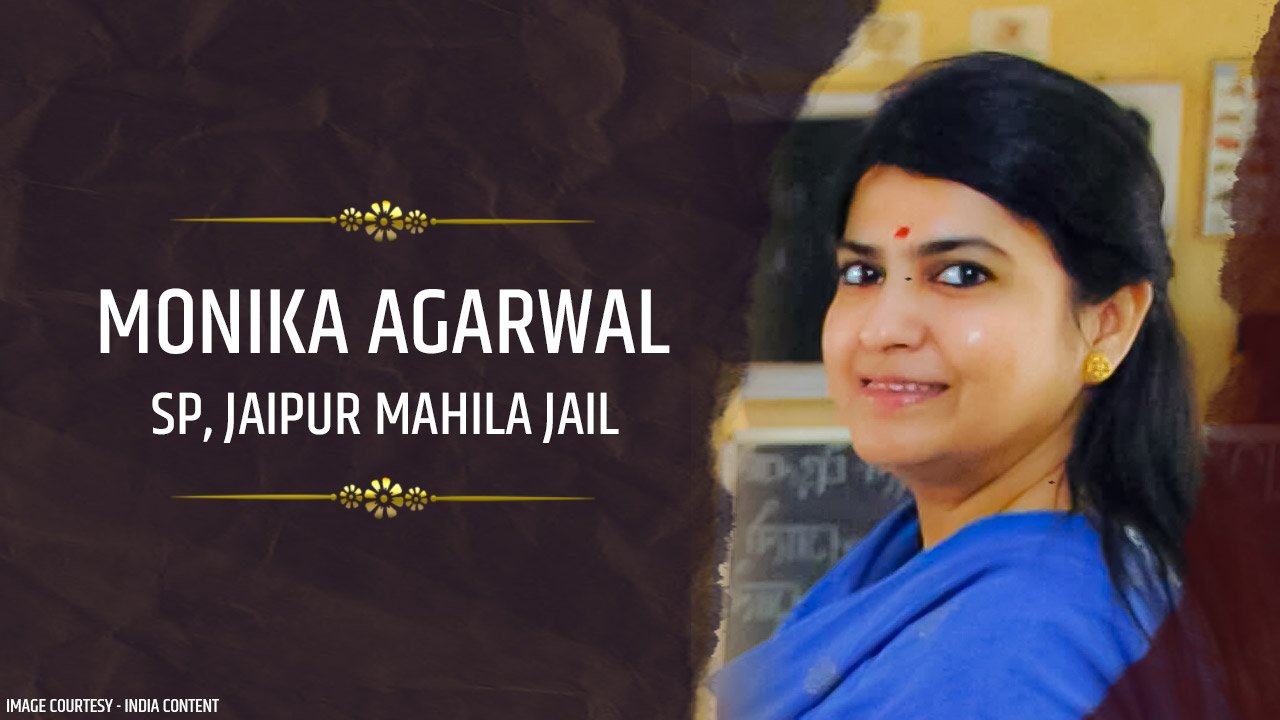
The masks made by women are high in demand and are earning laurels from different departments, said Monica Agrawal, SP, Jaipur Mahila Jail.

Our jail shop named ‘Ashayen’ is selling these masks to different departments including CBI, IB, PHQ, amongst many others.

The opportunity is helping department to fill its coffers as a single mask costs Rs 8 and this amount hence is being deposited into our accounts department, says Monica.

The prisoners are also been paid their daily allowance, she says further.

Monica informs that the women prisoners were highly exited when they came to know that they shall be making masks for people. 

They are disappointed for being called as “criminals” and hence are quite happy to serve people by making face masks for them

“We now have a chance to change public mindsets. This is one way we can wash away our sins, Monica quotes the prisoners.

Even in Udaipur jail, there are 42 women in the Mahila Bandi Sudhar Grah, who have been working 24*7  to get masks ready.